Old Hag you have killed me – The Bothy Band
Reply
 In Capital Volume 1 Marx provides an example of how the productive powers of society have come up against restricted relations of production, how they have further developed and in so doing have consequently revolutionised the economic foundation of society.
This involved the movement from what Marx called the formal subsumption of labour under capital to real subsumption. At first, the existing labour process, including the workers labour power, their technology, means of production, and markets, are taken under ownership by a capitalist; where previously individual workers’ families produced and sold (or not) on their own behalf. This latter activity is, of course, not capitalist because no worker is exploited (except perhaps that they exploit themselves) and it is impossible to define a workers’ wage separately from any consideration of profit that the family may be considered to have made.
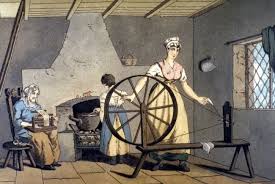
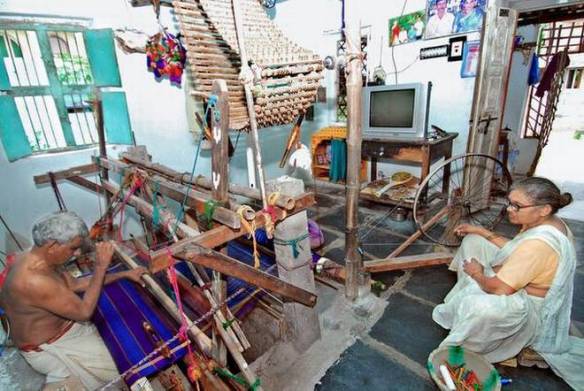
This, Marx calls “formal” subsumption, under which the whole labour process continues much as before, with previously independent workers now working for a capitalist, perhaps using the same methods, with the capitalist now monopolising the means of production and ownership of the product. The typical example given is of hand-loom weavers, who continued working as before but did so on behalf of a capitalist who puts out the raw material to be worked upon and will take it back in finished form to sell, while the worker and their family carries out their labour in the home.
Considered at this stage, the workers’ means of subsistence may or may not be produced wholly or partly by the workers’ family itself, which if it is, may either give the worker some freedom to refuse demands from the capitalist if they are considered too onerous; or may entail very low wages which on their own would not be enough to maintain the subsistence needs of the worker and family without their own domestic production. In either case the capitalist must be able to make a profit and may be greatly empowered to do so if he can compel the worker to submit to wage-labour through total reliance on it for his or her livelihood and that of the family.
This is therefore capitalism, or rather capitalism in a very limited and undeveloped form, because in its early forms it can either involve the workers’ reliance on their own production of subsistence needs and/or is based upon existing production techniques that are not developed by the capitalist to extract more surplus labour.
We do not yet have the social forces of production in the form of capitalism. Such wage labour has existed for centuries without what we could recognise as something called capitalism as a system in existence. Indeed, pure wage labour has gone further than this without being generalised. It is not therefore the case that we have prior or newly created and fully capitalist relations giving rise to capitalism itself.
 Capitalism as such cannot develop on the limited basis it finds in the already existing forces of production. The pre-requisites for capitalism as a system, as a form of truly social production as we now know it, is a capitalist labour process that is the real subsumption of labour under capital, where the instruments of production can only be operated cooperatively and not individually as before.
Only when the forces of production, including the type of division of labour and its organisation, have been radically developed beyond the restrictions of the purely formal subsumption of labour can the whole social relations of production within society become thoroughly imbued with the nature and requirements of capital. Only then does capitalism become generalised, obligatory and a totality.
Only when labour is combined together, and the potential technology appropriate to such combinations developed, can the productive power of capital be unleashed and we can move from more or less isolated, primitive and undeveloped forms of capitalist exploitation to a whole society of commodity production in which the vast mass of potential labour power is dependent on employment by capital. In the words of Marx only then do capitalist relations achieve their “adequate form” and they gain their “totality and extent”.
 The superior productivity – productive power – of the developing capitalist forces of production can then destroy less efficient methods of production (if it is allowed to) or it uses the state to enforce ‘free trade’ on less efficient productive arrangements. We then have a society in which every need of the worker and capitalist is provided by wage labour working for capital, and gone are the days when such needs were met by the product of one’s own labour or the trading by oneself of one’s own products for those not self-made. While the latter limits the organisation and division of labour including the application of technology, the employment of wage labour cooperatively together in one place opens up an enormous vista of expanding productivity.
With the real subsumption of labour the expansion of capital involves enormously increased accumulation of labour and the instruments of labour; a previously inconceivable increased division of labour; the centralization and concentration of capital on an gigantic scale and the development of specifically capitalist forms of crisis, which no longer involve a shortage of production but are the result of too much production, overproduction of commodities that cannot be sold profitably.
Before long the exploitation of labour increases not because the working day is extended and its intensity increased, although tendencies to this never cease to be the case under capitalism, but because the division of labour and technology increases labour productivity, so cheapening the products of labour consumed by the worker and therefore reducing the time the worker must labour to reproduce her own wage while increasing the time in which she works to create profit for the capitalist.

By such a process new products and methods of production are created, adding to workers’ needs and the means by which these needs are satisfied, with the latter determining the former. The versatility required of the working class is much increased and the ‘civilising’ process of capitalism can be seen to operate, while the exploitation of labour increases at the same time. In fact, within the massive increase in the productivity of social labour they are aspects of the same process.
The productive forces are developed enormously under the spur of the prevalent relations, these relations having been given full reign by the power of the productive forces corresponding and adequate to their particular form.
But it is Marx’s contention that such correspondence and adequacy is historically limited, just as the previous relations of production were adequate to a certain level of productive forces, but which had to give way when these subsequently became fetters.
Previous isolated wage-labour relations were limited because the productive forces were not sufficient for any further development and/or the production based on wage labour was not for profit but for the increased consumption of the ruling classes.
A society based on generalised commodity production requires productive forces more powerful than were then employed. It is not therefore possible to consider internal contradictions within relations of production as adequate to an explanation of historical development and certainly not of historical progress. The contradiction in feudalism between feudal lord and peasant did not develop a new mode of production (peasant or otherwise); when this new mode did arise it involved development of productive forces that neither class could become the bearer of.
A theory of historical development that considered only relations of production, and subsumed what may be considered the forces of production within them, would efface the reality that production is a result of material processes and constructions that social relations assume but do not define. It leads to a view that the social relations of capitalism are embodied in the material elements of production so that what is materially required for production is already assumed to be capitalist in nature.
So, capital for example, becomes machines and equipment, and people have ‘human capital’, when capital is really a relation between capitalist and worker in which the latter works for the former and the former owns what has already been assumed to be ‘capital’ – the machines and equipment, product of labour and use of labour power. Such a view distorts the fact that worker ownership of this ‘capital’ does not necessarily mean they also become capitalists. A society in which the means of production are owned by those who work it is a socialist one, in which the working class ceases to be a class because they no longer work for capitalists. Incomplete development of such a society may be one considered to be in transition and considered just such a transitional society.
Neither should workers be confused that the skills and knowledge they acquire and with which they may acquire higher wages makes them in any sense a capitalist, earning any profit on their skill – this skill does not allow them to make any money out of other people’s work.
The distinction between forces and relations of production are therefore necessary to understanding capitalism and the possibility of an alternative to it.
Back to part 21
Forward to part 23
 I noted in part 18 of these posts that different views exist on the relationship between the forces and relations of production. For some, the forces of production have primacy in explaining historical development and changes in the relations of production arise from the development of the productive forces, in the manner Marx describes in the 1859 Preface.
An alternative view is that it is the relations of production, in capitalism the capitalist ownership of the means of production and the competition among them, that is the motor of development. Yet another view considers that it is contradictions within the relations of production alone that drives historical development, and not between these relations and the forces of production.
The latter two views lend themselves to the possibility that overthrowing of capitalist relations, no matter what the level of development of the productive forces, can lead to socialism, and the last can even encompass the view that simple changing from capitalist relations involves socialism in toto. This is not a purely theoretical view but is one advanced by various varieties of Stalinism and left nationalism.
This still leaves us with the necessity of showing that Marx is correct to advance the argument the forces of production have primacy in explaining historical development and change in the relations of production arise from the development of these forces.
We have already defined the forces of production and stated that they always exist in a particular social form, that is, always exist within and as part of certain relations of production. Marx says that these relations, that include the drive to exploit labour more intensively and in greater quantities, driven also by the requirements of capitalist competition, show that these relations of production are forms of development of the forces of production. However, relations of production do not fetter themselves even if in certain senses they could be considered to develop themselves.
This can be seen for example in a geographical sense – through the growth world-wide of capitalism in previously non-capitalist societies, but also to the degree to which commodity production has penetrated previously non-commodity labour – pre-cooked food and restaurants replacing unpaid domestic labour for example.
These however also require productive forces that allow the practical and material possibility of the massive geographical spread of capitalism, including transport and communications, and the technology for the production of massive quantities of pre-cooked food, itself relying on a level of development of the productive forces that allows significant numbers of workers in many countries a standard of living that allows consumption of food not prepared by themselves.
Neither can it be said that the forces of production fetter the relations – the material forces of production, including division of labour, does not act to restrict commodity production or limit the exploitation of workers. Rather technological development, modes of labour organisation and division of labour are restricted in their existence due to their employment in commodity production or as aspects of the exploitation of workers as wage labour. How this evidences itself will be shown in a later post.
So, the contradiction in the mode of production cannot lie solely within the relations of production. The contradictions within capitalism cannot be understood as purely involving unintended consequences both positive and negative, but as immanent and inherent in the system. For example, the civilising function of capitalism that has been extensively discussed in these posts is not a by-product of some essentially reactionary character of capitalism. “The simple concept of capital has to contain its civilising tendencies etc. in themselves; they must not, as in the economics books until now, appear as external consequences. Likewise the contradictions which are later released, demonstrated is already latent within it.” (Marx, Grundrisse)
The alternative translation of what we have denoted as ‘productive forces’ – Produktivkräfte – is that of productive powers (not forces). Whereas a ‘force’ can be conceived as a thing, independent and standing alone, a power is always an attribute of something else and for Marx, the power in question is specifically that of social labour. Productive forces are thus an attribute of human beings in association, their collective capacities, not merely a set of things such as machinery, raw materials, technology or buildings. It is the human being itself which is the main productive force and concrete labour (as opposed to labour in its exchange value creating role) that expresses this productive power, most powerfully as the cooperative labour of the whole working class.
The mode of cooperation that labour always involves, including the division of labour, is therefore itself a productive force that can be considered to be developed or fettered by the relations of production. Marxists insist that the nature and scope of conscious cooperation between the direct producers in society, the working class, is retarded and restricted by capitalism in such a way that the productive powers of society are fettered and limited.
In capitalism, the mode of cooperation of labour and the application of technology are closely tied together so that technology can set the requirements for, and limits of, the division of labour. This is true not just within the workplace or even between different workplaces:
“The relations of different nations among themselves depend upon the extent to which each has developed its productive forces, the division of labour and internal intercourse. This proposition is generally recognised. But not only the relation of one nation to others, but also the whole internal structure of the nation itself depends on the stage of development reached by its production and its internal and external intercourse. How far the productive forces of a nation are developed is shown most manifestly by the degree to which the division of labour has been carried. Each new productive force, insofar as it is not merely a quantitative extension of productive forces already known (for instance, the bringing into cultivation of fresh land), causes a further development of the division of labour.” (Marx and Engels, The German Ideology)
Back to part 20
Forward to part 22
 News in the North of Ireland for over a week has been dominated by the controversy created by Sinn Fein MP Barry McElduff, who posted a tweet of himself with a loaf of Kingsmill sliced bread on his head in the shop at a service station. He’s regarded as the Sinn Fein clown but nobody was laughing, at least not publicly, as he posted his video at 5 minutes past midnight on the 42nd anniversary of the killing of ten Protestant workmen by the IRA, at Kingsmill in Armagh.
He was roundly condemned and Sinn Fein suspended him from his post for three months, which was generally regarded as a weak admonition. Unionists roundly condemned the photo and the punishment and contrasted one republican’s behaviour and the party’s mild rebuke with the recent Sinn Fein demand for equality and respect.
McElduff complained that he had not been aware that there would be any link between his tomfoolery and the massacre but some argued that it was too much of a coincidence. My own view was that it was crass but couldn’t see the point of a republican drawing attention to something Sinn Fein would wish forgotten and which the IRA at the time would not admit.
What was more important was that the killings had actually taken place and had not been politically accounted for by those who carried it out and who are now claiming the mantle of reconciliation.
The sectarian slaughter was so appalling there was no admission of responsibility and, despite years of demands by republicans for a truth process, they still haven’t done so and aren’t going to. Six members of two Catholic families had been murdered by loyalists the day before the Kingsmill massacre, and Kingsmill was carried out and widely seen as retaliation. A classical tit-for-tat killing designed to deliver a message that we can also do what you can.
I remember that, perhaps five years later, a republican supporter defended the massacre to me on the grounds that it stopped the sectarian tit-for-tat killings. This was the view of republicans at the time and no doubt still the view of most of those old enough to remember it now.
A also remember a comrade of mine once saying that the IRA fought a campaign that sometimes involved sectarian killing while loyalists fought a campaign that was sectarian killing. That many of the unionist politicians today complaining about the behaviour of McElduff are still today collaborating with loyalist paramilitaries up to their necks in criminality and with a record of sectarianism no republican could match makes their protest and grievance easy for many to dismiss.
The media controversy didn’t die, partly because it suited unionist purposes, and partly because it really does put a big pall over the republican ‘equality and respect’ agenda, with the video conjuring up the view that sectarian killing is a joke. In the North the controversy will not significantly dent Sinn Fein support, but it just adds to the cynicism and/or calculated ignorance required to continue that support. While always stating their republicanism could not be compared to loyalism, the retreat to what-about loyalist hypocrisy admits of such comparison. It is a defence, but only at the expense of embracing your enemy and sharing the same unwanted spotlight.
In the South, things are different. It is now being argued that the resignation of McElduff after the mild rebuke of suspension has not been voluntary but demanded by Sinn Fein, especially Sinn Fein in the South, for whom association with the past deeds of the IRA really is a shackle they seek to escape.
This might seem the worst of all options for republicans – refusing to take strong action that might demonstrate they have changed and recognising their responsibilities, while losing their colleague anyway. But this is not how it works. He’s gone; they can welcome his decision and move on. Just like the original massacre – admit nothing, while sending a message, and hope to move on.
Like seemingly every major atrocity during the ‘Troubles’ the spectre of the British state’s involvement has also been raised by the controversy and as usual relegated in importance.
Police failure, seeming incompetence in investigating the case and suspicions of collusion, with no one charged over the killing, has raised again the issue that the IRA and loyalists seemed often to be almost puppets of agents working in the bowels of the British State. That this was the case for much of loyalism can hardly have been doubted, though seldom admitted, but the state penetration of republicanism has been much more surprising.
In truth, there is little new in the episode because nothing has been revealed that we didn’t know already. It will not affect the current political stalemate in the North and in the South every step away from its past renders the new Sinn Fein closer to a pale imitation of the rest of staid Irish nationalism. Those coming from a republican tradition are devout in their remembrance and commemoration of the past but they seem incapable of learning from it.
Far from facing its history and learning its lessons they forget nothing and learn nothing because they either seek to repeat the same strategy today or defend the strategy applied yesterday. In any circumstance it would be a failure today as it was before.
The episode is seen as showing the barriers to reconciliation existing in the North but the columnist Brian Feeney of the Northern nationalist paper ‘The Irish News’ is right when he says that reconciliation is a religious notion that is a chimera, one that hasn’t, isn’t and won’t exist. What is actually being demanded is reconciliation of incompatible claims coming from different sides while the respective validity of these different sides is also paradoxically affirmed. The complete incoherence of the equality of sectarianism that passes for political progress here is on show once more.
What is required is not reconciliation of two sectarian sides but unity across sectarian division that through this unity dissolves it. Irish republicanism has failed this task, which it once set itself over two hundred years ago, and no one really expects it to have much to do with achieving it now.
 History develops through the contradiction between the forces and relations of production, the forces representing the material, including human, organisation of productive powers and the relations representing the social relations between the classes entailed by the productive forces.
Socialists have always recognised that socialism will have more developed and powerful productive forces than capitalism and will have radically different relations of production, within which classes themselves will disappear.
So, in general terms, Marx identifies human progress in history as the development of individuals and society’s productive powers, their productivity. At any point in time these productive powers take on a particular form, with a particular configuration of classes corresponding to the historical development of the productive forces.
In general terms, it can also be said that humanity seeks to reduce the burden of labour while securing its reproduction with the highest possible quality of life, in other words there is an incentive to develop the forces of production. This however is constrained, or rather is developed, through the relations that humans have with each other, as we have said – all human labour is social labour – and this social labour gives rise to particular classes. The form that these classes take determines the “forms of development of the productive forces”, as Marx says in the 1859 Preface.
In capitalism, the capitalist class seeks to maximise profit through the extraction (as exploitation) of surplus labour, and in so far as this means maximising production it has been a powerful spur to the development of humanity’s productive powers. Capitalism strives to develop the social surplus, the surplus of production over and above that consumed by the direct producers, the working class, so that this can be accumulated as profit. As the capitalist class exists as many fractions and individual units, this drive to maximise the surplus is also driven forcefully by capitalist completion which, on pain of extinction by their rivals, the different units must accept and follow.
Contradictions arise from production for use and production for profit, as the commodities produced are both useful to their purchasers, being use values, and have exchange value, that is they have commensurate values, which different use values do not, that allows their exchange with each other on account of their all being the products of human labour.
Marx in Capital explains how this contradiction lies at the heart of the development of the capitalist system and its contradictions. It is therefore clear that this contradiction at the level of society is expressed in the contradiction between the forces of production and relations of production, in production for use and production as a consequence of the capitalist nature of society and pursuit of profit. So also it is clear that this can be understood as the conflict between the different classes that inhabit these relations of production, or rather embody these relations.
It’s therefore also clear that criticising Marx for saying in one place, like The Communist Manifesto, that history is the history of class struggle, but saying in another place, the 1859 Preface, that history is the history of the contradiction between the forces and relations of production, is to fail to recognise how these concepts arise and relate to each other in historical development.
Understanding that they are all aspects of a Marxist understanding of historical development is important and it is my argument that, for many Marxists, history understood as the history of class struggle has made them at least partially sighted as to the import of the contradiction between the forces and relations of production. For example, while it is correct to see class struggle between workers and capitalists as a battle simply to be won, it is also clear that the development of the forces of production, i.e. the development of capitalism, is not something to be deplored, or more often ignored, on the basis that this might signal acceptance of some still progressive content to capitalism. To recognise this progressive side would be no more than continued recognition that capitalism produces not only for profit but also for use, since commodities must have both a use value and an exchange value.
This is also reflected in the tendency to see crises at every time and everywhere, when by definition the forces of production are not developing as they could, while failing to appreciate what has developed, what has “matured within the framework of the old society”, and that heralds not simply crisis but the ready potential of an alternative. In my life time Marxists have gone from disseminating their ideas through typed-up, ink-smudged duplicated leaflets produced on Gestetner machines to internet blog posts created on powerful laptops stored in massive data servers, all the while proclaiming capitalist crisis and stagnation!
The simple focus on class struggle and political revolution, without stating how the contradiction between the forces and relations of production also signals the end of capitalism, has encouraged a failure to look reality in the face, to ignore the continuing growth of capitalism, in favour of a reactionary dismissal of actual progressive developments in society, understood in the way Marx did and as explained above i.e. the continuing development of the forces of production. For those who like their politics and theory orthodox, one attraction of such recognition is to accept that Marx’s analysis in the 1859 Preface retains its validity.
The corollary of this is that the relations of production still act as “forms of development” of the productive forces” in the words of Marx, with all the attendant civilising achievements and barbarism that this has entailed for the last two hundred or so years. As stated a number of times, capitalist progress is still progress, even if we understand as Marxists that it can only be through exploitation, inequality, violence and destruction, and that the full potential of humanity can only be realised through its supersession, which is not its simple destruction.
The alternative is to see capitalism as a system in stagnation, and for a longer or shorter future period – permanently in such a condition. Beside this not at all corresponding to Marx’s analysis – which of course can be considered out of date if one wants to hold this view – this alternative implies that history has in some sense either halted or gone into reverse. At the very least, the understanding by Marx of the drive to increase the forces of production contained within capitalism would have had to have been drastically impaired. The stagnation of capitalism would, according to Marx, also imply that its progressive features, including the development of a class conscious working class, could not be expected either. There is, after all, no reason to expect a stagnant capitalism, with attendant degenerating social relations, to be the herald of socialism.
Since the development of the productive forces that undoubtedly has occurred has taken place in a certain social form, a certain set of productive relations, it is understood by most people in the world that the economic development that we have witnessed historically is the growth of capitalism and due to it. To believe that the material gains that workers have achieved over the past 100, 50 or 25 years is due only to their own struggles or through (in certain countries where it exists) a welfare state, is to entertain unconscious belief in the efficacy of reform of the system and the potential beneficence of the capitalist state. Above all, in this context, it misses the dynamic development of capitalism upon which the Marxist conception of socialism rests.
Of course, Marx said the relations of production can retard the forces of production; that these forces can “come into conflict with the existing relations of production”, which become a “fetter’ on the forces. We still have to understand what these forces are, how they come to be fettered, if they do, despite the massive growth of capitalism, and how in this process we can still hold to the view that within capitalism, within this fettering, there develops the alternative to capitalism, one that does not simply arise more or less out of nothing from a purely political revolution, but one developed within the base and heart of the system.
Back to part 19
Forward to part 21
 The discovery of intelligent life in the second largest galaxy of the Local Group – a galaxy called the Milky Way – itself in the universe within the Virgo Supercluster of galaxies, is of obvious significance. This life-form exists on a planet located in one of the spiral arms of the Milky Way (called the Orion Arm), which lies about two-thirds of the way out from the centre of the Galaxy. Here exists part of the Solar System – a group of eight planets, as well as numerous comets and asteroids and dwarf planets which orbit the Sun. The planet with intelligent life is called earth and it is the third planet from the Sun in the Solar System.
The discovery of intelligent life on earth might seem to be called into question, but is actually confirmed, by the equally brilliant discovery of a Local Group in the island of Ireland, off the largest land mass on earth, by the People before Profit organisation.
This organisation has released a statement on the Brexit negotiations, in which it announces its brilliant discovery – that it is “becoming increasingly clear” that these negotiations will take place between “two reactionary imperialist blocs. On one side are the Tories” and “on the other side are the bureaucrats in the EU Commission.”
Who’da thunk it, eh? Hard to believe, I know. But there you are, it’s true. When the referendum produced a Brexit result, it was the British Government and the European Commission that would negotiate the outcome.
I know the first round of negotiations started in June, but the referendum was only called in February 2016 and held on 23 June 2016, and Article 50 was only invoked on 29 March 2017. It is only now becoming clear that it is the Tory Government and EU bureaucrats who will cobble together the deal (if there is one) and now, or rather on 13 December 2017, when the statement was published, that it became “increasingly clear” that “the Brexit negotiations are a competition between two reactionary imperialist blocs.”
Can we expect a progressive outcome from these negotiations? I don’t think so. People before Profit are therefore surely right to say that this does not bode well for the working class of Ireland. Or Britain for that matter.
But hold on a minute! Did not People before Profit support Brexit? And should it not have been suspicious that the British Government would end up negotiating the Brexit deal with the European Commission?
It is hard not to conclude, after careful thought, that Yes! Yes! is the answer. They should’ve known.
But wait, didn’t People before Profit not support something else entirely? Didn’t they support Lexit? And isn’t this a completely different life-form from Brexit?
Mmmm, I know what you are trying to say, but wasn’t it Brexit on the ballot paper, not Lexit? And didn’t People before Profit vote for it? And isn’t this life form ‘Lexit’ completely unknown to our universe? Is it not, to quote Mr Spock ,“Life, Jim, but not as we know it!”, completely alien to life in our Solar System, never mind the North of Ireland?
Does this really matter? Can’t we change Brexit to Lexit?
I don’t think so – “ye cannae change the laws of physics”, even if you really understood them.
Jesus Christ!, isn’t this politics complicated?!
So, let’s move on. After all, that’s what all politicians do when they’ve f****d up.
So, People before Profit now say that “The question must be asked what use is it to call for an end to the British Empire only to dissolve Irish sovereignty into a new EU empire?”
That’s a good question. But what exactly is “Irish sovereignty” – the sovereign power of the Irish people maybe? But how could this power be exercised in a capitalist Irish State, which seems to care only about rich tax dodgers, corrupt bankers and multinationals? Didn’t this Irish State declare that it would die in the ditch to protect its sovereignty by retaining a 12.5% corporation tax rate, even as it saddled today’s and future Irish generations with €64 billion of debt to bail out the twats who invested in Irish banks?
Isn’t this attachment to an “Irish sovereignty” rather old fashioned, when a really, truly independent Ireland can’t exist in a globalised world? Isn’t that why we are socialists? Because we know that the sovereignty of working people will have no need for borders, just like now the capitalists and their money have no need for borders? Is this not why we are internationalists – we don’t want to be exploited and oppressed by anyone, whether they’re from Baltimore in County Cork or Baltimore Maryland, Dublin Ireland or Dublin Ohio?
Would fighting with our fellow workers in Denmark, Spain and Lithuania etc. not be a better idea than “Irish sovereignty”?
But let’s move on, again.
“PBP continue to call for referenda to be held North and South on any Brexit deal. Ordinary people should have the final say in whatever deal is made, as a matter of democratic principle.”
But what sort of shit deal from the “two reactionary imperialist blocs” can we expect to look forward to accepting? Or are we going to reject all of them, one after another, as they concoct ever more awful arrangements for us to vote on?
Can we maybe expect them to eventually come up with Lexit? So we can vote yes, just as we might expect a monkey, given enough time, to type the complete works of Shakespeare?
Or, are we rather to expect that we would reject every conceivable deal they would throw at us? In which case why should we have supported Brexit/Lexit/whatever-you-want-to-call-it in the first place?
But then, surely this is the point of the People before Profit statement.
They’ve worked out that Brexit (whisper it – Lexit) is a crock of shit, and want to be seen to have nothing to do with it, and to oppose it, without however looking stupid and without, to use the HR jargon employed in my work, ‘showing competency in holding to account’.
What better way of doing this that declare up front the bleeding obvious – that it is “becoming increasingly clear” that these negotiations will take place between “two reactionary imperialist blocs. On one side are the Tories” and “on the other side are the bureaucrats in the EU Commission.”
Then, when you already have them agreeing with you, say that you want to vote again (when you can get it right this time) and cover your tracks with “PBP continue to call for referenda to be held North and South on any Brexit deal. Ordinary people should have the final say in whatever deal is made, as a matter of democratic principle.”
So, far from being cynical, perhaps we should recognise the fact, that People before Profit have recognised the fact, that Lexit is a joke and Brexit a disaster, and should be opposed.
They aren’t all the way there yet, but then, who ever expects a small left group to admit it got it wrong, very wrong?
This statement might therefore be seen as a start – at impulse power rather than warp drive.
Of course, there’s other rubbish in the statement, but it’s less important than this unacknowledged step forward (or should that be backward). As I noted before, the British mothership once refused to engage in reactionary opposition to the EEC, perhaps it’s coming home again, via Belfast.
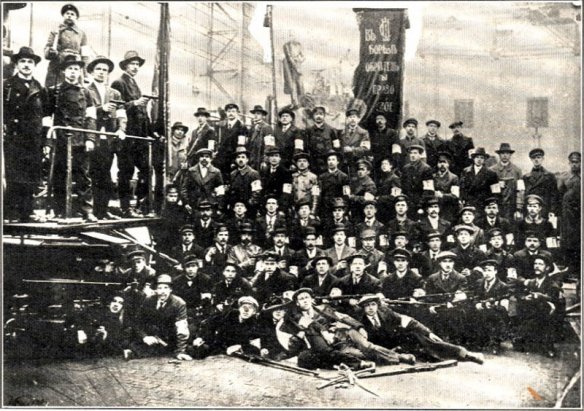
Red Guards from an electrical factory Petrograd 1917
Two common charges levied against the Russian Revolution is that it was violent and undemocratic.
The allegation of violence rests largely on the experience of the civil war that followed the October revolution, as the October events themselves were remarkably bloodless. During the civil war violence was ubiquitous – no one involved eschewed violence – not least the partisans of European liberalism and social democracy, at that time up to their knees in the blood and carnage of the First World War, and which the Bolsheviks strived to end.
But nor is it even true that the October Revolution sparked this bloody civil war. In fact, a good argument could be made that the Kornilov revolt of that reactionary general commenced the civil war in August. It was therefore not a result of Bolshevik violence, nor even simply the reactionary violence of the old Tsarist regime and imperialism, but of the incompatibility of the interests of the two contending forces in the revolutionary process that were inevitably to clash violently. The civil war was simply a question of who would win and what would be left to rule over.
Stephen Smith in his book already quoted in these posts argues that –
“In fact, purely in relation to the 1920s (Stalinism in the 1930s was a different matter), it is not obvious that Soviet society was more violent than its tsarist predecessor. Historians often fail to convey how ingrained violence was in late-imperial Russia, evinced in colonial conquest, police repression, counter-insurgency, terrorism by left and right, and anti-Jewish pogroms, extending, too, into more everyday forms of violence, such as practices of samosud (‘self-judgement’), meted out by peasant communities on those who transgressed their norms, to the flogging of prisoners, to beatings in the workplace, child abuse, and wife-beating.”
As for the charge that the revolution was undemocratic – we have already noted that the vast majority of the Russian people wanted an end to the war and land distribution and that this was incompatible with the old regime, incompatible with ‘moderate’ socialists who refused to break with the ‘liberal’ capitalist bourgeoisie, who in turn refused to break with all the old reactionary forces of tsarism.
Where the charge may have some force is that in a country with only a small working class, it was not possible to have a ‘pure’ working class revolution, one that could fully satisfy its class interests. This explains the compromises, changes of direction and Lenin’s “radical modification” of what socialism was that we looked at in previous posts.
In the latest issue of the journal Science and Society, the author August H. Nimtz goes to some length to explain just how important it was for the Bolsheviks that they had the majority support of the working class before organising the October revolution. He analyses the approach of Lenin in 1917 and how it consciously rested on the views of the founders of Marxism – Marx and Engels.
He quotes Engels in the conclusion to his 1884 book, Origin of the Family, Private Property and State, that “universal suffrage is the gauge of the maturity of the working class. It cannot and never will be anything more in the present-day state; but that,” he continued, “is sufficient. On the day the thermometer of universal suffrage registers boiling point among the workers, both they and the capitalists will know where they stand.”
He quotes Engels again:
“Do you realize now what a splendid weapon you in France have had in your hands for forty years in universal suffrage; if only people know how to use it! It’s slower and more boring than the call to revolution, but it’s ten times more sure, and what is even better, it indicates with the most perfect accuracy the day when a call to armed revolution has to be made; it’s even ten to one that universal suffrage, intelligently used by the workers, will drive the rulers to overthrow legality, that is, to put us in the most favorable position to make the revolution. (MECW, 50, 29.)”
This last sentence might seem to anticipate the Kornilov revolt and the spur to Bolshevik support and ultimately revolution that this reactionary conspiracy helped create. Engels words also set out the problem that the Bolsheviks grappled with and which we have reviewed in the previous posts –
“a “revolution in Russia” could save what was left of the peasant communes. And such a revolution would “give the labor movement of the West fresh impetus and create new, better conditions in which to carry on the struggle, thus hastening the victory of the modern industrial proletariat, without which present-day Russia can never achieve a socialist transformation, whether proceeding from the commune or from capitalism” (MECW, 27, 433). Contrary, therefore, to all future Stalinist distortions of M&E’s [Marx and Engels] views, Russia could “never achieve a socialist transformation” without the overthrow of the bourgeoisie in Western Europe by its own proletariat. Engels could not have been more prophetic.” (Nimtz)
Nimtz, then records the approach of Lenin in seeking to know whether the revolutionary forces were winning the hearts and minds of the working class, and the careful study he undertook to understand whether, and to what extent, they had done so –
“By the time of the Fourth Duma elections in 1912, the Bolsheviks, now devoid of the boycotters, were in near-unanimous accord for participation. Lenin’s assessment of the results reveals once again how seriously he took elections. “It is beyond question,” he wrote after analyzing them, “that elections supply objective data. Testing subjective wishes, sentiments and views by taking into account the vote of the mass of the population representing different classes should always be of value to a politician who is at all worthy of the name. The struggle of parties — in practice, before the electorate, and with the returns summed up — invariably furnishes data serving to test our conception of the balance of social forces in the country and of the significance of particular ‘slogans’” (LCW, 18, 505). That’s exactly, I argue, why Lenin would pay such close attention to elections in Russia five years later. The entire record makes clear that these weren’t aberrant pronouncements on his part about elections. They registered how thoroughly he had absorbed the lessons drawn by M&E, specifically, the need for the workers’ parties to “count their forces.”” (Nimtz)
Nimtz explains that during 1917, Lenin used elections to determine the support of the working class for revolution and the necessity of this support in order to resort to an armed uprising.
This is not presented here as an argument, as I have previously stated, that we should hold on to the revolution in Russia in 1917 as some sort of model for revolution today, but only to argue that in this precise aspect – the absolute necessity for the working class to support revolution – we should absolutely seek to guide our thinking, programme and activity to just such a commitment to working class democracy. Such democracy must be the conscious activity of the working class itself and not ‘support’ in any passive sense of this word for leaders or movements that substitute themselves for this self-activity. Or even for leaders or vanguards that do the same, in the name of the working class but separate from it.
Just as bourgeois productive relations entail private ownership of productive forces and working class productive relations require collective and cooperative ownership, that by definition entails conscious self-direction and activity, and not indirect delegation or support to an exterior body such as a state – however benign; so the nature of socialism reduces the role of all separate elements of society apart from the activity of the working class itself.
In the approach to October Lenin explained that the Bolsheviks now had the support required for revolution, or a mandate, as it might be expressed today –
“The Bolsheviks, having obtained a majority in the Soviets of Workers’ and Soldiers’ Deputies in both capitals, can and must take state power into their own hands. . . . The majority gained in the Soviets of the metropolitan cities resulted from the people coming over to our side. . . . Compare the elections to the city councils of Petrograd and Moscow with the elections to the Soviets. Compare the elections in Moscow with the Moscow strike of August 12. Those are objective facts regarding that majority of revolutionary elements that are leading the people.” (Quoted by Nimtz)
Lenin explained the approach later when looking at the possible repetition of revolution in Germany –
“As matters stood in October, we had made a precise calculation of the mass forces. We not only thought, we knew . . . with certainty, from the experience of the mass elections to the Soviets, that the overwhelming majority of the workers and soldiers had already come over to our side in September and in early October. We knew . . . that the coalition [provisional government] had also lost the support of the peasantry — and that meant that our cause had already won.” (Quoted by Nimtz)
The alternative route of bourgeois democracy, which as I have noted excludes working class participation, was closed in Russia in 1917, in a way I have also noted, that has not been the case in other more recent mass working class struggles such as France in 1968 or Portugal in 1974-75. As Nimtz explains –
“The Socialist Revolutionary–Menshevik leadership of the executive of the soviet convened in mid-September the “Democratic Conference,” basically an attempt to divert the energy boiling from below, and increasingly led by the Bolsheviks, into the parliamentary arena. Lenin urged the party’s leadership not to be enticed. “It would be a big mistake, sheer parliamentary cretinism on our part, if we were to regard the Democratic Conference as a parliament; for even if it were to proclaim itself a permanent and sovereign parliament of the revolution, it would nevertheless decide nothing. The power of decision lies outside it in the working-class quarters of Petrograd and Moscow”
This did not mean either capitulation to the false democratic norms of bourgeois democracy or a rejection of what these norms often tell us –
“A comparison of the data on the “parliamentary” [local duma] elections and the data on the . . . mass movements [since April 20] fully corroborates, in respect of Russia, an observation often made in the West, namely, that the revolutionary proletariat is incomparably stronger in the extra-parliamentary than in the parliamentary struggle, as far as influencing the masses and drawing them into the struggle is concerned.” (Lenin Collected Works, 26, 33.)
Nimtz quotes as a summary of Lenin’s views his brochure Left-Wing Communism: An Infantile Disorder, in which he says, with reference to the various fake tsarist parliaments, that –
“We Bolsheviks participated in the most counterrevolutionary parliaments, and experience has shown that this participation was not only useful but indispensable to the party of the revolutionary proletariat, after the first bourgeois revolution in Russia (1905), so as to pave the way for the second bourgeois revolution (February 1917), and then for the socialist revolution (October 1917).”
Those thinking that 1917 can simply be repeated today in very different and more advanced conditions might want to reflect that 1917 required 1905 and that both entailed defeat in war. Hopefully some other sort of preparation is required by the working class today in order that it make itself capable of a revolutionary overthrow of the capitalist system.
It is necessary to learn and re-learn these lessons. For example, the issue of the correct socialist approach to reactionary bourgeois institutions was recently debated in relation to the Northern Ireland Stormont parliament on this blog here.
It is natural to assume that the relevance of events that have celebrated their one-hundred-year anniversary will then inevitably recede. It is not to condemn the 1917 revolution to say that it must be hoped that this is the case, because it will only retain its significance for socialists if it remains the only (very imperfectly) successful example of what we seek to achieve.
Concluded
Back to part 6
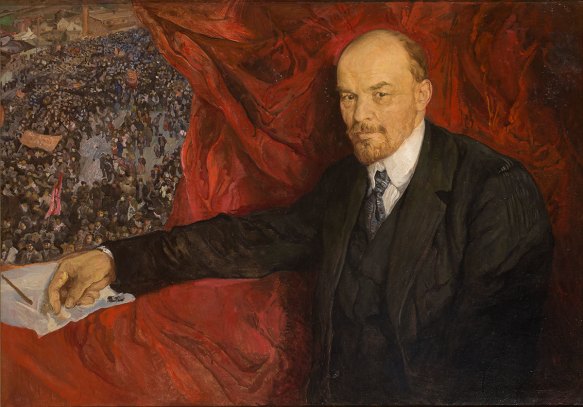 While the dominant view among the Bolsheviks was a statist one: that socialism would be the further development of the tendencies towards socialisation of production within capitalism – through centralisation and concentration of production by the state, including large private trusts supported by it, this was not the view of Marx.
For him it was not a task of replacing capitalist state ownership of the productive forces with ownership by a workers’ state, although some formulations of his would have led to this conclusion. Even for Lenin, the question could be asked – how on earth could the state wither away, as set out by Lenin in his 1917 work ‘State and Revolution’, if the economy was to be directed and developed as part of the state? As a body separate from, and on top of, society, the state could not be the representative of the community as a whole, a point Marx had argued from his earliest years. Neither could it play such a role by becoming totally predominant: it could not become one with society and erase its separate character.
The transitional road from capitalism to socialism was not to come through a new socialist state simply replacing and increasing the growing economic role of the capitalist state. As Marx explained:
“The co-operative factories of the labourers themselves represent within the old form the first sprouts of the new, although they naturally reproduce, and must reproduce, everywhere in their actual organisation all the shortcomings of the prevailing system. But the antithesis between capital and labour is overcome within them, if at first only by way of making the associated labourers into their own capitalist, i.e., by enabling them to use the means of production for the employment of their own labour.”
“They show how a new mode of production naturally grows out of an old one, when the development of the material forces of production and of the corresponding forms of social production have reached a particular stage. Without the factory system arising out of the capitalist mode of production there could have been no co-operative factories. Nor could these have developed without the credit system arising out of the same mode of production. The credit system is not only the principal basis for the gradual transformation of capitalist private enterprises into capitalist stock companies, but equally offers the means for the gradual extension of co-operative enterprises on a more or less national scale. The capitalist stock companies, as much as the co-operative factories, should be considered as transitional forms from the capitalist mode of production to the associated one, with the only distinction that the antagonism is resolved negatively in the one and positively in the other.” Marx Capital Vol III)
At the end of 1917 Lenin had declared that “The first step towards the emancipation of the people from this penal servitude is the confiscation of the landed estates, the introduction of workers’ control and the nationalisation of the banks. The next steps will be the nationalisation of the factories, the compulsory organisation of the whole population in consumers’ societies, which are at the same time societies for the sale of products, and the state monopoly of the trade in grain and other necessities.”
He announced that “accounting and control–this is the main economic task of every Soviet of Workers’, Soldiers’ and Peasant’ Deputies, of every consumers’ society, of every union or committee of supplies, of every factory committee or organ of workers’ control in general”.
He went on to say that “one of the most important tasks today, if not the most important, is to develop this independent initiative of the workers, and of all the working and exploited people generally, develop it as widely as possible in creative organisational work. At all costs we must break the old, absurd, savage, despicable and disgusting prejudice that only the so-called “upper classes”, only the rich, and those who have gone through the school of the rich, are capable of administering the state and directing the organisational development of socialist society . . . The workers and peasants are still “timid”, they have not yet become accustomed to the idea that they are now the ruling class; they are not yet resolute enough. The revolution could not at one stroke instill these qualities into millions and millions of people who all their lives had been compelled by want and hunger to work under the threat of the stick.”
The only way this can be read is that state control did not necessarily entail control and management by the working class itself.
But then, at the beginning of 1923, Lenin wrote that – “we have to admit that there has been a radical modification in our whole outlook on socialism”; which, on the face of it, is a pretty radical admission to have made.
Giving the phrase its fuller context explains how much of a change was involved –
“Now we are entitled to say that for us the mere growth of cooperation (with the “slight” exception mentioned above) is identical with the growth of socialism, and at the same time we have to admit that there has been a radical modification in our whole outlook on socialism.”
“The radical modification is this; formerly we placed, and had to place, the main emphasis on the political struggle, on revolution, on winning political power, etc. Now the emphasis is changing and shifting to peaceful, organisational, “cultural” work. I should say that emphasis is shifting to educational work, were it not for our international relations, were it not for the fact that we have to fight for our position on a worldscale. If we leave that aside, however, and confine ourselves to internal economic relations, the emphasis in our work is certainly shifting to education.”
“Two main tasks confront us, which constitute the epoch—to reorganise our machinery of state, which is utterly useless, in which we took over in its entirety from the preceding epoch; during the past five years of struggle we did not, and could not, drastically reorganise it.”
“Our second task is educational work among the peasants. And the economic object of this educational work among the peasants is to organise the latter in cooperative societies. If the whole of the peasantry had been organised in cooperatives, we would by now have been standing with both feet on the soil of socialism. But the organisation of the entire peasantry in cooperative societies presupposes a standard of culture, and the peasants (precisely among the peasants as the overwhelming mass) that cannot, in fact, be achieved without a cultural revolution.”
Lenin thus reevaluated the role of cooperatives:
“Why were the plans of the old cooperators, from Robert Owen onwards, fantastic? Because they dreamed of peacefully remodeling contemporary society into socialism without taking account of such fundamental questions as the class struggle, the capture of political power by the working-class, the overthrow of the rule of the exploiting class.”
“In the capitalist state, cooperatives are no doubt collective capitalist institutions. Nor is there any doubt that under our present economic conditions, when we combine private capitalist enterprises—but in no other way than nationalised land and in no other way than under the control of the working-class state—with enterprises of the consistently socialist type (the means of production, the land on which the enterprises are situated, and the enterprises as a whole belonging to the state), the question arises about a third type of enterprise, the cooperatives . . . Under our present system, cooperative enterprises differ from private capitalist enterprises because they are collective enterprises, but do not differ from socialist enterprises if the land on which they are situated and means of production belong to the state, i.e., the working-class.”
“It is forgotten that owing to the special features of our political system, our cooperatives acquire an altogether exceptional significance. If we exclude concessions, which, incidentally, have not developed on any considerable scale, cooperation under our conditions nearly always coincides fully with socialism.”
Lenin now put forward a different overall perspective arising within the New Economic Policy (NEP), which had been introduced as an admitted retreat on behalf of the Bolsheviks:
“All we actually need under NEP is to organise the population of Russia in cooperative societies on a sufficiently large-scale, for we have now found the degree of combination of private interest, of private commercial interest, with state supervision and control of this interest, that degree of its subordination to the common interests which was formerly the stumbling block for very many socialists. Indeed, the power of the state over all large-scale means of production, political power in the hands of the proletariat, the alliance of this proletariat with the many millions of small and very small peasants, the assured proletarian leadership of the peasantry, etc. — is this not all that is necessary to build a complete socialist society out of cooperatives, out of cooperatives alone, which we formerly ridiculed as huckstering and which from a certain aspect we have the right to treat as such now, under NEP? Is this not all that is necessary to build a complete socialist society? It is still not the building of socialist society, but it is all that is necessary and sufficient for it.”
“We went too far when we reintroduced NEP, but not because we attached too much importance to the principal of free enterprise and trade — we want too far because we lost sight of the cooperatives, because we now underrate cooperatives, because we are already beginning to forget the vast importance of the cooperatives from the above two points of view.”
However, cooperatives were not in themselves the answer to the backwardness of Russian economic development – “There are now no other devices needed to advance to socialism. But to achieve this “only”, there must be a veritable revolution—the entire people must go through a period of cultural development. . . . But it will take a whole historical epoch to get the entire population into the work of the cooperatives through NEP. At best we can achieve this in one or two decades. Nevertheless, it will be a distinct historical epoch, and without this historical epoch, without universal literacy, without a proper degree of efficiency, without training the population sufficiently to acquire the habit of book reading, and without the material basis for this, without a certain sufficiency to safeguard against, say, bad harvests, famine, etc.—without this we shall not achieve our object.”
The new importance given by Lenin to cooperatives was clear – “given social ownership of the means of production, given the class victory of the proletariat over the bourgeoisie, the system of civilised cooperators is the system of socialism.’
Today, unlike Russia in 1923, there has been no socialist revolution, in the sense that the capitalist state has been smashed and replaced, even if only by an unreconstructed one that Lenin admitted to in 1923. On the other hand, for many countries, the peasantry is small or insignificant, while for others it is larger but not so preponderant as it was in Russia one hundred years ago.
The mass of the population is also more advanced and cultured than one hundred years ago, so that any successful revolution will not suffer from the same debilitating backwardness that Lenin believed would require another revolution taking “a distinct historical epoch.”
But before that, the question of a socialist revolution does not even arise among today’s more advanced population, unless it becomes fully and completely committed to such a project. It is not therefore the objective conditions for socialism that today are absent, in the sense of the broad cultural development of the working class, although this is far from fully developed, but the subjective perspective of the working class, recognising that this too has its own objective basis.
Rather than cooperatives being the sequel to socialist revolution, it may be better now to think of cooperatives as vital preliminary grounds upon which can be developed the political consciousness necessary to make socialist revolution a practical proposition. The subjective ignorance of the working class of its interests in creating a new self-managed society might have its own objective roots in capitalist domination and in the lack of the prior development of cooperative production within existing class society.
In the final reflection on the Russian Revolution I will look at the key inspiration of that revolution – that it was a revolution desired and fought for by the majority of the working class.
Back to part 5
Forward to part 7
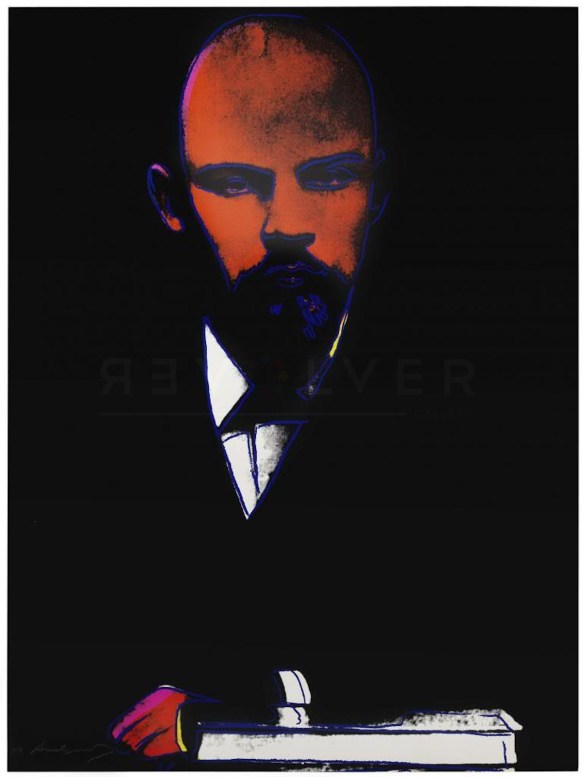 In 1921 Lenin wrote the following on ‘Concessions and the Development of Capitalism’:
“The Soviet government is inviting foreign capitalists to obtain concessions in Russia.”
“What is a concession? It is a contract between the government and a capitalist who undertakes to organise or improve production (for example, felling and floating timber, extracting coal, oil, ore, etc.) and to pay the government a share of the product obtained, keeping the rest as his profit.”
“Is it right for the Soviet government to invite foreign capitalists after expelling the Russian landowners and capitalists? Yes, it is, because, seeing that the workers’ revolution in other countries is delayed, we have to make some sacrifices in order to achieve a rapid and even immediate improvement in the condition of the workers and peasants. The sacrifice is that over a number of years we shall be giving away to the capitalists tens of millions of poods of valuable products. The improvement in the condition of the workers and peasants is that we shall immediately obtain additional quantities of petroleum, paraffin oil, salt, coal, farming implements, and so forth. We have no right to forego the opportunity of immediately improving the condition of the workers and peasants, for our impoverishment makes it essential, and our sacrifices will not be fatal.”
“But is it not dangerous to invite the capitalists? Does it not imply a development of capitalism? Yes, it does imply a development of capitalism, but this is not dangerous, because power will still be in the hands of the workers and peasants, and the landowners and capitalists will not be getting back their property. A concession is something in the nature of a contract of lease. The capitalist becomes, for a specified period, the lessee of a certain part of state property under a contract, but he does not become the owner. The state remains the owner.”
In this view, the proletarian nature of the state guaranteed the socialist character of an economic construction carried out upon the foundations of state capitalism. The undeveloped and crisis conditions in Russia meant that the state capitalist foundations had themselves to be built under the workers’ own state in alliance with forms of state capitalism that involved individual capitalists, and including foreign capital. In these circumstances “the worker will never be afraid of such a [capitalist] leader, because he knows that Soviet power is his power, that it will stand firm in his defense, and because he knows that he wants to learn the practicalities of organization.” This was considered a requirement all the more pressing because of the low cultural level of the Russian working class we noted in our earlier posts.
One such collaboration shows what this might involve but also the differences within the Bolsheviks and the new state over the policy and its practical implementation. In January 1918 the head of the Mining-Metallurgy Department of the Supreme Council of the National Economy (Vesenkha), reported discussions with Alexis P. Meshchersky, a self-made industrialist, on the formation of a metallurgical trust.
This would involve creation of a milliard-and-a-half ruble trust combining some 20 industrial enterprises to control approximately 60% of railway wagon and 85% of locomotive production, or 50-60% of Russia’s machine construction and metallurgical industries. Initially, Meshchersky offered the government one-third of the trust’s shares (corresponding to the number of enterprises to be included which were already nationalised) and the same representation on the central administrative board of the trust. Each factory would be run by a board consisting of the existing ‘specialists’ and a commissar representing Vesenkha.
The idea for the trust met with a positive response on the part of leaders in Vesenkha but opposition from some local metallurgical trade unions, who called for complete nationalisation of the factories involved. Meshchersky then began to back off from his original proposal, in particular with regard to the relative proportions of private/state control.
Meshchersky was forced to reveal that almost 20% of the stocks in the proposed trust were in the hands of German banks and opposition to possible foreign control resulted in readjustment of the shares in the proposed trust from 60% private and 40% government to 50-50, 20-80, and finally to a 100% government share and complete control. However, included in this final proposal was a ‘loophole’ from which Meshchersky never retreated: that 20% of the shares be held in reserve to be returned to the original owners with accumulated dividends should the government ever offer the trust’s shares for sale. When Meshchersky refused further concessions, Vesenkha voted to break off the talks but to proceed with the formation of a unified metallurgical trust.
Vesenkha continued to circulate the Meshchersky proposal to unions and representatives of workers but while they supported creation of trusts or national syndicates they rejected Meshchersky’s proposal because he had refused from the beginning to cooperate with the trade unions and because of the potential influence of foreign capital in the trust. Eventually Vesenkha nationalised the Sormovo-Kolomna industrial complex in June and other factories in November
Similar negotiations took place in the spring of 1918 between owners and managers of the sugar, textile, and leather industries and trade union representatives, which resulted in formation of a joint or state controlled trust. The typical pattern for creating joint trust organisations in these cases involved the addition of trade union representatives to pre-revolutionary regulatory boards (usually privately initiated, state sanctioned organisations) which were authorized by Vesenkha to take control of the whole industrial branch.
Lenin cited these organisations as exemplary of state capitalism’s role in the transition period: “The situation is best among those workers who are carrying out this state capitalism: among the tanners and the textile and sugar industries, because they have a sober, proletarian knowledge of their industry and they want to preserve it and make it more powerful-because in that lies the greatest socialism.”
The pursuit of this state capitalist road reflected not only the relative backwardness of Russian capitalism exacerbated by war and economic collapse, but an analysis that socialism could only be built on the grounds of capitalism and not from simply ‘smashing’ the capitalist state and creating socialism ex nihilo.
In neither of these could Lenin be criticised for being wrong. What was wrong was (1) that the weak development of Russian capitalism could not be overcome within Russia itself and socialism could neither be created through state capitalism (with a workers’ state place on top of it) nor could this stage be leapt over by going ‘straight’ to socialism and (2) the socialisation created under capitalism upon which socialism could be built was not limited to the centralisation and concentration of production by state capitalist trusts.
Back to part 4
Forward to part 6

