In Covid’s Wake (3 of 6) The US as a laboratory

The authors of In Covid’s Wake note that the United States formed a laboratory in which an experiment on the different approached to the Covid-19 pandemic was played out.  In Democrat controlled states the speed at which restrictions were imposed, the length of stay-at-home orders, length of school closures, and the stringency of Covid restrictions were all faster or greater.  The willingness of residents to be vaccinated was also greater.

The resulting pattern was noticed in late 2023:

  • Until vaccines became available, there was little difference in COVID death rates between blue states and red states.
  • After vaccines became available, there were clear differences, with red states having higher death rates.

The book therefore states that ‘variation in vaccination rates can account for fully 47 percent of state-by-state mortality.’  (In Covid’s Wake, p 140, 142) It also records that the lack of difference evident by the summer of 2020 ‘went broadly unreported, despite its inconsistency with the epidemiological models that had seen so much media coverage earlier in the year.’ One of these models reported “substantial reductions in peak attack rates “due to school closures”. (In Covid’s Wake, p 146, 148)

In the UK, a review of the literature to March 2023 reported that ‘there are still many uncertainties and unknowns’ while the Scottish official inquiry concluded that “there was insufficient evidence in 2020 –or alternatively no evidence.”  So even after the pandemic the authorities were claiming not to have learned much, if anything, about their basic approach. (In Covid’s Wake, p 154)

Some countries with light restrictions fared well while others didn’t; ‘Japan fared better than Australia and only slightly worse than New Zealand in terms of Covid mortality, despite never imposing a lockdown or widespread business closures nor making much use of Covid testing and contact tracing . . .  The underlying determinants of population health–poverty, education, comorbidity profile–shaped Covid pandemic outcomes far more reliably than non-pharmaceutical interventions.’ (In Covid’s Wake, p 157)

 In the US the two Democrat-leaning authors lament that ‘rather than learning from the policy experimentation that was taking place, decision-making about pandemic policy was rigidly ideological and moralized’.  Democrats didn’t learn about the absence of support for lockdowns and Republicans, or at least some of them, didn’t learn about the efficacy of vaccination.  For the two authors this failure of ‘partisan politics is the main lesson of the pandemic.

As for the left that advocated even more severe restrictions, there is no evidence that they ever, at any point, looked in the rear view mirror; Covid may as well never have happened.  The morally right are right–by definition.  The idea of having any sort of cost-benefit analysis was dismissed as involving a straight comparison between saving lives and saving money; ‘health versus wealth’ as the book puts it.  The world’s capitalist governments were charged with being more interested in the economy than public health and people’s lives.  Further shutting down the economy was being opposed, it was claimed, in order to protect capitalist profits, in the process risking workers’ lives. 

At the time this blog noted that capitalist economies produce commodities with a use value as well as an exchange value, without which they cannot assure their sale and realisation of profit. It was never clear just exactly what production was not ‘essential’ and could be shut down, and how massive reductions in production could be accomplished in order to achieve ‘zero-Covid’ while also creating correspondingly massive income flows for those now unproductively unemployed.

Even the view that the governments’ response was focused on maintain capitalist profits hardly squares with the single focus on public health by those state officials tasked with leading the response who consciously excluded economic and social experts. The mathematical models that were so influential only looked at the effects of policy on Covid transmission, hospitalisation and deaths.  None looked at the health, social and economic consequences of lockdown to see were its costs exceeding its benefits. A point not strongly made in the book is that with models predicting catastrophe this might seem understandable, but as we have noted, when the models failed to correspond with reality the experts doubled down on lockdown.

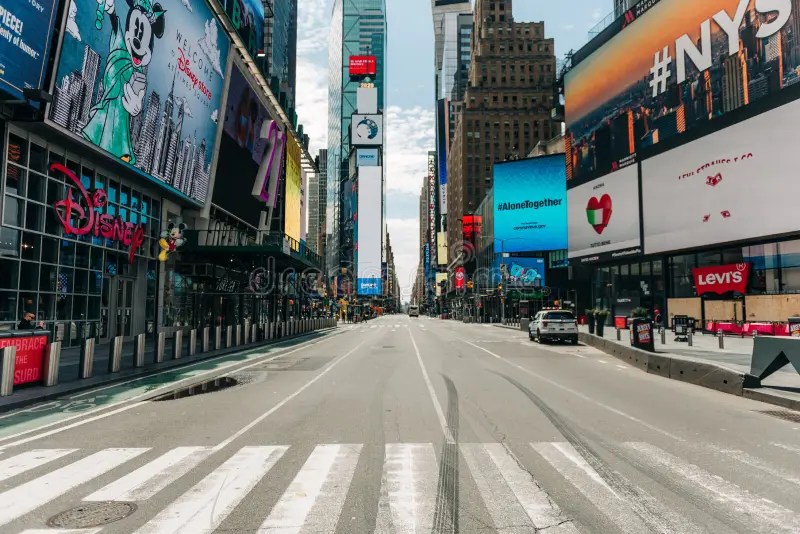
The media played its role by stating that the pandemic closed schools and travel etc., not that it was the lockdown, and that this was a choice.  Rather like wages causing unemployment or inflation, or the war in Ukraine causing high energy prices, the conditions and interventions that actually caused them were rendered invisible.

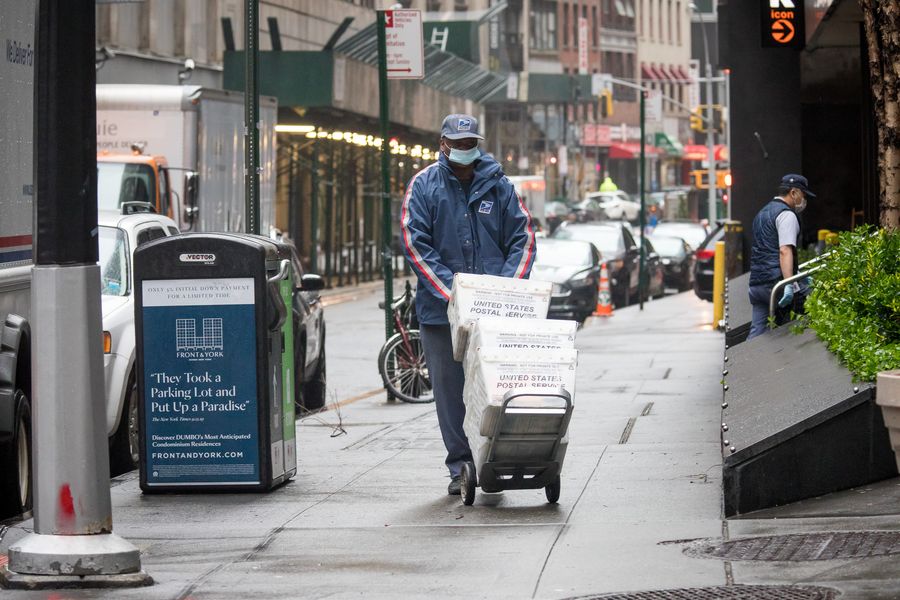
What also became invisible was that it was overwhelmingly white collar workers who were working from home.  Blue collar workers kept working and were a stranding rebuke to those who claimed that lockdown was needed to prevent ‘mass death.’  A left more in touch with this section of the working class might have appreciated this.  The authors of the book note that, while stoking fear of the pandemic, the lowest paid and vulnerable workers were expected to show up.  So did all those calling for ‘zero-covid’, unless they didn’t actually mean zero.

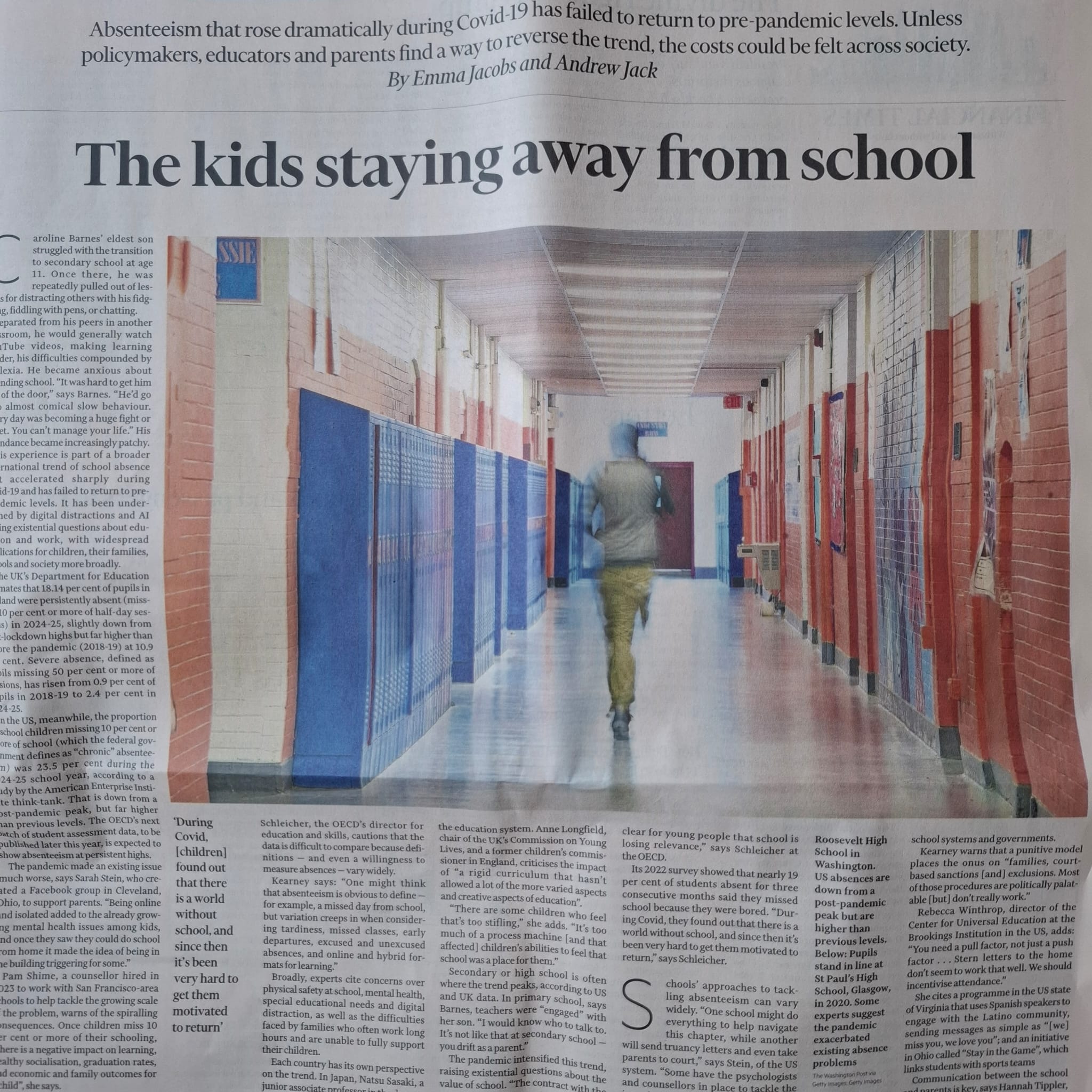
The policy of lockdown was popular among trade unions and among the majority of their members.  The book records the Chicago Teachers’ Union tweeting that ‘the push to reopen schools is rooted in sexism, racism, and misogyny’, while the head of United Teachers of Los Angeles described school reopening as a recipe for propagating structural racism.’  (In Covid’s Wake, p132)

In fact, schools were not a vector for transmission while those workers tasked with continuing to work as normal probably included a large proportion of women and black workers.  Not for the first time politics based on identity got it wrong, ironically weakening the cause of women and black workers in the process.

Back to part 2

Should we be inspired by the fuel protests?

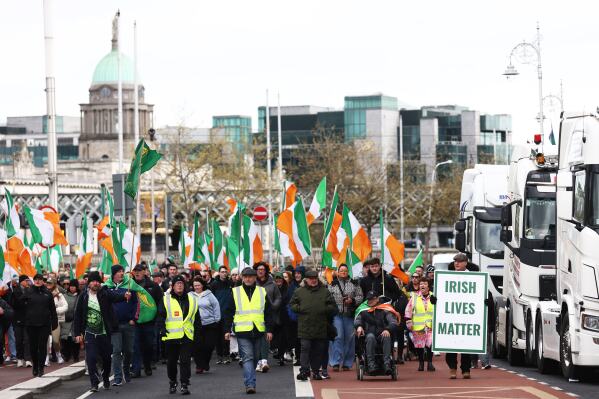
The fuel protests in Ireland have involved the blocking of main roads, including O’Connell street in Dublin city centre, the M50 motorway around the city, sea ports and an oil refinery, leading to disruption of supplies and closure of hundreds of petrol stations.  Originally taken by surprise, and then taking a softly-softly approach, the state has moved the Garda to clear some protests away while negotiating concessions with representative bodies of some of the protestors, including seeking permission from the EU for cuts to excise duties.

The protests are mainly formed by hauliers, agricultural suppliers and farmers; in general, small businessmen and the self-employed.  In class terms, the petty bourgeoisie.  The mass of the population, including workers, are also badly hit by the rise in prices and there is general sympathy with the demand for measures by the government to reduce the impact of rising prices; especially given the large budget surpluses the state has garnered in the last number of years through the Irish state being a tax haven for a small number of US multinationals.

A number of far right figures have attached themselves to the protests and the People before Profit TD Paul Murphy was more or less chased away when he went to meet one protest in Dublin. A flavour of some of the self-appointed protest spokesmen who have attempted to sideline the trade associations is James Geoghegan who has revenue judgements of more than €500k against him, plus animal cruelty convictions.  Another prominent figure has previously stated he couldn’t care less if Greta Thunberg got raped or beaten, while claiming that instead of ‘free Palestine’ flags, some people will be waving ‘free Dublin’ ones.

The ignorant and abusive taunts by some protesters received by Paul Murphy has not stopped him stating that the protests should be supported.  He has called on ‘ordinary people’ to take mass action in effective protests; yet the existing protests are by ‘ordinary people’ in so far as this means anything at all, and they have had some effect.  He states that the working class should take inspiration from them and calls on it to take mass action while trade unions should take the lead.   

While there is evidence of limited prior organisation, the protests are essentially spontaneous.  The principal participation is by forces that the two main bourgeois parties rely on as a base, and they are not forces that the working class should take inspiration from.  The prominence of reactionary and far right figures is not accidental while there is no form of democratic control of any sort of progressive movement or organisation.

The social base of the protest is not therefore working class and claims to be representing the ordinary people of Ireland simply exposes the vacuous nature of basing politics on ‘the people’ that we have criticised before, and which Murphy’s party has been guilty of.  He is right that the working class should have a mass campaign and the trade unions should take the lead, but they haven’t and they won’t.  The left has not built a larger movement or an opposition inside the trade union movement and cannot rely on a working class spontaneous movement to rival that which has just erupted.

This weakness of the left has been reviewed before and the current situation is illustrative of the results.  The perspective of a left government championed by People before Profit has now obviously nothing to do with a left movement that would act in situations like this. The putative components of it, such as the Labour Party, Social Democrats and Greens have all opposed the protests while People before Profit supports them.  Sinn Fein, as usual, triangulates. Any such future government would therefore simply be an administration put together by horse-trading jobs and policies and would have no social movement that could conceivably drive it forward and represent it, which is presumably what PbP envisages?

The weakness of this perspective, demonstrated by the protests, is shown in two other ways, one significant and one symbolic.

Murphy says the protests should be supported because they have the same aims as People before Profit, which had previously sought to introduce price caps through legislation in the Dáil.  First, it’s not clear that the protests do have the same objective and are not directed at caps on the fuels used by the protesters.  Secondly, the idea of price caps is a utopian one in any case.

They cannot provide the ‘security’ claimed for them because they can’t promise to cover massive price increases such as have been incurred, which is precisely their purpose; and claims to stop ‘profiteering’ don’t work in a system in which profiteering is its whole purpose.  This is, after all, why socialists think an alternative socialist society is required.  If profiteering could be eradicated, we wouldn’t need socialism.

The second, symbolic reason, were the reactions of the protesters to Paul Murphy’s presence at the protest.  They portrayed him as simply another politician, which in so far as he thinks legislating in the Dáil will do away with profiteering, is actually close to the truth!  The far right get away with this because of the grain of truth involved–that the left has built only an electoralist base in a few working class areas based on their own variety of clientelist practices.  The jibes about Murphy’s identification with gender identity simply illustrate how easily the right can paint the left as divorced from working class concerns, aside even from the stupidity of the view itself that we have repeatedly demolished.

There is nothing wrong in seeking measures to get amelioration of sudden price increases but that is all they can be and it is misleading to pretend otherwise.  Oil and gas prices are set on the capitalist world market and cannot be avoided by any country and certainly not by one like Ireland.  It’s why socialists are internationalists, because socialism can only be international for it to make sense and to work.  Within capitalism, the working class can defend itself by actually doing it themselves; by fighting for higher wages and by building a movement that seeks to go beyond these struggles towards the only definitive solution.

It is also true that socialists should seek to win over middle layers of the population to the cause of the working class, but this is only possible if the working class itself has been won and has built a movement that can convince others.  Before this, it simply means surrendering to all sorts of misleading and reactionary petty bourgeois ideas.

Numerous people have commented that because the crisis has been caused by Trump and the US imperialist attack on Iran, it would have made more sense to protest and blockade the US embassy.  Far from the existing protests inspiring such an action, much of the social base of the protests is as likely to support an Irish O’Trump as protest against US imperialism.  Once again, we have a lesson that not all those who oppose our enemies, in this case the Irish government, are our friends.

In Covid’s Wake (2 of 6): ‘mass death . . . is a benefit to be sought’

The imposition of lockdown that was justified as ‘following the science’ did not quite achieve the consensus that the claim implied and there were a number of voices challenging it at an early stage.

One epidemiologist in the Washington Post stated that ‘of the first 1,023 people to die in Wuhan, China . . .  only one was younger than twenty.’  He wrote that “The high death rate from the coronavirus is driven almost exclusively by the oldest cases . . . the virus causes severe disease almost exclusively in older adults.”  In March 2020 an op-ed in the New York Times was entitled ‘Is Our Fight Against Coronavirus Worse than the Disease?’ (In Covid’s Wake, p 72). This blog also had enough information to point this out in March 2020. 

Unfortunately, ‘war’ had been declared on Covid-19 and the cliché that the first casualty of war is the truth proved only too true.  The consensus in the US was supported by Harvard’s Safra Center on Ethics, the right-wing American Enterprise Institute, and the ‘progressive’ Center for American Progress and focused on testing, tracing and quarantining the infected.  The policy that had previously been predicted to be unsuccessful was now the establishment view that brooked no dissent.  Yet it made little sense when the virus was already widespread, was asymptomatic while infectious and completely asymptomatic in many who had contracted it.

Sweden presented an alternative in which large gatherings were banned; people over seventy were advised to limit contacts with others; it was advised not visit to nursing homes, and recommended but not mandated that those who could work from home should do so.   Society-wide lockdown was not advised: “The storm was already here,” judged Sweden’s health authorities and what remained to be done “was to protect the most vulnerable.” No large-scale test-and-trace regimes were attempted.  Masks were never mandated. No stay-at-home orders or restrictions on movement were imposed’ and restaurants, gyms and schools for younger children and adolescents remained open. (In Covid’s Wake, p 85).

The head of Sweden’s Public Health Agency, Anders Tegnell, thought that “the world has gone mad” while ‘many thought Sweden had gone mad’ or ‘insane’.  The New York Times described Sweden as a “pariah” and some European media described it as like “a banana republic” (In Covid’s Wake, p 86-7).

The Great Barrington Declaration published online in October 2020 was another alternative view to Lockdown that pointed out the costs and proposed a policy of ‘Focused Protection’: “Our goal should therefore be to minimise mortality and social harm until we reach herd immunity.”  Those who had such immunity ‘could play an especially important role in helping the sick and frail.’ (In Covid’s Wake, p 96 & 97)

Herd immunity, however, became a term of abuse, as “simply unethical” and a call to “let it rip”.   It was ‘dangerous’ and came from ‘fringe’ and ‘maverick scientists.’ (p 74, 97 &106). One doctor, who had earlier in March gathered 800 signatures warning of the costs of lockdown had seemingly changed his mind; “I have no more fucks left to give.  Except those peddling pseudoscience, bankrolled by right-wing, libertarian assholes can kiss my queer ass …. This fucking Great Barrington Declaration is like a bad rash that just won’t go away.” (In Covid’s Wake, p 100)

The vitriol involved in such denunciations reflected not so much a long established scientific consensus as a moral consensus that had especially gripped the ‘left’, becoming the left position because the left had adopted it, assisted by most of the support for the Great Barrington Declaration coming from the right, confirming that this was indeed the right-wing position.  The effect was to close debate and remove critical thinking–in moralistic arguments there is simply no arguments in favour of the ‘bad’.

Who made the arguments defined what was right and not the arguments themselves so that ad hominem became de rigeur.  From liberal Democrats to the ultra-left, moral condemnation could not be strident enough: The Great Barrington Declaration became ‘A manifesto of death’; ‘mass death, is a benefit to be sought’; ‘the White House’s embrace of the document is a statement of intent for mass homicide’; ‘the ruling class’s drive to allow the mass infection of the population can be imposed only by violence’.  Those who defended it on the left were from ‘the pseudo-left’ while ‘the herd immunity policy has found support not only within the capitalist oligarchy, but among sections of the upper-middle class.’

The pandemic was an unprecedented suppression of the most basic civil rights employing the weapons of fear and state surveillance, yet the largest part of the left not only endorsed it, its policy was to intensify it.  This was the policy of ‘zero-covid’ that could only ‘be imposed by violence’ as lockdowns began to be relaxed in 2020, only to then be reimposed.

The left website above stated that ‘Workers around the world must welcome the categorical and courageous stand taken by public health experts in opposition to the ruling class’s policy of herd immunity’, except the experts were divided and previous advice stood squarely against lockdowns.  Not unsurprisingly, the moralistic and catastrophist argument proved more attractive to a left for whom socialism will only come through capitalist crisis and repression, through force of circumstances, and not through the building of a class conscious movement committed to socialism that is the result of years of political education, clarification and struggle.

The authors of the book note that ‘if recovery from infection would not afford immunity, it is not clear by what mechanism vaccines would confer immunity either.’ (In Covid’s Wake, p 102).  In June 2020 the World Health Organisation website defined herd immunity as “indirect protection from an infectious disease that happens when a population is immune either through vaccination or immunity developed through previous infection.’ (In Covid’s Wake, p 104).  In November the reference to acquired immunity was removed.  The voice of ‘science’ was to be put in the service of government policy.

Back to part 1

Forward to part 3