
The book we have been reviewing has noteworthy things to say about the origins of Covid19 in China, including the speculation that it originated in a laboratory. It also has interesting things to say about the interest of certain US officials in closing down any debate about it. It states that ‘we now have more evidence of Covid transmission months before the first cases associated with the Wuhan wet market’. (p230-1) For our current purposes, the most relevant Chinese experience is the example it set for the policy of zero-covid.
It would be naïve to believe that the outcome of any review of this approach now would force reconsideration by its supporters; the general experience of much of the left is that it quickly moves on, muttering about the revolutionary party being the memory of the working class while forgetting what it did the year before, especially when experience calls into question their previous approach.
The slow car-crash that is Brexit does not seem to have affected British and Irish left support for it, except for parroting the same excuses that the right wing supporters of it have – ‘it wasn’t properly tried’. In both cases the world in which they claim it could have been a success does not, and did not, exist.
The recent book ‘Breakneck: China’s Quest to Engineer the Future’ has a chapter setting out the authors experience of living in China during the pandemic. He explains that at first the zero-Covid policy seemed to work, so that by spring 2020 the ‘strategy had broadly halted the transmission of the virus. (p133) If the app on your mobile showed green you were free to enter most public spaces but if it was yellow it indicated that you ‘had had some degree of proximity to a positive case’, while if it was red, you were probably already ‘hauled off to quarantine.’ Unfortunately, simply walking past a restaurant with a previously known case could turn it yellow even if you didn’t go in.
Later, in 2021, the strict policy caused more significant issues. A story went viral of an eight-month pregnant woman refused entry to a hospital until she had negative test who bled heavily and miscarried outside. In 2022 a few cleaning staff were infected in Shanghai, and following mass testing and tracing, lockdown meant that everyone in the apartment buildings, no matter how high-rise, were not allowed to leave, while those testing positive were quarantined in a centralised facility.
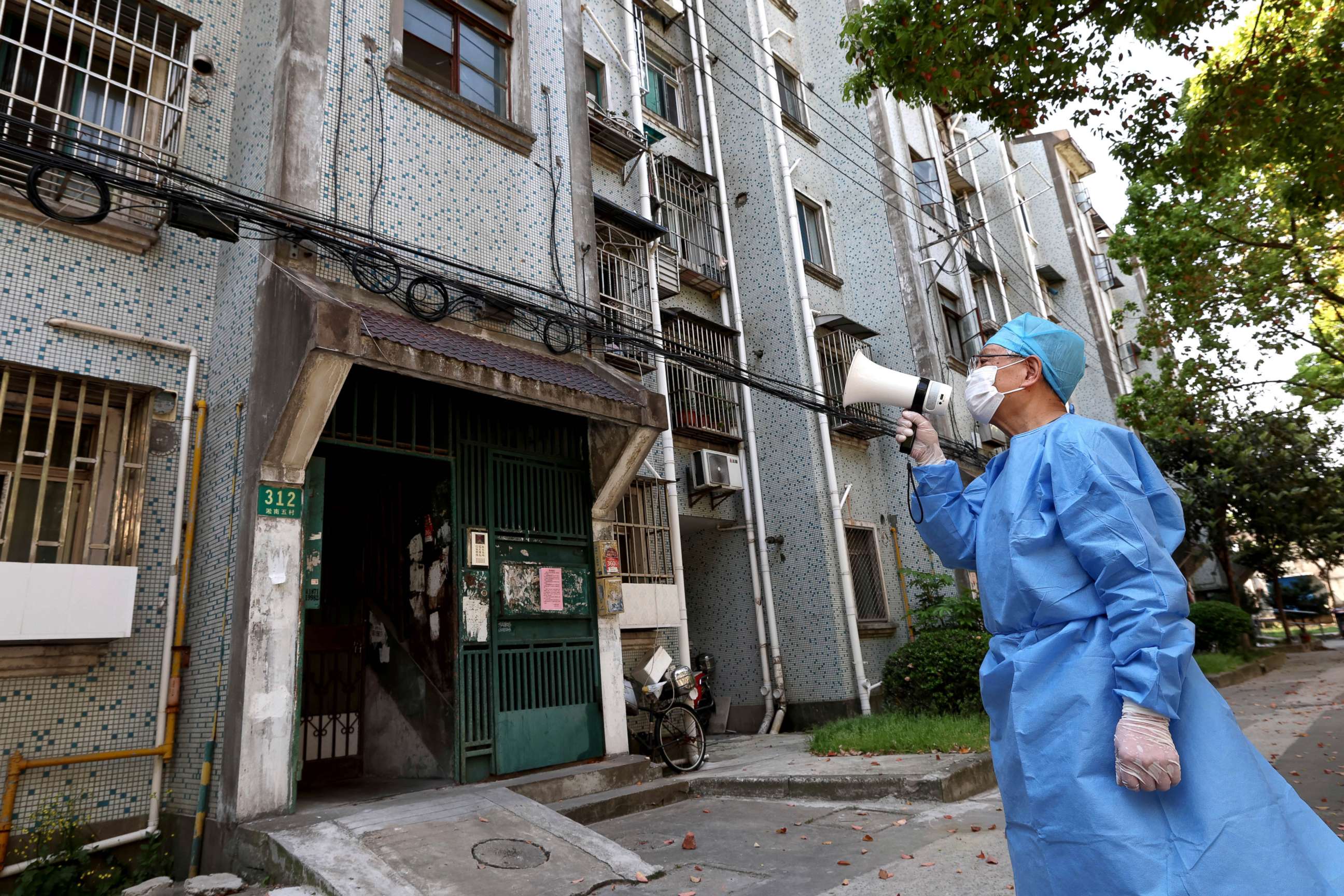
The authorities in Shanghai claimed on the 24 March 2022 that there were no plans for a lockdown, except two days later they said that Shanghai was too important for the global economy and announced a lockdown would start the next day. Drones flew over the city with megaphones attached barking orders to those on the street without a mask or involved in an illegal gathering. “Repress your soul’s yearning for freedom” began blasting on loop from the drones with their lights blinking, with an additional message “do not open your windows to sing, which can spread the virus.”
‘Over April 2022, stress in Shanghai spiked to unimaginable levels’ (p139). Failure to warn about the lockdown meant the failure of people to stockpile food, which became ‘the primary worry for most people . . . when they could not leave their homes.’ (p139). The authorities promised food deliveries (of random items) but these ‘ran out of steam,’ while ‘much of the food that made it into the cities rotted before it could be delivered to residents.’ (p139 & 140).
One reason the policy failed was that each person had to report for a test, sometimes twice a day. Everyone in a compound had therefore to report to the medical team, and either caught it from a neighbour while waiting for the test or caught it from the person doing the testing.
On top of the government doing ‘everything it could to frighten people’ for two years, those found positive, including their whole household, were taken from their home and moved to huge quarantine facilities to be disinfected. In Shanghai the largest such facility contained 50,000 beds, with one CNN producer placed there describing lights that never turned off, loudspeakers demanding residents attend tests at 6am the next day, and ‘everywhere the stench of toilets or unwashed laundry.’ (p144)
Children and babies were separated from their parents and, just like other countries, prioritisation of Covid meant cases of more serious disease were downgraded or ignored. This involved making the provision of fever medication difficult, including ibuprofen, that might have allowed people to disguise their Covid infection: it ‘denied its people fever medications during a fever-producing pandemic.’ (p165)
The author of the book notes that people had a variety of experiences, ‘from the nightmarish to the merely difficult’, leading to protests –‘banging pots and pans during the night became a much-shared form of protest, with a few videos portraying whole buildings of people engaged in cathartic screaming . . .’ (p 145 & 146). Protest videos posted online were deleted quickly by state censors, while the author recounts the original censorship by the state at the beginning of the pandemic to ensure that no negative news emerged while an important political meeting was taking place.
The focus on zero-Covid was bound to lead to excesses, leading to bizarre episodes of fresh-caught fish and pandas being tested, and workers streaming out of their office when a rumour would circulate that everyone in it might be put into lockdown. The author judges that, in comparison to the US, ‘in retrospect, China’s response to Covid looks shambolic as well.’ (p158). The problem was zero-Covid meant excesses that were not bizarre or amusing. In Sichuan, people fleeing buildings during an earthquake were prevented from leaving their trembling structures, and ten people died in a fire in Urumqi when pandemic-control barricades prevented the fire service from putting water directly onto the fire.
Despite the fear of the pandemic generated by the state, protests against the controls introduced by lockdown began to develop as anger against them grew. These included workers at Foxconn factories facing off against riot police, and a late night protest by young people chanting ‘Down with the Communist Party! Xi Jingping step down!’ While ‘the number of protesters was never very large . . . they were special because they involved upper-class Chinese families: wealthy people who didn’t want to suffer lockdown and well-off youths who attended good schools. The Communist Party had always counted on these people for their support. The denouement of China’s Covid experience features broad exhaustion’ By December 2022 many controls were no longer enforced while ‘the government’s response grew erratic. Nearly three years after it began, zero-Covid was over’ but ‘unfortunately, the state has suppressed any official memory of Shanghai’s lockdown . . .’ (p163-165 & 168)
A bit like the Western left supporters of the same policy.
Back to part 4
Forward to part 6
 Sráid Marx