Self-emancipation of the working class

Karl Marx’s alternative to capitalism part 83

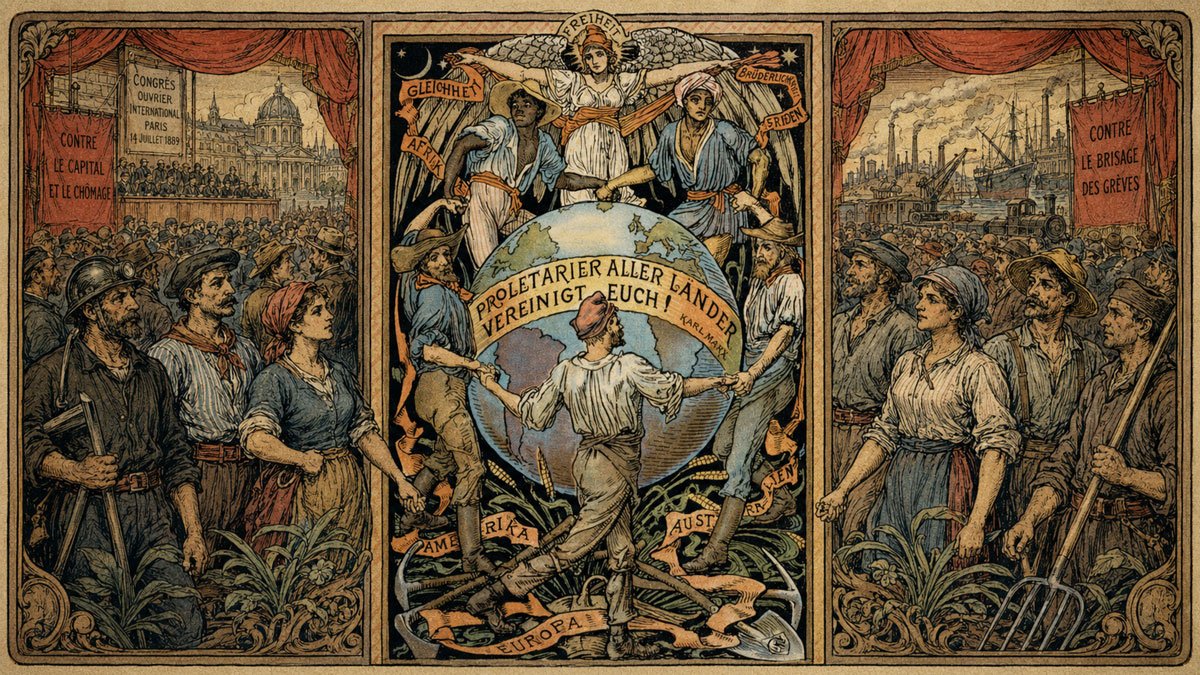
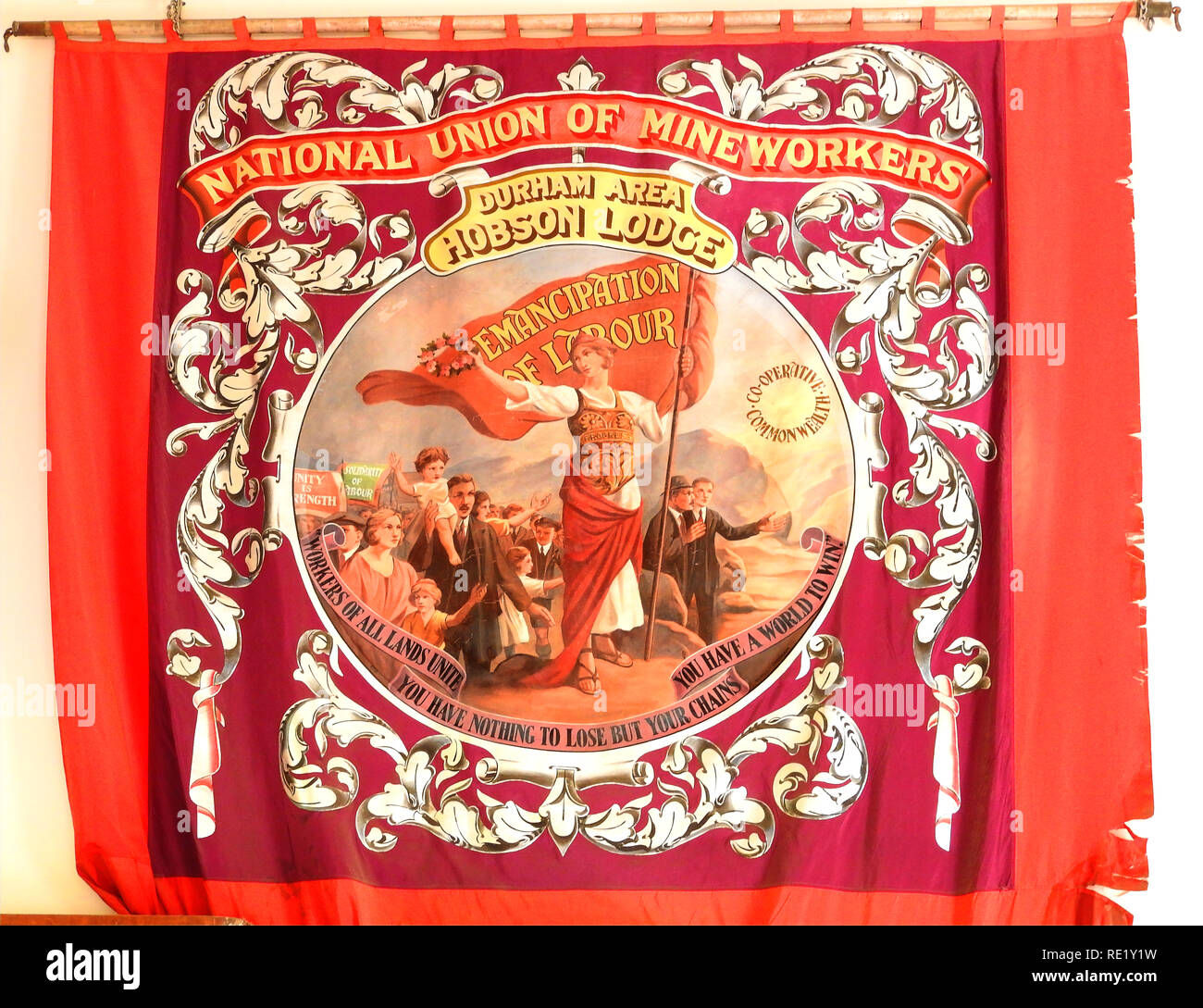
In The Communist Manifesto Marx and Engels stated that ‘the proletarian movement is the self-conscious, independent movement of the immense majority, in the interest of the immense majority.’ (The Communist Manifesto, Marx and Engels Collected Works Vol 6 p495). They argued that ‘modern bourgeois society that has sprouted from the ruins of feudal society has not done away with class antagonisms. It has but established new classes, new conditions of oppression, new forms of struggle in place of the old ones.’

‘Our epoch, the epoch of the bourgeoisie, possesses, however, this distinct feature: it has simplified class antagonisms. Society as a whole is more and more splitting up into two great hostile camps, into two great classes directly facing each other – Bourgeoisie and Proletariat.’

This, however, is only one tendency of capitalist development, albeit the most important, in that capitalism has spread across the globe, ironically, as many who have considered themselves Marxists have argued the decisive importance of the obstacles to the development of capitalism (and therefore of the growth of the working class).  This has come in the form of the purported regressive effects of imperialism, set out, for example, in the ideas of dependency theory within which it is supposed to develop underdevelopment. Without this development of capitalism however there could be no talk of the proletariat becoming the ‘independent movement of the immense majority’ or of ‘society . . . more and more splitting up into two great hostile camps . . . Bourgeoisie and Proletariat’. 

If this were not the case then Marx’s view, expressed in The Communist Manifesto would not be correct; that ‘the bourgeoisie cannot exist without constantly revolutionising the instruments of production, and thereby the relations of production, and with them the whole relations of society . . . Constant revolutionising of production, uninterrupted disturbance of all social conditions, everlasting uncertainty and agitation distinguish the bourgeois epoch from all earlier ones. All fixed, fast-frozen relations, with their train of ancient and venerable prejudices and opinions, are swept away, all new-formed ones become antiquated before they can ossify. All that is solid melts into air, all that is holy is profaned . . . ‘

This constant revolutionising of the conditions and relations of production makes and remakes the working class, creating and destroying the material bases of its life, its organisation and its class consciousness.  As we noted in the previous post, it does not sweep away all previous ‘venerable prejudices and opinions’, which continue to weigh on the consciousness of the working class and oppressed, but develops new ones that are newly ‘venerable’ and sacred but equally inimical to the development of working class consciousness.  Politicised religion still plays an important role in many countries, including, for example, Christian fundamentalism in the US and Islamic fundamentalism in the Muslim world.  New theories of identity have been developed whose effect is to erase the importance of class and class struggle and divide the working class, often proposing impossible claims; for example that humans can change sex.

Marx and Engels grew up and matured when the process of worldwide capitalist development was beginning to create an industrial working class in only a few countries in the world and when this class was relatively small in some of them.  They never, however, broke from the central principle that the emancipation of the working class was to be achieved by the working class itself, even when its lack of development required alliances with other classes and forces in tasks that did not immediately and directly involve their full emancipation.  Had Marx based his politics on the worst oppression of the by far biggest class at the time, he would have advanced the politics of the peasantry. 

Engels noted that the proletariat, as it ‘evolved itself from these propertyless masses as the nucleus of a new class, as yet quite incapable of independent political action, appeared as an oppressed, suffering estate, to whom, in its incapacity to help itself, help could, at best, be brought in from without or down from above.’ (Anti-Duhring Part 3 Section 1 Historical)

After Marx’s death, and nearing the end of his own, he reviewed their joint experience, concluding that ‘the time of surprise attacks, of revolutions carried through by small conscious minorities at the head of masses lacking consciousness is past. Where it is a question of a complete transformation of the social organisation, the masses themselves must also be in on it, must themselves already have grasped what is at stake, what they are fighting for, body and soul.’

‘The history of the last fifty years has taught us that. But in order that the masses may understand what is to be done, long, persistent work is required, and it is just this work that we are now pursuing, and with a success which drives the enemy to despair.  (Engels 1895 Preface to The Class Struggles in France)

In this, he restated views that Marx had come to early in his political development in which he rejected the abstract universality of the state as simply the ‘political heaven’ of the atomistic individualism entailed in private property.  The state presents its members as ‘equal in their heaven of their political world, but unequal in their earthly existence of society’ (Contribution to the Critique of Hegel’s Philosophy of Law, Collected Works Vol 3 p79). At this point in 1843 Marx had yet to identify the proletariat as the universal class and the means to end the alienation entailed by bourgeois private property, but he had already rejected the state as the means of doing so, ironic, as I have said so many times, that many of his self-declared disciples today take precisely this view.

His general approach at this time was set out as follows: ‘we do not confront the world in a doctrinaire way with a new principle: Here is the truth, kneel down before it! We develop new principles for the world out of the world’s own principles. We do not say to the world: Cease your struggles, they are foolish; we will give you the true slogan of struggle. We merely show the world what it is really fighting for, and consciousness is something that it has to acquire, even if it does not want to.  The reform of consciousness consists only in making the world aware of its own consciousness, in awakening it out of its dream about itself, in explaining to it the meaning of its own actions. (Letters from Deutsch-Französische Jahrbüche, Collected Works Vol 3 p144).

The politics that Marx and Engels developed did not therefore consist of moral claims that are ahistorical and forever categorical, or other timeless principles divorced from existing society; it did not comprise of virtuous panaceas or utopian schemes that should be imposed from outside, but were rather to be developed from the existing struggles and from within the society of which they were expressions.  Today, we might also add that it is not based on subjective experience, of the reaction of oppressed groups to their own oppression in, for example, various forms of identity politics, but in an understanding of their position within the relations of production and how their specific oppression is related to them.  From this their role in overcoming this oppression as part of a movement to transform these relations can be developed out of their own struggles.

‘All previous historical movements were movements of minorities, or in the interest of minorities. The proletarian movement is the self-conscious, independent movement of the immense majority, in the interest of the immense majority.’ Politics and struggle which is incapable of presenting such a perspective is incapable of promising emancipation.  Still less are those who, whether consciously or in effect, see other workers as the ‘privileged’, with their ‘privilege’ as the font of oppression, and therefore the enemy to be defeated

The first public statement of their general politics in The Communist Manifesto, as Engels much later explained, was therefore based not on a set of ready-made ideas, which instead they developed throughout their lives, but on the current reality and history of existing classes, struggles, and movements:

‘Yet, when it was written, we could not have called it a socialist manifesto. By Socialists, in 1847, were understood, on the one hand the adherents of the various Utopian systems: Owenites in England, Fourierists in France, both of them already reduced to the position of mere sects, and gradually dying out; on the other hand, the most multifarious social quacks who, by all manner of tinkering, professed to redress, without any danger to capital and profit, all sorts of social grievances, in both cases men outside the working-class movement, and looking rather to the “educated” classes for support.’

‘Whatever portion of the working class had become convinced of the insufficiency of mere political revolutions, and had proclaimed the necessity of total social change, called itself Communist. It was a crude, rough-hewn, purely instinctive sort of communism; still, it touched the cardinal point and was powerful enough amongst the working class to produce the Utopian communism of Cabet in France, and of Weitling in Germany.’

’Thus, in 1847, socialism was a middle-class movement, communism a working-class movement. Socialism was, on the Continent at least, “respectable”; communism was the very opposite. And as our notion, from the very beginning, was that “the emancipation of the workers must be the act of the working class itself,” there could be no doubt as to which of the two names we must take. Moreover, we have, ever since, been far from repudiating it. (Preface to the Fourth German Edition of the Communist Manifesto, 1890 F Engels, Marx and Engels Collected Works 27 p59-60)

Back to part 82

The scope of self-emancipation. Karl Marx’s alternative to capitalism part 82

2017 Women’s March in Washington, DC. (Flickr/Vlad Tchompalov)

Socialism is possible because of the socialisation of production through the growth of the productive forces.  Only one agent can accomplish this socialisation such that it is a cooperative and consciously planned development, and is the instrument of the actual producers themselves, the working class.  As these producers are the main productive force in the world the object of the process is the development of the producers themselves, of human development itself.

‘This appropriation is further determined by the manner in which it must be effected. It can only be effected through a union, which by the character of the proletariat itself can again only be a universal one, and through a revolution, in which, on the one hand, the power of the earlier mode of production and intercourse and social organisation is overthrown, and, on the other hand, there develops the universal character and the energy of the proletariat, which are required to accomplish the appropriation, and the proletariat moreover rids itself of everything that still clings to it from its previous position in society.’ (Marx & Engels Collected Works Vol 5 p88)

No other agent can carry out this endeavour, so that only the working class can abolish bourgeois private property through revolution.  This cannot be the more numerous (until very recently) peasantry; some combination of petty producers and peasantry; some combination of women, petty producers and peasantry or of oppressed nationalities, ethnic groups and races etc.  As such, these play no role in the existing relations of production such that they could create a new cooperative society.

As the oppressed their struggle against their subordination must transcend their particular oppression and only as constituents of the working class can they take hold of the means of production to transform class relations, end their own oppression and abolish exploitation.  Only acting as a class can they abolish class in general and rid the world of the material want that lies behind the social inequality of all kinds that provides the basis for continuing social conflict and oppression.  Divorced from class struggle their opposition to their oppression will not ensure its ending, while a class struggle that ignores their oppression cannot promise universal emancipation because the working class would not then be united as a universal class.

The working class is made up of many oppressed forces, including the female half of humanity, so that its struggles must embrace the specific interests of these oppressed groups in order that the working class is united, not as allies but as equal participants in self-emancipation.  Marxism provides the basis for the necessary unity that can overturn racism etc. and not just modify it, for example through equality of races among the capitalist class and elite layers of society, and within the working class itself.

We have explained in many previous posts how human productive activity is central to human development and is key to all social liberation – to the relations between individuals and cooperative control of society; to the growth and transformation of civilisation; freedom from want, removal of alienation and social inequality as the basis of social conflict e.g. sexual oppression and racism; and replacement by social cooperation, the creation of free time that allows for the development of each individual and the creation of a realm of freedom as the grounds of human flourishing.

From all this follows that the emancipation of the working class must be achieved by the working class itself – the bedrock principle of Marxist politics upon which all else is built. Marx even suggests that unlike previous revolutions in the form of private property, for example from feudal to bourgeois, the appropriation of this by the working class will be easier!

‘The transformation of scattered private property, arising from individual labour, into capitalist private property is, naturally, a process, incomparably more protracted, violent, and difficult, than the transformation of capitalistic private property, already practically resting on socialised production, into socialised property. In the former case, we had the expropriation of the mass of the people by a few usurpers; in the latter, we have the expropriation of a few usurpers by the mass of the people.’ (Marx Capital Vol 1, Chapter 32)

When the working class puts itself forward as the new ruling class it must make its interests the interests of the new society in general: ‘For each new class which puts itself in the place of one ruling before it is compelled, merely in order to carry through its aim, to present its interest as the common interest of all the members of society, that is, expressed in ideal form: it has to give its ideas the form of universality, and present them as the only rational, universally valid ones. The class making a revolution comes forward from the very start, if only because it is opposed to a class, not as a class but as the representative of the whole of society, as the whole mass of society confronting the one ruling class.’ (Marx & Engels Collected Works Vol 5 p60)

Marx goes on to say that ‘Every new class, therefore, achieves domination only on a broader basis than that of the class ruling previously; on the other hand the opposition of the non-ruling class to the new ruling class then develops all the more sharply and profoundly. Both these things determine the fact that the struggle to be waged against this new ruling class, in its turn, has as its aim a more decisive and more radical negation of the previous conditions of society than all previous classes which sought to rule could have.’ (Marx & Engels Collected Works Vol 5 p61)

In this way the struggle of the working class is more difficult.  We see this in the innumerable struggles of oppressed or subordinated groups who seek their own liberation or emancipation not as a part of this general movement of emancipation but as particular claims, separate and often opposed to the general and universal objectives of emancipation that lies within the working class struggle to abolish capitalism and establish socialism as the rule of the associated producers.

This is illustrated not only by the partial struggles against discrimination and domination that do not seek to go beyond equality within capitalism – of nations, races, and sexes etc. – but also of those supposedly class struggles, in reality economistic struggles, that determinedly do not go beyond particular claims within the bounds of capitalism.  Within the latter the universal (and political) character of the struggle of the working class is consciously rejected by typically reformist politics that nevertheless often presents itself as socialism.

It is no accident that these ‘pure’ working class struggles – over employment or higher wages etc. – often look not to the power of the working class but to the capitalist state as their saviour, so that the state is certified as the universal representative of society; against which proposition Marx began his search for an alternative that became his journey to working class emancipation.  This tendency, existing as a function of capitalism and the state itself, was enormously strengthened by the history of the working class movement. As Marx noted in The Communist Manifesto The proletariat goes through various stages of development . . . If anywhere they unite to form more compact bodies, this is not yet the consequence of their own active union, but of the union of the bourgeoisie, which class, in order to attain its own political ends, is compelled to set the whole proletariat in motion, and is moreover yet, for a time, able to do so. At this stage, therefore, the proletarians do not fight their enemies, but the enemies of their enemies . . .’

The development of capitalism has demonstrated that this subordination of the working class, and its movement, to the bourgeoisie is repeated again and again.  On the war in Ukraine, for example, many ‘socialists’ have lined up behind their bourgeoisie and state on behalf of the cause of one of its constituent allies (Ukraine) on the basis of fighting the enemy (Russia) of its purported enemy (its own bourgeoisie.)

The underdevelopment of the working class led to the early attempts to establish a socialist society failing and inevitably falling back on the state in circumstances in which the class was a minority and only the state could impose any sort of ‘universality’, as in the direction of society and the bending of social and economic arrangements to achieve it.  This is the summary story of the Russian revolution and the ‘model’ of state socialism that it proclaimed, and which further contributed to the view of the state as the carrier of the universal interests of the working class.

These became the ‘digressions, the temporary and local aberrations’ that Engels mentioned the day after Marx died, which were ‘inevitable’ but which, upon his death, ‘will now proliferate.’  And proliferate they have. Even the most radical interpretations of the first state-wide attempt to create a new socialist society often fail to recognise the lesson that it is not even a healthy workers’ state that will avoid the bureaucratic deformities and degeneration experienced and then celebrated as Stalinism.  It is the working class directly controlling society’s social and economic arrangements with the role of the state to defend them – not constitute them – that will do so.

Capitalism involved the general destruction of feudal and other constraints that rendered people unfree not only socially but also legally so that in both ways they were bereft of individuality.  It permitted the idea of individual freedom and thus the idea of its realisation, even if its social arrangements effectively circumscribed it and strangled its development.  It has shown that it cannot yet eradicate all ‘the ancient and venerable prejudices and opinions’ inherited from previous medieval societies that Marx proclaimed in his sweeping anticipatory judgement in The Communist Manifesto.

It also, however, created the grounds not only for the perpetuation of various forms of existing social oppression but also the possibility of recognising them and struggling against them.  This is the basis for new ideologies and movements of oppressed groups that realise that the possibility for ending their oppression now exists.  In themselves they have no universal aims because they seek only sectional liberation, but their existence not only implies that the universal emancipation promised by the working class must account for them but that it must encompass them or the emancipation that the latter claims is not universal.

Back to part 81

Forward to part 83

The grounds for the achievement of universal emancipation       

Part 81 of Karl Marx’s alternative to capitalism.

The abolition of capitalism and the social revolution that would make society the expression of the needs of the majority would quickly and radically start to reduce inequality and alienation.  This would be the result of the relations of production between individuals being transformed from class relations of exploitation to cooperative relations between individuals.  It would eliminate the material basis for the huge inequality arising from the monopoly ownership of productive resources that skews production and consumption on behalf of the capitalist class, while it would allow production to be directly planned for the needs of the majority.

This control would begin to eliminate the alienation that exploitation, atomisation and lack of solidarity create while developing the bonds of cooperation based on the basis of a cooperative economy that allows the conscious determination of social priorities.  Reducing material inequality through creation of mechanisms that enable everyone to engage in setting future needs would reduce social alienation and antagonism upon which social problems and certain patterns of individual harmful behaviour are created.

In this context the division of the working class, now no longer a class but a society of associated producers, would no longer have any interest in division and conflict based on race or nationality or any other particular individual attribute that is irrelevant to the cooperative solidarity of society.  The development of the forces of production that will erode and then erase inequality will be the product of associated producers for whom race, nationality, sex or sexual orientation etc. will not be socially or politically relevant. 

Inequality will not be abolished all at once, as the forces and relations of production develop but remain insufficient and the effects of capitalism on the consciousness of the working class persist, with its quota of ignorance and prejudice.  However, the working class/associated producers will no longer have the same material interests in reproducing the oppressive divisions that currently exist and which the existence of a capitalist class and its state foment.

All this is not the product of the creation of a preconceived ideal society but will be a process created by revolution through which many of the best characteristics of solidarity must already have been created for such a revolution to be achieved.  The social revolution required is a transformative leap, in which the achievement of political power is the decisive enabler, but it is not one without necessary prior development or with continued evolution thereafter.

In the Preface to a contribution to the Critique of Political Economy Marx wrote that ‘The totality of these relations of production constitutes the economic structure of society, the real foundation, on which arises a legal and political superstructure and to which correspond definite forms of social consciousness. The mode of production of material life conditions the general process of social, political and intellectual life.’  Engels also wrote that the abolition of classes will also make possible “a really human morality which stands above class antagonisms and above any recollection of them.” (Anti-Duhring)

The creation of a cooperative economy will thus be the basis for the transformation of all of society including the mass consciousness that will arise from it.  Not only will economic and social inequality and oppression be eroded and erased, but the state as a mechanism of force and oppression will suffer the same fate as its useful society-wide functions become those of society itself, now governed and controlled by the associated producers.  Upon this basis reactionary ideas can recede and shrivel along with the oppressive behaviours they express. 

The continued existence of capitalism limits and impedes richer forms of individual self-realisation and higher forms of social development.  The unfettering of the forces of production will spur the more or less rapid transformation of the current stunting division of labour, including the division between those who make decisions and those subject to them.  Engels argued that removing capitalist relations of production would ‘secure for every member of society . . . an existence not only fully sufficient materially, and becoming day by day more full, but an existence guaranteeing to all the free development and exercise of their physical and mental faculties”

No other element, section or part of society can institute new relations of production that have the potential to abolish class exploitation and oppression, reduce material inequality and develop the forces of production in a way that can permit this free development, whether this be increased consumption, the protection of humanity from climate change, freedom from “non-class” oppression, increased healthy longevity, cultural development, or free time to pursue individual ambitions.  To the greatest degree the decisive force of production is the working class itself, and its development is the transformation of the working class by its own actions.

It would be obtuse to counterpose the rights of specifically oppressed groups – often misleadingly called minorities – to this perspective, for these ‘minorities’ consist of the majority of the working class, not just in world terms but in every society.  Socialism and the revolution needed to bring it about must be their creation, or it will not be at all.  It is hardly conceivable that particular needs within this majority will not be part of the objective of universal emancipation. The problem is not what the ending of class exploitation will do for women, people of colour, or the millions of poor in the world etc., but why this majority would not seek liberation and emancipation for themselves, as constituting the majority of the working class, through making this revolution and creating a new society.

Only through these ‘minorities’ liberating themselves can there be a united working class and only by a united working class can their liberation be achieved.  Domination and exploitation constitutive of “non-class” oppressions, such as those based on sex, race, ethnicity, sexual orientation, etc will not be ended within capitalism while the theoretical possibility that it could be would still leave them subject to all the domination and subjugation of their class compatriots.

That the majority of those subject to “non-class” oppression are working class or poor is illustration of the universal nature of the working class, and that the general erasure of inequality and reactionary consciousness is only possible under a cooperative socialist society is another.

That Marx did not develop a fuller understanding of the specific character of many “non-class” oppressions is no reason to believe that the working class emancipation he sought was for white men only.  This idea is absurd.  His championing of the struggle against slavery and his, and Engels, many comments on the oppression of women are testament.  When they speak of the free and full development of rich individuality this could not possibly be restricted to only some types of individuals.

The criticisms of what Marx didn’t write about women, racial subjugation and national oppression join a long list that includes finishing his life’s work Das Kapital; writing a book on dialectics; clarifying his ideas about what he meant by class; heading off future criticisms of ‘eurocentrism’ by developing his study of non-Western societies, and writing up an analysis of nationalism.  You could add to the list, but it wouldn’t get you any nearer to a decisive critique of him that you might seek to make.  Marx was notorious for missing deadline’s – wanting to read everything before committing to paper, but then, who knows what he would have come out with without doing so? One may as well ask why he didn’t have a more robust constitution and live longer.

The real point is not that Marx did not leave all the answers, as if new questions would not arise after his death, but that what is now referred to as his research agenda was good enough to open many questions and point to persuasive answers, and that these do not include a lot of the rubbish that some (many!) of his self-declared disciples have published later.

The relationship between “non-class” oppression and ‘the economical emancipation of the working classes’ as ‘the great end to which every political movement ought to be subordinate as a means’ is not settled by the above, and nor is the nature and scope particularly of women’s oppression, which we will come to later.  What the treatment above does is summarise the overall project of Marx and Engels that sustains their claim.

Back to part 80

Forward to part 82

Karl Marx’s alternative to capitalism part 79 – Universality (1)

In one of Marx’s earliest writings, the Critique of Hegel’s Philosophy of Right in 1843-4, he asks the question: ‘Where, then, is the positive possibility of a German emancipation?’

‘Answer: In the formulation of a class with radical chains, a class of civil society which is not a class of civil society, an estate which is the dissolution of all estates, a sphere which has a universal character by its universal suffering and claims no particular right because no particular wrong, but wrong generally is perpetuated against it; which can invoke no historical, but only human title; which does not stand in any one-sided antithesis to the consequences but in all-round antithesis to the premises of German statehood; a sphere, finally, which cannot emancipate itself without emancipating itself from all other spheres of society and thereby emancipating all other spheres of society, which, in a word, is the complete loss of man and hence can win itself only through the complete re-winning of man. This dissolution of society as a particular estate is the proletariat.’

The idea of universality and how it may be constituted is a central feature of Marx’s views, one that is acclaimed, as in the UN’s Universal Declaration of Human Rights, and also implicitly or explicitly rejected by supporters of identity politics, multiculturalism, postmodernism, religious fundamentalism, and nationalism etc.

The defenders of the rights of particular groups by virtue of their identity as being a member of that group are often in turn supported by those who would also proclaim support for human rights that are not based on these grounds.  No doubt many would argue their compatibility, but if the particular rights claimed by the former were such as to be merely expressions of human rights, then no particular rights would need to be demanded.

This is not primarily a problem of these particular rights not being wholly consistent with that of more general human rights, but of the reality of humanity being fractured and divided in reality.  The generality of human rights cannot recognise this so become an abstract moral claim that is continually eulogised and venerated but cannot be effected without particular claims being executed.

For Marx, it is the interests of the working class–the proletariat–that are compatible with and can bring about general human emancipation.  It is for this reason that Marxists do not cloak their politics in the language of human rights, because their enactment requires recognition of the grounds that would permit them and the struggle required to realise them.  Marxists are often dismissive of claims made on the grounds of human rights because they are made hypocritically by those who defend the grounds that necessarily impose oppression in the first place.  For Marx, the particular claims of the proletariat are universal ones because these include the abolition of itself, of the grounds of its particular oppression through the abolition of all classes.

The grounds for its particular claims must thus form the basis for the emancipation of all of society, and we have written about these extensively already.  In The German Ideology Marx writes:

‘This “alienation” (to use a term which will be comprehensible to the philosophers) can, of course, only be abolished given two practical premises. For it to become an “intolerable” power, i.e. a power against which men make a revolution, it must necessarily have rendered the great mass of humanity “propertyless”, and produced, at the same time, the contradiction of an existing world of wealth and culture, both of which conditions presuppose a great increase in productive power, a high degree of its development.’

‘And, on the other hand, this development of productive forces (which itself implies the actual empirical existence of men in their world-historical, instead of local, being) is an absolutely necessary practical premise because without it want is merely made general, and with destitution the struggle for necessities and all the old filthy business would necessarily be reproduced; and furthermore, because only with this universal development of productive forces is a universal intercourse between men established, which produces in all nations simultaneously the phenomenon of the “propertyless” mass (universal competition), makes each nation dependent on the revolutions of the others, and finally has put world-historical, empirically universal individuals in place of local ones.’

‘Without this, (i) communism could only exist as a local event; (2) the forces of intercourse themselves could not have developed as universal, hence intolerable powers: they would have remained home-bred conditions surrounded by superstition; and (3) each extension of intercourse would abolish local communism. Empirically, communism is only possible as the act of the dominant peoples “all at once” and simultaneously, which presupposes the universal development of productive forces and the world intercourse bound up with communism.’

Marx argues that these are the grounds for a real universality of freedom that previous ruling classes have proclaimed but could never represent:

‘For each new class which puts itself in the place of one ruling before it, is compelled, merely in order to carry through its aim, to represent its interest as the common interest of all the members of society, that is, expressed in ideal form: it has to give its ideas the form of universality, and represent them as the only rational, universally valid ones. The class making a revolution appears from the very start, if only because it is opposed to a class, not as a class but as the representative of the whole of society; it appears as the whole mass of society confronting the one ruling class.’

The character of the universality of the working class as the new ruling class lies in it being the working majority of society and in the nature of the appropriation of society’s powers that it will accomplish, based on the universal development of these powers, including the power of the working class itself:

‘Thus, things have now come to such a pass that the individuals must appropriate the existing totality of productive forces, not only to achieve self-activity, but, also, merely to safeguard their very existence. This appropriation is first determined by the object to be appropriated, the productive forces, which have been developed to a totality and which only exist within a universal intercourse. From this aspect alone, therefore, this appropriation must have a universal character corresponding to the productive forces and the intercourse.’

We should not pass without noting that when Marx speaks of the working class making a revolution, and of the universal character of this revolution, his interest is not in a uniform collective, one alien to the individual and her or his freedom.  For Marx, the abolition of classes is necessary to permit the freedom of the individual that capitalism and its liberal philosophy claims but destroys in reality.  After the previous passage he therefore goes on to say:

‘The appropriation of these forces is itself nothing more than the development of the individual capacities corresponding to the material instruments of production. The appropriation of a totality of instruments of production is, for this very reason, the development of a totality of capacities in the individuals themselves.’

How this is achieved is what constitutes working class politics, and is the realm of Marxism:

‘Modern universal intercourse can be controlled by individuals, therefore, only when controlled by all.  This appropriation is further determined by the manner in which it must be effected. It can only be effected through a union, which by the character of the proletariat itself can again only be a universal one, and through a revolution, in which, on the one hand, the power of the earlier mode of production and intercourse and social organisation is overthrown, and, on the other hand, there develops the universal character and the energy of the proletariat, without which the revolution cannot be accomplished; and in which, further, the proletariat rids itself of everything that still clings to it from its previous position in society.’

The concept of universality therefore has profound ramifications:

‘The individuals who rule in these conditions — leaving aside the fact that their power must assume the form of the state — have to give their will, which is determined by these definite conditions, a universal expression as the will of the state, as law, an expression whose content is always determined by the relations of this class, as the civil and criminal law demonstrates in the clearest possible way. Just as the weight of their bodies does not depend on their idealistic will or on their arbitrary decision, so also the fact that they enforce their own will in the form of law, and at the same time to make it independent of the personal arbitrariness of each individual among them, does not depend on their idealistic will.’

The state is today held up as the organ of the universal interest, as representing the interest of society as a whole.  There can be no more dreadful mistake, as not only does the state and the bureaucracy that it entails have its own interests, but these are bound tightly to those of the ruling class.  It is a mistake as common as it is egregious, proclaimed repeatedly even by those who claim to be followers of Marx.

As Marx notes: ‘actual private interests, etc., etc., are expressed as universal interests, descend to the level of mere idealising phrases, conscious illusion, deliberate hypocrisy. But the more their falsity is exposed by life, and the less meaning they have to consciousness itself, the more resolutely are they asserted, the more hypocritical, moral and holy becomes the language of this normal society.’ (All quotations from The German Ideology, Marx and Engels)

The one hundred and seventy-five years since Marx penned these words has witnessed hundreds of millions of deaths under the banner of universal interests in the guise of nationalism, the ‘national interest’ and wars for ‘human rights’.  At the same time the ideologues of capitalism have damned the explicit call for real universality as idealistic and totalitarian, if not actually impossible. Recovering the idea of universality as argued by Marx is therefore necessary but can only succeed if the politics of its creation through the working class is defended and advanced practically.

Back to part 78

Forward to part 80

Karl Marx’s alternative to capitalism part 74 – the dictatorship of the proletariat (3)

It is ironic that Marx’s idea of the dictatorship of the proletariat is held up as evidence of his authoritarian and oppressive politics when his view was advanced against such conceptions, held by many of his immediate socialist predecessors and contemporaries.  These included such figures as the utopian socialist Saint-Simon, Blanqui, Wilhelm Weitling and Ferdinand Lassalle, who are no longer so well known, but whose views are still the staple of many today who are unaware of their ancestry.

In the previous posts on the book Citizen Marx, we noted that early in his political career he was on the extreme democratic wing of republicanism, and against the constraints on democracy supported by liberalism, going much further in identifying the road to a positive conception of freedom.  The first ‘dictatorship’ championed by him was the dictatorship of democracy in 1848 during the bourgeois revolutions of that year, which the bourgeoisie betrayed.  Such a democratic “dictatorship” would energetically repress any counter-revolution to defend itself from reaction.

For Marx the dictatorship of the proletariat was synonymous with terms that now sound less jarring, such as the ‘political power of the working class’ or the ‘rule of the proletariat’, and meant nothing more nor less than these.  In his book Citizen Marx, Bruno Leipold suggests that the various terms Marx used to describe the Paris Commune could also be employed – “Communal Constitution”, “Communal Republic”, “Republic of Labour” and “Social Republic”.  What this entailed was set out in the previous post, most particularly the abolition of classes leading to the abolition of the state, understood by Marx as the mechanism for imposing and defending class rule.

As Engels set out, ‘the state is nothing but a machine for the oppression of one class by another, and indeed in the democratic republic no less than in the monarchy; and at best an evil inherited by the proletariat after its victorious struggle for class supremacy, whose worst sides the victorious proletariat just like the Commune, cannot avoid having to lop off at once as much as possible until such time as a generation reared in new, free social conditions is able to throw the entire lumber of the state on the scrap heap.’ (Engels Introduction to Karl Marx’ s The Civil War in France 1Vol 27 p 190)

Marx ventured some views on how the state would develop that history has confirmed: 

“The bourgeois state is nothing more than the mutual insurance of the bourgeois class against its individual members, as well as against the exploited class, insurance which will necessarily become increasingly expensive and to all appearances increasingly independent of bourgeois society, because the oppression of the exploited class is becoming ever more difficult.”  (Marx, Le Socialisme et l’Impôt, par Emile De Girardin, Collected Works Vol 10 p 333)

Hal Draper, in his third volume of Karl Marx’s Theory of Revolution, entitled The Dictatorship of the Proletariat ventures that ‘Marx’s term ‘rule of the proletariat’ was reformulated as ‘dictatorship of the proletariat’ when Marx had to confront the Blanquist mind. (KMTR Vol III p 293).  Draper also notes the comparatively few times – six – that Marx used the term, within two defined periods: 1850–52 and 1871–75.  What matters is that it follows from the idea of a working class political struggle, leading to a working class revolution, and new collective property relations based on the working class.

Draper further states that ‘Not before the “Critique of the Gotha Program” and not after it did Marx ever indicate that the party program should include the ‘dictatorship of the proletariat’, or any formulation involving the word ‘dictatorship’. (KMTR Vol III, p 305)

We have also seen in the posts on Citizen Marx that Marx and Engels believed that a democratic republic provided the best conditions in which to fight for socialism and was therefore more important to the working class than the bourgeoisie. The latter could, if it had to, have its interests defended by dictatorial political regimes that rested on capitalist property relations, while collective and cooperative property relations are inimical to such political forms.  Whether the form of the bourgeois state was a bourgeois democratic republic or an authoritarian regime, all entailed the dictatorship of the capitalist class in their understanding of the term since the property relations were capitalist and defended by the state.

As The Communist Manifesto put it “All previous historical movements were movements of minorities, or in the interest of minorities. The proletarian movement is the self-conscious, independent movement of the immense majority, in the interest of the immense majority.”

“The immediate aim of the Communists is the same as that of all other proletarian parties: formation of the proletariat into a class, overthrow of the bourgeois supremacy, conquest of political power by the proletariat.”

What distinguished Marx’s conception from that of others was that the “dictatorship” was to be one of the proletariat not over it.  As Engels said of one who advanced the latter view:

‘Since Blanqui regards every revolution as a coup de main by a small revolutionary minority, it automatically follows that its victory must inevitably be succeeded by the establishment of a dictatorship—not, it should be well noted, of the entire revolutionary class, the proletariat, but of the small number of those who accomplished the coup and who themselves are, at first, organised under the dictatorship of one or several individuals. (Engels, The Program of the Blanquist Fugitives from the Paris Commune Collected Works Vol 24 p 13)

Emancipation was to be achieved by the working class itself, counterposed to the schemes of the supporters of Blanqui:

‘Brought up in the school of conspiracy, and held together by the strict discipline which went with it they started out from the viewpoint that a relatively small number of resolute, well-organised men would be able at a given favourable moment, not only to seize the helm of state, but also by a display of great, ruthless energy, to maintain power until they succeeded in sweeping the mass of the people into the revolution and ranging them round the small band of leaders. This involved, above all the strictest, dictatorial centralisation of all power in the hands of the new revolutionary government.’  (Engels Introduction to Karl Marx’ s The Civil War in France 1Vol 27 p 188)

This was to be true not only of the workers’ party in relation to society but within the party itself. As Engels put it in a letter in 1890 regarding the German Workers Party: “The biggest party in the empire cannot remain in existence unless every shade of opinion is allowed complete freedom of expression, while even the semblance of dictatorship à la Schweitzer must be avoided.” (Marx and Engels, Collected Works Vol 49 p 11)

Back to part 73

Forward to part 75

The need to hate capitalism more

In the 1970s I used to sell the paper of the International Marxist Group Red Weekly every Saturday afternoon on Union Street in Glasgow at the side entrance of the Central Station. I remember one occasion when a visibly agitated man rushed up to me demanding to know whether I was a communist – ‘Are you a communist?’ ‘Are you a communist?’  He launched into a few remarks I barely took in at the time and don’t remember at all now.  I gathered that he was very angry about something and ‘communism’ was some sort of answer. He then exited as frantically as he had arrived.  I doubt very much he had anything to do with ‘communism’ thereafter.

I was reminded of this minor incident reading China Miéville’s book on Marx’s Communist Manifesto, in which he borrows a phrase employed by someone else, and in a different context, to say that The Communist Manifesto’s “negativity is not negative enough”. ‘It does not hate enough’, (A Spectre Haunting: On the Communist Manifesto, p 176)

This appears in a section entitled ‘On Hate’ in which he states that capitalism deserves to be hated, but that “a focus on hatred . . . is fraught, and dangerous territory . . . Hatred, after all, is an emotion that can short-circuit thought and analysis, can segue into violence, and not necessarily with any discrimination’; although he then notes that “hatred, particularly by the oppressed, is inevitable” (p170-171)

Against this he quotes Marx’s favourite maxim – Nihil humani a me alienum puto – nothing human is alien to me, and while he then states that it’s “hardly productive to pathologise hate per se, not least when it’s natural that it arises . . . the very absence of a critical mass of hatred may militate against resistance.”  He then quotes others on the need for ‘class hatred’ – “a radical structural hate for what the world has become” that is not “personal, psychological or pathological hate, but a structural hate.’  However, a hate that is neither personal nor psychological is not an emotion and a ‘structural hate’ must refer to something else entirely if it is to refer to anything at all.

Miéville is correct to refer to a statement about “deliberate hate as a rational category”.  The philosopher Martha Nussbaum noted that “emotions always involve thought of an object combined with thought of the object’s salience or importance; in that sense, they always involve appraisal or evaluation.”  The neurologist Antonio Damasio similarly comments that “Emotions provide a natural means for the brain and mind to evaluate the environment within and around the organism and respond accordingly and adaptively.”

This is the opposite of the view of emotions–that they cloud rationality, which they obviously can, and fits comfortably into the long tradition of Western philosophy focused on what is rational but which exaggerates both the disruptive potential of most emotions and the precision and certainty of human rationality.  Emotions are an evolutionary development of humanity that helps us quickly gather and process information about the world and respond to it accordingly.  

Some have made the comparison of thinking slow and fast, with emotions involving the latter entailing problems associated with ‘snap decisions’ and avoidance of ‘careful deliberation.’  If anyone was to look to Marx for inspiration, they might consider his long years in the British Library in London; his purported need to read all potentially relevant books on a subject before forming a definite view, and this resulting in missed deadlines and much unfinished work left to posterity.

Miéville believes that hate is not only necessary for resistance but “may help not only with strength but intellectual rigour, and of analysis, too” (p173). He quotes an Anglican priest, Steven Shakespeare, quoted above regarding hate’s “dangerous territory”, that it is necessary to be “more discriminatory about hate, where it comes from, where it should be directed, and how it gets captured for the purposes of others.’

So, we are into Goldilocks territory of not too much, and not too little, hate but just the right amount. Or we can appeal to Aristotle’s golden mean; where, for example, courage is a virtue but if taken to excess is recklessness and if too little, cowardice.  “Emotional intelligence” is a modern variation.  Cogitating on how much hate to evoke against capitalism is, however, a pretty unproductive pursuit.

Miéville, however, is particular about determining the need for greater hate, including that “Marx and Engels were too generous in their eulogy to its [capitalism’s] transformation and energetic properties, and to the bourgeoisie itself, as well as about the likelihood of its collapse.” (p175)

It might be more accurate to say that Marx and Engels were too sanguine, optimistic and confident about the overthrow of capitalism (not its collapse) but that they didn’t live to see the development of the workers’ movement or the programmes developed by its various parts that impacted on the outcome of subsequent failures.  The point of this series of posts is not to relay this long and involved history but to set out what their alternative to capitalism was, which should go some way to exposing the reasons for failure so far.

As for Marx and Engels being too generous about the transformational and energetic properties of capitalism, this is simply false; it is in fact one of their most brilliant judgements and predictions, fully confirmed by today’s capitalism and its spread across the globe.

Miéville says we should retain our “shock” at the iniquities that capitalism throws up and that provoke an “appropriate human response, the fury of solidarity, the loathing of such unnecessary suffering . . . We should feel hate beyond words.”  But the feeling of solidarity is also an emotion.  An emotion that we should wish to promote, which is not (simply) a “humane” one but one based on a feeling of class solidarity, to be combined with the emotions of pride in our cause and our movement, and growing confidence in our success.

If there is a deficiency in emotional investment it is in these, which are more vital to our future than learning to hate capitalism that bit more.  No one experiences only one emotion at a time (hence the falsity of the question repeated by Miéville “is your hate pure”); and as we have said, even the most instinctive emotion involves rationality and a degree of thought.

Marx noted, in relation to Miéville’s call that we should retain our “shock”, “fury” and “loathing” that some suffering has not been “unnecessary”, but absolutely necessary for the development not only of humanity in general but of capitalism and the grounds it creates for the subsequent potential for socialism.  Many still cannot get their head round this: that the suffering imposed by capitalism was unavoidable for its birth and development – and in this sense necessary – but that this does not in the least mean we do not cease to damn it and to seek its overthrow.

To claim otherwise – that much of the suffering endured through capitalism was unnecessary must explain a number of things.  How could capitalism birth and develop without suffering?  Is a non-suffering capitalism possible? Is socialism possible without capitalism (and therefore without this suffering but then also without the working class)?  Was all this suffering therefore without any historical meaning, but simply contingent and accidental?  Explain the laws of the development of capitalism and its relation to the possibility of socialism without contradiction and antagonism and therefore suffering!

Marx is criticised in Miéville for his greater criticism of other socialisms than of the bourgeoisie because the former has none of the “ambivalence” that he attaches to the latter. (p176) This “ambivalence”, however, was entirely appropriate in a period in which capitalism was more or less fully developed in only a couple of countries and had yet to supplant the legacies of feudalism.  Apart from recognition of the insights of the original utopian socialists, Marx admonished their succeeding followers because there was no merit in repeating anachronistic nostrums that were now reactionary.

Did Marx and Engels hate capitalism more than Weitling, Proudhon and Bakunin?  This would be a hard claim to sustain, but whose politics is the best guide to ending it, and would their’s have been better had they done so?

The emotion of hate has its (inevitable) place, but this does not mean “we must hate harder than did the Manifesto”; the demand for greater hate (“hate beyond words”) is a substitute for politics.  After all his detour on the need for hate, Miéville says that “Hate is not and cannot be the only or main drive to renewal.  That would be deeply dangerous.  We should neither celebrate nor trust our hate. But nor should we deny it.”  It would have been better had he started and elaborated on this than drop it into the end of a disquisition on how much we must hate more.

Karl Marx’s alternative to capitalism part 68

Back to part 67

Forward to part 69

Back to Part 1

Understanding ‘Citizen Marx’ 3 of 3

Engels once said that ‘Marx and I, for forty years, repeated ad nauseam that for us the democratic republic is the only, political form in which the struggle between the working class and the capitalist class can first be universalised and then culminate in the decisive victory of the proletariat.’

The context was a claim against him that when ‘the socialist party, will become the majority’ it will ‘then proceed to take power.’  Engels however stated that ‘For a start, I have never said the socialist party, will become the majority and then proceed to take power.  On the contrary, I have expressly said that the odds are ten to one that our rulers, well before that point arrives, will use violence against us, and this would shift us from the terrain of majority to the terrain of revolution . . .’

Responding to the question of what form this power would take – ‘Will it be monarchic, or republican, or will it go back to Weitling’s utopia’, Engels replied that of course the Reichstag deputies are republicans and revolutionaries, the question of a Republic being the most controversial political question in Imperial Germany at that time.

Engels goes on to ask whether it is implied ‘that the German socialists attribute no more importance to the social form than to the political form? Again he would be mistaken. He should be well enough acquainted with German socialism to know that it demands the socialisation of all the means of production. How can this economic revolution be accomplished? That will depend on the circumstances in which our party seizes power, on the moment at which and the manner in which that occurs.’ (Engels, Reply to the Honourable Giovanni Bovio MECW Vol 27 p271)

What Engels is making clear is that the fight for democracy is vital to the struggle of the working class to achieve political power not that it is necessary to have a republic as the first step to communism. Even where the question of a Republic was the unmentionable political issue, the objective was ‘the socialisation of all the means of production.’

On a separate occasion he said that ‘If one thing is certain it is that our party and the working class can only come to power in the form of the democratic republic. This is even the specific form for the dictatorship of the proletariat . .’ (emphasis added – SM) On the question of a Republic he explains the content of the demand, if it is not possible to employ the term itself: ‘But the fact that in Germany it is not permitted to advance even a republican party programme openly, proves how totally mistaken is the belief that a republic, and not only a republic, but also communist society, can be established in a cosy peaceful way’

‘However, the question of the republic could possibly be passed by. What, however, in my opinion should and could be included is the demand for the concentration of all political power in the hands of the people’s representatives. That would suffice for the time being if it is impossible to go any further.’ (Engels A critique of the draft Social-Democratic programme of 1891, MECW Vol 27 p227)

Engels in his postscript to Marx’s Civil War in France wrote ‘And people think they have taken quite an extraordinary bold step forward when they have rid themselves of belief in hereditary monarchy and swear by the democratic republic. In reality, however, the state is nothing but a machine for the oppression of one class by another, and indeed in the democratic republic no less than in the monarchy; and at best an evil inherited by the proletariat after its victorious struggle for class supremacy, whose worst sides the proletariat, just like the Commune, cannot avoid having to lop off at the earliest possible moment, until such time as a new generation, reared in new and free social conditions, will be able to throw the entire lumber of the state on the scrap-heap.’

‘From the outset the Commune was compelled to recognize that the working class, once come to power, could not manage with the old state machine . . .’  The bourgeois republic was not therefore the mechanism to advance towards communism.

Marx noted of the Paris Commune that ‘the political rule of the producer cannot co-exist with the perpetuation of his social slavery.’

Back to part 2

Understanding ‘Citizen Marx’ 1 of 3

The book Citizen Marx, which deals with Marx’s engagement with republicanism, has been favourably reviewed in a number of socialist publications.  In previous posts we have shown that this was an engagement coloured by competition for the allegiance of a radicalising working class.  This involved starting from a materialist analysis of the conditions facing workers and other classes, which brought to the fore the property question and involved a clear separation of socialist politics from even the most radical republicanism.

The book notes both Marx and Engels very brief alignment with anti-political communism that eschewed political struggles because of their claimed irrelevance to the over-riding social question, which resolved into the question of property.  For Marx and Engels this involved the socialisation of production by the working class that would lead to the abolition of all classes, including itself.

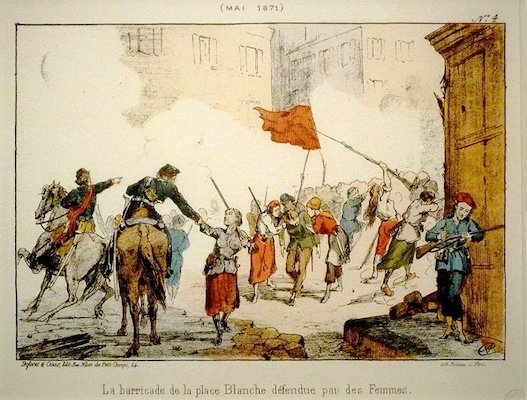
This required the conquering of political power by the working class and the book deals with Marx and Engels treatment of the Paris Commune as the first example of the capture of such power (with some qualifications).  Many of their tributes to it and the force of its example included elements of the democratic functioning of the Commune that were championed by republicanism, for example the direct election of workers’ delegates to state office and their being subject to recall.

This state however was to be a workers’ state, and qualitatively different to existing capitalist states, whether an absolute monarchy, constitutional monarchy or bourgeois republic.  It was to be a state not ‘superimposed upon society’ but ‘one completely subordinate to it.’ (Citizen Marx p 392)

‘It was essentially a working-class government, the produce of the struggle of the producing against the appropriating class, the political form at last discovered under which to work out the economical emancipation of Labour.’   (Marx and Engels Collected Works, Volume 22 p334)

The most famous lesson learned was that ‘the working class cannot simply lay hold on the ready-made state machinery and wield it for their own purpose. The political instrument of their enslavement cannot serve as the political instrument of their emancipation.’  (MECW Vol 22 p533)

This is not the bourgeois state democratised, à la radical republicanism, but the destruction of the bourgeois state and creation of one that would serve as a political instrument of working class emancipation.  And as the emancipation of the working class was to be achieved by the working class itself this meant not just creation of a workers’ state but the working class emancipating society from the state – a state not ‘superimposed upon society’ but ‘one completely subordinate to it.’  As Bruno Leipold notes in Citizen Marx, for Marx the Commune was a ’Revolution against the State itself . . . a resumption by the people for the people, of its own social life.’  It was “the people acting for itself by itself.’ (Citizen Marx p 389 & 366)

Leipold states that through the experience of the Commune Marx not only changed his understanding of what a ‘social republic’ was but that this also ‘went hand in hand with a new attitude to the bourgeois republic.  While his Commune writings contain similar condemnations of the emancipatory limits of the bourgeois republic that we find in his 1848 writings, we find no corresponding statements that the bourgeois republic still remains the terrain on which this emancipation is to be fought for.’ (Citizen Marx p 357)

Much of the book covers the period before the Paris Commune and deals with the role of the working class in a purely democratic revolution, i.e. a bourgeois revolution.  Marx and Engels set out the policy of communists, in which the working class, particularly in Germany, must fight for a democratic republic – as an independent force – alongside the bourgeoisie (if and when it does indeed fight) in circumstances where it cannot yet impose its own interests because of undeveloped material conditions.

Forward to part 2

Socialism and the inadequacy of republicanism

A photograph of the Great Chartist Meeting on Kennington Common, London, 1848

Marx supported the struggle for democratic rights because he believed that a bourgeois republic with political freedoms would make the class struggle between capitalists and workers arising from social inequality more transparent, less disguised by monarchical rule.  It would weaken the legitimacy of authority more generally and stimulate working class political development.  Without this freedom the working class would not develop the political capacity to become the ruling class.

Bruno Leipold, in his book Citizen Marx, notes that Marx adopted many of the democratic demands of republican revolutionaries that constituted these political freedoms, ensuring that implementation of democratic rights was not restricted by measures from the bourgeois state specifically designed to nullify them. (Citizen Marx p244). He notes that this enthusiasm led to what proved to be over-optimistic expectations of what would follow as a result.  So, Marx and Engels appeared to endorse the view in 1846 that the introduction of the Peoples Charter would mean that the working class “will become the ruling class of England” (Marx and Engles Collected Works Vo 6 p 58, ‘Address of German Democratic Communists of Brussels to O’Connor, quoted in Citizen Marx p245)

In The Communists and Karl Heinzen Engels stated that ‘the Communists for the time being rather take the field as democrats themselves in all practical party matters. In all civilised countries, democracy has as its necessary consequence the political rule of the proletariat, and the political rule of the proletariat is the first condition for all communist measures.’ (Marx and Engels Collected Works Vol 6 p 299)

Leipold discusses their optimistic expectations of universal (manhood) suffrage in his book (p 245-249) but he also notes Marx’s view of the experience of the French Second Republic, which originated in a democratic revolution but which was usurped by a coup d’état led by Louis-Napoléon Bonaparte, who later declared himself Emperor. This experience had shown that although “bourgeois rule as the outcome of universal suffrage . . . is the meaning of the bourgeois constitution” their democratic commitment crumbles the “moment that the content of this suffrage, of this sovereign will, is no longer bourgeois rule.” On “March 10 universal suffrage declared itself directly against the rule of the bourgeoisie; the bourgeoisie answered by outlawing universal suffrage.” (Citizen Marx p 246 and 247). Marx was therefore wrong when he claimed that “The classes whose social slavery the constitution is to perpetuate, proletariat, peasantry, petty bourgeoisie, it puts in possession of political power through universal suffrage.” (Marx The Class Struggles in France, Marx and Engels Collected Works Vol 10 p79)

In country after country, we can see the fraudulent character of bourgeois democracy.  In the United States measures to suppress voting are routinely employed while the constitution that is so revered contains significant undemocratic institutions and practices.  The political system is dominated by massive amounts of big business money and individual capitalist wealth.  The repression unleashed by Trump and the multiple law and order organs of the state has demonstrated its class nature and renders pretence of its hallowed democracy cynical.  In Europe, triumvirates of Starmer, Macron. Scholtz or Merz participate in a proxy war that no one voted for and are either deeply unpopular and/or elected on historically low votes but endowed nevertheless with full powers.

The defective features of bourgeois democracy are particular to each country but their universal existence in one form or another is due to the capitalist character of society and the social power this entails for the capitalist class and its retinue of helpers.

Marx was later to learn that a different form of state was required to break the power of these forces and embody real democracy.  This was discovered in the Paris Commune of 1871, when the working classes of that city overturned the ruling authorities and imposed their own rule.  Marx noted that:

‘The unity of the nation was not to be broken, but, on the contrary, to be organized by Communal Constitution, and to become a reality by the destruction of the state power which claimed to be the embodiment of that unity independent of, and superior to, the nation itself, from which it was but a parasitic excrescence.’

‘While the merely repressive organs of the old governmental power were to be amputated, its legitimate functions were to be wrested from an authority usurping pre-eminence over society itself and restored to the responsible agents of society. Instead of deciding once in three or six years which member of the ruling class was to misrepresent the people in Parliament, universal suffrage was to serve the people, constituted in Communes . . .’

‘It was essentially a working class government, the product of the struggle of the producing against the appropriating class, the political form at last discovered under which to work out the economical emancipation of labour.’

‘Except on this last condition, the Communal Constitution would have been an impossibility and a delusion. The political rule of the producer cannot co-exist with the perpetuation of his social slavery.’

Republicanism promised the right to ‘life, liberty and the pursuit of happiness’ but only social emancipation can deliver it.

Part 65 of Karl Marx’s alternative to capitalism

Back to part 64

Forward to part 66

Part 1


Engels and republicanism

Marx’s materialist understanding of history identified the contradictions of capitalist society, the struggle of classes and the alternative of working class rule.  Republican critics of communism rejected all of this with criticisms that have been repeated ad nauseum since.  The Italian republican Mazzini damned it for reducing man to existing in “the cold, dry, imperfect theory of economists, nothing more than a producing machine,” while the German republican Karl Heinzen stated that “humanity is not always determined by ‘class’ or the size of their wallet”. (Quoted in Citizen Marx p265)

Both Engels and Marx criticised Heinzen, and not just from a theoretical perspective but with a view to the political consequences of his approach, which opposed the materialist analysis that was the foundation of their politics.  Engels accused him of not appreciating where the political struggle was starting from and what should therefore be done:

‘Scarcely had the way back been cut off for him when he declared the necessity of an immediate revolution. Instead of studying conditions in Germany, taking overall stock of them and deducing from this what progress, what development and what steps were necessary and possible, instead of obtaining for himself a clear picture of the complex situation of the individual classes in Germany with regard to each other and to the government and concluding from this what policy was to be followed, instead, in a word, of accommodating himself to the development of Germany, Herr Heinzen quite unceremoniously demands that the development of Germany should accommodate itself to him” (Marx and Engels Collected Works Vol 6 p292-293)

He criticised his argument about the nature of the revolution that was required, whether a purely political one or also a social one was necessary:

‘He declares the princes to be the chief authors of all poverty and distress. This assertion is not only ridiculous but exceedingly damaging. Herr Heinzen could not flatter the German princes, those impotent and feeble-minded puppets, more than by attributing to them fantastic, preternatural, daemonic omnipotence.  If Herr Heinzen asserts that the princes can do so much evil, he is thereby also conceding them the power to perform as many good works. The conclusion this leads to is not the necessity of a revolution but the pious desire for a virtuous prince, for a good Emperor Joseph . . . the exploitation by the landowners and capitalists is after all surely responsible for nineteen-twentieths of all the misery in Germany!’

The role of the revolutionary party (understood as a general movement) was therefore different:

‘Its task is to reveal the oppression of the proletarians, small peasants and urban petty bourgeoisie, for in Germany these constitute the “people”, by the bureaucracy, the nobility and the bourgeoisie; how not only political but above all social oppression has come about, and by what means it can be eliminated; its task is to show that the conquest of political power by the proletarians, small peasants and urban petty bourgeoisie is the first condition for the application of these means’. (Marx and Engels Collected Works Vol 6 pp292-293, 294)

The republican demands of Heinzen, including his social ones, were therefore inadequate, not least because for him they were ‘not a means but an end.’   In fact, as we saw in the previous post, in so far as these arrested economic development – ‘free competition’ – without seeking to go beyond it they were reactionary:

‘All measures, therefore, which start from the basis of private property, and which are nevertheless directed against free competition, are reactionary and tend to restore more primitive stages in the development of property, and for that reason they must finally be defeated once more by competition and result in the restoration of the present situation.’

What made the demands of the communists appropriate was their arising from existing social conditions and their role within a continuing working class struggle (while those of Heinzen represented petty bourgeois politics, of the peasantry, for example).  This included that they necessarily had to be considered in an international context:

‘Herr Heinzen—one of the most ignorant men of this century—may, of course, not know that the property relations of any given era are the necessary result of the mode of production and exchange of that era. Herr Heinzen may not know that one cannot transform large-scale landownership into small-scale without the whole pattern of agriculture being transformed, and that otherwise large-scale landownership will very rapidly re-assert itself.’

‘Herr Heinzen may not know that a country as industrially dependent and subservient as Germany can never presume to undertake on its own account a transformation of its property relations other than one that is in the interests of the bourgeoisie and of free competition.’

‘In short: with the Communists these measures have sense and reason because they are not conceived as arbitrary measures but as consequences which will necessarily and of themselves ensue from the development of industry, agriculture, trade and communications, from the development of the class struggle between bourgeoisie and proletariat which is dependent on these; which will ensue not as definitive measures but as transitory ones, mesures de salut public arising from the transitory struggle between the classes itself.’ 

Engels therefore condemned the republican demands of Heinzen for being arbitrary arising from ‘obtusely bourgeois visions of putting the world to rights; because there is no mention of a connection between these measures and historical development’ (Marx and Engels Collected Works Vol 6 p 296)

Engels quotes communist criticism of Heinzen that they ‘have made fun of his sternly moral demeanour and mocked all those sacred and sublime ideas, virtue, justice, morality, etc., which Herr Heinzen imagines form the basis of all society.’  He criticises politics based on morality instead of recognition that this morality arises from society and that it is the material reality of this from which one must start. (Marx and Engels Collected Works Vol 6 p 301)

We are left with the seeming incongruous republican politics of a call for immediate revolution based on a limited democratic programme that, in so far as it seeks to go further, is out of kilter with the state of German development and what it can likely support.  Engels acknowledges the latter by stating that:

‘. . . the Communists for the time being rather take the field as democrats themselves in all practical party matters. In all civilised countries, democracy has as its necessary consequence the political rule of the proletariat, and the political rule of the proletariat is the first condition for all communist measures.’ (The optimism involved in this is take up in a future post)

Engels goes on: ‘Communism, insofar as it is a theory, is the theoretical expression of the position of the proletariat in this struggle and the theoretical summation of the conditions for the liberation of the proletariat.’ (Marx and Engels Collected Works Vol 10 p 299 and 304)

The reality of working class struggle and revolution in less developed capitalist societies that in themselves are not ripe for socialism, not least because they have a relatively small working class, has thrown up enduring controversy and countless debates.  In relation to them, this early article by Engels retains its relevance through its general approach compared to an earlier revolutionary republican – not socialist – alternative.

Part 63 of Karl Marx’s alternative to capitalism

Back to part 62

Forward to part 64

Part 1