Oppressor and Oppressed (2) – Palestine and beyond

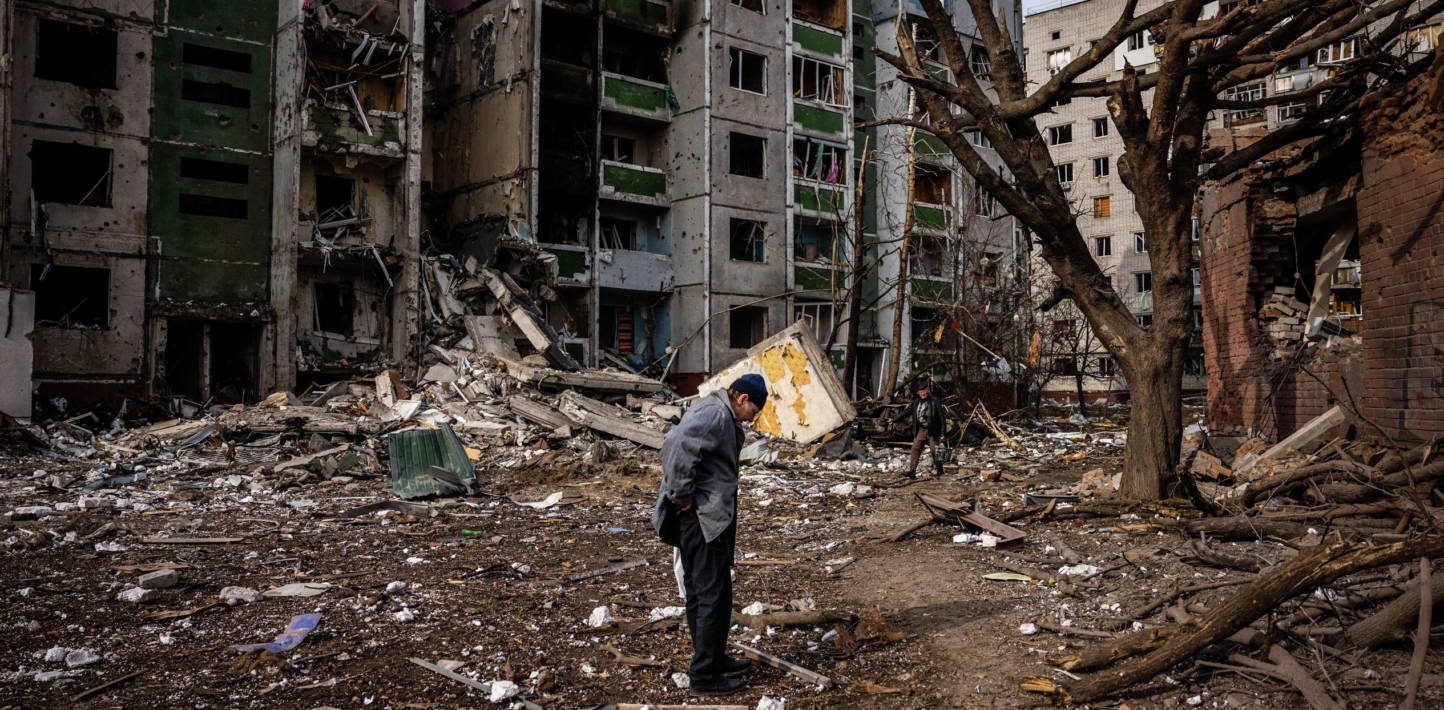
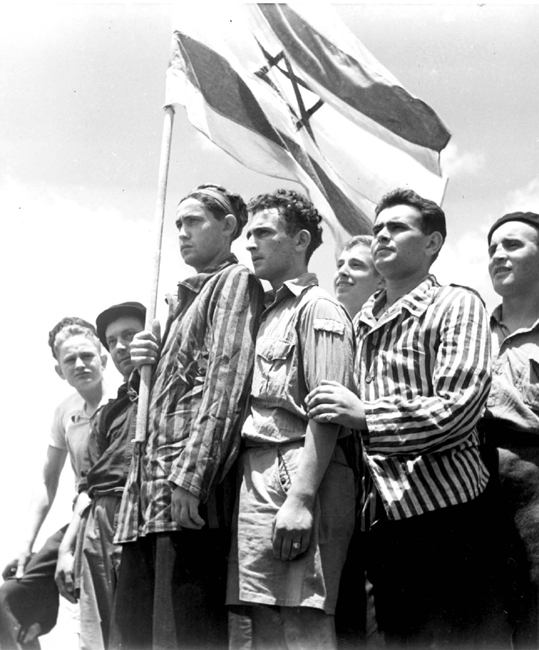
Buchenwald Concentration Camp survivors arrive in Palestine in 1945.

If ‘it is all very simple. We support the struggle of the oppressed’ it should not be difficult to identify who they are, and usually it isn’t, but not always.  What their oppression consists of is sometimes harder and how it is to be remedied harder still.  When I say harder, I mean that there is usually more dispute about it, not that there is something intrinsically difficult to determine but rather that there are fundamental differences about how it may be remedied, which in turn determines how it is understood.

For example, intersectionality identifies multiple oppressions and their combination but in doing so also identifies multiple oppressors and a hierarchy of oppression that can act to divide the oppressed into competing groups, with no joint and common project to overcome their oppression.  This series of posts deals with national oppression but even here these problems are raised.

Current events in Palestine illustrate some problems.   Jews are among histories victims and their treatment by fascism during the Second World War has become symbolic of their whole history of oppression.  The state of Israel has appropriated this symbolism to assert its legitimacy and rights, except these rights include the claim to Palestine as a state for the Jews, a Jewish state.  This has included the ethnic cleansing of the indigenous Palestinian population, a project that continues to involve dispossession and genocide.  The history of oppression and continued antisemitism against Jews is waved like a shroud to justify the claims of the Zionist movement, which proclaims a political programme and practice that involves oppression of the Palestinians.

These claims were accepted by many and it has taken decades of Palestinian oppression to reverse the sympathy many have had for the Jewish state. It should not have taken so long and stands as a warning against too simple an understanding of oppression and the claims of the oppressed. History is not a tale of good versus evil.

Marxism poses the working class as the force that can create the conditions for the ending of all oppression, whether based on class, sex, race, nationality or religion etc.  Since none of these will be ended without struggle it proposes a political programme to encompass all of them and sets out principles to judge the policies and strategies to pursue them.  As Marx once said, philosophers have only interpreted the world in various ways, the point is to change it.  To change it we have to interpret it correctly.

If we take the two wars currently raging in Gaza and Ukraine we are faced with the prospect of their expansion; so we need to understand the context in which they developed and how they might spread.  The war in Ukraine had not even begun before the United States threatened China by imposing economic sanctions, first by Trump and then by Biden, with warnings that it will intervene militarily in Taiwan.  Biden has now talked about an ‘inflection point’ in history, a decisive turning point affecting the whole world.  

Western powers have invested so much armed support to Ukraine they have admitted running out of some types of ammunition while promising to rectify this through massive rearmament, reminiscent of the build up of arms before the First and Second World Wars. A US general has predicted the possibility of war with China by 2025.

To think, therefore, that the wars in Gaza and Ukraine are unrelated events and are not expressions of the potential for a world-wide catastrophe is to feign woeful ignorance.  A response that starts from identifying the oppressed in Gaza and Ukraine and championing their cause does not get near understanding the stakes involved and what is necessary in response.

The Palestinian people are facing ethnic cleansing that in its purpose and execution is bleeding into genocide.  At a recent Palestine solidarity demonstration in Belfast a Palestinian speaker repeatedly thanked Israel for demonstrating its open commitment to destruction of the Palestinian people and to its murderous character, its dispensing with the normal lies and deception practiced by Western politicians.

This open declaration of barbarism would not be possible without the support of Western imperialism that demonstrates its full agreement to Israeli actions and revealing its own murderous character.  Rule by the capitalist class in most Western countries has ordinarily been based on some level of consent, or at least acquiescence, but their support for Zionist genocide is tearing a veil from the ugly face of capitalism.

This is the reason for the opposition to demonstrations in support of the Palestinian people, because they are objectively, and more and more subjectively, demonstrations against western governments and by this fact western imperialism.  In circumstances where this imperialism, under the hegemony of the United States, threatens ever wider and even greater cataclysmic conflict in pursuit of US hegemony, this threatens the support or acquiescence of their own working classes and thereby US dominance.

As we have said before, the Palestinian struggle is not just about Palestine– the world-wide demonstrations of support are proof of this.  The current slaughter is the continuation of the Zionist project and the Palestinian people are calling for a permanent solution before it completes.  By themselves the Palestinian people cannot prevent it and both an immediate and lasting ceasefire and creation of a free Palestine can only arise from a wider political struggle and revolutionary process.

This involves not only opposition to the Zionist state but to the reactionary Arab regimes that oppress their own people and seek increased collaboration with Israel.  Identifying the Palestinian people as oppressed does not identify how they can be free from oppression.  To be on their side means recognising this by including the vast majority of the Arab people in a struggle against their oppression.  Sweeping away the reactionary Arab rulers also includes disposing of the reactionary leadership of the Palestinian Authority. 

If the ending of one oppression is to succeed, and not to lead to another, it means embracing Jewish workers in Palestine, while also recognising that this necessarily involves the defeat of Zionism, with its project of Jewish subordination of the Palestinians and other Arab populations.  The argument that the possibility of a future oppression means that the current Zionist one must be accommodated or conciliated must be rejected; the possibility of a future oppression can never justify acceptance of current oppression but rather helps define how it should end.

The support given to the Zionist state by western imperialism means that even this is insufficient.  At the end of the day only the defeat of this imperialism, which can only be definitively carried out by its working class, can remove the decisive support available to the Zionist state.  The demonstrations in solidarity with the Palestinian people are therefore part of the same struggle that must become conscious of its own nature.

This is what imperialism fears most.  I remember being on the million-plus demonstration against the Iraq war in London, alongside many others across the world.  They did not prevent British involvement because the demonstration illustrated that the passive slogan ‘not in my name’ only dissociated the demonstrators from the actions of their governments but, by remaining at simple appeals to their ruling class, did not advance any project to remove them.

We can see from the barbaric oppression of the Palestinians that recognition of their plight as an oppressed people is only the first step.  The next are to understand how this oppression was created, how it persists and how it can be removed only by going beyond appeals to those supporting the oppression to end it.  Already, workers in Barcelona and Belgium have decided to take things into their own hands by blocking the supply of arms to Israel.  The extension of this across the world would be an enormous step towards ending the destruction of Gaza and attacks in the West Bank and against their own ruling class.

The oppression of the Palestinians thus raises many wider questions because it has a long history and involves the rest of the world.  No solution is possible that ignores this history or what is happening elsewhere.  War is an inevitable product of capitalism and these wars are the most recent of the very many wars that it has created, and will continue to create, unless a movement is created not simply to opposes this or that oppression but the system that perpetually creates all of them.

For many young people the oppression of the Palestinian people has opened their eyes to the need for political action to defend an oppressed people but their failure to take similar action in the much bigger war in Ukraine, or to appreciate the potential for even greater conflict, shows that they need to learn the lessons from the failures of their older generations, who opposed oppression but have failed to end it.  So it is not quite ‘all very simple’?

‘We support the struggle of the oppressed’ is good but there is an enormous problem when you oppose western imperialist intervention in Palestine but sit back or support it in Ukraine.

A look at the war in Ukraine is next.

Back to part 1

Forward to part 3

Oppressor and Oppressed (1) Introduction

What attitude should we take to resistance movements, such as Hamas?  Boffy’s Blog has a critique of a letter submitted to the ‘Weekly Worker’ that answers this question.  He particularly criticises the following paragraph:

Lazare says that Marxists do not side with rightwing groups claiming to speak in the people’s name. Wrong. In the 1950s we supported Eoka in Cyprus against the British. Likewise we supported the IRA. Lazare fails to understand that the nationalism of the oppressor and oppressed is not the same. It is all very simple. We support the struggle of the oppressed.’

This opens up a range of issues, but let’s start by breaking them down:

‘Lazare says that Marxists do not side with rightwing groups claiming to speak in the people’s name. Wrong.’

This claim, I think, is wrong.  Why would we – socialists/Marxists – side with right-wing groups?  What would these groups be doing that would warrant support?  Any anti-colonial or anti-imperialist struggle they would be involved in might put us ‘on the same side’ of such a struggle, only so long as they were actually involved in struggle, but would not mean that ‘we side with them’.  Any such struggle they carry out against imperialism will not be one against capitalism, i.e. not be waged against the system that at a certain historical stage we call imperialism.

They will not seek the emancipation of the working class and will seek instead the creation of a new capitalist state.  They will therefore have, or seek to advance, common class interests with the oppressor, therefore making their opposition defective, temporary and prone to betrayal.  They will not seek to make the working class the leadership of the struggle or seek to guide it to overthrow capitalism but will seek to thwart those that do.

To understand this it is helpful to defiine the class nature of the groups we are supposed to side with.  These can be bourgeois, or more often petty bourgeois, in which case it is necessary to see them as inimical to the interests we serve and as rivals, even if we sometimes are temporarily ‘on the same side’ with them in any particular struggle or issue at any particular time.  In all cases the socialist movement must organise itself separately from them and against them.  

‘In the 1950s we supported Eoka in Cyprus against the British. Likewise we supported the IRA.’

Here, I will limit myself to the Marxist approach to the IRA.  The political tendency I belonged to did not support the IRA.  We did not endorse its programme and did not support its armed struggle.  We took the view – going back to James Connolly – that, as with the whole tradition of Irish republicanism, it was a revolutionary nationalist movement that was united around the principle of armed struggle, a struggle that was parasitical on the mass anti-imperialist struggle and was bound to be defeated, which it was.

This did not mean that we were not ‘on the same side’ in a struggle against imperialism; did not mean that we did not defend it against charges of being a purely terrorist and criminal organisation; did not work with republicans in campaigns against British imperialist repression, or did not support a united Ireland and the smashing of the Northern State.  Tactical cooperation in united campaigns were possible and existed; but we organised separately and under our own banner and not as supporters of Irish republicanism or its movement.  The formula ‘unconditional but critical support’ did not apply.

To ‘give support’ must be taken to mean political support arising from political agreement and no such agreement existed between Marxism and Irish republicanism and obviously does not exist now that it has surrendered its own programme.

‘Lazare fails to understand that the nationalism of the oppressor and oppressed is not the same.’

Whether Lazare understands this or not is not what I want to address.  I want to agree that ‘the nationalism of the oppressor and oppressed is not the same.’  The former is reactionary, and the latter can have a democratic content that socialists would seek to advance.  However, not being the same does not mean that we support the nationalism of the oppressed, which is the usual next step that many mistakenly take.

We are not nationalists of any sort or variety and identification of some democratic content to any nationalist cause does not make us so.  Our support for the struggle against colonialism or imperialism is based on the interests and politics of the working class, which are universal across nations, both for the oppressed and the oppressor nations.

Nationalism, no matter what its variety, places primacy on the nation and asserts that it creates some separate and common interest that encompasses all its members.  Socialists and Marxists reject the claim that all the people within a nation have common interests, even (especially) in opposing colonial or imperialist rule, because they are impacted differently by this rule and thereby have different interests in removing it.

‘It is all very simple. We support the struggle of the oppressed.’

In general socialists and Marxists do ‘support the struggle of the oppressed’ but it is not ‘all very simple’ because we do not start from this assertion but from the interests of the working class and the struggle for socialism.  More will be said about this in a future post.

Supporting the struggle of the oppressed against their oppression (and not for any other reactionary objective) does not mean we necessarily support the organisations leading their struggle or their methods.  This is another step that many mistakenly take but this is based on assumed moral obligations and not on political accordance, unless one shares the same political programme and strategy as these organisations.

In the past this step has led the British ‘Troops Out Movement’ to move from support for the withdrawal of the British Army from Ireland – opposition to the oppressor – to essentially support for Sinn Fein, even after this movement had effectively abandoned its struggle against British rule.

This is itself an example of the mistake of supporting the nationalism of the oppressed because this nationalism will, as history has repeatedly demonstrated, be ‘defective, temporary and prone to betrayal’ even of its own proclaimed objective.  Even in success, anti-colonial movements have created new capitalist states in which ‘national liberation’ has encompassed the continuation of social and political oppression.

Marxism identifies the working class as the universal class that is the only force that can create the conditions to end all oppression.  This includes national oppression. The working class is not the most oppressed section of society so moral claims based on those suffering the most extreme poverty, exclusion, prejudice or discrimination, or some ideal of justice does not explain its role or potential emancipatory function.  This is true across the world, in all its struggles and applies to all of them.

Forward to part 2