It would seem ironic if demographics determined a united Ireland. Socialists over the decades have advanced a political strategy based on working class unity and opposition to sectarian arrangements, including partition, which has strengthened division. We have condemned a strategy based on Catholics ‘out-breeding’ Protestants.
In fact, of course, demographics is not a political strategy anyway. It will not of itself produce working class unity and remove division. It will weigh on the balance of forces, but will not determine how this balance is ultimately determined, because any referendum will not be the result of demographics but of the weight of political arguments arising out of any changed economic and social circumstances. A referendum will not just be a count but a result of a political struggle, a struggle based on political argument, interests and organisation.
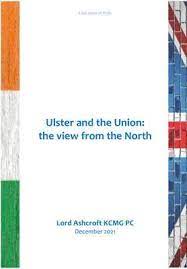
Religion does not map one to one onto politics and there are Catholic unionists and Protestant nationalists, although rather fewer of the latter. Many nationalists may be described as soft and Lord Ashcroft’s poll records that ‘In our groups, many on all sides felt there was a growing number of voters, particularly younger voters, who would see a referendum in terms of practicalities rather than religion, nationality or tradition – or as one put it . . .“some will vote green or orange, but a lot of people will vote with their heads.”’
The 2021 census results will not show a Catholic majority or a Protestant one, while those defined as ‘other’ or ‘neutral’ are split two to one in favour of those from a Protestant background, who are currently more likely to favour remaining in the UK. The nationalist vote has remained at around 40% for some time and the potential for the census to show the number of Catholics exceeding Protestants will not translate into votes for a generation. The issue will sharpen well before this happens meaning that those who consider themselves soft nationalists or neutral will play a significant role in determining any majority. Hence the importance given to non-nationalist opposition to Brexit and the poll findings of people changing their minds on the constitutional question.
The poll records that ‘More than a quarter of voters (27%) said they had changed their mind on the question of whether or not Northern Ireland should stay in the UK, including 16% who said they had done so more than once.’ This seems improbable and invites some scepticism; somewhat mitigated by the elaboration that ‘31% of women, 38% of those aged 18-24 and 71% of those who describe themselves as neutral on the constitution said they had changed their minds at least once.’ A significant change of mind would currently be required to create a majority in favour of a united Ireland.
All this points to a referendum on a united Ireland not being a question of simply counting the numbers within two blocs but of a political struggle that will much more immediately set the agenda and result.
This is more obviously the case since a referendum will inevitably be required in the South and there is no doubt that this will require a political debate and struggle. One only has to recall the history of Articles 2 and 3 of the Irish constitution, which included that ‘The national territory consists of the whole island of Ireland, its islands and the territorial seas’, and its overwhelming popularity before it was overturned by a 94% vote because it would deliver ‘peace’. The nature of events in the North will affect voting in the South but equally the debate in the South will impact on the North.
Since socialists do not want a sectarian headcount the necessary debate on a united Ireland will be a welcome opportunity to fight for our ideas. This will include support for a united Ireland, defending its claims for democracy and ensuring, in so far as we can, that promises are delivered. At the same time we must admit that it is currently very likely that any unity will take place on a capitalist basis and will require socialists to oppose the particular form that this unity will take.
We should not fool ourselves that what will be on the agenda is anything other than the incorporation of the North into the Southern state. We should obviously oppose the importation of sectarian practices from the North into the South in the name of accommodating unionism, as covered in this post. In the meantime, we must continue to fight for the building, expansion and democratisation of the organisations of the working class and the influence upon them of militant socialist politics.
In this way we can hope that the struggle over a referendum will not involve just a count but will allow our politics to count.
The pessimism of unionism revealed again in the Lord Ashcroft poll is based on their uncomfortable reliance on perfidious Albion – ‘more voters thought the Westminster government would rather see Northern Ireland leave the UK than thought it would rather keep the province as part of the Union. Only 11% of voters, and only 21% of Unionists, said they thought Westminster very much wanted Northern Ireland to remain part of the UK. A further 22% of all voters thought it would prefer to keep the province as part of the Union.’
If the Northern state were really as British as Finchley this would be inexplicable.
‘In our focus groups, voters on all sides said they thought Northern Ireland was an “inconvenience” or an “afterthought” for the rest of the UK. The “levelling up” agenda seemed to apply to the north of England, rather than anywhere further afield.’
Nationalist voters are more convinced that Britain wants to get out, with 68% believing this. Given the determination of the British State to defeat the struggle against its rule by some of them this is somewhat surprising, but is only one element of their view of the world, and in part reflects their view of the patent illegitimacy of partition and the palpable failure of the Northern state to be what is considered ‘normal’.
Another element is that one third of nationalists think the Southern state is indifferent or opposed to a united Ireland. While almost 95% think there should be a referendum on Irish unity within 10 years and 86% think there will be, there is apprehension at how it might occur. Commentary to the poll states that ‘Many were also nervous about the prospect, including some who favoured a united Ireland in principle. They tended to think that a referendum would be divisive, re-awakening tensions rather than resolving them, and that a return to violence would be more than likely.’
This view can hardly be dismissed, since every change to the Northern State, including the demand for civil rights, has been met with protest and violence by unionism. The view that a referendum in the South should follow one in the North is an additional incentive for unionist aggression and to make any threats credible.
The latest change is the Protocol to the Trade and Cooperation Agreement between the British government and EU following Brexit. Unionist leaders claim it has constitutional implications, that their agreement to it is therefore required, and that they’re not giving it. Since the argued direct constitutional effect is mistaken, although not its implications, unionism is arguing – as it always does – that no change can be made to the arrangements within the Northern State without its agreement. Since its politics are overwhelmingly sectarian and wholly reactionary this is one reason why partition should be ended and a united Ireland is progressive.
The main reason for nationalist optimism is demographic, that the share of the Catholic population is growing and Protestant Unionist one is declining; Ashcroft states that ‘one Catholic voter told us cheerfully and candidly in nationalist Strabane, “we breed better than they do. They have big TVs; we have big families.” More than seven in ten voters aged under 25 said they would vote for a united Ireland.’
The poll states that ‘Support for a united Ireland declined sharply with age: 71% of those aged 18-24 said they would vote for unification, with 24% opting to stay in the UK; among those aged 65 or over, only 25% backed a united Ireland, with 55% choosing the status quo.’
It also reports the finding that ‘More than a quarter (27%) of voters said they had changed their mind as to whether Northern Ireland should stay in the UK . . . Among neutrals, 62% thought voters would choose the status quo tomorrow, but 66% thought they would back a united Ireland in ten years’ time.’ Nationalists anticipate that people will change their minds and change them in only one direction.
One reason for this belief is the claimed effect of Brexit. According to the poll 95% of nationalists/republicans opposed Brexit while 66% of unionists supported it. The 30% of unionists who opposed Brexit and the 92% of those defined as ‘neutral’ (those who described themselves as neutral on the constitution) who also opposed it are expected to, or at least it is hoped will, change their views on the constitutional question because of the UK leaving the EU.
The poll makes much of its effects – ‘Participants in all our focus groups spoke about rising prices and shortages of goods, including food, clothes, household items and building materials. Several noted that ordering items from overseas had become more expensive or in some cases impossible; several had experienced Amazon being unable to ship certain items to Northern Ireland. Such problems were attributed to Brexit, the Protocol, covid, the Suez Canal blockage, or various combinations of all four.’
It finds that ‘Nearly 9 in 10 voters (88%) said they thought Brexit had been a cause of shortages of food and other goods in Northern Ireland, including 62% who said it had been a major factor. This was especially true of Nationalist/Republicans, with 73% of 2017 SDLP voters and 90% of Sinn Féin voters saying they believed Brexit had been a major factor.’
‘Three quarters of 2016 Leave voters said Brexit had had a part to play in shortages, including 29% thinking it had been a major factor.’
‘Unionists, however, were more likely to blame the pandemic and (especially) the Northern Ireland Protocol. Nearly 8 in 10 (78%) of them, including 89% of 2017 DUP voters, said they thought the Protocol had been a major factor, compared to 38% who said the same of Brexit more generally.’
The poll asked ‘whether Brexit had affected people’s views as to whether Northern Ireland should be part of the UK. For three quarters, it had made no difference: 43% said they had thought the province should be part of the UK before Brexit and still did; 32% said they had favoured a united Ireland before Brexit and they still did.’
However, ‘13% said they had thought Northern Ireland should stay in the UK before Brexit, but now favoured a united Ireland. This included 40% of 2017 SDLP voters, 34% of those who had backed the Alliance party, and 36% of those who described themselves as neutral on the constitution.
A further 9% (including 36% of 2017 Alliance voters, 29% of constitutional neutrals and 9% of self-described Unionists) said Brexit had made them less sure that Northern Ireland should be part of the UK.’
Again, its perceived effects reflect previous dispositions, with 34% of unionists believing Brexit makes a united Ireland more likely, 99% of nationalists thinking it does, and 89% of ‘neutrals’ believing the same. Nationalist optimism and unionist pessimism are long standing but have not changed the existing political division. It is therefore an open question whether Brexit will have the effect of persuading some unionists or ‘neutrals’ to support a united Ireland. It will certainly not strengthen opposition to it and its longer term economic effects may be more powerful in shifting views than relatively minor shortages.
Everyone loves an opinion poll on the potential result of a referendum on a united Ireland. The media has something to report and its commentators have something to comment on.
Nationalists in particular like them – they are a good fit with Sinn Fein policy of being in favour of a united Ireland while not actually being able to do very much about it. It keeps the pot simmering with the promise that someday soon it will come to the boil. Nationalism repeats that there needs to be a conversation about what a united Ireland will be like, as if talking about it brings it closer – giving the impression of doing so – at least to its supporters.
The Dublin Governing parties don’t mind since their policy of sometimes expressing support for a united Ireland tallies with the general view of the Southern population that it would be a nice idea, although without much evidence of it exercising itself to bring it about. A perfect fit for the Southern establishment and its political representatives.
The British government doesn’t mind because it has said it will do whatever the people want, once again demonstrating its good offices, while it can be confident that it will not be required to do anything very much.
Only Unionists seem not be enamoured with them, even though they should, since they usually show there being no realistic chance of the majority in the North voting for unity in the foreseeable. This might be a result of their normally dour political outlook in which seventeenth century politics seems by far the most attractive, and among whom some think flying the union flag for Prince Andrew on his birthday is the honourable and righteous thing to do.
Of course, they have an aversion to seeing the little enclave carved out for them being anything other than as British as Finchley, and nobody asks this North London district if it wants to leave the union. They are also concerned that opinion polls may show them winning most of the time, but that they only have to lose the real thing once to have lost definitively, which is progress of a sort, since the last time they lost such a vote they changed the rules to ensure that they couldn’t.
Two opinion polls were reported at the end of last year, one in the North and one in the South, and the issue will become more excited as the results of the March 2021 census in Northern Ireland begin to be published in March this year, although with full results only by next year.
These polls are attractive because they allow for various interpretations. As we have seen in the vote for Brexit, some on the left still see it as a great idea even if it rallied a reactionary vote around Boris Johnson and split the Labour Party. If only, they say, the Party had supported Brexit it could have stolen Johnson’s thunder and won over all the pissed-off working class voters available to a progressive sovereignty politics!
Fortunately, opinion polls can rule some claims out, including the idea of Brexit powered by progressive politics, as the Lord Ashcroft poll showed. It demonstrated that it was primarily an English nationalist vote with strong anti-immigrant content that would supposedly have expanded the Labour Party vote by pissing off the 63 per cent of its supporters who voted Remain. Very convincing, I don’t think.
The Ashcroft poll on Irish Unity reported that ‘The news that Northern Ireland voters would choose to stay in the UK – by a majority of 54% to 46% in my poll, once undecideds are excluded – is a welcome early Christmas gift for unionists. In a similar survey two years ago, I found a wafer-thin margin for Ulster to join the Republic in a united Ireland.’
It then said that ‘My latest research, published today, shows a clear swing back towards remaining in the United Kingdom . . . But as I also found in my survey of over 3,000 voters and focus group discussions throughout the province, it is the nationalists who feel things are heading their way.’
When I first heard this previous poll result, I didn’t believe it to be accurate and in discussion with a colleague in work he didn’t believe it either. It wasn’t consistent with what I knew and with other polling results. There has also been no political development in the past two years that could explain an increase in support for remaining in the UK or a fall in support for a united Ireland.
The latest poll has recorded that ‘Nearly two thirds (63%) of voters thought that in a border poll tomorrow, Northern Ireland would vote to stay in the UK. However, by 51% to 34% they thought that a referendum in 10 years’ time would produce a majority for joining the Republic in a united Ireland.’
‘While 90% of self-described Unionists thought voters would choose the UK in an immediate border poll, only 64% thought this would be the outcome ten years from now,’ while Nationalists belief that the vote would be for a united Ireland increased from 47% to 91%.
Nationalists overwhelmingly (93%) expected Northern Ireland to be out of the UK within 20 years, two thirds (67%) of unionists thought they would still be part of the Union at that stage. However, fewer than half (47%) of unionists thought the status quo would still prevail in 50 years; 23% said they thought Ulster would have left by then, and 30% said they didn’t know.
This reflects a certain pessimism of unionists, consistent with their reactionary and generally paranoid politics where ‘Lundies’ and traitors are a constant threat, but also reflects for some a nagging unspoken acknowledgement of the illegitimacy of their position, which doesn’t however extend to shifting from it. I recall my not very political late Aunt from the Shankill Road in Belfast saying that there would be a united Ireland, but not in her lifetime. That, it appears, continues to be another largely unacknowledged view.
Whether the pessimism of unionism collapses into resignation and the optimism of nationalism becomes a spur to action is yet to be determined.
Thirty-six years ago I had an interview for a temporary clerical officer job in the local hospital. One question was – ‘Who is the most important person in the health service?’
Thinking on my feet as I sat in the interview I answered – ‘the patient.’
Which is the right answer.
Although this doesn’t appear to be the case today.
While I was recruited to possibly the very lowest rank in the health service all those years ago, those today at the very top appear to have a different view.
Last week the Minister for Health at Stormont, Robin Swann, issued a public consultation on whether new staff recruited to the health service and social services should be compulsorily vaccinated. The Minister both in the consultation and in interviews more or less ruled out vaccination of all staff, considering it relevant, or perhaps only possible, for new and agency staff.
It should be remembered that the Minister and Executive ensured that all health service staff, including office staff with no contact with patients, were offered vaccination last year before patients described as extremely clinically vulnerable – those with suppressed immune systems for example.
When some of these patients were sent the draft of a letter proposing that they ensure all visitors to their homes take a Covid test, the project disappeared when it was returned with a question whether this would also include the visit of district nurses.
The public consultation launched last week mentions that “Trade unions, employees and employers will have a key role in this consultation, but the views of the general public will also be very important.” It also mentioned relatives, and failed to mention patients.
This week the Minister announced he wanted the introduction of a mandatory Covid-19 passport scheme and this has been agreed by all the parties except the DUP. So, while the Minister wants anyone going into a restaurant or pub to demonstrate that they are vaccinated, or not otherwise a risk, he thinks it’s acceptable for nursing staff dealing with the care of vulnerable patients to be excused this requirement.
Part of the reason for the recent increase in Covid is obviously the partially seasonal nature of the virus. In the case of Northern Ireland however it is also due to the relatively lower numbers vaccinated than Scotland, England and Wales, despite having had a head start on them. It currently has a higher number totally unvaccinated and a lower number fully vaccinated with a booster shot.
Not only has this probably led to increased severity of infection – requiring hospitalisation – but also increased the sickness level of health service staff (up to 20% among nurses). Media reports following Freedom of Information requests indicate potentially lower vaccination rates among nursing and social services staff than among the rest of the population.
The trade union UNISON has opposed mandatory vaccination of nurses and called for a voluntary approach of persuasion. The union might appear to be on more solid ground if it did not make the stupid point of asking why health service staff should be singled out. Management might also strengthen its position if it were to at least mention the needs of patients, that their views should be canvassed, and that protocols were in place to ensure that the most vulnerable patients were not unnecessarily exposed to unvaccinated staff. Both might have more of a point if they had followed through on their argument and were to point to a rigorous campaign to get staff to voluntarily vaccinate.
Unfortunately, as argued before, the needs of the NHS bureaucracy have been put before the needs of the people it is supposed to serve; summed up in the mantra that we must ‘protect the NHS.’ Politicians wave the possibility of the closure of Emergency departments; of the health service “about to topple over” if immediate action is not taken; and warnings by senior medical staff that “this phase of the pandemic is now the toughest”.
Just like the Tories in Britain, they point to the crisis they helped create in order to point away from their own culpability. Instead, it becomes an alibi that implicates those subject to a collapsing service who are blamed for not following guidance and advice.
They congratulate the staff on their heroism in order to absolve themselves while making their heroism a continuing requirement of their work; wrap themselves around the NHS brand in order to avoid and deflect away from their role in its failure, and threaten future collapse as a move to pre-emptively protect . . . themselves.
This partially explains Swann’s particular penchant for lavishing praise on NHS staff with ‘proof’ of seriousness by repeated announcements of additional funding. When advertising the gruelling pressure on doctors and nurses dealing with the pandemic, he presents himself as a vicarious fellow sufferer. Identification of the NHS with himself reaches a pinnacle when he says that “I don’t have enough nurses, I don’t have enough doctors.”
Additional funding, as he acknowledges himself, cannot conjure up and deploy staff out of nowhere; its announcement is instead more usefully deployed as a response to internal requests for action by medical staff raising concern at where services are heading. Additional funding cannot immediately increase capacity, especially if it is non-recurring and limited to a one-off injection, but unfortunately long-term planning has not been a strong feature of the NHS.
So, we are now enjoined to accept renewed restrictions involving Covid-19 passports in order that the NHS not be overwhelmed. Unfortunately, it is abundantly clear that the NHS has already been overwhelmed. While pointing to the crisis and away from themselves we are supposed to listen to the words of politicians and not recall their responsibility and years of inaction.
Years of unprecedented underfunding of the NHS are now presented as a historic problem that attaches to no one in particular today. We are simply reminded that the task now, our task, is to ‘protect the NHS’ in an unprecedented pandemic.
Many socialists get very defensive about criticism of the NHS, as if it were some sort of socialist enterprise in the midst of capitalism. The reasons for this are numerous, including that it is free at the point of delivery, is not run for a profit and is owned by the state.
Except that it is not free, and is funded by a regressive taxation system; many private companies make a lot of money out of it; it is owned and managed by a capitalist state, and having worked in it for 22 years I can confirm that there is nothing democratic about the way it is managed. Like all state ownership, it is bureaucratic and unaccountable, as repeated scandals exposed within it testify.
It is not therefore simply a question of underfunding, and to uncritically defend it because the only alternative is conceived as privatisation is a mistake. Socialism involves different ownership of the productive forces, including those that protect and improve our health, and this democratic workers’ ownership is not a question of a name on a title deed but of how productive forces are organised and developed.
Workers are not ignorant or indifferent to the bureaucratic failings of the NHS because they are the ones who use it, while some better off workers, middle classes, and definitely the richest all use private health care to one degree or another.
It is argued that the pandemic is unprecedented but the longer restrictions continue the more circumstances can no longer bear the description of exceptional. The lower rate of vaccination might go some way to explaining the greater effect of increased incidence of Covid than in other countries, while the later roll-out of booster vaccinations than in other countries might similarly explain renewed restrictions. Nevertheless, it is the declared necessity of protecting the health system that is employed as justification for the new restrictions announced this week.
We have been informed repeatedly about the pressure which health service staff have been put under, and our reliance on them has been reason enough for most people to accept restrictions. That this pressure has been harsh is real enough but this in itself does not permit the demands of the politicians and bureaucrats to go without challenge.
There have been enough first- and second-hand reports that not all NHS staff have been under similar pressure to ask why this organisation cannot more effectively and efficiently deal with Covid and the other demands placed upon it. Some of the reasons we have mentioned above – that the NHS is a bureaucracy in which individual talent and commitment can only have individual effects.
That the NHS is failing is shown by some of the latest statistics from the Northern Ireland health service which show that between the years 2019/20 and 2020/21 total admissions to hospitals fell by 30%; average occupied beds fell by 17.9% and total theatre cases fell from 110,605 to 59,762, a fall of 46%, and 50% on the previous year’s figure.
What these figures show is that it was not simply a question of capacity but the capability to use that capacity and the inability to use it efficiently. A factor in this will no doubt be increased sickness of staff, but the higher rate of unvaccinated staff contributed to this. Other factors will be the inability to institute infection control without reducing capacity with the creation of much-hyped ‘Nightingale Hospitals’ illustrating the problem.
The results of this failure can be seen in increased waiting times; for example in the 112,915 patients waiting to go to hospital at 30 June 2021, up from 97,243 at 30 June 2020, and 88,203 at the same time in 2019; an increase of 28% over the two years. This is an example of only the most obvious and measurable outcome, which most damaging effect is in the impact on health.
The British government has successfully protected itself by using the NHS as a shield because its popularity has facilitated this, which in turn is partially because the only alternative to it is perceived as privatisation, which is widely unpopular. Much of the Left, with its state-centred view of socialism and greater predilection for knowing what it is against rather than what it is for, has put itself in no position but to follow the government, with the add-on of demanding more money.
When the London Olympics opened nearly ten years ago, it was noted that the NHS was part of the show, a tribute to its place in the national psyche. What it wasn’t was a tribute to socialism, no more than was the presence in the show of James Bond and the Queen.
The offer by the EU to significantly reduce checks on goods, especially food, on the Irish Sea border, and the promise to legislate for British authorisation of medicines supplied into NI and therefore the Single Market, takes away the salience of complaints of barriers to the supply of goods from Britain into Northern Ireland. The solution of the medicines issue was promised long ago and the EU was never going to allow itself to be held up to criticism for preventing the supply of medicines, including cancer treatments, to NI. The non-issue of British sausages that was already hardly alive was killed once again by the EU breaking with its policy on chilled meats entering the Single Market.
This does not mean that these issues are solved. One reason that the existing border checks did not work was because the British and Unionist minister at Stormont made sure that they didn’t. The scope, or motivation, for a repeat approach by the British in the enforcement of the compensating mechanisms proposed by the EU for the abandonment of checks at the sea border remain to be seen.
Instead, the question of the role of the EU’s European Court of Justice (ECJ) has been held aloft by the British as the key requirement in negotiation of a new Protocol. Of course, the unionists don’t want any Protocol but that could only be the outcome if the UK and EU entered a trade war that none would benefit from, especially the British. The unionists aren’t worth that price for the British so they will just have to sell as a victory whatever Johnson and Frost agree to in the end.
However, if both the British and unionists wanted to declare victory now is the time to do it. The EU declared it would not negotiate and it has; its restrictions on food imports and requirement for authorisation within the EU for medicines circulating within it are important elements of its Single Market but have been given up in this case (the former to an extent). It can bypass them only because it believes it can contain these concessions within the Protocol, that is within its arrangements for the North of Ireland. It obviously takes the view that there will be no leakage into any other trading relationship and no precedent set that could be exploited by other trading partners.
Both the British and unionists could therefore claim that not only has it forced the EU to negotiate the Protocol, which it still denies, but that they have compelled the EU to surrender much of what it said it could not do. It has political coverage for this not only for the reasons just set out but also because for its Irish member state and for Northern nationalists what matters is that there is no Single Market land border down the middle of the country. As long as the checks along the Irish sea are held to be working, they are happy.
But this will remain an issue. The more the British depart from EU regulation, the greater the scope for unapproved goods to circulate into the Single Market and therefore greater risk to the integrity of it. The compensating proposals from the EU would therefore have to have meaningful effect and will grow in impact as Britain diverges from EU requirements, whether arising from its own decisions or from those of changed EU rules.
This is not the declared reason for the new prominence of the ECJ in British demands. Instead, it is what a NI business representative called “nothing but a Brexit purity issue.” For him the ECJ “it is not a practical or business issue.” In fact, for business the Protocol gives unique access to both the UK and EU markets. Were the British market certain to continue to be the much more lucrative and important the unionists would have little to fear from this parallel opportunity. However, the growing trade between North and South and the reduced trade between the Irish State and Britain means that their opposition to the Protocol on political grounds is justified even if nationalists deny it. Unfortunately for unionist leaders this political opposition is detrimental to the people they represent, which will not have short term importance but will in the long term.
The unionist commentator Newton Emerson has argued that Irish and EU complaints about British negotiating tactics are a ‘slight loss of perspective’ and that their annoyance is mistaken. In effect, both sides are at it and it’s a case of ‘all is fair in love and war’ . . . and trade negotiations. He is however wrong to say that “the fact that Frost is tearing up his own deal is a redundant complaint. The protocol is being negotiated.” It matters that the negotiations that are now being conducted are not a first stab at an agreement but follow bad faith negotiations by the British who never intended to implement the deal they signed.
It matters because all the arguments made by Emerson about the ECJ not being necessary for Single Market governance must face up to this. It is not a matter of whether the NI Protocol can be made amenable to Swiss type arrangements or those governing EU relations with Norway, Iceland and Lichtenstein, which insert arrangements that put ECJ competence at a greater distance.
Why would the EU agree to Swiss governance arrangements when the British have just rejected Swiss trading arrangements? Why would they seek to introduce arrangements involving numerous bilateral treaties that they already find too onerous and have sought to dispense with? Why would they seek the governance arrangements applied with Norway etc. when the British specifically rejected the EEA option as the form of Brexit they should seek? Part of the reason why the EU will not want to agree is that the British cannot be trusted.
If Emerson wants to critique the statements of Irish politicians in relation to the British approach to negotiations he would be better to start with Varadkar’s nonsense that “for decades, for centuries, British people in many ways were renowned by the fact that they were an honourable people; people whose word you could trust . . .“ And by “people” it should be understood to mean the British state.
Has he not heard of Perfidious Albion? Has he no knowledge of the Anglo-Irish treaty, with its Boundary Commission, or the promise by the British king in 1921 that the new Northern Ireland parliament would be “an instrument of happiness and good government for all parts of the community . . .’?
The British may reject the mitigations of border checks and alternative arrangements and may demand removal of any role for the ECJ. If they do, they may proceed with Article 16, which will lead to further negotiations but also opens up the possibility of retaliatory measures against them by the EU. Tory Brexiteers are still bloviating about the EU needing Britain more than the Brits need the EU but only the blinkered continue to entertain such nonsense.
It is reported that Article 16 may be triggered by the British on narrow grounds that may avoid a fuller EU retaliatory response but we would have to see what such narrow grounds might be and the EU has indicated it is weary of British negotiating tactics.
Even if the EU were to agree to some intervening body between the operation of the Protocol and adjudication by the ECJ, this would not essentially change the fact that there would be a Protocol that would involve a trade border between NI and GB and none between the North and South of Ireland. It would not change Northern Ireland membership of both the UK and EU markets or the economic dynamics released by this arrangement. It would not put to bed the problems that will arise if the British decide to increasingly diverge from EU rules. It would not change the enforcement mechanisms ultimately available under the Protocol or wider Trade and Cooperation Agreement and it would not change the power imbalance between the UK and EU.
The attitude socialists should take to all of this should follow from their opposition to the whole reactionary Brexit project, which seeks to reverse the internationalisation of capitalism and the long-achieved broaching of nation state constraints on the productive forces. Such an international development of capitalism is precisely the material basis for socialism and the unity of the working class irrespective of nationality.
Some on the left have opposed Brexit only by registering its English nationalist clothes and necessarily xenophobic and racist expression, without appreciation of this more fundamental basis. For some, not even this has dawned on them and they have supported Brexit without being able to demonstrate that it has led to any compensating advance by the working class.
Just as nationalism feeds off other nationalisms so the Brexit war of words has involved Priti Patel advocating the threat to Ireland of food shortages from a no-deal Brexit and the French threatening to deny power supplies to the Channel Islands. Socialists must oppose all such offensive nationalist threats. Opposition to Brexit does not mean defence of the policies of the EU but simply recognition that we do not oppose the development of capitalism by demanding it regress to a more primitive form less suited to creation of a new society.
In terms of the Protocol, we oppose the creation of a land border in Ireland as a strengthening of division on the island and recognise that this could only come about from increasing the separation of Britain from the EU, most likely from acrimonious conflict that would have the effect of dividing workers, and not only in Ireland.
I was in the south of England as the recent fuel crisis hit, when many petrol stations ran out of fuel and closed. Stuck in Bath, I drove around the city looking for one that was open, then drove to nearby Chippenham where Google Maps was telling me that there were a number of stations open. All were closed so I decided the best thing to do was to drive North, where I was heading to the ferry at Stranraer that would take me home. My wife had cancer treatment the day after next and we really didn’t want to miss it – the treatment is keeping her alive. I was able to get petrol on the M4 and then headed North via the M5, filling up again in a Motorway service station north of Lancaster.
So, we got home safe and sound and to the sight of petrol stations in Belfast with lots of fuel and no queues. Buying the local Irish papers in order to get up to speed on the local scene I read speculation that the Tories were going to invoke Article 16 of the Northern Ireland Protocol as a means of getting rid of it, although it doesn’t actually do this, on the grounds that the Protocol gives rise to “serious economic, societal or environmental difficulties that are liable to persist, or to diversion of trade.”
Since unionists have been declaring a crisis and organising protests that have managed to mobilise only hundreds of protestors; and trade between the North and South of Ireland has grown dramatically, albeit from a low base, their strained narrative has claimed that the grounds for unilateral action by the British to trigger Article 16 exists.
I thought to myself, if only the Article applied to Britain, where trade with the EU has fallen; ports are clogged up; goods are sent to Rotterdam and Antwerp before being unloaded and re-loaded onto smaller vessels so they can be taken to England; the shortage of lorry drivers has led to restrictions on the supply of goods with even more knock-on effects due soon; the shortage of other workers has led to a culling of animals and the shortage of all these workers has led to approval for recruitment of foreign drivers and butchers – a clear reversal of the rationale for Brexit.
But still Article 16 is waved as a magic sovereignty wand that derives its power from being a unilateral action that needs no EU negotiation or agreement, although the foresight of a goldfish is required in order to overlook that it leads to both.
The growing crisis caused by Brexit has been answered by louder and louder bellicose rhetoric, especially by Lord Frost. This rhetoric is all the more raucus because Britain has few cards to play; the opposition(?) Labour Party is silent so the high pitch is only necessary to divert attention from real events. Even so, Frost finds himself admitting that the British were compelled to agree to the NI Protocol because of a weak bargaining position – one glint of truth in a trough of bullshit and deception. On this score not much has changed so rhetoric substitutes for real power. The response to the driver shortage demonstrates this.
Not only has the British government had to beg foreign lorry drivers to return, having just told them to get lost (why would they come back?), but rules on the number of internal deliveries that foreign companies can carry out when delivering into Britain have been relaxed while the British Road Haulage industry complains that they cannot avail of the same rights when delivering into the EU. Just like Brussels enforcing Single Market restrictions on British exports to the EU but London still not able to enforce restrictions on EU exports to Britain.
Unionist opposition also reveals its weakness not just in low numbers protesting or the absence of any queues at petrol stations, but through plummeting support for the DUP, now down to 13% from over 31% in the December 2019 Westminster election. With Sinn Fein now the largest party it is in line to nominate the First Minister after new Assembly elections scheduled for May.
In the latest poll the DUP is the third largest unionist party, although what matters most is the division in unionism caused by the DUP collapse. Its leader Jeffrey Donaldson has attempted to reverse this by relying on Johnson to get him a better deal, in itself a terrible admission of weakness (relying on the guy who shafted you in the first place) and also by attempting to get the rest of unionism to own the failure.
So, when I arrived back from England I came back to a joint article in the ‘Irish Times’ by Donaldson and the Traditional Unionist Voice (TUV) leader Jim Allister, plus a joint statement by the ‘four main unionist leaders’ with a video to accompany it. One I didn’t bother to watch.
The ‘Irish Times’ article was a joint statement of opposition to the Protocol by Donaldson who declares he wants it scraped because it contradicts the Belfast Agreement (which he originally opposed) and by Allister who has never supported it.
The joint statement and video to the unionist public proved only that you really can have too many leaders. The motivation for Donaldson is obvious – ‘I may have helped get you into this mess but all the rest are now just as responsible for getting you out of it’. For the Unionist Party leader Doug Beattie all his claims to be modernising his party and putting clear blue water between him and the DUP is exposed to ridicule as he stands beside the even more extreme TUV.
The contradictions for the TUV in uniting with supporters of the Stormont administration that it never ceases to denounce are obvious but matter less. If the campaign fails the TUV can still blame the DUP and if it can be portrayed as any sort of victory they can own part of it. The loyalist leader Billy Hutchinson is there to show that loyalist paramilitarism and its own particular means of exerting influence are part of the family, to be ostracised when embarrassing but embraced as a delinquent brother if required. For Billy Hutchinson, he gets to wear a suit for the day out and a boost to mainstream credibility that has been less frequent of late.
Where there does appear to be some genuine unity is revealed in one of the opinion poll‘s other findings, which recorded that 79% think the performance of Johnson and his NI Secretary is bad or awful.
In last weekend’s Marr show the BBC rallied behind those Brexit forces, which would appear to be almost all of them, who still can’t get their head around the idea that you can’t leave the EU without consequences and that these consequences are not a punishment but actually what they voted for.
This time it was the new leader of the Democratic Unionist Party, Edwin Poots, who was allowed to forget that it was his Party that had helped deliver Brexit and in a form that didn’t allow Northern Ireland to join with the rest of the UK in its new relationship with the EU. Such a deal, as proposed by Theresa May, was opposed by the DUP as insufficiently Brexity.
Marr appeared to labour under the impression that the Northern Ireland Protocol is solely the EU’s baby and not a joint production with the British Government. Perhaps to be regarded as another one of Boris Johnson’s unrecognised children?
One even had sympathy with the EU representative who had to respond politely to the ignorant and repeated interruptions of Marr, including the latter’s injured innocence that the EU should seek to take legal action against the British for breach of their legal obligations under the Protocol. Not for him the previous obvious and hardly avoidable observation that – for the DUP – it was “arguably your political incompetence that got you here.”
Marr pushed the incoherent unionist argument that they were so offended by the very temporary suggestion of the EU to invoke Article 16 of the Protocol in order to amend its operation that this was what was required, this time by the British Government.
While sarcastically referencing the ‘sacred’ Single Market, the one Brexit supporters want out of but also to enjoy its benefits, Marr pointed to an opinion poll in Northern Ireland which showed that ‘48% hate the Protocol’.
‘Hate’ of course is a strong word; was not quite what the question asked, and presumably must mean that while 48% ‘hate it”, 46% also ‘love it’. The numbers are within the margin of error, and repeating the unionist assertion that speaks of the people of Northern Ireland as if it consisted solely of unionists, the other assertion of Marr – that ‘the people of Northern Ireland have lost faith in the Protocol’ – was hardly justified by the poll.
The BBC, through Marr, appeared to adopt the view of unionism encapsulated in such mottos as ‘we are the people’ and ‘our wee country’, which may be properly understood as ‘WE are the people and ‘OUR wee country’. That the majority in Northern Ireland voted against Brexit is ignored as unionism, and now the BBC, considers that the rights of the majority of unionism takes precedence.
But perhaps the BBC is also registering something else, which is the evolving strategy of its master – the British Government.
At the beginning of the year the incoherence of unionist rejection of the Protocol led the DUP leader Arlene Foster to point to its benefits (as the alternative to futile opposition). Unionist hostility spoke of changes to the Protocol. Now this opposition demands its complete removal.
A large part of this hardening of position derives from the encouragement of the British Government, in a cynical attempt to play the Orange card and support its own policy of seeking changes but not complete abolition.
Of course, British opposition is mainly motivated by the attempt to create leverage elsewhere in UK-EU relations and not any particular priority allotted to the North of Ireland. So, when it is reported that ‘a senior ally of the Prime. Minister’ says that the Protocol is “dead in the water” this is simply playing to the gallery, in this case just after Lord Frost and the Tory Secretary of State had met loyalist paramilitaries represented by the Loyalist Communities Council (LCC).
Similarly, Poots’ total opposition puts forward, as an alternative, checks on goods in other locations within Northern Ireland “including the ports.” This however rather undermines his argument that the level of such checks makes them impossible and doesn’t carry any weight when it is to the checks themselves that is the objection. The promise of any such alternative is about as trustworthy as a promise from Boris Johnson.
Unionists want the Protocol destroyed and the British Government would like it filleted for other purposes. Neither are acceptable to the EU.
The increased legitimacy given by the British Government to the paramilitary front organisation is illustrated by its providing a platform to the LCC at a Westminster Committee hearing, allowing a teenage loyalist to make the statement that he stands by previous remarks that “sometimes violence is the only tool you have left.”
That the Orange card is being played is made abundantly clear when the Tories reveal that the 12th July has been “privately set” by David Frost for the easing of Protocol checks. The culmination of the loyalist marching season is now aligned with deadline for acceptance of the demands of the British Government.
Such recklessness by the Tory regime passes right over Andrew Marr’s head, while he accuses the EU of endangering the peace process. He denigrates the EU Single Market, but is unwilling even to raise the question whether the vast majority of European States constituting the EU is going to roll over on account of teenage threats on behalf of criminal gangs; the pronouncements of creationist politicians, or as a result of the perfidy of the serial liars of the British Government.
Unionist opposition, backed by the British, may have hardened but the reality of their mistaken Brexit policy has simply compounded their frustration at their inability to push the peace process in a sufficiently rightward direction, a process many of them never supported in the first place. As unionism has hardened it has also thereby divided.
The DUP is now irreversibly split down the middle. The only question is what organisational from this division will take. It is haemorrhaging support to the softer unionist Alliance Party and the even more uncompromising Traditional Unionist Voice.
It has attempted to protect one flank by making overtures to the loyalist paramilitaries in the LCC (by both sides of the current split) but this has proceeded to claims that the UDA has intimidated DUP members to support the new leadership.
The paramilitaries are themselves united in opposition to the Protocol but divided on everything else, so that what appear as marginal figures present as leading spokesmen of loyalist opposition.
On the other side of unionism, its moderate commentators denounce EU ‘intransigence’ while calling on it to protect Northern Ireland from the potential for unionism to finish off the Stormont Executive. Unfortunately, the DUP has made promises in its opposition to the EU that it cannot keep and the EU has no interest in ensuring that they are kept. The party may soon no longer be the largest political party or even the largest unionist party.
To expect the EU to capitulate to such a weakened and fractured opposition and a British Government flailing about for trade deals that won’t deliver is to live in an alternative universe.
The EU seeks to become a major political as well as economic power on the world stage. It expects to be taken seriously by the likes of China, Russia and the United States. Whatever ‘pragmatic’ changes it is prepared to make to the workings of the Protocol will not amount to accepting any significant risk to its Single Market. Such changes as are proposed will require the British Government to introduce all the measures agreed by it but not implemented.
The failing and weakening of the Good Friday Agreement institutions will continue as will the parallel confusion of unionism. The Northern State will continue to hold together and no Irish unity referendum will come along soon to save everyone from the decay. Out of all these processes it is ironically only the successful operation of the EU Protocol that promises some grounds for successful, if only temporary, stabilisation.
In the previous post I argued that there should be no attempt to conciliate unionism, and certainly not by socialists. Although its politics is entirely reactionary this is what is being proposed by a number of commentators who really should know better.
In one blog, a comment asserted that the ‘institutions of the [Northern] State are errand boys for Sinn Féin, who are errand girls for the Army Council, which is a body of totally unreconstructed IRA hard men from back in the day. Moreover, it is an almost entirely Northern body, on the cusp of taking control of a 26 County State.’
This, of course, is phantasy. Locally, the regular columnist in the nationalist newspaper questioned whether ‘sectarian control [has] simply changed hands?’ and asserted that it was ‘difficult to avoid the observation’.
This ignores recent history that is littered with loyalist riots against what they see as encroachment on their rights by Catholics. Indeed, such riots played a major role in the start of ‘the Troubles’ with such inconvenient facts as the first policeman killed being shot by loyalists.
Conciliation has already been adopted by the Police Service of Northern Ireland pretending that loyalist paramilitaries are not involved in organising and leading the riots. Its first statement pointed the finger but refrained from outright assignment of responsibility. It waited until the umbrella group for the main paramilitary groups had issued an appropriate statement denying involvement, and calling for only peaceful action, before stating that these organisations had not ‘sanctioned’ violent protest and that only individuals may have been involved. This is the normal way of trying to prevent escalation; part of what was called a long time ago an ‘acceptable level of violence.’
The Unionist columnist Newton Emerson has written in a number of Irish newspapers that compromise with loyalist demands should be made to protect the peace process. After all, warnings by nationalists and the Irish Government that republican violence would follow any Brexit land border within the island had led to it being placed down the Irish Sea. If Irish nationalism could threaten violence to get its way what’s wrong with unionism doing the same?
There is some obvious truth in this, except that a hardened land border, while not strictly contrary to the Good Friday Agreement (GFA) as often claimed, would not only serve (dissident) republicans but would also severely undermine the current political arrangements.
In the GFA nationalists were to accept the legitimacy of partition and of the Northern State in return for some cross-border bodies, a hypothetical mechanism to bring about a united Ireland through a border poll, one however that was in the gift of the British Government, and a power-sharing Stormont regime that included an effective sectarian veto on change for both sides, which of course is more obstacle than opportunity for those seeking change.
If the border were to be strengthened as a result of a hard Brexit that most of unionism supported while the majority in the North of Ireland opposed, and with the stupidity of the DUP coming back to haunt them in loyalist riots, nationalism might consider that promises are cheap but reality expensive. It was not republican dissidents that put a border down the Irish Sea but the Irish Government and the EU with the blessing of senior US politicians.
Emerson goes on to ask ‘should we risk restarting the Troubles ‘over inspecting packets of ham at Larne?’ He queries the evidence and reason for believing that the EU Single Market ‘would otherwise be swamped via circuitous smuggling of food through Britain and Northern Ireland.’
He also, in rather contradictory fashion, suggests a law-and-order solution to smuggling across the Irish border and maximum mitigation of the effects of the Protocol in order to assuage loyalist paramilitaries who, although almost defeated, require concessions. In this regard there are further press reports of money for these paramilitaries in a continuation of the policy of weening them off criminality and political violence by giving them what they want. Alongside this a law-and-order solution would be applied to the really delinquent factions.
All this is washed down by the admission that ‘at some point we will have to confront the moral squalor of giving in to violence but that moment is hardly now, when so little might be required to prevent violence. Rather it would be immoral to prioritise hypothetical ham over life and property.’
Of course, the ham is far from hypothetical and Emerson gives every indication of suffering from the illusion of the supporters of Brexit who never understood the magnitude of the decision they supported. He regards the potential breach of the EU Single Market as small, although both the EU and British sought to use the North of Ireland as leverage in the overall Trade and Cooperation Agreement, promoting its importance to any overall deal.
There is no reason to believe that loopholes would not be exploited and no reason for the EU to believe that the British Government would not seek to exploit concessions or mitigation or whatever term is used to fudge the regulations. The British have openly breached agreements already reached and failed to implement practical measures, such as installation of inspection posts and access to data, that it promised to deliver.
The EU has claimed that the most difficult issues could be solved by the British agreeing to synchronise their food standards with those of the EU but the British have ruled this out, and while the British have asked for flexibility the EU has stated that they must first implement what they have already agreed.
It would go too far to say that loyalism and the British Government are in cahoots, the latter is not attempting to get rid of the Protocol altogether, but the pressure applied by both is in the same direction.
The Single Market may not seem so dramatic as yet another political crisis in Northern Ireland but the EU has more interest in the former than the latter: concessions that are given only to Britain might easily give rise to discrimination cases against the EU. More generally, retreating on the basis of pressure from political violence does not set a good example for any other potential challenges to Brussels and member states.
There is no reason or evidence to believe that smuggling would not take place on the Irish border were it also to become the border for Brexit, or to believe that such smuggling would need to ‘swamp’ the EU Single Market for it to matter to the EU. On the other hand there is good reason to believe that mitigation of the trade border in the Irish Sea would not be enough for loyalism. For the EU, checks on any border would have to mean something and if they did loyalism would object.
There is no doubting that these checks are onerous and will increase after the transition but the negotiations between the EU and British to find technical solutions do not warrant the view that the Protocol will be effectively removed. These negotiations were reported by RTE and the Guardian, with some sceptical coverage of them by one informed blogger.
There has so far not been enough direct impact on imports to motivate those not consumed by potential constitutional implications to protest. As Emerson points out, Marks & Spencer has just announced the opening of a new food store in Coleraine, and Covid-19 has been a much more immediate barrier than Brexit to people getting what they want.
This does not mean that loyalism is not angry, or has cause, but their anger should really be directed to the DUP who led them up the garden path with Boris Johnson at the forefront. Nevertheless, while loyalism does not need to be particularly coherent, there are also limits to what an incoherent view of the world will achieve in bending that world to its own misapprehensions.
Emerson’s law-and-order solution does not seem to recognise the incongruity of calling for increased repression of dissident republicans and others in order to reduce ‘paperwork’. He wants a retreat on policing of protest demonstrations that are held within unionist-majority areas so as to avoid ‘confrontation’, but it’s not clear how much consideration he has given to the minority living within these ‘unionist-majority areas’.
Of course, in most Protestant areas Orange marches are generally popular and there can be little doubt that a majority of Protestants oppose the protocol and would have sympathy with the aims of demonstrations against it. The majority would have less sympathy with the paramilitaries who often accompany such displays and that is their problem: one doesn’t come without the other. Emerson forgets that the immediate victims of loyalist paramilitaries are Protestants in working class areas who are often presented as the paramilitaries’ political constituency, in so far as they can claim one.
He is right therefore to acknowledge the ‘moral squalor’ involved in concessions to loyalism but over twenty years from the deal that was supposed to bring peace and an end to them, we apparently have to make some more, and to the same people. He says that ‘we’ have to make them but the majority of the population have had no choice in the matter. His ‘giving in to violence’ has in the past not only involved ‘giving in’ but the sponsorship of loyalist paramilitaries by the British State through all sorts of collusion. This has involved not only accepting loyalist violence but protecting its perpetrators and assisting its organisation and effectiveness through state agents. In his seemingly bold and brave admission of unfortunate necessity we are to forget what it has meant in the past.
If Newton Emerson’s proposals have any educative value, they show the limitations of unionist opinion, even from its most intelligent and least prejudiced sources. It reminds me of the statement last week by First Minister Arlene Foster who, after riots and petrol bombs, and with one bus driver attacked in a case of “attempted murder”, declared that these actions were an “embarrassment” and “only serve to take the focus off the real law breakers in Sinn Fein.”
In the mind of unionism, even when its their fault it’s really someone else’s, anybody else’s. Brexit was a unionist own-goal which they are trying to reverse. Socialists have no interest in defending their seventeenth century reaction from twenty-first century capitalism. It would be good if the many on the left in Ireland who also supported Brexit would acknowledge that they too have made a mistake.
The recent riots in the North of Ireland have been described as the worst for some years. It is not that they are particularly large or violent. In fact, they have been localised and rather small, many rioters being not much more than children. Some have arisen from loyalist groups more involved in criminality than politics and kicking back at policing too effective for their liking.
So why the concern? The first is that they might get out of control and gather momentum. The summer is the traditional unionist marching season so there will be plenty of opportunities for disturbances. This is especially the case now that the state is going to have to relax the Covid lockdown. A second is concern that the Boris Johnson Government is not considered to have the skills to pacify the situation, or may even have reasons to keep the pot boiling.
It is his betrayal of the unionists in his ‘fantastic’ – ‘oven-ready’ – Brexit deal that has been the main reason for the eruption of unionist anger. If the definition of stupidity is believing anything he says then the Democratic Unionist Party has shown itself to be the dumbest of the dumb. Yet even now their leaders call on him to do the right thing and scrap the Northern Ireland Protocol to the Trade and Cooperation Agreement with the European Union; something with much bigger ramifications for the British state than riots in Ireland.
The placing down the Irish Sea of the inevitable trade border arising from Northern Ireland staying in the EU Single Market is, as unionists claim, a clear separation of it from Great Britain, even if nationalists and others claim it has no constitutional significance. Its maintenance would be a reverse for unionism and cause for demoralisation. While the same barriers are in place between Britain and the Irish State, the effect is to encourage further North-South economic integration. This, however, is of most significance from a longer term perspective and the Brexit deal excludes services, where it might be expected that the British and EU economies might diverge, with possible similar effects between the two states in Ireland.
The leader of the DUP Arlene Foster started off the year more or less accepting the NI Protocol and pointing out that Northern Ireland membership of both the UK and EU markets gave it certain advantages in terms of trade and foreign investment. The more bitter DUP MPs, such as Sammy Wilson and Ian Paisley, nevertheless continued to denounce the betrayal, perhaps all the more so because they had been personally associated with being taken for fools. Leaked minutes of a DUP meeting appeared to indicate that at least some DUP members had about as much respect for these figures as many of us outside.
Which brings us to one of the more immediate causes of unionist agitation. As pointed out in a previous post the main cause for the swift change of direction by the whole DUP and its titular leader was an opinion poll showing significant loss of support to the even more rabidly militant Traditional Unionist Voice. When the NI Director of Prosecutions recommended no prosecution of Sinn Fein members following their attendance en masse at an IRA leader’s funeral, and their apparent breach of Covid-19 restrictions, it proved to be the spark that lit the fire.
But this too, while causing understandable unionist anger, is largely a confection. Unionists condemned the DPP decision but blamed the police when it was the police who had recommended prosecution. Unionists have lighted upon liaison between the police and Sinn Fein before the funeral as a reason given by the DPP for likely inability to prosecute, but such liaison is not unusual.
The other reason given by the DPP was the Covid regulations themselves and their unfitness for the purpose of successful prosecution. But it was the DUP (and Sinn Fein) who were responsible for drafting these regulations and if they could not be prosecuted it is yet another example of their incompetence. Much of the consequences of Brexit and of the fall-out from the Bobby Storey funeral can therefore be laid at the door of the DUP. Far better for someone else to be the target of loyalist anger than themselves.
Arlene Foster called for the head of the Police Service of Northern Ireland (PSNI) to resign and refused to meet him, although then did so since she had previously met the loyalist paramilitaries; while the leader of the rival Ulster Unionist Party joined in calling for his resignation but could not explain in a radio interview what he had done wrong. Meanwhile, the first loyalist riot in Belfast against this failure to prosecute lack of social distancing at the republican funeral took place in the same area in which a loyalist funeral in September had failed to do exactly the same thing.
In a sense none of this incoherence matters, reactionary causes don’t have to be coherent, they just have to be reactionary. The charge levied by unionism is that everyone else doesn’t understand them, doesn’t appreciate their anger, and doesn’t acknowledge that their ‘British identity’ is being undermined. Since this amorphous charge is without any clear definition it becomes whatever unionism says it is. What is being claimed is that anything unionism doesn’t like is undemocratic, and the more it is upset the more undemocratic it is, and the less everyone else understands.
So what unionism wants is what it wants and deserves to get. The Northern State was set up for them and it should fulfil its role of satisfying the majority whose existence it is for. Since its position has historically been one of sectarian privilege and supremacy this should continue to be bolstered, and any attempt to undermine it is undemocratic and sectarian itself. The nationalist demands for respect, tolerance and equality apply to unionism in equal measure, which means respect for its reactionary culture, tolerance of its sectarian practices and obeisance to its supremacist demands. The current political arrangements in the North of Ireland are supposedly based on these values, to be shared by nationalists and unionists alike, making it obvious why they aren’t working.
We who live here however are expected to bow down before unionist demands and recognise the failure to offer unionism what is its due, so that we must sympathise with its turmoil and incoherence. We are supposed to accept the democratic rights of bigots on the basis that there are a lot of them. Fortunately, the world is a much bigger place and it is possible to imagine that the limits of political change are not defined by sectarian reactionaries, no matter how locally numerous they may be.
While forecasts of an imminent border poll and of a potential united Ireland are premature, the already existing growth of the non-unionist defining section of the population no longer allows unionism to constrain all political development and change. Even the attempt to share out resources, privileges and rights along sectarian lines has proven unstable, although without yet the maturation of forces to make it fall over.
Socialists should acknowledge that the death of sectarianism, and the forces that defend it and promote it, will not be painless and will not be entirely peaceful. In the next post I will look at renewed proposals to conciliate this sectarianism. In the meantime we should not support compromise with sectarian reaction, if only on the grounds that it does not work. What progress there has been even within Northern Ireland, has come from denying unionist demands and opposing its demonstrations and threats. Socialism or any sort of democratic settlement will not come without the defeat of unionism, the more demoralised it is the easier and less violent its demise will be.
Brexit isn’t working, and isn’t going to work. Sooner or later its false promises were going to be exposed and it didn’t take long. The recession caused by the Government’s Covid-19 lockdown policy has only partially hidden its effects but sector specific issues and complaints from trade associations plus the emergence of official statistics are revealing the damage.
French customs recorded that exports and imports to the UK in January fell by 13 and 20 per cent compared to the average of the previous six months, while the volume of French trade to other countries increased. German exports to the UK were down 30 per cent year on year, continuing the decline since the Brexit referendum, while Italy reported a 38 per cent drop in exports and 70 per cent drop in exports.
Some of this is undoubtedly due to the pandemic and its effect on the reduction of consumer demand, and some due to the build-up of inventory in anticipation of Brexit, but these are dramatic reductions. Although not dramatic enough it seems.
It is now reported that the British Government is so Brexit unprepared that the introduction of checks required by it, postponed until April and July, would so damage trade that they could lead to shortages in supermarkets. They will therefore be deferred further, with a “lighter touch” in controls on imports while work on border inspection posts continues, or in some cases only starts.
British exports to the EU however will continue to have the full suite of border checks applied, while the EU will be alert to the components imported into the UK that are incorporated into these exports but have been subject to rudimentary checks, if any. Other countries might also wonder at British discrimination in favour of EU exports to the UK while theirs suffers the full panoply of inspections. This temporary solution cannot therefore be a permanent one but has the potential to create more problems – the “fantastic” Brexit deal all over it might be said.
On this score, while unable to implement controls on its own borders, the ‘Minister for the Benefits of Brexit’ still celebrates the achievement of “a sovereign country in full control of our own destiny while keeping open and free trade between us”; claiming that while many said it could not be done, David Frost can declare “but we did it”. Except that what “we did” – what he was personally responsible for negotiating – he has now torn up three times in one week in respect of the Northern Ireland Protocol (in relation to supermarkets, parcels and plants/machinery).
The greater integration of the Northern Ireland economy into the British, and the political divisions within it, have brought to the fore the irreducible problems of Brexit that in Britain have been addressed by reduction in trade, lorry parks, restriction of entry into Kent and postponement of the application of import controls.
These controls are undoubtedly onerous, with potentially separate approval documentation for hundreds of individual items in containers and lorries. Many seem petty and pointless, at least to those doing the trading. Before the controls were even implemented the leaders of the DUP and Sinn Fein had written to the EU Commission expressing concerns about the effects of these controls and asking for “flexibility”.
At the time I thought that Sinn Fein was complaining about something it had supported: the Brexit border had to go somewhere and it went down the Irish sea as it wanted. For the DUP the complaint was consistent with their opposition to any separation from Britain, even if it wasn’t consistent with their support for Brexit. But both were guilty of not accepting the seemingly empty statement of Theresa May that Brexit meant Brexit.
The difficulty of full implementation of the Brexit deal in relation to the North of Ireland was appreciated by the EU, which is why it was prepared to come to some agreement with the British Government if this could be separated from wider application. This is what the EU side thought it was doing when perfidious Albion did what it does.
Both the EU and the British sought to leverage the situation in Ireland to their advantage and the latest spat is a continuation of that. The breach of the Trade and Cooperation Agreement (TCA) is a provocation that obviously plays well for the Tories politically but it has no future and can only fool the gullible Brexit supporters so often – yes even some of them will eventually twig.
The EU will not be deterred from pursuing its existing course and if it does not hold all the cards, the ones held by the British entail paying a price for their being played. The range of actions it can take will always involve a higher price being incurred by them than the EU. The possible benefit to the British is that any eventual fudge needed to get the Irish Sea border arrangements to work can be claimed as a victory even if the EU is content to accept it.
For the EU, the difficulty is, as they say, one of trust. How can it be confident that any attempt to adjust the working of the NI Protocol does not entail more than a fudge that it can live with? It is even now pointing out that the British are not implementing the deal already agreed, including providing EU officials with the information they require to validate checks.
Given the nature of the existing TCA there is no great need for the EU to seek to ‘punish’ the British, it has enough mechanisms to address non-compliance. Were the British Government to still seek to essentially violate and contravene the Protocol it would compel the EU and Irish Government to choose between a Brexit border at the Irish land border or make the entry and exit points in the Irish State that border. The latter has been described by unionism as a win-win-win situation (for GB, NI and the Irish State) but it would entail all goods leaving the Irish State being subject to checks whether made in that EU member state or not, and it would mean acceptance into that state of any British product whether single market compliant or not; hardly a win for Dublin.
The Brexit border at the Irish border would be widely condemned as a breach of the Good Friday Agreement (GFA) and although it isn’t we have reached a stage where political reaction will very much go along the same lines as if it did. Practically it would be difficult to enforce and politically it would be very damaging. Were the GFA working smoothly it might be remotely possible to conceive that this just about might be accepted (at a stretch) but not under current and any conceivable future circumstances given the instability of the Stormont Assembly and Executive.
Sinn Fein would find it impossible to stay in a political arrangement which produced an obviously strengthened border. The DUP and other unionists are now faced with the same choice, as ex-DUP leader Peter Robinson has explained – basically suck it up or bring down the Executive and Assembly, which is not even guaranteed to get rid of the Protocol anyway. Comparisons have been made with unionist opposition to the Anglo-Irish Agreement in the 1980s, but this opposition failed.
The DUP engineered the temporary suspension of Brexit checks at the ports through claiming that there were threats to staff that were not confirmed by the police. Council staff from a DUP dominated council and from the DUP controlled Agriculture Department were briefly withdrawn prompting EU staff to follow suit. The DUP has been unable to back up its claims of intimidation and the trade unions involved have denied claims that they had raised serious concerns. The DUP Minister has also stopped work on building permanent border inspection posts (upon which work hasn’t started) but this too will not be a permanent obstacle to operation of the Protocol.
Loyalist politicians have engaged in their usual sabre-rattling, threatening to fight and engage in “guerrilla warfare” although this is always to be engaged in by someone else, in the first place by the loyalist paramilitaries. They in turn have reminded everyone that they and the wider ‘unionist community’ are “angry” and are withdrawing support from the Good Friday Agreement. Since this Agreement envisaged loyalist paramilitaries disappearing through bribery, and they have no intention of disappearing and see no need to do so when the bribes keep coming, what this ‘support’ amounts to rarely gets asked, just as it’s to lots of people’s advantage for it not to get answered.
The DUP came under criticism for meeting the paramilitaries’ umbrella group but the British Government, through the Northern Ireland Office, had already done so. Normally when the British do something unionists don’t like these paramilitaries eventually get around to killing Catholics. This time the immediate targets are as likely to be Protestant employees carrying out border checks as Catholics, and the British Government can be portrayed as at least partially on their side in seeking modification of the Protocol, if not yet its removal. Their problem is the EU and the Agreement made with it.
DUP opposition has been motivated as much by falling polling numbers as the embarrassing results of its Brexit policy. Its support was reported in February to have dropped to a 20-year low of 19 per cent, more than nine percentage points down on its vote share at the last Stormont election, which could see it being eclipsed as the biggest party by Sinn Fein. The First Minister of Northern Ireland would then be a supporter of a United Ireland. Most of the lost DUP voters have gravitated to the even more rabidly reactionary Traditional Unionist Voice, which according to the survey has increased its support by 10 per cent.
DUP leader Arlene Foster began the year by declaring the Protocol “the gateway of opportunity for the whole of the UK and for Northern Ireland” while now calling it “absolutely devastating.” The DUP privately lobbied the British Government for a “Swiss-style” deal before their Economy Minister condemned it for requiring the UK to “slavishly” follow the EU. The same Minister also complained about a £70m hole in her budget created by the loss of EU funding.
Unionist opposition is therefore incoherent and is partially muffled by the duplicitous policy of the British Government, which is attempting to delay the worst impacts of Brexit and probably harbours some vain hope it can modify the workings of the TCA permanently. The EU will continue to implement the deal and to grind down non-compliance with the tools included in the Agreement.
In all this rolling calamity, that once again has exposed the disaster that is Brexit, we should finally not forget the role of the leader of the British Labour Party, Sir Keir Starmer, who voted for the TCA and now also owns its results. However, rather than begin to separate himself from it and expose the disastrous effects of the Tories’ Brexit, he thinks he can ignore it and say nothing, even as it impacts the people for whom his three wise monkey policy is supposed to be for. This, along with everything associated with Brexit, will not work.