
Lockdown came with a cost, an enormous cost. In the United States, Congress approved $5 trillion of new spending – more than was spent in the responses to the economic crash in 2009 and the New Deal in the 1930s. Only 10 per cent was spent on direct health costs while a similar amount went on fraud. In the UK, friends of the Tory government were given fast-track contracts worth billions of pounds with many also involving fraud. All this expenditure increased state debt and fed into the subsequent demand for austerity.
Unemployment grew, especially among low wage workers, and particularly among women, with the increases higher in Democrat-run states than Republican ones due to their more stringent lockdowns. Economic and social inequality grew with the authors noting that the effect in poorer countries was greater when, with younger populations, lower welfare services and a bigger informal economy, the effects of lockdown would be more severe.
The authors quote that “more than 40 million additional people in Africa [were] in extreme poverty by late 2021 when compared with 2019. Some 4.5 million children [were] removed permanently from education in Uganda alone . . . [with] huge increases in child marriage.” Another author is quoted stating that double the number of people suffered from severe hunger in 2023 than in 2019, the primary cause being the response to the Covid pandemic. (In Covid’s Wake, p185-6)
That all this would have made even less sense, and caused greater suffering, had a ‘zero-covid’ policy been adopted will not faze its proponents. At the time I noted that it was nonsense to demand greater welfare payments to people while preventing them from working, and therefore not producing the goods and services that the extra welfare payments were supposed to buy. Not surprisingly inflation increased. The different politics of reformism and Marxism could not be clearer. Reformists habitually think that the capitalist state can and should provide subsistence to the working class in a crisis, while Marxists seek always to advance the self-organisation of the working class and the objective of seizing control and operating the productive forces of society.
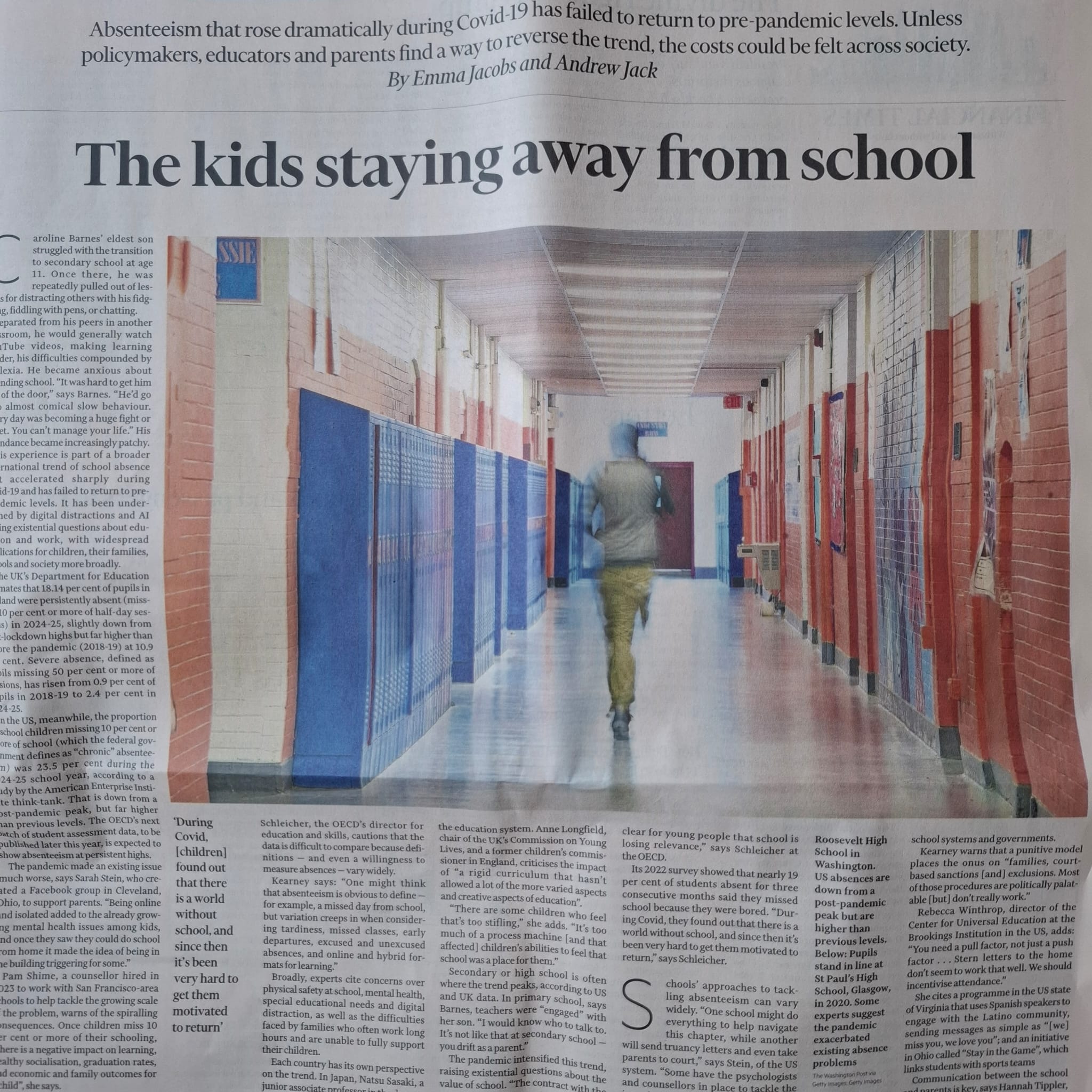
Other effects are still with us. ‘The response to the Covid pandemic entailed the most extensive and lengthy disruption to education in history.’ (In Covid’s Wake, p187). In the US, and elsewhere, school closures continued long after it was clear, if it was not already clear from the start, that schools did not drive transmission. It has led to a continuing significant increase in absenteeism from school with long lasting damage to the children involved and to wider society.
Also, like everywhere else, health service provision was reduced while populations faced repeated demands by governments to protect them. I can’t have been alone in wondering at the time – is it not supposed to be the other way round? Populations also responded as desired by delaying treatment out of fear. Lockdown was to apply to everyone, not just those at higher risk, so the virus was presented as a threat to everyone. In the US the effects of mandated and ‘voluntary’ avoidance from using health systems meant that ‘both overall health care spending and health sector employment in the United States actually fell during the pandemic, despite the pressures on the system caused by Covid.’ (In Covid’s Wake, p191)
A lot of the effects on health caused by the pandemic and lockdown have yet to be analysed, and reports on its effects are still being produced. This one is on excess cancer deaths in the US: ‘between March 2020 and the end of 2022, the United States is estimated to have experienced nearly 1.7 million excess deaths. It is not fully clear how much of these increases in mortality have their roots in reduced health care provision and use, economic dislocation, and other harms associated with pandemic policy.’ The book records one Canadian study attributing 17 percent of the increase in excess deaths in the US to non-Covid causes.
‘Increases in excess mortality during the pandemic were due primarily to rises in deaths from heart disease, diabetes, Alzheimer’s, overdose, and homicide. Minority populations were especially adversely affected.’ (In Covid’s Wake, p192). Not only physical health but also mental health suffered from lockdown. Karl Marx noted of human nature in the 19th century that the ‘human essence is no abstraction inherent in each single individual. In its reality it is the ensemble of the social relations.’ Lockdown drastically broke many of these relations – what else was social distancing, stay-at-home orders and working from home – if you otherwise didn’t lose your job? How could it be a surprise that this also damaged and broke millions of individuals?
‘After years of recommending social distancing, who can fail to appreciate the painful irony of the 2023 surgeon general declaring a “public health crisis of loneliness and isolation”?’ The authors note that ‘public officials were simply never very clear about precisely what restrictions were supposed to achieve.’ (In Covid’s Wake, p198 & 200)
So not only did they not factor into account the costs of their policies, they were never quite clear about what the mechanisms employed were supposed to achieve. The rhetoric of flattening the curve, protecting the health system, reducing the R number, testing and tracing targets, reducing, suppressing or eliminating Covid, were all quoted as if they all formed a coherent approach.
‘Zero-Covid’ made for a simple objective but the mechanisms to achieve it were never clear. A disease that had spread round the world before its potential was even determined, and which developed quickly to infect hundreds of millions, many without realising that they had it, was not going to be eliminated even by the most drastic of lockdowns. Its proponents, like those in authority who they criticised, had no intention of ascertaining what the cost would be and whether it would be worth it.
Back to part 3
Forward to part 5

