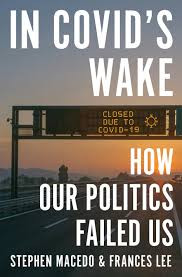
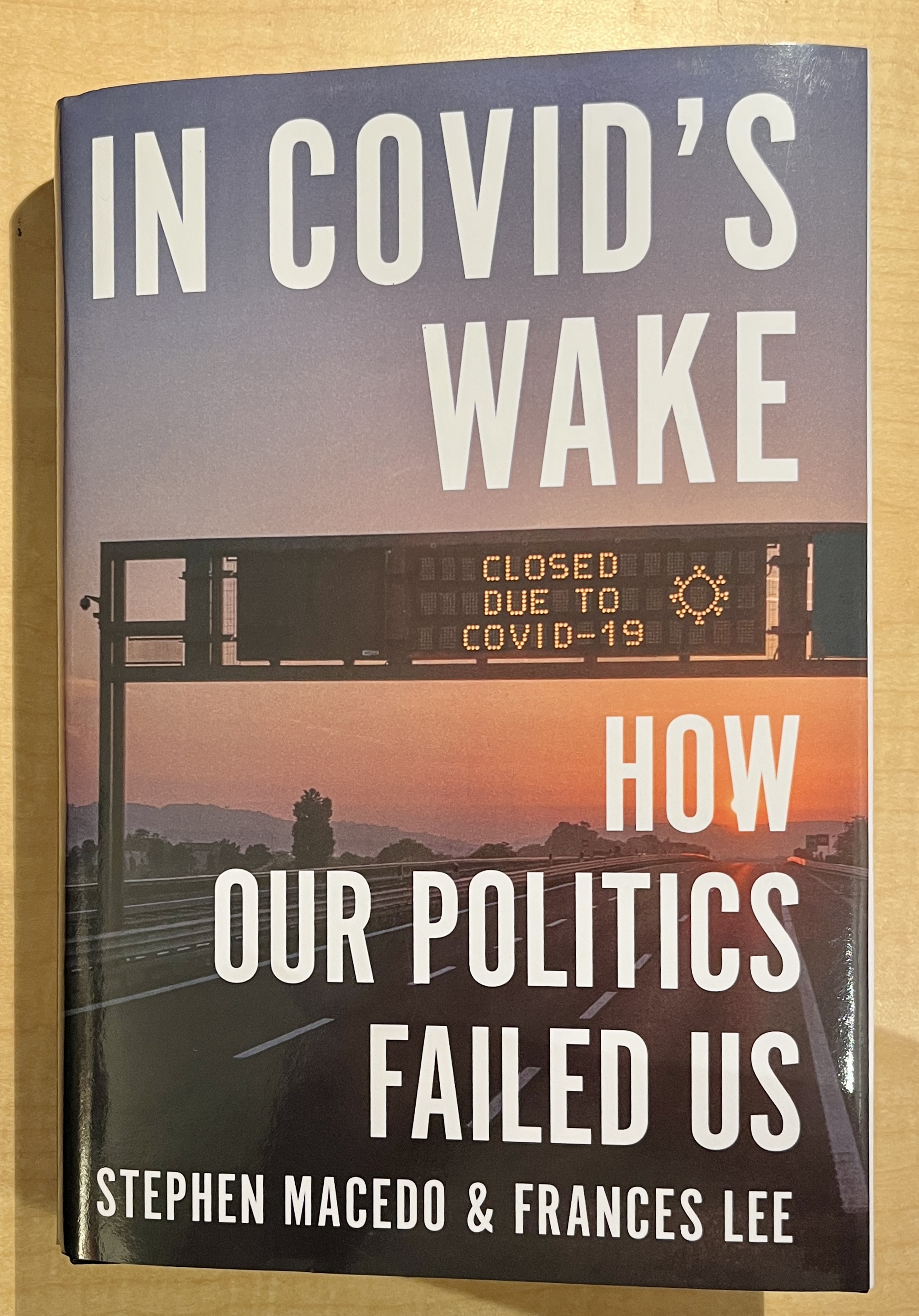
In Covid’s Wake (6 of 6): Censorship and truth

Perhaps the most shocking but not really surprising aspect of the Covid lockdown was the ‘scientific’ justification of it and its associated measures that upended previous accepted views.  It was also generally successful in imposing a silence on dissenting views, treating them as dangerous blasphemy.

For example: ‘most pre-Covid plans for addressing a respiratory pandemic were skeptical of masking . . . the U.S. surgeon general tweeted “STOP BUYING MASKS!” because they gave no protection to healthy individuals. (In Covid’s Wake p234). Yet those least at risk – those at preschool – were one of the last to require universal masking up to September 2022. (p236).  The scientific uncertainty around masking was considered an obstacle to getting the population to do as it was told.

This was just one aspect of what the authors of the book consider ‘groupthink; and ‘a sense of moral and intellectual superiority’, justified by those making the decisions because of who they were. (p254) Just as many on the left justify their demands as left wing because they are the ones making them.

This included ‘the long suppression of reasonable suspicions about a possible lab leak origin of the virus.’  This involved calling the idea a “conspiracy theory” or “racist conspiracy theory”, and smearing dissenters as “fringe epidemiologists”, indulging a form of “decidedly unscientific discourse”.  All, the authors say, ‘moralistic performances aimed at marginalising dissenters and closing down discussion.’ And all redolent of arguments employed on the left for a very long time. (p297 & 294).

This moralistic view, with its attendant features, meant that ‘Covid policies were generally unresponsive to actual pandemic conditions’, which ‘tended to a wholesale abandonment of rationality.’  ‘Even as late as summer 2021, after more than thirty million Americans had tested positive for Covid and vaccines had been made widely available, the director-general of the World Health Organization was still demanding that governments attempt to track and trace every case . . . The zero-Covid frame locked policymakers into costly, futile policies with no exit strategy.’ (p291 & 293)

However, behind every moralistic policy lies material interest.  In the case of denying the lab leak from gain-of-function research at Wuhan Institute of Virology was the funding of the research by the US National Institute of Allergy and Infectious Diseases, denied to a Senate committee hearing by the top administration health official Dr Anthony Fauci.

A number of scientists wanted an open discussion on the origin of the virus but the book records that a WHO investigation into it in 2021 was ‘compromised’ because it included someone whose organisation funded the research in the Wuhan Institute.  Top public health officials engaged in ‘oversimplifications, half-truths, and noble lies’ in order to get the population to follow its diktats. (p 263)

This was the case with the policy of lockdown itself, as we have already seen. It involved ‘White House officials and public health experts to work in secret with social media companies to amplify messages favouring government policy while censoring or muting dissenting voices and points of view.’  When it came to the weakness of the evidence for Covid boosters one paediatrician and professor of vaccinology was told that although ideally it was only high-risk groups who should be encouraged to receive them, ‘nuance garbles the message’ (p271 & 272).

‘Following the science’ became following the government and what was true was what the Government decided it was.  In the UK current and former BBC journalists stated that there was a “climate of fear” with experienced reporters “openly mocked” if they questioned the wisdom of lockdowns.  The threat posed to everyone had to be driven home even while ‘the actual risk to more than half the population was extremely low.’  In the UK ‘the BBC News backed up this misperception by regularly reporting rare tragedies involving low-risk individuals as if they were the norm.’ (p112 -113)

The authors note a paper, published after the pandemic was effectively over in August 2023, by a number of scholars associated with the US Department of Health Promotion and Policy at the University of Massachusetts Amherst.  It was published in the prestigious journal of the American Medical Association JAMA Network Open, which targeted misinformation on Covid by medical professionals on their social media platforms with a view to the government agencies and professional associations taking “actions to regulate and discipline” them. (p 276)

Among the “misinformation” was the allegation of a cover up of the possibility of a laboratory leak; the claim that the government withheld key information regarding Covid-19; that the effectiveness of masks was doubtful; that natural infection and recovery contribute effectively to herd immunity, and that “Government actors” were in contact with Twitter and other social media companies telling them what to censor. The censored included two authors of the Great Barrington Declaration, which emphasised the range of harms caused by lockdowns and proposed an alternative.

The authors of the book note that these ‘may actually be correct, or, at a minimum, within the scope of reasonable disagreement.’  They also note various sources that acknowledge the truth of this ‘misinformation.’  Perhaps the most astonishing thing about these scholars case is the lack of awareness that it was actually many of the claims made by the government and public health officials that were untrue. (p 277 & 282)

The book’s authors also say that ‘some evidence suggests that today’s scientists are more inclined than those of the past to censor research they perceive as socially harmful.’  Editors of academic journals ‘are granting themselves vast leeway to censor high-quality research that offends their own moral sensibilities.’ (p 283).  As one senior US academic put it – there is “a real peril in a public health approach steeped in moralism”. (p 122). This is, for example, a strong feature of the approach to research by those promoting ‘gender affirming’ medical and surgical intervention.

A recent article in the Financial Times reports a professor of epidemiology at Colombia University stating that the most important legacy of Covid was “a lack of trust in public health and the implications for people refusing vaccines.” 

Unless the left that demanded zero-Covid accounts for its error it must be assumed it has learned nothing. This includes regard for the truth. Once more a quote from a dead Russian is apposite – ‘We must speak the truth.

Back to part 5

In Covid’s Wake (4 of 6): The Cost

Lockdown came with a cost, an enormous cost.  In the United States, Congress approved $5 trillion of new spending – more than was spent in the responses to the economic crash in 2009 and the New Deal in the 1930s.  Only 10 per cent was spent on direct health costs while a similar amount went on fraud.  In the UK, friends of the Tory government were given fast-track contracts worth billions of pounds with many also involving fraud.  All this expenditure increased state debt and fed into the subsequent demand for austerity.

Unemployment grew, especially among low wage workers, and particularly among women, with the increases higher in Democrat-run states than Republican ones due to their more stringent lockdowns.  Economic and social inequality grew with the authors noting that the effect in poorer countries was greater when, with younger populations, lower welfare services and a bigger informal economy, the effects of lockdown would be more severe.

The authors quote that “more than 40 million additional people in Africa [were] in extreme poverty by late 2021 when compared with 2019.  Some 4.5 million children [were] removed permanently from education in Uganda alone . . . [with] huge increases in child marriage.”  Another author is quoted stating that double the number of people suffered from severe hunger in 2023 than in 2019, the primary cause being the response to the Covid pandemic. (In Covid’s Wake, p185-6)

That all this would have made even less sense, and caused greater suffering, had a ‘zero-covid’ policy been adopted will not faze its proponents.  At the time I noted that it was nonsense to demand greater welfare payments to people while preventing them from working, and therefore not producing the goods and services that the extra welfare payments were supposed to buy.  Not surprisingly inflation increased.  The different politics of reformism and Marxism could not be clearer. Reformists habitually think that the capitalist state can and should provide subsistence to the working class in a crisis, while Marxists seek always to advance the self-organisation of the working class and the objective of seizing control and operating the productive forces of society.

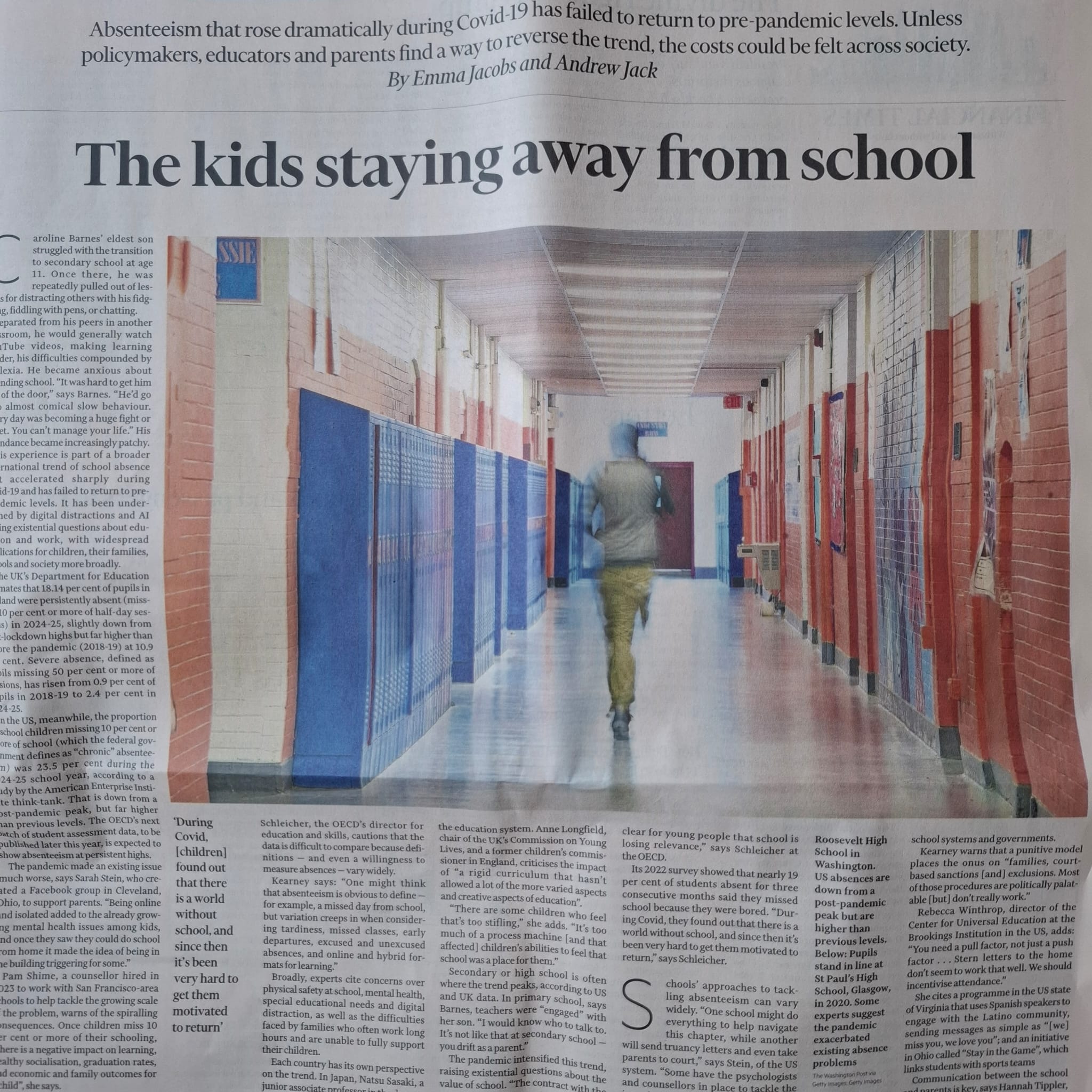
Other effects are still with us.  ‘The response to the Covid pandemic entailed the most extensive and lengthy disruption to education in history.’  (In Covid’s Wake, p187). In the US, and elsewhere, school closures continued long after it was clear, if it was not already clear from the start, that schools did not drive transmission.  It has led to a continuing significant increase in absenteeism from school with long lasting damage to the children involved and to wider society.

Also, like everywhere else, health service provision was reduced while populations faced repeated demands by governments to protect them. I can’t have been alone in wondering at the time – is it not supposed to be the other way round?  Populations also responded as desired by delaying treatment out of fear.  Lockdown was to apply to everyone, not just those at higher risk, so the virus was presented as a threat to everyone.  In the US the effects of mandated and ‘voluntary’ avoidance from using health systems meant that ‘both overall health care spending and health sector employment in the United States actually fell during the pandemic, despite the pressures on the system caused by Covid.’ (In Covid’s Wake, p191)

A lot of the effects on health caused by the pandemic and lockdown have yet to be analysed, and reports on its effects are still being produced.  This one is on excess cancer deaths in the US: ‘between March 2020 and the end of 2022, the United States is estimated to have experienced nearly 1.7 million excess deaths.  It is not fully clear how much of these increases in mortality have their roots in reduced health care provision and use, economic dislocation, and other harms associated with pandemic policy.’  The book records one Canadian study attributing 17 percent of the increase in excess deaths in the US to non-Covid causes.

‘Increases in excess mortality during the pandemic were due primarily to rises in deaths from heart disease, diabetes, Alzheimer’s, overdose, and homicide.  Minority populations were especially adversely affected.’ (In Covid’s Wake, p192). Not only physical health but also mental health suffered from lockdown. Karl Marx noted of human nature in the 19th century that the ‘human essence is no abstraction inherent in each single individual. In its reality it is the ensemble of the social relations.’   Lockdown drastically broke many of these relations – what else was social distancing, stay-at-home orders and working from home – if you otherwise didn’t lose your job?  How could it be a surprise that this also damaged and broke millions of individuals?

‘After years of recommending social distancing, who can fail to appreciate the painful irony of the 2023 surgeon general declaring a “public health crisis of loneliness and isolation”?’  The authors note that ‘public officials were simply never very clear about precisely what restrictions were supposed to achieve.’  (In Covid’s Wake, p198 & 200)

So not only did they not factor into account the costs of their policies, they were never quite clear about what the mechanisms employed were supposed to achieve.  The rhetoric of flattening the curve, protecting the health system, reducing the R number, testing and tracing targets, reducing, suppressing or eliminating Covid, were all quoted as if they all formed a coherent approach.

‘Zero-Covid’ made for a simple objective but the mechanisms to achieve it were never clear. A disease that had spread round the world before its potential was even determined, and which developed quickly to infect hundreds of millions, many without realising that they had it, was not going to be eliminated even by the most drastic of lockdowns.  Its proponents, like those in authority who they criticised, had no intention of ascertaining what the cost would be and whether it would be worth it.

Back to part 3

 Forward to part 5

In Covid’s Wake (3 of 6) The US as a laboratory

The authors of In Covid’s Wake note that the United States formed a laboratory in which an experiment on the different approached to the Covid-19 pandemic was played out.  In Democrat controlled states the speed at which restrictions were imposed, the length of stay-at-home orders, length of school closures, and the stringency of Covid restrictions were all faster or greater.  The willingness of residents to be vaccinated was also greater.

The resulting pattern was noticed in late 2023:

  • Until vaccines became available, there was little difference in COVID death rates between blue states and red states.
  • After vaccines became available, there were clear differences, with red states having higher death rates.

The book therefore states that ‘variation in vaccination rates can account for fully 47 percent of state-by-state mortality.’  (In Covid’s Wake, p 140, 142) It also records that the lack of difference evident by the summer of 2020 ‘went broadly unreported, despite its inconsistency with the epidemiological models that had seen so much media coverage earlier in the year.’ One of these models reported “substantial reductions in peak attack rates “due to school closures”. (In Covid’s Wake, p 146, 148)

In the UK, a review of the literature to March 2023 reported that ‘there are still many uncertainties and unknowns’ while the Scottish official inquiry concluded that “there was insufficient evidence in 2020 –or alternatively no evidence.”  So even after the pandemic the authorities were claiming not to have learned much, if anything, about their basic approach. (In Covid’s Wake, p 154)

Some countries with light restrictions fared well while others didn’t; ‘Japan fared better than Australia and only slightly worse than New Zealand in terms of Covid mortality, despite never imposing a lockdown or widespread business closures nor making much use of Covid testing and contact tracing . . .  The underlying determinants of population health–poverty, education, comorbidity profile–shaped Covid pandemic outcomes far more reliably than non-pharmaceutical interventions.’ (In Covid’s Wake, p 157)

 In the US the two Democrat-leaning authors lament that ‘rather than learning from the policy experimentation that was taking place, decision-making about pandemic policy was rigidly ideological and moralized’.  Democrats didn’t learn about the absence of support for lockdowns and Republicans, or at least some of them, didn’t learn about the efficacy of vaccination.  For the two authors this failure of ‘partisan politics is the main lesson of the pandemic.

As for the left that advocated even more severe restrictions, there is no evidence that they ever, at any point, looked in the rear view mirror; Covid may as well never have happened.  The morally right are right–by definition.  The idea of having any sort of cost-benefit analysis was dismissed as involving a straight comparison between saving lives and saving money; ‘health versus wealth’ as the book puts it.  The world’s capitalist governments were charged with being more interested in the economy than public health and people’s lives.  Further shutting down the economy was being opposed, it was claimed, in order to protect capitalist profits, in the process risking workers’ lives. 

At the time this blog noted that capitalist economies produce commodities with a use value as well as an exchange value, without which they cannot assure their sale and realisation of profit. It was never clear just exactly what production was not ‘essential’ and could be shut down, and how massive reductions in production could be accomplished in order to achieve ‘zero-Covid’ while also creating correspondingly massive income flows for those now unproductively unemployed.

Even the view that the governments’ response was focused on maintain capitalist profits hardly squares with the single focus on public health by those state officials tasked with leading the response who consciously excluded economic and social experts. The mathematical models that were so influential only looked at the effects of policy on Covid transmission, hospitalisation and deaths.  None looked at the health, social and economic consequences of lockdown to see were its costs exceeding its benefits. A point not strongly made in the book is that with models predicting catastrophe this might seem understandable, but as we have noted, when the models failed to correspond with reality the experts doubled down on lockdown.

The media played its role by stating that the pandemic closed schools and travel etc., not that it was the lockdown, and that this was a choice.  Rather like wages causing unemployment or inflation, or the war in Ukraine causing high energy prices, the conditions and interventions that actually caused them were rendered invisible.

What also became invisible was that it was overwhelmingly white collar workers who were working from home.  Blue collar workers kept working and were a stranding rebuke to those who claimed that lockdown was needed to prevent ‘mass death.’  A left more in touch with this section of the working class might have appreciated this.  The authors of the book note that, while stoking fear of the pandemic, the lowest paid and vulnerable workers were expected to show up.  So did all those calling for ‘zero-covid’, unless they didn’t actually mean zero.

The policy of lockdown was popular among trade unions and among the majority of their members.  The book records the Chicago Teachers’ Union tweeting that ‘the push to reopen schools is rooted in sexism, racism, and misogyny’, while the head of United Teachers of Los Angeles described school reopening as a recipe for propagating structural racism.’  (In Covid’s Wake, p132)

In fact, schools were not a vector for transmission while those workers tasked with continuing to work as normal probably included a large proportion of women and black workers.  Not for the first time politics based on identity got it wrong, ironically weakening the cause of women and black workers in the process.

Back to part 2

Forward to part 4

In Covid’s Wake (2 of 6): ‘mass death . . . is a benefit to be sought’

The imposition of lockdown that was justified as ‘following the science’ did not quite achieve the consensus that the claim implied and there were a number of voices challenging it at an early stage.

One epidemiologist in the Washington Post stated that ‘of the first 1,023 people to die in Wuhan, China . . .  only one was younger than twenty.’  He wrote that “The high death rate from the coronavirus is driven almost exclusively by the oldest cases . . . the virus causes severe disease almost exclusively in older adults.”  In March 2020 an op-ed in the New York Times was entitled ‘Is Our Fight Against Coronavirus Worse than the Disease?’ (In Covid’s Wake, p 72). This blog also had enough information to point this out in March 2020. 

Unfortunately, ‘war’ had been declared on Covid-19 and the cliché that the first casualty of war is the truth proved only too true.  The consensus in the US was supported by Harvard’s Safra Center on Ethics, the right-wing American Enterprise Institute, and the ‘progressive’ Center for American Progress and focused on testing, tracing and quarantining the infected.  The policy that had previously been predicted to be unsuccessful was now the establishment view that brooked no dissent.  Yet it made little sense when the virus was already widespread, was asymptomatic while infectious and completely asymptomatic in many who had contracted it.

Sweden presented an alternative in which large gatherings were banned; people over seventy were advised to limit contacts with others; it was advised not visit to nursing homes, and recommended but not mandated that those who could work from home should do so.   Society-wide lockdown was not advised: “The storm was already here,” judged Sweden’s health authorities and what remained to be done “was to protect the most vulnerable.” No large-scale test-and-trace regimes were attempted.  Masks were never mandated. No stay-at-home orders or restrictions on movement were imposed’ and restaurants, gyms and schools for younger children and adolescents remained open. (In Covid’s Wake, p 85).

The head of Sweden’s Public Health Agency, Anders Tegnell, thought that “the world has gone mad” while ‘many thought Sweden had gone mad’ or ‘insane’.  The New York Times described Sweden as a “pariah” and some European media described it as like “a banana republic” (In Covid’s Wake, p 86-7).

The Great Barrington Declaration published online in October 2020 was another alternative view to Lockdown that pointed out the costs and proposed a policy of ‘Focused Protection’: “Our goal should therefore be to minimise mortality and social harm until we reach herd immunity.”  Those who had such immunity ‘could play an especially important role in helping the sick and frail.’ (In Covid’s Wake, p 96 & 97)

Herd immunity, however, became a term of abuse, as “simply unethical” and a call to “let it rip”.   It was ‘dangerous’ and came from ‘fringe’ and ‘maverick scientists.’ (p 74, 97 &106). One doctor, who had earlier in March gathered 800 signatures warning of the costs of lockdown had seemingly changed his mind; “I have no more fucks left to give.  Except those peddling pseudoscience, bankrolled by right-wing, libertarian assholes can kiss my queer ass …. This fucking Great Barrington Declaration is like a bad rash that just won’t go away.” (In Covid’s Wake, p 100)

The vitriol involved in such denunciations reflected not so much a long established scientific consensus as a moral consensus that had especially gripped the ‘left’, becoming the left position because the left had adopted it, assisted by most of the support for the Great Barrington Declaration coming from the right, confirming that this was indeed the right-wing position.  The effect was to close debate and remove critical thinking–in moralistic arguments there is simply no arguments in favour of the ‘bad’.

Who made the arguments defined what was right and not the arguments themselves so that ad hominem became de rigeur.  From liberal Democrats to the ultra-left, moral condemnation could not be strident enough: The Great Barrington Declaration became ‘A manifesto of death’; ‘mass death, is a benefit to be sought’; ‘the White House’s embrace of the document is a statement of intent for mass homicide’; ‘the ruling class’s drive to allow the mass infection of the population can be imposed only by violence’.  Those who defended it on the left were from ‘the pseudo-left’ while ‘the herd immunity policy has found support not only within the capitalist oligarchy, but among sections of the upper-middle class.’

The pandemic was an unprecedented suppression of the most basic civil rights employing the weapons of fear and state surveillance, yet the largest part of the left not only endorsed it, its policy was to intensify it.  This was the policy of ‘zero-covid’ that could only ‘be imposed by violence’ as lockdowns began to be relaxed in 2020, only to then be reimposed.

The left website above stated that ‘Workers around the world must welcome the categorical and courageous stand taken by public health experts in opposition to the ruling class’s policy of herd immunity’, except the experts were divided and previous advice stood squarely against lockdowns.  Not unsurprisingly, the moralistic and catastrophist argument proved more attractive to a left for whom socialism will only come through capitalist crisis and repression, through force of circumstances, and not through the building of a class conscious movement committed to socialism that is the result of years of political education, clarification and struggle.

The authors of the book note that ‘if recovery from infection would not afford immunity, it is not clear by what mechanism vaccines would confer immunity either.’ (In Covid’s Wake, p 102).  In June 2020 the World Health Organisation website defined herd immunity as “indirect protection from an infectious disease that happens when a population is immune either through vaccination or immunity developed through previous infection.’ (In Covid’s Wake, p 104).  In November the reference to acquired immunity was removed.  The voice of ‘science’ was to be put in the service of government policy.

Back to part 1

Forward to part 3

In Covid’s Wake (1 of 6): the past is another country

The Irish government report on how the state handled the Covid-19 pandemic is due to report at the end of the year, seven years after it reportedly arrived in Ireland.  The delay says a lot, as was the original announcement of the review by the government – that the review was to have a “no-blame” approach and would “not be a UK-style” inquiry.  It would not have statutory powers and would be an “evaluation” on the grounds that anything greater would drag on for years.  This was not an empty threat given the many previous tribunals of inquiry held by the state, but it rather loses conviction when it took so long to establish in the first place.

Scepticism over its role was heightened by it rejecting the stronger powers of the UK inquiry, but since this failed to question the basic approach to the pandemic adopted by the British government these in themselves would not have promised a full reckoning.   A spokesperson for a patient advocate group stated that ‘the Evaluation model protects policies and decision makers from any scrutiny at all’.  We shall see.

Two liberal (Democratic Party-type) US academics have published a new book that has much wider relevance than the US, including why it is important that we do not just forget about the whole thing. The book, not surprisingly, is controversial as the consensus it critiques has, also not surprisingly, not gone away.  The authors have responded to some criticism here.

It is said that the past is another country but since almost all other countries had the same experience this doesn’t displace it safely to the past, not least because its impact is still with us, never mind the possibility of any repetition.  

From the point of view of this blog the focus is on what the book implies for an evaluation of the approach taken by much of the left.  Those who have read the coverage during the pandemic will know that it was severely critical of the groupthink that overtook the left and was very much a minority, but not idiosyncratic, view.  The Left’s groupthink showed it incapable of challenging the politics of the state and mainstream bourgeois opinion across the world, putting forward a policy–‘Zero Covid’–that was actually much worse.

The suddenness and severity of actions taken by states meant that ‘just a few weeks after the lockdowns spread from China to Italy and elsewhere, 3.9 billion people–half the world’s population–were living under some form of quarantine.’ (In Covid’s Wake, p 3) What was also sudden was the adoption of the policy of lockdown that justified this approach.  Called “following the science”, it was adopted by overturning the science as it had previously been accepted and became the club to silence and stigmatise those who challenged or even questioned it.  The Left consensus simply adopted a more extreme version of this predominant approach.

Several non-pharmaceutical interventions (NPIs), including “contact tracing, quarantine of exposed individuals, entry and exit screening, [and] border closure” were “not recommended in any circumstances” in a World Health Organisation’s (WHO) assessment in November 2019 of NPI use in a respiratory pandemic.  Quarantine of individuals–never mind whole populations–was “not recommended because there is no obvious rationale for this measure in most Member States.” Contact tracing was considered some help in “isolated communities” in the “very early stages of a pandemic.” (In Covid’s Wake, p 29) Other assessments also questioned the use of NPIs, including after reviewing the experience of the 1918 Spanish flu pandemic.

This meant that when China introduced lockdown “public health experts in the United States and elsewhere responded with shock and disbelief”. (In Covid’s Wake, p 50). Dire predictions from Imperial College in London and China’s draconian embrace of lockdown were the occasion for a complete change of approach by the WHO so that now there was no alternative to unprecedented restrictions on freedom of movement backed by massive social surveillance.

Previously inconceivable restrictions became moral imperatives supported by governments, health bureaucracies, health academics and the mainstream media; plus the majority of the left for whom the unprecedented was not unprecedented enough and the draconian not sufficiently draconian.  That China’s apparent success kept on being implemented until its population started revolting was all in the future.  The WHO’s mission to China found that it provided “vital lessons for the global response” and its measures were the only “proven to interrupt or minimize transmission”, while early predictions were made that it would succeed within three months. (In Covid’s Wake, p 56 &58)

The book records how dubious this claim must have been, including the knowledge that pandemics proceed in waves; millions of people had escaped lockdown in Wuhan, and there could be no confidence in the effect lockdown would have against the progress of a novel virus. The WHO made matters worse by stating that “globally, about 3.4% of reported Covid-19 cases have died”, although it could not know how many people had been infected so could not say what percentage of them had died.  Without acting to implement stringent NPIs the modellers of Imperial College predicted “approximately 500,000 deaths” in the UK “and 2.2M million in the US”, along with the collapse of heath systems. “Suppression” of the virus was the only “viable strategy”, with China again held up as the exemplar. (In Covid’s Wake, p 63 &64)

If this didn’t scare you, or rather ‘convince’ you, this might be because you might have known of Imperial College modellers’ previous poor record.  In 2006 it had predicted “catastrophe”, ‘forecasting 150 million deaths around the world’ as a result of the outbreak of avian flu.  Nevertheless, the book’s authors note that Imperial College Covid projections ‘captured the headlines and grabbed the attention of Covid policymakers, including President Donald Trump.’ (In Covid’s Wake, p 51)

Given the forces ranged against any possible dissent it is not surprising that the ‘global suspension of basic liberties was undertaken with widespread public support.’   This was despite the book stating that ‘it is important not to ascribe to policymakers’ views more coherence than they possessed with respect to the goals of the policies they pursued.  To some extent, policymakers failed to reckon with the choices between flattening the curve, attempting to contain the disease and eliminate it entirely, or suppressing the total number of infections over the whole course pf the pandemic.’ (In Covid’s Wake, p 67)

In my own city of Belfast, the local hospital was converted into a ‘Nightingale Hospital’ for Covid-19 patients and apparently more or less closed for most of everything else. While claiming that Covid-19 would close it if it was not protected, it partially closed itself.   Cancer patients could die but no Covid-19 patient could be refused.  Yet even this stupidity did not give pause for thought that this whole policy was the latest example of the ‘madness of crowds.’  Moral panics demand that doubters are immoral and with so much mainstream opinion on-side it is easy to excuse the left who supported it, except it was a failure; they demanded even more of the same, and they ignored, when they weren’t denouncing, alternative voices.

Forward to part 2

Marxism and Gender Identity Ideology (5) – Believe as you’re told

It’s always been said that if you’re going to tell a lie, tell a big one.  The more outrageous the better. It immediately requires a big denial that itself feels like it is making a big claim.  A big lie also has numerous and wide consequences, so denial equally requires a lot of follow-through.

For many people the social opprobrium of denial is enough to impose silence and there are lots of incentives to keep schtum, including entreaties to ‘be kind’, be ‘on the right side of history’, not to be a bigot – or what seems to work better – not have anyone call you one.  And so many people on ‘your side’ seem to go along with it, and so many not on ‘your side’ seem to be against.  Anyway, it all involves a small number of people so let’s not get exercised about it.

An additional factor is the temptation not to think too hard about it all, lest you end up having the debate in your head that you have been insistently told you can’t have outside it. The ‘no debate’ mantra of some trans activists thus functions at two levels.  It immediately fences off from acceptable discussion disagreement with the view that men can become women – and in doing so claim all their rights – and treats such disagreement as akin to racism or homophobia. The assertion itself is therefore free from questioning.

Since there is now a fashion for the introduction of hate crimes in certain countries, the subjective views of those carrying out alleged criminal acts are also taken into account; meaning that what you think can also be taken as an aggravating factor and in effect become an ancillary crime itself. We are not quite in ‘thought-crime’ territory but we are definitely in the land of ‘impure thoughts’, so you must not only do as you are told but believe it as well.

I have written before that this ‘no debate’ mantra is the cause of the ‘toxicity’ of the (non) debate, so is largely the result of the virulence of tans activism.  Of course, this is a product of the preposterous nature of the claim itself but the consequence of this combination – of the outlandish claim and command to agree – results in the anger of those critical of the claim, and their exasperation at those who just want to ignore it, or turn a Nelsonian eye to the whole thing.

Again and again, however, the ideology hits you in the face, with the claim to be a uniquely vulnerable and marginalised minority clashing with the obvious support accorded to it by the state and other institutions.  Often, when it does, it’s because the consequences of the claim once again conflict with reality.

Let’s take an example I came across in the past week.

My wife was asked to complete a survey originating from Kings College in Britain, the purpose of which was stated as follows:

‘We would like to invite you to participate in this online survey which will explore how anxiety, emotion and wellbeing are experienced in the body after primary breast cancer and in secondary breast cancer. Before you decide whether you want to take part, it is important for you to understand why the research is being done and what your participation will involve’

‘We know that many people struggle with their mental health after primary breast cancer and in secondary breast cancer. Breast cancer and our emotions are also both rooted in the body. However, research has not yet explored how people feel emotions in their body during and after breast cancer, and how this can impact people’s general wellbeing.’

The survey is designed to take about 30 minutes, so not a quick on-line poll: ‘The purpose of the study is to understand how interoceptive sensibility – how someone feels able to sense their internal bodily sensations – impacts people’s experiences of mental health and wellbeing after primary breast cancer and in secondary breast cancer.’

By way of context, Cancer Research UK records that there are around 56,800 new breast cancer cases in the UK every year and that it is the most common cancer in females with around 56,400 new cases every year (2017-2019) but not among the 20 most common cancers in males, with around 390 new cases every year (2017-2019).  This translates into an annual death toll among women of 11,415 and among men of 85 with a mortality rate of 33.9 and 0.3 respectively. This means that women account for over 99 per cent of deaths from breast cancer.

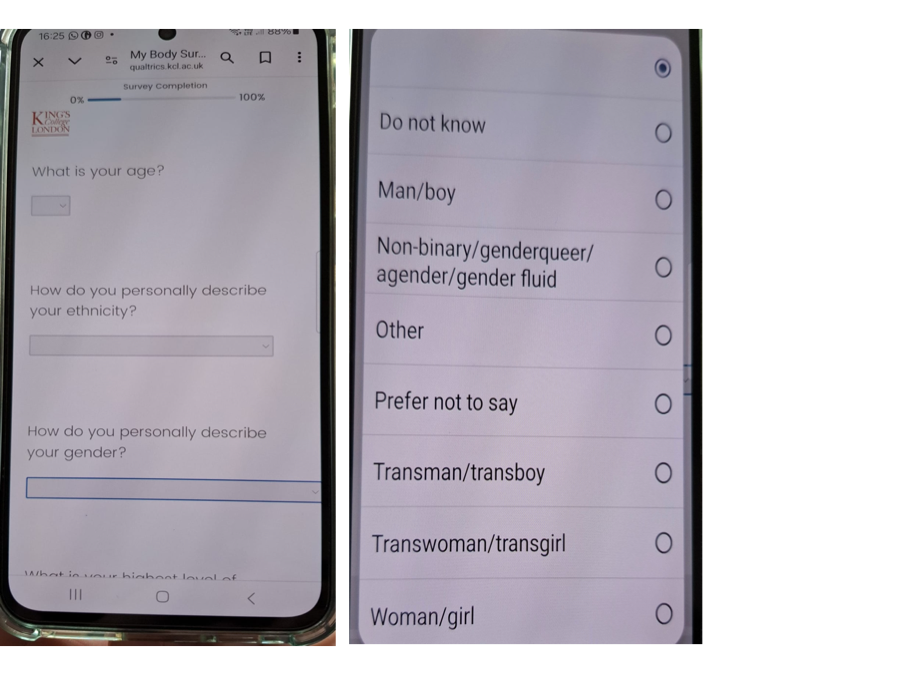
So, if men can also suffer from breast cancer and it is not a women-only disease, perhaps we can accept the use of the word ‘people’ in the survey from Kings College.  What is hard to accept is one of the questions at the start of the survey, which I captured on my phone and the range of potential answers expected and requested:

Question and permitted Answers:

If we were to be (very) charitable, we might say that the survey is about subjective responses to having had or still having breast cancer and that it is a valid objective to distinguish, and then compare, the subjective response of women, men and trans individuals. The permitted answers forswear the outer reaches of trans ideology by lumping together a number of ‘identities’ and excluding the myriad of others of uncertain number.

In doing this however, we would have to ignore the biological basis of cancer and that the overwhelming risk attaching to it is not ‘gender’, whatever that is, but sex.  We would also have to pass over the recognition by the survey’s authors that the study already recognises the primacy of biology by stating that ‘Breast cancer and our emotions are also both rooted in the body’ and that ‘The purpose of the study is to understand how interoceptive sensibility – how someone feels able to sense their internal bodily sensations. . .’

The problem is that the question is designed to find out not only what ‘gender’ someone thinks they are but what sex they are, and if someone were to reasonably state that non-binary/genderqueer/agender/gender fluid are not a sex then the question is at best ambiguous. At worst it is an invitation to accept gender identity ideology; that all the answers are equivalent and gender = sex and there are more than two.  If you don’t accept this equality then you would be entitled not to answer the question on the grounds that you do not have a gender identity.

In this case, from any scientific perspective, the survey is flawed. And in any case, anyone studying the responses who thinks ‘I don’t know’ is a valid answer to the question ‘how do you personally describe your gender’ has a big problem. Is the respondent stupid, confused or does she or he think that the question is stupid or the result of confusion?

Occam’s Razor would lead one to the conclusion that the survey is an example of gender identityideology positing the salience of self-ID to the feelings of women who have or are suffering from cancer. Does this matter?

This is often the question used to puncture opposition to expressions of gender identity ideology.  In this case the scientific soundness of the survey is called into question by mixing incommensurate concepts.  The introduction of the survey, on the stresses of having cancer, to be read by participants before they complete it, is keen to avoid causing further stress, advising ‘that you contact your GP in the first instance.’  One wonders how a question relating to a disease that by over 99 per cent affects women could put this category at the bottom of eight when attempting to identify its public.

Perhaps this will also be excused as a mistake, but that would be to deny the claims of gender identity ideology for which such a question is totally appropriate and absolutely necessary.  Don’t ask why, because that is to presume an explanation that itself presumes reasoning that itself must be open to interrogation, and that would require a debate.

Back to part 4

Forward to part 6

Karl Marx’s alternative to capitalism part 5: capitalism’s achievements

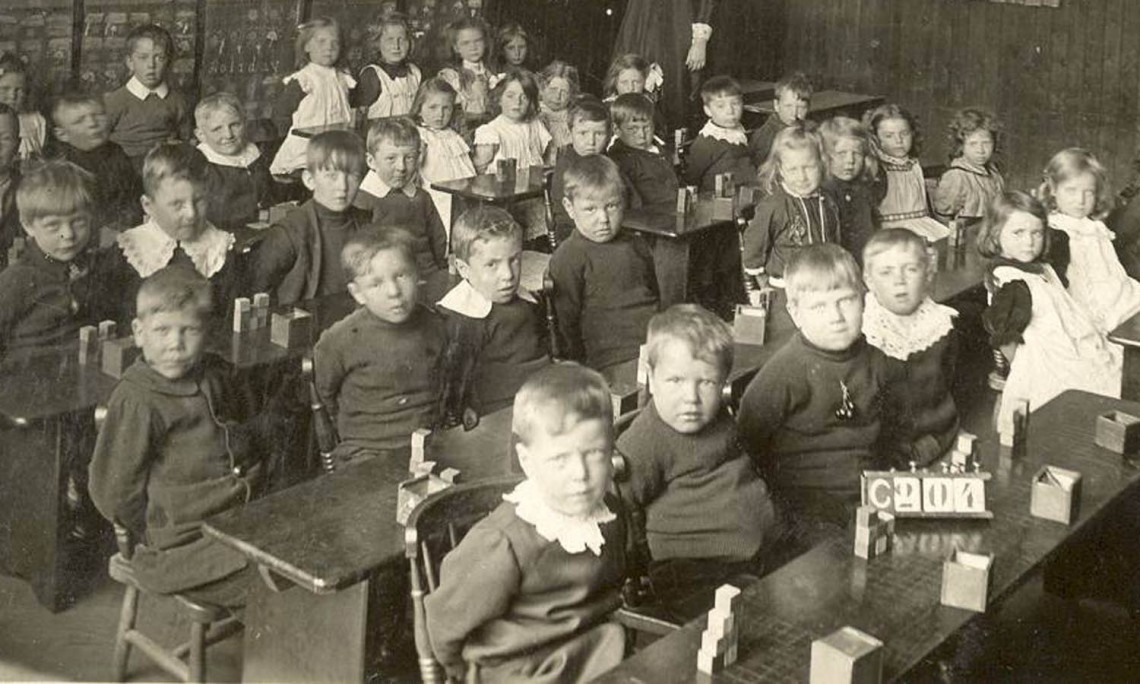
classroom-19th-century-1140x684One comment on an earlier post on the blog relating to the situation in Greece included the following: “So I think the task at hand is not to solve Greece’s economic crisis, this will certainly take years. Rather it is to add some political organisation and direction on to the instinct to fight. I believe that you are thinking too far ahead, overly concerned with what socialism should be in the future, and not really catching the fire of the present.”

Leaving aside whether this was true of this particular post on Greece or even of other posts; a point I have made is that the Marxist movement is too concerned with attempting to “catch the fire of the present”.  This has usually meant jumping on whatever bandwagon it thinks might propel it along in some opportunist direction.  This is informed by the view that socialism will arrive through a capitalist crisis that precipitates political revolution that will destroy the existing state and then introduce the new society.  All of which it will lead through “catching the fire” in some sort of eschatological conflagration.

Missing is the development of the alternative, evolving within capitalism in advance of any crisis, that creates and develops workers’ power in the present and most of all creates the conditions that means workers actually seek a socialist alternative long before any crisis.  Missing is the building of a working class movement that fights for an alternative society now, sees such a new society as its answer to its problems and does not limit itself to the necessarily defensive struggles against capitalist attacks.

This understanding of the working class movement, as embodying the future alternative within itself, is now more or less completely lost but would have been the foundation of workers’ socialist consciousness during most of the first century of the movement’s existence.  So, the building of mass workers’ parties, trade unions, friendly societies, educational organisations and cooperatives were all seen to be the visible rise of the more or less inevitable final victory of socialism.

No such confidence now pervades the socialist movement and part of this impoverished outlook is the perspective of fighting for and relying on the state to deliver the goods.  This and/or the view that some future, but always more or less near, political crisis will quickly precipitate a struggle and a consciousness adequate for a successful political revolution.   A view that forgets that socialist revolution is distinguished by it being primarily a social one and the Marxist view that social being determines consciousness: that is the development of consciousness is based on the development of capitalism, including what workers do over many decades to develop their own power and organisation within it. There is no exception in such a view for small groups propagandising for revolution, crisis or no crisis.

The patient building of workers organisations, such as cooperatives, is viewed by some as simply reform of capitalism when in fact no successful revolution will be possible without them.  Opposition to what has been termed the stages theory of revolution, that every workers struggle is inevitably limited to certain non-socialist goals, is confused with rejection of the truth that the working class will go through stages of development and that earlier stages that do not immediately threaten the system are also just as necessary because they are expressions of the workers own activity and power.

That this has been more or less forgotten is both a product and producer of the decline of the socialist movement.

That is why I started to write a series of posts on Marx’s alternative to capitalism, because without such an alternative there will be no, well to state the obvious – alternative!  It’s why this series is now continued.

*                                                     *                                                 *                                                              

In the last post on Marx’s alternative I said I would look at the evidence that the development of capitalism continues to provide the grounds for socialism as an alternative.  By this I mean the contradictory nature of capitalism is still creating on an increasing scale its gravediggers, the working class, and that even “with all the miseries it imposes upon them, the present system simultaneously engenders the material conditions and the social forms necessary for an economical reconstruction of society.” Marx.

A look at the long term development of capitalism illustrates what Marx called its civilising mission, a product not just of the growing requirements of capitalist production for an educated and relatively healthy workforce but of the needs of the capitalist state itself that provides most of this education.  By 1985 mass education was compulsory in 80 per cent of the countries of the world and over 90 per cent of the world’s children spent some time enrolled in school.

Estimates for the year 1900 put participation rates in primary education at under 40 per cent in most parts of the world outside North America, northwest Europe and English speaking areas of the Pacific, where it was over 70 per cent.  By the beginning of the twenty-first century every part of the world had achieved the minimum of the most industrialised countries at the start of the 20th century and most had exceeded it.

The picture of course is far from universally rosy and a 2007 UNESCO report estimated that in 2004 781 million adults did not have minimum literacy skills and close to 77 million children of school age were not enrolled in school.  Nevertheless the twentieth century was the first in human history in which the majority of the world’s population learned to read and write.

The development of higher level education has been just as dramatic.  In 1900 roughly half a million were enrolled in higher education institutions across the world.  By 2000 the number had grown two-hundredfold to 100 million people.  Growth in higher education has not slowed but accelerated in the latter part of the twentieth century; particularly after about 1960, with enrolment rates climbing rapidly, especially of women.  This growth has created what amounts to a global higher education system with “the same subjects . . . taught with the same perspectives leading to very similar degrees . .” (The Worldwide Expansion of Higher Education in the Twentieth Century)

If we look at population and health we can see the capacity of the productive system to support a growing population and improved health.  “Since 1800, global population size has already increased by a factor of six and by 2010 will have risen by a factor of ten. . . . The length of life, which has already more than doubled, will have tripled . . In 1800, women spent about 70 percent of their adult years bearing and rearing young children, but that fraction has decreased in many parts of the world to only about 14 percent, due to lower fertility and longer life.” (The Demographic transition: Three centuries of Fundamental Change)

Global life expectancy (years at birth) in 1700 was 27, still 27 in 1800, 30 by 1900 47 by 1950 and 65 by 2000, while population was 0.68 billion, 0.98, 1.65, 2.52 and 6.07 billion in the same years.  This decline in mortality began about 1800 in northwest Europe, and in many lower income countries at the beginning of the twentieth century, accelerating after the Second World War.

“The first stage of mortality decline is due to reductions in contagious and infectious diseases that are spread by air or water. Starting with the development of the smallpox vaccine in the late eighteenth century, preventive medicine played a role in mortality decline in Europe. However, public health measures played an important role from the late nineteenth century, and some quarantine measures may have been effective in earlier centuries. Improved personal hygiene also helped as income rose and as the germ theory of disease became more widely known and accepted. Another major factor in the early phases of growing life expectancy is improvements in nutrition. Famine mortality was reduced by improvements in storage and transportation that permitted integration of regional and international food markets . . .”

“In recent decades, the continuing reduction in mortality is due to reductions in chronic and degenerative diseases, notably heart disease and cancer (Riley, 2001). In the later part of the century, publicly organized and funded biomedical research has played an increasingly important part, and the human genome project and stem cell research promise future gains.”

“Many low-income populations did not begin the mortality transition until some time in the twentieth century. However, they then made gains in life expectancy quite rapidly by historical standards. In India, life expectancy rose from around 24 years in 1920 to 62 years today, a gain of .48 years per calendar year over 80 years. In China, life expectancy rose from 41 in 1950–1955 to 70 in 1995–1999, a gain of .65 years per year over 45 years.” (The Demographic transition: Three centuries of Fundamental Change)

Again however the gains in life expectancy are not uniform and the productive advances of capitalism, some of which are reflected in public health and medical advances, are subordinated to the accumulation of profit.  This is most clearly seen in the two significant exceptions noted in the article quoted above – the stagnation in mortality gains and increased mortality from HIV/AIDS in sub-Saharan Africa and the decline in life expectancy in Eastern Europe and the former Soviet Union arising from their transition to capitalism.  The article quotes the UN in 2002 noting that male life expectancy in the Russian Federation was 60, similar to that of India.

Back to Part 4

Forward to Part 6