Why have the Irish not Revolted? Part III

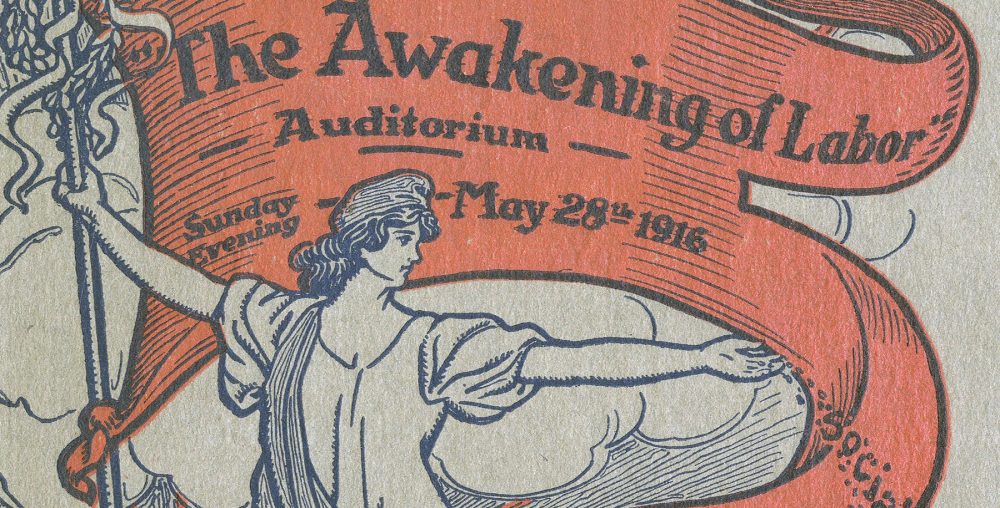
1913_LOCKOUT_ADVERT-1

The weakness of Irish workers resistance to austerity cannot be explained as a supposed result of this austerity having less effect than in other countries.  We have just witnessed the eighth austerity budget, the previous seven having cumulatively accounted for 17 per cent of current Gross Domestic Product.

The budget deficit in 2013 is higher than that of Spain, Portugal or Greece; there is at least another austerity budget pencilled in and the State debt is continuing to rise.  Next to nothing of the debt taken on in order to bail out the banks has been paid back and these banks are still saddled with mortgage customers who can’t pay their loans back.  Were the much trumpeted rebound of the property market to be anything substantial the banks would be repossessing and selling the vacated properties.  They’re not.

In other words the crisis isn’t over and neither is austerity, although faint hope that it is coming to an end plays one part in explaining latterly the weakness of protest and resistance.

The answer to the problem lies in the weakness of the Irish working class itself.  For Marx capitalism, in creating the working class, created its grave digger.  The nature of a particular capitalism goes a long way to explaining the nature of a particular working class and the weakness of the Irish working class is a reflection of the weakness of Irish capitalism.

An objection might be made to this that the Russian working class was the most ideologically advanced working class a century ago while Russian capitalism was weak. On the other hand capitalism in the United States has been the most advanced for a century or more but its working class is a byword for exceptional weakness.

The uneven and combined development of both societies has gone a long way to explaining this apparent anomaly and it is beyond the scope of this post to compare and contrast the development of the US and Russian socialist movements.  Over 100 years ago Karl Kautsky wrote on this question in ‘The American Worker’, relatively recently republished as part of a symposium in the journal ‘Historical Materialism’.

What we can say here in respect of Ireland is that its uneven historical development both inside the country, and as a region within the wider British economy, mainly as a reserve of agricultural production and labour power, has accounted for its historical weakness.

I was reminded of this nearly a year ago when I received a United Left Alliance (ULA) email newsletter what presented a series of proposed meetings to be organised by the ULA against austerity.  These meetings were to deal with different aspects of the issue such as the economy, health services etc.  In Russia a noteworthy feature of political and intellectual life a hundred years ago was the strength, vibrancy and hegemony of Marxism such that it dominated even the thinking of Russian liberals.

How different a situation from Ireland!  The speakers proposed for the ULA list of meetings demonstrated the reverse – the domination of Irish socialism by liberalism.  We can see this in everything from the Left’s opportunist search for unity with organisations that are far from working class in political character, from the Greens to Sinn Fein and populist independents, to their Keynesian economic alternative that relies on the goodness of the liberal capitalist state –taxing the rich and nationalising industry.

This of course feeds into the mis-education of workers who, while they may not reject the ULA’s state-reformism from a revolutionary perspective, have a healthy distrust of the really existing bureaucratic state they know.  And they have a healthy scepticism that this state will create a new economy and tax the rich when the most widespread view of politics and government is that the politicians and the state mandarins are only in it for themselves.

Acquaintance with the occupational training by FÁS and the decades-long state attitude to tax dodging by the elite has convinced workers that the state is rotten; a source of corruption, incompetence and of patronage which moves according to who you know or who you can lobby or to whom you can provide supplication.  Meanwhile Irish liberals bemoan the population’s lack of civic virtue and the Left feeds it nonsense about the capitalist state as the solution to austerity and poverty.

Lack of a response to austerity is in small part a result of this but more significantly a long result of Irish economic development and the working class and its movement, which it has produced.  The weakness of the working class movement is therefore of long vintage in Ireland.  The outstanding figure of Connolly, who remains a giant of working class history, and the courage of the 1913 lock-out, are today appropriated by the bureaucrats of ICTU and the Labour Party wielders of the austerity knife.  Where is the movement that can legitimately claim this heritage?

Connolly and 1913 shine so brightly because the working class movement has for most of Irish history been subordinated to other forces.  While capitalist relations developed early in Ireland and industrialisation grew beside that in Britain it was much reduced by its greater development in the latter so that by and large it became limited to the north-east of the country.  There a relatively compact and developed working class developed but the fatal disease affecting it has long been known.  It could therefore play no wider progressive leadership role for the rest of the country

There the creation of a reserve of agricultural production for Britain created the conditions for the famine in the middle of the 19th century that devastated the country and led to reactionary social and political consequences everywhere.

First were the direct effects of death and emigration which robbed the country of a growing domestic market on which capitalist production could grow.

Then there was its effect on the land question that provided the social basis of Irish nationalism but which, because of the famine and its effects, including emigration, could be solved without a wider popular alliance of forces that included the working class.  The Irish nationalist movement was thus alternately dominated by reactionary bourgeois forces heavily influenced by the Catholic Church or a republican tradition that had its most democratic leadership in the United Irishmen ripped from it at the end of the 18th century through severe repression and sectarianism.  Republicanism became a petty bourgeois movement largely indifferent if not hostile to working class politics when at its strongest.

It did develop a wing which looked at the working class as ‘the men of no property’ but only so that they would help win national freedom.  This grew into a socialist republican tradition but this has also looked to the working class as the force for national freedom.  Where in other countries the socialist movement has grown through leading a fight for democracy, in Ireland this has never happened.  The left wing of the democratic movement has on the other hand appropriated radicalism that might in different circumstances have flowed into the working class movement.

Instead of a socialist movement that has taken on board the tasks highlighted by republicanism we have had a republican movement with left wing views tagged on but which has more often than not simply not understood what a socialist programme is, although sadly they are not alone in this.  Thus left wing opinions have abounded in this part of the republican movement but opinions have substituted for programme.  Marxism, genuine Marxism, and not its bastard imitation Stalinism, has been almost non-existent.  So many of the most radical spirits in Ireland have left the country or been absorbed in the dead end of republican politics.

The famine also resulted in the growth of the enormous power of the Catholic Church.  It is commonplace to at least partly account for the weakness of the working class movement in Ireland by pointing to the sectarian division of the class.  This division was hardened and strengthened tremendously by partition, creating an additional divide between workers in the North and those in the South, on top of the religious divide.

What is more and more apparent however is not simply the effects of the division itself, in preventing unity across state jurisdictions or in spite of sectarian identification, but the paralysing influence of the resulting political forces within the separate parts of the working class.

Sectarian division allowed the Catholic Church to engage in social repression involving sexual abuse, censorship and imposition of a reactionary ideological environment that was consciously and vehemently anti-socialist.  The more that is learned about this repression the more its class aspects become apparent.

The extreme reactionary monarchist ideology is perhaps less important in the North among some Protestant workers than the sheer ideology of division itself, i.e. sectarianism.

The strength of both Catholic and Orange movements have in no small part been due to the creation of the two states issuing from the division of the country.  Again and again even today we see the state protect the most reactionary elements in society both North and South – the Northern state facilitate loyalist paramilitaries and the Southern State finance the organisations found guilty of systematic child abuse.

National oppression has prevented the Irish working class from being an organic part of the growth of the British working class movement which means it has never availed of its strengths while it has on the other hand imported and copied all its weaknesses, including economism and trade union type politics.

Upon this weakness of the working class has been built its political subordination; its domination in the South until recently by the bourgeois Fianna Fail and its saturation by sectarian politics in the North.  Without a strong socialist tradition the periodic shifts away from the traditional parties can go in almost any direction.

In the last election the Left captured the vote of a small bit of this but the apolitical and clientelistic character of Irish politics affects the Left.  This and the state-centred nature of its politics is the basis for the chronic sectarianism that has shattered the alliance the Left had formed.

As Marx said the growth of sectarianism is in inverse proportion to the development of the class as a whole and the weakness of the class is the fertile ground on which the narrow and blinkered outlook of much of the Left has been established.

So what we have had is an historically weak working class.  During the key episode of political struggle around and after the First World War it was subordinated and subordinated itself to bourgeois nationalist or sectarian forces.  The victory of the most reactionary of these forces combined with retarded economic development prevented the growth of a strong working class movement thereafter. The Irish state did not participate in the Second World War so its working class missed out in the radicalisation that accompanied it in many countries.

Marx however called capitalism a revolutionary mode of production that continually creates and recreates the working class.  While this historic political weakness weighs on today’s generations the system throws up new industries, new work relations, new circumstances enabling economic growth and new forms of working class development.  The historical development of the Irish working class during the 19th and much of the twentieth centuries cannot explain the current lack of combativity of the Irish working class because this combativity is capable of being changed and transformed.

The Irish working class continued to develop after the Second World War but this subsequent development did not create a break from its historic political weakness and to the extent it has not done so the weight of history continues to oppress.

 

What way forward for the Dublin Bus workers?

482013-dublin-bus-strike-members-of-siptu-and-3-630x484In August drivers at Dublin Bus went on strike in opposition to yet another proposed cost cutting exercise in the company totaling €11m.  Subsequently a group comprising the Government, the Irish Congress of Trade Unions and the employers’ body IBEC, joined together to carry out an investigation into why Labour Court recommendations about cost cutting proposals had been consistently rejected.

From a workers’ point of view it is difficult to know where to start in responding to such an initiative.  ICTU joined with those seeking to cut terms and conditions in order to investigate why workers hadn’t done as they were told by management.  It might have been thought that unions were there to see how workers could defend conditions but the combination involved of bureaucrats, bosses and government have been engaged in a conspiracy against the decisions of the workers.

This is dressed up as concern for the drivers themselves –  the Minister for Transport Leo Varadkar and the Minister of State Alan Kelly have said that the investigators had worked independently “in an honest attempt to address the concerns of drivers”.  But addressing the concerns of drivers for these independent experts means that “We ask the drivers to agree to the final proposals.”  In other words the drivers are to do as they are told.

And if they don’t the workers are threatened – “We are clear, however, that the outlook for Dublin Bus and its employees is very stark if this final effort does not succeed.”

To appreciate what ICTU has done it is best to consider what it didn’t do.

ICTU didn’t commit itself to an investigation to ascertain if the claims by management about the financial position of Dublin Bus were correct.

ICTU didn’t investigate why the major concessions made by drivers in at least two previous productivity/cost-cutting agreements have failed to resolve the company’s financial crises despite management assurances to the contrary. Why are they threatened by yet another cost-cutting exercise?  Has management lied about the promised effects of previous cuts or has it just been incompetent in developing a robust plan for the company?

ICTU didn’t investigate whether the support of bus services by the State was comparable to that in other states, whether the Government had any coherent transport plan for the capital or had taken adequate account of the role that transport plays in providing the infrastructure necessary for an efficient and prosperous society.  Whether instead it had taken a narrow view of the company’s profitability without regard to wider benefits to society.

ICTU didn’t seek to collaborate with all the unions involved to determine a strategy that could assert and defend the bus drivers’ rights.

ICTU didn’t seek to rally together the bus unions, wider union movement and the users and potential users of the buses to initiate a campaign for an efficient, sustainable and decent bus service.

ICTU could have done lots of things and had plenty of alternatives but it decided to conspire with the bosses’ organisation and State to threaten the drivers. And it did it in plain sight.

When you think of it this way the actions of ICTU are shocking.  But they don’t shock and they don’t surprise and they don’t do these things because workers have long got used to the fact that this is the way ICTU behaves.  So registering anger and pointing out that ICTU are engaging in an act of betrayal is hardly enough.

Do socialists have an alternative?

The first and most important thing to understand is that socialists have no alternative unless workers decide to take matters into their own hands.  The first step is therefore that workers fight to win ownership and control of their own struggles through ownership and control of their own trade unions.

In so far as the steps that ICTU should have taken are political ones, workers need to create their own political party.  This of course is a longer term requirement only in the sense that it can realistically be achieved only over a number of years.  And while the building of a genuinely democratic and militant trade union movement is also not an immediate prospect it is one that is immediately posed.  In other words the fight to create it is always present, which means we must fight for it now.

These should be central tasks of Irish socialists and outside of them the debate about unity of the Left is pretty well irrelevant.  If the Left wants to unite to build itself, unless this is a task to be achieved through the organisation of the working class itself, it will be sectarian.  Left wing unity and political sectarianism are not mutually exclusive.

On the other hand genuine unity around such a task, achieved through democratic organisation, which alone can achieve it, would act as a beacon, however small, for workers in struggle.

In order to create it however we need to ask why we need such a movement.  Why is the current movement inadequate, even treacherous, and what would a new one do?  We need these answers in order to persuade workers to undertake the task of creating one.

So how do the ideas of socialism relate to the predicament facing Dublin’s bus workers?

First we should recognise that their repeated willingness to oppose management’s plans is the indispensable basis for any alternative.

Secondly we should inform workers that militant strike action by them will not be enough.  As Marx and Engels repeatedly stated, strikes are often provoked by bosses in order to facilitate their own plans.  Often they serve to save money, implement lock-outs and close workplaces.  In Dublin Bus they will undoubtedly be used to blame workers for the financial difficulties the company is in. Strike action is insufficient and is not the only action that can be taken.

Do workers have an alternative solution of their own that could be put forward?

The first step in creating such an alternative would be to establish the real financial position of the company, which is what ICTU should have done.  This would include an assessment of the support given to Dublin Bus by the state.

The second is to establish what sort of service should be provided and how it should be delivered.

The third is to determine whether the workers themselves can offer their own model of ownership to deliver this sort of service.  Privatisation and continued state ownership both offer the same prospect of cuts in workers’ conditions.  Reliance on state subsidy should be recognised as a weakness in the workers’ position.  Dependence on the state, the ally and protector of the bosses, is reliance on precisely those that are insistent that the cuts be implemented.  That these cuts must be made prior to privatisation is demonstration that both the bosses and state recognise that it is the latter which is best placed to reduce workers’ conditions.

The fourth is to publicise and win support among other workers and the travelling public.  Other forms of action could be considered to achieve this such as providing ‘free travel’ days.  Only a campaign structure going outside the confines of trade unionism could make such a campaign a reality.

It is no great feat of criticism to describe these steps as schematic or abstract.  Only a really existing movement could make them anything else.  Schemes, or plans, are there to be proposed and debated, discarded or modified as real, active workers determine.  They sometimes abstract from the concrete realities of the situation, which give abstractions content, and become simply propaganda, usually when those with ideas lack the power to implement them.  Propaganda however is almost everything when you have little else, which is where socialism in Ireland is at.  Ideas are critical when an idea of how to fight back is the element that is missing from struggle.

The point of the commentary above is to inform workers and socialists that a certain understanding, class consciousness, is required to see any way out of the struggle that the bus workers find themselves engaged in.

One thing is for sure; the answer to the bus workers needs has been proved not to reside with management, the state or with ICTU.  The second has yet to be proved – that it resides with the workers themselves and in the strength and solidarity that they can muster.

Why have the Irish not revolted? Part II

imagesausterityIn my first post I qualified the view that there was something particularly weak in the resistance of Irish workers to austerity but argued that nevertheless an explanation is needed.  To develop this further we need to ask what this austerity has involved.

Some commentators would have a ready explanation.  In terms of the share of taxation in Gross Domestic Product (GDP), in terms of the share of Government spending in GDP and overall deficit as a percentage of annual value added there has not been ‘savage austerity’ so there has been nothing to rebel against.

Here unfortunately we have no choice but to enter the world of economic statistics where only the naive can expect clear objectivity and accuracy.

A post on the Irish Economy blog records that (adjusting the statistics for the well-known effect of foreign multinationals in the Irish State significantly overstating economic performance) living standards measured in GDP per person (in Purchasing Power Parity values) declined by 14 per cent from 2007 to 2011.  This is a bigger decline in living standards than in Portugal where the fall was only 1.6 per cent, in Spain where it was 4.9 per cent and Greece where it was 8 per cent.  In terms of national income (another measure) the drop was bigger – 20 per cent – and it will have fallen further since then.  It would appear that the relative quiescence of Irish workers needs additional explaining.

But does it?

Any Irish statistic that uses GDP is immediately suspect for the reason above but not only because of this.  GDP is a measure of value added which means the 2007 figure will include property produced at vastly over-inflated values.  Houses and offices built and priced at one value will have been shown subsequently to have been worth 50, 60 or 70 per cent less, or sometimes to be completely worthless.  A moment’s thought reveals that this is not a characteristic simply of Irish statistics but of measures of capitalist production everywhere.

When we think of the effects of the banking industry on measures of economic growth we again see that this measure is seriously distorting, not only because of the difficulties of capturing accurately what is happening, but because of the nature of capitalist production.  This takes place through the production of commodities whose real value is only realised after production. The value of these commodities is elaborated through the workings of the market which reveals the socially necessary value of output in a cyclical fashion.

For economists wedded to capitalism recessions are always the result of exogenous shocks outside the system or of purely irrational behaviour within it, which amount to the same thing.  For Marxists the cycle of boom and bust is how the values of commodities are established and then re-established in a constant process.  By nature therefore there can be no precise measure of value produced at any one point in time or over any one period.

In figures for GDP the distinction between use value and exchange value is absent never mind any accounting for how really ‘socially useful’ the use values produced are – ghost estates and weapons compared to commodities actually consumed by workers. This is to be considered on top of the well-known criticisms of measuring living standards by GDP.

There are alternative measures we can review but before we leave behind this discussion we should appreciate that what we have been looking at is not simple mismeasurement of economic activity but one form of the appearance of real contradictions within the system.

From the point of view of our particular investigation we can make two points.  That a critical review of some of the figures means the boom was not as boomier (to quote Bertie Ahern) as some statistics might appear to show and the recession not as sudden and complete a reversal as might first appear.  The expectation of more or less immediate revolt might therefore be less justified?  Other evidence however might suggest that such a view should be considered a relatively minor factor.

Secondly, the constant reporting of such economic statistics plays an ideological role such that workers must accept real changes to their lives on the basis of these statistics.  Workers are subject to such pressures not just in the recession but also in the boom – encouraged to get into unsustainable debt for example.  To the extent that they do the latter they are then under ideological assault to accept that they, along with everyone else, ‘partied’ and went on a ‘mad borrowing’ frenzy, as Taoiseach Enda Kenny has put it.

Some commentators might argue that a recognition of ‘guilt’ has played a role in short-circuiting resistance but the existence of such undoubted views is as much a result of demoralisation as a cause of the lack of resistance.

There are other statistics we can look at to see if there are material reasons for the lack of opposition apart from this particular ideological one.

What appears a more relevant statistic is called Actual Individual Consumption which encompasses goods and services consumed by households including government services such as education and health provision.  This would appear to show that between 2008 and 2011 living standards in the Irish State fell more than in Spain and in Portugal but less than in Greece or Iceland.

Actual Individual Consumption

State

2008 index

2011 index

Percentage fall

Ireland

109

100

8.3

Spain

99

94

5.1

Greece

104

94

9.6

Portugal

84

82

2.4

UK

123

118

4.1

Iceland

122

107

12.3


This measure is made up of a component of GDP so is subject to some of the criticism above.  We have already seen that three different measurements of living standards result in reductions in living standards of 20 per cent, 14 per cent and over 8 per cent, depending on dates and the measurement adopted.

What we can say with certainty is that living standards fell abruptly and significantly due to the crisis and it is not obvious that the severity of the fall in any country determined the relative extent of opposition to austerity.  It is necessary before drawing any conclusions to look at what might be at least some of the components of the fall in living standards, not by any means only a result of the effects of Government austerity policies.

By one measure unemployment in the Irish State increased from 3.4 per cent in 2007 to 10.4 per cent in 2012, a tripling of the rate in only five years.  The economically inactive, which must contain many who have given up hope of getting a job, increased from 27.5 per cent of the population aged 15 to 64 to 30.8 per cent.

Using a different measurement unemployment in the Irish state was 13.5 per cent in January 2013 compared to 17.8 per cent in Portugal, 26.8 per cent in Spain and 27 per cent in Greece.  Clearly the crisis has hit the latter countries much harder than Ireland.  It is by no means clear that higher unemployment breeds resistance since its function under capitalism is to facilitate increased exploitation of the working class.  The mobilisation of the unemployed is not always for progressive reasons, which is one reason we have noted before that economic crises often breed reactionary movements.

Once unemployed some workers face the prospect of hardship and one measure of this defined as deprivation, or being without two or more basic items, has increased from 11.8 per cent of the population to 24.5 per cent in 2012.  The possibility of this is affected by the level of welfare an unemployed personmight rely upon and this is measured by the net replacement rate, or the payments due to the unemployed as a percentage of previous net income.  This obviously depends on whether the person has children or is married etc.

Net Replacement rates 2011


No children

2 children

Country Single person One earner

Married couple

Two-earner Married couple Lone Parent One-earner married couple Two-earner married couple
Republic of Ireland 50 81 75 64 75 81
Greece 49 54 75 58 63 80
Spain 79 76 90 77 75 89
Portugal 75 75 92 77 76 91


The table shows that Greece has significantly lower replacement rates than the other selected countries for most categories but that the Irish state’s is generally lower than Spain’s and Portugal’s.  It would not appear that the prospect of a more significant loss of income as a result of unemployment has spurred opposition in Ireland relative to that in Spain or Portugal.

The other obvious way workers cope with periods of unemployment is falling back on any savings that they have accumulated.  The following table shows the movement in net financial assets per person (€) in the various countries:

Country

2007

2011

Republic of Ireland

23,634

26,279

Spain

21,698

16,328

Portugal

19,950

19,750

Greece

19,681

10,105

Euro area (17 countries)

37,289

36,201


The table shows the Irish State to have the highest level of financial assets (though much below the Euro area average) and that this even increased between 2007 and 2011!  Since these figures say nothing about the unequal distribution of wealth and we know that many have suffered unemployment, cuts in wages or tax increases, it is clear that certain sections of Irish society are bearing up quite well.  In the other countries financial wealth fell and in Spain, but particularly in Greece, fell quite dramatically.

Such average figures hide as much as they reveal.  Average household disposable income in the Irish state fell from €49,043 in 2008 to €41,819 in 2011 but this was still significantly higher than in 2004 when it was €38,631.  Right wing commentators have often made the observation that incomes have often just gone back to such and such a date and we are all much better off than before the boom kicked off in the first half of the 1990s.  This is undoubtedly true for many but doesn’t provide an answer why as a class Irish workers have resisted austerity so weakly, unless the argument is that expectations have very quickly reduced.  Is this however another result of defeat or a contributing factor to it, or both?

Averages can obscure because it is precisely the unequal incidence of the effects of capitalist crisis that can have decisive political effects.

Unemployment has increased dramatically but its incidence is not uniform.  Employment in construction has collapsed, from 258,000 at the start of 2008 to 102,000 at the end of 2012, a fall of over 60 per cent.  Over the same period employment in the state sector fell from 417,000 to 381,000, a fall of 8.6 per cent.  The pitting of private sector workers against those in the public sector was a clear strategy of the Government, the employers and the media and it was quite successful.

But this has not been the only divisive effect of the crisis.  Rates of unemployment among young people in Ireland, just like other countries, have been much higher than the general rate.  In the Irish state the rate of unemployment among those less than 25 years old was 26.6 per cent in April this year while it was 42.5 per cent in Portugal, 56.4 per cent in Spain and 62.5 per cent in Greece.  These are truly staggering figures.  The rate of long term unemployment has increased from 29.2 per cent of total unemployment at the start of 2007 to 45.5 per cent at the end of 2012.  What this should remind us, is that unemployment is a divisive imposition of the effects of capitalist crisis that impacts not only on those without a job but also those in employment.  Emigration has returned and is continuing to increase, up from 87,100 in the year to April 2012 to 89,000 in the year to April 2013.

None of these figures illustrates the hardship caused by tax increases and public expenditure cuts that can affect the most vulnerable the most.  They do not include the effects on people’s experience of negative equity, the full effects of which have yet to hit home.  Here again it is younger people who are more likely to be in negative equity and to be in arrears in their mortgage payments.  And of course the figures do not tell us that the results of the crisis and austerity are to be here for a long time.

Over 32 people were unemployed for each job vacancy in 2012, while the figures for Spain and Portugal were 72.6 and 90.4 respectively.  The General Government Debt as a percentage of GDP was 117.6 per cent in 2012 while the 2012 EU Fiscal Compact stipulates that where this is above 60 per cent it must reduce by 1/20th per year.  In 2012 the in-year Government deficit was 7.5 per cent which means the debt was not getting smaller but getting bigger.  Normally optimistic forecasters are predicting that unemployment, as measured by the International Labour Organisation methodology, was only to reduce from 14.7 per cent in 2012 to 13.9 per cent in 2014.

So what are we to make of all these figures?

The fall in living standards has been significant even if not so sudden or large for some sectors of society as others and not on the same scale as some other countries such as Greece.  Certainly the disproportionate effects on young people and rise in emigration have blunted resistance but these factors exist on the same or greater scale in some other countries in Southern Europe where resistance has been greater.

It is not therefore the effects of the crisis themselves that explain the response even if these act to weaken certain social and political reactions.  The left wing economist Michael Taft has claimed that the ‘squeezed middle’, the 4th to 8th deciles of income earners, suffered declines in direct income in the five years leading up to the crash, gaining only as a result of social transfers.

During the boom the level of trade union organisation fell relatively as union density dropped from 46 per cent of the workforce in 1994 to less than a third in 2007, and only 16 per cent in the private sector.

Thus even during the most favourable circumstances, when workers are best placed to protect and advance their living standards, they were unable to do so with their own strength.  During recession such weakness is exposed.

Now they are subject to the vicious laws of the capitalist market and, as we said in the first post, short of overturning the system there is a limited amount workers can do about this without challenging the system itself.

During this post I have said that workers have not resisted austerity but in truth the great mass of unemployment, insecurity caused by mortgage arrears and negative equity, and the drop in personal consumption are not so much the result of the austerity policies of the Government, which of course have made things worse, but of the capitalist crisis.  This crisis can in certain circumstances be postponed or ameliorated by the State but it cannot be suppressed and certainly not by a State in bankruptcy.

When even during the boom large number of workers dependency on this state increased rather reduced and rather than their developing their own independent power, it can be little surprise that when the state turns round and kicks them in the teeth they are unprepared.

Some socialists argued again and again during the boom that social partnership, the vehicle by which the Irish trade unions hitched themselves to the State, was to be opposed not mainly because it prevented workers making gains in their living standards that they should but because it rotted away their independent organisation.  This has not just organisational consequences but political and ideological ones and it is to these that I need to look at next.

Workers say NO to Croke Park 2

5178_54_news_hub_5200_328x250Commentators across Europe, indeed the world, have marvelled at the ability of the Irish to suffer punishing austerity without strikes, riots and political convulsions.  Local commentators have basked in their acclaim as the austerity poster-boy – in damning comparison to those Greeks and other southern Europeans.  Instead the Irish voted for a European austerity Treaty and voted in a Fine Gael-led coalition with politics no different from the previous Fianna Fail led one.   If opinion polls are to be believed, many have gone back to supporting the utterly discredited Fianna Fail.  The recent Meath by-election saw the Fine Gael candidate handsomely returned and the particular local circumstances do not adequately explain it.

Irish workers accepted the tearing up of the existing social partnership deal and voted for a new one called Croke Park, which inflicted cuts in services and conditions, including yellow pack terms and conditions for younger workers, in return for no compulsory redundancies.

Unemployment however has soared, reaching over 14 per cent officially and, according to the IMF, over 23 per cent if the underemployed are included.  This is despite emigration of tens of thousands of the younger generation to destinations across the world.

Yet still the ‘fighting Irish’ showed no signs of fighting.

Until now.

This is the significance of the vote on a new Croke Park deal.  Irish workers have said NO.

If it has been a surprise to many on our side it has been a shock to the Government who thought their threats, bullying and intimidation would work.  Above all they thought the rotten leadership of the Irish trade union movement, which supported the new deal, would pull it through.

Its mouthpieces in the media reacted with denial.  The ‘Irish Times’ journalist said “it was so close”, “if 1,000 members of SIPTU had voted the other way, or if more of its members had been minded to come out and vote – there was an extraordinarily low turnout of 45 per cent – the deal would have sufficient support to be ratified.”

There is a grain of truth in this but we will come back to this.  Let us first note that the press and media betray once again their class character by agonising about how the democratic wishes of the workers can be subverted by ‘tweaking’ the deal to get it through.  You will search in vain for commentary deliberating over how the workers’ majority can assert and validate their democratic decision.

The deal has been rejected but the vote is a mere inconvenience.  It doesn’t count.  The workers can say anything they want and will be listened to, but only if they agree.  Like European referendums voting is to allow worker s to approve the plans of the capitalist class and its state.  Again and again Irish workers are taught this lesson – voting is not a choice, it’s a stamp made of rubber.

Instead we are fed rubbish that a vote that saw the deal decisively rejected by a majority of two to one, 115,000 to 55,000, could somehow have been passed “if 1,000 members of SIPTU had voted the other way, or if more of its members had been minded to come out and vote.”  The votes of those who didn’t vote are ‘virtually’ counted to support austerity while in fact the vote against will have awakened the many workers who didn’t vote to the possibility of voting against the Government, the State, the mass media and their own rotten leaderships.

But even these propagandists of the system couldn’t help but recognise that many workers voted no, not because they were personally affected very badly by the deal, but because they didn’t think they should vote for other workers to take a pay cut.

The grain of truth – that the result could have been very different – is a reflection of the bureaucratic nature of the trade union movement, where a majority of 60,000 might be reversed by 1,000 voting differently in the biggest union.  This is only one illustration of what is now the biggest question that is to be answered, which is not the one asked in the media – of what will the Government do?  The real question is – what will, or can, the workers do about their leaders who recommended and argued for and censored the opposition to this rotten deal?

The problem is neatly encapsulated by a report on the Irish National Teachers Organisation Conference at which delegates wanted to put an emergency motion calling on the leadership to have a strategy in place if there was a No vote.  This was ruled out of order but a weaker one was allowed.  Only when delegates booted this out was a compromise motion passed that called “on the central executive committee to urgently liaise with the executives of other public service unions with a view to promoting and planning a public service solidarity alliance of trade unions across the public service.”

What this episode reveals all too obviously is the restrictions placed on workers by union bureaucracy and this bureaucracy’s intention of relying on the Government to ‘tweak’ the deal so it can be imposed on the membership.  It shows the awareness of trade unionists that a strategy is required and one that seeks the maximum unity.  The obvious weakness involves relying on the same union bureaucrats to provide this strategy and implement it.

Putting together a convincing strategy will not be easy but the vote itself is a massive step forward, as is the appreciation of the need for a strategy and for this to be based on unity within the union movement.

Very early on in the current crisis the then Government relatively easily divided workers through claiming those working in the public and private sectors had separate and opposing interests.  The union leaders seemed only too happy to walk into this trap.  Their willingness to sacrifice services for short-term and increasingly illusory benefits for public sector workers has failed even these workers as their pay has been slashed and the deal they signed up to was torn up with union consent.  Meanwhile the workers who use these services have had some confirmation that the quality of these services may suffer to defend the conditions of those who deliver them.

The initial reaction against this disastrous approach was recourse to an even more divisive one, with the creation of a Frontline Alliance that saw narrow trade unionism prioritise the interests of some workers who are on the frontline of some services, implying a common interest not shared across all workers.  However I’ve yet to meet a frontline service that could operate without the support of rearguard(?) workers.

Even this signalled not some reduced form of trade union unity but the plaintive cries of the ‘special case’.  I remember listening to an interview some months back on ‘The Last Word’ on Today FM with a group of union leaders from this Alliance.  What was most striking was that when they were interviewed one-by-one there was hardly the slightest hint of a common grievance.  They seemed totally ignorant of how narrow their complaints seemed and how stupid a strategy is which is based on claiming special treatment when such an all-engulfing attack is being meted out.

There are other courses of action and what might seem like alternative courses for workers looking to fight back are in fact the same struggle.

The view that it is impossible to get the union movement to fight back without first kicking out its rotten leadership replaces a task on which workers have just voted – rejection of Croke Park 2 – with one they have not had placed clearly before them, debated and decided upon.  There is limited traction in simply claiming ‘betrayal’ and saying these leaders must be replaced now before a real struggle to give effect to the No vote can be realised.

The entirely justified and valid view that the current union leaders must be replaced can be achieved by demonstrating to the majority of members the practical effects of these leaders supporting attacks on their interests while frustrating any resistance.  In the course of mounting this resistance the task of replacing these leaders can be posed but not as a precondition or prior requirement for such resistance.

The related questions of whether workers should demand that their leaders hammer out a united strategy or should unite at rank and file level to achieve this themselves are also not opposed.  While rank and file workers must unite across unions to create their own structures this can only be in addition to the established ones. In this way they might demand that their separate leaderships take action and also advance towards an end-point where, if they do not, workers are in a position to pose this task practically themselves.

In doing so workers might learn that replacing the current leaders is not enough and that what is really required is an entirely rejuvenated trade union movement.  One that is open, democratic and not in thrall to either bureaucratic leaders or bureaucratic structures and rules.  A big step forward has been taken with the No vote and the Government is faced with the threat of resistance.

As this post is finished it is reported that the Government does indeed intend to ‘tweak’ the deal in what is called a “carrot and stick approach”.   Since it still intends to make the same amount of cuts what won’t change are the pain and divisiveness of the tweaked deal and the threats that will accompany it.  Like donkeys workers are expected to look at a carrot paraded in front of them while what they feel is the stick.

The new bank deal and the working class

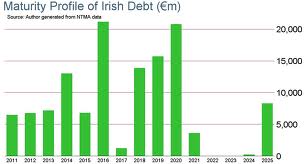
debt maturityThe most important aspect of the deal that has replaced the promissory notes is not what it entails but what it does not entail. It does not involve a write off of any of the debt so that less would have to be repaid and interest burden on the debt lowered. It does not involve the European Stability Mechanism, in effect the EU, directly funding the banks which appeared to be the deal offered last June and it does not affect all the bank debt.

The deal on the promissory notes affects €28 billion of a total debt at the end of last year of €192 billion and relates to less than half that incurred in bailing out the banks. The Government has not changed its austerity targets. The editorial in the Financial Times stated that ‘restructuring the promissory note does not make the public liability for bank losses lower, just easier to bear.’ Easier to get workers to pay is more accurate. All the questions regarding how the deal will work have not been answered, which also demonstrates continuity with the promissory note arrangements that were understood fully by very few despite the enormous impact on people’s lives.

Never mind, the Taoiseach proudly told us that the “stains on our international reputations and dents to our national pride, have now been removed from the financial and political landscape”. This is a statement so revealing of the shallow moral argument for the deal, so instructive of the concerns of the elite as distinct from the majority and illuminating of the poisonous demands of national identity that despite its odious character it would be good to see it repeated again and again and again. The Irish people have decades to ponder how satisfying it is to pay for so long to erase such an embarrassment.

As for the new deal itself, it involved the liquidation of IBRC, which was the combination of Anglo-Irish bank and the Irish Nationwide building society. The Government will still pay €1bn to the bondholders of Anglo, as part of the 2008 guarantee, so no bondholder is left behind, and more rotten loans in Anglo will transfer to NAMA, which promises further losses down the road. Loans left in Anglo totalled €15bn.

It involves tearing up the promissory notes that provided the means for the State to get money from the Irish Central Bank (ICB), the local branch of the European Central Bank (ECB), to be replaced by ordinary government bonds, which are really just a more regular IOU used by states. This allows the state to keep the money loaned to it on the back of the promissory notes instead of having to pay it back when the notes were torn up. The state will still have to pay the money back and pay interest but will have much longer to pay and with what appears a lower rate of interest. Both of these are good things – having longer to repay and being charged less for the loan, but both are not as good as they appear.

The longer you have to pay the more you have to pay back, just like any mortgage. The lower interest rate is not such a change for the reason explained in the last article. This is because the high rate of interest paid by IBRC (8.2 per cent) to the Irish Central Bank, which the taxpayer ultimately funded, was used by the ICB to pay the ECB which charged a much lower rate of interest. The difference was returned to the Irish State so the effective rate of interest was not they headline rate of the promissory note. The reduced interest cost between the promissory notes and the government bonds is therefore not what it might appear.

But this is not the only reason the savings might not be so great. The ICB will have an asset, the bonds, the ownership of which entitles it to receive interest every year and receive repayment of the principal. Part of the deal is that the bonds are sold to private capitalists, €6.5 must be sold by 2022. How quickly they must be sold is not at all clear and thus neither is the cost of the deal, although this has not prevented the Government, media and commentators continuing to welcome the deal and proclaim its savings as if they were hard fact.

In selling the bonds the Government will in effect be raising new loans. If for example it attempts to sell €1bn worth of these bonds and investors don’t think the interest they would get on them is high enough they may be willing only to pay €980m, €950m or €930m instead of the €1bn. In other words the bonds would be sold at a loss and the tax payer would foot the bill. To replace the loss would require more loans costing more.

The rate of interest charged on the bonds over their lifetime is not known so calculations of how much the new deal will cost must make more or less educated guesses of how much the deal will actually cost over the long term. The longer the term the more the ‘educated’ guess becomes ‘pure’ guesswork.

Nevertheless within a couple of days estimates of savings on an NPV basis were quoted and savings of €8bn announced. Net Present Value (NPV) analysis allows one to calculate and compare amounts over different time periods recognising that someone would rather pay €1 in 10 years’ time than pay €1 today. It allows one to say whether it would be better to pay €1 for each of the next 9 years and €11 the following year or pay €2 for the next 10 years. In both you pay €20.

The money paid in the future is discounted so that €1 paid in ten years’ time is less than €1 paid in 5 years’ time which is calculated as less than €1 paid in 3 years’ time. How much you reduce the amount depends on the discount rate and this rate can have a big effect on the result. The rate chosen is another variable that is a guess, first educated and then pure.

The higher the discount rate the less costly future costs become which offsets the fact you are paying longer and on the face of it more. So one could be paying €21bn equally over 20 years instead of €19bn equally over 12 years but because the first means the money is paid off later it is worth less and the total cost on an NPV basis is less. In the example above an NPV calculation at a discount rate of 6 per cent shows that the first payment schedule costs €11.2 in NPV terms, where €11 is paid in the last year, and €14.7 in the second where equal yearly payments of €2 are made.

In the new deal the first repayment of principal is not until 2038 and the last in 2053. The NPV savings in the new deal were worked out by one economist as €8bn and then by a couple of others as €4bn, a whopping difference of 50 per cent of the first estimate. Another economist has stated that almost all of the calculated savings disappear if the timing of the sale of the government bonds to the private sector is accelerated. Factor in the loss on sale to the capitalists plus increased interest costs and the deal might very well cost more.

A final argument has been much quoted, and certainly more often than the lack of robustness of the savings estimates. This is that inflation will erode the real value of debt repayable by our children, who will be middle aged when they might finally pay it off. This means that, if say the interest rate is 5 per cent and inflation is 3 per cent the effective rate of interest is only 2 per cent. Also the real value of the money repaid in thirty years’ time will be less because of the cumulative reduction in the real value of the debt by this inflationary process.

It might otherwise be amusing to listen to these experts, who gave us a property ‘soft landing’ and now the wonderful benefits of inflation, except that we can state with absolute certainty that they will also be lecturing us in the future on the evils and futility of seeking pay rises to compensate for inflation because these will only increase it. Not only will interest rates rise in response to higher inflation thus limiting the effect above, which will also put up the cost of mortgages, car loans and credit card debt etc. but higher inflation will also erode living standards. What workers might gain from erosion of the real value of the debt they will surely lose by the reduction in living standards caused by an increased cost of living.

By now it should be apparent that the deal’s main benefit is putting off repayment of the loan principal thus making it less likely the state will have to default. In other words the main beneficiaries are the State and the ECB, which is sanctioning the lending of the money and protecting the European banking system. What is good for the state, that it continues to pay and does not default, is bad for workers who will really do the paying.

The second benefit is that the low interest rate charged for the money the state gets in exchange for the bonds will be around longer. However as we have seen, how much longer we don’t know. It won’t be our decision when it goes up (through selling the bonds to the capitalists) because this is a decision of the European Central Bank. Such a decision will cost us billions but we have absolutely no say in the matter. Yes, we live in a democracy.

Once again it is necessary to educate workers that they must distrust the state as much as they would distrust an email from Nigeria asking for their bank details. (The power of the state means it doesn’t need them.) We need to remind them that the state is able to foist the debt of Anglo and Nationwide on them because it nationalised these institutions. We need to inform them that both the Irish Central Bank and European Central Bank are institutions of the state deliberately designed to be protected against any kind of democratic pressure.

This brings us to a couple of questions a reader asked me about the promissory note deal. He asks how the government borrows from the central bank as if it is separate institution. “To me it looks like the government is borrowing from itself, but if that is the case why doesn’t it borrow some more?”

The first answer is that with so much debt the Irish State cannot borrow more from the markets (private capitalist funds) which is why the EU and IMF stepped in to loan the money. It can’t borrow more from these institutions because they want the state to reduce its indebtedness and pay them back their existing loans.

The second answer is that the Irish Central Bank is a branch of the state and a normal central bank can both provide loans and ‘print money.’ There are limits to the former if, as we have just noted, the state won’t be able to pay the loan back. In this case it is if it makes a loan that isn’t repaid just printing money. Printing money will at some point lead to a devaluation of the currency meaning that the Euro will be worth less and buy less making everyone across the Eurozone worse off when it has to buy goods from countries that don’t sell in Euros.

To protect against this the ECB has a firm grip on money printing and the deal on the promissory notes and the new one involving the issuing of bonds required its approval. The Irish state is part of the Euro so doesn’t control its own currency or it could try to get away with printing some money, although in reality it is too weak to be able to do so even if it went back to the Punt.

The ECB is taking control of the timing of selling the bonds because printing money in exchange for bonds that don’t have to be repaid for years is so close to money printing it really is printing money.

The rules of the ECB prevent it funding states and public institutions directly for this reason. It has however ended up with Irish government bonds in exchange for funding the IBRC. Because it ended up in this position indirectly by funding a bank (public banks must be treated just like private ones)rather than a government and through the receipt at first of promissory notes rather than regular government bonds this has to a very little degree been hidden.

This is why they’re not very happy with the deal and might also be why they will quickly ensure the bonds are sold to private capitalists; thereby entailing an interest cost more reflective of the market. As I have said, this will cost the Irish people a lot of money.

In the next post I will look at whether the new deal has solved the debt problem.

The promissory notes and the working class

The response of the mass media to the deal on the promissory notes was one of considerable praise to a Government that had won a deal that “appears as good as could have been hoped for”.

The world of finance is notoriously complex so in simplifying the deal for a mass audience the media felt free to simply lie.  Thus the headline in the Irish Times said that the ‘Bank debt deal to cut borrowing by €20bn and ease next budget’.  The small print revealed it would only reduce the amount paid in the next decade and the debate after the deal has revealed that there is no certainty that the next two budgets will be any less severe than planned.  The Troika and others are demanding the original targets are adhered to and being a poster boy of austerity might demand it.  The uncertainty surrounding important aspects of the deal leaves open to doubt many of the claimed benefits.

But one thing is very clear: the bank debt was unsupportable despite the responsibility of all the parties for placing it on the shoulders of the Irish people and something had to be done to prevent a disorderly bankruptcy.  This would have been caused by inability to raise the financing required to run the State at remotely affordable interest rates.  The average maturity of the main sovereign debt of about €80bn is around six and a half years, which has to be renewed by borrowing this amount again to pay it off – ‘rolling over’ the debt.  Combined with a possible promissory note repayment of over €28bn averaging five years and continued deficits this looked close to impossible.

Not that anyone dared point out that the deal exposed the lie of the Government parties, of the previous administration, and of the current Governor of the Irish Central Bank that the deb was ‘manageable’.

Ignoring this also allowed the media to largely stay clear of why this deal was necessary in the first place.  The Irish State had decided it would protect the investors in two thoroughly rotten institutions, run recklessly by their owners, by promising them that the Irish working class would pay off their gambling bets.

The Irish State never asked workers whether they wanted to, or whether they thought it was a good idea, but conceived the original bank guarantee in the middle of the night, as a scheme concocted without even the presence of cabinet ministers who were supposed to make up the Government.  In effect it decided to pledge money it didn’t have to people we still did not know and get everyone else to pay for it, including generations not yet born.

As ever we are bombarded with propaganda that cuts must be made in wages and services; increases must be applied to taxes, charges and working hours and all because we need to be competitive.  Yet billions that could not possibly be afforded were pledged and paid that bankrupted the State.  This in turn necessitated a ‘bail-out’ by the EU and IMF, which is akin to a blood transfusion to a dying patient so that she can work to earn money to pay the vampire.

As the Croke Park deal is ripped up and more draconian conditions inserted – not ‘extended’ as claimed – on the back of demands for austerity, no austerity is to be inflicted on the capitalist gamblers.  While money can be wasted on dead banks money must be cut out of wages and services because ‘we’ can’t afford it.

This is the logic of the capitalist system but it is hidden not just by the mass media and politicians but by the opaque workings of the capitalist system itself, made more complicated by the complexity of the financial system.  This complexity is useful because when it is more difficult to understand and appreciate what is going on it is more difficult to fight against it.  Only vague ideas that you are being screwed do not help give you confidence to say stop!

That is the importance of understanding as much as possible what the promissory note deal involves.

When the State guaranteed the liabilities of the banks in September 2008 it claimed the problem was one of liquidity, that is the banks were basically sound but were in danger because they would not lend to each other.  There might also be a withdrawal of money by depositors.  This was the purest rubbish and the gamblers who had put their money into Anglo-Irish Bank and Irish Nationwide didn’t buy it.  They took their money and ran.  Deposits in these institutions, packaged together as the Irish Bank Resolution Corporation (IBRC), fell from €65.8bn at the end of 2007 to €1bn at the end of 2011 while the value of debt securities funding the IBRC fell from €30.85bn to €6.3bn during the same period.

So if the IBRC was bust where did the money come from to give to the depositors and holders of the IBRC debt?  The answer is that it came in the form of Exceptional Liquidity Assistance (ELA) from  the Central Bank of Ireland (CBI).   This ELA funding to the IBRC was zero in 2007 and €40.1bn at the end of 2011. ELA is money so the question is where did it come from, how did the CBI get it?

In many ways the CBI may be thought of as the Irish branch of the European Central Bank (ECB).  The ECB has strict rules about money creation (money printing) so the local branch in Ireland could not just print Euros (metaphorically speaking) although this is one of the things Central Banks can do.

Nevertheless the CBI was able to give money in the form of ELA to IBRC which then paid off its depositors and holders of debt securities.  Since this bank and building society were broke the state nationalised them making all their reckless speculation our reckless speculation and making their debts everyone else’s debts.  Because the State didn’t have the money either to pay back the speculators they issued IOUs to the Central Bank of Ireland in return for their money’ the ELA.

The result was that the CBI gave money to the State in the form of IBRC and the State gave the CBI promises to pay this money back with interest.  Although the two institutions that became the IBRC had issued loans which were due to be repaid many of these were worthless so only through the state intervening could the capitalist investors in these institutions get their money back.

The promissory note IOUs were the promise by the State that through tax increases, wage cuts and public service cuts the working class would ensure they got their money.  This is what prevented the ELA being simply money printing and thus prevent the CBI holding worthless pieces of paper.

So the cuts to wages and public services that are justified by the claims that we need to be competitive are partly in order to pay the debts of a very uncompetitive bank.  So uncompetitive it is now dead, having been in a zombie-like state for the last few years.  When the State pays part of the promissory note IOU to the CBI the Irish Central Bank has ‘taken the money out of circulation’, again to ensure the problem is not solved by printing money.  In other words the money workers paid through austerity is simply burnt (again metaphorically speaking).

What could be more uncompetitive than maintaining dead banks on life support through burning money by putting real people on the dole and cutting services such as education?  The promissory note episode is one object lesson in the irrationality of the capitalist system.

This course of action could not have been taken by the Irish Central Bank and the Irish State without the approval of the European Central Bank and the European Union and its Commission.  For them the over-riding concern has been the protection of the European banking system just as the main objective of the Irish State has been the protection of the Irish banks.  Nationalist complaints that the Irish have made sacrifices for everyone else, much trumpeted by trade union leaders, has to ignore this.

If Irish workers have paid more so far it is because the Irish banks have been weaker and more rotten and Ireland remains a subordinated country which is dependent on foreign money for its speculative bubbles.

If the Irish State’s attempt to save the banking system required the ultimate liquidation of the IBRC this is because there was, in the end, little left to save after all the depositors and holders of its debt securities had been paid.  Again only the workers, in this case of the two institutions, are threatened with picking up the bill through redundancy.

For the Irish State this promissory note device to ensure that it did its best for European banks (and its own) had some advantages and disadvantages.  Of course inability to actually afford it is one big disadvantage but if it can get workers to accept austerity then this is not such an insurmountable obstacle.

The ECB does not want to lend money to institutions that cannot pay it back and since IBRC was bust its actions in approving the lending by its local branch raised some controversy.  If for example it lent to a bank that went bust and which didn’t pay back the money lent this money would then have entered the economy (through those people the bank did pay back, its employees or new loans) and this would amount to money creation/printing.  This can create inflation and low inflation is the primary objective of the ECB.  A strong currency allows a state, or in this case the Eurozone, to command greater resources on the world stage and is thus integral to the project of a strong EU imperialism.

The ECB thus regularly monitors (every few weeks) its ELA so their approval or otherwise was always hanging over the Irish State, although even without this it remains under close and regular scrutiny.

An advantage of the promissory note arrangement that will be lost at some stage with the new deal is that because the State owes the money to the Irish Central Bank profits by the ICB on the loans can be returned to the Irish State.  Given the high interest rate of over 8 per cent this is important.

Because a lot of the ELA created by the Irish Central Bank has ultimately been paid by IBRC to banks and institutions in other EU states the ECB has had to lend money to the ICB so that the reserves of the Irish Central Bank do not decline dramatically.  The ECB charges the ICB for this money but at a low interest rate so that the difference between this low interest rate charged to the ICB and the higher interest rate charged by the ICB to IBRC is a profit which can go to the Irish State.

What this means in terms of the current benefits of the new deal is that the move to a lower interest rate on the Government bonds that replace the promissory notes is not a gain since the effective rate of interest actually paid on the notes is the rate charged by the ECB to the Irish Central Bank and not that charged on the promissory notes.  As explained the profit generated by the latter is taken by the Irish Central Bank and returned to the State.

In the next post I will look at the new deal to replace the promissory notes.