
Most of Europe is involved in a proxy war against Russia, costing billions of Euros and untold lives; untold because the personnel involved were not supposed to be in Ukraine in the first place. Who voted for the war?
This question sums up bourgeois democracy.
This has not prevented many on the left enthusiastically supporting it. This left, which normally would not dream of calling a strike without a ballot, has given a blank cheque to its ruling class and its state. Rather than demand a vote in order to debate the purpose and objectives of the war, they have simply endorsed it and called for it to be supported more vigorously. I doubt the idea of a debate and vote even crossed their minds, not least because they don’t have an alternative anyway.
The justification, ironically, is that Ukraine is a ‘democracy’ and Russia is not; even though the current president of Ukraine is no longer an elected leader, since his period of office has expired, while the President of Russia actually won an election, for what it’s worth. In the last few days Zelensky has tried to concentrate even more power in his hands by sacking around half his cabinet. That opposition parties and media are banned in Ukraine matters not a jot to these people while Russia’s elections are regarded as a sham. Let’s think about that for a minute and consider recent elections in the ‘democratic’ West as a comparison.
First, we have the new Labour government in Britain, elected with an enormous parliamentary majority by only 20% of the electorate on the basis of not much more than not being the Tories. Starmer and his colleagues did their best not to commit to any specific policies and have quickly broken promises that they did make – on energy prices and austerity. No doubt, further measures will confirm this course. The widespread opposition to genocide in Gaza, reflected in support for some independent candidates, could find no reflection in the choice of government as both Labour and Tories support it.
Second, we have the most powerful bourgeois democracy in the world in which counting the money is a better guide to who will win than the polling of support for the various policies that the candidates claim to support. The US is possibly even worse than Britain in terms of the vacuum of debate on what exactly parties will do when elected, whether anything they say can be believed and is not just a catalogue of lies. For every Donald Trump and Kamala Harris we have a Boris Johnson and Keir Starmer. The main appeal of each candidate is aversion for the other.
When the usual mechanisms for making sure the ‘right’ candidates are selected fail these are ditched and the men and women with money and political power step in to make the ‘right’ selection. After months of primaries and the votes of millions – 14.5 million in fact – the Democratic grandees and apparatchiks stepped in to ensure that Genocide Joe would not be the Presidential candidate. In this he was simply the subject of the same machinations that ensured he was the candidate in 2020 instead of Bernie Sanders, who was judged too left wing regardless of the popularity of his policies or of himself.
Even the proponents of bourgeois democracy worry that all this is not sustainable, while certain sections of the left cling to it all the more firmly the more rotten it becomes. In an opinion piece in the Financial Times, a contributing editor noted that Kamala Harris has given only one media interview and even that not by herself – ‘she seems to think that if voters understand what she will do as president, they will be less likely to support her.’ It notes the irony that, while claiming to defend democracy against the “existential threat” to it posed by Trump, the failure to do what you say you are going to do means that ‘rather embarrassingly, you will be the one undermining the system of representative government.”
The argument of socialists is that bourgeois democracy – “representative government” – is a sham. How could it be otherwise in a system in which the means of production are controlled by the capitalist class, including the means of communication – of producing ‘the news’ and disseminating it, and the state machinery through which government policies are implemented – thorough its top personnel and the economic structures through which policies can be allowed to work or alternatively are throttled.
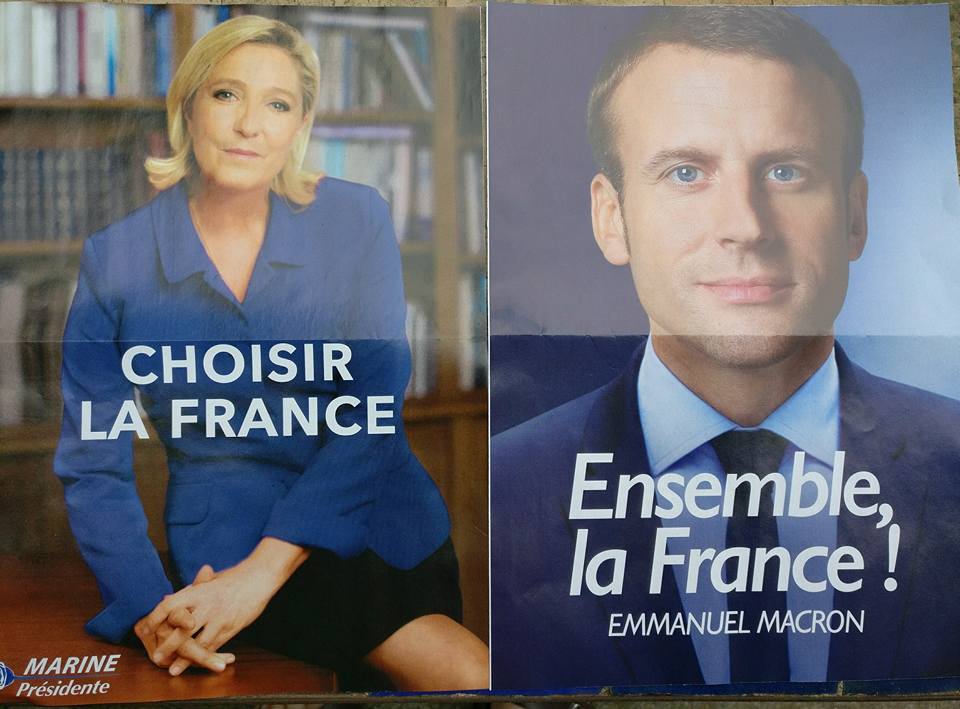
A final example of bourgeois democracy in action is in France, where the defeated Emmanuel Macron, having prevaricated for two months, has announced that Michel Barnier has been chosen by him to be Prime Minister. Despite the New Popular Front having won a plurality of the votes he has selected a leader from the right wing Les Républicans, which won only 6.57% of the first round vote.
The leader of France Insoumise, Jean-Luc Mélenchon has declared that “We’ve been robbed in this election”. It is normally the largest formation that is permitted to form an administration but such normalities are always disregarded when the political establishment thinks that it faces some sort of threat, especially from the left.
The real anti-democratic nature of this move by Macron is not so much the abuse of this Presidential mechanism but what the employment of this power signifies. The elections were a decisive rejection of Macron and his policies, reflected in the vote for the New Popular Front and in the rise of the far right Rassemblement National. Yet Barnier was selected preciously in order to confirm and continue these policies.
The front page of the Financial Times explained that the purpose of Macron’s choice was to ‘find a candidate . . . who would not seek to undo his pro-business reforms.’ The fraudulent nature of the far right alternative to mainstream capitalist policies was revealed by the response of Marien Le Pen who is quoted as ‘cautiously’ welcoming the appointment and saying that “Barnier seems at least to meet one of the criteria we’d demanded . . . and be able to speak with the Rassemblement National. That will be useful as compromises will need to solve the budget situation.”
An analyst from one of the think tanks that litter the capitalist political environment stated that his appointment would ‘help in France’s bid to reassure markets over the economy and public spending’. “He’s a safe pair of hands known to market participants, known to Europe and the domestic political elite within France”, adding that he would be expected to ensure that ‘Macron’s labour and pension reforms would remain intact.’
So, there we have it. An overwhelming vote against Macron’s policies is turned, or is attempting to be turned, into an administration that will ensure their maintenance. It is not the clear wishes of the electorate that must be counted but that of the ‘markets’ – national and international capitalism – and the ‘political elite’ that counts.
For all the hypocritical cant about ‘democracy’ we have yet another example of how bourgeois democracy is democracy for the bourgeoisie. For the majority, including the working class, democracy does not extend beyond occasional visits to the polling booth in which meaningful choice has often been removed, or when it has not, constitutional devices are employed until these too are insufficient whereupon more forceful measures are employed.
Mélenchon is reported to have called for protests against this subversion of the popular will, demonstrating that, for the working class, democracy can only be enforced and guaranteed by its own actions. What this action cannot do, however, is democratise the state itself, which is the instrument of the political elite and the markets – the bourgeoisie and capitalism.
The resort to protest is testament to where power for the working class arises and where it must be advanced – in the organisation and mobilisation of the workers themselves. Elections can measure its strength and level of politicisation but only the workers own organisations can form a democratic alternative to the political elite, the bourgeois class and its state. This in turn demands that the organisation of the working class movement itself must be democratic, but until some current socialists stop supporting capitalist war in defence of bourgeois democracy they will have nothing but a reactionary role to play in building up the workers own democracy.

 Sráid Marx