Within minutes of the announcement that the negotiations between the EU Commission and Britain would continue the Labour Party put out a statement calling for Brexit to get done, plus supporting a deal so that we could all ‘move on’. There was no sign of Starmer’s six tests for a Brexit that Labour could support because this would mean not supporting any deal.
So, the statement was one part opportunism and one part aping Boris Johnson’s “get Brexit done”. The most stupid however was the idea that once there is a deal, any deal, we can all “move on”.
In 1957 the British Prime Minister Harold Macmillan sought to pre-empt creation of the European Economic Community by proposing a wider free trade area that would encompass the six would-be members of the EEC. The six however had already committed while the British appeared to want to have their cake and eat it: gain a free trade area for its industrial goods in the rest of Europe while continuing its current arrangements with its old Empire, especially in relation to food. For the prospective members of the EEC the British proposal appeared to threaten political ambitions for the new European organisation while France in particular saw it as a British attempt to take leadership.
When this British attempt failed it went ahead with creation of a separate European Free Trade Association (EFTA) that included Austria, Denmark, Norway, Portugal, Sweden and Switzerland, setting its launch date for May 1960. When the EEC members accelerated plans for cutting tariffs in the same month EFTA, in an effort to keep up, followed suit with its own programme of cuts the following February. An earlier example of the exercise of sovereignty and the ‘ratchet effect’ so objectionable to the British now.
Just over a year later Britain demonstrated its commitment to its new EFTA allies and announced it was applying to join the EEC. It did this for many reasons, including that EFTA was too small, that the countries of the dying Empire were going to go their own way, and that the US supported West European unity, meaning that EFTA could never rival the EEC.
Joining it, according to Macmillan in 1961, was necessary not only to boost relatively poor economic performance but “to preserve the power and strength of Britain in the world.” Showing its continuing devotion to its EFTA allies it unilaterally imposed a 15% surcharge on imports from EFTA members in 1964, making them in some ways worse off than the US.
Today Britain is on its own. It will not be putting together an alliance of several other European states to rival the EU when it doesn’t even have the weight to compel direct negotiations with the two largest EU states, Germany and France. Instead of such a coalition it trumpets an exit on “Australian” terms, which is a euphemism for no deal but has the merit of showing how isolated it is.
So, Britain sought EEC membership again and applied to join in May 1967. Six months later France vetoed the application. In June 1970 the EEC opened negotiations and in January 1973 the UK was admitted to membership. There was no position for Britain outside it that remotely cohered with its view of its role in the world.
This is even more the case now when its relative power has continued to wane and will suffer a downward step change as it leaves, regardless of the post-imperial bluster that has gone off the scale. When the Royal Navy boasts of four small boats defending British sovereignty you should know you’re in trouble. As a nuclear power it awaits a decision on whether the US is going to go ahead with a missile system Britain depends upon for its ‘deterrent’.
Having rejected membership of the Single Market, even were the EU to agree to it, any deal that is now negotiated will be a ‘thin’ one. In other words, it will address tariff barriers which average about 3 percent while leaving intact non-tariff barriers that are in the order of 20 percent. Such barriers threaten the existence of whole industries, including motor manufacture, and many others that require EU approvals such as chemicals and aerospace. Electricity interconnection with France and Ireland requires adoption of EU harmonised trading rules. Not mutually accepted rules, not equivalent rules, but exactly the same rules.
The British have resiled against the necessity to align its rules with any development of those of the Single Market. Why should it change its rules just because the EU changes theirs? As we have seen, we have been somewhere like this before.
Were the British proposals to be accepted, and their rules to remain unchanged while the EU developed its own rulebook, the rules set by the EU would no longer govern entry into the Single Market. Britain would have access without having to follow the same rules as member states. In order to prevent this the EU would have to put on the brakes to take account of the European power that has assumed the strategy of preventing European unity for centuries. The alternative would be to open itself up to other countries seeking the same privilege as the British. Neither of these is going to happen.
So, we witness the issue of Fish remaining prominent as a way of allowing Britain to declare some sort of victory in a skirmish while surrendering on the main battlefield.
It seems fairly clear, as Denis Staunton from the ‘Irish Times” made clear this morning, that there will be a deal, but that won’t mean Britain can ‘move on’, except in the sense that it goes round another loop of either having to rejoin its European neighbours or sink by itself into an isolation its people will not accept. There is no ‘moving on’.
This means that the strategy of the British Labour Party of supporting Brexit through supporting or abstaining on the deal in Westminster will put it on the wrong side of history and make it joint owner of the disaster. The referendum and tortured path since have demonstrated again and again that Brexit is toxic. It will entail untold attacks on the working class, its rights and its standard of living. The Labour Party should not be looking to be a donkey that blame can be tagged on to.
The division of workers along national lines shows how reactionary Brexit has been by inevitably promoting division within the British working class itself. We can see this through the millions of workers opposed to Brexit and the rise of Scottish nationalism, nurtured by the idea that one variety of British nationalism is somehow qualitatively better than another. Already in England we see demands for some sort of autonomy for certain regions like the North of England, as if there was a geographical solution to a problem arising from the system that crosses all borders. It is as if nothing has been learned from the failure of proposing the fix of devolution for Scotland as the solution to austerity and decline.
On the Left, the so-called Trotskyists are saying it could all have been different when it couldn’t; while Stalinists wallow in their own nationalism, in their demand for national sovereignty and their own version of (nativist) identity politics.
The unity of Europe and erosion of national political differences is objectively progressive. It is a task that socialists would themselves seek to accomplish. That capitalism is doing it only confirms that it can be done in a rightist and conservative manner and that Marx was right to see capitalism as transitional to socialism. Of course, it is only transitional to socialism if the working class makes it so, but it won’t if it fails to fight for the tasks that capitalism itself has commenced and imposes for its own ends.
The policy of lockdowns has been approved by many on the left, with the additional argument that they have not been strict enough. Some appear to believe that pandemic induced crises necessarily open up opportunities for revolutionary crises. These are considered opportunities to mobilise the working class to resist attacks on its social position and turn it towards socialism. Crises then become both the necessary and sufficient condition for political revolution. What these sufficient and necessary conditions might actually be is not considered. That question has been answered and is no longer a question.
Previous crises have not entailed socialist revolution, but rather than investigate why this is, the approach has been to lament the weakness of the revolutionary left and the treacherousness of existing working class leaders. Crises therefore are expected to do much of the heavy lifting of working-class political consciousness, allied to an unexplained rise to prominence of revolutionary organisations. Rather than see such crises as occasions of potential radicalisation which must be based on prior conditions giving rise to class consciousness, this consciousness is assumed to arise from crises itself and the spontaneous activity generated. This latter activity is then fed by Left economic and political demands that further radicalises it.
This process however requires prior development of the working class, including organisation and consciousness which already disposes the working class to defend itself through ‘spontaneous’ mobilisation that rests on some prior socialist consciousness. We know that a lack of such consciousness has not been overcome by crisis in itself because of previous decades of defeats of working-class struggle; from a sober assessment of current working-class consciousness and passivity, and from appreciation that the last real revolutionary period rested on this prior development of socialist organisation. Of course, many struggles in this period were betrayed by reformist and Stalinist leaderships but these betrayals had precisely the effect of setting the working-class back decades. It’s why continuing opposition to these political trends in the working-class movement is a continuing imperative. But it is wrong to simply repeat the explanations of previous defeats that happened decades ago as applicable now to much later generations.
In demanding a more stringent lockdown the purveyors of this general view rally behind the most lurid and sensational predictions of the effects and deaths that will be caused by Covid. The pandemic itself has become a ruling class conspiracy – “as far as the ruling elite is concerned, if the old and infirm die and allow for further cuts to pensions and health care, that is to be regarded as a positive good.” As has been pointed out: across the world capitalist governments have spent fortunes in response to the pandemic. If their objective has been to save money they have failed abysmally. In Ireland and UK the state has borrowed billions and seen their debt mushroom as a result.
If their favoured policy of total lockdown requires emulation of the approach of China, Australia and New Zealand etc., as some have claimed, then why are these countries not also in on the conspiracy?
This left appears oblivious to the cost of lockdown in terms of deaths, illness and social and economic loss; and sliding over who suffers these costs: from the lost jobs, education, domestic violence and damage to menial health. It may point to the massive and wasted expenditures on testing and tracing systems that don’t work, and from failed and corrupt contract awards for PPE etc., but what has facilitated this?
They don’t stop to consider how their approach supports the politicians and state bureaucrats who cancel cancer and other life-saving treatments in order to protect their politicised health choices, and a health system that is failing and for which these politicians and bureaucrats bear responsibility. Instead, their demand for lockdown puts the onus on the population to accept the most restrictive forms of social control and denial of civil rights, opposition to which is another one of their conspicuous silences.
Instead they oppose the opening of schools, though children are not at significant risk and infections in schools are low (see here and here and here). One organisation dismisses schools as a “child-minding service’ employed to force parents into work, oblivious to this being a service that many parents are very glad of. It complains of trillions going to corporations but ignores that this is a product of lockdown; or do they believe that the state would give money to furloughed workers and not corporations? What would happen if they didn’t, would all these corporations survive?
This organisation proposes committees that “would provide the means to organize a Europe-wide general strike to compel the closure of schools and nonessential production and allow workers to shelter at home.” A stay away from work in order to get paid to stay away from work! Since when did the capitalist class pay for an indefinite general strike? And how would one be organised with the mass of workers at home and socially distancing? How would any revolutionary potential of a general strike be realised, i.e. acknowledging that society cannot simply close down but must continue to run, raising the question of who runs the economy – who rules? How would this be possible unless major sections of the working class were actually at work?
“Massive resources must be invested to provide a high standard of living to everyone throughout the pandemic, including the resources required to maintain online learning for students.” But how could anything be invested if the workers required to deliver the investment are to stay at home? Or is this yet another essential section of the working class that must work – like so many the total-lockdown supporters refuse to acknowledge.
“The claim that there is “no money” for such measures is a patent lie. Trillions of euros have been handed to the banks and corporations in bailouts since the beginning of the pandemic. The resources exist, but they are monopolized by a corporate and financial oligarchy.” The utterly un-Marxist idea is again advanced that money can equal “resources” and that pieces of paper are of use without human labour to deliver the real goods and services for which they are exchanged. And anyway, isn’t the monopolisation of productive resources by a separate class not called capitalism?
Indeed it is, which once again demonstrates that every intervention by the ultra-left telescopes into demanding the overthrow of capitalism.
“The fortunes of the rich must be expropriated and the major corporations transformed into public utilities, democratically controlled by the working class as part of the socialist reorganization of economic life on the basis of social need, not private profit.” But how are “the major corporations” to be put under the control of the workers unless they are actually at work?
As we know, Covid-19 is a specific threat that must be defended against. When advocates of total lockdown call young people having a party ‘granny killers’ they acknowledge this reality. Yet the pretence is still made that everyone is equally threatened at least to such degree that no strategy must distinguish between those who are old and/or otherwise vulnerable and those who are relatively young and healthy. Students must go home, schools must close and young people socialising is an existential threat.
What this does is weaken the protection of those most at risk because it calls into question any restrictions. If there really was no significant differential impact then many thousands of young people would have died. They haven’t. Many working class people, as I have noted in previous posts, and here in a previous comment by a reader, are ignoring the rules when it suits. The left advocates of complete lockdown are really now following Bertolt Brecht when he said – should this left not just elect a new people?
Most people however do register the greater threat to older and vulnerable people but rather than this being informed, encouraged and organised it has more or less been ignored by the authorities when it comes to organisation of the response. Tightening restrictions affects everyone, and in some ways young people more, and undifferentiated relaxation exposes older people more because it cannot be admitted that they should still be shielded or socially distanced; just in case everyone decides that is the way it should stay, that this is the correct approach that should now be implemented and those in charge have got it wrong.
This approach has failed in Ireland, Britain and across Europe and further afield. Part of the left doubles down and says the lockdown is not tough enough, without weighing up the cost or admitting that total lockdown has never actually been implemented because it can’t. You cannot close down society, which relies on the continuous labour of millions of workers. Admission that ‘essential’ work must continue never admits the enormous extent of what this entails given the development of the forces of production and division of labour involved.
A blanket threat in many ways protects the authorities from blame for failure because Covid-19 becomes an all-embracing indiscriminate threat that is difficult to defend against because of this character. It allows them to introduce harsh social restrictions and coercive powers that for most people are totally unnecessary, and which some on the left who, were they consistent, should support because (1) they should endorse a fair claim to be necessary and (2) totally warranted given the assumed threat. What could be more important that saving lives?
The longer the pandemic lasts the more incredible become the demands for total lockdown and ‘zero-Covid’. The failure of existing restrictions has been too great to inspire notions that just more of the same will be both successful and at an acceptable cost. Given the attacks stored up for the future, there will be plenty of time to reflect on the lessons.
The Northern Ireland Health minister was interviewed on the BBC here. After first saying that he didn’t want anyone in the health service to be put in a position of making ethical decisions to deny essential medical treatment the interviewer told him that the Chief Executive of the Belfast Health Service Trust has said that they are already being made, and are life and death decisions. Does Swann deny this or say he will investigate? No. He immediately and without hesitation attempts to justify something he said he didn’t want to happen, as if it hadn’t been happening.
He says that these decisions have to be made – “the ethical decision is could we turn a Covid patient away? The answer is no.” For other patients, “sorry your operation, your scope your diagnosis is going to have to be put off.”
When it is put to him that what he is saying is that a Covid patient won’t be turned away but that the result of this is that a cancer patient may die his answer is “yes, that’s as black and white as it is.”
So how is this ‘black and white’? There has been no medical assessment provided that this blanket prioritisation is justified, in fact it is presented as if its justification is self-evident, an obvious ethical decision. Except it’s not obvious and it is without justification, in both senses of that term – it has not been justified and any attempt to justify it would be wrong.
Swann says that we ‘cannot turn a Covid patient away’ but we already know that while over 50,000 people in the UK and over 3,000 in Ireland have died with Covid it is not at all clear how many of these have died of Covid. So how can this particular disease be prioritised?
More people die of cancer than Covid-19. There are around 165,000 deaths from cancer in the UK – that’s every year. In 2018 over 4,000 people died of cancer in Northern Ireland. In the Irish state over 9,000 die every year.
It cannot be because of the severity of the disease: cancer kills cancer patients because of their condition, while for most sufferers of Covid the disease is so mild they may not even know that they have had it. If someone with Covid has a serious underlying condition making them vulnerable to death compared to a relatively healthy person with the same disease, what is it that makes the difference between survival and death? Covid may be the proximate cause of death but Covid may not be the underlying condition without which death would not occur. If this is not considered an important distinction then presumably the health service and whole swathes of the economy will close down during the next flu season. A report from the Health Information Quality and Quality Authority shows that not all ‘Covid deaths’ should really be counted as such (see below).*
There is little that can be done to avoid many cancers; even those who don’t smoke, eat healthily and exercise fall prey to it. Hospital treatment is necessary but can sometimes require less serious intervention if caught earlier, although this is precisely what is being deprioritised. Those most vulnerable to Covid on the other hand can take many of the measures we have all become accustomed to including social distancing etc. The most vulnerable received shielding letters informing them of their vulnerability and measures they might want to take to limit exposure to infection. Swann and his chief medical advisor have decided that these letters aren’t necessary this time but provided no real explanation why. What has changed from the first lockdown?
Why is the protection of those most likely to suffer fatalities from Covid not the major focus of protection, support and prevention from these political leaders and bureaucrats? Is it not really that, what both measures have in common – prioritisation of Covid patients within hospital and lack of focus on those most vulnerable – and what is being protected, as they have made clear repeatedly, is the NHS? Protected from doing a job they know it will fail? And by their association, responsibility and accountability for it, protection of themselves?
The NHS in the North of Ireland is the worst in the UK. There are, for example, more than 2,500 nursing vacancies. As I have said before, Covid-19 may overwhelm the resources of the health service but is in itself not overwhelming. It is only so because the NHS is already in crisis, and what we are asked to do is also to accept that we must collude in covering up this permanent crisis, including through regular speeches telling us how difficult it has been for the staff.
This message is all the more powerful, and successful, because it is largely true – many health service staff have been under enormous strain but this should not be an alibi for failure of the bureaucracy that is the NHS as an organisation. As I have said before, the demand to protect the NHS, when it is supposed to be there to protect us, is an admission that this responsibility of the NHS will not be met.
The unjustified blanket prioritisation of Covid patients in hospital and the failure to issue shielding letters to the vulnerable are political decisions and have been successful because of a political campaign to justify lockdowns. This has involved not only politicians but also senior health figures, who have given legitimacy to their decisions. One such figure has been Gabriel Scally who has regularly intervened to argue that policies in the North and the South should be the same, as if two wrongs make a right. He has stated that ‘the figures speak for themselves’ when it is well know that they don’t, and has stated that over 50,000 have died of the disease without recognition that dying with it is not the same as dying of it. That such basic errors are repeated by a respected public health doctor illustrates the scope of the group think that has developed.
So egregious was the Health minister’s statement that the Department of Health put out a tweet entitled ‘Myth Buster’ with ‘myth number 1′ being “are Covid-19 patients being prioritised over other patients?” To which the answer was “No, they are not. Patients are treated according to clinical priority.” Swann pitched in with “it is untrue and offensive for anyone to accuse frontline staff of prioritising one condition over another.”
Since it was Swann who said that prioritising was ‘black and white’ perhaps it is himself he is referring to as being offensive. So who is right – the Department or the minister, and which version of the minister?
It would be difficult to deny that senior health staff would not be so stupid to as to admit such crass medical practice but easy to understand how Stormont politicians could grandstand with this level of idiocy and ineptitude.
The real problem is not that some politician has instructed hospital doctors to relegate individual cancer patients in order to prioritise Covid patients but that this is what has and will continue to happen by political decisions on allocation of resources that constrain individual medical assessments. These individual decisions rely on higher level decisions on allocation of staff, wards and beds to deal with Covid that in the first wave witnessed empty Covid beds in the Nightingale hospital while other treatments were stopped.
Lockdown is a political decision involving an analysis not only of the disease but the potential impact of the response. It is not a question of medical expertise determining the correct approach, even if one were naïve enough to believe that the medical profession is a paragon of virtue and wisdom. The advocates of lockdown refer regularly to the number of cases, hospitalisation cases, numbers in ICU and deaths but rarely to the costs incurred by lockdown. To do so would invite a critical debate they are ill prepared to have. Swann’s mistake was to take soundbites to their logical conclusion and blurt it out. It denotes the logic of the current approach but too crudely expresses its effects.
It is tempting to see in Swann’s first statement the chaos and breakdown of the functioning of the Stormont Executive that because of its reaction to the pandemic was seen for a while as an example of the political arrangements working. No one is pretending they’re working now. However, the real political weakness lies not in the political primitiveness of Stormont but that such crass political interventions elicit no popular opposition. Unfortunately on this score looking for the left to offer one would be a complete waste of time, as we shall look at in the next post.
* HIQA: ‘The officially reported COVID-19 deaths may overestimate the true burden of excess mortality specifically caused by COVID-19. This may be due to the likely inclusion within official COVID-19 figures of people who were known to be infected with SARS-CoV-2 (coronavirus) at the time of death who were at or close to end-of–life independently of COVID-19 or whose cause of death may have been predominantly due to other factors.’
In a recent opinion column in ‘The Irish Times’ the writer asserted that the virus ‘has always killed randomly’, proving the old adage that opinions are like arseholes – everyone’s got one. In fact, of course, Covid-19 doesn’t kill randomly and the fact that it doesn’t should be the starting point for understanding not only its effects but also how it should be dealt with. And so, in many cases, it has.
For example, in this article in Nature Medicine the writers state in relation to the first wave that ‘in absolute terms, the total mortality toll of the pandemic was overwhelmingly in those aged 65 years and older, who experienced 94% of all excess deaths. In relative terms, older people were also affected more, with mortality in these ages being ~40% higher than it would have been in the absence of the pandemic in Spain and England and Wales and ~30% higher in Belgium, Scotland and Italy. The largest effect on those younger than 65 years was in England and Wales—26% (20–32%) for males and 22% (17–28%) for females—followed by Scotland, Spain, Sweden and Italy.’
It goes on to state that ‘the fourth group of countries, which experienced the highest mortality toll, consists of Belgium, Italy, Scotland, Spain and England and Wales’, which confounds the political spin that the Scottish Government did a good job.
‘The spread of infection within and between hospitals and care homes, and between them and the community, is itself an important determinant of infections and deaths in both the vulnerable groups and the general population. Where infection rates were high and care homes were not appropriately safeguarded—namely in Spain, the United Kingdom, Belgium, Italy, France and Sweden—a large number of care home residents died from confirmed or probable COVID-19. The initial seeding through discharge of infected patients to care homes was compounded by lack of testing and protective equipment for staff and residents and, especially in privately run care homes, regular movement of (temporary) staff across facilities.’
In the Irish state 93 per cent of fatalities have had an underlying condition according to the Central Statistics Office, with a median age of 83. The most common underlying condition of those who died was chronic heart disease but the relevant conditions also included kidney, liver and neurological disease as well as cancer and diabetes. In the North people aged 75 and over accounted for 78 per cent of Covid-19 related deaths in the year up to the end of October.
Health experts in Ireland, both North and South, and defenders of the lockdown approach more generally, have claimed that the only way to prevent death in these groups is a blanket lockdown that restricts everyone and justified their recent and current restrictions on this basis. But it hasn’t worked.
In yesterday’s Belfast paper, the ‘Irish News’, it was reported that there were outbreaks of the virus in 146 care homes; in September it was only 20. At the end of last week the newspaper reported that 44 per cent of deaths were accounted for by care home residents.
Yesterdays ‘Irish Times’ reported that a letter from the Irish State’s health regulator to the Department of Health asked why residents at some nursing homes where staff had tested positive had not themselves been tested. “Luckily, to date most centres are reporting that these residents are asymptomatic. However, we cannot rely on the situation continuing.” In the month of October, 39 of the 103 deaths were of residents of nursing homes, while some of these homes have made persistent complaints of inadequate support from the health service.
Defenders of universal lockdown argue that you can’t protect the vulnerable without generalised measures, but these measures mean that not only has there not been a focus on, and resources directed to, those most in need but that there can’t be.
Lockdown brings temporary reductions in cases, hospitalisation and deaths that increase when they are inevitably relaxed, which earlier in the year was modified by the warmer weather during the summer. This has led some to advocate stricter lockdowns and a ‘zero-Covid’ strategy, which sometimes doesn’t actually involve zero cases but only reduction to lower numbers so that test and trace then addresses new cases. Since the majority of cases are asymptomatic it is never explained how these could be identified, and most of them wouldn’t; which also explains why the common metric to determine the severity of restrictions – the R number – is a guess. Given the wide range of estimates of this number right from the start it should have been obvious that imprecise metrics were being employed to justify an imprecise strategy. It isn’t actually known how many people have had it or what sort of immunity has already been created.
The cost of the lockdowns has been enormous and the financial cost, which will be paid by workers in the near future, has been eye-watering. The social and health cost has been less easily defined but we know it will also be huge. The Irish Hospital Consultant’s Association has estimated that almost 150,000 fewer people have had cancer screening in the first six months of this year compared to last, a drop of around 60 percent. In the North operations have been cancelled and cancer treatments delayed. The graphic at the top of this post indicates the possible fatal consequences of such delay and was tweeted by a hospital doctor in Belfast. Children’s and young people’s education has been badly damaged, domestic abuse is expected to have dramatically increased and children’s safeguarding has been endangered by the closure of schools and restricted access by healthcare professionals. Mental health is expected to have suffered, something that can only get worse over the winter.
Huge sums of money have been announced and dispersed that previously were denounced as the ravings of a lunatic Jeremy Corbyn and the left of the Labour Party. The difference however is that while the latter put forward increased spending as investment to deliver more and better jobs, the Tories have spent money to pay people to do nothing, or to pay out to their incompetent and corrupt friends through competition-free contracts.
The Left has long been aware that the best way to get people to do as they are told is to scare them, so the threat of terrorism has been used to spread fear and act as cover for attacks on democratic rights. These attacks are as nothing compared to the restrictions imposed by general lockdowns. We are invited to look down on Sweden and its policy of largely voluntary measures to restrict virus circulation and to accept that we aren’t responsible and sensible enough to do likewise – we are both too stupid and too smart. Too stupid to be trusted and too smart to try. Alternatives have come to be seen by many as the preserve of the far-right and assorted anti-science nut-jobs who sometimes deny that there is any threat at all.
The Left would normally have been expected to oppose this transparent attempt to scare the population into restrictions on their civil liberties, but instead they have joined in the moral outrage at those who aren’t doing as they are told. So young people having a rave become ‘granny killers’. They would normally have been expected to take an approach based on a materialist analysis. Instead, they have demanded that massive sectors of the economy shut up shop and their workers get paid for doing nothing, workers who are overwhelmingly young and not threatened by the virus. Pieces of paper or numbers on a computer screen are supposed to be a substitute for the production of real goods and services. Everything Marx taught about capitalism is dumped in favour of illusions in money and the state.
The alternative of an intervention through which jobs are kept, the economy can continue to function and targeted measures are taken to protect the vulnerable are labelled herd immunity as if these were some sort of swear words. The language of much of the Left has become dominated by definitions that are uttered as if they were insults. So, in Scotland, unionism and unionists are by definition reactionary. But do these words denote reaction by definition? Would the description ‘rebel’ have denoted a reactionary during the American or Spanish civil war and would socialists therefore have rejected the description ‘unionist’ or ‘loyalist’ in these struggles?
Of course, it may be said that it all depends on the context, which is precisely the point. The words herd immunity, which denote a real phenomenon, has become a term to dismiss consideration of a different way forward. Any and all speculation that acquired immunity is inadequate has been published without recognition that these objections apply equally to vaccination.
So, it has been noted that covid-specific antibodies have declined rapidly in those infected, without recognition that the immune system will have reduced these naturally because they are no longer required but will have developed the capacity to generate them again if required. The possibility of achieving some sort of herd immunity was dismissed but it has been reported in ‘The Economist’ that in Northern Italy the most badly hit places including Bergamo now enjoy some degree of immunity: ‘Serosurveys show that antibodies there are not only common, but especially so among the old and health-care workers, who need them most.’
Less reported than the possible existence of antibodies and their rapid decline has been the potential of T-cells to provide protection. This is only partly because they are harder to measure and less studied; they haven’t fitted the narrative. Except now they do.
One research project directed at health care workers in England may have found that six months after infection all the patients studied, even those who had mild symptoms, still had detectable levels of T-cells directed against the virus, even if their anti-bodies had disappeared. This, it is speculated, might be why reinfection cases seem so rare. It has been found that for some people T-cell response lasted over a decade in patients with the original SARS-COV-1 outbreak from 2002-03.
It is through seeking this type of response that the much-heralded Pfizer and BioNTech vaccine is based, and was reported in ‘The Economist’ before it became a headline in the mass media.
News of a potential vaccine doesn’t make the debate over the correct response irrelevant. There will be no mass vaccination until well into 2021, as even the Northern Ireland Health Minister has said, even if it goes through all the necessary testing and authorisation, which it hasn’t as yet. The avoidable cost of lockdown, which governments don’t seem to know how to get out of, is a big added pressure to rush vaccine approval, with all the risks this might involve.
Governments have narrowed down their options and, allied with their favoured expert advice, have given every appearance of the proverbial person who only has a hammer treating every problem as a nail. Months of potential wasteful lockdown lie ahead and the issue of targeting the vulnerable doesn’t become less important because there appears a means of protection through vaccination. Maybe then, finally, those pretending that the virus kills ‘randomly’, or that everyone has to be subject to equal treatment, will acknowledge that it doesn’t and they shouldn’t.
The suspension of Jeremy Corbyn for daring to state an opinion, and one that accords with the facts, is a provocation by the right of the Party. Corbyn is obviously a much diminished figure since he ceased being leader, and the very limited revolt of left MPs in opposition to Kier Starmer’s support for the right of agents of the State to murder and torture show that his failure to democratise the Party has weakened the Left.
What this implies is that the target of the disciplinary action is not so much Corbyn as the mass membership who were inspired by him becoming leader and promoting the policies that he did. That you can be suspended for simply expressing an opinion that happens to be the truth is obviously a weapon that can be used against anyone who thinks the truth is important. It’s ironic that it is a former Director of Public Prosecutions who is leading the witch hunt, not perhaps surprising to those of us who consider the State he served in such a senior position is a weapon of the ruling class.
Opposition to this State comes naturally to socialists from the North of Ireland who have long ago been accustomed to agents of the State getting away with murder; but it does make a difference that they are actually sanctioned to do it by law, and important also that the so-called Party of the working class in Britain votes in favour of it.
So if the right wing of the Labour Party decides to provoke the left – what is it provoking it to do and what is the objective if Corbyn and left MPs are clearly too weak to be of any real obstacle to its plans?
This can only be the defeat and expulsion of the left membership inside the Party. The election of Corbyn to the leadership obviously came as a shock to it and to the British establishment more generally, and both don’t want it in place in any strength with the potential to do it again. In fact, even if there are other methods to neuter the membership, the right wing of the Party is as opposed to socialism as the Tories and since the largest grouping of socialists in Britain is within the Labour Party a key objective is to shatter this potential base of socialist opposition.
So if this is the plan, what should the response of the membership be? Should it be to stay and fight? And what would be the objective of such a fight? Or should it be to leave and set up another organisation?
Support from the second alternative comes from those who have always said that the Labour Party can never be reformed and will always defend the fundamental interests of capitalism.
In this case the question has to be put to them, at least to those who are members of the Party, what are you doing in it now? Why, if this is true, did it not exclude you permanently from membership before now? Does this not mean that there are some other grounds for membership? And what would these be except that revolutionary socialists can be part of a mass phenomenon that has the potential to be organised and radicalised in a much more significant way than creation of yet another small radical left organisation? Given past experience, one that will only parrot left reformist politics while failing to garner enough support to be relevant to the mass of the working class?
Some members will no doubt be demoralised by this turn of events, having rallied to the Labour Party because of Jeremy Corbyn becoming leader and the possibility of him leading a left Government. But these people have just had an object lesson that significant progress and socialism will not be delivered to them from on-high, or from anywhere else, but only from their own organisation and activity.
They have been taught that the Labour Party is not democratic and a fight is needed to make it so, which can only come from the inside. They have learnt that the right-wing of the Party is not on the same side as them and that appeals for unity that were ignored when Corbyn was leader will similarly get nowhere now Starmer is pulling the strings. They will realise that it is the intention of the right of the Party that they should no longer be in the same movement. The purpose of the provocation is to shatter the left by silencing and expelling it. If this is the objective what purpose – whose purpose – does it serve by leaving the party or even making it easy to be expelled?
So, to return to the first alternative – should the left in the party stay and fight and what should be the objective of remaining in the Party in the current situation?
Given the accumulation of a mass membership it should be clear that the objective must be to defend its current position and oppose resignation and expulsion. This should be the first task. The alternative is to leave and set up an alternative and rival organisation. The history of such organisations is not a good one and those that exist are by and large sects that have proved incapable of containing even a narrow spectrum of opinion within their ranks, never mind the current political heterogeneity of the left membership of the Labour Party.
Whatever can be said about the political weakness of much of the left membership from a Marxist point of view, there is no reason to believe that it does not faithfully reflect the leftist working class support outside the Party. The so-called revolutionary left usually acknowledges this, without acknowledging it, by presenting itself as left reformist when it organises in its unity projects or goes before workers in elections. Thinking that, alternatively, this failure can be overcome by adopting a revolutionary programme will leave any organisation small and fixated on getting their programme right, which translates into splits.
More fundamentally, a programme without the working class is an idea searching for a reality; in this case a small number of revolutionary militants searching for a working class membership that ignored, if it was even aware of, its previous left projects and joined the Labour Party. This membership was right to do so, so there is no reason to expect it to rally to their banner now.
So the objective of this fight is to resist attempts at expulsion and to remain alongside the hundreds of thousands of members in the fight to learn the lessons of what is going on – the lessons as set out above. This means the left must organise to resist the expulsion of Jeremy Corbyn and any other member – success will be preventing this from happening.
How this is done is for the members themselves and those much more in tune with what is possible than I am, but at a general level what it means is that socialists have to know how to retreat and how to defend their position in the Party by defending their membership. If they think it’s about an opportunity to create a genuine mass socialist party then they have misread the situation completely and will play into the hands of the right.
Lenin said that it ‘is an incontestable truth’ that ‘communists must exert every effort to direct the working-class movement and social development in general along the straightest and shortest road to the victory of Soviet power . . . but it is enough to take one little step farther – a step that might seem to be in the same direction – and truth turns into error.’’ As he goes on to say, sometimes it is necessary to take conciliatory manoeuvres and make compromises.
If this sounds like selling out then those thinking this must not be able to conceive how in current circumstances it is possible to take this sort of action, how to take a step back, how to make a retreat that prepares for future advances. Those who reject this approach may sound very revolutionary but what they are proposing is anything but. Corbyn made an absolute blunder by accepting the slanders about anti-semitism in the Labour Party and he, and we, are paying the price for it. So, now that the going has gotten very tough the tough have to stay and fight.
There are no easy solutions or answers. So said Doctor Michael McBride, Northern Ireland’s Chief Medical Officer, when announcing the return to lockdown. There were hard and difficult choices, all with bad outcomes, but what was good for health was also good for the economy, poverty does kill people.
Just before this the Health Minister, Robin Swann, announced that the new restrictions were required in order to protect the NHS. We could not turn away Covid patients he said – ‘who would suggest such a thing’ – suggesting instead that other patients be turned away, without being so dramatic is saying so of course. McBride said that we needed to ‘help protect the non-Covid health service’, not long after one hundred planned operations in the Belfast Trust had been cancelled.
The announcement involved a presentation that included graphs of new cases, number of tests and numbers of hospital in-patients, but no graph on the number of deaths. The Northern Ireland Statistics Research Agency latest weekly report recorded that in the week ending 9 October the total number of deaths in Northern Ireland was 348, of which 89 were due to respiratory causes. The number of deaths where COVID-19 was mentioned on the death certificate, whether or not COVID-19 was the primary underlying cause of death, was reported as 11, which was just over 3 % of all deaths during the period.
To those who thought Covid was exaggerated Doctor McBride said that they needed to ‘wake up’ to the number of cases, number of in-patients and number of deaths.
Two questions were then asked repeatedly by the journalists invited to speak at the presentation. What was the evidence that the new measures were required and what happens if it doesn’t work?
The question on evidence wasn’t answered; one journalist was referred to the minutes of the UK experts group SAGE and to unspecified peer reviewed articles. No one asked whether the members of the Executive were limited to this, or were offered this as an answer if they had asked the question. ‘It worked before’ was one further response to the question.
To the second question – what happens if it doesn’t work? – the answer was that the public must follow the guidelines, so implicitly it’s your fault if it doesn’t. Only near the end of the press conference did the Chief Scientific Advisor Ian Young state that people’s behaviour would have to change after the end of lockdown. Elsewhere it was reported in one newspaper that the document informing the decision on a new lockdown had stated that further interventions will be required “early in 2021 at the latest.”
It would also seem that relaxation of restrictions at Christmas with the “likelihood of increased population mixing” in the run up to it is a significant consideration. (No, I don’t understand the rationale behind this either.)
The document apparently reports concern that Covid hospital admissions will rise to 450 to 600 at the peak; while the average number of NHS Acute services beds available in Northern Ireland was reported as 3,891 for 2019/20 and 3,882 in the previous year. The average number of occupied beds was identical in both years at 3,239. The forecast peak of Covid-19 patients of 600 would therefore occupy a forecasted maximum of 18.5% of the average number of occupied beds at the peak or 15.4% of available beds, before any plans for temporary expansion.
This includes all Acute beds and it would appear that the document has the aim of having a total of no more than 20% of general medical beds, around 320, being occupied by Covid patients. Of course, it is more complicated than this and lots of uncertainty surrounds the ability to create additional capacity, and especially how much will actually be needed. There is no explanation reported on the inconsistency between a target of 320 beds and expectation of up to 600 being required.
Given the lack of transparency, avoidance of answering questions, finger-pointing and general arrogant condescension of the Health Minister and experts it is no surprise they didn’t provide the level of information provided in a short newspaper article. Non-sequiturs, plain contradiction and pontification are regarded as the currency that is required to get the population to do as it’s told. And the population in the main accepts the argument, such as it is, and gets on with generally keeping to the rules except when it doesn’t suit them.
The latest Department of Health figures for 16 October show 3,711 beds available, 180 less than the average last year, with 211 taken up by Covid patients and 615 unoccupied. The figures also show that of 104 ICU beds available 26 are taken up by Covid patients with 21 unoccupied. No doubt the number of beds occupied will increase as it always does in the winter with the onset of influenza infections.
The effect of winter pressures is already being felt in Care Homes with 301 respiratory outbreaks being reported and 72 being classified as Covid related, with a further 10 suspected to be Covid. Around three quarters of ICU and Care home outbreaks are therefore not Covid related. The increased pressure on beds will also most likely reflect the same pattern. If the NHS is overwhelmed by Covid it will not be because Covid in itself is overwhelming.
The figures for the growth of Covid outbreaks in Care Homes is a cause for concern while ‘protect the NHS’ may again be interpreted as a need to get elderly patients out of hospital and into Care homes in order to free up beds – regardless of testing beforehand. It was remarkable that in the press conference the appalling death toll in Care Homes was not referenced or any pledge made to protect their residents.
If the Health Minister and his experts therefore have an argument justifying their approach, it is not that Coivid-19 is an especially lethal threat but that the health service cannot cope with the additional work. So the focus becomes one of reducing the work on non-Covid patients by creating Nightingale Hospitals that use existing facilities and existing staff and involve relatively little activity, while the capacity of the rest of the Service is massively reduced. The overall efficiency of the NHS therefore plummets just when it needs to increase. And this is called ‘success’, and we are all asked to applaud it.
Rather than address this issue as the primary problem, which might raise the question how we got into this position, we have instead the enormous task of shutting the rest of society down (in so far as this is possible). While those most vulnerable are, or can be, identified the message is given that everyone is more or less threatened, when this is not the case. And because it’s not the case the population more and more ignores the rules when it suits, which allows the politicians and bureaucrats to sermonise and talk nonsense, such as the head of the British Medical Association in Northern Ireland telling us that “success leads to complacency, complacency leads to failure.” You might think that if a successful strategy leads to failure you’ve got the wrong strategy.
The approach of the politicians and health service bureaucracy has the comfortable effect (for them) of making the population the problem, requiring that it accept the shutting down of much of its normal everyday activity. Much of the services provided by the NHS is also cut because the NHS is already, how shall we put it, not up to the job. The politicians and bureaucracy responsible for this situation then demand of the population that it support and approve of this, garnering its sympathy because many of the staff who work in the NHS are now exhausted.
Which, brings us once again to the question of what is the right strategy. While the North once gain goes into a level of lockdown the Southern Government is discussing going to Level 5, the most severe level of restrictions in its five-level menu. The prospect now looms of repeated expensive lockdowns that lead only to a higher number of cases when they end.
In ‘The Irish Times’ someone took out a full-page advertisement opposing the current approach and supporting the Barrington Declaration. This has led to objections and claims by some that they will no longer buy the paper. The facts quoted in the advert are nevertheless true: that current life expectancy in Ireland is 81.5, the median age of death from Covid-19 is 83, a total of 20 people under 44 have died from Covid-19, and the record of Covid-19 deaths is one that includes those who died with Covid and not from it.
Controversy around the declaration has involved arguments that have little to do with what the Declaration says or what its argument is, but concentrate on the dubious political character of some of its supporters, its supposed nefarious objective of mass murder and criticism of what it does not say, as opposed to what it does. A number of letters to ‘The Irish Times’ illustrate this.
It is claimed that the facts quoted are intended to mean that the deaths of older people are of less significance, although the point of the declaration is to make protection of the vulnerable the priority, while it has been the current strategy adopted that has demonstratively failed in this regard.
This fact is also construed to imply that these older people lived longer than they should have expected. In any case it is life-expectancy at 83 that matters, not at birth, which is six years for men and eight for women. But the first claim is without support from what the advertisement says and the second fact, while absolutely true, would require more information to demonstrate that at age 83 Covid-19 reduces the remaining life span of six or eight years from everyone who dies from it.
Another line of criticism is that sheltering will not work when there is widespread community transmission. But we have widespread community transmission now after lockdown and there is no reason why measures that are supposed to socially isolate everyone cannot be strengthened for those most at risk. From some on the left especially, the argument is simultaneously put that lockdowns should be more restrictive and would not work for a targeted minority.
The new lockdown in the North is an admission that the previous one failed. That there is the expectation of another one of some sort later is further evidence. That the population is treated as too ignorant to discuss these issues is a repeat on a massive scale of ‘trust me I’m a doctor.’ The modern notion of an ‘expert patient’ is gone.
If the failure of the current policy is unrecognised it is hard to have any confidence that the costs of the lockdown in future deaths will be acknowledged and accounted for. The only thing that will save the current policy from ignominy is if its central claim is untrue – that we face a massive death toll if some sort of society-wide lockdown is not the major plank of State policy.
The advice from the health experts of the National Public Health Emergency Team (NPHET) was that it was necessary to move from level 2/3 to level 5 because this was the “only opportunity” to get Covid-19 “back under control”. But when this was rejected by the government and Leo Varadkar went on TV to cut the Chief Medical Officer (CMO) off at the knees, he damned not only the CMO and his advice but also the strategy of his Government.
Not only could it no longer be claimed that government strategy was the product of expert advice, but it raised the obvious question why total lockdown was previously implemented. If it was necessary in March there was no reason it wasn’t necessary now. Where is the improvement in the test and trace system and health service capacity over the summer that might have been presented as some sort of explanation for a more relaxed policy now?
All the questions raised in my previous post could be asked again, including how the different levels of intervention make any sense when, for example, the criteria that are supposed to prompt intervention are the same for levels 2 to 4. In the previous post the question was where was level 2 and a half, or 3 and a bit, applied to Dublin? Now it is – what are all these levels for in the first place?
There are of course real concerns, such as the reported “sustained increase” in cases among the elderly with seven new outbreaks in nursing homes in the previous week, especially when we recall that over half the deaths have come from these facilities. But this too raises a question – if lockdown didn’t prevent these deaths then, what would lead us to believe it would do so now? After all, we have been told that to protect the vulnerable we have to have complete lockdown but it didn’t work before – why not?
And if the NPHET is the while knight alternative to the Government – where have the warnings been about the preparedness of the health service and the vulnerability of the old and special measures proposed to protect them?
Instead we have a lower level of restrictions, although still based on the same assumption that everyone must be isolated in order to also protect the vulnerable. To present a show of real intent thousands of Garda, at hundreds of road blocks, have attempted to prevent the whole population from moving outside their county (as if these were epidemiologically significant boundaries) in order to deliberately gum up traffic, when such movement is entirely legal.
Apparently Varadkar had some tough questions for CMO Tony Holohan, like what was the metric for success and how long would the lockdown last? There has even been speculation of following the widely trailed policy supposedly to be implemented in the North – a ‘circuit breaker’, i.e. a relatively short lockdown to bring the virus ‘back under control’. But this can’t explain why a shorter repeat of the last lockdown will not result in the same increase in the virus when it ends.
Unless, of course, as I noted in the last post, the spread of Covid is much greater than reported, in which case the rationale for lockdown is even more undermined.
Varadkar also apparently said to the Chief Medical Officer that Ireland needed a plan in case this one didn’t work and a plan for re-opening if it does, and a plan for communications as well. A bit rich coming from Varadkar you might think, since if we work our way backwards on this list, the Government screws up communications each time it attempts to communicate; a plan for re-opening should already be in place since we have already had a re-opening; and we should also have a plan from the Government if lockdown doesn’t work since we have had a lockdown and it didn’t work.
Which neatly brings us to the need for an alternative. As in the previous post, we can briefly review what has been proposed by some of the left, by People before Profit (PbP), which has beefed up its press statements and explained a little more about its zero-Covid policy. This it seems “does not mean we reach absolute zero in terms of cases. It means crushing the virus to the point where we can test, trace and isolate every single case that arises, stopping the spread of the virus.”
But if up to 30% of positive cases show up as negative then it is impossible to “test, trace and isolate every single case.” Never mind the prior problem that, as The Guardian newspaper reports, “researchers at UCL said 86.1% of infected people picked up by the Office for National Statistics Covid-19 survey between April and June had none of the main symptoms of the illness, namely a cough, or a fever, or a loss of taste or smell the day they had the test. Three quarters who tested positive had no notable symptoms at all.”
The proposals by PbP support level 5 lockdown and include expansion of testing and tracing and health services; increased workplace inspections and more money spent on teachers with the potential for closure of schools “until the virus is crushed.” Inexplicably, there is no specific mention of those most at risk. Nothing is said about how long this lockdown would have to last and what the financial cost would be. Nothing, in other words, about the deaths and illness caused by prolonged isolation, a health service diverted from its day job or the long-term effects of a prolonged lockdown.
There is also nothing on the level of State coercion that would be required to impose a more severe lockdown with an indefinite timescale. People before Profit is kidding itself if it believes that this would not be required.
It calls for a harmonised response across the island but the problem isn’t harmonisation, it’s that both jurisdictions are making the same mistakes. To little public response the Health Minister in the North reported that there was, after all, to be no announcement on plans for the NHS to return to normal operation – how and when it will return to delivering all the health and social care that consume more lives but are not now so politically prominent. There was a time when Sinn Fein complained of political policing, but now it is in office we have the previously undreamed problem of political health care.
The Guardian has another article ‘Why herd immunity strategy is regarded as fringe viewpoint’ that criticises a strategy focused on protecting the most vulnerable, those at most risk. Unfortunately it ignores the failure of the current strategy in Britain, which is due not simply to Tory mendacity and incompetence.
The alternative is damned for being outside the ‘scientific mainstream’ and having extreme right-wing supporters, neither of which proves anything more than these bald facts. It quotes one professor who ‘is among many scientists who are sceptical that the most vulnerable in society can be adequately identified and protected. “It is a very bad idea,” he said. “We saw that even with intensive lockdowns in place, there was a huge excess death toll, with the elderly bearing the brunt of that.” In the UK, about a quarter of the population would be classed as vulnerable to Covid-19.”
This is stated almost as if 25% is too great a number to protect. So let’s go for 100%? They can’t be adequately identified and protected? So why can’t the health service and social services be mobilised to identify them from its records and then put in place measures to support and protect them? Why would it be a problem, for example, to identify everyone in elderly person’s homes? Or receiving treatment for those underlying conditions that make them vulnerable? Even the first measure might have made a major contribution to protecting half of people who died but were supposedly being protected by measures aimed at everyone else.
And let’s not forget that primary among that to be protected was the health service itself. As I’ve pointed out before – isn’t it supposed to protect us?
Another biostatistician is quoted as saying that actually this strategy of protecting the vulnerable was tried – “Shielding of the vulnerable was part of the UK policy since the start of lockdown.” Except of course, this was never true, not in Britain and not in Ireland either, as the irresponsible transfer of the elderly out of hospital and into homes with their lack of PPE testing and adequate staffing amply demonstrated. To claim otherwise is to admit the existing strategy had to entail these deaths – not something you will hear or read very often.
“What troubles many scientists is that with coronavirus no one knows how protected people are after contracting the virus, how long that protection lasts, and exactly what proportion of society needs to be immune to quell a pandemic.” All good questions, none of which provide support for the existing strategy or damn the alternative; or address the fact that the relatively young and those without the relevant underlying conditions have little to worry about. These concerns apply equally to a vaccine, but no one will advance them as objections to vaccination.
“It is impossible to fully identify who is vulnerable and it is not possible to fully protect them.” But is it harder to protect them than to fully protect everyone?
‘Another concern many scientists raise is the impact on the young and healthy. While the risk of death is low in people under 40, infection can still expose them to long-term complications that healthcare could be left dealing with for decades . . . “Quite large numbers of younger people are already becoming infected at present, whether or not they are being encouraged, and there are consequences to those infections.”
There do indeed seem to be some consequences for some younger people but transparency on this, how many there are and what the effects are, is not readily available. But it is not possible to put this into perspective with a strategy that is based on treating the whole population as if it was under the same threat. Identifying exactly who is at risk and of what is not what the current approach is about, and scare stories and sensationalist reporting are instead the order of the day.
If socialism is about building a counter-power within capitalism that fights for its replacement this must include the development of the organisation and consciousness of the working class, starting with its labour movement. This organisation must include scientific bodies and scientific consciousness. We don’t have working class scientific organisations – bodies consisting of scientific professionals belonging to or sympathetic to the labour movement or socialism – but the Covid-19 pandemic is one more lesson that we cannot afford to accept that the state, in its welfare guise or not, will provide the protection or support we need.
Beyond the arguments over the failure of almost all capitalist states to protect its most vulnerable, and the strategies that would most successfully address this need, lies this longer term task that the labour movement and socialists must accept and seek to address now and after the pandemic is over.
A couple of weeks ago the Irish Government announced a new plan to deal with Covid-19. It consisted of five levels that were to signal the approach everyone should take to social distancing and the restrictions the Government would impose. These guidelines and restrictions would follow from the perceived level of threat from the virus.
Immediately however Dublin fell into level two and a half and quickly moved to three and a bit, though the trajectory of the infection had hardly changed. Far from the new plan setting out discrete levels of intervention and expected behaviour, the expected behaviours and interventions were not consistent with the plan, or the plan was not consistent with the interventions. Either way the plan immediately became discredited.
But this is the least of the problems with it.
The major problem is the idea that the virus can be locked away in lockdown, then we can ease lockdown and the virus doesn’t return. No one believes this. Yet the consistent approach now would be to reintroduce lockdown. But this isn’t going to happen. Yet if it’s not going to happen, if it’s not justified now, what justified it in the first place?
One argument was to ‘flatten the curve’. In other words, reduce the strain on the health system and prepare for an elongated engagement with the virus based on an expected ‘second wave’. The problem with this is that the health services have less resources immediately available to it than before, with the ending of sequestration of private hospitals, and there has been no satisfactory expansion of the test and trace system over the summer.
We are promised a planned expansion of health services but these cannot be conjured up in weeks or months and there can be no assurance that what we will get is not a reduction in normal critical care to permit less critical, but now more politically important, Covid treatment. The alternative potential outcome is that Covid-19 is not as threatening this time, but this hardly accords with the Government message.
But this isn’t the only problem, because it is becoming clear that a hoax is being perpetrated and it isn’t the crazy one from the deranged far right – that Covid-19 doesn’t exist. The last week has revealed that, according to Prof Philip Nolan of the National Public Health Emergency Team, public health doctors ‘don’t need to know” where someone got the disease. “We don’t have the time or resources to pursue this academic exercise” he said. Which rather makes a mockery of the whole plan, based on isolating the virus. As this blog has said repeatedly – it’s not the virus that is being isolated but the people.
So if knowing where infections spread is not important how do they then know where to limit activity, where to shut up and for how long? Hundreds of thousands of jobs will be lost on the basis of an guesses and assumptions paraded as expert evidence-based public health practice.
This might be considered the most scandalous admission but it isn’t. Instead, that award goes to the admission that, as infection rises among the older population, the Health Services Executive chief clinical officer states that it is not possible to keep nursing homes and other congregated older settings completely immune from a virus spreading through the rest of society. Over half of those who have so far died did so in these settings but the Government can’t promise there won’t be some sort of repeat.
It is well known that younger people have relatively, and absolutely, little to worry from catching the virus unless they have a relevant underlying health problem, yet it appears that they have to be locked-down to protect those really at significant risk. Everyone has to be controlled to control the risk to those really threatened. But is it easier to protect everyone from a virus that is widespread or a minority of the vulnerable? Well, how did the original more restrictive lockdown go?
The Government approach attempts to scare everyone, with some evidence of success, when this is not credible. And this lack of credibility has infected the population, especially the young, who seem perfectly aware that they are not significantly at risk. This discredits those public health messages that really are important and it detracts from mobilising the majority to realise the need for them to assist in the protection of the vulnerable. For the latter, if everyone is threatened and so many are ignoring or resentful at the advice and restrictions being introduced, why should their responses be different?
More and more credible arguments against the current approach are being reported but the longer the mistaken strategy continues the more difficult it is for the Government to change tack, even as the end of the process seems further and further away. If it did it might have to admit to an enormous series of mistakes we will have to pay for, and for a very long time. In the meantime, continuation of the current approach leads to inconsistent and contradictory advice and measures that arise because the strategy is mistaken.
The bill for this has been paid for in direct deaths from the virus, from the absence of treatment for other critical conditions, from the effects of social dislocation and isolation and from the massive economic cost that will be paid for in health terms as well as in reduced living standards and life chances. Here, it will be predominantly the young who will be most affected. The current approach is not one that should divide generations but one that should unite them. The higher incidence of Covid in poorer areas with greater prevalence of the underlying conditions that entail heightened risk makes it a class issue as well.
All the more reason then to note that the current attitude of the left is a disaster. Far from seeking to base itself on understanding what is going on, seeking an effective alternative and challenging the draconian restrictions on democratic rights. Far from highlighting the enormous cost that will be imposed on working people, it has supported the Government, except it wants greater restriction and calling for more money from the Government as if it is going to pay the enormous bill.
Every day, the press and media declare that the Government will pay this wage subsidy or that pandemic unemployment benefit, provide this support to small and large business and that tax exemption. The left appears either to assume that money will simply be printed so it is considered more or less costless, or no thought is given to it at all. But of course, the Government will not pay out of its own pocket because the pocket of the Government is the pockets of working people. The money spent will be borrowed and working people will pay back the debt. How could this be a surprise – the left is always going on about how unfair the taxation system is but here it is proposing to unnecessarily make the potential burden so much greater.
Some on the left might entertain the idea that printing money will work, but money is a claim on the real resources of society, the resources created by the labour of the working class, and only this labour creates these resources. Once this is understood, as it is supposed to be by Marxists, it is abundantly clear that paying people money for closing the place that they work in, or the business that they own, will not create any additional resources but will create an enormous financial bill that will have to be repaid.
I had a discussion on Facebook with a contributor who argued that since capital created the mess it can pay for it and workers should make sure that it does. I argued that if all these payments were for our own good we were on weak ground rejecting paying the cost, regardless of who was to blame. Workers in Ireland have found it hard to fight against their tax burden in the past, with Ireland having a history of such resistance going back to the 1970s. The burden imposed by the financial crisis wrought by the Celtic Tiger crash doesn’t bode well for further imposition and confidence in successful resistance. It makes no sense to make this challenge so much greater if we can prevent it.
Were we really able to get capital to pay the enormous bill coming we would either have replaced it, or capitalism would no longer be the exploiter of the working class socialists have always claimed.
Richard Boyd Barrett TD for People Before Profit admits new public health restrictions planned for Dublin were “sadly necessary” given a rapidly rising infection rate but that they “reflect a failing and incoherent strategy.”
“The government’s failure to plan for and resource permanent capacity building in key areas such as test and trace, health and ICU capacity, school infrastructure and teacher numbers is now coming back to bite us all with a vengeance.”
Many of the issues raised in this statement are correct, but they do not amount to a strategy that will work and have all the defects just presented, because essentially it is built upon the same strategy as the Government’s. It is but a supercharged version of Kier Starmer in Britain, who also supports the Tory Government’s strategy but simply wants it implemented competently.
From the social democrats of Labour to the ‘Marxists’ of People before Profit and others, the left has failed. Failed on the two biggest issues facing Irish (and British) workers today – Covid-19 and Brexit. Both have been a disaster for workers and both are now supported by major parts of the left, with the caveat that they support the most stringent version of both – greater restrictions on free movement and a more complete Brexit.
This is a left that is seriously lost; if its programme had actually been followed, including an Irish exit – Irexit – we really would be facing disaster.
Just over a month ago my wife and I visited my daughter, her boyfriend, and my sister in Glasgow and had dinner in my sister’s house. Two weeks later this would not have been possible, I would have been breaking the Covid regulations; in fact, my daughter and sister couldn’t have done it together even without us. They could, however, have met together in the pub, which of course doesn’t make much sense, as this Scottish blogger argued.
This week new restrictions were introduced in the North of Ireland, and even more stringent ones in Belfast and a number of other areas, making breaking of the regulations inevitable. This has led to the targeting of students returning to University and partying in the Holyland area. As some students have pointed out – we can’t party in numbers in our houses or on the street but we can all go to the Hatfield bar and ‘socially distance’.
When more restrictions were to be introduced by the Government in Dublin it was also stated that it would be looking at opening ‘wet’ pubs (that don’t serve food). Later it suffered complete derision by asking publicans to keep receipts showing that punters had indeed ordered a panini costing at least €9 when they had bought their pint of Guinness.
This week it unveiled a new strategy that had five levels of restrictions, leaving Dublin to fall into level two and a half! The Health Minister took sick on the day of the launch and had to isolate, causing the rest of Cabinet to briefly join him. Since all these rules and regulations are based on assigning individual responsibility for avoiding the virus it wasn’t a good look.
In all these jurisdictions the number six has become a new guideline for people meeting up, the number to be made up – or not made up – of children and belonging to one, two or three households, sometimes differing between indoors and outdoors. Overall however the differences seem less and less important.
The timing and severity of lockdown has proved no protection as infection rates increase in Dublin, Belfast and Glasgow while various parts of England are subject to greater restrictions every week. In all places the threats of a second wave reveal the failure of the measures to deal with the first, and in all of them, despite its much-vaunted role, the test and trace systems are not operating as the should. The readiness of the health services is unclear, but only in so far as the extent of new wave of infection is unclear, otherwise the inadequacies of each health service is perfectly clear.
Such inadequacies were the subject of a column in the Belfast paper ‘The Irish News’, in which was noted the absence of protest at the local NHS having almost closed down. The lockdown has led to much reduced access and reduced capacity, on top of waiting lists much worse than those in Britain. It has been justified in terms of keeping Covid out of hospitals and preparing for the second wave but deaths have now arisen in two hospitals – so it isn’t working. In the South, the number of people screened for cancer was down 60 per cent in the first six months of 2020 compared to the previous year and the already unprecedented waiting lists have increased.
The so-called second wave was to be addressed by much improved test and tracing systems. Unfortunately, the system in England is reported to be collapsing and the Irish one is nowhere near what was projected as necessary in April. While still considering itself better than the British, the Irish are testing 1.8 per thousand people while the UK is doing 2.43, and has been achieving this only by using scarce heath care staff to do the testing, meaning they can’t do their day job. In Scotland pressure on the system has meant results are taking up to ten days to come through with this reported to be threatening the regime for care workers in elderly persons’ homes.
In all countries extra funding for health services have been announced as if this will quickly address the neglect and austerity these services have suffered for years. The additional funds are a reiteration, on a much greater scale, of repeated funding for new initiatives that are periodically announced but that rely on recruiting health professionals from other parts of the service, which create problems further back. It’s as if you can deploy thousands of trained medical, nursing and other professional staff in a matter of weeks or months despite taking years to train them and years to put in place new facilities for them to work in.
The announcement of potential fines of £10,000 in England is many things, but an effective public health measure it is not. It will discourage compliance with the rules and disaffection with the whole public health campaign. The call for respect for the law, given the exclusion of Dominic Cummings from its requirements and the threat to break international law over the Brexit Withdrawal Agreement, is too obviously hypocritical to be acceptable. The result will be intensification of blame on the general population for the Government’s failures.
Irish public health officials have warned of an increase in cases in the over-75s, the most vulnerable group and those who have suffered the greatest loss. The argument advanced is that the whole population must suffer increasingly arbitrary and unenforceable rules to protect its most vulnerable section. But all this achieves is failure to focus on targeted measures that might work in protecting the vulnerable, through steps to support their social distancing, ensure safe care home environments and safe hospital care when they need it. It is impossible to square the idea of widespread social distancing to protect the vulnerable with the return of schools, colleges and the necessary return to some sort of normal working by many workers.
One noticeable aspect of the approach of all these administrations has been their failure to protect the old, through their being dumped out of hospital into homes without testing or even after testing positive. None of them has made a genuine attempt to investigate and report the lessons of their failure. The traditional centralisation of power and secrecy in Britain has not been shattered by devolved administrations but reproduced. The Scottish and Stormont regimes show exactly the same tendencies to secrecy, centralisation and lack of accountability. They also show exactly the same instincts to authoritarian measures that substitute for an effective policy that goes beyond nationalist slogans.
Statistics are still paraded as proof of one jurisdiction being more successful than the other although this is fraught with difficulties and assumes that the statistics reflect the impact of respective Government measures: that it is the virus that is being controlled for either better or worse, rather than the virus determining mistaken responses to it, which is more obviously the case.
Lockdowns have been relaxed in each and the virus has flared up again, alongside dire warnings from Governments and their official advisors. In circumstances where many are asymptomatic the possibility of testing and tracing systems identifying the source of every or most infections and then closing them down, even if efficiently carried out, is unlikely. Not unless we face complete shutdown, which is not going to happen and which is now both too late and impossible to sustain in any case.
Comparisons drawn are always carefully chosen. Sweden was the comparator not to be followed, except that at the beginning of September the Irish State recorded 30.6 cases per 100,000 while the Swedes reported only 23.4.
On 19 September the death rate for the four parts of the UK were reported below:
It is clear that England has performed worst and Northern Ireland best. Scotland has done better than England, and my relatives confirmed reports that the SNP Government is getting credit for this.
Scottish nationalists claim that the dire performance of the Tory Government shows that Scottish independence is justified, and sometimes use comparisons to judge the Scottish performance poorly because of membership of the UK. So, for example, this blog damns membership because Scotland did not match the performance of some Scandinavian countries. Of course, its comparison at that time excluded Sweden.
So not only do the nationalists get to pick their comparators but they get to pick whether being worse means that Scotland should separate from the UK and being better (especially than the English) also means they should separate. If these statistics were the product of good Governance one must marvel at the so-far hidden wonders of the Stormont regime in Belfast that some believe works best when it doesn’t work at all, which it frequently doesn’t.
The Irish State in turn has been compared favourably to Northern Ireland, both of which recorded their first cases only two days apart. Crude mortality rates calculated by two economists, one from the North and one from the South, showed a mortality rate at that point in time of 44.5 per 100,000 in the North but only 35.8 in the South.
They recognise however that the majority of deaths, in what they call the first phase of the pandemic, was of the over-65s, 93.5% between March and June in the South and 92.8% in the North. They noted that a higher proportion of the population in the North is over 65 – 15.8% compared to 13.9% in the South. Adjusting for the age profile in each jurisdiction produces a mortality rate of 35.6 per 100,000 in the North (if it had the South’s population distribution – the rate in the South itself was 35.8), and the mortality rate in the South using the North’s population distribution would be 45 per 100,000 (the actual rate in the North was 44.5). So in fact not much different at all.
The following graphs show first, the daily new cases, and the following two graphs the cumulative total cases and death rate per million for a number of different countries.
The first graph shows that there are increased numbers of cases in a number of countries giving rise to the concern about a resurgence. The second graph however puts this into perspective, that growth in the cumulative number of cases is not at all as high as it was initially or in the first 50 to 100 days.
The third shows that the increase in the number of deaths has slowed even more than cases and the lines in the graph have flattened considerably. The point is not comparison between countries but the common pattern of reduced growth of both cases and especially deaths over the whole period of the pandemic. The first graph shows that this is the situation while cases have and may continue to increase in a range of countries.
The first of the following two graphs shows that across the world the number of new cases continues to grow but the second that the number of deaths is not following the same trajectory. A strategy that assumes the opposite will be increasingly exposed and indefensible.
Despite claims that Covid-19 and state responses to it are not political issues, it is clear that in every country this is not the case.
Dominic Cummings and his Government are determining the strategy in England; the centralising SNP is doing so in Scotland, and the dysfunctional Executive is doing it in the North of Ireland. The latest strategy out of Dublin makes explicit that the National Public Health Emergency Team has been downgraded and that decisions will be taken by politicians. The punitive fines being introduced in England are eminently political and make for potentially violent confrontation. That Keir Starmer supports them shows only that he will contribute to that coming confrontation. Maybe he will be looking for his old job back.
There is widespread deflation, if not complete surprise, that the incompetent mess that we are passing through has not led to more precipitate decline in Tory support in opinion polls. The ‘secret’ of course is the solid nationalist and reactionary support behind Brexit that clings to the Tories in order to deliver the promised new Jerusalem. The more Johnson fails to deliver the more some will cling.
Considerable responsibility for this must be laid at the door of the Labour Party whose previous leader acted as if a good Brexit was possible, but whose new one has collapsed into more or less criticising that the Tory deal has not been implemented. The idea that Brexit and its effects must be gotten out of the way, and Labour can then compete more effectively with the Tories afterwards, forgets that the effects of Brexit that have already been severe have only started.
At the moment the British press is full of articles that show that the real opposition to Boris Johnson comes not from the clever lawyer and stupid politician opposite but from those behind him.
This view that there is a good, or at least defensible Brexit, is held even by sections of the left who correctly opposed it in the referendum. Against all the evidence of its toxic character socialists are asked to unite against the specifically Tory Brexit. But far from the Tory Brexit being as far away as possible from the Brexit supported by the nationalist left’s Lexit, the Johnson version is exactly what they have demanded. There is no reason for these people to unite against a Tory Brexit with those socialists who supported Remain and there is no reason for the latter to renounce total opposition to Brexit when its every step is a disaster.
The other opposition comes from the nationalists of the SNP, which have always employed English nationalism to strengthen their own and are now successfully hiding their own failures over Covid by pointing to the worse failures down south. The difference is mainly presentational, with Sturgeon substituting seriousness for bombastic incoherence. It is noticeable that the growth in support for separation appears not to be based on any confidence that things will be so much better but that it couldn’t be worse.
Scottish nationalism appeared in a ‘Yes’ campaign to offer some positive solution to Scottish workers’ problems even if the experience of the SNP Government provided no grounds for such a view. The movement for it appeared more progressive than the objective itself, at least to those inside it. Its renewed support is based on a hope and a prayer that somehow an ‘independent’ capitalist Scotland, by virtue of this alone, will solve problems.
The North of Ireland shows the complete bankruptcy of nationalism. Just as England has an opposition that wants Government policy implemented (competently), and Scotland has a divided and discredited one, the regime in the North of Ireland can’t afford to have an opposition at all. In Ireland the governing parties may have to accept that the current opposition is not really an opposition and will have at some point to be trusted.
Governing parties and States have gotten accustomed to exercising control and issuing dire warnings tempered only by the knowledge that a new lockdown is unaffordable and unenforceable without money. Only the far-right has so far opposed the restrictions on civil liberties while pushing insane conspiracy theories and dangerous health edicts.
The justification for these restrictions reduces with every case that does not result in a death, while deaths of the vulnerable are their responsibility. A danger is that the right leverages legitimate opposition to repression of civil rights into acceptance or tolerance of other reactionary parts of its programme. Passivity and acceptance of the state’s increasingly unjustified repressive public health measures facilitates development of this possibility and does nothing to prepare workers for the disaster of a no-deal Brexit or, more likely, a Brexit sealed with a rotten deal.
The shared anti-Covid strategy of these Governments appears increasingly at odds with reality and is generating indifference and resentment. Socialists need an alternative view of the pandemic rooted in observable fact, one that avoids any support for undemocratic measures or calls for more restrictive lockdown. We also need to renew opposition to Brexit and expose its effects while seeking to draw attention to the bursting of its illusions. On their own, Covid-19 and Brexit would be a major threat, together the effect is multiplied. But opposition requires some coherent view of what is happening.
Well that didn’t take long. No sooner had the new restrictions to deal with Covid-19 been introduced but they had been broken, and not just by anyone.
They have been broken by the members of the Oireachtas Golf Society at their dinner in a Co Galway hotel, the first time anyone had heard of it. Apparently, it’s a collection of TDs, ex-TDs, Senators and ex-Senators, councillors, a former high-profile RTE journalist and the Chief Executive of the Banking and Payments Federation – where would a gathering of the political class be without a representative of the banking fraternity?
Four names stood out, first the Minister for Agriculture Dara Calleary. He who complained loudly, when he originally didn’t get the job, that “I had hoped to lead a department. That’s always been my ambition and I can tell you that it’s still my ambition and it will happen, it will absolutely happen.” And it absolutely did, for just over five weeks, which was better than his predecessor who lasted less than four. New Fianna Fail may be as scandal-prone as the old one but they’re not as good at getting away with it.
It had taken Calleary one day from approving the new guidelines at the cabinet to breaking the new guidelines, in fact even breaking the old ones, forcing him to resign quickly, along with the leas-chataoirleach of the Senate, Jerry Buttimer. This could hardly be avoided. What many people want now is for the other two high-profile names to do the same.
This includes EU Commissioner Phil Hogan, whose approach has been to deny that he did anything wrong, shift the blame onto the organisers of the dinner and the hotel, and avoid an apology, until it seemed absolutely required in order to avoid anything more serious.
The most embarrassing is possibly that of Séamus Woulfe, the former Attorney General who held that post when the rules were being introduced, and is now a Supreme Court judge. He reprised the same deflection as Hogan by attempting to shift the blame onto the organisers and hotel, but he also added “I ended up in a situation where breaches may have occurred.” It’s funny how things like that can just sort of happen to you. We can look forward to that plea of mitigation at the next trial to come before him.
There is no doubt that the rules were broken and a Garda investigation has begun. The recent change to the regulations limited such gatherings to six people, but since over 80 were present the gathering broke even the previous limit of fifty.
Media reaction has indicated widespread anger from a general public that has generally stuck by the rules quite rigorously. It exposed those making the rules to the charge that everyone is not all in this together and that there is one rule for the powerful and a different one for everyone else. The credibility of the new Government has been seriously undermined as have its demands for social distancing. Very much the same in other words as the actions of Dominic Cummings in Britain.
In fact, it is surprising how little this parallel has been drawn, as if the national self-satisfaction at having performed better than the British could not be allowed to give way to acceptance of being just as bad.
The opposition, including Sinn Fein, has condemned the Government for its hypocrisy and disorganisation, another parallel with the Brits, but given its own embarrassment over the breach of the rules at IRA leader Bobby Storey’s funeral they don’t make very convincing purveyors of unimpeachable conduct themselves.
Mary Lou McDonald has called for the recall of the Dáil as has People before Profit TD Bríd Smith. This in itself is not wrong, it provides a forum to expose the Government’s hypocrisy, but this is only useful in so far as it has a further purpose, and one beyond seeking a bit of party advantage for electoral purposes.
Without an alternative it is mainly posturing and without anything additional it miseducates workers that only within the Oireachtas can these issues be pursued and settled. It tells them that the voice of workers is within these walls and the Oireachtas must be left to deal with the Oireachtas Golf Society.
This unfortunately is where we are with the left in the Dáil. If it has a policy of its own it is that the lockdown must be more restrictive, address questions such as the working conditions in meat processing plants and direct service provision centres that hold asylum seekers, and that we need better testing. It’s a call to action – directed to the state. And that’s the problem.
The arguments about the lack of action in meat processing plants and direct service provision centres, and the need for better testing, are all fair enough but the action they say workers themselves should take are follow-ups to the demands on the state and are so generalised as to be ritualistic incantations. They are a dead letter. We know this because there is no workers’ action. The most prominent has been that of the Debenhams’ workers, which is itself at least partially a result of the lockdown the left wants more strictly enforced.
The original justification for electoral participation, that it would support and promote workers action, has disappeared only in the sense that it never appeared in the first place. The cart has long been in front of the horse which explains, at least to some extent, why the working class movement hasn’t moved forward.
The proposals of the left include mandatory sick pay for all workers, full reinstatement of the €350 a week Pandemic Unemployment Payment, more teachers hired on permanent contracts and private hospitals to be taken under public control. There is no inkling that you cannot pay workers to do nothing for very long and no warning that all this spending will have to be paid for.
This requirement isn’t a feature of neoliberalism but a fact that socialists acknowledge by putting forward an alternative. The idea that public ownership, i.e. state ownership, of hospitals is the answer ignores the disastrous performance of the NHS in the UK and its failure to protect the old, who aren’t mentioned in some left analysis, and its responsibility for having exposed them to infection. The NHS didn’t even properly protect its own staff.
Above all, and specifically, these measures would not “move us towards zero Covid” as claimed. Not only could they not but it is utopian to believe that the virus can be suppressed and eliminated. Any attempt to do so would see an endless lockdown until a vaccine was found and even then this might not see final eradication, no more than flu has been eliminated by vaccination. The attempt to do so would incur costs that would inflict much more damage in economic and health terms than the strategy of the Irish State.
A couple of days ago I noted that the strategy of the state was unravelling and the latest drama is a further example. It faces its sternest test with the return of schools, which itself calls for enormous levels of cognitive dissonance: support for mass transport and containment of children when a deadly virus requires such stringent controls in the home, at work and elsewhere. You do not have to be very smart to realise it doesn’t add up.
In other words, the moral outrage of the left, upon which its politics is based, would lead to a worse outcome than that of the current Government.
So, while we all condemn the state elite that dines out on its hypocrisy, the left needs to educate workers to show social solidarity in order to protect the vulnerable, to protect themselves and to prepare for the bill that is mounting up from the lockdown. Without such an approach the left simply becomes the liberal conscience of the state whispering good advice in its ear, for in reality this is all the grandest and loudest speeches in the Dáil currently amount to.
 Within minutes of the announcement that the negotiations between the EU Commission and Britain would continue the Labour Party put out a statement calling for Brexit to get done, plus supporting a deal so that we could all ‘move on’. There was no sign of Starmer’s six tests for a Brexit that Labour could support because this would mean not supporting any deal.
 The policy of lockdowns has been approved by many on the left, with the additional argument that they have not been strict enough. Some appear to believe that pandemic induced crises necessarily open up opportunities for revolutionary crises. These are considered opportunities to mobilise the working class to resist attacks on its social position and turn it towards socialism. Crises then become both the necessary and sufficient condition for political revolution. What these sufficient and necessary conditions might actually be is not considered. That question has been answered and is no longer a question.
 The Northern Ireland Health minister was interviewed on the BBC
 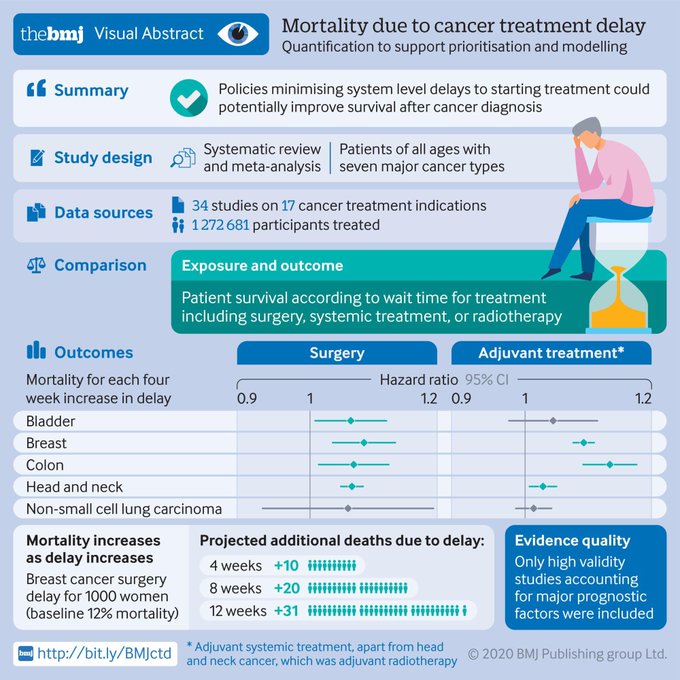 In a recent
  The suspension of Jeremy Corbyn for daring to state an opinion, and one that accords with the facts, is a provocation by the right of the Party. Corbyn is obviously a much diminished figure since he ceased being leader, and the very limited revolt of left MPs in opposition to Kier Starmer’s support for the right of agents of the State to murder and torture show that his failure to democratise the Party has weakened the Left.
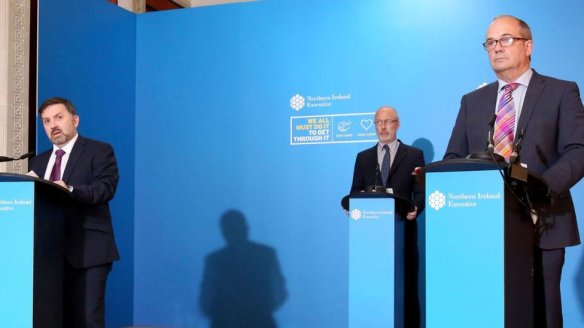 There are no easy solutions or answers. So said Doctor Michael McBride, Northern Ireland’s Chief Medical Officer, when announcing the return to lockdown. There were hard and difficult choices, all with bad outcomes, but what was good for health was also good for the economy, poverty does kill people.
 The advice from the health experts of the National Public Health Emergency Team (NPHET) was that it was necessary to move from level 2/3 to level 5 because this was the “only opportunity” to get Covid-19 “back under control”. But when this was rejected by the government and Leo Varadkar went on TV to cut the Chief Medical Officer (CMO) off at the knees, he damned not only the CMO and his advice but also the strategy of his Government.
 A couple of weeks ago the Irish Government announced a new plan to deal with Covid-19. It consisted of five levels that were to signal the approach everyone should take to social distancing and the restrictions the Government would impose. These guidelines and restrictions would follow from the perceived level of threat from the virus.
 Just over a month ago my wife and I visited my daughter, her boyfriend, and my sister in Glasgow and had dinner in my sister’s house. Two weeks later this would not have been possible, I would have been breaking the Covid regulations; in fact, my daughter and sister couldn’t have done it together even without us. They could, however, have met together in the pub, which of course doesn’t make much sense, as this
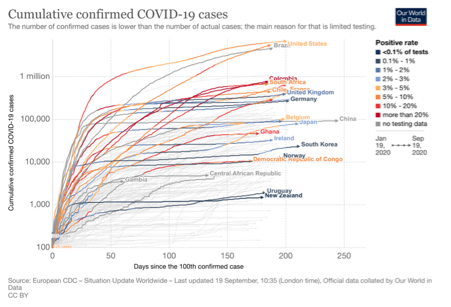
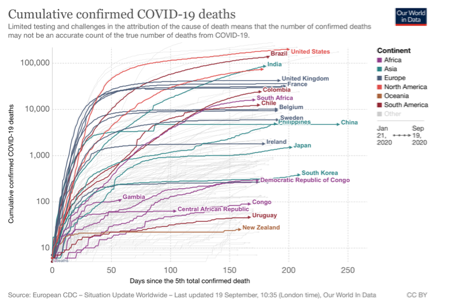 The first graph shows that there are increased numbers of cases in a number of countries giving rise to the concern about a resurgence. The second graph however puts this into perspective, that growth in the cumulative number of cases is not at all as high as it was initially or in the first 50 to 100 days.

 Well that didn’t take long. No sooner had the new restrictions to deal with Covid-19 been introduced but they had been broken, and not just by anyone.
 Sráid Marx