The Northern elections point in only one direction Or do they?

There are three take-aways from the Westminster election in the North of Ireland.

First, Sinn Fein continued to make progress, defending its existing eight seats, including securing bigger majorities in a number of constituencies, and making gains in others that promise two more in the future.  It sealed its position as the biggest party in the Westminster elections, to rank alongside earlier local and Assembly successes, although small comfort for its failure in the local and European elections in the South a month ago.

Second, the Alliance Party, as the main face of ‘others’ in the North – neither Orange nor Green, Unionist or Nationalist – lost one seat and gained another, so stood still with a small drop in the share of the vote of 1.8% on the 2019 election.  The ‘Alliance surge’ has stopped surging.  At 15% of the vote it does not come anywhere near marginalising the sectarian division and the basic conflict over the existence of the Northern state.

Thirdly, and most dramatically, the  DUP lost three of its eight seats, very neatly lost another in East Derry and saw a dramatic fall in its majority in East Antrim.  It lost from all directions: from the Alliance Party, Ulster Unionist Party and the uber-unionist TUV.  In the case of the last, the defeat of Ian Paisley junior brought a smile to most faces in spite of the identity of the victor, such is the likeability of the loser.  Even some of his colleagues were reported not to be too displeased. The only real bright spot was securing the seat of its new leader in East Belfast.  A fall in the share of the vote of 8.5%, or a proportionate fall of 28%, is a disaster.

So what does it all mean?

Some nationalist commentary repeated familiar lines about ‘the writing on the wall’ and ‘the arrow pointing in one direction’ into the ‘inevitable future’ (Brian Feeney in The Irish News) – all references to the writing pointing to a future united Ireland.  Unfortunately it’s not so simple, even for the biggest party.  It won 27% of the vote, and when you factor in the lowest turnout for a Westminster election in the history of the North of 57.47%, we can readily see that 15.5% of the electorate does not a revolution make.

Over 42.5% found no reason to vote, which undoubtedly reflects a number of things, including apathy in constituencies in which a nationalist candidate hasn’t a chance, but even in the 2022 Assembly election, with a more proportionate system, Sinn Fein got 29% in a 63% turnout, or 18% of eligible voters.  In this election the pro-united Ireland vote was just over 40%.  If this is the writing on the wall, the wall is far away, the arrow points to a very long road, and the inevitability of a united Ireland is not quite the same as that of “death and taxes.”

Sinn Fein continues to advance in the North without any justification deriving from its now long record in office at Stormont.  The latest reincarnation of devolution managed to set a budget for departments without agreeing what they were going to spend it on – what were its priorities?  It spent plenty of time passing motion after motion lauding all sorts of good things with zero commitment to doing anything about them, while utterly failing to account for the public services it has been responsible for.  These, such as the health service, have fallen into a crisis worse than anywhere in the rest of the UK. 

For Alliance, its still second order existence testifies to the inability of the status quo to satisfy Northern nationalists or provide evidence that Unionists really are as confident that the state is as British as Finchley.  Its existence at all, however, is held to define what is necessary to change this status, which is not simple growth of Irish nationalism.  Convincing the ‘others’ of a united Ireland is argued as the key task for nationalism, which must include current Alliance supporters.

In this, Sinn Fein is not succeeding, in fact it doesn’t realise it isn’t even trying.  It continually berates other nationalist parties, especially in the South, for not joining ‘the conversation’ on a united Ireland, and calls out the necessity of planning for it; as if talking about it brings it any closer never mind making it inevitable.  It’s like being lifted by the cops who want to have a conversation with you – where you do all the talking.  Where are Sinn Fein’s plans?

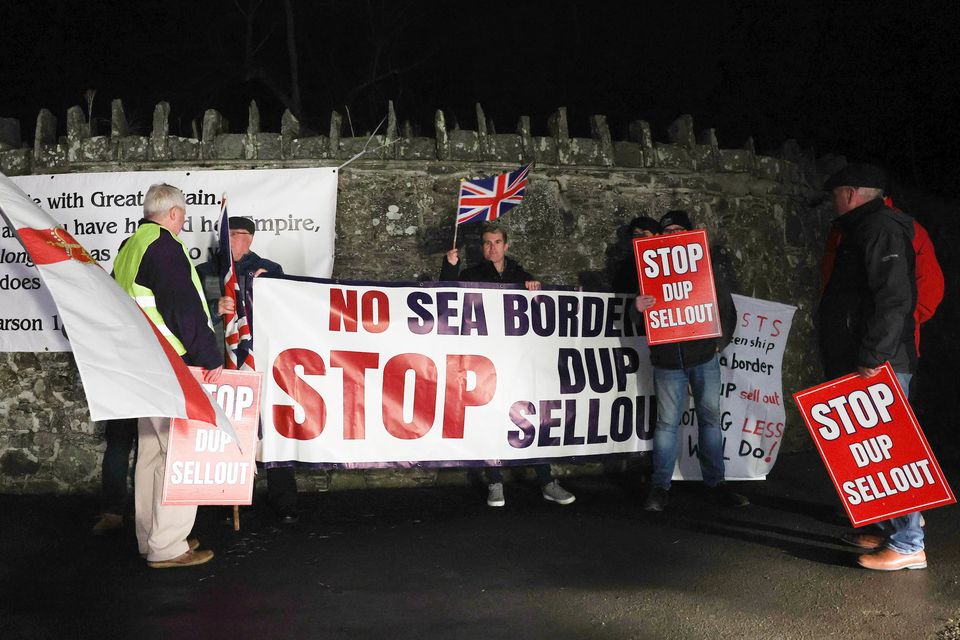
The biggest issue however, that has signalled a step to a united Ireland, has been Brexit, and it is this that has done to the DUP what it did to the Tories in Britain.  While the victory of the TUV was most obviously a result of the failure of the DUP to prevent ‘the Irish Sea border’ that resulted from Brexit, it also lost because it lied about its deal with the British government that would supposedly make it disappear.

The Alliance victory in Lagan Valley was partly due to the constituency MP Jeffrey Donaldson being sent for trail on sex-offence charges, but this copper-fastened a prior loss of personal credibility as author and prime advocate for the deal.  With the Brexit disaster in the background every credible opposition to the DUP looked that bit more attractive and its most vocal supporters, such as Ian Paisley and Sammy Wilson, suffered.

The local political commentator Newton Emerson noted that the DUP losses in very different directions made it difficult for the DUP to know where to pivot.  This dilemma exposes the real demoralisation within unionism that sought to strengthen partition by supporting the UK leaving Europe but found itself inside a part of Ireland less aligned with the  sovereign power.  There is no mileage in continuing to fight it, so they won’t follow the TUV in doing so, but this means that it remains exposed to this more rabid unionism with only the old age of its leader Jim Allister as the pathetic hope of future redemption.  

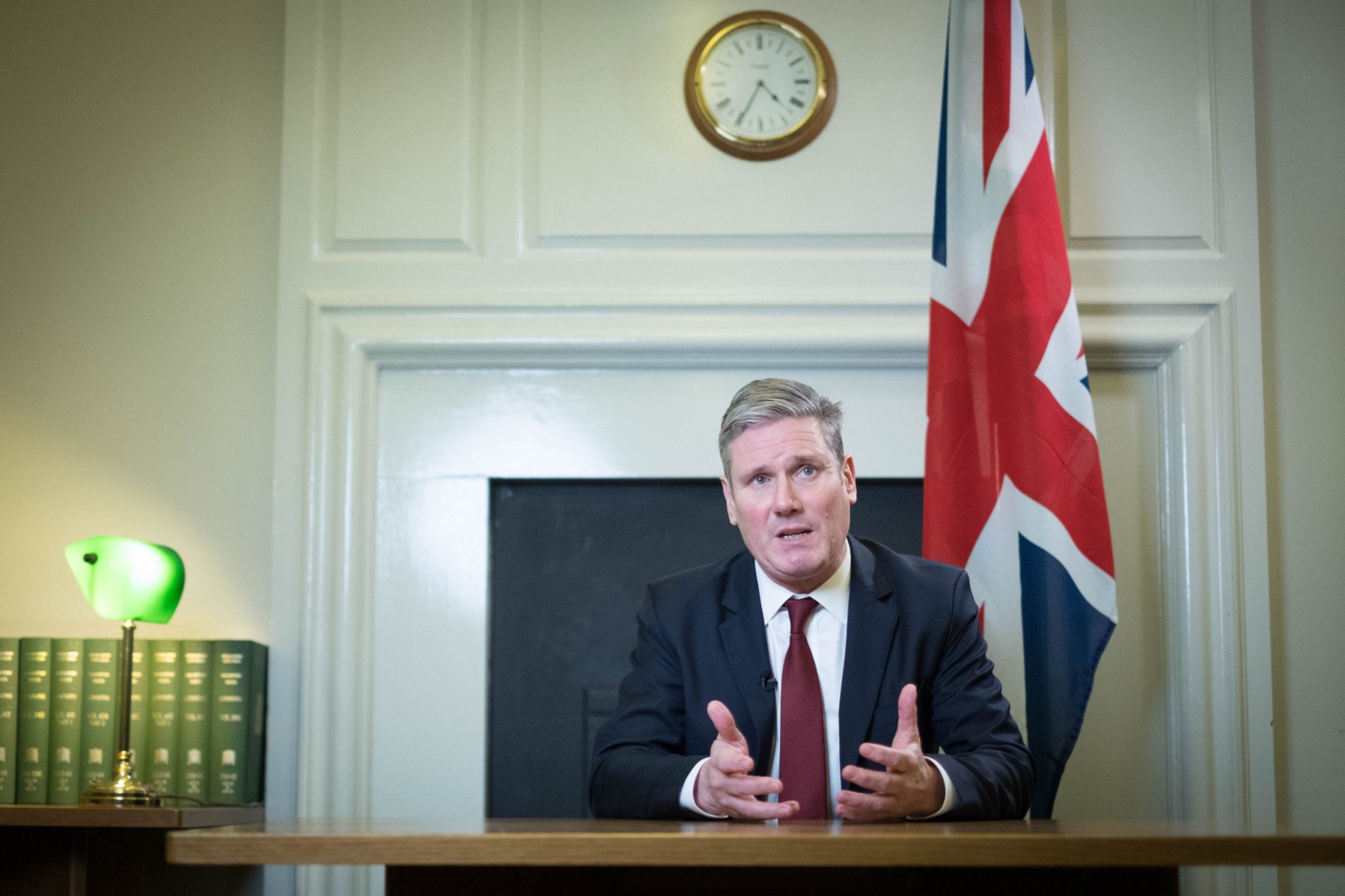
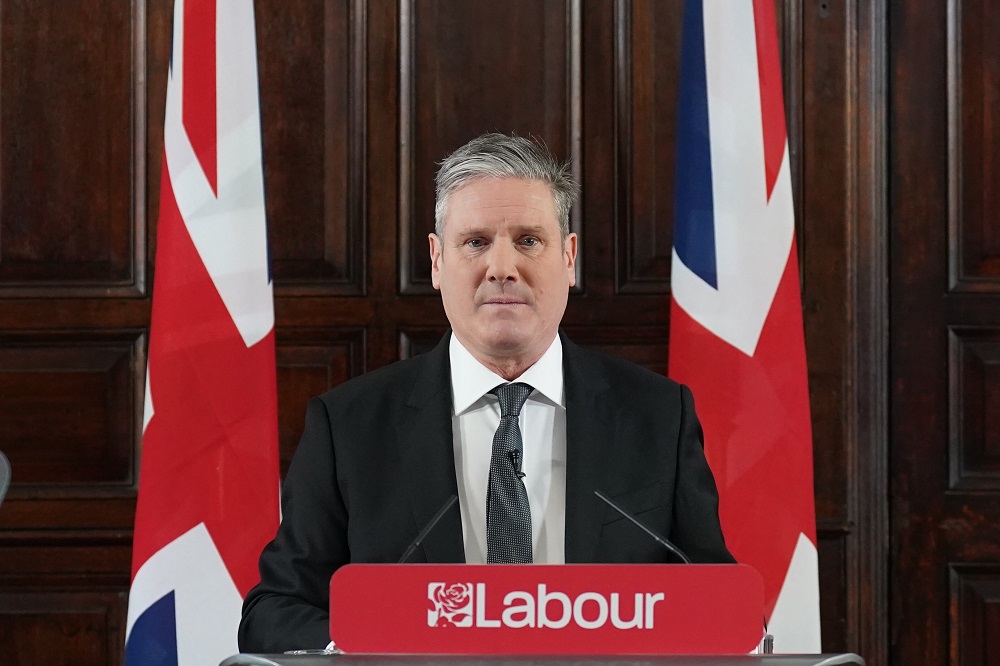
It can keep quiet about the whole thing and hope it disappears as an issue but there are at least three problems with this.  First, its opponents will remind people, people will remember DUP stupidity themselves, and much as Keir Starmer might try to ignore it and think he can evade its worst effects, it’s not going away and neither are its effects.

A bit like the election in Britain, a thoroughly boring campaign had some more noteworthy results.  The stasis, if not stagnation, in politics within the North continues but events elsewhere are not so stable and have their effect.
The British General election – what lies beneath?

“Not only do the opinion polls say that Labour will win back working class areas in Northern England it lost in 2019, but it is also expected to do well in wealthy parts of the south that were once Tory heartlands.”  So read the full-page article in the Financial Times at the start of the week.  The reason?  “There’s only one answer to that: Brexit”, according to the Tory Chair of the House of Commons justice committee.

One section of the Tory base is leaving while the other in the so-called Northern ‘Red Wall’ is also departing, and since only one third of the electorate now still thinks Brexit was a good idea, the pool the Tories are fishing in – against the competition of the Reform party – is getting a lot smaller.  Since Starmer’s Labour Party also claims that it can get Brexit to work, and is also not talking about it, it is not a surprise that the share of the vote of the two main parties is now the lowest since 1918. Only 35 % of those polled think Starmer would make the best prime minister against 19% for Sunak, the former’s rating lower than all of the recent election winners.

It is obvious that the predicted Labour landslide victory has more to do with the unpopularity of the Tories than anything to do with Starmer, so that while Labour’s support has declined during the election so has that of the Tories.  The Financial Times reported that Tory support has fallen by a third since January and the view that the only issue that matters is getting rid of them has continued to dominate.

Both parties have embraced the politics of waffle with commitments that are as few and vague as the waffle is ubiquitous.  “Growth” is the answer to every problem yet the Brexit elephant in the room that squats on growth is ignored.  Starmer has followed Tory policy like its shadow while dropping every promise he ever made to become leader, parading his patriotism with “no time for those who flinch at displaying our flag”.

He has presented himself as a strong and tough leader –in such a way that his rating for being trustworthy has fallen from 38 to 29; his rating for honesty from 45 to 34; his rating for authenticity from 37 to 30 and, for all his posturing, his rating for charisma from 20 to 18.  What we don’t have therefore is popularity born of personality to explain why it’s not born of politics or principle.

The vacuousness of the politics of the election is covered up by trivia such as Sunak taking himself off early from commemorating the D-Day landings and the betting scandal, which shows that low-level corruption is always more easily exposed than the bigger stuff.  All this however is for the consumption of the masses.

The ‘get the Tories out’ mantra that also characterises the left is perfectly acceptable to the ruling class since the Tories have failed to govern properly, leading to Brexit and Truss’s unfunded tax cuts that briefly threatened the currency and suddenly raised interest rates.  Being anti-Tory is no longer a solely left-wing pursuit, which makes the primacy of getting them out (which is going to happen anyway) illustrative of the poverty and bankruptcy of many on the left.

Bourgeois commentators lament that the lack of honesty of the election ‘debate’ will lead voters to “distrust politicians and so our democracy itself” (Martin Wolf FT), while the more cynical shrug their shoulders and accept it.  “The UK is approaching a general election of vast importance for its future.  It just has to get next week’s one out of the way first” (Janan Ganesh FT).  The first worries that the British public will not be ready for the radical attacks that are coming their way while the second is concerned only that they learn to accept them next time.  Clearly both are more interested in what happens next, which doesn’t mean what happens to the Tories but what happens when we have Starmer.

One Irish commentator described him as “legendarily boring” and “resolutely moderate”, which fatuousness is what often passes for informed political commentary in the Irish press. The ruthlessness of Starmer’s dictatorship in the Labour Party and his pathological record of lying to become its leader should give even the dimmest observer pause to wonder what he will do with the exercise of real power.  What struck me ages ago was the unwillingness to wonder what decisions someone so innocent of due process in the Labour Party made when he was Director of Public Prosecutions.

The Starmer government is now the threat to the working class in Britain and to us in the north of Ireland, while the Tories are receding in the rear view mirror.  Preparing for this can best be done in the election by robbing this government of as much legitimacy as possible and using the election to organise potential opposition.  This means not voting for the Starmer’s Labour Party but only for those on the left of the party who might be considered as some sort of opposition, including those deselected and standing as independents.

The first-past-the-post electoral system is not designed to elicit people’s true preferences but incentivises many to vote against parties and not who they are for.  When there is widespread disenchantment with the major parties this can be muffled and stifled. Yet even with the current system we have seen support for the two main parties fall and ‘wasted’ votes for others may encourage further politicisation.

The Financial Times report that behind the steady gap between the Tories and Labour that will give Labour a ‘supermajority’ is a drop in Labour’s polling matching a fall in that of the Tories.  These trends may reverse as voting approaches but at the moment they show that their ‘competition’ is not strengthening either.  The FT claims that the Labour Party is experiencing high levels of turnover in its support, losing a quarter of those who had previously (January this year) said they were planning to vote for it.  Three per cent were undecided, 9 per cent were less  likely to vote, and 4 per cent were going to vote for the Lib Dems while potential Lib Dem voters were travelling in the opposite direction, perhaps for tactical reasons.

The proportion of voters who switched parties in elections used to be about 13 per cent in 1960 but is nearer 60 per cent now.  Some might lament that this illustrates a decline in class consciousness but since this was often an habitual Labourism it is not the loss that it may appear. What has suffered a greater loss is the coherence of the left that now mainly rallies behind its own ruling class, today in a war that has the potential to escalate catastrophically and which involves endorsement of all the hypocritical claims of the British state and ruling class it claims it oppose. The consensus on the war is something that the war itself may have to break.

Groundhog Day. Stormont is back! Again!

I remember giving out leaflets at a Sinn Féin demonstration on the Falls Road in about 1993.  The demonstration was called to support the Hume-Adams Agreement, hammered out between the leaders of the SDLP and Sinn Féin after several secret meetings.  No one knew what was in the Agreement, but thousands of republican supporters came out to show their support for it.

I don’t think my comrades, or I, ever had such a keen and eager crowd as the demonstrators queued up to get a copy.  It was clear that they thought they might find out what it was they were demonstrating in support of.  That in itself told us an awful lot about the political consciousness of rank and file republicans at the early stages of the peace process – they were going to faithfully follow their leadership, wherever it led them and swallow whatever they were told.

Many, many subsequent leaflets, and meetings through the long peace process changed nothing of their approach, or raised in them any consciousness that they might require a more critical approach, one that involved some scepticism of where their leadership was taking them.

Only a few years before, in 1987, Sinn Féin had published a document called ‘A Scenario For Peace’ in which it set out its proposals for a settlement to end the conflict.  It included that Britain should declare its intention to withdraw; the Royal Ulster Constabulary and Ulster Defence Regiment would be disbanded; ‘political’ prisoners should be unconditionally released; and Britain should provide a subvention for an agreed period to facilitate harmonisation of the northern and southern economies. In return, unionists would be offered equal citizenship within the new Ireland.

Well, the Hume-Adams talks were not about this agenda, and neither was the peace process.  The British have not gone, the RUC and UDR were indeed disbanded but the former was replaced by the PSNI and the latter were a unit of the British Army, and it certainly hasn’t gone away.  Political prisoners were released but not unconditionally, Britain imposed austerity (and Sinn Féin helped implement it).

The peace process in its various guises is now longer than the war it was supposed to end, and the former looks harder to get to the end of than the latter did.  When it was announced that the devolved Stormont Assembly was coming back, and a Sinn Féin leader, Michelle O’Neill, would be first minister, it was declared by Mary Lou McDonald that this showed that a united Ireland was “within touching distance”.  Of course, the Provisional republican movement has been promising a united Ireland since the early 70s, that is, for over half a century.  A unionist commentator noted recently that a recent opinion poll showed no increase in support for a united Ireland in the North over the last couple of decades.

Some columnists have claimed that the real significance of the return of the DUP to the Assembly and Government is this accession to the post of first minister of Sinn Féin, even while they admit that this is symbolic since the unionist deputy first minister has equal power.  No decision can be taken by the first minister if not agreed by the deputy and the post cannot be filled in the first place without unionist agreement.

In order to minimise unionist opposition to the deal between the DUP and British government over the ‘Irish Sea border’ the process of getting DUP agreement and all it entails is being rushed through.  The DUP Executive thus voted for the deal without seeing it; fittingly appropriate to the return of what passes for democracy in the North of Ireland.

This democracy, in the shape of the Stormont Assembly, has been suspended at least eight times, ranging from a single day to a couple of years.  It has been functioning for only sixty per cent of its existence and subject to a number of reviews and changes with yet more changes now widely canvassed. The sectarian, corrupt, incompetent and clueless governance it has provided and the future problems considered inevitable by everyone who thinks about it (and many don’t) means that the rules are not the problem.

Public services, from health to roads, are routinely described as being in crisis, while others such as education and voluntary organisation are subject to open sectarian practices. It has been claimed that these issues can only be put right by local governance, but its track record shows that it is as much responsible for the decay as British rule.  The repeated suspension allows the alibi to be sold that were it not for suspension public services would be much better.  The previous suspension following the Sinn Féin walk-out, after the DUP-implicated Renewable Heat Incentive scandal, showed levels of incompetence that could more easily be explained as corruption.

The return of Stormont is therefore no step forward, never mind a panacea, and is mainly an unstable framework to accommodate sectarian competition, one that has not proved to be very stable.  It stands on its rotten foundations only because there is no outside force to push it over, while those that have knocked it over temporarily have been internal.  It is widely accepted among the population and further afield because no alternative seems possible, which is why the DUP have gone back in.  This also helps explain why the misgivings of many unionists, and significant opposition, will be unsuccessful in stopping the Assembly’s return.

The opposition has no credible leadership, which would have to come from within the DUP itself, and there is as yet no real sign of this.  Further demoralisation of unionism is therefore one (welcome) result.

That this is the case throws light on the claim by the DUP leadership that their new deal is a significant victory. Packaged as a joint British government/DUP initiative, and launched by a joint press conference, there is not the slightest pretence at non-partisanship by the British: ‘Safeguarding the Union’ is the name of Command Paper1021.

Its content in 77 pages could safely be accommodated at one tenth of the length.  The measures introduced include proposed legislation to say that Northern Ireland is part of the UK – who would have thought it?  It has proposed legislation to ‘future-proof the effective operation of the UK’s internal market by preventing governments from reaching a future agreement with the EU like the Protocol’, which by definition cannot achieve what it claims.  It also includes a ‘commitment to remove the legal duties to have regard to the “all-island economy” in section 10(1)(b) of the European Union (Withdrawal) Act 2018.’  A bit of red meat for the DUP, and sticking it to Irish nationalism North and South, that will make little or no difference.

It promises that ‘Legislative change to recognise the end of the automatic pipeline of EU law . . . which applies in Northern Ireland is now properly subject to the democratic oversight of the Northern Ireland Assembly through the Stormont Brake and the democratic consent mechanism.’  This implies either future bust-ups with the EU if single market changes are not incorporated into the Northern Ireland market, or a formality to cover regulatory alignment.  The Brexiteers in Britain are aghast at this as they no doubt realise it might not be the former.

Media reporting has suggested that the EU Commission has yet to look at the Agreement but that ‘no red lines’ have been crossed; however, it is hard to believe it has not been agreed and only kept quiet in order to help the DUP sell it as an act of undiluted British sovereignty.

The ‘democratic consent mechanism’ that is held to act as a check on unwelcome EU encroachment states that it can be triggered by a majority of local members of the Assembly and not by some ’cross-community consent’ mechanism.  It is hard to be optimistic that this whole area will not entail future argument.

Other measures include promises on maintaining trade flows that can’t be honoured and a number of new quangos that will deliver more red tape that Brexit promised to get rid of.

The main gain pointed to by Jeffrey Donaldson is the removal of routine checks on certain exports from Britain to Northern Ireland that were set to reduce anyway but are now declared to be zero.  This is on goods, such as retail to consumers for example, that will stay in Northern Ireland and not considered to be at risk of going further into the Irish state and thus the EU single market proper.

Donaldson has, however, claimed too much – that there is unfettered trade between GB and NI and therefore no sea border.  The command paper states that ‘there will be no checks when goods move within the UK internal market system save those conducted by UK authorities as part of a risk-based or intelligence-led approach to tackle criminality, abuse of the scheme, smuggling and disease risks.’

‘Abuse of the scheme’ must mean that checks will be made if it is suspected that goods purportedly sent for sale only in Northern Ireland are actually heading further.  The acceptance of such controls by the DUP has so far been rather successfully sold by the leadership as simply a common sense measure that ensures that checks are made at the Northern Ireland ports instead of a long and windy North-South border.

This problem arises only because of Brexit, which the DUP supported, and of course the argument makes sense in its own terms; except those terms mean acceptance that there is a trade border on the Irish Sea because there had to be one somewhere, and its not south of Newry and north of Dundalk.  The opponents of the Agreement among unionists are therefore right that single market membership means EU law applying in Northern Ireland.  They go wrong when they, like the other hard Brexiteers, assume that the British government must pursue widespread non-alignment, without which Brexit makes even less sense that it already does.

In the last few weeks public sector workers in the North have engaged in very large strike action in pursuit of wage demands designed to recover some of their lost real incomes.  It has, however been subsumed under the politics of Stormont return, even while the trade unions have demanded that the British Government pay up and not use the lack of an Assembly as an excuse. It was supposedly putting pressure on the DUP to get back so the workers could get payed when the DUP didn’t, and doesn’t, give a toss.

The return of Stormont has not been lauded and celebrated as in previous ‘returns’ and the population is jaded by repeated failure and broken promises of a ‘new approach’.  The real new approach required is, unfortunately, a long way off.

The Windsor Framework

Dan Kitwood UK in a Changing Europe

The ‘Windsor Framework’ agreement between the EU and Britain to maintain or replace (take your pick) the Northern Ireland Protocol to the Brexit Withdrawal Agreement is a truly remarkable document.  It allows Northern Ireland to have free access to both the EU single and UK markets for goods.

The British Prime Minister visited to ensure we knew how great this was even though, as a staunch Brexiteer, he had helped ensure that Britain walked away from this “privilege”, this “prize” that put Northern Ireland in a “unique”,  “unbelievably special position” . . . ‘like the world’s most exciting economic zone”, that ensures we are an “incredibly attractive place to invest for businesses”.  Perhaps the most fulsome declarations against Brexit I have ever heard.

Yet the truly remarkable factor is that such an arrangement is supposed to be impossible.  When Russia claimed that Ukraine could have close trading relationships with the EU and also with its own Eurasian Customs Union, the EU claimed it couldn’t be done.  Ukraine had to look decisively West and could not continue its attempts to straddle between it and Russia.  We know, of course, that this provoked the Maidan uprising in 2013-2014, when the Ukrainian President decided that the price of greater access to the EU and erecting barriers to Russia was too high.

Ukraine split over his decision, with the open intervention of the United States, repression by the Ukrainian security forces, violence by protesters and seizure of weapons by pro-western elements, including the far right and fascists.  This led to a counter-mobilisation in the East of the country among pro-Russia Ukrainians and a civil war that led to Russian armed intervention in Crimea and then Donbas.  The conflict never really ended and, of course, we know that this eventually led to the Russian invasion and the proxy war between the US with its NATO allies, and Russia.

So, why is it that what has just been achieved in the North of Ireland could not be done in Ukraine?

The answer, of course, is that the decision in respect of Ukraine was a geopolitical one aimed not just at Ukraine but against Russia, even if some claim that the bureaucrats in Brussels did not fully appreciate this aspect of what they were doing.  In any case, the new ‘Windsor Framework’ is essentially a political agreement with political significance that does not primarily lie in the North of Ireland.

It has been pointed out by commentators that the EU and British have put entirely different spins on the significance of what has been agreed, with the former claiming that it has not “renegotiated the protocol” while the British have claimed that the deal “fundamentally amends the text and provisions of the original protocol”; lots of ‘dancing on the heads of pins’ according to one journalist.

Nevertheless, the protocol stays, there remains a ‘border on the Irish sea’ and not inside the island, and the fundamental relationship between the EU and Britain remains.  The EU has made concessions and the British have agreed measures that the EU thinks it can live with which minimise physical and other trade-related interventions.  The EU Q&A is replete with references to the limits of its flexibility. So, the trusted trader scheme can be suspended if ‘1) the UK fails to provide the EU with access to the relevant UK IT customs systems and databases, or 2) the UK does not live up to the commitments it undertook when setting up the trusted trader scheme.’  On excise ‘the UK will not be able to apply any duty rate below the EU minima’; on duty rates for small producers of alcoholic beverages ‘the UK will not be able to set duty rates for small producers below EU minima rates. The respect for EU minima rates will protect the level playing field with the EU’ etc.

Breaches of the controls are inevitable, but it must be considered that these are going to be relatively unimportant.  Northern Ireland is both small and peripheral and ultimately so in the political sense as well, a far cry from Ukraine.  The EU was quick to claim the deal as a one-off, so the Swiss can’t follow up on it.  The significance of the deal agreed lies in the British acceptance that the road is running out on hostilities with the EU, a project that is taking its Tory sponsors to electoral defeat.

The deal is not however the last word.  The disapplication of EU laws is still winding its way through Westminster and controls on imports to Britain have still not been introduced; Brexit has still not been ‘done’.  The ’Windsor Framework’ has still to be implemented while deadlines for the various steps are part of the agreement.  Beyond this, the problem of continued divergence between the EU and Britain remains, as does its potential impact.  While on the British side the debate is about the extent of future divergence, or even its advisability, on the EU side the debate will be about the potential benefits of further deepening, where consideration of its effect on relations with Britain will be a minor concern. 

The major innovation beyond the rather technical aspects of trade policy is the introduction of a ‘Stormont Brake’, as an ‘emergency mechanism that will allow the UK government, at the request of 30 Members of the Legislative Assembly in Northern Ireland (Stormont), in the most exceptional circumstances, as a last resort . . . to stop the application of amended or replacing provisions of EU law . . .’

‘The Stormont Brake can be triggered only after having used every other available mechanism, and where the amended or replacing EU act, or a part of it, significantly differs in scope or content from the previous one and application of such amended or replacing act would have a significant impact specific to everyday life of communities in Northern Ireland in a way that is liable to persist. . . . If triggered and if the conditions are met, the amended EU act would not apply automatically in Northern Ireland.’

This represents the introduction into the workings of the Protocol a mechanism akin to the ‘petition of concern’ introduced in the last British initiative to save the Stormont administration–New Decade, New Approach–meant to get Stormont to work after the previous breakdown.  The original devolution arrangements, meant to demonstrate that the Northern Ireland polity could function ‘normally’ and without conflict, introduced powers of veto for each sectarian bloc as a key incentive to make them work it.

The petition of concern was meant to be a last resort insurance-type mechanism but was reportedly used 115 times in five years, a testament not to it working, or to the number of issues absolutely vital to one side or the other, but to the degree of sectarian division.  It has quickly been speculated that the restrictive grounds of its use, mirrored in the wording of the new deal as set out above, would make no difference to the willingness of unionists to paralyse the Protocol agreement with the EU.  There is no reason why this might not be the case except for the different circumstances of the ‘Windsor Framework’.

Like the ‘New Decade, New Approach’ deal, it requires 30 members of Stormont to trigger it from at least two parties, and since there are 37 unionists out of a total of 90 members, this looks eminently possible, even accounting for those specifically excluded.  Once triggered it would take a harder to procure ‘cross-community’ vote to allow any suspension of a new EU law to be lifted.

While there are various other, on the face of it, rather onerous requirements, including for consultation, the key difference is that the British government is required to apply the veto on any new law, and the British government is not going to do this if it is not in their interest as well, regardless of what unionists think.  If it does, the EU can then take retaliatory measures that are proportionate.

It is just about feasible for unionists to repeatedly attempt to apply the brakes, but this would lead to ridicule for themselves and their Brexit cause, and would fail, not mainly because of this but because the British government is in charge.  The British, by making the agreement in the first place and failing to meet the Democratic Unionist Party’s seven tests, have shown that the demands of unionism are not its priority.  

The Stormont Brake has been characterised as a carrot to unionism but one that requires the DUP to return to Stormont and end its boycott, as it can only be triggered in a functioning Assembly.  The offer of a veto is thus a sardonic judgement on the power of the veto the DUP already wields.

It was widely thought, even before the appearance of the new deal, that the DUP would play for time so that it would withhold judgement before the local elections in May.  These, it is thought, would reveal the verdict of the majority of unionists on the deal to be negative, or certainly negative enough to damage the DUP should it accept it.  This would hardly be a surprise since an oft-repeated unionist expression is ‘not an inch’.  Unfortunately, it cannot retake the ground itself and the crisis is of its own making – by supporting Brexit, accepting the different circumstances of Northern Ireland, opposing the alternative Theresa May deal, even if it could have worked, and the initial support it gave for the Protocol’s benefits.  This leaves it ill-prepared for a battle against the British government.

Postponing decision on the deal might appear smart, especially since the party is divided, but it might not take that long before this looks weak, and vulnerable to accusations from rivals that it is.  The main rival is Traditional Unionist Voice, which is a one-man band, which itself illustrates the hollowness of unionist opposition. This, however, can just breed frustration and anger.  Far from protecting themselves, DUP delay may simply strengthen unionist opposition by opening the door to those willing to be clear and forthright, with resignation developing among others of its supporters.  In any event, in local terms, the Windsor Framework is a defeat for unionism.  You can tell this, when even the King gets it in the neck.

The Story of Brexit (3 of 3) – Britain punching its weight

Book Review ‘Inside the Deal: How the EU got Brexit Done’, Stefaan De Rynck, Agenda, 2023

At one point in the Brexit negotiations Michel Barnier pointed out that in the area of security policy the UK was promising to do more together with the EU than it had done before; as De Rynck puts it, trying ‘briefly to hold on to its lead role on EU military operations.’  It continued to present itself as the bridge between the EU and US, except the EU ‘failed to see any benefit in not liaising directly with the US instead.’  When Johnson won the election in December 2019 this approach for a closer relationship on security and foreign policy was dropped.

What came later, we now know, is acting as an instrument of US policy in the war in Ukraine; scuppering early negotiations by promising western military support to the Ukrainian regime and continuing to ‘punch above its weight’ by promises of weapons deliveries like tanks designed more to pressurise others than to make a critical contribution itself.

De Rynck doesn’t explain the about-face, except that Trump had criticised NATO, implying a reduced priority for Europe ,while he had already promised Britain a trade deal “very quickly”.  His ambassador to the UK supported Brexit – “you have a great future outside the EU”  he said – while US State Department officials warned against no deal and stated their wish that security cooperation be maintained at “current levels”

De Rynck admits that the EU negotiators were initially less confident of maintaining a united front on foreign and security policy than on the economic front, and implies concern that some East European countries might want different outcomes.  He argues however that Brexit has strengthened EU security arrangements and its autonomous decision making in which the UK will no longer be involved.  He argues that weakening the single market would have eroded both and reduced the ‘strategic potential of a more Global Europe’.  On the other hand, its development, including a ‘single market for defence industries’, is a precondition for development of this role.

This assessment is informed by the start of the war in Ukraine and the alliance with the US in opposition to Russia, including sanctions that have substituted cheaper Russian energy for more expensive US sources.  The introduction of the Inflation Reduction Act in the US is now also a threat to EU industry with its subsidies attracting European industry to the US.  When the problem of Ukrainian refugees is added, it is clear that the ‘strategic potential of a more Global Europe’ faces a threat from the US in relation to which Britain has acted as supplicant and surrogate.

De Rynck makes none of these observations in the book but alludes to this role in recording previous US opposition to the EU’s satellite navigation system Galileo, which Britain had at first also opposed.   He reports that the EU Commission came close to abandoning the project, although went ahead when Denmark switched sides, Tony Blair withdrew British reservations and Germany promised to pay.  This then gave the EU its own alternative to the American Global Positioning System.

The British claimed that they had been able to limit Galileo to civil applications, and continued to veto military uses, but by 2015 they announced their intentions to use it for military purposes, including for the guidance of targeted weapons.  ‘Losing access’ to the system was therefore a significant Brexit problem.

De Rynck explains that the EU were willing to allow the UK to use the system’s military grade signal, but Britain also wanted access to the source code for economic and military purposes and complained it could not be the only member of the UN Security Council without full control of its own navigation system.  After a ‘bitter’ debate, and threat and counter-threat, the purpose claimed for Brexit of “taking back control” did indeed mean losing it, and Britain did become the only member of the UN Security Council without full control of its own navigation system.

A core justification of Brexit was the ‘opportunity’ to change its policies, regulations, and product requirements.  Brexit, it seemed to everyone, would be pointless without this.  However, rather than see how EU rules would continue to apply post-Brexit, the EU initially concentrated on what guarantees any alternative arrangements could offer, on effective dispute settlement and on credible unilateral remedies, all of which were agreed three years later.

In between the British complained that the EU approach did not seek to replicate its trade negotiations elsewhere, like those with Japan or New Zealand. Michael Gove said Britain was willing to reintroduce tariffs in exchange for the EU lowering its demands on a level playing field only to be told that there was no time to go line by line through each product, and in any case, it would not buy a lighter version of the level playing field.

Britain made proposals and then withdrew them; it proposed a Canada style trade agreement and then backtracked when what this meant was explained to them. ‘What makes the UK “so unworthy” complained David Frost, as the British declared their sovereignty, only to be told that sovereignty was a two-way street; the EU was itself annoyed that what was on offer to them was less than what the British were offering to Japan, Ukraine and Australia.

It seems almost incredible that, given the course of the negotiations recorded in the book, the British continued to argue that cooperation should rely on trust rather than rules.  The EU was perfectly aware that the negotiations were mainly just to ‘get Brexit done’ without any genuine commitment to any written agreement.

De Rynck states that ‘despite some failed EU demands and compromises, the outcome was largely in line with what the EU set out at the start.’   ‘The UK government played a game of chicken, by itself’ and ‘as a more diverse and bigger economy, the EU had no interest in accommodating the UK . . .’

The majority of the British people now regard Brexit as a mistake.  The sign on the side of the bus promising money to the NHS looks like the con it was as the NHS collapses, highlighted by media reports of incidents of raw sewage pouring out inside crumbling hospitals.  This, and every other Brexit promise, has literally turned to shit and the wonder is that anyone thinks being poorer is part of the solution to anything.

Guardian commentators like Polly Toynbee write articles setting out how awful Brexit has been but with no proposal to reverse it – ‘Most people are now in favour of rejoining the EU, but Labour is right to steer clear of another row over Europe’ she says.   Gideon Rachman writes columns for the ‘Financial Times’ about how it can be reversed but has nothing more to propose than two referendums on the tenth anniversary of the 2016 leave vote.

The British state is in confusion about what to do, evidenced by the meeting of the great and good, leavers and remainers, reported to arise because ‘Brexit is not delivering’.  Its proclaimed purpose however was “about moving on from leave and remain, and what are the issues we now have to face.”  As if the issue is not what brought them together in the first place and the answer obvious.

As one commentator in ‘The Irish Times’ said, ‘it is hard to understand the 40 per cent who still agree with the decision’.  On the left, among the Lexit supporters, there equally appears to be no remorse, just excuses like the assorted Tories, UKIPers, xenophobes and racists who were equally committed to a Britain-alone approach.

The book by the EU insider reveals no secrets but describes the British negotiation process as confused, inept and as full of wishful thinking as the Brexit project itself.  It faithfully records the bluster and threats that no one with any appreciation of the balance of power could take seriously.  It points to the folly of left supporters of Brexit who supported it when all this was obvious.  Did they expect the negotiations would deliver some advance for the British working class?  I suppose that they must, in which case the book is another testament to the stupidity of Brexit, Lexit or whatever its supporters want to call it, now that it’s no longer just an idea and so not what they wanted.

Back to part 2

The story of Brexit (2 of 3) – Britain’s Irish problem

Steve Bell ‘The Guardian’

Book Review ‘Inside the Deal: How the EU got Brexit Done’, Stefaan De Rynck, Agenda, 2023

In Ireland one of the lessons supposedly to be learned from Britain leaving the EU is the necessity to have a plan for what you want to do when you succeed, with the mess associated with Brexit due to its supporters not having one.  Some leave campaigners did want to put together a plan but apparently Dominic Cummings opposed this on principle.  So now, supporters of a referendum on a united Ireland are keen to get a plan on what it would look like and how it would be implemented.  Of course, the experience of the Brexit referendum and its consequences demonstrate that the problem with it was not the absence of a cunning plan but that it was simply a bad idea. 

Brexit immediately gave rise to the potential for hardening the existing political border, with leaving the customs union and single market raising the prospect of checks to be applied to goods entering and exiting the single market. This was the case even if Theresa May repeatedly said that there would be “no going back to the borders of the past.”

Both the EU and the British negotiators were concerned that whatever solution was proposed to avoid a hard border within the island did not (or did) become leverage for the new border that would exist between Britain and the EU.  That concern continued to exist even after a first agreement was made with Theresa May that a ‘backstop’ would be in place, which would ensure–absent any other agreed solution–that Northern Ireland would remain aligned with EU rules, although this would entail checks between Britain and the North of Ireland.  As a sign of things to come the British government blocked civil servants in the North from engaging with the EU on how this might work.

As noted in the previous post, the British would rapidly disavow at home what they had just agreed, and May renounced her commitment in the House of Commons as something no prime minister could ever accept.  But if this was the case, a ‘soft’ Brexit would have to cover all the UK and this was not acceptable to those for whom Brexit meant Brexit, whatever Brexit actually meant. Jeremy Corbyn once again demonstrated the poverty of his own position by supporting the backstop but wanting domestic guarantees of a soft Brexit.

De Rynck describes British politics as a ‘farce’, noting that ‘May could not claim publicly she had obtained a customs union for fear of upsetting her backbenchers, which suited Corbyn’s fear that he would have to explain his own opposition to a deal his party officially wanted.’

The focus on the North of Ireland that frustrated the Tory Brexiteers so much only existed because it starkly revealed the illusion of Brexit itself, and the phantasy that was the deal that they thought they could get.  Irish nationalists could be forgiven for seeing what was happening as karma – British weakness being exposed by their clinging to one of their last colonies.  However, a survey of Tory MPs revealed that only one third of them thought the border was a serious matter, so it’s doubtful this was the source of much discomfort for them. 

British think tanks sought out a different solution that avoided the necessity for checks and a border where they would have to take place, including ‘Max fac’, which the EU rejected but De Rynck suggested ‘some elements could be useful to soften friction for goods moving from Britain to Northern Ireland’.  In the end, of course, May couldn’t get her deal through, and Boris Johnson turned the backstop into a ‘frontstop’.

De Rynck completes the picture of British political farce by noting the position of the Democratic Unionist Party, which believed that EU support for its Irish member state would collapse in the end.  He recalls that Barnier “pushed Foster and her party to come up with its own solution but there was never a plan from the DUP”, quelle surprise.

He notes their June 2017 manifesto, surely being one of very few to have read it, which affirmed Northern Ireland’s “unique history and geography”, its “particular circumstances” and its need for “ease of trade with the Irish Republic and throughout the European Union.” The DUP advocated “Northern-Ireland specific solutions through active executive engagement”.  Its leader, Arlene Foster, was later to highlight the benefits to Northern Ireland of being in both the UK and EU markets; but not for the first time, and certainly not for the last, the most extreme elements set the agenda for the rest to follow and it became the overwhelming policy of unionism to condemn these sort of arrangements as a threat to their ‘precious union’. 

While Johnson turned the backstop into immediate application, or at least pretended to, he also wanted a particular voting procedure that would ensure local Northern-Ireland consent to its peculiar arrangements.  The EU agreed that the NI Assembly should have the right to confirm the requirements of the deal over time but thought that its ability to overrule the initial Westminster decision made no sense.  The British negotiators wanted the local Assembly to approve the deal and to require a majority of both nationalists and unionists, which given the latter’s deepest affection for saying ‘No’ would have meant they would have said no and there would have been no deal.

It might appear easy to discern British motivation for asking for this provision because they might have believed that the unionists’ ‘No’ could perhaps be a means of putting pressure on the EU to deliver a better deal.  The approach of the EU however, was that while it was up to the UK to determine its internal political arrangements, these were not determining a deal with the European Union.  Today, the DUP is still opposed to the final deal and is in effect attempting to impose its veto, but it is not a party to the talks and it will not determine their outcome.

The final deal was concluded with the same familiar backdrop as the preceding negotiations.  The Daily Telegraph reported a cabinet minister’s “fury” at the EU’s “demands for more concessions” while at the same time Johnson decided to sign up to it.  He later met representatives of Northern Ireland manufacturing, assuring them that they could throw any customs forms requested in the bin, and they could call him if they had a problem. I would not be surprised if they immediately reflected that there was no problem for which he would be regarded as the solution.  As we have now been assured, Johnson did not know what he was signing up to, writing in the Daily Telegraph that the protocol he agreed to couldn’t have meant introducing trade barriers, because that’s not what he meant, and so it would be vital to now “close that option down.”  

On the EU side, it would appear from De Rynck that the EU was happier with the Johnson deal than with May’s proposed all-UK membership of a common customs territory, with its pursuit of some sort of “max-fac” means of reducing customs checks.  He nevertheless contends that “the EU compromised more on Northern Ireland than on any other withdrawal issue”.   This might be true, because it is also clear that in terms of the other two issues, in respect of Britain’s financial settlement and the rights of citizens, the EU essentially got what it wanted. 

Back to part 1

Forward to part 3

The story of Brexit (1 of 3) – How not to negotiate

Book Review ‘Inside the Deal: How the EU got Brexit Done’, Stefaan De Rynck, Agenda, 2023

This book tells the story of the Brexit negotiations from the point of view of the EU by a senior EU negotiator.  It is a reminder of the tortuous course of the process and the more or less complete failure of the British government to achieve its objectives, not least because it was never too clear about what these were; or perhaps more accurately, if it did have ideas, these were none to clear and not possible to achieve.

Anyone with any interest in Brexit will be aware that Britain appeared to believe that the EU needed Britain more than Britain needed the EU and that certain countries had a particular interest in the British market. These would be keen on a deal that facilitated unrestricted access; for example that German car makers would put pressure on Angela Merkel to make sure no barriers were put up to selling their cars in Britain. In fact German industry (and others, including the Spanish so reliant on British holiday makers) lobbied to ensure protection of the EU’s single market.

This meant British diplomacy believed it could prise individual states away from the EU negotiators and undermine a united EU response.    This was backed up by repeated threats that if Britain didn’t get what it wanted it could walk away with no deal.  This was sometimes accompanied by threats of ending security cooperation, which the author of the book acknowledges the British usually to the lead on.  Ironically it was the EU in the final agreement that rejected an important aspect of military cooperation in which the British were very keen to be involved.

Their negotiating tactics often amounted to not negotiating and dragging their feet, as if the EU would come running, expecting the EU to be in some way desperate to maintain the relationship due to the cost of the divorce.  Merkel recalled at an informal occasion at Davos that ‘May kept asking me to make an offer’, as if the party walking away should be given whatever was required to have it still hanging around. Merkel said “I told her it is the UK that is leaving.  The UK should tell us what it wants.”

British tactics also involved repeatedly deferring Brexit through delaying notification of leaving, extending the period of negotiation, and demanding a transition period while then running down the clock in the face of deadlines that piled on the pressure to get a deal.  This pressure was placed particularly on the British side because Tory leaders were continually under pressure from their Eurosceptic MPs to demonstrate progress in getting Brexit done.  What would be the problem if the EU did indeed need Britain so much?

While this was supposed to be the case, British sources continually leaked stories to the media in London that the EU negotiators had made outrageous demands that Britain had rejected. EU negotiators then began to find that this was the prelude to acceptance of the actual EU proposals, at which point the press in London would claim a great victory!

De Rynck notes that while the British media in Brussels often had a better grasp of what was going on, their counterparts in London regurgitated the same Brexit delusions of Tory MPs for home consumption.  This was the case even where the British made agreements and then talked at home as if they hadn’t, or openly backtracked on them in front of the domestic audience. Threats would be made, and no action ever follow.

While the whole exercise was based on ‘taking back control’ the negotiations revealed how little control Britain had; its parsimony on protecting citizen’s rights in the Withdrawal Agreement revealing the reactionary priorities behind the project.  Taking back control meant taking control of citizens’ rights and trashing them.  Theresa May would tell Italian television she was guaranteeing the rights of their compatriots in the UK at the same time as her negotiating team was arguing to take some away.

And it wasn’t even the rights of foreigners that were to be discarded.  De Rynck writes – that ‘Madrid seemed more concerned about the Brits in Spain than London was an impression activist NGOs often confirmed at that time in conversations with Barnier’s team.’  Some EU states wanted EU nationals to have the same rights in the UK as UK nationals would have, except that this would give UK nationals in the EU more rights and better protection than EU nationals in the UK.

De Rynck appears to view with some wry amusement the visits to Brussels of British political delegations to meet with Michel Barnier, including those tasked with monitoring the Brexit process, with their innocent suggestions for progress but clear incomprehension about what the problem was.

He makes clear that the united response by the EU member states and refusal to be divided was a result of EU membership and its single market being much more important to them than Britain.  The EU was completely conscious that it was the stronger party and British claims that it was going to get ‘a great trade deal’ with the United States, as promised by Donald Trump, failed completely to influence EU negotiators.  None of the US officials met by an EU delegation to Washington supported Britain and audiences were mostly in favour of deepening the single market in order to benefit US investment.  The EU was also aware of British intentions to make agreements and not implement them, which is why unilateral enforcement was included in the texts.

It never struck the British that if they hadn’t got what they wanted by threatening to leave they weren’t going to get it once they had decided to go.  Boris Johnson had claimed that after voting to leave Britain would get a better deal than David Cameron’s attempt before it, while some member states thought Cameron had got too much. 

The British never seemed to ‘smell the coffee’ even after the repeated refusal of members states to enter into bilateral discussions, or to appreciate that British political difficulties and divisions did not mean that the EU would decide they should be helped to overcome them. Rather it was taken as a warning for EU negotiators not to get embroiled.  Repeated resignations by British negotiators, of David Davis, Dominic Raab and David Frost no doubt assisted the Brexiteers in not learning from experience, although perhaps resignation was the best course individuals could take to avoid their fingerprints over failure.

Above all, the EU was determined to protect its single market, which meant that there was to be no cherry-picking and no having cake and eating it, where Britain would be able to have access for some favoured sectors but not for others.  Neither was there to be mutual recognition of each other’s standards, which effectively meant the British could establish the market’s rules.  EU negotiators raised the issue of their own sovereignty when the British proclaimed theirs, while other Eurosceptics such as Le Pen in France, Geert Wilders in the Netherlands, Salvini in Italy and the Sweden Democrats rowed back on their opposition to the EU or the Euro.

De Rynck has negative judgements to make on the British Labour Party, which he accuses of having givien a blank cheque to the Conservative government by voting for withdrawal without knowing the destination the government wanted to go in.  He records that Starmer while accompanying Corbyn, just like Theresa May, wanted full single market access while restricting free movement of EU nationals.  The Labour MP Hilary Benn, who led the House of Commons Committee on Exiting the EU, visited Brussels and asked questions ‘from a different galaxy.’  Benn wondered why divergence from EU rules was a problem as the UK would still be more aligned than any other country. From the point of view of the EU, and apart from dynamic alignment being a problem, there was no point to Brexit if the British did not change their rules, with this change expected to be in the opposite direction. Why would it agree to that?

Forward to part 2

‘Don’t hold your breath on UK rejoining EU’

The headline above is from the columnist Newton Emerson in the Belfast nationalist newspaper ‘The Irish News’.  He notes an opinion poll recording that two-thirds of Britons want a referendum on re-joining the EU and 54 per cent would vote yes.  He then explains why it isn’t going to happen, including that the majority would not be prepared for the long re-entry negotiations in which Britain might be humiliated – compelled to join the Euro, the Schengen Agreement and lose it opt-outs and rebate.

The Tory Party won’t and can’t do it as it would destroy itself and Starmer’s Labour won’t, although Emerson is wrong to say that Labour ‘can only stay in power by burying the question.’  While the venality, incompetence and unpopularity of the Tories may see it lose office, and Labour may even gain it, the Party will not stay in office with a policy that can’t be buried.  The majority of Labour voters and members will not stay with a Party that accepts Brexit with promises to ‘make it work’ while its damage continues to do its work. 

Emerson quotes a former Irish Ambassador to the EU that Brussels would accept re-entry on the previous favourable terms of membership but that it would need a guarantee that ‘the UK wouldn’t pull the same stunt again.’  Emerson argues that given British politics and public opinion such a guarantee couldn’t be given, although joining the Euro would be as close as one could get.

Emerson proposes that the ‘only realistic alternative’ is ‘inching closer towards the single market, one deal at a time.’  He acknowledges that ‘the Swiss model’ is not a model at all and that the EU ‘hates it’; so it can hardly want to repeat it with a much larger and recalcitrant ‘partner’.

The Economist’ has a leader and main article covering similar ground and with the same general view – ‘returning to the question of membership now would reanimate the toxic polarisation of the Brexit years.’  It too doesn’t seem to appreciate that this division is not going away, because the issue is not going away, because its effects are not going away.  It sets out some metrics of what these are.

The Bank of England has estimated that Brexit has depressed investment by 25 per cent over the five years to 2021, which can only exacerbate Britain’s poor productivity record.  The think-tank Centre for European Reform estimates that by the second quarter of 2022 GDP was 5.5 per cent smaller and investment down 11 per cent.  Aston Business School estimates that trade barriers have reduced exports to Europe from 70,000 product types to 42,000.  It quotes a survey from Tony Blair’s think-tank that 70 per cent of Britons want a closer relationship with the EU. But of course, it takes two to tango.

The Economist’ sets out in more detail its proposals to evolve such a relationship but is clearer on the obstacles than on the process to achieve it.  It quotes Peter Mandelson on “reconceptualisation” of the relationship, mentioning financial services.  It quotes ex-Tory Chancellor Philp Hammond suggesting a ‘grand bargain’ on migration policy to alleviate Britain’s skill shortages in return for deeper access to the services market in the EU, plus possible return to the EU customs union.  The newspaper speculates on a ‘Norway’ type deal or something between it and a ‘Canada’ deal.

Its own plan involves making a deal on the existing Northern Ireland Protocol; making the Trade and Cooperation Agreement work; expanding its scope in its scheduled review in 2026, and ‘reimagining the British-EU relationship afresh.’   It can’t help noting, however, that this might be ‘yet another form of magical thinking’ that has afflicted the British view of its relationship with the rest of Europe for many years.  Its proposition involves the EU ‘softening its aversion to the idea of Britain cherry-picking bits of the single market’, which it should apparently do because ‘the scenario it once feared, of Britain becoming a dynamic Singapore-on-the Thames, is remote’.  In other words, Brexit has failed so the EU must provide a better one!

Again, we are informed that access to certain markets determined by Britain ‘would be a boon for a bloc that aspires to be a regulatory superpower’; ignoring that the superpower would be much less if it allowed significant rivals to cherry-pick its regulations. Mandelson is quoted on financial services which Britain is concerned to maintain its advantage, while Hammond similarly wants access for British services–including of course financial–in return for help from the EU for the British skills shortage!

The prize for ‘have cake and eat it’ goes to the Labour Party’s Rachel Reeves, who reprises the spirit of the 2016 Leave campaign by claiming that “They’re desperate for a British government that wants to engage.  I do feel we’d be knocking at an open door if we went in with a different attitude to our future relationship.”  Apparently, the Labour Party hopes for ‘a bolt-on agreement on certifying industrial goods, so that a product approved for sale in one market is automatically certified in the other.’ In other words it wants Britain to be able to set rules for the EU single market!

The Economist’ states all this while also noting that the EU lead negotiator, Michel Barnier, was determined that Britain could not cherry-pick, especially over services, and could not re-enter the single market “through the windows”. It is also noted that ‘a hard Brexit suited everyone’, although Britain has found out the hard way that a hard Brexit doesn’t actually suit, while the EU sails on. Why would the EU now save Brexit Britain from itself?  ‘The Economist’ quotes a member of Barnier’s team – “Even if you normalise the relationship, that won’t obliterate the economic interests the EU has to defend.”  A former British official states that “They are going to look at the EU with puppy eyes, and the EU will take out a gun and shoot the puppy.”  So, a “different attitude” doesn’t look like it is going to cut it.

Most immediately, nothing will be achieved unless there is a deal on the Northern Ireland Protocol and the proposed legislation that will allow the British to unilaterally repudiate the bits it doesn’t like is withdrawn or neutered.

The most recent speculation on a deal on the Protocol envisages light checks on goods entering the North from Britain, with the full rigours of the Protocol in effect not being applied.  This is a solution that almost all parties in the North would support.  They are like the Brexiteers that some of them condemn – a Brexit that ‘works’ as long as it doesn’t so that it really does deliver benefits with minimal cost.

Already the British have unilaterally extended grace periods.  But even if such a fudge was agreed, this is hardly the basis upon which new deals with the EU for the rest of the UK could be agreed.  The inevitable further development of the EU will see greater divergence between the EU and Britain with greater strains on any deal, never mind a fudged one.  The role of the EU Court of Justice is harder to fudge but it is inconceivable that any wider deals with Britain would include one

The Economist’ obviously believes that the war in Ukraine shows the necessity for unity in Europe against Russia and that the EU should accommodate such unity given Britain’s role; but the lessons of the war for the EU are not so clear.

In principle the EU and Russia (since it has become capitalist) can accommodate complimentary interests.  This does not mean that Russia could become a member–for the same reason that it cannot become a member of NATO.  It is too large, too militarily powerful, and with its own political interests and ambitions, including unwillingness to be subordinated to the United States.  The war in Ukraine has seen the EU become a casualty of the war, as the US demands sanctions that weaken the EU and strengthen the US.  There is little reason to believe this will not continue as the EU is a strong economic competitor to the US and therefore also a potential military one.  The EU has sought to avoid the latter but is being forced to confront what it means to be the former.

By contrast Britain has played an outrider role on behalf of the US in the war and has been a willing subordinate to the US for decades.  Inside the EU it would only strengthen those countries such as the Baltic states and Poland that prioritise opposition to Russia.  The core EU countries have no interest in having this split strengthened. 

The EU is an expression of the socialisation of production under capitalism which lays the basis for that socialisation to be completed through the social ownership and control by the producers – the working class.  The erosion of national divisions is a political reflection of this process and like the socialisation of production is progressive.

This doesn’t stop the EU from being capitalist, with the increased socialisation of production also raising the competition within capitalism to a new level that only socialism can overcome.

The crisis in British politics (2) – the mess on the left

Kier Starter, leader of the British Labour Party, flagging his alterrnative (Photo: Stefan Rousseau/PA)

Where does the current political crisis put the left?  I can’t remember a time when it has been so divided, not only over the causes of a crisis but what to do about it.  Brexit, Covid lockdowns and the Ukraine war have all contributed, as have years of printing money.  Yet many on the left have supported Brexit, demanded more severe lockdowns, supported war and western sanctions, and it even has its fair share of proponents of Modern Monetary Theory.

Even the minimum of policies raises division: against austerity includes opposition to energy price increases, which can be solved by ending support for war and removing sanctions. Opposition to the threats to workers living standards, and attacks on democratic rights opened up by the threats of removing EU laws, can be advanced by opposing Brexit.  This means giving focus to the awareness of the majority that Brexit has failed, by explaining the purpose of re-joining the EU.  

Photo: Morning Star

The Labour Party isn’t going to fight for these because it has, like some on the left, supported all the steps that got us here.  Some on the left have therefore said that it is better to face a weakened Tory government than a stronger Labour one committed to more or less the same agenda, so we shouldn’t call for a general election.

There are things wrong with this, although it has the merit of admitting that the left is chronically weak.  This should give it pause to recognise just how close, or rather how far away, it is to leading any revolutionary change, and to considering just what the preconditions for this would be.

Opposition to the call for a general election may reveal the belief that your alternative is weak but the weakness of your enemy will not make up for it.  Labour support for ‘balancing the books’, and therefore austerity, can easily permit their implementation by Sunak if he introduces the odd seemingly ‘fair’ implementation of pain, which would also prevent Labour from shouldering the blame. The effect of further Tory mistakes and division could either be to encourage opposition to austerity or usher in a Starmer government essentially wedded to the same project.

Calls for a general election to kick out the Tories should not be opposed but since we know that it’s not nearly enough the left should concentrate not on this but on what Marx would have called the momentary interests of the working class as well as its future.

This means supporting and generalising the strikes workers are taking to defend their living standards. It means politicising them, including with the demand to bring down the Tories with the purpose of also setting the expectations that will be placed on any alternative Government, including a Labour one.  It means organising in the trade unions to make them more democratic, which is easier to do when workers are engaged in union activity, and building the grounds for longer term rank and file activity.  It means similar activity in the Labour Party, and since this is mainly a defensive struggle against the leadership, it means defending existing rights and supporting the very few potential candidates who will get to stand in an election that support working class action.

If it is argued that the Labour Party is dead then such a view must be tested by the activity that can be organised within it; by the possibility of activating members and recruiting others through the strikes that are taking place, and some proof that the lessons of numerous attempts to organise a party outside it have been learnt.  It’s not enough to say that numerous battles have been lost if it is not clear to thousands of Labour members that the war inside it is over and definitively lost.  It’s not enough to propose some party that does not exist to something you claim is dead but will in some way have to be recognised as very much alive for millions who will vote for it.

Unity on the left is not enough.  There is no point blindfolding ourselves to Brexit, which cannot, like Starmer hopes, simply be parked, but has to be opposed.  Those who have supported it show no sign of recognising their mistake when it stares them in the face.  Likewise, what is the point of demanding protection from the enormous increase in energy prices while supporting war and the sanctions that make it inevitable?  The political struggle against these disastrous positions must continue.

The left, both in Britain and Ireland has put forward actions that the state must implement to address these problems: through nationalisation of energy companies, windfall taxes or price caps, increased state spending and taxation of the rich.  All of these rely on the state doing what the working class needs to do itself, and the state doesn’t exist for this purpose.  We have all just been given a huge lesson on who really controls society and what they are prepared to do even to a pro-capitalist Government that doesn’t play by its rules.

Nationalisation will not gain control over the supply of gas and oil so nationalising retail companies (known as suppliers in the industry) will not reduce prices; and you can’t nationalise companies in other countries.  This is also the case in Ireland, where much of the industry is already nationalised. You certainly can’t nationalise Russian gas, but you can pay a lower price for it, if you argue it’s generally good practice to buy from the cheapest supplier.

You can’t continue to increase workers income from state payments to make up for inflation when the financial markets won’t even support unfunded tax cuts for the rich.  While it’s an acceptable propaganda demand to increase taxation on the rich you won’t be able to make this the answer to the crisis. The underlying weakness of British capitalism is set to continue worsening, especially outside the EU, and redistribution of the tax burden isn’t going to change this.

The Tories have already overturned proposals to reverse corporation tax increases and there comes a point where significant increases would simply amount to a form of state capitalism, and one that is to the benefit of workers!  That’s not the society we live in, or one that could possibly exist.  Income taxes on the rich require a government to legislate it; require a capitalist class to accept it without shifting its incomes abroad, and a state willing to implement it.  The British tax authorities have proved time and time again their willingness to indulge tax avoidance and evasion by corporations and the rich. Tax incentives are as much a part of the code as levies and these always apply to the rich; workers don’t need an incentive to work since it’s the only way they can afford a tolerable or decent standard of living.

The recent crisis of the British state’s creditworthiness was caused not by proposed tax cuts for the rich but by increased debt caused by income payments during the pandemic, and early predictions of a £150 billion bill for energy supports to energy companies in lieu of consumers paying.  The idea that the financial markets will accept lending money to fill any gap left after screwing Britain’s rich, so that the incomes of the working class can be protected, ignores the political interests of the players involved in these markets. At the very least increased interest rates would be demanded if steps along this road were taken, which means they would get their pound of flesh one way or the other.

It makes no sense to offer alternatives that depend on actions by the state when you also argue any possible government won’t introduce them.  To paraphrase Marx again, the emancipation of the working class must be conquered by the working class itself.  So must the fight against austerity, the defence of living standards and against war.

Under capitalism the place of the working class is determined by its absence of property ownership – the means of producing goods and services.  If you create these by your labour but don’t own them, you can’t expect to receive the revenue arising from them, and especially from a state that is there to defend existing property rights.

This means that the income of the working class comes overwhelmingly from wages and if these are being reduced through inflation the correct response is to increase them, including through strikes.  The working class in many countries is now in the fortunate position of being in a period of low unemployment where it can take advantage of its position in the labour market to organise, demand wage increases and fight for them.  The longer term perspective is to take ownership of the means of production, and thus of the goods and services produced, so it can determine the distribution of the incomes derived from their use and sale.  In this it will obviously come up against the state determined to defend the rights of existing ownership.

It should be axiomatic for the left that the benevolence of the state is not the answer.  It takes the workers’ own money and then decides how much of it to give back, to whom and for what purpose.  It also borrows, then taxes workers to repay the borrowing.  In all this it buys the goodwill of workers with their own money, pretending it is that of the government.  The problem of lack of income then becomes one of demanding that the state gives you more, in the form of lower taxes, higher welfare and pensions, payments for not working (as in Covid) or subsidies to pay energy bills.

This analysis derives from very basic understandings derived from Marxism that many of its adherents accept in theory only to forget in practice.  The failure produces a phenomenon not unknown to Marx.

It produces an inverted reality in which workers seek salvation in actions by the instrument of their subordination.  It illustrates the grain of truth in accusations of the right that welfare dependency creates a culture of dependency, of which the politics of much of the left is a demonstration.  It is indeed ironic that the right often betrays a better appreciation of the role of the state than many self-described socialists.

This state-centred socialism has resulted in support for Brexit because it is believed that somehow the British state can be relied upon to be more progressive than any European one, and can become the vehicle to introduce socialism.

It fuelled demands for more stringent lockdowns during the pandemic because the state can miraculously give people money to buy goods and services it then prevents them from making and providing.

The Left’s “zero-COVID” strategy in operation in China (Chinatopix Via AP)

It now results in support for a notoriously corrupt capitalist state and its armed forces because it supposedly embodies the interests of Ukrainian workers; indeed the workers of the world, even while it acts on behalf of the most powerful states, together forming what is customarily called imperialism.

The Left joins supporters of the Ukrainian state who just happen to be fascists https://theintercept.com/2022/06/30/ukraine-azov-neo-nazi-foreign-fighter/ Photo:NurPhoto via Getty Images: veterans of the Azov volunteer battalion attend a rally in Kyiv, Ukraine, on March 14, 2020

From all this we can see that the task of the left in assisting the British working class in the current political crisis needs some work itself.  A lot of work.

Back to part 1

The crisis in British politics (1) – Brexit

For weeks my wife had complained about Johnson and his lies and wondered how on earth he had managed to survive.  How did he get away with it and when will we be rid of him?  

I explained that although he would go eventually I wanted the crisis caused by his repeated lying to continue as he was dragging the rest of the Tory Party down with him.  I also explained that his biggest lie was Brexit and Kier Starmer wasn’t calling him out on it.  In fact, he was repeating the lie by claiming he could get it to work.

When she wondered how long Liz Truss would last I ventured the opinion that the longer she stayed the more divided the Tory Party would become although I also said she was already toast.  Once again Brexit loomed large and about the only useful service she provided was to admit it in her very short, 89 seconds, resignation speech – ‘we set out a vision for a low-tax, high-growth economy that would take advantage of the freedoms of Brexit.’

Indeed she did.  She demonstrated that ‘taking back control’ was a fantasy and that attempting the national road to growth the Tories planned for Britain was deluded.  The Guardian columnist Polly Toynbee wrote that the Labour Party, Lib-Dems and ‘moderate’ Tories should now strike her ‘extreme brand of libertarian, state-destroying, Europe-baiting, austerity politics . . .  dead so it never resurrects, so no one ever tries it again any more than they would advocate Stalinism.’

Unfortunately, while she may prove correct about the Right, although I doubt it, she has already been proved wrong about similar nationalistic, Brexit-supporting ideas on the Left, which range from Starmerism to Stalinism, plus some ‘Trotskyism’, which spoils the alliteration, but that still makes for a strange unity of purpose. The opinion poll by Tony Blair’s think tank asked for one word that describes Brexit for its supporters and opponents.  For supporters it was the word ‘Freedom’. However, if such ‘freedom’ doesn’t make a nationalist capitalist programme possible how much more impossible is the idea of such freedom bringing about socialism?

The dominance of such a stupid idea arises not from the idea itself but from what it seems to allow – a much reduced role for the state or a much increased one; its reactionary character demonstrated by the fact it can succeed in neither.  Far from thinking it has been achieved by Johnson’s ‘Get Brexit Done’ Government, more believe it hasn’t that has, with only 6 per cent thinking it has been completely accomplished.  Sixty per cent think it has made the economy worse; in the North of Ireland its rating is negative 72 per cent and negative in parts of the so-called “red wall” in the north-east of England.

This doesn’t prevent about two-thirds expecting some benefits from Brexit, but since the most likely anticipated is new trade deals this has already been disappointed.  The prospect of ‘better UK laws’, ‘less immigration’, ‘better-funded public services’, ‘greater influence in the world’ and ‘lower prices’ are all being disproved.  No matter how blinkered its supporters may be, even with blinkers you can still see what is going on.

Where an alternative might come from explains a lot of the crisis in British politics.  Asked which option you would choose for the UK’s place within Europe in the next 10–15 years, only 23 per cent said inside the EU, while 36 per cent said some sort of new trading partnership outside, and 11 per cent said outside the EU but inside the single market.  In other words, almost half thought they could choose having your cake and eating it, or an arrangement that made Brexit pointless at best.  Only 45 per cent of Remain voters supported joining the EU.  That this is the case is suggestive of the role of political parties in setting out what appears possible; after all, if next to no one is saying it would even be a good idea then achieving it becomes, at best, something remote.

I informed my wife that the press were reporting some Tories saying that it would be better if the Labour Party took over; something that none of them would have claimed had Corbyn been leader, not altogether for rational reasons it must be said.  This told us that such a view was informed not just by the idea that the Tory Party needed a period in opposition to get their act together but by the view that the mess created would be better cleaned up by Labour.  Labour could then take the hit for all the unpopular decisions that the Tories are promising and still formulating.

Of course, allowing a general election when some opinion poll shows Tory support at 14 per cent means this is rather an unattractive position.  At this level they would seem to be justified in believing that the only way is up.  Instead, therefore, they will likely try to climb their way back with the new leader– the richest man in parliament, increasing taxes while his household has avoided a reported £20 million, and introducing austerity in which claiming ‘we are all in this together’ can only be seen as so much transparent nonsense.  Misguided attempts to suppress energy prices or reduce their impact will not so much be more targeted as just avoid aiming at most of them.  Inflation will continue and so will support for a war drummed up by unprecedented censorship and propaganda that has millions believing the righteousness of a state previously noteworthy for its corruption, internal division and endearment to fascists.

Having been trounced by the financial markets and the state, in the shape most obviously of the Bank of England, the new Tory leader will be on-side.  Despite being a supporter of Brexit, he will still be detested by the hard-right of the Party, although its traditionally good at hanging together instead of hanging apart.

Which brings us back to Keir Starmer’s Labour Party, which has to reckon on being the opposition, something it hasn’t been very good at.  Starmer’s Party has been characterised as a policy-free zone, but this does not mean policies will not, in the absence of an alternative, impose themselves.  In a longer time-frame, ‘making Brexit work’ will not work.  Immediately, calling for a general election only puts more pressure on it to set out an alternative, and the more we see of that the less alternative it looks.

We will look at that in the next post