Public Debt and Private Debt by Belfast Plebian

public and private debtAbout three months ago I was listening to Max Keiser on Russia Today talking about his participation in the Kilkenomics conference in Ireland. Max is a former stand up comedian, turned Wall Street broker and now a TV commentator on the markets. What he brings to the role is a large dollop of cynicism as to the subjective integrity of the bankers and brokers drawing on his past experience, his collective name for them is ‘banksters’ or ‘financial terrorists’

In this particular show Max went into his cynical routine and the target was the STUPID IRISH. Max was especially indignant with the attitude of the young Irish people attending the economics seminar who consistently said it was the ethical duty of the Irish taxpayers to make good the debts stacked up by the zombie Irish banks. In the world of capitalist finance where Max used to work it is established lore that the only law that really matters is the law of the survivor, the law of the advancement of the strong and the elimination of the weak. Max finished with the sarcastic quip ‘so much for the fighting Irish.’

The truth is that these young Irish have not been educated in a global financial culture that is based on the perspective of the law of the economic jungle. When ordinary folk think about the debt burden it is usually in terms of subjective feeling.

Let us go back to the most basic subjective transaction. If I need 1000 Euro to do something urgent and I don’t have the money I will have to borrow from someone else. If I borrow from a family member or a good friend I might expect to not pay any interest on the loan and I may even expect to overshoot the pay back date, say a year. But no decent person thinks that having borrowed it is right to not pay the debt.

If I have to borrow the money from a creditor rather than a friend I will expect to pay an interest on the loan, say 10 percent. If I honestly can’t make the loan and the interest on the due date then I will try to delay the terms of payment schedule. But I would still think I have an ethical obligation to pay back what I had borrowed.

There are various reasons why I might think that way, one reason being that I might not ever be able to borrow again if I defaulted. This would be a rational reason but the ethical reason is that if I entered an agreement based on a promise to pay then I feel honour bound to keep to the word of the promise. This is a way of thinking that does not belong to the law of the jungle, it is ethical but it might also be inappropriate for the present context.

Some of the young Irish are following a rational way of thinking when they contemplate the country’s debt and they infer that if the debt is not honoured the country won’t be able to borrow again. Others are following the subjective ethical way in their thinking, that is, if a financial promise or agreement is made then it ought to be kept.

Yet there is a big flaw in the way of thinking in the above. The problem is that the young Irish do not see that there is a distinction in kind to be made between private debt and the public debt and a moral rule generally applicable to the former does not necessarily carry over to the latter.

One way of approaching the matter is to argue there is a difference in kind between private debt and public debt. If this is the case then we might be more able to drop our previous adherence to subjective ethical feeling. There is a ready made version of this argument on the Mises web site (Mises Daily Feb 26, 2013).

Making use of the thought of the Austrian economist, Murray Rothbard, the author argues that it would not be unethical for the American President to repudiate the now 17 trillion dollar public debt pile because the people as private citizens had no part in the making of the debt encumbrance; that was all the work of Congress . He quotes an earlier essay by Rothbard from 1992 when the debt pile was thought to be too high at a mere 4 trillion dollars. The argument is directed against those economists who say that it would be a grossly immoral act and in fact a theft on a grand scale to refuse to honour the loans granted to the Federal Government in good faith

‘If sanctity of contracts should rule in the world of private debt, shouldn’t they be equally as sacrosanct in public debt? Shouldn’t public debt be governed by the same principles as private? The answer is no, even though such an answer may shock the sensibilities of most people…When government borrows money it does not pledge its own money, its own resources are not liable. Government commits not its own life, fortune and sacred honour to repay the debt but ours’.
.
The argument continues that the contract between the private creditor and the public authority is an inherently disingenuous one from the beginning. This is because the political authority is not borrowing in its own name but in the name of the taxpayer and secondly the creditor is not taking any risk with his friendship or his promise, for they know the government will always seek to pay the debt because it can expropriate somebody else’s money, and even worse they know in advance that governments will always come asking for another loan unlike the private individual who will eventually realises they have to stop borrowing.

The conclusion is that private borrowing and lending is something honest and is guided by an ethical code whereas public borrowing and lending is inherently crooked.

This is not a bad argument as far as it goes especially if it shocks the subjective ethical feeling out of its subordination to the public debt. In fact repudiating the public debt because it is not our subjective debt is a position that all too easily unites the left and right of the political spectrum. The economists of the Austrian school do provide arguments why the public debt should be repudiated in certain circumstances but it comes with a lot of heavy social baggage. This is the sort of economic thinking that is the basis of the Tea Party movement in the United States. It serves as a useful reminder that the slogan ‘repudiate the debt’ is a slippery one. It is important to know the reasons why we should repudiate the debt.

The problem is that some of the public debt can be construed as our debt and so the Irish government is not without the appearance of a rational case though certainly not an ethical one. Some of the public debt exists to fund crucial social services.

If we try to simplify things by going back to our original loan situation. Say for instance a third party known to me but not a friend borrowed the 1000 Euro on my behalf because he knew I really needed the money and could not get it for myself, how would we stand to this kind of borrowing and debt.?

This in fact is what the Irish government’s rational case really comes down to. The government is presenting itself as the third party that is morally obligated to pay the public debt and the interest on it because the public debt is in fact just the sum of all our private debts. The government merely borrows and spends on our behalf.

In the above situation the simple ethical relation between borrower and creditor easily breaks down into the legal or the political and the moral. The honest person I think would contend that legally they were under no obligation to pay back a loan that was taken out on their behalf by a third party but they would still feel morally responsible depending on one other factor, namely the knowledge factor.

If the money was borrowed on my behalf with my tacit knowledge and approval then I still might feel morally obliged to take on the responsibility for repaying the loan. This track of subjective thought is probably what explains the thinking of those young Irish who still believe ‘we’ have to honour the nation’s public debt. To put it in a nutshell, the government borrowed money from its creditors on our behalf and with our tacit knowledge and approval so we have a moral obligation to help the government pay it back .

Of course it is evident to the not so naive that the Irish government is playing hard and fast with the private and public debt distinction. More and more people in Ireland simply want to burn the government’s creditors; are aware that the so called public debt is not the sum of private debts but the debts of only a handful of very wealthy borrowers concentrated in the private and institutional banking sector. If this is all there is to it then the public debt would I think be repudiated

It might take a while to remove the influence of the golden circle over the political parties but in a situation where the many are steadfastly set against the interest of the few the pressure would eventually count. A no frills Marxist of course would likely disagree, knowing that in a capitalist society the few in the form of the top rung of the capitalist strata do in fact have the political clout to dictate the terms any of economic settlement to a popular government. But even the capitalists have to win elections and socialists should at least concede that their control over the political process is at times precarious.

So why has it not happened yet? I can only offer a few stabs in the dark. Some people continue to look at the situation of the borrower and the creditor in subjective terms and transfer this mode of thought to the public debt situation. What this means is that they think about the public debt in terms of the feeling of the private person: if you expect to get a loan in the future you will have to pay off the loan from the past, and this rule they believe applies to whatever government we choose to elect.

What this reels out as is a way of thinking that accepts that the best the government can do is what we individuals would do in a situation of private debt ie try to roll over the debt. This tends to give the government the benefit of the doubt. Other people think of the government situation in purely subjective or ethical terms and are prepared to honour the public debt because the money was borrowed by a third party, namely the government, with our tacit knowledge and approval when they voted for the party of government .

We might like to call such people dupes but surely the bulk of the people are not STUPID. Some have even reached the conclusion that the debt should be repudiated because the government’s case for repayment is a fraudulent one, that the Irish people had no knowledge of what the government was doing in its secret dealings with the various creditors back in September 2008. They have already repudiated the government and good on them. The reservation here though is to worry over the reasons they have for repudiating the debt and what logic they will follow into the next phase.

What is missing in the present national context is an awareness of another key concept: that of class debt. When the national debate is conducted in term of private and public debt the majority of people easily falls into the trap of applying rule of thumb maxims of how private individuals think about borrowing and lending. Or they declare the government’s debt has got absolutely nothing to do with them. Both have no place for viewing things in terms of objective class debt.

The crucial point is that the public debt that should be repudiated is the debt built up by a wealthy minority and foisted onto the working class as their debt. The idea that a workers’ government should not borrow and take on expansive debt on behalf of the working class should also be repudiated.

A rational case can be made for the idea that Ireland should in fact be cancelling old debts and searching for new creditors, there is certainly no shortage surplus savings in the world, borrowing to invest in public goods and ending the artificial regime of austerity. So it is of the utmost importance to understand the class composition and derivation of the public debt and this requires special analysis, something this blog site is at least endeavouring to do.

Following the Ugly Game

hampdenWhen I last wrote about following the beautiful game attempts were being made to shoe-horn the successor club to Glasgow Rangers into the first division of the Scottish Football League (SFL), the second tier of the professional game, having been prevented from crow-barring them into the first tier – the Scottish Premier League (SPL). As I said then, this attempt flew in the face of everything a sport is suppose to be about – a game played by common rules the results of which are determined solely by the sporting endeavour of the teams. The parachuting of an entirely new club, leap-frogging dozens of others, would do away with the inconvenience of playing football matches and winning them.

The reason for the Scottish football authorities attempt to do this was the claimed Armageddon that would befall Scottish professional football if one of the biggest clubs were to lie outside the top flight. Speculation was rife that TV broadcasters would walk away and sponsorship would fall massively. I covered it on this site not because of my own interest but because it appeared to present a transparent case of money-making triumphing over a corner of human activity which had not yet been completely subordinated to the drive for profit that otherwise determines so much of life.

The pressure of football fans of all SPL clubs compelled their owners to reject the parachuting of the new Rangers into the division and the equally strong reaction of the fans of the SFL ensured that the new club was not able to unfairly jump ahead of many of its member clubs into its division one. Instead it started out life in the bottom tier, division three, another victory for fan power and defeat for money and bureaucratic interests.
The victory however was only partial. By right the new club should also not have been allowed into the third division since it did not qualify to be there by virtue of it not having three years of audited accounts. The rule was broken by the football authorities claiming the new club was availing of an endowment of the old dying club, a very dubious justification in itself, except the old club hadn’t got any audited accounts for its most recent year either.

The reason it didn’t was because it had been embroiled in a long-standing dispute with the tax authorities over its payments to players by way of employee benefit trusts (EBTs), which gave players untaxed income. This allowed Rangers to sign players they could not otherwise afford, win matches and trophies they might very well not have won and deprived every other club in the SPL of deserved income, the amounts involved reaching tens of millions.

Under its last ownership Rangers simply stopped paying all taxes, including PAYE and National Insurance. In fact it stopped paying anyone, including other clubs it owed transfer fees to and the local newsagent. A liquidation process quickly followed when it could not come to an arrangement with its creditors to pay them only a fraction of what they were owed.

New owners bought the assets of Rangers at a fraction of what they had been valued, including the club ground and training complex, through a process that saw the words ‘gratuitous alienation’ (look it up) become common parlance of many more familiar with terms such as zonal marking. This new ownership then proudly declared that the new club was, unlike most others, debt free!

While the directors of Amazon, Google and Starbucks have tried their best to look contrite when confronted publicly with their tax avoidance the directors of Rangers complained about the unfairness of them having to play football in the third division. There was a bigoted agenda against them apparently, although this did not appear to include the Scottish Government which, it was reported, had lobbied on behalf of the tax dodgers. The future independent Scotland that is simultaneously claimed would be a social-democratic alternative to a Tory UK and a haven of low corporate taxation had some confirmation that the latter was closer to the truth, should such an eventuality arise.

The First Tier Tax Tribunal eventually reported, and to the surprise of most found that the EBT scheme was legal although in the fog of Scottish media comment the fact that tax evasion was otherwise proved was lost. Rangers had been vindicated ran the headlines! If only Starbucks could rely on such a sycophantic press.

The decision effectively meant that money to players were loans not income and thereby not taxable as such. The decision, unusually, was not unanimous and the dissenting opinion had rather more to say on why the EBTs should have been taxed than the majority had to the contrary. The precise legal hair-splitting that enabled such a majority decision can be pursued on the net.

On this front however it isn’t all over yet – HMRC is appealing the decision.

A second threat existed to the new club. Rangers had failed to lodge the terms of the ‘loans’ with all the other contractual information required by the Scottish Football Association (SFA) to properly register a new player. Beyond a precaution to ensure that clubs are really independent and the sport corruption-free the rules in this respect are, or were known to be, particularly strict in application. Non-league Spartans had been thrown out of a cup competition and fined a quarter of its annual revenue because it had failed to date a form submitted to the SFA. It had submitted the date but was required to do it twice and hadn’t done so. Just imagine the magnitude of the punishment to Rangers for failing to declare in full the documentation in relation to players’ contracts for over a decade!

Well this week we no longer had to use our imaginations. This was left to the lawyers. The dead club was fined £250,000 it will not pay because .. well ..it’s dead. The whole thing was an administrative error that gave Rangers no sporting advantage according to the independent tribunal set up by the SFA. They did of course embark on this course deliberately but the learned panel pondered that they didn’t know what other clubs were doing and that it had “received no evidence from which we could possibly say that Oldco [Rangers] could not or would not have entered into the EBT arrangements with players if it had been required to comply with the requirement to disclose the arrangements as part of the players’ full financial entitlement or as giving rise to payment to players.”

The ruling appeared to say that once having registered the players wrongly the player was properly registered and eligible to play and only by it being disclosed could the registration be revoked. You are innocent until you are caught! Except even now that you have been caught a slap on the fingernail is the limit of punishment.

Normally incorrect player registration turns the result of every game the player appeared in into a three- nil defeat. But, according to the panel since no sporting advantage arose no sporting penalty should be imposed. What exactly Rangers were attempting to do buying players they couldn’t afford if not to gain sporting advantage the learned panel did not say and dared not imagine.

The decision on the case might appear decisively influenced by the evidence of an SFA official, whose responsibility it was to police the registration process. How convenient then that this rather strange interpretation of the rules also appears to absolve the SFA of culpability for Rangers cheating. The claim of other club’s fans that the SFA showed itself once again to be a Rangers protection racket are indeed hard to deny – so they will be ignored and when not ignored ridiculed.

Once again however this story of money and bureaucracy versus sporting integrity and the wishes of fans may not be over. A future article on this site reporting another victory for the latter may depend on these fans uniting across their various club rivalries to demand that the crimes of Rangers are properly punished and the Augean stables of the SFA are cleared out. In a sport increasingly dominated by money interests and self-serving bureaucracies such an event would be an inspiration to the millions of working people around the world who love the game and would like to see it beautiful again.

The promissory notes and the working class

The response of the mass media to the deal on the promissory notes was one of considerable praise to a Government that had won a deal that “appears as good as could have been hoped for”.

The world of finance is notoriously complex so in simplifying the deal for a mass audience the media felt free to simply lie.  Thus the headline in the Irish Times said that the ‘Bank debt deal to cut borrowing by €20bn and ease next budget’.  The small print revealed it would only reduce the amount paid in the next decade and the debate after the deal has revealed that there is no certainty that the next two budgets will be any less severe than planned.  The Troika and others are demanding the original targets are adhered to and being a poster boy of austerity might demand it.  The uncertainty surrounding important aspects of the deal leaves open to doubt many of the claimed benefits.

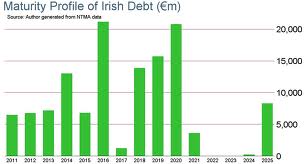
But one thing is very clear: the bank debt was unsupportable despite the responsibility of all the parties for placing it on the shoulders of the Irish people and something had to be done to prevent a disorderly bankruptcy.  This would have been caused by inability to raise the financing required to run the State at remotely affordable interest rates.  The average maturity of the main sovereign debt of about €80bn is around six and a half years, which has to be renewed by borrowing this amount again to pay it off – ‘rolling over’ the debt.  Combined with a possible promissory note repayment of over €28bn averaging five years and continued deficits this looked close to impossible.

Not that anyone dared point out that the deal exposed the lie of the Government parties, of the previous administration, and of the current Governor of the Irish Central Bank that the deb was ‘manageable’.

Ignoring this also allowed the media to largely stay clear of why this deal was necessary in the first place.  The Irish State had decided it would protect the investors in two thoroughly rotten institutions, run recklessly by their owners, by promising them that the Irish working class would pay off their gambling bets.

The Irish State never asked workers whether they wanted to, or whether they thought it was a good idea, but conceived the original bank guarantee in the middle of the night, as a scheme concocted without even the presence of cabinet ministers who were supposed to make up the Government.  In effect it decided to pledge money it didn’t have to people we still did not know and get everyone else to pay for it, including generations not yet born.

As ever we are bombarded with propaganda that cuts must be made in wages and services; increases must be applied to taxes, charges and working hours and all because we need to be competitive.  Yet billions that could not possibly be afforded were pledged and paid that bankrupted the State.  This in turn necessitated a ‘bail-out’ by the EU and IMF, which is akin to a blood transfusion to a dying patient so that she can work to earn money to pay the vampire.

As the Croke Park deal is ripped up and more draconian conditions inserted – not ‘extended’ as claimed – on the back of demands for austerity, no austerity is to be inflicted on the capitalist gamblers.  While money can be wasted on dead banks money must be cut out of wages and services because ‘we’ can’t afford it.

This is the logic of the capitalist system but it is hidden not just by the mass media and politicians but by the opaque workings of the capitalist system itself, made more complicated by the complexity of the financial system.  This complexity is useful because when it is more difficult to understand and appreciate what is going on it is more difficult to fight against it.  Only vague ideas that you are being screwed do not help give you confidence to say stop!

That is the importance of understanding as much as possible what the promissory note deal involves.

When the State guaranteed the liabilities of the banks in September 2008 it claimed the problem was one of liquidity, that is the banks were basically sound but were in danger because they would not lend to each other.  There might also be a withdrawal of money by depositors.  This was the purest rubbish and the gamblers who had put their money into Anglo-Irish Bank and Irish Nationwide didn’t buy it.  They took their money and ran.  Deposits in these institutions, packaged together as the Irish Bank Resolution Corporation (IBRC), fell from €65.8bn at the end of 2007 to €1bn at the end of 2011 while the value of debt securities funding the IBRC fell from €30.85bn to €6.3bn during the same period.

So if the IBRC was bust where did the money come from to give to the depositors and holders of the IBRC debt?  The answer is that it came in the form of Exceptional Liquidity Assistance (ELA) from  the Central Bank of Ireland (CBI).   This ELA funding to the IBRC was zero in 2007 and €40.1bn at the end of 2011. ELA is money so the question is where did it come from, how did the CBI get it?

In many ways the CBI may be thought of as the Irish branch of the European Central Bank (ECB).  The ECB has strict rules about money creation (money printing) so the local branch in Ireland could not just print Euros (metaphorically speaking) although this is one of the things Central Banks can do.

Nevertheless the CBI was able to give money in the form of ELA to IBRC which then paid off its depositors and holders of debt securities.  Since this bank and building society were broke the state nationalised them making all their reckless speculation our reckless speculation and making their debts everyone else’s debts.  Because the State didn’t have the money either to pay back the speculators they issued IOUs to the Central Bank of Ireland in return for their money’ the ELA.

The result was that the CBI gave money to the State in the form of IBRC and the State gave the CBI promises to pay this money back with interest.  Although the two institutions that became the IBRC had issued loans which were due to be repaid many of these were worthless so only through the state intervening could the capitalist investors in these institutions get their money back.

The promissory note IOUs were the promise by the State that through tax increases, wage cuts and public service cuts the working class would ensure they got their money.  This is what prevented the ELA being simply money printing and thus prevent the CBI holding worthless pieces of paper.

So the cuts to wages and public services that are justified by the claims that we need to be competitive are partly in order to pay the debts of a very uncompetitive bank.  So uncompetitive it is now dead, having been in a zombie-like state for the last few years.  When the State pays part of the promissory note IOU to the CBI the Irish Central Bank has ‘taken the money out of circulation’, again to ensure the problem is not solved by printing money.  In other words the money workers paid through austerity is simply burnt (again metaphorically speaking).

What could be more uncompetitive than maintaining dead banks on life support through burning money by putting real people on the dole and cutting services such as education?  The promissory note episode is one object lesson in the irrationality of the capitalist system.

This course of action could not have been taken by the Irish Central Bank and the Irish State without the approval of the European Central Bank and the European Union and its Commission.  For them the over-riding concern has been the protection of the European banking system just as the main objective of the Irish State has been the protection of the Irish banks.  Nationalist complaints that the Irish have made sacrifices for everyone else, much trumpeted by trade union leaders, has to ignore this.

If Irish workers have paid more so far it is because the Irish banks have been weaker and more rotten and Ireland remains a subordinated country which is dependent on foreign money for its speculative bubbles.

If the Irish State’s attempt to save the banking system required the ultimate liquidation of the IBRC this is because there was, in the end, little left to save after all the depositors and holders of its debt securities had been paid.  Again only the workers, in this case of the two institutions, are threatened with picking up the bill through redundancy.

For the Irish State this promissory note device to ensure that it did its best for European banks (and its own) had some advantages and disadvantages.  Of course inability to actually afford it is one big disadvantage but if it can get workers to accept austerity then this is not such an insurmountable obstacle.

The ECB does not want to lend money to institutions that cannot pay it back and since IBRC was bust its actions in approving the lending by its local branch raised some controversy.  If for example it lent to a bank that went bust and which didn’t pay back the money lent this money would then have entered the economy (through those people the bank did pay back, its employees or new loans) and this would amount to money creation/printing.  This can create inflation and low inflation is the primary objective of the ECB.  A strong currency allows a state, or in this case the Eurozone, to command greater resources on the world stage and is thus integral to the project of a strong EU imperialism.

The ECB thus regularly monitors (every few weeks) its ELA so their approval or otherwise was always hanging over the Irish State, although even without this it remains under close and regular scrutiny.

An advantage of the promissory note arrangement that will be lost at some stage with the new deal is that because the State owes the money to the Irish Central Bank profits by the ICB on the loans can be returned to the Irish State.  Given the high interest rate of over 8 per cent this is important.

Because a lot of the ELA created by the Irish Central Bank has ultimately been paid by IBRC to banks and institutions in other EU states the ECB has had to lend money to the ICB so that the reserves of the Irish Central Bank do not decline dramatically.  The ECB charges the ICB for this money but at a low interest rate so that the difference between this low interest rate charged to the ICB and the higher interest rate charged by the ICB to IBRC is a profit which can go to the Irish State.

What this means in terms of the current benefits of the new deal is that the move to a lower interest rate on the Government bonds that replace the promissory notes is not a gain since the effective rate of interest actually paid on the notes is the rate charged by the ECB to the Irish Central Bank and not that charged on the promissory notes.  As explained the profit generated by the latter is taken by the Irish Central Bank and returned to the State.

In the next post I will look at the new deal to replace the promissory notes.

The transitional programme and political consciousness Part II

2010-08-16Grafik8926075967511404471

In my first post on Trotsky’s transitional programme I argued that the political consciousness of the working class is critical to the success of the socialist project and crucial to take into account in the development of a political programme. I also noted that the transitional programme was one way of approaching this problem but did not in itself provide a simple solution. It did however provide ways of thinking about one by, for example, raising demands for workers’ control as an illustration of a programme based on workers self-emancipation.

The problem arises most clearly, as I said, when the political consciousness of workers is too low for them to effectively rise to the challenges posed by objective conditions. This could be the fight for an alternative to austerity in the south of Ireland or against sectarianism and the state that supports it in the north. How then should a programme be conceived and presented in such circumstances?

Trotsky presents guidance but it is not immediately apparent that the various elements of it are all consistent and provide clear answers. Trotsky argued that Marxists must tell workers the truth –

“To face reality squarely; not to seek the line of least resistance; to call things by their right names; to speak the truth to the masses, no matter how bitter it may be; not to fear obstacles; to be true in little things as in big ones; to base one’s program on the logic of the class struggle; to be bold when the hour for action arrives — these are the rules of the Fourth International.”

Socialists must avoid abstractions, which in words such as ‘peace’ or the ‘national interest’ are weapons of the capitalist class. Socialists on the other hand must be concrete in what they propose because a programme is a call to action not, as it often appears, purely propaganda for education purposes. Where it is the latter there is no reason not to speak Marxism clearly instead of debased social democracy.

Unfortunately too often the small groups of the left are known for their dishonesty, most obvious when they inflate their own numbers and achievements. This in itself is unimportant except that it is held up as evidence for particular perspectives that are often divorced from reality.

Trotsky understands that, in a programme predicated on what it is the working class itself does, the demands of the programme must be based on the truth, on reality and be practical or the working class will have no means to put them into action.

“Using these considerations as its point of departure, the Fourth International supports every, even if insufficient, demand, if it can draw the masses to a certain extent into active politics, awaken their criticism and strengthen their control over the machinations of the bourgeoisie.”

So we are to support limited demands if these are able to bring workers into active political activity while it is still necessary to state the truth that much more radical action may be required to achieve given objectives.

Trotsky however has been criticised because he didn’t actually understand the role of workers’ consciousness in framing a political programme. Trotsky is quoted:

“We know that the subjective conditions – the consciousness of the masses, the growth of the revolutionary party – are not a fundamental factor. It depends on the objective situation; in the last instance the subjective element itself depends on the objective conditions, but this dependence is not a simple process.”

And further:

“What are the tasks? The strategic tasks consist of helping the masses, of adapting their mentality politically and psychologically to the objective situation, of overcoming the prejudicial tradition of the American workers, and of adapting it (their mentality) to the objective situation of the social crisis of the whole system.”

“I say here what I said about the whole programme of transitional demands – the problem is not the mood of the masses but the objective situation, and our job is to confront the backward material of the masses with the tasks which are determined by objective facts and not by psychology.”

The question is then posed to Trotsky:

‘Question: Isn’t the ideology of the workers a part of the objective factors? Trotsky: For us as a small minority this whole thing is objective, including the mood of the workers. But we must analyse and classify those elements of the objective situation which can be changed by our paper and those which cannot be changed. That is why we say that the programme is adapted to the fundamental, stable elements of the objective situation, and the task is to adapt the mentality of the masses to those objective factors.’

We should remember that for Trotsky the transitional programme was itself said to incorporate the requirements of a transitional epoch – “During a transitional epoch, the workers’ movement does not have a systematic and well-balanced, but a feverish and explosive character. Slogans as well as organisational forms should be subordinated to this feature of the movement,”

The organisations on the left repeatedly argue that workers’ consciousness can change quickly, and so it can, but this is mostly simply a way of avoiding the reality of the distance that workers must travel, the time required to do so and the experiences that must be gone through. This also plays a role in the debasement of the socialist programme, prompting attempts to make it look more ‘realistic’ and even ‘common sense’ by constructing a socialism based on widespread illusions in the capitalist state. How much more realistic, upon such illusions, do calls for nationalisation appear than the call for workers’ cooperatives or other measures of control?

So if we can try to summarise Trotsky’s approach, it is one that starts from trying to change the consciousness of the working class, through its more militant elements, in order to change objective conditions which alone set the tasks of the working class.

In the ‘transitional epoch’ that Trotsky described “the workers’ movement does not have a systematic and well-balanced, but a feverish and explosive character” and might therefore have been expected to be more open to the changes in organisation, action and consciousness that were required.

As I said in the first post the workers movement today in European countries cannot be said to have this character. The organisation and consciousness of workers today must therefore be considered much more an objective factor than when the transitional programme was written. This reflects the long history of capitalist boom conditions after the Second World War and the defeats inflicted on the workers movement in the most advanced countries plus the general discrediting of socialism consequent on Stalinism and its collapse.

To a much greater extent therefore the tasks of the programme is to confront workers with the objective circumstances which include the limitations of their own consciousness. Since for Marxists consciousness must reflect reality, changing consciousness means changing the conditions of workers themselves, including their own organisations and their workplace experiences. This is the task of workers themselves.

The Marxist programme must therefore place to the fore the working class changing its own circumstances so that objectively it increases its political and social activity. That this does not immediately raise the question of revolution does not matter since this cannot be raised concretely and practically any other way and certainly not by programmatic demands issued by small groups.

It must be realised that a revolutionary programme is not defined by adherence or commitment to the call for revolution now or in the future (in the sense of smashing the capitalist state and creating a new workers’ state). In the first case this is revolutionary phraseology only and in the second is merely a promise, and promises are regularly broken. Revolutionary politics exist in today’s period of retreat as they also more clearly do in periods of offensive and they do so whether an actual revolutions is more or less probable.

Revolutionary politics means the self-activity and independence of the working class themselves and an acceptance that just as workers must achieve their own emancipation they must also learn their own lessons and do so through their own mistakes. Marxists can lessen and shorten this process but not abolish it. To counterpose real expressions of working class action that may be politically weak and to abstain from it in favour of hypothetically more advanced courses of development is a sectarian mistake. This is not such a common mistake on the left today since it usually makes the opposite one but it is sometimes reflected in demands for acceptance of programmatic positions that in themselves do not answer any real tasks more or less immediately posed.

The more common mistake is to substitute action by others for action by the working class and in a whole series of posts I have given examples of this being done. To return to the beginning of the first post – Trotsky’s transitional programme gives no support to those who believe state ownership is part of the working class programme. It is rather the predominant means by which the left supports actions by others for what can only be achieved by the working class.

In the next post I will look at what Trotsky had to say on this.

The reality of the Good State

images (1)
Some readers of this blog might think that I’m labouring the question of nationalisation and state ownership and its identification with socialism. While I believe it is a question of fundamental political importance its practical significance has been vividly illustrated in the last few days.

mag6

In Britain the report from the fifth investigation into Stafford hospital has been delivered, prompting David Cameron to say that he was”truly sorry” for what had happened, which was “not just wrong, it was truly dreadful.” Previous investigations had already established in harrowing detail the abuse and neglect that took place from 2005 to 2008.

Between 400 and 1,200 more deaths took place than would have been expected between these years, although it is stated that it is impossible to say whether all of these patients would have survived had they received better treatment. Receptionists were left to decide which patients to treat, inexperienced doctors were put in charge of critically ill patients and nurses were not trained how to use vital equipment.

The National Health Service, so beloved of the British nation that it featured in the opening ceremony of the Olympics, has been damned from top to bottom.

Trust management ignored patients’ complaints while local GPs and MPs also failed to speak up, the inquiry said.

The local primary care trust and regional health authority were too quick to trust the hospital’s management and national regulators were not challenging enough.

Meanwhile, the Royal College of Nursing was highlighted for not doing enough to support its members who were trying to raise concerns.

The Department of Health was also criticised for being too “remote” and embarking on “counterproductive” reorganisations.

The findings of the report cannot be regarded as an aberration as it follows repeated damning judgments of care provided in Britain, especially care of the elderly, and news that five other hospitals are to be investigated following Stafford.

Yet the NHS is the crown jewels of the social democratic state.

The inquiry’s head said that patients “were failed by a system which ignored the warning signs and put corporate self-interest and cost control ahead of patients and their safety.”

Many on the left speak and act as if the only problem with the health service is a lack of cash but this is much less than the full story and money will not deal with what has been referred to as the cultural changes that are required.

Working class people in Britain and Ireland are all too aware of the shortcomings of the health services. While those in Ireland may wish for their own NHS those in the UK know its limitations and going to hospital is more and more regarded as something you really don’t want to do unless you have to.

Those with elderly relatives in care are all too aware of the possibility of mistreatment.

Only yesterday Channel 4 news reported on the death of an elderly person left with no domiciliary care for 9 days when the service she was receiving was closed by immigration police, who had raided the office of the private organisation providing the care. When the care provided by this organisation stopped the council never picked up on the elderly woman who had no relatives. She went without her medication and died hungry, thirsty and alone.

Two days ago the illegal charging by the Irish State of people in long-term care again became news. As early as 1976 the State, through the Department of Health, knew its charges were illegal. In 2005 the Government attempted to make them legal retrospectively although this was stopped by the Supreme Court.

The Government knew exactly what it was doing. The Minister of Health Mary Harney said that “more than 300,000 people were charged illegally during 28 years. This was entirely wrong. They were old, they were poor, they suffered from mental illness, they had intellectual disabilities, they were physically disabled. As vulnerable people, they were especially entitled to the protection of the law and to legal clarity about their situation.”

And yesterday the report on the Magdalene Laundries was released, which revealed some of the State’s role in the incarceration of thousands of women in institutions run by Catholic religious orders, compelled to work for nothing and stigmatised as ‘fallen women.’ “A very Irish form of slavery” as the Sinn Fein TD Mary Lou McDonald put it. Over one quarter of the women were put there by the State. The last laundry only closed in 1996.

The State again attempted to cover up and lie over its role.

In 2009 the Minister of Education Batt O’Keefe said that “the Magdalene laundries were privately owned and operated establishments which did not come within the responsibility of the State. The State did not refer individuals to the Magdalene laundries nor was it complicit in referring individuals to them.” Not true.

In 2011 Sean Aylward, secretary general of the Department of Justice, speaking in Geneva at the UN Committee Against Torture said “the vast majority of women who went to these institutions went there voluntarily or, if they were minors, with the consent of their parents or guardians.” He knew this because he had met some of these women.

Yet not one of the five women he had met had entered the laundries voluntarily or with the consent of their parents or guardians. Over eighty three per cent who entered the laundries were put there.

What all these examples demonstrate is that the capitalist state cannot be relied upon to provide services that working people, especially the most vulnerable, require. Some, like the Magdalene laundries, are now easy to denounce but none are models of socialism. Far from uncritically defending these services socialists must educate and agitate for a workers’ alternative to how they are currently organised and managed. The very last thing we want to do is proclaim these services as exemplars of socialism and the state that runs them as the font of this socialism.

The transitional programme and political consciousness

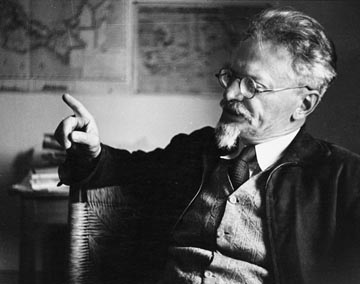
Trotsky-1931In a series of posts I have shown that capitalist state ownership and its identification with socialism has no support in the writings of Marx, Engels and Lenin. It nevertheless recurs again and again and has done so for years in the political programmes of organisations claiming to derive their politics from these figures. Most of these organisations also claim to be inheritors of the ideas of Leon Trotsky and consider their political programme to embody the approach of the transitional programme formulated by Trotsky in 1938. It remains therefore to look at the transitional programme to see what support it gives to today’s organisations which consider themselves to be continuing the fight for this programme.

The transitional programme was itself said to incorporate the requirements of a transitional epoch – “During a transitional epoch, the workers’ movement does not have a systematic and well-balanced, but a feverish and explosive character. Slogans as well as organisational forms should be subordinated to this feature of the movement.” (Trotsky) It cannot be said today that the workers movements of Ireland, Europe or the historically advanced capitalist countries have a feverish or explosive character. The point is therefore not to quote Trotsky in order to impose a specific formula on today but to demonstrate a general approach to Marxist politics and in so doing dismiss what are mistakes in formulating a working class programme.

The purpose of the transitional programme is to bridge the gap between workers and socialism through approaching workers at whatever level of political consciousness they are at and through progressive struggle and education direct them towards the goal of socialist revolution. It starts with existing objective conditions and through step by step struggle projects forward to the conquest of political power by the working class. It is designed to overcome the division of political programme into support for socialism as the maximum objective and the fight for a minimum programme made up of immediate demands that involve only reform of the capitalist system.

For Marxists the truth is concrete, not a formula, a schema, theory or principle and the truth lies in the whole, not any individual part or series of parts. The Marxist programme is therefore one that is true to the interests of the working class when taken in its entirety and when it becomes a guide to action. The role and purpose of the transitional programme is not therefore without its own problems; it does not of itself provide solutions to the difficulties in fighting for the interests of the working class or achieving the working class conquest of political power and it does not guarantee falling into failure to really fight for revolutionary change, on the one hand, or declarations of revolutionary virtue with limited purchase on reality on the other.

It provides no ready-made answer when objective conditions clash with working class political consciousness, when the threat to the working class is either not understood by it or it does not have the means to respond. When the Irish working class faces years of austerity, but has no conception of an alternative and so votes or accepts this austerity, the transitional programme waves no magic wand. When relatively large numbers of working class people are prepared to support or engage in very militant forms of struggle but have no or very little conception of socialism, as many republican workers did in the north of Ireland during the late 1960s and 1970s for example, the method of the transitional programme offers no off-the-shelf remedy.

What it does do is demonstrate through very practical examples how these problems may be faced and the method used to conceive the way forward – practical political demands which socialists and militant workers can fight for that can achieve their objectives. The class struggle itself will decide whether success is achieved.

This can be illustrated by a criticism I have seen made of the Irish United Left Alliance programme. This Alliance has now fallen apart but there is no reason to believe that the errors of its political programme so criticised in this blog have been understood. The electoral platform of the ULA has been criticised for not using the word socialism but this would not be a problem if it was only the word that was missing and the content it is shorthand for, working class power, was maintained.

The method of the transitional programme is based solidly on the Marxist view that the emancipation of the working class must be the task of the working class itself. The demands of the programme are all ones that the working class must fight for, impose and achieve. To bring us back to the point: nationalisation is something the working class hands to the capitalist state, the defender of capitalism, to carry out.

In terms of the examples above; the fight against austerity must place the tasks of the workers themselves to the fore, fighting the mechanisms of austerity in cuts and tax rises and putting forward alternatives that are creations of the working class itself such as democratic trade unions and workers cooperatives etc. In the North the need for defence of sections of workers attacked because of their religion must be a political task first, not a military one, and must be carried out democratically by workers themselves, not by a secret military group. It must be done under a political banner committed to democratic and class identification not sectarian and communal affiliation. Of course, as we have said, to fight is not necessarily to win but to fight under the wrong political banner and demands is already to fail.

The principle that it is working class activity and action which is key through the mechanism of workers control is also revealed in the approach to demands which on the face of it are not specifically socialist and are limited to reforms or purely democratic changes within the existing capitalist framework. In these cases such demands must be fought for through working class methods of struggle in order that the workers themselves go through the experience of fighting and learn from the experience.

Inevitably when this occurs workers quickly teach the socialists but no lesson is learnt automatically or spontaneously. The struggle in the North of Ireland is proof that even the most militant struggle does not generate socialist consciousness and that this must be fought for just as much as the particular object of struggle itself and if they cannot be linked the struggle for socialism is not on the agenda anyway.

On the other hand the fixation with electoralism evidenced by the ULA is not a lapse but sits comfortably within a political programme which calls on the capitalist state to create equality and democratic ownership. Since the illusion exists that election to governmental office allows one to utilise the state to direct capitalist society, instead of the other way round, what makes more sense that seeking election? In this scenario working class action supports the actions of the elected instead of the elected acting merely as the megaphone of the working class movement.

When I first became involved in Marxist politics in Glasgow in the middle of the 1970s the organisation I joined, the International Marxist Group, was critical of what it saw as the syndicalism of the (British) Socialist Workers Party because the SWP refused to stand in elections. Electoral intervention led to revolutionary politics being diluted and betrayed in the pursuit of votes said the SWP. Less than five years later the same argument was being advanced by Peoples Democracy against Provisional republicans who claimed that standing in elections was to play the British game, legitimising its rule and distracting from the cutting edge of the armed struggle. For both the IMG and PD the Russian Marxists at the beginning of the century were proof that entering electoral contests did not necessitate abandoning revolutionary politics.

While this might be true in principle the subsequent course of both the SWP and republicans has conclusively demonstrated that the IMG and PD (and myself) were wrong in practice. Over on the Irish Left Review a statement is quoted from Ann Foley, the ULA candidate for Cork North West and the SWP’s People before Profit electoral organisation that starkly exhibits this: “I feel the ULA has very common sense policies. When people think of socialists, they think of communism, which is not the case. There is nothing dramatic or revolutionary about our policies.”

This is not the place to explain how this collapse of these organisations’ programmes came about but it is obvious that this has happened. As explained above, even the most militant struggle may not of itself generate socialist consciousness but electoralism has its own ways of causing political degeneration.

In any case the struggle for capitalist state ownership does not challenge capitalist ideology, does not challenge the natural order of capitalist society, does not challenge the widespread illusion that the state (at least potentially) is a neutral arbiter of interests or is the embodiment and representative of a common, national interest. When the actions of the state feature so heavily in even the programme of self-declared Marxists, and for decade upon decade, can there be any wonder there is so little evidence of socialist political consciousness among the Irish working class?

For Marxists this is key because if emancipation can only follow the actions of workers themselves then the ideas these workers act upon are obviously critical. In so far as socialists can affect this consciousness then the manifestos, budget statements, press statements, speeches on the floor of the Dail carried by TV and radio, door canvassing, interventions in workers’ meetings and leaflets at demonstrations are the means by which socialist education can be achieved. How many of these stray beyond Keynesian, that is capitalist, ideas? By comparison the theoretical articles in the left press are simply salves to a guilty conscience that is not even conscious of its guilt.

Consciousness is key because socialism is another name for working class rule and no ruling class rules without being aware of it, which explains the much higher level of class consciousness among capitalists than workers. Workers cannot rule unless they purposefully chose to do so because power will not simply be handed to them. They will have to fight for it which means they will have to want it. Perhaps this is obvious but it has consequences for how socialists must see socialism coming about.

The task of ruling society by the class that makes up the vast majority of society is an enormous and unprecedented undertaking. The scope and depth of political and social awareness to make such a prospect a real possibility does not at the moment exist anywhere. It must come through struggle involving greater and greater parts of the working class, through a process of political and social education that prepares the working class both ideologically and practically for accomplishing it. The transitional programme is meant to encapsulate how this momentous task is achieved.

Unfortunately the transitional programme is looked upon in relatively restricted terms, as a result of the particular historical period in which, and for which, it was written. It is most obviously relevant to a revolutionary situation where the capitalist system is in crisis and the rule of the capitalist class is similarly struck. By their nature such situations are temporary and often fleeting.

To believe today that such crises can move the working class from its current position of subservience, where it does not even control and mostly does not even participate in the organisations which are supposedly its own, such as trade unions, to being politically conscious and organised enough to take political and economic power, is to believe in revolutionary crisis as a sort of magic wand out of which the organisation and education of decades can be squeezed into a few years, at most, of crisis.

The creation of socialist political consciousness among the vast majority of the working class is not the task of a few months or years but of decades. This is also true of the maturation of the objective conditions upon which such consciousness can only be created. This involves a qualitative increase in the social and political participation of the working class as a class in political and economic life, through real participation in trade unions, political parties, community organisations, workers’ cooperatives and other aspects of economic life.

It sometimes appears as if supporters of the transitional programme believe that a series of smart demands allied to struggle can somehow lead workers from rather backward political consciousness, almost by the nose, to one day deciding they would like to rule society. Or worse, finding by sudden surprise that they must smash the capitalist state to get what they want or that having done so waking up one morning to find themselves in charge of society almost by default. It is almost as if the working class will take conscious control of society by a process of mostly unconscious action, at least until the last minute.

While it cannot be expected that even the greatest struggle must start with full consciousness of the socialist objective it cannot be expected that the beginnings of a revolutionary struggle will start without widespread allegiance by major sections of the working class to the ideas of socialism as an objective and deep and widespread experience of self-organisation as a result of commitment to such ideals. In other words there exists a more or less long struggle to win the working class to the ideas of socialism and the need for practical experiences of organisation that comes from militant workplace organisation and inroads into capitalist property.

For those who believe only a Marxist Party needs to be conscious of such tasks and long term objective there might not appear any problem.  But if socialism is working class rule then the vast majority of workers must believe in their capacity to rule society and seek it as the solution to the critical problems which capitalist society has presented to them in periods of revolutionary crisis.

In the next post I will look at claims that Trotsky did not understand this objective requirement.

Why are the flag protests still going on?

Loyalists march in Belfast waving British Union flagsWhen I first posted on the flag controversy I argued that the issue was not one of identity or culture or any supposed rights attaching to either of these but one of intimidation; as clear as day from the moment protesters attempted to get into the City Hall as the vote was taken. In fact it was clearer even earlier when the two main Unionist parties put out leaflets in East Belfast in a transparent attempt to prepare for the ousting of the Alliance Party MP.  Unionists had already supported flying of the flag on designated days, and not every day, in Lisburn and presumably the protesters hadn’t then noticed any loss of identity or culture.

As the protests have continued their intimidatory character has become more obvious: from preventing people getting to hospital to attacks on political representatives to attacks on Catholic homes in the Short Strand area of East Belfast. As the violence has increased the number of arrests by the police has fallen. The Police Service of Northern Ireland (PSNI) has stated that it is not possible to arrest those flagrantly breaking the law which is, of course, an open incentive to continue to do so.

The numbers involved have been relatively small, the core rioters have been youths and the PSNI have pointed to individuals in the paramilitary UVF as being responsible for organising the rioting. The protests, even the ‘peaceful’ ones, have been characterised by sectarian displays.

The political organisation behind the protests, in so far as it exits, is composed of marginal, relatively unknown figures or individuals with little political credibility. Their call for a return to direct rule by the British State was seen as confirmation of their marginal status and further betrayed their sectarian objective and its lack of any democratic content.

While unionist politicians have attempted to rationalise and defend the motivations of the protesters these have been exploded by the actions of the protesters themselves. So they hold up the union flag demanding ‘Hands off our Flag’, with the ‘our’ underlined. In other words the union flag is a Protestant flag and is to be defended as a sectarian symbol.

Having originated in an opportunist attempt by unionist politicians to unseat the Alliance Party the issue was initially held up as one of the right to fly the union flag 365 days a year. The acceptance by republicans that instead it could fly on the Queen’s birthdays (she has two) or the Earl of Wessex birthday etc. etc. is held up as a stunning denial of Protestant cultural rights and identity. As if understanding the absurdity of this, spokesmen for the protesters and others have listed a catalogue of grievances of which the flag issue was ‘just the straw that broke the camel’s back.’ All grievances have been blamed on republicans and nationalists.

This list includes unemployment, educational disadvantage and a supergrass trial that threatens to put some leading UVF figures behind bars. The latter is reported by some journalists as the real reason this organisation continues to keep the protests going. None of these are the result of action by, or the responsibility of, nationalists and republicans. Unemployment, educational disadvantage and poverty are the responsibility of the State from which they wish to be directly ruled and the worst areas for social and economic disadvantage are still by and large Catholic.

The idea that Protestants are unable to express their Britishness, which the more it is expressed the less those who are British recognise themselves in it, is risible. As we have said ‘Hands off our Flag’ is an expression of sectarianism, and they still want it 24/7/365 irrespective of all the other complaints.

So what we have then are relatively small protests involving mainly youths and a hard core of Loyalist paramilitaries some of whom might be facing serious criminal charges in the not too distant future. The political leadership of the protests is extremely weak and is denounced by all mainstream unionist leaders, if only for party political purposes – the Democratic Unionist Party now claims it is the target of the protests, how ironic.

The complaints of the protesters are blamed on those with nothing to do with their grievances and their demands vary over time and are in turn incoherent and contradictory. We are asked to feel their pain as they attempt and often succeed in widespread and sometimes random acts of intimidation on everyone else, regardless of religious background. There is no doubt that the vast majority of the population is fed up with the protests and there is limited appeal for incoherent violence. Many, like the State itself, have assumed, and still assume, that they will burn themselves out.

So how come the protests are able to continue? The most immediate answer is the one we have mentioned. The police have let them. It is assumed by many that once the protests are over the PSNI will quietly round up the miscreants but there is limited reason to assume this. The Chief Constable, fresh from conferring legitimacy on the political front of the UVF by attending and speaking at its conference last year has really said they can do nothing now to stop them. However the loyalist paramilitaries are thoroughly penetrated by the British security services and have in the past been financed, armed and provided with intelligence by them.

The PSNI has said that around 4,000 have taken part in recent protests and they can’t ‘wade in’, ignoring that single republican demonstrations of greater number have in the past received exactly this treatment. The point is not to demand such repression on loyalists because the forces of the state are clearly not an answer to loyalist paramilitarism.

This immediate answer is also the deeper answer. For all their small size and the opprobrium heaped upon them the protesters are not as isolated as they appear.

It was mainstream unionism which kicked the protests off. Their rank and file political representatives have appeared regularly on the protests and their leadership has endorsed their demands. The loyalist paramilitary leaderships have not disowned and expelled their wayward local leaderships and the unionist political parties and paramilitaries have come closer together, most visibly in the new unionist forum. The nationalist and republican parties have called on these mainstream unionist parties to do the right thing as the peace process deal they have sold themselves into necessitates an alliance with unionism. Coalition government is what they have demanded for decades and they have no other strategic perspective. In this way they are prisoners of their unionist partners in government just as they are now wedded to political support for the PSNI.

So the protesters are tied to the unionist parties by their function as foot soldiers for ‘peaceful protest’, by ideology and their ties to loyalist paramilitaries. The state sponsors these paramilitaries but like rabid dogs are not under total control. The paramilitaries are working more closely with the unionist parties and these unionist parties are in government with nationalists and republicans, who are clinging to them for a solution because they value their role in government above all else, including what being in it can actually deliver.

All this is understood by many people if not in quite the way just explained. There is for example the understanding that if the police went in tough to arrest violent protesters or simply to prevent obstruction of the roads this could trigger wider involvement by paramilitaries. Unionist parties might then row in to excuse, justify and attempt to gain control of the protests. The republican and nationalist policy of hugging these unionists would be put under strain and the potential would thereby be created that the existing careful political deal could unravel. This of course is an extreme but not inconceivable scenario.

It is not that the state forces could not succeed in facing down this challenge because it is still unlikely the majority of the population would engage in open rebellion but the existing political dispensation would come under extreme stress. For the British state there might be no victory.

Should they capitulate to the most rabid expressions of sectarian intimidation they leave themselves open to similar challenge in the future and in the meantime convince the nationalist population nothing has really changed – they continue to live in an orange state where loyalist sectarianism sets the rules. If they win they run the risk of inflicting the sort of defeat on unionism that republicanism has just suffered. This led republicans to giving up their armed campaign, accepting partition, accepting Stormont, supporting the police, disarming and then dissolving the IRA. Were a similar defeat inflicted on unionism where goes the basis for British rule and a separate Northern state?

The existing policy of softly, softly or bribes to the criminals involved is therefore an attractive option, as might some concession on flag waving at the City Hall, except that it works only in the short term. Instead of an immediate crisis a gangrenous corruption discredits the state and eats away at its foundations and its legitimacy.

All this reflects that the population of the north of Ireland is still bitterly divided as is the working class despite the hot air about the new modern Northern Ireland, its peace process and the solving of an 800 year old Irish question.

This does not mean that nothing can be done by those seeking to awake from this nightmare of history but this requires that we also stop dreaming that this nightmare is something other than what it is and speak the truth, however unpalatable. There is no progressive impulse behind the protests. They are entirely reactionary and they should be opposed be anyone who considers themselves anti-sectarian. This opposition needs to be organised and make its presence felt. Only then can a path be chartered out for the many workers, Protestant and Catholic, trapped inside this sectarian state.

Nelson McCausland, a little man with a big loud drum. (by Belfast plebian)

47925243_3707225203_e18c6d4d4e-1It is a hell of a misfortune that at this time of a drastic need for some form of social protection for hard pressed working class families we are saddled with a social development minister in the Stormont Executive whose opinions accord well with the right wing government across the pond and who is also regarded by many as a hardened religious sectarian. This little man with the big drum is also proving to be the most active of the generally passive Stormont ministers.

It should be said at the outset that he took on the ministerial portfolio at a very awkward juncture when the Tory austerity plans where already in an advanced state. The SDLP of course vacated the crucial social development portfolio as soon as they caught sight of the content of the welfare reform bill and Sinn Fein screamed PASS to the chance to take over the department from the SDLP following the May 2011 assembly elections. Why Sinn Fein chose to take on the department of arts and culture, the one with the smallest budget and largely symbolic importance rather than one of the key economic departments stands as an interesting question without of course an answer.

Nelson McCausland is known for being an ardent Unionist, a formidable Orangeman and monarchist, a ‘pro-life’ evangelical Christian who is also a Creationist and of course a great enthusiast for something called the Ulster-Scots culture. Indeed it can be persuasively argued that he more than any other individual is responsible for the ideological mishmash called Ulster-Scots culture. When he was appointed to his previous ministerial post in 2009, in charge of dolling out money to the arts and science cliques, his primary mission was to raise Ulster-Scots heritage up a couple of intellectual notches to the status of ‘a traditional culture’ and therefore make it worthy of taxpayer cash. The small budget didn’t deter Nelson too much.

Before he captured the minister for arts and culture portfolio he was the director of a lobby organisation called the Ulster-Scots Heritage Council. Back in those days he had little or no money to promote Ulster Scots heritage as a rival to the Irish language and culture movement and so no one of any intellectual standing took him too seriously. It was only when he got his hands on the department cash card that the little man with the big drum had to be listened to by the typically anti heritage arts cliques.

For a brief moment Nelson attracted the attention of the middle brow Guardian newspaper, thus earning a wider notoriety and crossing swords with non-other than uber-scientist Richard Dawkins who declared that the minister was an unfit person to be in charge of science museums. This was after Nelson wrote to the Ulster Museum requiring that it display a range of Creationist inspired artefacts to offer the North’s naive children a legitimate alternative to the “unproved theory of evolution.”

It didn’t take much to put down poor Professor Dawkins, faced with the acuity of Ulster’s superior evangelical mind. “Dawkins is an arrogant and militant atheist who prides himself on his knowledge and reason. He loves to demean and disparage others but this time the mighty man came unstuck” declared Nelson on his personal blog.

Being anti-modern in evolutionary science has not stopped the little man with the big drum being a very successful politician, He is already into his second ministerial position and is easily the busiest minister. Some people think they know why he is so successful. The key to his lasting popularity they say is to be found in his very frequent sectarian public outbursts, something that goes down well in loyalist flag waving working class districts. Let’s run through just a few of his more recent efforts.

On the third of October the Belfast Telegraph ran a story -‘Fury after Nelson McCausland says there’s no need for more Derry housing funds.’ It emerged that the minister had refused a recent appeal by Derry City Councillors for additional funds for the Housing Executive to build more social housing in the city. The latest figures revealed that the number of families and single people on waiting lists had passed the 3,000 mark

Sinn Fein councillor Tony Hassan said ‘we get a letter back from the minister’s secretary and to me it was disgraceful.’ The SDLP councillor John Tierney called the statement of the minister ‘crazy’. And here’s a nice Nelson touch – ‘the minister’s letter also referred to Derry City Council in the address and throughout as City Council of Londonderry.’

On the 25 September he faced down an SDLP sponsored motion calling for a three month parliamentary suspension for supposedly breaching the ministerial code by failing to condemn illegal acts conducted by a royal black band parade as it swaggered outside St Patrick’s Church on Donegall Street in Belfast. The suspension motion attracted a lot of media attention and was voted down. And so the little man’s political stock went up within his own party. McCausland, more than most DUP politicians, gets a kick out of baiting both ‘republican’ and nationalist politicians. He runs his own blog just to keep the invective regular.

In mid-June we can pull out another two media stories, ably covered by the online newspaper the Detail. The story broke that Nelson McCausland had caused worry and anger among Housing Executive workers when he chose to provide fellow DUP assembly colleague Paula Bradley with the religious breakdown of staff employed in North Belfast in the most public way. The decision was strongly criticised by trade union officials who warned that publication of the religious designation of workers in specific localities might put them at risk.

Less than a week later a car belonging to a Housing Executive employee was destroyed after it was set on fire by masked youths as it was parked outside the agency’s district office in Newtownabbey. ‘The Detail understands that Housing Executive officials have been forced to review security measures at offices across Belfast as a result of the attack. In a series of questions to DSD ‘we asked Mr McCausland to explain why he decided to publish the figures against the advice of his own officials and despite staff concerns…We also asked DUP MLA Paula Bradley why she had originally asked for a religious breakdown of staff… she chose not to respond.’

Also in June McCausland was criticised for blocking plans to build 200 new houses for people deemed to be nationalists on the vacant site of the former Girdwood army base in North Belfast. ‘However the Detail can now reveal new evidence showing that the DUP minister held discussions with the Housing Executive to ensure that four loyalist areas in north Belfast were given preferential treatment to be included in a new housing building scheme despite having little or no sign of any significant homelessness.’ Nationalists make up most of the 1,300 people in homeless stress in North Belfast.

The Detail obtained evidence that emergency approval was used to ensure that the four estates were added three months after the three year building plan had been finalised by the Housing Executive. The change was all down to pressure from the DSD and was a clear breach of a 40 years old protocol that social housing should be allocated strictly on the basis of priority of need and not on the basis of political or religious affiliation. This incidentally dragged Sinn Fein into the mix as they had agreed to the decision at local level talks.

And here is one from this month, this time from Nelson’s personal blog. Under the heading Biased Broadcast Corporation he complains about a pro Sinn Fein bias at, of all places, BBC Northern Ireland . He thunders against a BBC documentary that he hasn’t even seen about the life of the youngest Lord Mayor of Belfast, who happens to be a member of Sinn Fein, councillor Niall O Donnghaile.

He notes ‘This is not the first BBC documentary on a Lord Mayor. There was also a documentary on Alex Maskey, who was Lord Mayor in 2002. In between there were eight other Lord Mayors and they were drawn from all the larger political parties, but the BBC has decided that the only party whose Lord Mayors merit a BBC documentary….There is an onus on the BBC to acknowledge that it was wrong to give preferential treatment to Sinn Fein, to determine how this happened, to ensure that it does not happen again and to take action to redress this balance.’ There is a lot of this type of thing on Nelson’s blog, most of it aimed at excoriating Sinn Fein, his partner in government.

So Nelson’s strong electoral success can be attributed to some degree to what appears to be his carefree sectarian mud-slinging that goes down well with his many loyalist followers. However this is not what I want to focus on so much, rather I want to show up his other prejudice, his right wing class prejudices that make him the emblematic leader of the main party of government at Stormont.

Nelson holds strong opinions on socio-economic matters but critics prefer to ignore them, all the more to encourage him to just get on with his ministerial post. If only Nelson would just do his job and not court publicity things would be fine say his newspaper critics. But Nelson is getting on with his job. In fact he has the two biggest policy initiatives of the Executive on his agenda, implementing the welfare reform bill and dismantling the Housing Executive.

We can pick up the thread of Nelson’s approach to welfare reform from his offering on the bedroom tax. The chief executive of the Northern Ireland Federation of Housing Associations (NIFHA) Cameron Watt recently called on Nelson to delay the implementation of the bedroom tax until the Universal Credit is actually ready to go. This would of course only mean a postponement of about six months, from April 2013 to October 2013.

According to NIFHA this is ‘necessary, realistic and fair.’ Nelson rejected the very meek proposal outright saying that ‘I intend to increase funding available for discretionary housing payments to be made to all social housing tenants.’ In other words if any of the 34,000 tenants experience problems with rent they might be able to get a discretionary payment to help them out. Housing officers are to be offered a new career path into becoming poor law guardians.

The public line of the Stormont Executive is that it is being blackmailed by the Con-Dem government into progressing the welfare reform bill. If it was down to them it would not happen but if they put obstacles in its way they would face financial penalties

Yet in his speech to the NIFHA conference Nelson says “Turning now to events at a UK level, everyone in the room will be aware of the welfare reform agenda which is progressing. We know that its implementation is unavoidable. I think most of us will agree that the key principles behind this legislation are positive and we should recognise the real positives and opportunities that can be achieved as a result of some of these reforms.”

The principle that Nelson likes most is the one that says a welfare system should promote personal and social responsibility. In fact Nelson being a keen evangelical is happy to edge the State out of welfare provision and get the churches in. His department has already licensed a couple of schemes to that end.

We find an article on his blog of 25 November 2012 called signposts for funding churches “The Minister for Social Development, Nelson McCausland, believes that there is a very critical role to be played by the faith sector in developing strategic partnerships with Government to help deliver practical approaches to tackling poverty. For this reason, the Minister funds the Faith Forum for Social Development …. Minister McCausland wants all faith-based groups to become engaged with the Department whether it is on local Neighbourhood Renewal Partnerships, benefit uptake or helping ensure the connections exist between vulnerable citizens and agencies such as the Social Security Agency or the Housing Executive. There is no cost to them and only benefits to be gained by those most in need.

Nelson’s DSD operates something called the Voluntary and Community Unit which doles out millions to agencies like the Law Centre, Citizens Advice Bureau and Northern Ireland Council For Voluntary Action. It also funds the Regional Infrastructure Programme which has an annual budget of 3 million to fund community groups. Some scope then for Nelson to put his own brand of welfare policy into operation.

The day Nelson became Social Development minister in May 2012 was the day the death knell sounded for the Northern Ireland Housing Executive (NIHE) and of socialised housing. Nelson has chosen to make social housing his battlefront. We already mentioned the clash over the abandoned Girdwood Barracks, the emails seeking knowledge of the religious makeup of the Belfast offices in February 2012 and the publication of Catholic numbers working in Newtownabbey.

There has also been his row with the senior management over a £7 million repair contract with a company situated in East Belfast, Red Sky. The contract was terminated in July 2011 following accusations that the company had engaged in a practice of overcharging. Huge political pressure was piled on the NIHE to overturn the termination of the contract

Three days into his post Nelson met with the NIHE chairman Brian Rowntree to ask that the decision be suspended for six months. The investigative magazine the Detail gained access to the emails. The NIHE chairman sent one to the Department for Social Development (DSD) Permanent Secretary Will Haire on July1 saying he had ‘serious concerns and misgivings’ over the pressure being applied by the DSD over the contract and asked that the minister take a step back. The DSD permanent secretary emailed back saying ‘I believe that you should withdraw the remarks you made.’ Four days later Mr Rowntree resigned as Chairman citing personal reasons.

Nelson knows a few things about the NIHE that are not to his liking. He knows that it came into being to end the allocation of social housing on the basis of religious affiliation and he knows it always has had a catholic majority in its staff. But putting the sectarian boot into the NIHE is not his only motivation. He does not like its social democratic ethos. He is in fact busy drawing up plans to have it broken up and privatised.

It is likely that the 90,000 tenants will be transferred to private Housing Association where rents are higher. A good number of redundancies will follow out of the 2,800 staff. For those who think he will face opposition from Sinn Fein – think again. In July Stormont announced that it had set itself a target of transferring 2,000 homes to Housing Associations and a number of British based Housing Associations are said to be taking soundings. The public justification for the change is stated in the consultation documents, which is the need to raise a billion pounds for repair work. The NIHE is not able to raise loans from private banks but Housing Associations can do so.

What is motivating the politicians in the Stormont Executive to break up and privatise the NIHE? Some might think it is pure sectarianism. But if it is, what about Sinn Fein? Do they also want a sectarian carve up? Is it simply a relentless falling into line to what is happening to social policy in Britain, with the varied the attacks on the social housing sector? Is it the Stormont Executive looking for one way to cut its own costs in this time of austerity? Or is it that nobody wants to rock the Stormont boat too much in case it sinks and so Nelson must be left to pursue his own private political agenda with a minimum of opposition? Maybe all the above motivations are factors? What do you think?

Lenin and nationalisation

144px-Lenin_perfilIn an earlier post I outlined the founders of Marxism opposition to confusing socialism, or the road to socialism, with capitalist state ownership.  I wanted to follow that up with a look at the views of Lenin.  When I did it would appear that the argument of opposition to state ownership is not advanced, in fact it is contradicted, and at best it might have to be modified.

This is because in the middle of the Russian Revolution, in fact in the weeks before the October revolution, Lenin wrote ‘The Impending Catastrophe and how to Combat it’ which sets out what appears a completely different approach.

The first thing that struck me about this short document is the title.  It does not promise a solution.  It does not declare ‘The Impending Catastrophe and how to Solve it’.  In fact the first sentence states ‘unavoidable catastrophe is threatening Russia’.  With all due regard to the much less severe crisis currently affecting Ireland there is something to be learnt from accepting that the job of socialists is not always to promise pain-free solutions to workers but to persuade them that they have to fight.

The problem is stated concretely and what’s more it is stated that everyone knows and says what the solution is.  This is “control, supervision, accounting, regulation by the state, introduction of a proper distribution of labour-power in the production and distribution of goods, husbanding of the people’s forces, the elimination of all wasteful effort, economy of effort.  Control, supervision and accounting are the prime requisites for combating catastrophe and famine. This is indisputable and universally recognised.”

Lenin proposes nationalisation of the banks but makes no claim that this is any sort of confiscation of private property.  In fact he is keen to emphasise how little difference it makes in this respect:

“If nationalisation of the banks is so often confused with the confiscation of private property, it is the bourgeois press, which has an interest in deceiving the public, that is to blame for this widespread confusion.”

“The ownership of the capital wielded by and concentrated in the banks is certified by printed and written certificates called shares, bonds, bills, receipts, etc. Not a single one of these certificates would be invalidated or altered if the banks were nationalised, i.e., if all the banks were amalgamated into a single state bank. Whoever owned fifteen rubles on a savings account would continue to be the owner of fifteen rubles after the nationalisation of the banks; and whoever had fifteen million rubles would continue after the nationalisation of the banks to have fifteen million rubles in the form of shares, bonds, bills, commercial certificates and so on.”

However he states that having done so “it is impossible to nationalise the banks alone, without proceeding to create a state monopoly of commercial and industrial syndicates (sugar, coal, iron, oil, etc.), and without nationalising them.”  Again the limitations of what is involved is stated – “All that remains to be done here is to transform reactionary-bureaucratic regulation into revolutionary-democratic regulation by simple decrees providing for the summoning of a congress of employees, engineers, directors and shareholders, for the introduction of uniform accountancy, for control by the workers’ unions, etc. This is an exceedingly simple thing, yet it has not been done! . . . and this could and should be done in a few days, at a single stroke.”

Where, as in the oil industry, the owners sabotage these plans and production generally Lenin proposed that they may have their property confiscated.  While all this was to be the task of the revolutionary-democratic state “the initiative of the workers and other employees must be drawn on; they must be immediately summoned to conferences and congresses; a certain proportion of the profits must be assigned to them, provided they institute overall control and increase production.”

The purpose was to increase production and stave off complete economic collapse and consequent famine, which was made all the more probable by the mismanagement and sabotage of the capitalist owners.  This required workers control, which meant workers supervision of existing management – not workers sole management and control never mind capitalist expropriation and workers ownership.  Abolition of commercial secrecy was proposed in order to make this control effective and democratic.  Under workers ownership the question of commercial secrecy would not arise as the owners with the secrets would be the workers.

Lenin was at pains to point out that what he was proposing was not socialism. “This is why I have already stated in Pravda that people who counter us with the argument that socialism cannot be introduced are liars, and barefaced liars at that, because it is not a question of introducing socialism now, directly, overnight, but of exposing plunder of the state .”

What he was proposing was not new.  “It might be thought that the Bolsheviks were proposing something unknown to history, something that has never been tried before, some thing “utopian”, while, as a matter of fact, even 125 years ago, in France, people who were real “revolutionary democrats”, who were really convinced of the just and defensive character of the war they were waging, who really had popular support and were sincerely convinced of this, were able to establish revolutionary control over the rich and to achieve results which earned the admiration of the world. And in the century and a quarter that have since elapsed, the development of capitalism, which resulted in the creation of banks, syndicates, railways and so forth, has greatly facilitated and simplified the adoption of measures of really democratic control by the workers and peasants over the exploiters, the landowners and capitalists.”

The exploiters, landowners and capitalists were not being abolished.  Indeed far from it.  They were to be organised!  Capitalism was to be developed!

“Compulsory syndication, i.e., compulsory association, of the industrialists, for example, is already being practised in Germany. Nor is there anything new in it.” The political opponents of the Bolsheviks were blamed for not carrying this out.  “Compulsory syndication is, on the one hand, a means whereby the state, as it were, expedites capitalist development . . . The German law, for instance, binds the leather manufacturers of a given locality or of the whole country to form an association, on the board of which there is a representative of the state for the purpose of control. A law of this kind does not directly, i.e., in itself, affect property relations in any way; it does not deprive any owner of a single kopek and does not predetermine whether the control is to be exercised in a reactionary-bureaucratic or a revolutionary-democratic form, direction or spirit. Such laws can and should be passed in our country immediately, without wasting a single week of precious time.”

The primary responsibility for implementation of this was to belong to the capitalists themselves.  “And it must be repeated that this unionisation will not in itself alter property relations one iota and will not deprive any owner of a single kopek. This circumstance must be strongly stressed, for the bourgeois press constantly “frightens” small and medium proprietors by asserting that socialists in general, and the Bolsheviks in particular, want to “expropriate” them—a deliberately false assertion, as socialists do not intend to, cannot and will not expropriate the small peasant even if there is a fully socialist revolution. All the time we are speaking only of the immediate and urgent measures, which have already been introduced in Western Europe and which a democracy that is at all consistent ought to introduce immediately in our country to combat the impending and inevitable catastrophe.”

So what are the political conceptions behind Lenin’s demands which he is clear do not amount to socialism?

“And what is the state? It is an organisation of the ruling class — in Germany, for instance, of the Junkers and capitalists. And therefore what the German Plekhanovs (Scheidemann, Lensch, and others) call “war-time socialism” is in fact war-time state-monopoly capitalism, or, to put it more simply and clearly, war-time penal servitude for the workers and war-time protection for capitalist profits.”

“Now try to substitute for the Junker-capitalist state, for the landowner-capitalist state, a revolutionary-democratic state, i.e., a state which in a revolutionary way abolishes all privileges and does not fear to introduce the fullest democracy in a revolutionary way. You will find that, given a really revolutionary-democratic state, state- monopoly capitalism inevitably and unavoidably implies a step, and more than one step, towards socialism!”

“For if a huge capitalist undertaking becomes a monopoly, it means that it serves the whole nation. If it has become a state monopoly, it means that the state (i.e., the armed organisation of the population, the workers and peasants above all, provided there is revolutionary democracy) directs the whole undertaking. In whose interest?”

“Either in the interest of the landowners and capitalists, in which case we have not a revolutionary-democratic, but a reactionary-bureaucratic state, an imperialist republic.”

“Or in the interest of revolutionary democracy—and then it is a step towards socialism.”

“For socialism is merely the next step forward from state-capitalist monopoly. Or, in other words, socialism is merely state-capitalist monopoly which is made to serve the interests of the whole people and has to that extent ceased to be capitalist monopoly.”

What Lenin is therefore saying is that the measures he proposes go no further in many cases than what exists in Western Europe but while implemented by a revolutionary-democratic state, i.e. not a workers’ state, they are a step towards socialism.  What is then decisive is the character of the state.

These measures gain their democratic and revolutionary character from the state – remember this is a state that has already resulted from a revolution, one that had overthrown a centuries-old monarchical regime, was headed by avowed Marxists and was subject to a situation of dual power where workers, soldiers and peasants organisations were vying for effective and official power with the institutions of this state.  How different is this from the idea that these measures, such as nationalisation, in themselves are socialist even when implemented by a right-wing government at the head of an established capitalist state implementing the diktats of the combined powers of European imperialism!

For the purposes of this very limited argument all this should be clear and its relevance and application to the political programme of today’s left also clear.

What concrete purpose does nationalisation of the banks serve in Ireland today?  Their nationalisation was the practical means to saddle the working class with the debts of large sections of the capitalist class.  This is obvious to everyone.  Is there any sign that the usefulness and correctness of this policy has been questioned?  Unfortunately not, instead the United Left Alliance demands “full nationalisation with direct public control of the banks”.  The same, but more so.  As was said of the Bourbon dynasty in France, ‘they had learned nothing and forgotten nothing’.

Related, but much wider, issues arise from this booklet by Lenin and the quotations cited that we shall not go into.  For example Lenin states: “that capitalism in Russia has also become monopoly capitalism is sufficiently attested by the examples of the Produgol, the Prodamet, the Sugar Syndicate, etc. This Sugar Syndicate is an object-lesson in the way monopoly capitalism develops into state-monopoly capitalism” and that “given a really revolutionary-democratic state, state-monopoly capitalism inevitably and unavoidably implies a step, and more than one step, towards socialism!”  This may gloss the undeveloped character of Russian economy and society as a whole.

Secondly the view that “if a huge capitalist undertaking becomes a monopoly, it means that it serves the whole nation. If it has become a state monopoly, it means that the state . . . directs the whole undertaking. In whose interest?  Either in the interest of the landowners and capitalists, in which case we have not a revolutionary-democratic, but a reactionary-bureaucratic state, an imperialist republic.  Or in the interest of revolutionary democracy—and then it is a step towards socialism.”  This takes a view that the state, even if “revolutionary-democratic”, can effectively act as the vehicle for working class emancipation without workers ownership of the means of production.  While Lenin calls for workers control we have seen how limited this is.  We have also to consider of course the long debate about the ambiguity of the formula of “revolutionary-democratic”.

It is not our purpose to debate these other issues here and regard must be had to the limited purposes of Lenin’s own booklet, the rather telescoped and formulaic end to it and his qualification that the revolutionary-democratic state tasks in relation to the economic crisis are “a step towards socialism” and not socialism itself.

The purpose of this post has rather been to set out that even where Lenin puts forward the demand for nationalisation it is not as a socialist programme but as one that is a precursor to it. In addition it assumes a state of a very different form and in a very different position from the one that many on the Left today call on to carry out tasks that should be those of the working class itself.

Northern Nationalism in Denial

untitledWednesday’s Northern nationalist paper ‘The Irish News’ betrays the exasperation of many at the continued widespread disruption and violence caused by loyalist protests.  Its front page headlines with ‘Arrest the loyalists who are taking us back to a wasteland’.  Inside, their columnist Brian Feeney excoriates the unionist leadership and their hypocrisy and mendacity.  He dismisses their ‘unionist forum’, which has been called by the unionist political leaders to unite all shades of unionism, and claims that they no longer rule the state, including the police, as they did in the past because “of a raft of legal changes which have gone through in the last 25 years guaranteeing equal rights for all.”  To paraphrase: Unionists will have to accept the reality of equality with nationalists and sit down with them to sort out their problems.

Meanwhile, on that day’s Dublin-based ‘The Irish Times’ its Northern editor reports on the flag riots and the new Unionist Forum and states that “most people will wish it good luck.”

What we have here is three examples in which reality, which stares one in the face, is ignored and sacrificed through ideological wishful thinking.  Let’s take them in turn.

First ‘The Irish News’ calls for the arrest of the loyalist protestors, expressing the now widespread view that they have broken the law and caused widespread disruption and intimidation with seeming impunity.  Inside it has a hard-hitting editorial which never mentions the only people who can carry out their demand and who have so utterly failed to do so – the police.

The new Police Service of Northern Ireland was supposed to banish into history the partiality of the Royal Ulster Constabulary but there is no apparent difference in the way the new PSNI has treated loyalist protest from the old RUC.  In the past this would have led to criticism of the latter but now nationalism supports the PSNI but is faced with the uncomfortable fact that the PSNI appears in no respect to be fundamentally different in its approach.  The paper’s editors are left calling on the new emperor to put on clothes while still cheering him and recoiling from pointing out he hasn’t got any on. It is unable to truly call the police to account or to explain its role in facilitating the protest because to do so might raise uncomfortable questions why all the “raft of legal changes” arising from the peace process have changed so little.

Which brings us to Brian Feeney, who has the same problem, because the last three weeks show that the Northern State continues to treat the two communities differently.  It is hardly conceivable that republicans could have caused the disruption of the past three weeks without vigorous suppression by the State.  So how can he claim that equality is a reality that unionists are refusing to accept?  Just who is blind to reality?

Even if the proposed Unionist Forum is simply an attempt to regain the political initiative by the Unionist parties who set the whole protest off, it signals that only sectarian organisation is capable of political effect.  The joint call by Peter Robinson of the DUP and Martin McGuinness of Sinn Fein for an end to the protests achieved absolutely nothing.  Brian Feeney calls for the unionists to sit down with nationalists apparently oblivious not only to the fact that they have been doing so throughout the crisis, in fact for over five years but that they have actually been in government together for all this time.  During these years they were supposed to be drawing up a joint anti-sectarianism strategy which was to include how to deal with such issues as flags.  So the clichéd call for the two parties to get together to sort out their differences now has to ignore that this has been a failure.  What’s the alternative now then?

Finally we have the pious declaration of the ‘The Irish Times’ Northern editor that most people will wish the Unionist Forum good luck.  As we have said, if it is to be more than a device for the unionist leaders to regain control, in which case it simply gives control back those who caused the protests in the first place, it will be a sectarian construction uniting the unionist political parties with the political fronts of the loyalist paramilitary outfits who have been organising much of the violence.  The policy of promoting these forces by the state became news again when it was revealed that ex-prisoner groups were to get £4 million in state funds through what has been widely described as a “slush-fund”.  The smell coming from it was such that the neither Peter Robinson nor Martin McGuinness wanted to be publically associated with it despite it coming out of their Office.  Fashionable talk about reconciling the combatants doesn’t look so smart when one set is promoting riots and intimidation in the streets and seemingly getting paid for it.

What we have therefore is Irish nationalism in denial of the reality that stares it in the face.  It is of course possible to deny reality for a long time even while this becomes more and more uncomfortable.  But it is not possible to do so forever.  Its smug assumption that what we have witnessed is unionism in crisis ignores its own role in covering for the Unionist political leaders who kicked the protest off and who they must now cling to as the way out of the protests. It is reflected also in its support for the police who have “facilitated” the protest.

If unionism is in crisis then in a system which is a joint sectarian carve-up so is nationalism.  Most nationalists may not believe it but that too stares them in the face when they can’t get home from work and can’t go Christmas shopping in Belfast city centre.