Jeremy Corbyn’s economics 1

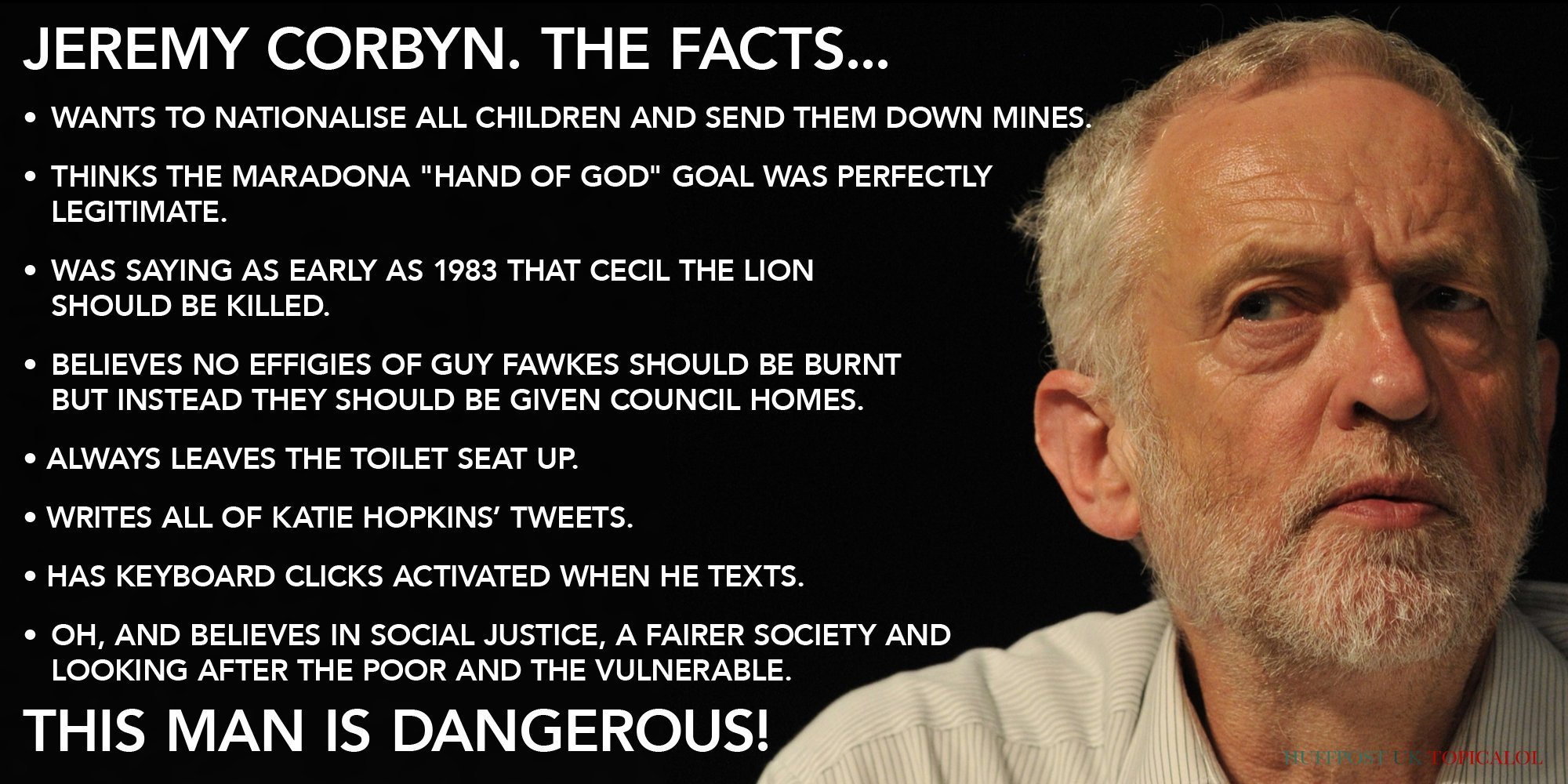
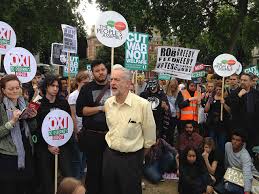
corbynimages (12)I hadn’t even gotten out of my scratcher yesterday morning when I looked at my mobile and the BBC news web site to see what was happening in the world, only to see yet another attack on Jeremy Corbyn’s campaign for Labour party leader.  This time the Brlairite was Blair himself, looking skull-like and definitely not very well – all that chasing after money mustn’t be good for his health.  “Labour must come to its senses” he apparently said.  I didn’t read any more.

Corbyn has been criticised in just about every way imaginable, from the Mail prophesying a return to the “dark ages”, riots and intervention by international peace keepers, to the oh so condescending approach of Janen Ganesh of the ‘Financial Times’: that Corbyn’s policies, “eccentric” and a “joke” as they are, are not really the problem, it’s the “soft left” and Andy Burnham and Yvette Cooper who are the ultimate problem.  Poor Jeremy, he’s either responsible for a new dark ages or he’s such a joke he doesn’t deserve consideration, even as a problem.

At the centre of all this dismissal is contempt and ridicule of Corbyn’s economic proposals for “quantitative easing for people instead of banks.”  Our local biggest daily ‘The Irish News’ had its own columnist to hurl his own critique, this time mixing both dire prediction and condescending ridicule.

The author, Newton Emerson, thinks that fewer than 1% of the population will understand “why Corbynomics is ridiculous” even though “it takes little more than an A-level to understand why.”

Emerson is normally an acute commentator on politics in the North of Ireland, frequently exposing the hypocrisy of political culture here and the rottenness of the political arrangements.  Unfortunately he has two problems.  First, when it comes down to it he actually supports the rotten political arrangements, and secondly, he gives every indication of having been educated in the dismal science of economics as taught in the universities.

He is undoubtedly correct that the general population is seriously under-educated in economics and this is a real problem for them identifying their interests in any debate.  On the other hand I don’t believe that Corbyn’s ideas are very radical and certainly not ridiculous, so going to university or doing an A-level really isn’t the answer.

So let’s see if we can understand what the issues are in this case.

Quantitative easing as practiced by the Bank of England involves the bank loaning newly created money (created as an electronic entry in the bank’s accounts) to a fund which has to pay it back, so theoretically it’s a loan and not just giving away newly created money.  This fund then uses these loans to buy government issued bonds (IOUs payable by the Government) that are held by pension funds.  These pension funds now have money instead of these bonds.

The theory is that these pension funds will then want to use the money to buy other assets from banks such as bonds to replace the ones just sold back to the government or buy other sorts of securities such as private debt instruments (IOUs issued by private corporations to raise money for investment).

The end result is that money has been created electronically by the Bank of England and it now rests in the banks which, it is hoped, will use the new money to buy debt issued by private firms that will in turn help them invest directly through the money just received.  This investment will create jobs and economic growth.   That’s roughly the theory anyway.

However, once the banks have the money they can do what they want with it.  They could buy bonds or securities issued by other countries; they could buy existing shares or securities which would give no more money to firms to invest but simply increase the price of these pieces of paper; they could buy commodities or property and cause inflation in these assets or they could simply sit on the cash.  In each case there would be no increased employment or contribution to economic growth.

Even if they bought newly issued debt from private companies, these too could decide not to invest the money in new factories, offices or equipment and instead do any of the above and join in the great speculative boom in property or share prices etc.  Many banks and companies appear to have done just this, which has made them richer but not helped economic growth.

In other words the ‘money printing’ that has been carried out has helped the banks and made the rich who hold financial assets richer by increasing their price.

Hence the alternative proposed by Jeremy Corbyn in which the newly created money, which is also in the form of a loan, is given to a State investment bank who then loan it out to state agencies which would invest in state-owned infrastructure such as “housing, transport , digital and energy networks.”  The objective would not only be to create jobs in the short term and promote economic growth, so reducing the debt burden, but also contribute to the longer term productivity of the economy, which is recognised as going through something of a productivity crisis.

To be continued.

The politics of murder in Belfast

images (11)The murder of Kevin McGuigan on 12 August in East Belfast is widely seen as revenge for the former’s claimed involvement in the earlier murder of Provisional IRA leader Gerard ‘Jock’ Davison.

The Police Service of Northern Ireland (PSNI) have done their bit to protect the Provisional movement by claiming that although Provisional IRA members were involved there is no evidence that it was authorised by the leadership.  Since complete denial of Provo involvement would stretch credibility to breaking point and reflect on the PSNI as well as the Provos, this was as much as they could do.

Of course this makes no sense, although it was notable that some nationalist commentators were prepared to swallow it.  Much amazement was feigned by unionists that an IRA even existed, so ‘answers’ were demanded.  The British Government said that of course it knew the IRA existed but that what was important was what Sinn Fein said (i.e. not what the IRA actually did) and especially that it continued to express support for the ‘principles of democracy and consent”.

The Garda in the South had previously claimed that the IRA had no military structure but are going to look at it again and the PSNI claimed it was a lobby group for “peaceful, political republicanism”.  Sinn Fein spokesmen claimed that of course the IRA was not involved, that it had “gone away” and all allegations to the contrary were ‘palitics’.

So the Provos continue to support the police but not as far as allowing them to get in the way of taking revenge or protecting themselves and their enormous financial empire. Support for the police is therefore purely ‘palitical’.

In the hypocrisy and lying stakes each out-does the other.

So the British Government and PSNI are claiming that while a much slimmed-down ‘peaceful’ IRA exists there is no evidence that it sanctioned the murder of McGuigan; although investigations will continue, which means that if it suits the political purposes of the British Government such a judgement can be easily changed. And easily justified – a ‘peaceful’ IRA with guns, that murders its enemies, and which by its very reduced size and tightness makes inconceivable the idea that the murder was not approved from the top.

The meaning of this is obvious: the British state and its police force doesn’t care if the Provisional IRA kills people it doesn’t like.  It doesn’t care if loyalist paramilitaries kill people they don’t like. Round the corner from where McGuigan was killed a young woman was almost killed by the loyalist Ulster Volunteer Force but the PSNI refused to blame the UVF who were responsible.

Today it is reported that the murder of another Short Strand man Robert McCartney by the Provos was subject of a secret deal between the PSNI and Provos, with the cops offering not to go after those who cleared up the murder scene, in exchange for Provo information on the less important hands-on killers.  No one has gone to jail and the Provos kept their mouths shut.

The political import of the killing is the following:

The Provos can kill and the state will give them impunity but it will expect a price to be paid.  Anyone who thinks that the end of Sinn Fein’s meagre opposition to austerity through opposition to some welfare cuts will not form part of the price probably believes that everything that the British Government, police, unionists and Sinn Fein has said about the murder of Kevin McGuigan is 100% true.

A message has been sent to all enemies of the Provos, political or criminal, that they are willing and able to kill, no doubt under some new set of initials such as AAD (Action Against Drugs).

The slow crumbling of the architecture of the political peace settlement has speeded up and now threatens the current arrangements.  The Ulster Unionist Party has withdrawn from the all-party Executive, putting pressure on its supposed more rabid rivals in the DUP to follow its lead.

The DUP has now proposed that Sinn Fein be expelled from the Executive, although Sinn Fein can prevent it, and only the British Government can do this.  If the British do not support such a move the DUP would then be forced to either put its money where its mouth is and walk themselves, bringing down the Executive, or reveal themselves as joined at the hip to the Provos in the great gravy train on the hill.  It might then start losing support.

As the pro-settlement ‘Irish News’ editorial put it today, the Executive is so discredited most will not care if it remains or goes.  And as I have noted before, the current Stormont regime is so rotten it has little credibility left.

The peace process has been built on the lie that the rotten sectarian arrangement brought about the absence of widespread political violence.  In fact the defeat of the Provos and the ending of widespread violence preceded the creation of the rotten sectarian arrangements.  Again and again the sectarian political settlement has been defended by the claim its overthrow would bring us back to the troubles.

The recent killings demonstrate precisely the opposite.  The existence of the sectarian Assembly and Executive is now justifying collusion between the state, Provos and loyalist paramilitaries in violence, intimidation and large scale criminality.  The message from the British pro-consul has been explicit:  as long as Sinn Fein supports the sectarian settlement and police that is what counts.  What it actually does will be excused and glossed over if remotely possible.  The so-called peace settlement and its preservation is now the justification for allowing political and criminal violence.

Socialists must continue to oppose this rotten settlement.  They should continue to oppose the PSNI and expose its collusion with the Provisional IRA and loyalist paramilitaries.  They should oppose the austerity imposed by the British Government and the Stormont parties, especially Sinn Fein and its phoney anti-austerity posturing.

It should likewise refuse to offer political support to any opposition by Sinn Fein to its exclusion from Government should this occur.  The Provisional movement is an obstacle to working class people in the North and South of Ireland identifying their own interests and defending them.

Teaching entrepreneurship to children

entrepreneurdownloadWhen a front page article in ‘The Irish Times’ reported that the Irish Business and  Employers Confederation (IBEC) is calling for entrepreneurship to be taught in schools my first reaction was  a sort of harrumph – brainwashing kids.  Then I thought that maybe it wasn’t such a bad idea after all.

The content of the subject would have to be wide enough to cover the full range of knowledge and skills necessary to teach children how to make money.  And let’s be clear, that’s what the objective of entrepreneurship is.  Nobody starts a business to make less money than they currently are making and losing money is a quick way to not being an entrepreneur at all.  So I think we are on safe ground saying that making money is pretty fundamental to the subject.

Secondly, it would be necessary to explain something obvious to adults but not to children.  I read recently, I can’t remember where, that it is only by the age of twelve that children can reason logically and handle abstract concepts.  This means that when it is explained to them that entrepreneurship means making money, this does not mean it is part of the art class and doesn’t actually mean getting pieces of paper from teacher and marking it.

Later in the course syllabus it will unfortunately be necessary to row back on this a little, if not actually quite a lot, by explaining that money can actually be made by pieces of paper, that is by other pieces of paper that are already money.  This will be called investment and will be a difficult concept for the younger child to grasp.

It is of course sincerely to be hoped that sometime later these children come across an entirely different subject called Marxism, which will explain to them that in fact real wealth is a result of work and that (paper) money is only a symbol or token of this wealth.  At this stage it will also be explained that investing is not actually hard work and that therefore the real wealth received from investments (such as stocks, shares, bonds etc) is not actually produced by simply buying and selling these pieces of paper.  It is a result of someone else who doesn’t own these pieces of paper working hard to make the things that make up real wealth – like houses, cars, clothes and nice food, including sweets.  This can be easily demonstrated by role play in which the children sell pieces of paper in class and note the additional wealth that has been created or not created at the end of the exercise.

It will also be explained that although they will have learned that the interest that is received from their investment is a reward for their abstaining from consumption, i.e. doing nothing, they do not actually have to abstain from consuming and that a lot of capitalists, sorry entrepreneurs, actually consume quite a lot more than the rest of us, sorry, I mean more than them.

Similarly they will have been taught that doing nothing is not what investors do but is what poor people do and on no account can those who live on their investment income be accused of doing nothing.  Quite the contrary – they invest.  Marxism will then teach them that this is bollocks, which will probably have to wait until mild sweary words are deemed to be an appropriate teaching aid.

If the subject goes beyond pure entrepreneurship and includes modules on applied entrepreneurship the children will have to learn how to apply the theory of creating money and a business to a real world situation.  Earlier summary presentations about the marginal utility function of consumption will have to give way to appreciation that perfect information on the part of consumers may well be a necessary feature of perfectly competitive markets but that the last thing that real entrepreneurs want is a perfectly competitive market.

Teaching this to children will have its obvious difficulties and their heads will seriously spin when forced to accept that this is because, if there is a perfectly competitive market, there is actually no profit – so what’s the f*****g point they might ask?  They will find that they have created a business that only makes money for investors who have lent them the money and do nothing, or whatever.

If the brightest pupils demonstrate that they are able to retain these conflicting ideas in their heads they should nevertheless be discouraged from retaining any memory of their earlier lesson on free markets, which is that it’s probably not worth their while starting a business with their wizard new idea in the first place because the efficient market hypothesis implies it’s probably already been done.  And yes, that’s even if you think you’ve invented a time travel machine.

You can see how such abstract concepts might be difficult for the average child to grasp but it has been demonstrated that having been grasped it is incredibly difficult to shift these ideas, even among the brightest children who have advanced to be really good at maths.  These children might go on to be economists although this is difficult to encourage, being similar to telling a child that they can’t be a footballer but can aspire to write for the back page of ‘The Independent’ or, god forbid, the ‘Daily Record’ in Scotland.

Applied entrepreneurship, however involves not just theory, as we have said, but the rough and tumble of the real world of business.  Specifically for IBEC this means Irish business.  Being a real entrepreneur therefore means hard choices.  Do you want to be a small entrepreneur, in which case you might end up feeling that you are exploiting yourself?  Or do you want to be a BIG entrepreneur and be famous.

In the latter case knowing a bank manager will be indispensible in getting access to funding so playing golf might be of great assistance here.  Similarly, access to lucrative contracts and access to some newly created incentive scheme (you need these to incentivise making money because this doesn’t happen by itself) will be greatly assisted by knowing a politician.  If you don’t know one the child should be encouraged to get a brown bag and practice giving it to their local councillor.

Newspapers love small people acting like adults without really be aware of what they’re doing.  Very small children will no doubt forget the experience but this will be invaluable training and education for future life as forgetting what you’ve done and claiming not to know what it was you’ve just done are  a feature of applied entrepreneurship in Ireland, especially in dealings with politicians and appearing at tribunals of inquiry.

Applied entrepreneurship also often requires not paying taxes but for goodness sake don’t let the child worry about how their teacher is going to get paid or the next generation of entrepreneurs educated.

So, having thoroughly reconsidered the idea of teaching entrepreneurship I think is has some very positive implications:

  • The teaching of neo-classical economics would have to be discontinued in order for one of the subjects not fall into total disrepute.
  • Teaching children that they should aspire to own the means of production and not just work for them might spur the quite logical question why workers shouldn’t own their own firms by creating workers’ cooperatives.
  • In the spirit of social partnership the role of trade union representation should also be taught and in order to gain access to the syllabus as a subject in its own right will have to include identification of workers separate interests and the various means to represent and promote them (that is: simply agreeing with the employer would invalidate it as a separate subject of study)

The next related lesson will involve moving on to a post on A level economics and why that man Jeremy Corbyn could really do with having studied it.

Visiting Avignon

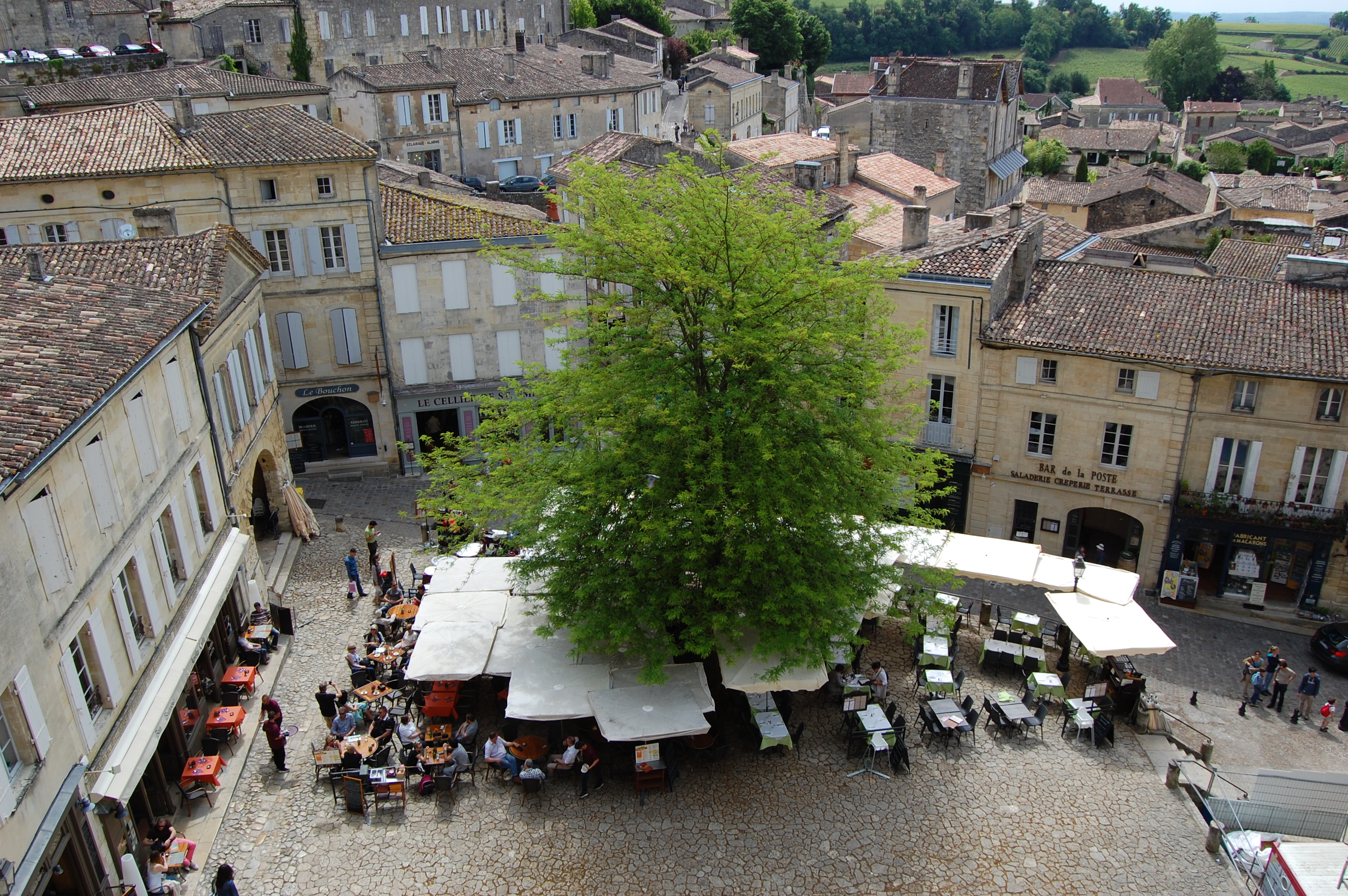
DSC_0373This year I went to Southern France for my holidays, including Avignon, famous for its song ‘Sur le Pont d’Avignon.’ I was there just at the end of its annual arts festival so it was buzzing with life, hosting some fantastic busking musicians who could keep you entertained for hours while licking ice cream.  At least that’s what I did quite a lot of the time.

It’s also famous as the site of exile from Rome of the Popes, from 1309 to 1376, and has a very impressive Palais des Papes, which was their residence and is now a major tourist attraction.  As the audio guide to a visit explains, the palace demonstrated the secular as well as the spiritual (ideological) power of the papacy but the history untold is not one of the rise in the secular power of the papacy but of its decline from its zenith a century earlier.

DSC_0378

Boniface VIII, pope from 1294 to 1303, who liked to wear a crown, declared papal authority over the clergy and threatened France and England with excommunication. In 1300 he also pompously staged a Holy year, selling indulgences to finance his worldly domain. Overreaching himself however he planned the excommunication of the French king, who promptly arrested and imprisoned him in his castle in Anagni.  Even though subsequently freed by the people of the town he was a broken man and died a few months later in Rome.  The second next pope was enthroned in France and eventually establishing his seat of power in Avignon, the start of a series of French popes all largely dependent on the French monarch.

The Catholic theologian Hans Küng remarks that though such events might lead one to assume a tempering of papal claims, this was not the case.  Indeed the guide to the Palais deals a good deal with its vast system of financial management, required to finance building of the Palais and development of the papal bureaucracy:

“In the late Middle Ages, the Roman papacy increasingly lost its religious and moral leadership and instead became the first great financial power of Europe.  The popes claimed a spiritual basis for their worldly demands, of course, but they collected revenues with every means at their disposal, including excommunication and bans” (The Catholic Church)

It was in this period also that saw creation of the doctrine of papal infallibility, originally propagated by an eccentric Franciscan previously accused of heresy.  Apparently this early claim was not taken particularly seriously and was eventually condemned as the work of the devil and the ‘father of all lies’, only to be resurrected later in the nineteenth century.

For political reason the papacy moved back to Rome in 1377 but the next pope showed “such an excess of incompetence, megalomania and outright mental disturbance that there was reason for an automatic dismissal.” (Küng) So another pope, Clement VII was chosen except that the incompetent, megalomaniacal and mentally disturbed pope – Urban VI – didn’t accept this result and so they had a fight over it.  Upon defeat of his troops Clement VII took up residence in Avignon again.

Now we had two popes who excommunicated each other.  You can’t have too much of a good thing; so you had two colleges of cardinals, two Curias and two financial systems.  Clement was supported by France, Aragon, Sardinia, Sicily, Naples and Scotland plus some Germans while Urban was supported by the German Empire, parts of Italy, Flanders, England and some others.

In order to sort this mess out the cardinals met at a general council in Pisa in 1409, deposed the two popes and elected a new one.  Except neither of the existing popes accepted this result either, so the Catholic Church now had three popes! You really can’t have too much of a good thing and we now had a new holy Trinity.

Of course this couldn’t last and eventually the Church managed to get itself just the one pope.

I’d forgotten all this history while doing the tour of the Palais and it would really make for a ripping yarn if it was included in the audio guide to the tour.  But unfortunately some people don’t like the story history tells us.

Another thing I didn’t know was that the area of Avignon continued to be owned and governed by the papacy until the French revolution, only joining the rest of France in 1791.  In the meantime (the Michelin ‘Green’ Guide explains) Jews were confined to a ghetto, locked in at night, compelled to wear a yellow cap, pay dues to their Christian rulers and listen to sermons designed to convert them.

The incorporation of Avignon into a unified French state reminded me of another book I had read some years ago, ‘The Discovery of France’ by Graham Robb.  He noted that at the time of the revolution there were hundreds of small towns, suburbs and villages all more or less independent of any national state.  France was a name often reserved for the small ‘mushroom-shaped’ province centred on Paris.

DSC_0352

There was little common French national identity and no common language among ‘the French.’   As late as 1863 a quarter of recruits to the army spoke ‘patois,’ a ‘corrupt language’.  French seemed to be declining in some areas so that children forgot it when they left school.  Even half a century later some recruits to the French army in the First World War couldn’t speak French and there were reports of Breton soldiers being shot by their comrades because they were mistaken for Germans or because they failed to obey incomprehensible orders.

Most people in the 18th century didn’t travel far and their identity was a local one.  Robb quotes records of 679 couples from 1700 to 1759 showing that almost two thirds of the brides came from within shouting distance of their bridegroom: – “In Saint-Jean-Pied-de-Port, all but four of the fifty-seven women had married less than five miles from home. Only two of the six hundred and seventy-nine were described as ‘foreign’. This was not a reference to another land.  It meant simply, ‘not from the region.’”

Some of these towns and villages were “flourishing democracies” when France was an absolutist monarchy.  In one village, Salency, the children were never sent away to become servants, all were considered equal, and everyone worked the land. The village was conspicuously clean and tidy, harvests were abundant and crime was unknown.  Of course horizons were limited and no one was allowed to marry outside the village, which had only three surnames.

In another set of villages covering many square miles a clan called Pignou occupied an area in the northern Auvergne. All men over twenty elected a leader, there was no private property and all children in one village were brought up by a woman who ran the communal dairy.  Again people were forbidden to marry outside the clan and those who did were banished forever, “although they all eventually begged to be readmitted.”

So while the destruction of papal control over the mini-state of Avignon was obviously a progressive outcome of the French revolution the destruction of the much loved independence of many small communities by a remote, centralised state with its demands for standardisation, inevitable destruction of local customs (including language) and imposition of oppressive requirements, such as conscription into massive bloody wars, was not.

But such is capitalist progress.  Marxists understand its positive and negative aspects.  In fact understand that capitalist progress is a function of the contradictions and antagonisms within society that does not allow for real separation of good and bad.

Should it be rejected by seeking to go back to the past?  Obviously we can’t now go back to isolated village communities with no private property in the means of production in France or anywhere else but that is not how the question is posed today.

Today it is posed in terms of rejecting capitalist progress at the international level, also characterised by standardisation, centralisation and lack of democracy in favour of a return to more local, nation-state democratic forms.

Unfortunately much of the Left today is no longer confident about the future so seeks solace in the past.  But as we see, this past in the form of nation states was built upon its own brutality and disregard for peoples’ choices.

But just as the development of the nation state also heralded undoubted progress for humanity so also does the internationalisation of capitalism promise the grounds for a new and better society, a socialist one.  This is the ground upon which we must fight and seek to build an alternative.

Nationalist answers 2 – Greece

Greece imagesIn the last post I noted that one view on the Left in Scotland was that it was not possible to call for a vote or support for a reformist SNP because, through being reformist, it could not face down the intransigence of international capitalism when it tried to introduce reforms.

This would seem to be confirmed by the experience in Greece in which a reformist formation Syriza has just performed a humiliating U-turn and supported a third bailout that will impose greater austerity than that which it had previously opposed.

One of the many evaluations of this experience is here, which is also written by someone from the SWP tradition and which is based on the same political assumptions.  Unlike Davidson, who claims that the distinctions between reformists, revolutionaries and centrists are only understood by a relatively few revolutionaries, Kieran Allan argues that understanding such distinctions is vital:

“Ever since the crash of 2008, there has been an increasing call among activists to forget ‘old’ debates about reform or revolution. Yet the betrayal of Syriza re-opens this very question.”

One line of argument in response might be that Kieran Allen doesn’t actually advance a revolutionary programme himself – the SWP in Ireland doesn’t stand candidates in elections under a revolutionary banner but consistently stands as part of alliances that exclude it.  His definition of reformism applies equally to the various electoral projects of the left in Ireland over the past number of years:

“Despite opposing neoliberalism, Syriza embraced a reformist strategy. The term ‘reformism’ is not meant as one of abuse but it describes a strategy of using the mechanisms of the state to effect substantial changes on behalf of working people. It operates within the framework of capitalism and uses Keynesian economics to increase demand – rather than proposing the outright expropriation of capital.”

His criticism of Syriza can be made just as cogently against the United Left Alliance, People before Profit or Anti-Austerity Alliance:

“Some object to describing Syriza as a reformist because a) it leaders used a rhetoric about moving beyond capitalism and b) because there were avowed anti-capitalists elements within its coalition. However, this objection is somewhat facile as it was only in Bad Gotesberg programme in 1959 that the German SDP dropped their formal adherence to Marxism. In the early twentieth century many reformist parties combined a rhetoric about moving beyond capitalism as their maximum programme with a practice of seeking social reforms as their minimum programme.”

While he criticises the view “of democratising the apparatus of the capitalist state, transforming it into a valid tool for constructing a socialist society, without needing to destroy it radically by force’,” this is the alternative put forward by all these left alliances in Ireland.

This is certainly a problem but not the one I want to address here.  The latter is the problem of the strategy Allen puts forward as the alternative to Syriza’s reformism, not the similarity of this reformism to the SWP’s actual political practice.

Allen criticises “Syriza’s strategy of working exclusively through the state and through negotiations with the EU [which] could not match the courage of the Greek electorate.  This historic defeat, therefore, arose from a belief that control of the Greek state apparatus and appeals to EU solidarity was the method for bringing change. It never entered their heads to think about how the NO vote could be mobilised within Greece to physically face down EU efforts at blackmail. The sole agency was the Greek cabinet and its ability to negotiate with the EU bullies.”

Allen says that “they [Syriza] placed little emphasis on the role of Greek workers themselves taking action to break from capitalist control. . .  The mobilisation of workers in every area of society can stop the power of money and market forces.  Against the economic terrorism of the EU, people power and workers action is the only way to achieve change.”

When discussing lessons for Ireland he says that “In recent months there have been discussions about the need for a ‘progressive government’ in Ireland and interesting debates have occurred about policies. But there has been little talk about the methods by which such aspirations might be achieved.”

Unfortunately in reality neither does Allen, although this is the centre of his critique.  There are plenty of evocations of the need to mobilise workers to “face down the EU” but what does this mean?  What methods does he propose by which the aspirations of progressive change could be turned into reality?

What we have are calls to take action but total lack of clarity as to what action should be taken.

The first question is to identify the problem. And it’s not Syriza’s reformism.  Why is there a crisis in Greece in the first place?  Why not in Italy or Belgium – both have large debts?

The answer is well known.  Greece is relatively poor with a weak and not very productive capitalism. This makes not only Greek capitalism weak but its working class also weak, in a manner for which an increase in class struggle cannot compensate, or at least not very quickly.  This doesn’t enter Allen’s analysis.

The second question concerns the EU: “After the Greek crisis, the Irish left needs to drop any idea about the progressive nature of a social EU. It should note that Syriza was wrong to believe that it could combine an anti-austerity programme with support for the EU.  The reality is that the EU combines a soft rhetoric about ‘inclusion’, ‘solidarity’ and ‘respect for human right’ with a hard core neoliberalism that is embedded into its institutions.”

“The Irish left should, therefore, fully break with a ‘we will stick to the EU at any cost’ mentality because it was precisely this approach that gave the EU leaders a stick to beat Tsipras. Instead the left should advance its demands for a write down of debt, for nationalisation of natural resources, and a reversal of privatisation regardless of whether or not this is acceptable to the EU. It should indicate that it will not be bound by the rules of the Fiscal compact and that electoral support for the left means a mandate to defy such rules. It should make it clear that it favours the break-up of the EU in its current form and will seek its replacement by a federation of peoples based on democracy and control of capital.”

The EU is unreformable but if Allen has pretentions to Marxism he will also agree that the Greek State is also just as capitalist as the EU and also just as unreformable, yet he sees it as part of the solution through “a write down of debt, for nationalisation of natural resources, and a reversal of privatisation.”  Why would a capitalist Greece do this?  Is this not precisely the reformist approach that Allen excoriated earlier in his article? Or if an unreformable Greek state could do it why not a similarly unreformable EU?

He says that “Most modern European states are embedded in a network of EU institutions and so a strategy of working through the state also means working within those institutions. Syriza leaders correctly assumed that in an era of globalisation, there could be no purely national solutions to the crisis within capitalism.”

Yet in the proposals he advocates where is the recognition and incorporation of this impossibility of a “purely national solution”?

What we have in fact is the very opposite.  He proposes “A break from the euro [which] would have to be accompanied by a major programme to re-distribute wealth so that the costs of the change fall on those who can most afford it.”  But this is just the reformist programme he criticises while acknowledging that a new national currency cannot by itself be a solution. Yet a new national currency plus redistribution of wealth wouldn’t do it either.

Allen is right that any left Government “should [not] pretend that a different currency –such as the punt- can in itself solve problems. . . .  the key issue is not the currency but control of the economy.”  The problem, as we have seen above, is first that this economy is weak and second that the answer provided by Allen is always action by the state or rather by the national state, not internationally by the EU.

The nationalism that infects all inherently reformist projects appears explicitly in Allen’s perspective not just in rejection of the Euro or in rejection of the EU but in his support for “the break-up of the EU in its current form and . . . its replacement by a federation of peoples based on democracy and control of capital.”

This is something he “will seek” but as a policy it has no practical worth or educational propagandist value.  It simply states that a return to nation states and an end to capitalism is the answer and while the second is right and the first is wrong neither amounts to even the start of a strategy and adds nothing to any discussion of it.

This national road to socialism is made explicit in his statement that “it is possible to organise an advanced economy without a permanent need for substantial credit transfers. Ireland already has a high level of wealth but, unfortunately, its control lies in a few hands. Re-distribution of that wealth provides an alternative avenue to seeking ‘support’ from foreign creditors. Such a strategy does not preclude individual arrangements to access credit . Rather it suggests that a transitional economy that goes beyond capitalism would have to overwhelmingly rely on its own resources – rather than the type of EU ‘support’ that hung Greece.”

This in effect denies the international character of production from which there can be no going back and repudiates his statement that “in an era of globalisation, there could be no purely national solutions to the crisis within capitalism.” It asserts the opposite of everything that Allen professes to stand for.

He ends up arguing that “a transitional economy that goes beyond capitalism would have to overwhelmingly rely on its own resources” because the Greek crisis has not only tested and found wanting the reformism of Syriza but also exposed and found wanting the reformism within his own political conceptions based on action by the nation state.  In fact if anything, in its lack of any international perspective, it is worse than Syriza’s.

Nationalisation, redistribution of wealth and left governments astride capitalist states are not socialist solutions, even if in certain circumstances their effects can be welcomed and supported.  The example of Greece shows how one variant of such a solution can fail but the weakness of Greek capitalism placed major constraints on what could be done even if more could and still can be achieved.

Neither is nationalisation and redistribution by the state after a workers’ revolution socialism unless this state is the creation of workers themselves and not some minority party or group within it.  Freedom, as they say, is taken not given.

Socialism is the action of the immense majority of society, those who work and those rely on the wages of those who do so.  It is the actions of the working class that involve socialism.  It is not state ownership of production that is socialist but working class ownership that is socialist.  Before the political overthrow of the capitalist system and its state this must take the form of workers’ cooperatives.

The strategy of a purely political revolution, only after which comes social revolution; that is the strategy of seizing state power in advance of major gains in the economic and social power of workers achieved through workers ownership, leaves open the problem illustrated by the isolation faced by workers in the Russian revolution.

The alternative of more or less simultaneous revolutions in a number of economically advanced countries could only be conceived on the basis of a prior development of the economic and social strength and power of the working class on an international level.

This problem of isolation was and is faced by Greece but the socialism in one county approach of Kieran Allen is the wrong answer.

Seeking solutions at the level of the state in advance of the development of working class organisation at an international level provides the rationale for a programme which seeks not to advance beyond capitalist internationalism, which is what the EU is, but to regress from it mouthing fatuous phrases about international federations of peoples based on democracy and control of capital.
Nationalist answers 1 – Scotland

scoty images (11)A common analysis on much of the left is that the EU is a capitalist club that pursues an imperialist agenda, just confirmed by its brutal treatment of Greece.  The socialist answer is therefore to be in favour of leaving it.

Many of these same people argue that the UK is a capitalist state that has just re-elected a Tory Government committed to further austerity.  The election has shown that it too, just like the EU, is unreformable and should be split up; so for example Scotland should separate from it.

The answer to both is therefore a nationalist one.  Let’s not be distracted by the bells and whistles attached.  The objective is a change in the nature of the state but in both cases this means a return to the nation state, a smaller state, is the answer.

Ironically, as a recent post I read noted, while the treatment of Greece by the EU in the name of austerity has been acknowledged by more or less everyone to be brutal, the reaction of some nationalists has been much more muted.

Thus the SNP who are portrayed as opponents of austerity have rallied much of the British left around its nationalist argument for separation on the basis of its opposition to UK austerity.  It argues that any move to get out of the EU will see it demand a new indy referendum so Scotland can stay in.  Yet the austerity inflicted by the EU on Greece is of a magnitude many times greater than that directed from London.

From a socialist point of view it gets worse.  Their answer to this exposure to the contradictions of nationalism is to be even more nationalist than the nationalists.  Many of them demand that the UK (or the Irish State for that matter) leave the EU.  Of course it is claimed all the new states created will not be like their old incarnations  but progressive, if not socialist, but if they were there would be no need for them to be separate and if they are separate they will be in the position all nation states are in, which is in competition with each other.

We see such competition in the proposals of the various nationalists and left nationalists to reduce corporation tax.  Sinn Fein and the left in Ireland want to keep the low 12.5% rate but want it to be the effective rate while the SNP want a lower rate than the rest of the UK, whatever it is, and the Tories have just cut it to 18 per cent, so it now has to be lower than this.  When the Tories took office with the Liberal Democrats it was 28 per cent.  If my sums are right I think this makes Sinn Fein, the Irish Left and the SNP softer on the big corporations than Tony Blair.  But this doesn’t fit the narrative so let’s stick with it.

In an earlier post I promised I would look at an article notified to me by a friend, on the Left’s attitude to the SNP, just before the UK General Election so I’ll do that here.  I’ll also look in a second part at one of the many responses on the Left seeking to learn the lessons from the Syriza U-turn in Greece.  What they have in common is an accommodation to nationalism.

What they also have in common is being written from the Socialist Workers Party tradition.  As I noted before, this tradition, through their forerunner of the International Socialists, used to have much better positions on both the EU and Scottish nationalism.  However the two articles show that accommodation has not yet become capitulation.

The article in ‘Jacobin’ is in the form of an interview and it is revelatory that the first question doesn’t ask the interviewee why he supported Yes in the independence referendum but “what did you see in the movement that made it worthy of support?”

As I noted during the campaign, many on the left voted yes because they liked the campaign for it rather than any very compelling reasons for having a campaign for such an objective in the first place.

In this sense they were guilty of what Marx warned against – “Just as one does not judge an individual by what he thinks about himself, so one cannot judge such a period of transformation by its consciousness, but, on the contrary, this consciousness must be explained from the contradictions of material life. . “  Instead the Left supported a nationalist campaign, driven by social and economic concerns and desire for an alternative, and having done so declared it left wing.  It looked at itself in the mirror and liked what it saw.

Just like Sinn Fein in Ireland it does a grand job at telling itself and anyone else who will listen how great it is.  It might be something about nationalism.

I am also reminded by another less glorious figure in the history of the socialist movement who once declared “the movement means everything for me and . . . what is usually called “the final aim of socialism” is nothing.”

I exaggerate?  Well let’s look at the interview.  Davidson gives three reasons for changing his view to now supporting independence and, in his own words, he says that “the most important change was simply the nature of the campaign itself”

He says that “for many people it wasn’t about nationalism of any sort”. .  “It was about how to realise various social goals: an end to austerity, the removal of nuclear weapons, defence of the National Health Service”.  The fact that the answer to each of these problems is nationalism seems not to make the movement for it nationalist.

That the problems are not nationalist ones appears to mean that when the solution is national separation (“independence will improve their [workers’} situation immediately”) we don’t have to call it a nationalist solution.   Ironically if the problems were nationalist ones (like national oppression for example) a nationalist response might make more sense.

This self-regard leads to an exaggerated view of the role of the Left in the independence campaign, which, he says, dramatically changed its dynamic and drove the entire discussion of independence to the left.

In fact the landslide for the SNP in Scotland in the General election showed just who drove the campaign, who put independence on the agenda for decades before and who then benefited.

That the campaign for independence won the support of many working class people for a party Davidson admits is “on the extreme left of what I call “social neoliberalism” and “which broadly supports the neoliberal economic settlement”, i.e. austerity, is such an admission that it is simply staggering.

He supported separation because of the independence referendum campaign that led a neoliberal party to a landslide on the basis of that party claiming to lead opposition to austerity!

Davidson goes on to say that the SNP has moved to the left in economic terms “above all in rejection of austerity” and “is offering reforms” but also says they took up their “social democratic” position “in order to win votes” because “it would have been difficult to compete with New labour from the right”.

He accepts as good coin SNP claims of opposing austerity but fails utterly to examine its actual record in the Scottish Government, which would blow such claims out of the water.  Such an examination doesn’t fit the narrative.

In fact this narrative clashes obviously with reality.

He claims that the SNP sought an alliance with the Labour Party against the Tories, when in reality their strategy depended on destroying Labour in Scotland and keeping it to their right everywhere else.  Does he think the SNP would welcome a Jeremy Corbyn victory in the Labour leadership contest?

Why would it, since this would immediately demonstrate the efficacy of fighting together, that the Labour Party was not quite a dead loss and that there did actually exist a labour movement undivided by nationality.

He congratulates the SNP on their honesty, they’ll  never do a deal with the Tories he says, which means we can forget the one it had with them when in a minority administration in 2007 reliant on Tory support.

By supporting separation the pro-nationalist left has already separated itself from wider struggles.  In so far as there is a fight about austerity and its alternative in Britain today it is centred around the Corbyn campaign for leadership of the Labour Party.  I wondered on this blog whether the British Left would be part of it.  Were the unthinkable to happen and Corbyn actually win it could hardly be ignored.  Would an all-British movement against austerity in such circumstances be better than a purely Scottish one or would the Left insist on introducing national divisions where none were necessary?

It would appear that Davidson would answer the latter in the negative. “We must not give up the question of independence.  Unless a revolutionary situation emerges in England . . .”.  And of course Corbyn is far from being a revolutionary.

So it looks like English workers will have to deliver a revolutionary situation in England before the Scottish Left will be interested in political unity within one state.  (Talk about playing hard to get!) Not, mind you, that they are steaming ahead in the creation of a revolutionary party themselves because, Davidson says, “we are not in a position in Scotland to immediately set up a revolutionary party.”

Of course there are the ritualistic claims of wanting “solidarity” with English workers against the British State but not solidarity with English workers against a Scottish capitalist state which would replace the British one lording it over them come separation.  Joining with English workers to overthrow the Scottish state?  Now that really doesn’t fit the narrative.

Instead solidarity with English workers will mean we’ll demand the removal of Trident, which means moving these weapons to . . . err, England maybe?

And if the English follow this example and say that we’ll take the same position as you in Scotland and demand they’re not sited in our country, they can stay. . .err, in Scotland maybe?

What a splendid recipe for solidarity!

I mentioned that Davidson has accommodated to nationalism but not capitulated.  This is because although the article asks the question how the Left should relate to the SNP in advance of the General election he nowhere calls for a vote for the SNP.  The problem is, given what he says, I can’t see the reason for him not to.  Why not? given that he claims it opposes austerity, wants to introduce reforms, has moved to the Left and is now full of left-wing working class people who are ‘consolidating’ its position there.

It would be some slight comfort if it could be hoped that the reason for this is that, as a relatively recent convert to Scottish nationalism, at some level he just doesn’t quite believe his own argument.

Unfortunately the real reason may well be political sectarianism.  His reason appears to be that an SNP Government bent on reforms would face pressure and intransigence from capitalism when it would try to introduce its reforms.

He doesn’t say how this would not be the case in any other circumstance.  He doesn’t say how, what he might call a revolutionary party, would not face the same if not greater pressure.  He doesn’t say how it should be dealt with.  He doesn’t say why nationalist division prepares workers for such international capitalist intransigence and he does not say why this means that denial of support to the SNP now is justified by a future need for a revolutionary break, especially when he says the alternative party to be built now must not be revolutionary.  So how does he prepare all those inside and outside the SNP who must be prepared for this revolutionary break?

But what’s wrong with all this is not that Davidson should follow through on the implications of his analysis of the SNP and join it, but that his view of what is required of revolutionary politics now leads to a nationalist blind alley of supporting nationalist separatism now and being just as exposed to nationalist limitations when the grand day of revolutionary rupture might break out in the future.

His argument for national separation and endorsement of the SNP demand for independence falls apart because he refuses to support that party on the grounds that when it will be faced with international capitalist pressure it will be in no position to resist, most importantly because the working class will be divided by nationality whilst the capitalists won’t.

A convincing narrative or what?

Greece Crucified

ws jimagesAlexis Tsipras justified his humiliating U-turn, and commitment to imposition of austerity worse than he had just rejected, by saying that he had no mandate for Greece to exit the Euro.  Very true.  But he had just claimed that the referendum a week before had not been about the Euro.  By 61 to 39 per cent he has no mandate for austerity, which is what he said the referendum was really about.

He came into office promising an end to failed bail outs and has ended with a third one bigger than the first.  He called for debt reduction and now seeks support for debt inflation.

Such is the scale of the crushing terms of the latest ‘bailout’ that no one is attempting to say that it is nothing other than complete humiliation for Greece.  Even the Eurozone bureaucrats stated the truth behind the unpalatable words spewed out by their leaders – Tsipras had been subjected to “mental waterboarding” and had been “crucified”.

What has been mental torture for Tsipras will be brutal and catastrophic austerity for the Greek people.

I could write a whole blog on the capitulation of Tsipras and what looks like the majority of Syriza, and there would be good political reasons for doing so.  The policy and strategy of Syriza has been endorsed by Irish opponents of austerity such as Sinn Fein and these now lie in tatters.

In fact in my own view Sinn Fein is not even as radical as Syriza and this is an easy claim to substantiate.  It has already implemented austerity in the North of Ireland while hiding behind opposition to some welfare cuts.   In the South it supported the fateful decision to make the debts of corrupt banks and property speculators the burden of Irish workers and in doing so made the struggle against paying this odious debt much more difficult.

But there will be plenty of voices pointing out that what radical politics Sinn Fein has to offer have been trialled in a real life laboratory and been found wanting.  The capitulation of Syriza is in principle no greater than the Republican’s own acceptance of British rule in Ireland, acceptance of partition, surrender of weapons and dissolution of the IRA.  But that is all now a history that no one wants to talk about.

What is more important therefore is to try to understand what has happened and whether it could have been any different.  Not that it must be accepted that the ‘coup’ against Greece cannot or will not be resisted.  It can and will but it would be blindness to reality not to acknowledge that under Syriza the fight against austerity has suffered a demoralising defeat.

As that new aphorism says: it’s not the despair, I can take the despair.  It’s the hope.  Syriza gave hope.

Working out what has happened is not easy. For the man or woman on the street they see television reports of quantitative easing by the Eurozone involving the figurative printing of  millions of Euros by the European Central Bank, yet this same institution is involved in the vindictive pursuit of Greece for sums it could easily accommodate.

The proposals of the conservative leaders of the EU seem equally hard to understand or justify.  In fact for many they seem stupid, if not crazy. So draconian are they that they seem designed to achieve the very opposite of what they claim to be for.

The imposition of yet greater austerity when this austerity has demonstrably failed might be explained by ideological blindness.  And the humiliation involved might seem to invite rejection while being another attempt to remove Syriza from office.  But many commentators have explained that Syriza may possibly remain the only force that can push austerity through without complete chaos and collapse.

This humiliation is perhaps not just a message to a small and weak Greece but an unmistakeable one to a larger Italy and France: that the development of the EU will be under a model defined by Germany and its allies.  Yet even here the degree of malevolence can only invite small countries with parties equally blinded by reactionary ideology as Germany to wonder just what fate would befall them in an EU with such a definition of ‘solidarity.’

So while ‘good’ reasons might be found for what would appear to be ideological blindness the proposal for a “timeout” exit by Greece from the Euro appears as simply stupid; unless of course it is also a means of pushing Greece out permanently. But then it is such a stupid idea as justification that its purpose might only seem to be how open the imperial bullying can become, ‘pour encourager les autres’.

For the Greek people the surrender of even nominal control of their affairs is way beyond what has gone before.  The original proposal to ring fence €50 billion of Greek assets under German control,  to be sold at the discretion of its creditors, was such an open declaration of debt bondage as to render the humiliation utter and complete. What is yours is no longer even yours to sell.  Now it is reported it will simply be wasted on insolvent Greek banks with the needs of financial capital once again talking precedence not only over people but over real productive activities.

Thus in many ways, its failure to actually work being the first, its effects on undermining the legitimacy of the EU second and materially weakening the incentives to solidarity among its members third, all make the bailout deal a defeat for the idea of a European Union.  This is not even a European imperialism to rival the US, Russia or China but an imperial core and vassal periphery.

The price being paid seems so unnecessary because the main demand of Syriza – in order to give hope and reduce the impact of austerity, i.e. debt forgiveness, will be given and is already hinted.  Not in the shape of outright reduction but in the form of postponing or extending repayments and similar measures on the interest due.  After all, what cannot be repaid will not be repaid.

What matters however to the right wing conservative leadership of Germany, the Netherlands etc. is that their strength, and by extension that of the European imperialist project, is not diluted by the weak European nations and that the Euro remain in position as a world currency and not a vehicle for default and certainly not by what is considered an advanced nation.  Greece must be bled dry in order that the Euro remains strong and the pretensions of the EU remain in place.

The vision of a united Europe is not being abandoned by Germany etc, but it is one in which austerity is the bond that unites. It can be claimed that austerity will be inflicted on German workers if crisis hits the German banks; except of course that Germany has broken the rules before and would do so again.  It is easier to be ideologically blind when the price is paid by someone else.

Could it have worked out differently?    Syriza had hoped that enlightened self-interest would have combined with pressure from the US and the legitimacy gained by the referendum to mitigate the demands for austerity by Germany, The Netherlands and all the other little right-wing led states that curry favour with the powerful.  They have been rudely disabused of their illusions.

The more fundamental reason for this outcome is the weakness of the alternative at an international level.  Where were the left wing Governments calling for debt forgiveness, an alternative to austerity or even its reduction?  Where were the mass movements pressurising their Governments to accede to Greek requests?  Greece could not push back the demands of much stronger states on its own but on its own it was.

The demand for a revolutionary socialist alternative seeking the destruction of the Greek capitalist state and take-over of the Greek economy by its workers fails to provide any sort of immediate alternative, which is what we are discussing, for two rather obvious reasons.

Such a strategy relies on the aspiration and activity of the working class and the Greek working class neither desires nor is organised to destroy the existing state, create its own and take over the running of Greek production.  The anti-capitalist ANTARSYA for example got less than 1 per cent of the vote and Syriza, it should not need to be said, is not a revolutionary party.  How does a revolution arise out of this except through a long and painful process of learning lessons and making advances on this basis?

I was recently reading an article entitled ‘Marxism and Actually Existing Socialism’ written, what seems like a long time ago, before the collapse of the Soviet Union, and which defended Marx’s theory and politics.  In it the author wrote that:

“Marx envisaged that socialism would come first in the most advanced industrial societies of Europe, and it has not done so. Arguably, however, Marxism is capable of comprehending this fact. In any case, this is a matter of detail, even if an important one; and it seems difficult to resist the conclusion that, in its broad and general outlines, Marx’s account of the historical tendencies of capitalism has been remarkably confirmed by historical events.”

But of course the coming of socialist revolution not to the most advanced countries is not a detail, not even an important one.  It has been fundamental to the development and future possibility of socialism and has led to the very definition of socialism being distorted and disfigured.

Socialism is not possible in Greece alone any more, and certainly less, than it was in Russia not least because it is too weak and poor.   It is obvious that no other working class within any other country in Europe is at a stage of development where it could either join or support working class rule in Greece.

This does not mean Syriza should not have taken office or that it should not have engaged in negotiations with the Troika. Its strength however derives fundamentally from the class consciousness and organisation of the working class and not from any superior moral position.  The building of an international European party of the working class, of a militant current within the working class movement including trade unions, and of international workers’ cooperatives is the only road to creating the foundations for a successful conquest of political power.

On the other hand capitalist economic and political crises and socialist propaganda are, respectively, simply the occasion for such a conquest and the means of spreading word of the need for it.

As I have said before: the worst result would be Syriza implementing austerity.  It should now reject the bailout, call fresh elections on such a platform and if elected pursue an alternative.  If in opposition it should develop a movement as set out above.

The alternative it should pursue is that which the Irish should have carried out in 2008.  Let the banks go bust and let its owners and lenders take part in a ‘bail-in’ in which they pay the price for their investment in insolvent companies.  This is sometimes known as capitalism.

A radical Greek Government would encourage Greek workers to turn the banks into cooperatives that would shed their bad debts into a ‘bad bank’ (like NAMA in Ireland, in theory if not in its practice) and guarantee deposits that would fund development of worker owned enterprise.

The Greek debt would thereby suffer default and the reactionary gamblers Merkel, Juncker, Schäuble, Draghi and Dijsselbloem would see where the chips fall.

The blogger Boffy has suggested that a solution to the currency problem would involve electronic Euros that would allow circulation of money without the requirements for additional notes etc. from Brussels.  While this could work for the domestic economy I cannot see how it could function as a means of payment for international trade and, while Greece is a relatively closed economy, it cannot function without it.

In any case the leadership of the EU would, on current form, expel Greece from the Euro and introduce its own capital controls on the country.

Greece would be forced into issuing a new currency, a new Drachma, which the people do not want.  This could not be done quickly or without significant disruption.  It has been asserted that the argument that this would result in devaluation and a massive reduction in Greek living standards is false because the catastrophe predicted has already happened.  ‘Internal devaluation’ has already achieved what external devaluation of the new currency would otherwise have done.

I am not convinced by this argument but this too might be academic if the EU decided that Greece would no longer be part of the Euro.

The strategy suggested therefore provides no guarantee of success.  There is no ‘technical’ solution or answer in this sense.   And why should one be expected?

I have said that socialist revolution depends on the prior creation of a working class power consisting of an international party, international trade union action and development of workers’ cooperatives on an extensive scale.  What on earth could substitute itself for these?

What is suggested is a strategy for struggle and not a ‘solution’ but we have reached the stage where not even the leaders of the EU can present false promises on this with any credibility.  Austerity will continue not to work.  Struggle is what we have.


ICTU Congress Ennis 7th and 8th July – David Begg & ICTU should answer for his role on Central Bank Board‏

ICTU_david_beggs_Dec282009When the Irish financial system collapsed in 2008 bringing down the finances of the State with it there were plenty of people to point the finger at.

The banks who lent recklessly; the property developers who speculated wildly, the politicians for having encouraged and benefited from the bubble, the Regulator for having fallen asleep at the wheel, the Finance Ministry for having fuelled the fire with tax breaks, the auditors for having signed off on bankrupt organisations and sanctioning absurd valuations, the European Union for making us pay for  the bankers, the IMF for not warning about the danger, the economists who saw nothing wrong and assured everyone of a ‘soft landing’, the press and media for eulogising the Celtic Tiger miracle economy that fed it ever growing revenue from property advertising, and of course  the current Taoiseach Enda Kenny who told the people that they were to blame – “What happened in our country was that people simply went mad borrowing” he told the rich and powerful at Davos in 2012.

cartoon_independent_284347d

Have I missed anyone?

Well actually I have.

The following appeal was sent by a reader of the blog in Dublin.

“There is an opportunity to highlight the need to end the culture of collusion between full time trade union bureaucrats and Government/Troika at the Irish Congress of Trade Unions biennial conference on Tuesday and Wednesday next week. We the victims of austerity should let the bureaucrats and delegates attending know the collusion must end. They have sold out Irish workers.

It has been rumoured that David Begg former General Secretary of ICTU who sat on the Central Bank board for 13 years and never uttered a word of warning to Irish workers about what was happening will be receiving a send off as he retired last year. Mr Begg was formally representing ICTU on the CB board and crucially was chair of the Central Bank Audit committee during the crucial years of the boom and subsequent bust.  He’s due to appear before the banking inquiry on 22nd July.

Activists could leaflet delegates to demand that Mr Begg compile a report answering to Irish workers and their families for his failure to alert us about what was going on and for which we’re now paying. He and ICTU had a watchdog role on the CB and owe us an explanation for their failure in fulfilling that role. Some of the responsibility for water charges, cuts, misery, poverty, homelessness and plundering of resources falls on their shoulders because of their inaction in the years leading up to the crash and bail out.

 
ICTU have other questions to answer –Mr Begg’s role on the Central Bank board was raised on RTE’s Liveline, following the programme ICTU complained and RTE immediately took down the podcast of the programme and issued a disclaimer the following day.

Can ICTU now reveal what their role was in this episode of censoring entirely legitimate questions and debate on Mr Begg’s role on the Central Bank Board? Perhaps Denis O’Brien has just been following in their footsteps in demanding censorship. In case anyone wants to get in contact I have a page Stop Union Sell out which I’m promoting and would be more than happy for you to post on it.”

Some comments on the Greek referendum

Greece3543The decision of the Syriza Government to call a referendum on the proposed austerity proposals of the Troika (European Commission, European Central Bank and IMF) in return for another ‘bailout’ programme reminds me of the Irish austerity referendum three years ago.  It gave rise to one of the first posts on this blog.

The Irish people voted by a large majority to support austerity.  Will the Greeks do the same?

The Irish voted reluctantly to accept austerity (how else could you do so?) because there was no alternative at hand.   The arguments of the Left that the Irish State could lead a growth agenda of Keynesian stimulus hardly convinced when that State had just bankrupted itself bailing out the banks.

Both the reason for the defeat and its effects have not been appreciated.  Of the latter it is enough to ponder the proposals of the trade unions behind the largest sustained opposition to the austerity agenda – the Right2Water proposals for ‘A New Fiscal Framework for a Progressive Government’, which proposes additional State expenditure of €9.4 billion over 4 years.  This would amount to less than 4.5% of the 2014 level of Government expenditure.

The Right2Water’s ‘Policy Principles for a Progressive Irish Government’ contains a section which proclaims the need for additional investment in the water and sanitation system of “between €6 and €7 billion”, which leaves just around €2.5 to €3.5 billion for education, health, investment and everything else.  This is not so much an alternative to the current Government’s strategy as a variant of it.  So much have horizons been lowered.

According to the authors of this document the rules of the EU will be adhered to while seeking flexibility within them and negotiating additional scope for spending.  But the case of Greece exposes that the rules of the EU, ECB and IMF can be bent to suit.

So the claim that joining the Euro was irrevocable has been discarded by the leading powers in the EU to be replaced as the biggest threat to the Greek Government and people – vote against our austerity plan and you are voting to leave the Euro.

The propaganda campaign by the EU leaders includes European Commission President Jean Claude Juncker, who says he feels ‘betrayed’, and complains about a lack of “good faith” and “sincerity” from the Greeks.  This from a man who presided over the building of Luxembourg into a tax haven.  Yet he sees fit to question the Greek Government and people over their right and capacity to raise taxes.  Has the tax evasion facilitated by Luxembourg not contributed to the Greek predicament?

Christine Lagarde of the IMF proclaims she wants “adults in the room” with whom to negotiate, attempting to infantilise the Greek Government representatives and by extension the Greek people.  This is the Lagarde who has been placed ‘under investigation’ in a fraud case.  One can’t help but recall the behaviour of the previous head of the IMF, Dominic Strauss-Kahn.  Getting fucked by the IMF is a pleasure for no one.

In the current case this involves Troika demands for drastic reductions in the pensions of some of the poorest Greek pensioners and increases in VAT that will hit both those who will pay increased prices and the small businesses compelled to charge them.

On the Left these demands of the Troika are likewise treated as in effect an ultimatum which should lead to exiting the Euro – as the only effective response to the unceasing demands for austerity.  What for the leaders of the EU is a threat which the Greek people should retreat from is for some on the Left a major part of the solution.  What for the former is a recipe for chaos is for the latter the way out of it.

In my view the former are correct.  Exiting the Euro would lead to a new Drachma that would involve massive devaluation and a large reduction in Greek workers’ living standards.  Cutting one’s own throat is not preferable to having someone else do it.  If Greece is thrown out of the Euro it naturally has no choice but that is not a choice it should itself make.

It is clear however that the choice at the end of the day is not Greece’s to make.  It is not in a position to compel a significant reduction in austerity or debt relief even while many commentators who support the austerity demanded admit that debt relief is inevitable.  The reason that they demand austerity nevertheless, even while recognising that it has failed, is that they seek the removal of the Syriza Government.

The EU leaders tried it last week and now seek it this week through refusing to accept Syriza’s huge concessions, refusing to extend the ‘bailout’ and through freezing ECB liquidity provision to the Greek banks.

The Greek workers should reject the austerity plan from the EU and reject the non-solution of leaving the Euro.  Only on the basis of fighting austerity and refusing a go-it-alone nationalist solution can it minimally seek to build a movement that would stem the demands for austerity.  What the Greek crisis shows is that such austerity can only be fought at an international level.

What does this mean?

Well, let’s look at what the Channel 4 journalist Paul Mason, who is covering the crisis, had to say.   Exit from the Euro may be inevitable he says because of democracy – the population of Northern Europe would not support the transfers required to reverse austerity inflicted on Greece while the Greek people may no longer accept it.

In this he is at least partly right.  Only an international campaign of solidarity with the Greek people, which explained that the bailout was not for them, but for the German and French banks and hedge funds who invested in lending to Greece, could explain the real function of austerity and lay out the grounds for convincing those outside Greece to reject it.  On this basis it might force a retreat from the austerity demanded by other EU Governments, including the repulsive Irish one.

Within Greece it would require not just an ‘OXI’ vote but a mass movement that would compel implementation of a Syriza programme to tax the oligarchs through occupations to open the books of these businesses and in doing so help put in place a rigorous system of tax collection.

In itself this would only form the starting point of a workers’ alternative – one that is based on development of worker owned production.  Such workers’ cooperatives are the alternative to the weak and crony capitalism from which Greece suffers.  It offers practical proof of the socialist alternative and is a basis for its growth this side of political revolution.  The latter in turn will gain credibility from practical demonstration of a socialist programme.

The lack of such international and domestic conditions caused defeat for Irish workers in their referendum.  A very different vote in Greece would be a step forward for Irish workers now.

On the other hand the very worst result would be defeat in the referendum and a Syriza Government implementing austerity.

While the Dutch hatchet-man Jeroen Dijsselbloem again reveals the Euro leaders agenda of getting rid of the elected Greek Government – “ who are we trusting” he says if Syriza promised to implement the austerity it had just rejected, Varoufakis is quoted as saying that Syriza would do just this.  “If the people give us a clear instruction to sign up on the institutions’ proposals, we shall do whatever it takes to do so – even if it means a reconfigured government.”

Such an approach would discredit any sort of Left alternative and pave the way for a hard right Government to eventually push through austerity on a demoralised workers’ movement.

The long resistance of Greek workers to austerity has given hope that we are not yet at such a result and that the struggle against austerity will continue.

The Left and the fight for reforms

SFimagesIn the first of these posts I argued that the apparent differences in various contributions to the debate on recent developments in Irish politics, including the prospects for the left, did not reveal fundamental disagreements.  Everyone from Sinn Fein to the Left alliances looks forward to a very significant challenge to the establishment and see great potential for success.

In the previous post I mentioned that the general policy platform of anti-austerity and its implementation through forming a Left Government, supported by mass mobilisation outside, is endorsed by these same organisations.

Yet proposals for an overarching alliance formed by these organisations are rejected by both sides.  Sinn Fein rejects “the Trotskyist left” because it has sought to divide the anti-water charges movement formed under the banner of the Right2Water campaign.  And it is clear that it is also rejected because Sinn Fein thinks this Left is unwilling to form a Government with the Labour Party, and incapable of any sort of political unity with the trade unions that support the Right2Water campaign.

Of course there are good grounds for these positions.  The Labour Party has spent four years inflicting austerity in Government with Fine Gael in the South and Sinn Fein has been in office with the even more rabidly right-wing Democratic Unionist Party in the North, also inflicting austerity, while claiming to oppose it through vetoing some welfare changes.  In the South Sinn Fein also voted for the justification for much of the austerity by voting to bail out the rotten banks and their gambling investors.  In this way the Irish State transferred the debts of the banks to the working class.

However the centre piece of the Left’s strategy is the formation of a Left Government in order to reverse austerity – they propose no other effective or credible means of doing so.  As I have also argued – their privileging of the non-payment tactic as the only route to defeating water charges leaves them otherwise naked when it comes to explaining how they would defeat the much greater effects of the other austerity measures.

In their arguments, despite claims to prioritise mass mobilisation over electoral success, they reveal the central and indispensable role in their strategy of electoral success.  Only by forming a Government could their demands for reversing austerity be carried out: through taxation increases for the rich and reductions for the rest; for increased state spending to create jobs; for reversing privatisation and for repudiation of the state’s debt.  The actions proposed by the Left are inconceivable without forming a Government to do these things, which is why they naturally call for a Left Government.

The Left say that mass mobilisations are key and elections are there to support them but what these mobilisations are supposed to achieve in themselves, beyond single victories on various issues that develop, is never explained.  Mass mobilisation is not itself a programme, not itself a strategy unless given some purpose and objective, given some content.  What for? To achieve what?  How and in what way would such mobilisations put forward and actually implement an alternative, except other than through a Left Government?

The genuine order of priority is made clear when Paul Murphy explains the real importance of the anti-water charges campaign – “Winning the water charges battle is strategically central to the prospect of building a left that can fight for a real left government.”

The strategy of capturing government office in a capitalist state is what Marxists call reformism and I have written a series of posts criticising this view, beginning with this one.

I’m not going to criticise the Left here for being reformist but simply to point out that their strategy requires capturing Governmental office while rejecting any arrangement with Sinn Fein or the Labour Party.  The prospect of them doing this in the foreseeable future is therefore practically zero.

I have criticised the specific proposals of the Left before not because it has proposed reforms but because they are viewed, not as making capitalism less oppressive and creating better conditions within which workers can fight for a replacement, but because the reforms themselves are seen as in some way instituting an alternative to capitalism.  In this sense their policies are not an alternative to capitalism but an alternative to the real alternative to capitalism, which is socialism.

To sum up what their approach involves – it entails the capitalist state, presided over by the Left, intervening much more into the economy and creating a fairer and more just system.  It doesn’t involve a fundamental change in the economic or political structure and amounts to a fairer form of capitalism, full stop.

If their strategy ‘secretly’ involves revolution in the traditional sense of an insurrection, one that aims at the destruction of the capitalist state, this isn’t going to happen either, if only because they haven’t gone around doors giving out leaflets and telling the only people who can carry it out that this is what they should do.

Paul Murphy presents a related reason for opposition to unity with Sinn Fein and/or the Labour Party.   He says that the latter involves “the notion of constructing a “social majority”, instead of building a class based movement.”  Unfortunately this opposition of a social majority to a class based movement is false since a working class movement in itself will be a majority and its creation will win to its ranks individuals and social layers who are not working class.  The idea of a ‘social majority’, however described, should not be, or allowed to be, counter posed to a working class movement.

It is almost as if what this reformist strategy needs, and what its reformists-in-practice require, is some concrete reforms in an explicit strategic alliance with reformists.

So the Left says it cannot countenance a coalition that would include the Labour Party and/or Sinn Fein because these parties have already and will in future impose austerity when in Government.

However to many voters the alternatives offered by Sinn Fein and the Left do not seem very different.  The by-election victory of Paul Murphy of the Socialist Party over Sinn Fein, in part due to a more militant stance on opposing water charges, is not unfortunately likely to be the template for the general election.

The actions of the trade unions involved in the Right2Water campaign and their transparent attempts to endorse a left alternative that includes Sinn Fein, and even Labour if it went along with it, demonstrate this.

But the answer to this is not to simply denounce these parties, for if that were all that was required, as I have said before, we wouldn’t have the problem.  The answer must be to challenge the credentials of these parties and to win the trade union members and other workers who have supported the Right2Water campaign to a real anti-austerity alternative.  If such a process were to take place it could only be through joint activity and joint debate with the leaders and members of these parties.

In such a process it would be my view that the weakness of the Left’s own anti-austerity programme, in no essential terms different, would be exposed.   However such a strategy makes sense even from the Left’s point of view.

So, in order to begin to demonstrate their claims and in order to be seen to be seeking the maximum unity of anti-austerity forces the Left, perhaps paradoxically, would need to take its pretensions to reform the Southern State and economy more seriously.

It might do this by, for example, proposing the specific measures that it would take in the first 100 days and first year in office while demonstrating that unity around these policies is essential, challenging both Sinn Fein and the Labour Party to endorse them and fight for them together.  The Left would openly propose and debate these measures, this strategy, and seek to make itself accountable to its constituency, in the process attempting to leverage this support to engage with that of Sinn Fein and the trade unions.

The purposes of this would not only be to win these supporters to more radical politics but to promote their capacity and willingness to make the parties they currently support more accountable.  The aim of this is not so much to put pressure on these parties to keep their word, or even to facilitate their rejection when they do not, but to encourage and stimulate the independent political activity of these workers.

So, for example, the mechanisms put forward in the contribution by Rory Herne come across as elaborate and wishful scenario building that involve earnest but utopian blueprints for the ‘perfect’ movement.  But they do offer some sense of how such accountability might be achieved.

Would such tactics work? Maybe, maybe not.  But the point is that a means has to be created that allows the Left to engage with those voting for Sinn Fein and (more importantly from my point of view) for Marxists to go beyond denunciation of the Left’s Keynesianism to engage it and its supporters in clarifying the means to advance working class politics and organisation.

As Marx said:

“. . nothing prevents us from making criticism of politics, participation in politics, and therefore real struggles, the starting point of our criticism, and from identifying our criticism with them. In that case we do not confront the world in a doctrinaire way with a new principle: Here is the truth, kneel down before it! We develop new principles for the world out of the world’s own principles. We do not say to the world: Cease your struggles, they are foolish; we will give you the true slogan of struggle. We merely show the world what it is really fighting for, and consciousness is something that it has to acquire, even if it does not want to.”