 I’ve written a number of posts criticising the support for Brexit by some left organisations but these haven’t addressed the original political inspiration for this support.
Brexit is a nationalist project, which is obvious when the likes of UKIP or the right wing of the Tory Party declare their support for it. However, this is also true of its supporters on the left
‘Lexit’ is simply a left version of Brexit nationalism and left or right, it is nationalism which defines both types of support. In effect, it doesn’t matter whether the intentions of these leftists are good, or they get one thing right – that the EU is a creation of international capitalism – the left supporters of Brexit have rallied behind a reactionary cause.
So, for example, it is not just the case that left supporters of Brexit were drowned out during the referendum by the more obviously reactionary campaigns; the argument of these people was invisible because it was fundamentally no different from that of the mainstream Leavers. Both assumed the need to defend the predominant role of the nation state against the internationalisation of the economy and society, including its political form in the shape of the EU.
This can be seen in the many parallels between the arguments of the right-wing supporters of Brexit and its left echoes. Again and again the arguments presented by both, such as they are, are fundamentally the same, as we will see in a later post. Both denounce the lack of accountability in the EU and compare it unfavourably with the democratic character of member states. Then we’re told that it’s simply choice between the two. A simple choice – with a straightforward outcome.
If anyone doubts the similarity, confirmation can be found in the fact that these left nationalists voted for the Tory-UKIP Brexit. Whatever differences were inside their head never escaped it, even in order to abstain, never mind vote against.
Nothing has changed since the vote. These left nationalists have since failed to offer any alternative to the obvious shambles that has resulted from the decision they helped to make. Where are the left-wing pro-Brexit demonstrations? Where are all the meetings to welcome the great leap forward and discuss next steps? Why is the left not marching in its own contingent from Sunderland to London as I write this blog?
If there’s a special place in hell for those who promoted Brexit without a plan, the supporters of Lexit have their own particular space already booked. They are more invisible now than they were before the vote, in some cases attempting to hide behind the patently absurd pretence that what they voted for is not now really that important.
This, for example, is the argument of the most significant supporters of Brexit, which is wrapped around the leadership of the British Labour Party, whose alternative version of Brexit to Theresa May’s is not fundamentally different to her Withdrawal Agreement, including the ‘red lines’ she was forced to abandon.
These include inside the EU customs union while Britain can still negotiate its own trade deals, and participation in the Single Market but without acceptance of its most progressive feature – the free movement of people within the EU. And the biggest lie of the lot – that you can have a ‘jobs Brexit’ and the left social democratic plans of a new Labour government can go ahead unaffected.
Unfortunately we do have the spectacle of a ‘left’ Labour leadership opposing the free movement of people. If some supporters of Lexit were forced to sit at a typewriter and type ‘we must oppose the free movement of people’ endlessly, like a Jack Nicholson character in ‘The Shining,’ it would not be surprise if they still failed to register just how utterly reactionary this is.
Strip away the stock left phrases and the argument of the left supporters of Brexit is essentially the same as that of its right-wing custodians. Some cases are more obvious than others. The example of the Communist Party of Ireland is one of the more obvious, which should not be a surprise, and this will be covered in the next two posts.
This is because it is Stalinism, the nationalist distortion of socialism and Marxism, that is the real political inspiration for left support for Brexit. It turns out, as if it should really be any surprise, that the old debates by ‘dead Russians’ about the nature of socialism are neither obscure nor irrelevant. And because they are not irrelevant, neither are the writings of Marx and Engels from whom those who defended the traditional internationalism of the socialist movement in these debates derived their ideas.
These writings include the ‘Communist Manifesto’ in which Marx enthusiastically acknowledges the development by capitalism of a world market, as the grounds upon which the working class created by this development could establish a new socialist society. This development of capitalism created a new working class, which in turn created an industrial and political movement that was imbued with a confidence that they were on the side of history, a confidence that socialism was all but inevitable.
Do not fear the development of capitalism because it is creating its ‘grave diggers’. Do not fear the dissolution of old barriers and restrictions, of old conventions and customs because these pave the way for a completely new set of human relationships. Do not fear the socialisation of capital and the undermining of national divisions because on such processes an international class will be formed and an international movement of workers created.
Capitalism will again and again create a working class in its own image and the reflection that will stare back at it will be just as international in its politics and organisation. Giving birth to it will not be painless or easy, but then the creation of the new never is. We should not however put ourselves in a position where the political right can point to us and ridicule us like Cameron did to Blair and say – ‘you used to be the future once’.
These views about the nature of socialism meant the movement looked forward not backwards and it is from these that it derived its confidence in its ultimate success, its hopes for the future and its positive programme of transformation. It is therefore not only from the defeats of the working class that the socialist movement lost this confidence, now long evaporated. It will not come back for as long as the movement seeks only to retard capitalism, to limit it and tame it, or even to stymie it, strangle it or simply to smash it.
The left, as has been pointed out with glee by its opponents, has long been berated for being negative, for always knowing what it is against but not what it is for. What it is for in a real sense, not empty phrases that are without content, without any practical or immediate application, or if they are real, are simply promises to return to a previous form of capitalism that failed to survive.
So the left is against austerity, against war, against inequality and discrimination. But when it comes to positive answers the opposition to austerity turns out to involve expansion of the role of the capitalist state, its bureaucratic ownership of resources, and increased taxation of the rich, who unfortunately of course must stay rich in order to guarantee the revenues that feed this form of ‘socialism’.
Opposition to war involves pacifist illusions or support for those fighting imperialism no matter how reactionary they are, because they are ‘anti-imperialist’ – the ultimate end point of a programme defined by what you are against and not what you are for.
Opposition to inequality and discrimination meanwhile has for some now degenerated into identity politics where this negative identification of difference is primary and the grounds for any unity based on common interest is excluded by definition.
And within all this, support for Brexit fits in perfectly – opposition to the international development of capitalism but default support for increasingly outmoded and reactionary capitalist economic and political forms. All the better for the attempt to recreate the old Keynesian accommodation with national capitalism.
The majority of workers sense what Brexit means, even if they do not have the political consciousness to understand it in the terms presented here. They understand the backwardness of little England nationalism; they understand the growth or racism and xenophobia as true and authentic reflections of Brexit, and they understand that Brexit means turning their backs on the world in order to subordinate their hopes to narrow-minded nationalist myths.
EU flags fly in Remain demonstrations because the EU is the only political embodiment of a wider international vision they support and want to develop. The international socialist movement on the other hand has long since submerged into nationalist islands that stand up for the interest of Irish workers, or British workers, or Scottish workers, or workers of the ‘global south’ – for the concerns of any group of workers except their true interest which can ultimately only be defined without national limitation or qualification.
Only in form can socialism be fought for within national terms, and even here this must be less and less the case in order for socialism to advance. The existence of the EU is a reminder of such a requirement, which is why those who insist on national roads to socialism are unable to deal with it.
And because this purely negative opposition is without any positive content, the left supporters of Brexit are deaf, dumb and blind to the consequences of the no deal Brexit their position requires them to support – for they can hardly support a deal with the hated EU that the whole purpose of Brexit is to destroy. Again and again the consequences of their decision is attributed to someone else – the Tories, the EU or just capitalism in general.
Key to this degeneration of the socialist movement was the defeat of the revolutionary wave that followed the First World War, itself a reflection of the continued vigour of capitalism, and especially the defeat of the Russian revolution. From this defeat grew the ugly and deformed phenomenon of Stalinism and the nationalist distortion that was defined as socialism in one country and individual ‘national roads’ to socialism.
This is the history, and these are the conceptions, that lie behind left support for Brexit. The appearance of a new generation of political consciousness, not necessarily only of young people, provides an opportunity to renew socialism on the internationalist grounds on which it once stood. The last thing it needs is the dead hand of Stalinism suffocating it with defeated strategies and the promise of a future ‘socialism’, which oppressed millions of workers and which was decisively rejected by them when they got the chance.
This is therefore the importance of rejecting the left nationalism that stands behind support for Brexit and the Stalinism that has inspired it.
 The Socialist Party has stated that “the unity of working class people is our over-riding priority and we oppose any moves which tend to weaken that unity.” This post is about the extent to which this is evident in the party’s support for Brexit.
 Following economic recession the second possible consequence of Brexit
  The Irish Socialist Party, in common with the Socialist Workers and Communist Party, is a supporter of Brexit. What makes its particular position worth discussing is the way it brings to the fore the consequences.
 While the EU may not have been a main actor to the Good Friday Agreement (GFA) or a party to it, and not seen at the time as particularly important to it, this does not thereby mean that Brexit and the creation of a hard border is unimportant.

 According to the polls not many people have changed their minds since the referendum, although there may be a few signs that this is beginning to change.
 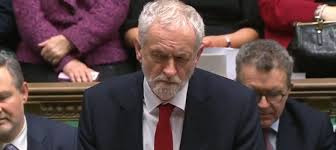 It was entirely appropriate that it was the votes of the DUP that saved Theresa May’s Government in the vote of no confidence. A reactionary Government was saved by the most reactionary and bigoted collection of MPs in parliament. It is clear that whatever the DUP’s differences over May’s Brexit deal, it did not want to risk a Corbyn alternative.
 In the last post I noted the view that change in the material base of society, its forces and relations of production, cannot be viewed as a result simply of superstructural change, i.e. a change in the nature of the state.
 Sráid Marx