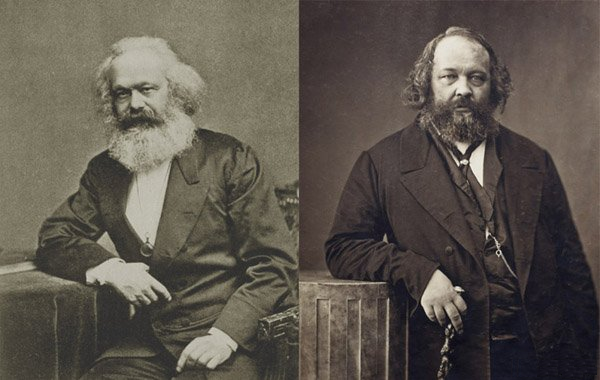
Engels once said that ‘Marx and I, for forty years, repeated ad nauseam that for us the democratic republic is the only, political form in which the struggle between the working class and the capitalist class can first be universalised and then culminate in the decisive victory of the proletariat.’
The context was a claim against him that when ‘the socialist party, will become the majority’ it will ‘then proceed to take power.’ Engels however stated that ‘For a start, I have never said the socialist party, will become the majority and then proceed to take power. On the contrary, I have expressly said that the odds are ten to one that our rulers, well before that point arrives, will use violence against us, and this would shift us from the terrain of majority to the terrain of revolution . . .’
Responding to the question of what form this power would take – ‘Will it be monarchic, or republican, or will it go back to Weitling’s utopia’, Engels replied that of course the Reichstag deputies are republicans and revolutionaries, the question of a Republic being the most controversial political question in Imperial Germany at that time.
Engels goes on to ask whether it is implied ‘that the German socialists attribute no more importance to the social form than to the political form? Again he would be mistaken. He should be well enough acquainted with German socialism to know that it demands the socialisation of all the means of production. How can this economic revolution be accomplished? That will depend on the circumstances in which our party seizes power, on the moment at which and the manner in which that occurs.’ (Engels, Reply to the Honourable Giovanni Bovio MECW Vol 27 p271)
What Engels is making clear is that the fight for democracy is vital to the struggle of the working class to achieve political power not that it is necessary to have a republic as the first step to communism. Even where the question of a Republic was the unmentionable political issue, the objective was ‘the socialisation of all the means of production.’
On a separate occasion he said that ‘If one thing is certain it is that our party and the working class can only come to power in the form of the democratic republic. This is even the specific form for the dictatorship of the proletariat . .’ (emphasis added – SM) On the question of a Republic he explains the content of the demand, if it is not possible to employ the term itself: ‘But the fact that in Germany it is not permitted to advance even a republican party programme openly, proves how totally mistaken is the belief that a republic, and not only a republic, but also communist society, can be established in a cosy peaceful way’
‘However, the question of the republic could possibly be passed by. What, however, in my opinion should and could be included is the demand for the concentration of all political power in the hands of the people’s representatives. That would suffice for the time being if it is impossible to go any further.’ (Engels A critique of the draft Social-Democratic programme of 1891, MECW Vol 27 p227)
Engels in his postscript to Marx’s Civil War in France wrote ‘And people think they have taken quite an extraordinary bold step forward when they have rid themselves of belief in hereditary monarchy and swear by the democratic republic. In reality, however, the state is nothing but a machine for the oppression of one class by another, and indeed in the democratic republic no less than in the monarchy; and at best an evil inherited by the proletariat after its victorious struggle for class supremacy, whose worst sides the proletariat, just like the Commune, cannot avoid having to lop off at the earliest possible moment, until such time as a new generation, reared in new and free social conditions, will be able to throw the entire lumber of the state on the scrap-heap.’
‘From the outset the Commune was compelled to recognize that the working class, once come to power, could not manage with the old state machine . . .’ The bourgeois republic was not therefore the mechanism to advance towards communism.
Marx noted of the Paris Commune that ‘the political rule of the producer cannot co-exist with the perpetuation of his social slavery.’
The book Citizen Marx, which deals with Marx’s engagement with republicanism, has been favourably reviewed in a number of socialistpublications. In previous posts we have shown that this was an engagement coloured by competition for the allegiance of a radicalising working class. This involved starting from a materialist analysis of the conditions facing workers and other classes, which brought to the fore the property question and involved a clear separation of socialist politics from even the most radical republicanism.
The book notes both Marx and Engels very brief alignment with anti-political communism that eschewed political struggles because of their claimed irrelevance to the over-riding social question, which resolved into the question of property. For Marx and Engels this involved the socialisation of production by the working class that would lead to the abolition of all classes, including itself.
This required the conquering of political power by the working class and the book deals with Marx and Engels treatment of the Paris Commune as the first example of the capture of such power (with some qualifications). Many of their tributes to it and the force of its example included elements of the democratic functioning of the Commune that were championed by republicanism, for example the direct election of workers’ delegates to state office and their being subject to recall.
This state however was to be a workers’ state, and qualitatively different to existing capitalist states, whether an absolute monarchy, constitutional monarchy or bourgeois republic. It was to be a state not ‘superimposed upon society’ but ‘one completely subordinate to it.’ (Citizen Marx p 392)
‘It was essentially a working-class government, the produce of the struggle of the producing against the appropriating class, the political form at last discovered under which to work out the economical emancipation of Labour.’ (Marx and Engels Collected Works, Volume 22 p334)
The most famous lesson learned was that ‘the working class cannot simply lay hold on the ready-made state machinery and wield it for their own purpose. The political instrument of their enslavement cannot serve as the political instrument of their emancipation.’ (MECW Vol 22 p533)
This is not the bourgeois state democratised, à la radical republicanism, but the destruction of the bourgeois state and creation of one that would serve as a political instrument of working class emancipation. And as the emancipation of the working class was to be achieved by the working class itself this meant not just creation of a workers’ state but the working class emancipating society from the state – a state not ‘superimposed upon society’ but ‘one completely subordinate to it.’ As Bruno Leipold notes in Citizen Marx, for Marx the Commune was a ’Revolution against the State itself . . . a resumption by the people for the people, of its own social life.’ It was “the people acting for itself by itself.’ (Citizen Marx p 389 & 366)
Leipold states that through the experience of the Commune Marx not only changed his understanding of what a ‘social republic’ was but that this also ‘went hand in hand with a new attitude to the bourgeois republic. While his Commune writings contain similar condemnations of the emancipatory limits of the bourgeois republic that we find in his 1848 writings, we find no corresponding statements that the bourgeois republic still remains the terrain on which this emancipation is to be fought for.’ (Citizen Marx p 357)
Much of the book covers the period before the Paris Commune and deals with the role of the working class in a purely democratic revolution, i.e. a bourgeois revolution. Marx and Engels set out the policy of communists, in which the working class, particularly in Germany, must fight for a democratic republic – as an independent force – alongside the bourgeoisie (if and when it does indeed fight) in circumstances where it cannot yet impose its own interests because of undeveloped material conditions.
Marxists believe that power in society resides in capital, in the capitalist system and its property relations in which ownership and control of the means of production etc. are monopolised by one class. In the form of money, capital can be otherwise employed to gain political influence through the media, buy politicians and discipline governments through speculation on the bond markets. Capital strikes can disable economies just as individual capitals can close down workplaces overnight destroying the livelihoods of their workers.
On top of this are states that defend these property relations through a multitude of laws bolstered by assumptions about the primacy of bourgeois private property rights that are considered holy writ. Should this be questioned the state is also composed of forces armed with the monopoly of violence to police and impose the requirements of these property relations. Since such relations involve the exclusion of ownership and control by the majority there is nothing democratic about them and no bourgeois claims to democracy entertain the notion that there should be democratic ownership and control of the economy.
Instead such claims to be democratic rely on parliamentary institutions that are dignified with reverential rules and procedures, the better to elevate their status above their essential subordination to the real power in society. Incantations about their sacred embodiment of democracy cover for this subordination while most people vaguely register their awareness of the sham through a view of all politicians as essentially liars.
This, however, is a purely cynical reaction and is not the ground for either an adequate understanding of what is going on or the envisioning of a genuine democratic alternative. Nationalism provides additional glue to bind workers to their (nation) state and the claims it makes for itself on their behalf, but more and more decisions are taken at an international level where real democracy is even more obviously absent. It is generally considered in most of Europe that its people live in a ‘democracy’. The job of socialists is to make them aware that this is bourgeois democracy and that it is a sham that they should seek to change. Moreover they need to be convinced that the state they are invoked to give allegiance to does not defend their interests.
One very small example of the fraudulent character of bourgeois parliamentary democracy has erupted in Ireland as the governing parties have voted to restrict the speaking time of the opposition, reduced its own exposure to questioning, and allocated opposition time to a group of ‘independents’ who have all declared full support for the government and have a number of members as ministers within it. As all the opposition parties have put it, you are either in the government or in the opposition – you cannot be in both.
Dáil sitting has been suspended before in much disorder but was suspended again yesterday when the change in Dáil standing orders was pushed through without debate by the Ceann Comhairle (the Speaker of the House). She is supposed to be independent but was elected as a member of the same ‘independent’ group and appointed as part of the secret deal that no doubt lies behind the speaking privileges now given to it.
This is no doubt a cynical political stoke that should be opposed. The up-its-backside liberal propaganda news sheet ‘The Irish Times’ opined that “normal Dáil business” must “resume immediately” so that a list of issues can be discussed. These include climate and health care that “normal Dáil business” has failed to successfully address for decades. Even these relatively minor attacks on democratic functioning do not find this liberal mouthpiece defending it.
Of course, the government is committing much greater crimes against democracy than these latest shenanigans, including allowing planes delivering arms to Israel to pass through Irish air space. Like governing party claims before the general election about the number of houses that were being built or support for the Occupied Territories Bill, this is a government that cannot be trusted to tell the truth.
The opposition parties, including People before Profit, have united to ‘stridently’ oppose this ‘alarming’, ‘outrageous’ and ‘unprecedented’ plan and to defend the ‘fundamentals of parliamentary democracy’. There has been a lot of talk about the government’s changed procedures reducing their ability to ‘hold the government to account’ and to ‘represent their constituents’.
But this follows People before Profit centring their recent electoral campaign on ending 100 years of unbroken office by the two ugly twins who nevertheless won the recent general election. When has either Fianna Fail or Fine Gael been held to account over this 100 years? When has it been punished for its failures, lies, hypocrisy and previous much more authoritarian measures? In what way do impassioned speeches by People before Profit TDs excoriating government ministers to an almost empty Dáil chamber – shown regularly on social media – embody holding these ministers to account?
The man in the centre of it all,’independent’ TD Michael Lowry, has been found by a state tribunal to be “profoundly corrupt” but here he was giving two fingers to the PbP TD Paul Murphy! Why is he not in jail, never mind inducing the government to tear up Dáil standing orders on his behalf? Tribunal after tribunal has demonstrated that there is no justice from the state and the Dáil chamber is incapable of delivering it either. More evidence of the sham that is bourgeois democracy! Why not say this?
Rather than use the episode to demonstrate this to the Irish working class, to further explain the limits and hypocrisy of bourgeois democracy, and to call out the alternative, People before Profit has decided to become bourgeois democracy’s most vocal defender. Rather than use it as support for the argument that the working class will not find real democracy within a bourgeois parliament, it declares the vital need to support its fraudulent claims that it can allow workers to hold the government to account’, i.e. criticise and punish it. Instead of exposing the hot-air bloviating that passes for democracy it holds out the necessity for extra hours of fine speeches.
Illusions in bourgeois democracy run deep in Irish society, as in most advanced capitalist states, with the continued election of Lowry and the ugly party twins as plenty of evidence. Every opportunity to expose it should be grabbed. Ironically, a previous posture of doing this – of exposing the hollowness of bourgeois democracy evidenced again by this latest stroke – would have been more powerful in embarrassing the government than the strident claims that more time to ask questions and talk to an almost empty room is vital to democracy.
To go back where we started – with Marxist principles. These declare that the emancipation of the working class will come from the activity of the working class itself, a principle precisely counterposed to the parliamentary illusions of much of the left. Real power comes from outside, that of both the capitalist system and of the working class. It is on the power of the working class and its organisations outside that socialists need to focus, and which could do with much greater democratic functioning. Illusions in the Dáil are only for those for whom these illusions are comforting and who seek a career within it.
When five political commentators were asked for the main moment of the election campaign, they all mentioned the TikTok Taoiseach’s snubbing of a disability care worker when he was on one of his many walkabouts. It “cut through” to the public, as the saying goes, and probably did lower the Fine Gael vote a little. However, in the grand scheme of things all it demonstrated was the irrelevance of the campaign, which has been described as a non-event. Unlike recent general elections in many other countries, the incumbents were returned to office, providing evidence of political stability that does not exist elsewhere. This stability rests on uncertain foundations.
The election was called following a large give-away budget of tax reductions and increased state spending, followed by a campaign where everyone promised even more tax cuts and increased spending. This included the previous austerity-merchants in Fianna Fáil and Fine Gael. Halfway during the campaign, when Sinn Fein joined the club, Fine Gael launched hypocritical denunciations that it was about to break the “state piggy bank”.
On the surface, the only difference between the governing parties and the different varieties of opposition was how much they would spend. People before Profit claimed that their clothes were being stolen by everyone, at least for the election, while media commentators claimed that the widespread consensus on increased state intervention showed what an essentially leftwing country Ireland was. Since PbP argues that such intervention is an expression of socialist politics these claims would be right – if PbP was also right, which it’s not. The view of politics as a spectrum from left to right implies no fundamental difference between the government and opposition but only shades or degrees of difference.
If this didn’t provide the grounds for major change, and the existing alignment of party support made it unlikely, the most important reasons for continuity are the foundations of the state itself and the economic success that has satisfied a significant part of the population, if only on the grounds that it could be a lot worse and recently was. The ‘left’ appeared as wanting to share the gains more equally. Unfortunately, those seeking equality inside the Irish state have to reckon on the giant inequality outside on which it would have to be based and which determines it.
The largesse of recent budgets, and the promises of more during the election, rest on the existence of the Irish state as a tax haven where many US multinationals have decided to park their revenue for tax purposes alongside some of their real activities. Over half of the burgeoning corporate tax receipts come from just ten companies, with the income taxes of their employees also significant. Trump has threatened tariffs on the EU, which threatens the massive export by US pharmaceutical firms to the US, and has promised to reduce corporate taxes, which also reduces the attractiveness of the Irish state to multinational investment. It is not so long since the shock of the Celtic Tiger crash, so very few will not be aware of the vulnerability of economic success and the finances of the state.
This vulnerability was ignored in recent budgets and election promises while the electorate is blamed for seeking short term gains that are all the political class can truthfully promise. Failure to invest in infrastructure has weakened the state’s long term growth with the major shortfalls ranging wide, across housing, health, transport, childcare and other infrastructure such as energy and water. This has led to calls for increased state expenditure as the existing policy of throwing money to incentivise private capital has fallen short even while the money thrown at it has mushroomed. Bike sheds in Leinster House costing €336,000, and a new children’s hospital that had an estimated cost of €650m in 2015, but costed at €2.2 billion at the start of the year – apparently the most expensive in the world – are both examples of the results of a mixture of a booming capitalist economy and state incompetence.
The consequences are an electorate that wants change but doesn’t want or can’t conceive of anything fundamental changing. Government and opposition differ on degree but avoid the thought of challenging the constraints their lack of an alternative binds them to. Trump is only one of them; Irish subservience to the US has already destroyed all the blarney about Irish support for the Palestinian people. Gestures like recognition of a corrupt Palestinian state are nauseating hypocrisy beside the secret calls to the Zionist state promising lack of real action; selling Israeli war bonds to finance genocide by the Irish central bank, and the three wise monkeys of the three government parties ignoring the use of Irish airspace to facilitate the supply of weapons employed in the genocide.
The Irish state is not in control of its destiny and its population is aware of its vulnerability. For a left that bases itself on the capacity of the state this is a problem; involving not just the incompetence, the bottleneck constraints on real resources, and the international subservience to Western imperialism. The fundamental problem is in seeing the state as the answer. Were the Irish state stronger, it would have joined NATO and more directly involved itself in the war in Ukraine; it would have intensified its support to US multinationals, and perhaps been a bit better at building bike sheds and a children’s hospital.
Parts of the left seems to think the current Irish state can oppose NATO, oppose war and perhaps tax US multinationals a bit more. It is, however, currently on the road to effective NATO membership; is more or less unopposed in its support for Ukraine in its proxy war; and already taxes multinationals on a vastly greater scale than almost any other country I can think of.
The left doesn’t have an alternative ‘model’ because its alternative isn’t socialist, but simply development of the state’s existing role, presided over by some sort of inchoate left government, the major distinguishing characteristic of which is that it doesn’t include Fianna Fáil and Fine Gael. This is so anaemic a strategy it avoids all the above reasons why it has minority support.
The terms in which this is popularly understood do not go in the direction of a socialist programme because of the generally low level of class consciousness, but a genuinely socialist path requires rejection of the current statist approach of ‘the left’. That this too is currently very far away reflects not only the very low level of class consciousness but also how the forces that are responsible for this have also debased the left itself, especially the part that thinks itself really socialist. Instead, we have the stupidities arising from the commonality of increased state intervention among all the parties repeatedly declared to be proof that Ireland is a left wing country.
These constraints explain the difficulty in creation of a left alternative to a Fianna Fáil and Fine Gael government; the fragmentation of the left and its Oliver Twist policies of simply asking for more. There are numerous permutations possible before any purported left government would arise, with Sinn Fein, Independents, Social Democrats, Labour Party, and others all willing to go into office with either (or both) of them. About the least likely is a ‘left’ government (in any meaningful sense) that excludes them and is composed of Sinn Fein – the austerity party in the North – and the Labour Party and Social Democrats whose whole rationale (as the good bourgeois parties that they are) is to get into office – they don’t see the purpose of being involved in politics if you don’t.
All the calls for a ‘left’ government free of the two uglies is based on the same bourgeois conceptions. Even if only on the grounds of the Chinese proverb – to be careful what you wish for, the failure in the election to achieve such a government is not grounds for mourning, even if the result invites it.
In my previous post I noted that the logic of supporting the Ukrainian State, and the British state’s support for it, was to support the British state itself; just as the Ukrainian state itself committed itself to this in their joint security agreement.
Further evidence of the unfolding logic of support for Ukraine was provided by the text of an agreement by leftist organisations in Eastern Europe published on International Viewpoint. On top of vague anti-capitalist aspirations, this noted that among its ‘top priorities is countering Russian aggression, which is destroying Ukraine and threatening the entire region. “The only reason why Russian troops have not yet attacked Poland or Romania is because of the US troops deployed there. We are convinced that the countries of our region must jointly build their own subjectivity and strength,”
The statement thus endorses the view that Russia is an immediate threat, that the people of the region are being protected by US imperialism, and that the countries should strengthen the military power of their states. There was no critique of any of these positions by the hosts of this statement and it is not hard to understand why.
The ‘Fourth International’, whose publication International Viewpoint is, agrees that Russian imperialism is responsible for the war, that the Ukrainian state should be defended and that the support of US imperialism (and British) should also be defended. This too, for them, is a top priority. The statement of the Central Eastern European Green Left Alliance (CEEGLA) is consistent with the political line of the Fourth International, which prioritises opposition to aggressive Russian ‘imperialism’ and supports Western imperialism in this opposition.
The remilitarisation of the West has been accelerated and trumpeted with more and more bellicose rhetoric from Germany and Eastern European states on the need to face a coming Russian invasion. Ukraine of course has been making this claim for two years, arguing that the best place to stop it is in Ukraine; in other words, the Western powers should directly join with Ukraine in the war. However, since Western powers are unprepared for this, including that they have not prepared their own populations, they have taken the route of proffering weapons to the Ukrainian state so that its workers can do the fighting and dying in the meantime.
Now the British state has upped this rhetoric by the head of its (supposedly non-political) Army calling for a “citizen army”, which implies the introduction of conscription, although this is denied, for what that’s worth.
In one way this is preparation for a replacement narrative to the one sold up to now that Ukraine must be supported because Western support is helping defeat the Russians, who are often portrayed as being as brutally incompetent as they are simply brutal. Now that it is becoming clearer that the West does not have the means to ensure a Ukrainian victory and Russia is winning the war, previous escalation of the power of the weapons supplied cannot continue without such escalation increasing the risk of a qualitative change in its character, which again the West is not prepared for.
The call for a “citizen army” raises lots of issues, including the not irrelevant point that Britain including the bit of Ireland it controls, does not actually have citizens – it has subjects. It is also relevant that some parts of the UK will not provide many volunteers, one thinks of the North of Ireland and Scotland in particular; and while these two might find some more than willing, many in England and Wales might also not be so keen.
For the left supporters of the idea that Russian imperialism is a real threat, which must be opposed as a priority – even alongside and on behalf of capitalist states, it raises the question of how the British military is to be supported in the case of Ukraine but not otherwise. (I assume that the pro-Ukraine left has not followed its own logic and gone so far down the road as to support the defence of its own capitalist state, although I have little doubt it would, should a war with Russia eventuate).
This left can maintain this inconsistent view because it refuses to consider everything from the position of the interests of the working class, the class as a whole. Instead, it has a routine of political positions based on reforming capitalism through its state by way of a range of political formulations that hang together while appearing to hang apart, unacknowledged as reciprocal. This includes self-determination for independent capitalist states; state removal of oppression of social groupings through laws against discrimination; capitalist state ownership of the means of production; capitalist state provision of welfare services, and capitalist state enlargement through appropriation of greater resources through increased taxation. Bizarrely, it thinks that this is a road to smashing this state.
The most important failure then is not to see the capitalist world as a whole and recognise the consequences, So, for example, it supports Western imperialist intervention in Ukraine but not in Palestine. It genuflects to the imperialist interest and objective in intervening in Ukraine but gives it no role in determining the nature of the war. In fact it goes further and refuses the idea that this is a proxy war and would have us believe that Western imperialism is supporting an anti-imperialist war of national liberation.
When we simply add up the increasing military intervention of the West in Ukraine; Middle East, including Yemen; in economic sanctioning and forecast of war with China; mobilisation of the Russian armed forces and growth of its military-industrial complex; the growth of Chinese military power; and the increased fracturing and realignment of state alliances with the relative decline of US imperialism, what we have is a drift to war across the world. In other words – World War III. The inevitability of war as a result of capitalist competition has in the past been well understood.
It must be obvious, to even the meanest intellect of those on the Left in the Western countries, that opposing the steps to this war by their own capitalist state cannot be done by claiming that in some parts of the world these states are defending the interests of the working class; against other capitalist states that are workers’ primary enemy. By doing so you have already surrendered the foundations of any argument a socialist might have.
The calls for a citizen army by the General is part of the British state’s preparation of the working class for war on its behalf, so how does the pro-war left prepare the working class to resist the entreaties and demands of the state by validating its role in Ukraine?
Behind the war in Ukraine lies Russia, China, Iran and North Korea on one side and the United States/Europe etc. on the other, with other states negotiating a place between them. A similar split arises in the war by Israel against the Palestinians and threats against Iran and some Arab countries. War over Taiwan would involve China and the US with Europe dragooned into supporting the US and Russia having good reason to support China. In other words these wars are conflicts between the same forces and their eruption signals their coming together. The forces creating them are not for disappearing so hoping that they will dissipate and simply go away are forlorn.
As regards the proposal of a citizens’ army, Boffy has succinctly put forward the socialist view of such a proposal. It is incompatible with the notion that workers should willingly join the armies of the capitalist state and defend its sovereignty, either with nominally separate workers battalions utterly subordinated to the Army command, or as individuals. In the latter case, it would be the duty of socialists to still carry forward their arguments, in so far as individuals can, and not to put a shine on the patriotic lies of the capitalist state.
So, once again, the socialist alternative stands in opposition to those defending Ukraine in the war, as the Interview with a Ukrainian and a Russian ‘socialist’ previously mentioned, shows.
When the head of the British Army makes a political speech with such a far-reaching proposal, which assumes an approaching war, the proper reaction is not one of either complacency or dismissive of the inconsequential. It is a political intervention of some purpose and socialists must explain what this purpose is and why it must be opposed.
Much of the Irish Left seems to have a strange fascination with the Irish State’s declared policy of neutrality, wanting to defend it while also seeming to deny that it actually exists.
A report of a recent meeting in Belfast on the Socialist Democracy website records the confusion. It was organised by the Communist Party of Ireland calling for neutrality to be put into the constitution. Not all the speakers appear to have agreed.
‘Vijay Prashad pointed out that Ireland had only “nominal neutrality” and ‘Patricia McKenna made a similar point about the nominal nature of Irish neutrality . . . A campaign to include neutrality in the constitution would have no effect.’ The Socialist Democracy speaker stated that currently ‘essentially Ireland was acting as part of NATO.’ However, the article asserted that ‘even if the CPI’s campaign is restricted to neutrality, it would be a step forward from the silence and submission in the face of the open integration to NATO, and opportunities will arise to argue for an anti-imperialist campaign led by the working class.’
This ambiguity, if not confusion, also appeared in a statement the organisation put out earlier. It stated that ‘neutrality is not enough!’, implying that it existed. It argued that ‘political groups are right to petition for the retention of neutrality and we support these campaigns and petitions’, at the same time as saying that ‘simply setting the bar around the issue of neutrality is to chase a chimaera’, and that such campaigns are ‘not enough. Ireland is not a neutral country.’
The confusion is not confined to this organisation. A good article in the ‘Weekly Worker’ pointed out – ‘what are so-called socialists doing upholding the foreign policy of their ‘own’ bourgeois state?’ It references the People before Profit TD Richard Boyd Barrett who, in his own article, argues that:
‘the Irish political establishment, and especially Fine Gael, have been trying, stealthily, to undermine Irish neutrality for many decades. And in practice they have succeeded in ensuring that in terms of actual policy Ireland has always operated firmly in the camp of US imperialism.’
However, he too argues that the present policy should be defended: ‘There are also strong positive reasons for defending Irish neutrality’, he says. And argues for ‘the real potential that lies in Irish neutrality if we defend it and make real use of it’, such as expelling the Saudi and Russian ambassadors. He argues that this ‘would send an immensely powerful statement against imperialist occupation and oppression round the world.’ A more striking and powerful statement would be the expulsion of the US and Ukrainian ambassadors, but he doesn’t argue that!
He says that not only does neutrality exist, but that it should be defended, and takes to task those that deny both:
‘There is a kind of weary cynical argument you sometimes hear on the left which runs, “Irish neutrality has already been so eroded that it is not worth defending any more”. But this misses the point. Even the fig leaf of neutrality that still exists does constrain our political establishment to some degree, which is why they would like to get rid of it. Moreover, a successful people power campaign to defend it would offer the potential to make the neutrality much more real.’
However, such an argument isn’t cynical but starts from reality, and since when did socialists defend fig leaves? Do we not call them out for the lies and hypocrisy they are? Is the socialist argument that we should make the Irish State ‘really’ neutral?
In principle, socialists are not neutral between the various capitalist powers and their variable alliances – we oppose all of them, whether bundled up under US leadership in NATO or the alliance of Russia with China. These are all components of the world imperialist system and to fall into supporting one against the other is to betray the working class not only of the countries supported but the interest of the working class of the world as a whole.
Opposition to neutrality is therefore derived from our not being neutral to the capitalist state within our own countries. Not wishing to take sides in the wars between them is a result of this opposition to all of them and does not entail a policy of neutrality but of seeking to turn wars between them into a class war against them–all of them.
Opposition to joining NATO has been conflated with support for the Irish State’s claim of neutrality as if this was genuine and as if, if it were, we should support it. Of course, it would be better if it did have some more substance but it doesn’t and we should not pretend that it does; just as, while it is also better that the Irish State is not a formal member of NATO, we should not defend a policy of neutrality that does not even make a claim to political neutrality. And we should beware of formalities: Ukraine is not a formal member of NATO but is fighting the biggest war in Europe since World War II against Russia on its behalf.
We should support the majority of people in the State who oppose NATO membership but explain why it is that this alliance should itself be opposed. This includes its provocations leading to the Russian invasion of Ukraine, with all its horrific consequences for the Ukrainian people; a result of their political leadership walking them into the war through advancing the cause of NATO membership. Such membership is not a guarantee of security but signs a country up to its policy of defence of US hegemony, leading recently to wars in Iraq, Afghanistan, and Libya.
We are opposed to Irish soldiers fighting imperialist wars not because we have any illusion that the Irish State is not also part of the world imperialist system. It is a large tax haven for mainly US multinationals and the home of opaque financial flows in the International Financial Services Centre in Dublin. It is also the site of a lot of US direct investment. To think that this State could be ‘really’ neutral, as People before Profit argues, is to believe that the interests of the Irish capitalist state can align or be compatible with neutrality, and that ‘real’ neutrality would be accepted by the United States and the rest of Western imperialism.
For Socialist Democracy the Irish State ‘is a satrap of imperialism. The current drive to militarisation is not a spontaneous decision by the Irish government, but is the result of demands by the US’; it argues that ‘the fight against military adventures is also a fight for our own self-determination. How can we mobilise around claims for self-determination in other lands while ignoring the continued British military presence in Ireland . . .’
In reality the interests of the Irish capitalist state and of Irish capitalism are fully subordinated to Western imperialism and both have as much ‘self-determination’ as any capitalist state in Ireland will ever achieve. The addition of the Northern six counties will not change these fundamentals. The problem isn’t mobilising around ‘self determination for the Irish people’ but building an international workers’ movement to overthrow capitalism and create new states based on the working class.
The organisation complains that in the meeting its contribution was not accepted – ‘the issue of class did not arise’ – but pretending that the question of imperialism is one of self-determination is misleading on the same point. Defeat of imperialism in Ireland is co-terminus with overthrowing the Irish capitalist state and this requires a working class movement under the banner of socialism and not appeals to ‘the Irish people’ to determine its own future. Neither do appeals to ‘people power’ by People before Profit represent any class alternative, but a populist cry that deliberately avoids the question of class.
This is why it is wrong to absolve the Irish bourgeoisie of responsibility for the drive to NATO membership by saying that ‘the current drive to militarisation is not a spontaneous decision by the Irish government, but is the result of demands by the US.’ The Irish capitalist class is not being forced against its interests to pursue NATO membership and imperialism is not simply some foreign domination.
The Socialist Democracy web site quotes another speaker at the CPI meeting approvingly:‘Fearghal MacBhloscaidh made an important point when he pointed out that the battle against colonialism had led to a current of assimilation and a current for democracy. Modern Ireland was not based on the democratic impulse but on the counterrevolution that came to the fore after the war of independence.’
A similar, though not identical, idea is advanced by People before Profit in Boyd Barrett’s article:‘Ireland’s neutrality is a legacy of the Irish Revolution of the struggle against the British Empire, which made the new nation reject the idea of lining up with an empire. ‘For neither King nor Kaiser,’ as James Connolly and the Citizen Army put it in 1916. Fine Gael was born out of the counter revolution which aimed in the Civil War to crush the Irish Revolution. Visceral hatred of Irish republicanism and all it stood for, including Irish neutrality, is in their political DNA.’
It is true that ‘Ireland’s neutrality is a legacy of the Irish Revolution of the struggle against the British Empire’ but the Irish revolution was not led by James Connolly and the Citizen Army. It was not led by the working class and labour was infamously told to wait. The leadership of the Irish revolution was bourgeois and the revolution was a bourgeois revolution. In other words, it was not an anti-capitalist revolution but an ‘anti-imperialist’ one that was anti-Empire but pro-capitalist. Its objective was the creation of a separate capitalist state and this was as true of the ‘revolution’ as of the ‘counter-revolution’ on which so much is blamed, without thinking what difference victory for the anti-Treaty side would have made?
In fact we already know the answer to this because the leadership of the anti-Treaty revolutionaries came into government a decade later and nothing fundamentally changed. Ignoring this is to ignore the class nature that opposition to imperialism must take now, as it needed to do in the Irish revolution of a hundred years ago but failed to do so. The task is not to complete the Irish Revolution but to make a completely new one.
So it is true that ‘Ireland’s neutrality is a legacy of the Irish Revolution . . .’ but the limitations and nature of that revolution, compounded but not radically changed by the ‘counter-revolution’, are reflected in the current policy of ‘neutrality’, with its bourgeois character and its sterile protection against capitalist war.
Some on the left think that the Irish State can have a neutral foreign policy, but it can no more do that than have a neutral domestic policy. Since some of the left have abandoned Marxism this is indeed the road they are following. Fine words about Marx in print and a thoroughly reformist practice in the Dáil; or if you are from a Stalinist background, belief that there is a progressive Irish bourgeoisie, or section of it, ready to declare neutrality.
But if you can’t see the policy or progressive bourgeoisie, it’s because they’re not there.
Irish neutrality does not exist and since the class war is international it cannot exist.
The neutrality of the Irish state, that most of its people support, is a myth. The Irish government has repeatedly stated that the state is militarily neutral but not politically. Since its armed forces are tiny it might be said that its military neutrality doesn’t matter but its politics does. It is also often said that its policy of neutrality is whatever its government decides it is.
Already the so-called policy of neutrality is variously referred to as ‘not clear’ and ‘flexible’, while the anti-communism of the cold war period was clear, and before that its neutrality in the Second World War was flexible in favour of the Allied powers. Before that, the sympathies of Catholic Ireland with the nationalist and fascist forces of Franco was widespread.
At the minute the Government hides behind a ‘triple lock’ which mandates that more than twelve members of the armed forces can be sent overseas on operations only if the operation has been approved by the UN, the Government, and a resolution of Dáil Éireann. It is now complaining about “the illegal and brutal full scale invasion of Ukraine by a permanent member of the UN Security Council”, and that because of the Russian and Chinese veto on the Council no sanction on Russia can be approved. No such calls were made when the US or British engaged in recent “illegal and brutal” invasions, and the contrast with the approach of other countries such as India and South Africa at the recent G20 meeting is glaring.
The political practice of the Irish state has been to allow US troops to stop-over at Shannon airport on their way to its various wars and to have a deal with the British Royal Air Force to police its airspace. It has refused to assert its sovereignty by checking suspected US rendition flights and has always made clear its support for ‘the West’. To think that a state so dependent on US investment and financial flows, plus its integration into the European Union, would be in any meaningful way neutral in the conflicts these various states are involved in is for the birds.
The claim to any sort of neutrality is not only bogus but also hypocritical and malevolent. Hypocritical, because in the Irish State’s recent application to join the UN Security Council it made much of its non-membership of NATO while flying kites domestically in order to facilitate the first steps to joining it. Leo Varadkar stated that trading on its former status as a colony had helped it gather support for Ukraine and oppose ‘Russian imperialism’. The level of hypocrisy would be astonishing were it not so common; it claimed its privileged victim status in alliance with all the Western powers that are members of NATO, are former colonial powers, and currently comprise the biggest imperialist alliance in the world. All very ‘anti-imperialist’.
It is malevolent because it has combined lying with efforts to support the war in as strong a way as it can, without eliciting opposition from its own people. So, it has ignored its own housing and homeless problem by welcoming one of the highest levels of Ukrainian refugees in order to demonstrate its political support. Should anyone fall for the idea that this is the expression of some sort of (welcome) humanitarian concern, the previous and continuing policy on asylum seekers of direct provision should be noted, as should the second class status applied to refugees who aren’t Ukrainian. Even with regard to Ukrainian refugees, Varadkar has made it clear on a number of occasions that while the door is open there’s nowhere to stay: the not so subtle message is ‘stay away’.
Implementation of the welcome has therefore stumbled from crisis measure to crisis measure with an eagerness the state did not previously display. The self-image of ‘Cead Mile fáilte’ (“a hundred thousand welcomes”) does not withstand historical examination, including the referendum on the right of children born in Ireland to citizenship, which was targeted at excluding the children of non-EU nationals born in the Irish State.
The recent government sponsored ‘Consultative Forum on International Security Policy’, which was no more than an obvious attempt to advance the cause of NATO membership, majored on the threats to Irish security, while commentary has often focused on the vulnerability of undersea cabling off the Irish coast linking the US to Europe. No one was so impolitic at this Forum to mention the threat to underwater infrastructure from the Americans, responsible for blowing up the new Nordstream gas pipeline to Germany.
The deceitful nature of the Forum was indirectly exposed by the Dame of the British Empire who was invited to oversee the proceedings. She remarked that “I really don’t know any other country where they’ve done something like this, really tried to engage the entire population in an open conversation about a county’s role in the world, – national security is variably restricted to small groups of senior officials and decision makers.”
In fact, the Irish State is no different in this respect from other capitalist states, as the example of US military flights through Shannon airport demonstrates, and now the support given to Ukraine. The Forum was not an exercise in conversing with the people of Ireland but an occasion to lecture them about the necessity to get on board with the rest of the West, led by the US, in its increasing polarisation of the world and aggression against its competitors – Russia and China.
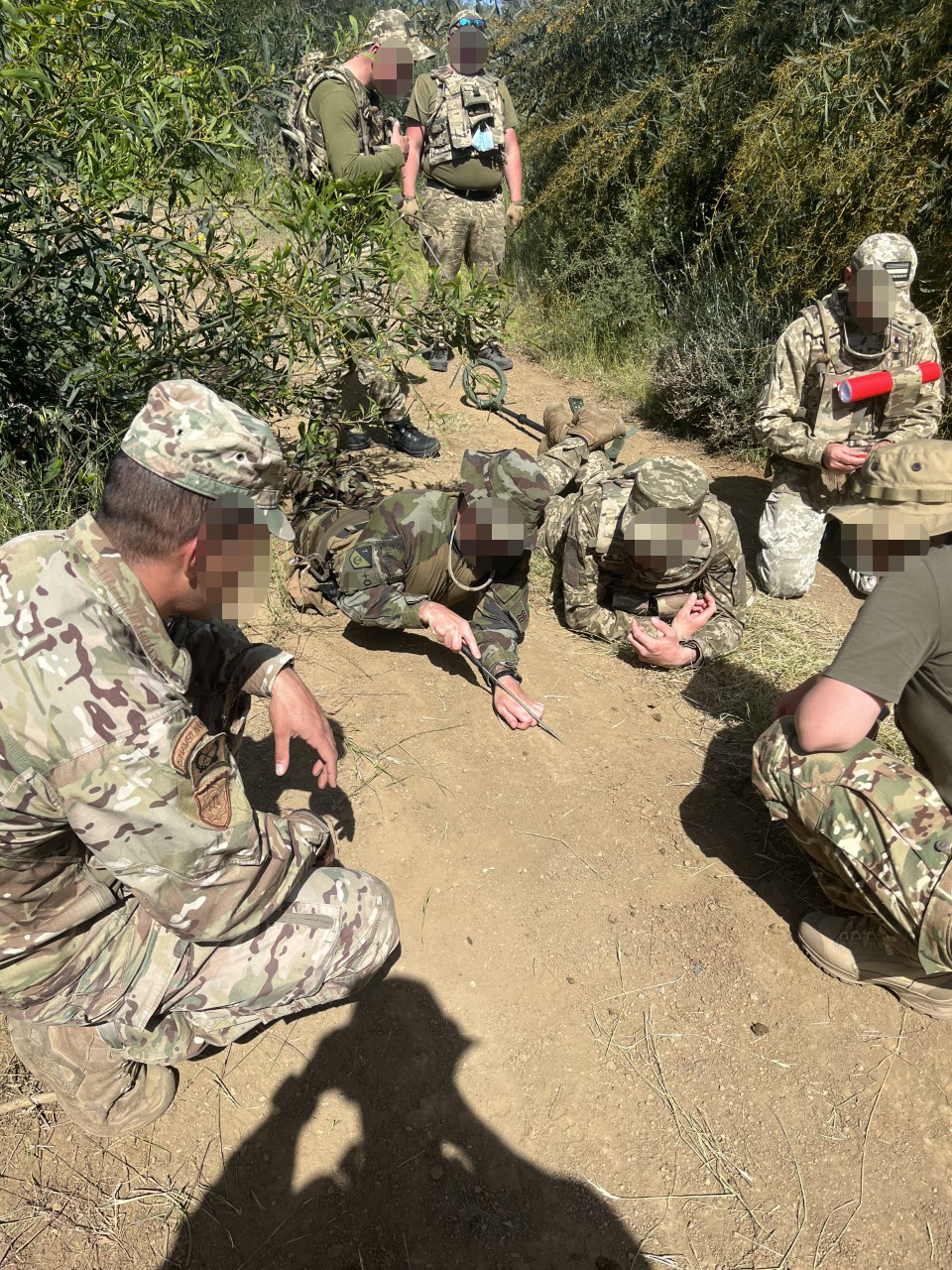
The Irish government claimed that its support for Ukraine was only going to involve provision of ‘non-lethal’ training to its armed forces, which included training in clearing mines and equipping it with two de-mining vehicles. Its ministers repeatedly emphasised the humanitarian nature of the training being provided. This claim was already something of a joke, given that clearing minefields was a crucial element of the Ukrainian offensive in which its armed forces have been thrown into a headlong assault against long-prepared Russian defences, only to be slaughtered in their tens of thousands. All for the sake of complying with the United States and the Zelensky regime, with the miserable result of the uncertain capture of small settlements that have been utterly destroyed in the process. Lives exchanged for a few kilometres of bloody ruins.
The revelation that the ‘non-lethal’ training also includes weapons training and military tactics has exposed the government as liars. Even the correspondent from the rabidly pro-war ‘Irish Times’ was compelled to admit that this was ‘a significant departure from the Government’s public position that Ireland is providing only non-lethal support. Weapons training was not included in public announcements by the Government of the Defence Forces participation in the EU training mission. It contrasts with a statement by Tánaiste and Minister for Defence Micheál Martin earlier this year that the training would be in “non-lethal” areas.’
There was no reference to weapons training in any Government statements in the Dáil during debates on Irish involvement, yet in July the Cabinet had authorised this extension of support. Just like other capitalist states, in Ireland “national security is variably restricted to small groups of senior officials and decision makers.” The policy of neutrality is indeed whatever the government decides it is.
The Department of Defence stated that the training presented “no conflict” with Irish military neutrality and denied any attempt to mislead the public on the nature of the training. It also said the training previously announced, which did not include any mention of weapons training, “was always intended to be indicative rather than exhaustive”. It was, it said, only a “modest step-up”.
What this “modest step-up” demonstrates is that the Irish State, through its participation in the EU’s Military Assistance Mission Ukraine (Eumam), is participating in a proxy war against Russia. It therefore also appropriates its own share of responsibility for its horrific results.
The comment below to a previous post is almost perfect in illustrating the illusions that exist on the role of the state and for which the series of posts were written. It is therefore worthwhile bringing greater attention to it along with my response:
=====================================
I would have reservations about what you say about the State and capital relationship. Both sides of the equation seem to be too general, categories that are not specific to time and place. I find the categories of the public sector versus the private sector a little more specific. The key thing here is that there has occurred over the last thirty years a major transformation in the relation between the two sectors. In short hand, there really is no public sector to talk about in the way we once did. One should preface talk about the public sector with the phrase ‘so called public sector’. The public sector has been taken over by the private sector yet throws over this capture an appearance of being in the hands of and being managed in the interest of the public.
When you use the public health service it is easy to believe that you are being served by what used to be known as the public sector, when in fact your are not, most of the services are provided to the hospital you are using by many private companies. This is just one example of many. It is interesting to see how in Britain many of what you would once have thought of as classic public services are in fact in the hands of private companies like SERCO.
I read the policy documents of the World Economic Forum and everything is dressed up in the clothes of Public Private Partnerships, something designed to deceive. What we mostly end up with, are private companies extracting money from what used to be called the Public Purse. Even the Dole broadly defined is operated by private companies pretending they are public bodies.
In a nut shell it is important to keep up with changes that have only recently occurred, over the last 30 years, not to get stuck using doctrines about State and Capital that are so universal that they pass over the particularities that now prevail.
RTE was once upon a time a part of the public sector, yet the funding came from both the licence fee and income raised from commercials. A model I have to admit I never liked, when I watch it I can’t stop moaning about the deluge of commercials, I have to sit through, more frequent than the those you get with British commercial television, four breaks for ads every hour. So the public broadcaster always had one foot in the commercial private sector. I wonder if State capitalism ever actually existed in the Republic of Ireland. When I travel from the North to the South I am struck by how more commercial the South seems to be, maybe this is too is deceptive.
=================================================
You write that the categories of State and Capital “are not specific to time and place” and that “the categories of the public sector versus the private sector [are] a little more specific”, and that the public sector gives “an appearance of and being managed in the interest of the public.” Of course, the opposite is the case.
“Public” and “private” in these contexts are empty abstractions designed precisely to obfuscate the real situation and to give appearances that essentially deceive. So-called public sector organisations are presented as if they serve the public but experience illustrates otherwise, as the posts on RTE demonstrate. The reformist left pretends that failures are due to the corruption of ‘public’ sector ownership by ‘private’ interests but the ‘public’ (however understood) does not own or control it; as we have seen from their sale and from the complete and utter lack of democracy and accountability in their operation.
Even ‘private ownership’ is no longer dominated by single ‘private’ capitalists but by collective pools of capital, including pension funds of workers, as well as pools of money of separate capitalist companies and ultra-rich individuals. Capital is being socialised but is still capital, so operates according to the laws set out by Marx, while the state is not the depository of the ’public’ or general interest but of the interests of the capitalist class as a whole. Again as set out by Marx.
It is a body separate and above society, which, while it rests on society, has its own interests that are intimately tied to the capitalist system and to various fractions of the capitalist class or to individual capitalists. Precisely in what way permits greater specification of their forms that are “specific to time and place”, which you see as the shortcoming of these categories. The general abstractions of ‘public’ and ‘private’ go nowhere, while the Marxist categories of ‘state’ and ‘capital’ have engendered whole libraries of analysis and empirical studies.
As I wrote on Facebook about the controversy at RTÉ – ‘it wasn’t commercial interests that decided to pay one presenter over €500,000 per year. It wasn’t they who doctored the accounts to hide this. It wasn’t they who cut other RTÉ workers’ salaries and conditions, and it wasn’t these interests who wasted millions by, for example, buying thousands of euros worth of flip flops on ‘barter accounts’. So what is it with “public service broadcasting” that requires so much forgiveness and support?’
Illusions in the ‘public sector’ are deep. Consider these facts:
During the Covid-19 lockdown everyone was invited to clap for the NHS in the North and in Britain when it had closed its doors to other services, with lasting effects we still suffer from, while it spent billions of pounds on useless equipment from the cronies of the Tory Party. Everyone now complains that they struggle to get a GP appointment, and that the service is crumbling, while more and more are signing up for private healthcare if they can afford it. If the ‘public’ sector really was there to serve the public none of this would be happening. If it really belonged to ‘the public’ it could be stopped but it can’t in its present form of state ownership.
The NHS is a bureaucratic monster. We recently learned of the neonatal nurse, Lucy Letby, who murdered at least seven infants and attempted to murder at least six others in her care between June 2015 and June 2016. The worst serial killers in British history have been ‘public sector’ employees paid to care for the public. It would be possible to write these off as tragic anomalies were it not for the fact that such scandals are exposed on a regular basis and are certain to recur. Only when workers and patients have the power to control and make accountable these services will this change, and this will only happen when these services are removed from bureaucratic state control.
You write that “most of the services are provided to the hospital you are using by many private companies” but this has always been the case. One of my first jobs was processing invoices from these companies in the NHS, from medical devices to food to pest control. The use of agency staff, employed indirectly through private companies, has certainly increased, but this is because the terms and conditions are better in some ways so workers such as nurses would rather work for an agency. In the last year millions of ‘public sector’ workers have gone on strike to get higher wages in defence of living standards ravaged by inflation, in the teeth of opposition by their state employers. Many workers in the private sector have already achieved higher pay increases without even having to go on strike.
You are correct to say that many previous state services have been privatised and often this leads to attacks on workers’ terms and conditions as well as deterioration in services. This often obscures the poor services previously provided under state ownership, as evidenced by telecoms in the South of Ireland. Much of the left opposed the creation of a single water authority in the Irish State, forgetting the failure of the previous mode of state ownership.
While it is correct to oppose privatisation it is no alternative to champion ownership by the state. The use of the term Public Private Partnerships, which you state is “something designed to deceive” is only true in one sense, for those with the illusion that state ownership is on behalf of the public. The purpose of the capitalist state is to protect capitalist ownership of the means of production, which is a sort of partnership. The use of the term Public Private Partnership is therefore not “something designed to deceive” but is actually a more accurate description of the relationship between State and Capital.
The alternative is workers’ ownership and not the belief that capitalist state ownership can be made democratic. This, of course, does not prevent us furthering any democratic changes that are possible without illusion that they are adequate or any sort of solution.
People before Profit (PbP) wants an “RTÉ for the people”, but just as the name ‘People before Profit’ invites the question–what people?– so does this new sort of RTÉ. The elision of class in the PbP name pops up here again, where ‘the people’ doesn’t actually mean every person but perhaps only some, perhaps the poor, those not paid enough, or those considered to be suffering or illegitimately aggrieved.
PbP wants “genuine public service broadcasting [which] is more important than ever. But instead of being a valued public broadcaster, RTÉ has been undermined by underfunding by successive governments and by the deeply corrosive effects of advertising and sponsorships.”
But what is this ‘public service broadcasting’ that must be made “genuine”? What service is being provided, by whom and to whom?
In so far as it shapes, and purposively shapes, social and political views, the service provided is the view of the Irish state. This is most obvious when it openly decides to censor alternatives, as in Section 31 of the Broadcasting Authority Act 1960 , which allowed the relevant Minister to direct RTÉ “not to broadcast any matter, or any matter of any particular class”. In 1971 the first such directive was issued to direct RTÉ not to broadcast “any matter that could be calculated to promote the aims or activities of any organisation which engages in, promotes, encourages or advocates the attaining of any particular objective by violent means”. A year later the entire RTÉ Authority was removed over a report on an interview with the then leader of the Provisional IRA, with this censorship remaining in place until 1994.
‘Public service broadcasting’ is supposedly provided for public benefit rather than to serve purely commercial interests, but this entails the common misconception–that socialists are supposed to disavow–that the state can in some way represent the interests of society as a whole. And just as society is to be considered as a whole, and not one divided by classes with separate and antagonistic interests, so apparently we also have a classless ‘public’ just waiting to be served. Hence the burial of the concept of class entailed in supporting ‘public service broadcasting’.
An undifferentiated public is supposed to be serviced by a state that can faithfully represent its interests as against the private interests of “advertising and sponsorships” and of “social media companies owned by billionaires”. However, while it is one thing to oppose privatisation it is quite another to defend state ownership, although PbP gets it even more wrong! It not only supports state ownership but wants to see it massively extended.
It proposes “investment in a comprehensive national public media service, incorporating RTÉ and other public service media e.g. print, local radio, production companies, digital media, etc”, plus “annual public funding . . . increased to €500m, with guaranteed multi-annual funding to enable it to properly fulfil its public service broadcasting remit.” It wants “an additional fund . . . [to] be made available to respond to the long-standing lack of investment in RTÉ and to rapidly up-grade its equipment and technology”, on top of the revenue increase of over 40 per cent.
But, and there is a but, People before Profit only propose this on certain conditions: that pay caps should be applied to the few high-earners; that “proper” pay and conditions should apply to all other workers; that there should be an end to low pay, to bogus self-employment and precarious contracts; and that there should be mandatory trade union recognition and democratisation of RTÉ. And who should introduce this?
Well, presumably it is the proprietors who will ensure the introduction of “genuine public service broadcasting”. Who else could fulfil these conditions but its owners–the Irish state? So bang goes another principle of socialism–that “the emancipation of the working class is to be conquered by the working class itself”. ‘Proper’ pay, greater equality of income, working conditions, union recognition, and a say over the running of the company are all to be provided for workers by the state.
How do we know this is what is meant? Well, all the additional investment is to come through state taxation: “€500m through a 1% tax on all Information & communications companies” and “a further €500m through an additional 1.25% Big Tech Tax on the largest ICT companies.”
Democratisation is to come from “replacement of the current Board with a Board representative of RTÉ workers and civil society”; “the board should not be dominated by people with private industry backgrounds”; there should be “development of additional mechanisms for democratic workers and public input into programming decisions”; and “Board members should be subject to recall.” But who appoints the Board and who would have the power of recall, and recall before whom? Will the capitalist state institute some form of workers’ control; and if it did–how would this be workers control?
These pick and mix proposals have been made up as its authors went along: who is in “civil society”–the province of private interests–but not “people with private industry backgrounds”, and what exactly are the “additional mechanisms for democratic workers and public input”?
It’s as if PbP had never heard of Karl Marx’s strident opposition to relying on the state to support working class encroachment on capitalist ownership. It’s as if in the 19th century he anticipated the People before Profit proposals in his ‘Critique of the Gotha Programme’; were we not already aware that such rubbish has been part of the left for over 150 years and addressed here before in a number of posts.
It’s as if this Left has no idea of what an alternative programme would look like, a question they might find easier to answer if they first asked themselves who they are talking to–who they are addressing their programme to, who is it for? Not the government sitting opposite them in the Dáil during fine speeches; not to a disembodied electorate–seeking votes to save their seats at the next election; and not potential allies like Sinn Fein with whom they want to be beside in the next government.
A socialist programme is addressed to the workers – this is what is meant by ‘the emancipation of the working classes must be conquered by the working classes themselves’. This means that ‘proper’ pay and conditions can only be won by the workers themselves, and only made permanent through their own ruling of society. That union recognition is most powerful if achieved by the workers themselves–thus strengthening the possibility of avoiding a union sweet-heart deal with the employer, and some control over the union organisation itself. Only by doing it themselves will workers learn that the state broadcaster is not ‘theirs’ and will only be theirs if they take it over themselves, which is only likely and possible in a struggle to take over the running of the rest of society as well. That is, only under socialism, which is why we fight for it, because working people’s control over their own lives will only occur upon assertion of their interests as a class and their creation of a new social and economic system, called socialism.
So, when PbP states that “ICTU and the NUJ, in their submissions to the Future of Media Commission, both called for a “‘windfall tax’ on the major digital platforms to help support public interest and public service media”, they should demand that they not implore the state to do what it has already rejected, but that they put forward and implement their own alternative. That is, workers media that give a platform to working class organisations through the skills and effort of media and other workers, and one not strangled by the bureaucrats who run trade unions that make their existing media so boring and irrelevant most workers don’t bother with it (which is certainly my experience).
PbP rightly observe that RTÉ “is a microcosm of the unjust class society we live in”, but instead of pointing the way to how it might be overcome it feeds illusions in the state that exists to defend it. In the next post we will look at another current exercise that does the same thing.
It’s the subject that dominated the news for weeks in June and July and has now returned. The RTÉ presenter Ryan Tubridy is not coming back to the state’s radio station. The broadcaster’s most prominent and highly paid TV and radio presenter has eventually exited following the revelation that his salary was under-reported in the RTÉ accounts by €120,000 between 2017 and 2019 and €150,000 between 2020 and 2021.
A combination of RTÉ management’s concern to impose cuts on the rest of the workforce while keeping the appearance of Tubridy’s payments at under €500,000 a year, and some decidedly dodgy accounting treatment, has led to widespread complaints that RTÉ has been less than transparent and truthful. And to top it off, the controversy also exposed the existence of previously unknown ‘barter accounts’ used to butter up corporate clients, including €5,000 spent on flip-flops for a party, and €4,200 for membership of an exclusive club in London.
It has been feeding time at the zoo as the Irish media, including RTÉ itself, has reported endlessly over the convoluted unwinding of the story, with Oireachtas committees interrogation of most of the significant actors screened live on TV, and with some pubs streaming it live. Government Ministers have shaken their heads and commissioned a number of investigations and reports. The talk is of RTÉ having betrayed its audience – the Irish people. How could they do it?
So, the light entertainment switches to lots of bloviating by politicians competing to show how clueless they are, and other media commentators showing inordinate zeal in going after Tubridy, giving plenty of evidence of jealousy and excessive professional disdain. However, from the clueless to the haughtily disdainful, they all agree on what really matters – that RTÉ must win back the trust of its audience. To which, the only serious response by socialists should be – oh no it shouldn’t!
RTÉ is the Irish State’s media arm, and abides by what is its own ‘Overton window’, the range of ideas that are considered acceptable for representation and, by default, those that lie outside this narrow range, that are too ‘extreme’, and which therefore must be disparaged when not being ignored entirely. As the state broadcaster this range reflects the nature of the state, its character, and the particular complexion of its Irish variety. Its coverage of the war in Ukraine is not significantly different from that of the BBC. Since the British state makes no secret of its vanguard role in the proxy war against Russia, and the Irish state is supposed to be neutral, this might seem a greater condemnation of the Irish state, although this is not the case, which we will come to in a later post.
To sum it up, socialists do not want the general or specific views of the Irish state to be taken by the Irish working class as either unbiased, objective or truthful. Above all we want workers not to trust the presentation of the world and its events from the point of view of the Irish capitalist state, by firstly recognising that this is what is actually involved. That RTE lied about its ‘star personalities’ while attacking the pay and conditions of its workers should not be seen as some anomaly to be corrected but revealing of its true character.
Unfortunately, this is not the view of those elected representative of the Left who think of themselves as Marxists. Their view is very different:
‘In a world dominated by social media companies owned by billionaires, genuine public service broadcasting is more important than ever. But instead of being a valued public broadcaster, RTÉ has been undermined by underfunding by successive governments and by the deeply corrosive effects of advertising and sponsorships.’
People before Profit quote approvingly the words ofHarry Browne, Senior Lecturer in Media Studies at TU Dublin, who attended their press event, saying: “Ireland needs strong public service media. At last, this policy document points a way beyond the politics of scandal and outrage, towards a positive vision for RTÉ and other public oriented media.’ Attached to this is People before Profit’s support for the propaganda arm of the Irish state in the form of a report.
This starts by saying that ‘People are rightly disgusted at what has happened at RTÉ. It is a microcosm of the unjust class society we live in, where the highest paid and richest people are treated as the ‘talent’, while everybody else struggles to get by on low pay and precarious employment.’
Yes, it’s a microcosm of the unjust class society we live in, but its particular role is to spread the word that any injustices can be remedied, and by the state itself, including RTÉ, which has, for example, exposed abuse by the Catholic Church. This Left, by putting forward its support for ‘public service broadcasting’ with reforms, shows that it is part of this consensus.
Where this leaves this Left and the view of Marxists, which they claim to be, that the capitalist state must be smashed, is anyone’s guess. Like their perpetual demands for nationalisation and expansion of the role of the state in almost every area in order to deal with whatever problems capitalism throws up, the glaring contradiction of strengthening the state and the illusions in it, while claiming you’re going to destroy it, doesn’t seem to add up.
We’ll examine exactly what they propose in the next post.