Oppressor and Oppressed (6) – the enemy of my enemy is also mine

In a previous post I noted that the Russian invasion of Ukraine with a relatively small army meant that it did not, and could not, hope to annex the whole country and that its limited claims of annexation in the east of the country demonstrated the intention not to annex the whole country.  And all this is true as far as it goes.

Russia, however, has expanded its mobilisation, increased its military budget, and made clear that its war aims include denazification and demilitarisation of Ukraine in order that it can no longer pose a threat to Russian security or be an accomplice of NATO in threatening it.  So, while its strategy and objective is not primarily one of territorial gains, its key objective is the attrition of the Ukrainian armed forces.  It has these aims because it would, as I have also said before, be no great victory for Russia if the Ukrainian state were to lose only the regions that could be controlled by a pro-Russian population while it remained free in the greater part of the country to rebuild its army and join NATO.

Leftist supporters of Russia think its war aims are justified, thereby making their idea of the interests of the working class synonymous in this case with the interests of the Russian State, just as leftist supporters of Ukraine do the same.  In the case of the latter, they ignore that this means supporting the project of US imperialism to weaken Russia as a step towards the encircling of China.  In other words, they claim to oppose the war by supporting the advance towards an even greater one.

By claiming that Russia’s invasion of Ukraine demonstrates that it is an aggressive imperialist power intent on taking over Ukraine it justifies that country’s armed defence by the US and NATO and gives carte blanche to acceptance of the same claims by other capitalist states in the Baltics and Poland etc.  In doing so the rest of the NATO alliance is thereby validated.  You can’t support imperialism just a little bit, only here and not there. You can’t tell the workers of Eastern Europe, In Poland or Baltics etc. that their enemy is their own ruling class and that they should oppose the aggressive NATO alliance if you have just rejected those claims next door in Ukraine.

But supporters of the Russian state must also accept the logic of their position.  In order to achieve the war aims that they have bought into they must accept the means necessary to achieve them, just as supporters of Ukraine have supported NATO intervention as an inevitable consequence of their defending that state.  The removal of any potential threat to the security of the Russian state from Ukraine means the crippling of that country and an effective Russian veto on its political leadership.  Genuine socialists will not fret over the weaknesses of any particular capitalist state, since we seek their overthrow and replacement by the rule of the workers through their own state, but the subordination of one capitalist state by another requires oppression that socialists do not support.

In the case of Ukraine it is necessary for Russian war aims that it lack the industrial capacity to create its own arms industry of the required size, and that it lack the human resources to effectively fight.  The attacks on industrial infrastructure and the massive decline in population is evidence of growing Russian achievement of these objectives.   The population of the country fell from 41.2 million in 2021 to 34.7 million in 2023.  In 1999 52.3m people lived in Ukraine; the dramatic fall in population has therefore not been mainly the result of the war but of the disastrous effects of the introduction of capitalism after the fall of the Soviet Union.  Once again, the main enemy of working people is proved to be its own ruling class, which now sends them into war or exile in pursuit of war aims that are to the benefit of Western imperialism.  The future looks even bleaker.  This does not however absolve the Russian state of its responsibility for the invasion and its consequences.

If it is alright to inflict this oppression on Ukrainian workers, then leftist supporters of Russia cannot claim to defend the interest of the working class in any general and universal sense, since Ukrainian workers are no less a part of the world working class than any other.  If the interests of the Russian state can permit this because of some primary objective of defeat of US hegemony, why would this not equally permit suppression of the Russian working class, as is currently the case?  And if this war is only part of a larger picture of preventing the US ultimately dominating China, why isn’t the Chinese capitalist state permitted to bolster itself by suppressing the Chinese working class as well?  Between them the so called socialist supporters of Ukraine and Russia can effectively justify the suppression of the working class of the whole world.

By supporting Ukraine in its maximalist demands, and US support for them, the pro-Ukraine Left has effectively signed off on the extension of Russian war aims to the more or less ruination of the country, as the only effective way to neutralise it when it has become a proxy for the US and NATO. They may believe that Ukraine is determining the nature of the war but by it being utterly dependent on Western imperialist support it is the objectives of this imperialism, and its capacities to deliver on them, that determines its nature and its outcome, and also the political character of this left’s support for it.

So what are the implications for those opposing the war and presenting negotiations as the means towards peace?  If the US seeks war in Ukraine it is not on behalf of Ukraine but itself, and if Russia seeks subordination of Ukraine to its security interests, what concern does either have for its people?  These are the competing interests that will frame any negotiations because these are why the war started, will ultimately determine its result and thereby the outcome of any negotiations.

In any event, Ukraine as a state and its people will be the plaything of greater powers.  Russia can have no interest in a ‘Minsk 3’ deal that leaves its war aims unachieved while Ukraine has also rejected a ‘Minsk 3’.   Russian proposals to the US before the war were not consistent with US policy of its substantial and definitive defeat and if implemented would have signalled acceptance of Russian regional influence.

To argue for negotiations that could only be concluded by these parties is to argue for some temporary pause in their mutual antagonism, which would have to involve removal of the antagonism itself to be any way permanent, which in turn would mean the end of great power rivalry and competition among the largest and strongest capitalist powers.  In other words the removal of capitalism itself.

The role of socialists is explain all this and to warn against the designs of both parties, including the Ukrainian state that has made itself a willing proxy of Western imperialism, before and after commencement of the war.  What you don’t do is pick one oppressor rather than another that therefore necessarily requires an oppressed.

Back to part 5

Forward to part 7

Oppressor and Oppressed (5) – How do socialists oppose War?

The answer to the question how to oppose war seems simple – to fight for peace.  In the article ‘Socialism and War’ Lenin set out the view of socialists, at that time in relation to the First World War, but applicable to the attitude to war in general:

‘Socialists have always condemned war between nations as barbarous and brutal. But our attitude towards war is fundamentally different from that of the bourgeois pacifists (supporters and advocates of peace) and of the Anarchists. We differ from the former in that we understand the inevitable connection between wars and the class struggle within the country; we understand that war cannot be abolished unless classes are abolished and Socialism is created; and we also differ in that we fully regard civil wars, i.e., wars waged by the oppressed class against the oppressing class, slaves against slave-owners, serfs against land-owners, and wage-workers against the bourgeoisie, as legitimate, progressive and necessary.’

When wars break out, those concerned with the oppressed are often impatient at the argument that war is inevitable under capitalism and that the fundamental task is to overthrow it and start the building of a socialist society.  More immediate tasks always seem more pressing and demand attention with the argument that all those on the side of the oppressed must unite to stop the worst of immediate suffering.

The task, of course, is not to ignore these immediate tasks, but unless they go hand in hand with creating a movement and party that will lead to the overthrow of capitalism such campaigns will have little role to play in preventing greater and more barbarous oppression in the future.  Good intentions count for naught in politics. Those who have been involved in politics longer will have seen multiple wars and will know that to simply oppose war with peace is treating symptoms but not the disease.

The current weakness of the socialist movement partially explains the pursuit of substitutes for it, which for some is ‘Ukraine’, for others Russia, and for others an unwillingness to consider such political considerations at all, with immersion in activity devoid of long-term perspectives: waiting for the next war so to demand peace.  Without stopping to think how can war be stopped before it starts – what is it that creates war after war.

Trotsky in The Programme for Peace dealt with this question in the midst of the First World War:

‘What is a peace program? From the viewpoint of the ruling classes or of the parties subservient to them, it is the totality of the demands, the ultimate realisation of which must be ensured by the power of militarism. Hence, for the realisation of Miliukov’s “peace program” Constantinople must be conquered by force of arms. Vandervelde’s “peace program” requires the expulsion of the Germans from Belgium as an antecedent condition. Bethmann-Holweg’s plans were founded on the geographical warmap. From this standpoint the peace clauses reflect but the advantages achieved by force of arms. In other words, the peace program is the war program.’ So, today, the peace programme of Ukraine and its supporters, and the peace programme of Russia and it supporters, is the war programme of the Ukrainian and Russian capitalist states, which some socialists have decided to endorse. For the former peace will come only from expulsion of Russia from all of Ukraine while for the latter peace will only be assured by a Ukraine too weak to join with NATO in threatening Russia and its legitimate security.

Consider too, for example, the peace programme of my local anti-war movement, which put out the following leaflet, which states that ‘The Belfast Anti War Group has opposed the war in the Ukraine and has called for a ceasefire and negotiations.’  But who and what will determine the outcome of the negotiations and what relationship will the outcome of the negotiations have for ‘the oppressed’; never mind the interests of ending war for good through socialism?

The answers are obvious – the stronger in the war will define the peace and the peace will be the victory of one capitalist power over the other; it will not care for the oppressed and far from bringing forward the end of war will simply create the grounds and starting point for the next.  It will not advance the interests of the working class and socialism.

This is what the call for the ending of war by negotiations means.

Trotsky’s following words could have been written for today, with reference to Ukraine instead of Belgium:

‘For the revolutionary proletariat, the peace program does not mean the demands which national militarism must fulfill, but those demands which the international proletariat intends to enforce by dint of its revolutionary fight against militarism in all countries. The more the international revolutionary movement expands, the less will the peace questions depend on the purely military position of the antagonists.’

‘This is rendered most clear to us by the question of the fate of small nations and weak states.’

‘The war began with a devastating invasion of Belgium and Luxemburg by the German armies. In the echo created by the violation of the small country, beside the false and egotistic anger of the ruling classes of the enemy, there reverberated also the genuine indignation of the common masses whose sympathy was attracted by the fate of a small people, crushed only because they happened to lie between two warring giants.’

‘At that first stage of the war the fate of Belgium attracted attention and sympathy, owing to its extraordinarily tragic nature. But thirty-four months of warfare have proved that the Belgian episode constituted only the first step towards the solution of the fundamental problem of the imperialist war, namely, the suppression of the weak by the strong.’

The analogy with Ukraine like all analogies is imperfect – Ukraine is not a small country and has large armed forces – but near enough to warrant close comparison.  Above all, such a comparison illustrates the definitive nature of the war as the ‘World competition of the capitalist forces, [which] means the systematic subjection of the small, medium-sized and backward nations by the great and the greatest capitalist powers.’

‘The war destroys the last shreds of the “independence” of small states, quite apart from the military outcome of the conflict between the two basic enemy camps.’

The mistake of those supporting Ukraine is that they think it irrelevant that Ukraine provoked the war by advancing membership of the major imperialist alliance – preparing for its own attack – and that this imperialist alliance had helped put in place in Ukraine a government that would pursue this course so that it might weaken its major competitors – Russia and China.  

The supporters of Russia make the mistake that this justifies the Russian invasion, which has nothing to do with defending democracy or its own people but is simply to protect its own capitalist interests – what else, after all, are capitalist states for?  Or do they, like the supporters of the Ukrainian state, believe that their chosen champion is unique such that it defends the interest of its working class? When these ‘socialists’ justify support for these interests, including the integrity of the Russian state, they simply admit their complete abdication from the socialist cause. The mistakes of either are the mistakes of both.  From the point of view of socialism, they land in the same place, simply waving different flags.

‘Only charlatans or hopeless simpletons can believe that the freedom of the small nations can be secured by the victory of one side or the other’, wrote Trotsky.

The supporters of one or other of the warring capitalist states are oblivious to a fact that should be blindingly obvious to Marxists, that they are supporting a capitalist state and in doing so surrender any claim to be Marxists. I have read supporters of Ukraine claim it is a democracy while Russia is an autocracy, while supporters of Russia have claimed it is an autocracy but Ukraine is fascist.  The fundamental problem is not that both are wrong but that even if one were correct, it could not justify support for either capitalist state.

Trotsky put it this way:

‘Social-patriotism which is in principle, if not always in fact, the execution of social-reformism to the utmost extent and its adaptation to the imperialist epoch, proposes to us in the present world catastrophe to direct the policy of the proletariat along the lines of the “lesser evil” by joining one of the two warring groups.’ 

‘We reject this method. We say that the war, prepared by antecedent evolution, has on the whole placed point-blank the fundamental problems of the present capitalist development as a whole; furthermore, that the line of direction to be followed by the international proletariat and its national detachments must not be determined by secondary political and national features nor by problematical advantages of militaristic preponderance of one side over the other (whereby these problematical advantages must be paid for in advance with absolute renunciation of the independent policy of the proletariat), but by the fundamental antagonism existing between the international proletariat and the capitalist regime as a whole.’

Lenin opposed the war and refused support to ‘democratic’ imperialism even when he saw Tsarism as especially reactionary, and refused support to Russia even when, after the February 1917 revolution, it was ‘the freest country on earth’, with dual power between the workers and peasant’s soviets and the capitalist Provisional Government.  Meanwhile the German social democrats supported the German state on the grounds that Tsarism was a special reactionary force compared to its own.

Today’s supporters of capitalist states only prove that, just like there is no fool like an old fool, there are no mistakes like the old mistakes.

Back to part 4

Forward to part 6

Oppressor and Oppressed (4) – Against Annexations

Source

Russia invaded Ukraine with an army much smaller than that of Ukraine and could not hope to annex the country with this force, even when combined with pro-Russian Ukrainian forces in the separated Eastern states.  It would have been stupid to attempt it, and although the Western media has been keen to present the Russians as stupid, and Putin as crazy, their conduct of the war demonstrates otherwise.

Russia has already proclaimed parts of Ukraine as now part of Russia but this in itself demonstrates the intention not to annex the whole country.  Those parts that it claims have populations that reflect the previous deep division in the country, and many within them will support incorporation into Russia.  Many will not and many of these will have fled to areas under control of Kyiv or to Western countries while many others have gone to Russia.

Some supporters of the Ukrainian state on the left started by endorsing the maximalist and unachievable objective of recovery of the Donbas and Crimea from Russian rule.  In this they were promising a forever war and far from defending Ukrainians from any oppression were in reality promoting its continuation. Some have moved away from this maximalist position in acceptance of its impossibility but done so at the cost of greater incoherence.  They now want only gains from the February 2022 invasion to be overturned, which still involves war but also must involve acceptance of what they consider oppression.

This oppression derives, it is claimed, from denial of Ukraine’s right to self-determination and only the free exercise of this right can put an end to this national oppression.  I have done this argument to death in many posts but will briefly recap.

Ukraine was already independent when it chose to ally with Western imperialism against Russia.  From that point it surrendered its freedom of manoeuvre, and its state committed its people to suffer the consequences of advancing NATO membership, which threatened Russia.  If a capitalist state employs its independence to condemn its people to war and invasion it is not its lack of independence that is the problem but the use to which it has been put.  

The regime in Kyiv pursued policies that irretrievably split its own people and undermined the basis of a united Ukraine.  Its nationalist project could not satisfy the ultra-nationalists predominantly in the West of the country while making their demands acceptable to many of the Russian speaking Ukrainians in the East.  The invasion has only radicalised Ukrainian nationalism and make it even less capable of peacefully encompassing both.

Criminally, some socialists in Ukraine and their supporters in the West have decided that some Ukrainians matter more than others and have supported the idea that what is needed is some sort of process of decolonisation from everything Russian.  Unfortunately, such a process will create as much oppression as it purports to relieve.  Ukrainian nationalism is not the solution to the oppression of the Ukrainian people.

The last thing to do then is defend the Ukrainian state but to point out its role in creating the oppressive conditions that stoked division in its people, and now is attempting to impose as the natural order a state oppressive of its pro-Russian minority.

So, if not all of Ukraine is going to be annexed to Russia and the country was already divided, does this exhaust the question?

Is the issue that parts of Ukraine have been annexed by force; is this is the problem and some other means would be valid and legitimate?

Lenin quotes a previous resolution of the socialist movement that ‘a protest against annexations is nothing but recognition of the right to Self-determination”. The concept of annexation usually includes: (1) the concept of force (joining by means of force); (2) the concept of oppression by another nation (the joining of “alien” regions, etc.), and, sometimes (3) the concept of violation of the status quo. We pointed this out in the theses and this did not meet with any criticism.’

On the question of force he goes on to say that ‘Can Social-Democrats be against the use of force in general, it may be asked? Obviously not. This means that we are against annexations not because they constitute force, but for some other reason. Nor can the Social-Democrats be for the status quo. However you may twist and turn, annexation is violation of the self-determination of a nation, it is the establishment of state frontiers contrary to the will of the population.’ (Lenin, The Discussion on Self-Determination Summed Up)

Lenin states in another article that ‘The right of nations to self-determination means only the right to independence in a political sense, the right to free, political secession from the oppressing nation. Concretely, this political, democratic demand implies complete freedom to carry on agitation in favour of secession, and freedom to settle the question of secession by means of a referendum of the nation that desires to secede’ (The Socialist Revolution and the Right of Nations to Self-Determination)

The Russian state has held referenda in annexed regions, to the derision of the West, but the West has talked and acted as if Ukraine consists of only those who support the Kyiv regime.  This regime rejected the Minsk agreements that promised autonomy for Russian controlled regions within Ukrainian sovereignty, which followed only after its initial ‘Anti-Terrorist Operation’ to reclaim full control was stopped by Russian and pro-Russian forces.  Since the Zelensky regime has run out of democratic legitimacy by banning opposition parties, censoring the media and cancelling Presidential elections, the various warring parties have no valid claim to be fighting for democracy even of the minimal bourgeois variety.

Ukraine can only occupy Crimea by force and Russia has already incorporated regions of Ukraine by force.  Russia, however, has annexed much of the East of the country, and the question of self-determination, as repeatedly argued by Lenin, is about such annexation.  

This is not to make a fetish of the current internationally ‘recognised’ boundaries of Ukraine, which are drawn from the administrative boundaries of the Soviet Union, but again this simply poses the question and does not answer it. So, we will have to pursue this question.

Back to part 3

Forward to part 5

Oppressor and Oppressed (3) – Ukraine and Oppression

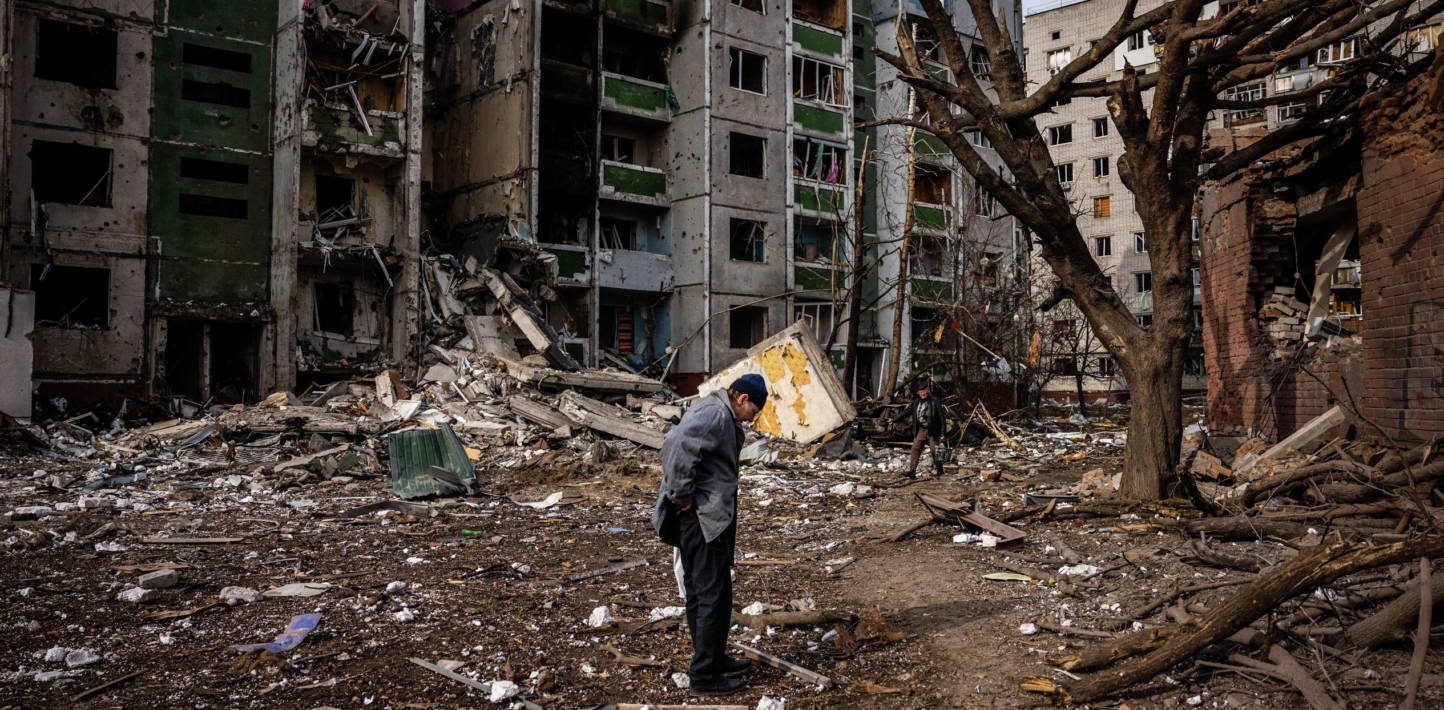
©DIMITAR DILKOFF/AFP via Getty Images

On the first day of the Russian invasion of Ukraine my first words were that ‘the invasion of Ukraine by Russian forces should be opposed by all socialists.  It will deliver death and destruction and strengthen division between the workers of each country . . . ‘

The subsequent war has certainly led to many deaths and massive destruction and the division between the workers of each country has certainly deepened. I have written around 60 articles on the war from the view that the working class and socialists should support neither Ukraine nor Russia but should oppose both by taking an independent position against the war.

If you read no more than the first few sentences of the original article you may be prompted to ask yourself the question – why, if you opposed the Russian invasion, do you not support Ukraine whose people are oppressed because of it?

Within this question are two issues: are the Ukrainian people oppressed by the war and why do you not support Ukraine? 

It might be thought that I have surreptitiously changed the question from one of the Russian invasion to one of the war.  Over the many sixty posts I have explained that who fired the first shot does not determine the nature of the war and since Marxists are not pacifists it may come to pass that the working class will ‘fire the first shot’ in a war against capitalism.

I have explained that the war was provoked, contrary to the many claims otherwise, by Western imperialism using Ukraine as the willing proxy for its war against Russia. Ukraine had already built up a very large army with the help of NATO, had committed itself to joining it, and had also committed itself to reoccupy regions already taken by Russia that could reasonably be thought to oppose such Ukrainian occupation.  In other words, war was inevitable given the objectives and policies of both states.  Being inevitable does not mean we oppose it less but rather oppose it more strongly for it is thereby not an accident or mistake but derives the character of the warring states.

It might be argued that it matters that Russia occupies parts of Ukraine and by virtue of this imposes oppression on its population, so that this should determine support for Ukraine.  In searching for the correct approach, we might refer to Lenin on national oppression, where we will read the following, written in 1916:

‘  . . . hardly anybody would risk denying that annexed Belgium, Serbia, Galicia and Armenia would call their “revolt” against those who annexed them “defence of the fatherland” and would do so in all justice. It looks as if the Polish comrades are against this type of revolt on the grounds that there is also a bourgeoisie in these annexed countries which also oppresses foreign peoples or, more exactly, could oppress them, since the question is one of the “right to oppress”. Consequently, the given war or revolt is not assessed on the strength of its real social content (the struggle of an oppressed nation for its liberation from the oppressor nation) but the possible exercise of the “right to oppress” by a bourgeoisie which is at present itself oppressed. If Belgium, let us say, is annexed by Germany in 1917, and in 1918 revolts to secure her liberation, the Polish comrades will be against her revolt on the grounds that the Belgian bourgeoisie possess “the right to oppress foreign peoples”!’

‘There is nothing Marxist or even revolutionary in this argument. If we do not want to betray socialism we must support every revolt against our chief enemy, the bourgeoisie of the big states, provided it is not the revolt of a reactionary class. By refusing to support the revolt of annexed regions we become, objectively, annexationists. It is precisely in the “era of imperialism”, which is the era of nascent social revolution, that the proletariat will today give especially vigorous support to any revolt of the annexed regions so that tomorrow, or simultaneously, it may attack the bourgeoisie of the “great” power that is weakened by the revolt.’ (Lenin, The Discussion on Self-Determination Summed Up)

When Lenin was writing these lines during World War I Belgium was an imperialist power with an appalling record of brutal oppression in the Congo, yet Lenin opposed its annexation.  Ukraine is not an imperialist power but it has contributed to imperialist adventures in Iraq and Afghanistan and has pursued membership of the major imperialist military alliance.  It is not some colonial victim.

If it is claimed that this example of Belgium warrants support for Ukraine today then we need to understand exactly what Lenin was saying and take relevant factors into account, including that already mentioned – that Ukraine was making ready to escalate the existing low-level war.

Lenin referred to the annexation of Belgium, not to its defeat.  In fact, at that time, Lenin was in favour of the defeat of all the imperialist powers.  He also refers to the need to ‘support every revolt against our chief enemy, the bourgeoisie of the big states, provided it is not the revolt of a reactionary class.’ The alliance of Ukraine is with precisely the largest of imperialist ‘big states’ – the United States – so supporting Ukraine would hardly be consistent with his analysis.

The Ukrainian war is a ‘revolt of a reactionary class’, which we cannot support; we cannot support war by this class carried out by its state that is precisely the instrument everywhere of subordinating and repressing the working class and oppressed.  This state and the Governments that sat upon it promised its people peace and delivered it into war.

It is utterly stupid, however, to then do what some self-proclaimed Marxists have done, which is to support Russia fighting ‘our chief enemy, the bourgeoisie of the big states.’  This ignores that Russia has its own bourgeoisie and is a big state itself, and involved in an alliance with another even bigger big capitalist state called China.  Some of these socialists think it progressive if US hegemony is weakened or overturned by the growing power of this alternative capitalist alliance, forgetting that if this happened this alliance would then be ‘our chief enemy’ that they would have supported climbing into the saddle of world imperialism.

So, was Lenin wrong to say that ‘If we do not want to betray socialism we must support every revolt against our chief enemy, the bourgeoisie of the big states, provided it is not the revolt of a reactionary class’?  Not at all, for we have to remember that the world he was referring to was made up of a small number of imperialist powers and a large number of colonies, and that even though these colonies were fighting for independence and not for socialism their struggle against the imperialist powers was justified and to be supported.  He was decidedly not in favour of supporting one capitalist alliance against another and damned every self-proclaimed socialist who did so.  Just as today we should damn as betrayers of socialism those that would support Ukraine and its imperialist backers or, alternatively, Russia. 

It is therefore necessary to do what Lenin and Trotsky always advised, to treat reality as it is, concretely, and not schematically or to some pre-determined purpose alien to real conditions.  So, it is not irrelevant that far from support for Ukraine being an example, as Lenin put it, of ‘support [for] every revolt against our chief enemy, the bourgeoisie of the big states’; support for Ukraine would place us on the same side, in support of, ‘the bourgeoisie of the big states’, including the US and its NATO allies.

The Ukrainian state and Armed Forces are utterly reliant on Western imperialism for money and weapons and could not continue the war without them.  When we are called upon to support ‘Ukraine’ we should remember that ‘Ukraine’ is a capitalist state and definitely not to be identified with its people, which it has driven into war against their interests and on its behalf.  It wages war for its own reasons and like every other capitalist state, these involve the subordination and exploitation of its working class who today are drafted into a war in which they are being slaughtered.  To a very great extent this state has become a proxy and extension of US imperialism and NATO.  This cannot credibly be denied even by those supporters of ‘Ukraine’ (i.e. the Ukrainian state), who must therefore rest this support on some moral claim that, because it cannot rest upon reality or any understanding of the class forces involved, is worse than useless.

The fundamental cause of the war and of the Russian invasion was, and is, the extension of the military alliance of ‘the bourgeoisie of the big states’ into Ukraine in its attempts to subordinate Russia.  As we must repeat, this does not mandate support for Russia, but the character of the war is determined by this capitalist competition.  We can no more support Russia because of some possible oppression by the United States than Lenin could support annexation of Belgium because of some future possible imperialist oppression by it.  Our opposition to an existing capitalist war cannot be based on the possible future baleful consequences of defeat for one of the warring states.  So, what of Ukrainian oppression?

Some on the left have claimed there are two wars going on, one of which is a proxy war between the US and NATO against Russia, and one of Ukrainian national liberation.  I have dealt with this argument before so will not repeat it now.  There is only one war and support for Ukraine by socialists will not change the outcome should it win with the support of the US and NATO – they will determine the character of any ‘victory’.

Back to part 2

Forward to part 4

Oppressor and Oppressed (2) – Palestine and beyond

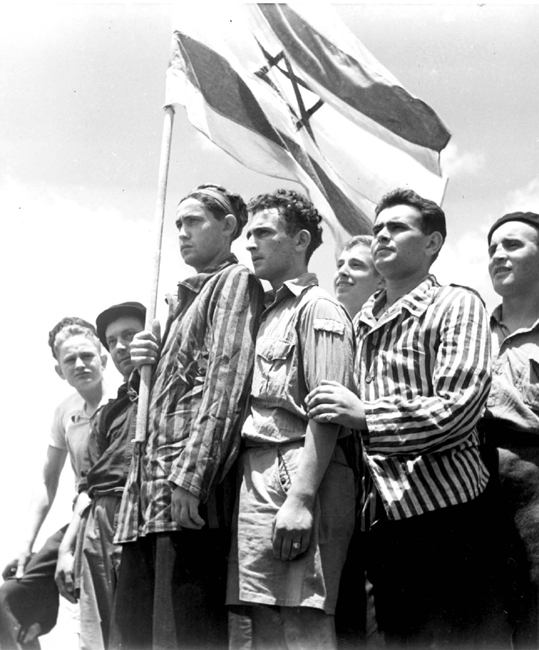
Buchenwald Concentration Camp survivors arrive in Palestine in 1945.

If ‘it is all very simple. We support the struggle of the oppressed’ it should not be difficult to identify who they are, and usually it isn’t, but not always.  What their oppression consists of is sometimes harder and how it is to be remedied harder still.  When I say harder, I mean that there is usually more dispute about it, not that there is something intrinsically difficult to determine but rather that there are fundamental differences about how it may be remedied, which in turn determines how it is understood.

For example, intersectionality identifies multiple oppressions and their combination but in doing so also identifies multiple oppressors and a hierarchy of oppression that can act to divide the oppressed into competing groups, with no joint and common project to overcome their oppression.  This series of posts deals with national oppression but even here these problems are raised.

Current events in Palestine illustrate some problems.   Jews are among histories victims and their treatment by fascism during the Second World War has become symbolic of their whole history of oppression.  The state of Israel has appropriated this symbolism to assert its legitimacy and rights, except these rights include the claim to Palestine as a state for the Jews, a Jewish state.  This has included the ethnic cleansing of the indigenous Palestinian population, a project that continues to involve dispossession and genocide.  The history of oppression and continued antisemitism against Jews is waved like a shroud to justify the claims of the Zionist movement, which proclaims a political programme and practice that involves oppression of the Palestinians.

These claims were accepted by many and it has taken decades of Palestinian oppression to reverse the sympathy many have had for the Jewish state. It should not have taken so long and stands as a warning against too simple an understanding of oppression and the claims of the oppressed. History is not a tale of good versus evil.

Marxism poses the working class as the force that can create the conditions for the ending of all oppression, whether based on class, sex, race, nationality or religion etc.  Since none of these will be ended without struggle it proposes a political programme to encompass all of them and sets out principles to judge the policies and strategies to pursue them.  As Marx once said, philosophers have only interpreted the world in various ways, the point is to change it.  To change it we have to interpret it correctly.

If we take the two wars currently raging in Gaza and Ukraine we are faced with the prospect of their expansion; so we need to understand the context in which they developed and how they might spread.  The war in Ukraine had not even begun before the United States threatened China by imposing economic sanctions, first by Trump and then by Biden, with warnings that it will intervene militarily in Taiwan.  Biden has now talked about an ‘inflection point’ in history, a decisive turning point affecting the whole world.  

Western powers have invested so much armed support to Ukraine they have admitted running out of some types of ammunition while promising to rectify this through massive rearmament, reminiscent of the build up of arms before the First and Second World Wars. A US general has predicted the possibility of war with China by 2025.

To think, therefore, that the wars in Gaza and Ukraine are unrelated events and are not expressions of the potential for a world-wide catastrophe is to feign woeful ignorance.  A response that starts from identifying the oppressed in Gaza and Ukraine and championing their cause does not get near understanding the stakes involved and what is necessary in response.

The Palestinian people are facing ethnic cleansing that in its purpose and execution is bleeding into genocide.  At a recent Palestine solidarity demonstration in Belfast a Palestinian speaker repeatedly thanked Israel for demonstrating its open commitment to destruction of the Palestinian people and to its murderous character, its dispensing with the normal lies and deception practiced by Western politicians.

This open declaration of barbarism would not be possible without the support of Western imperialism that demonstrates its full agreement to Israeli actions and revealing its own murderous character.  Rule by the capitalist class in most Western countries has ordinarily been based on some level of consent, or at least acquiescence, but their support for Zionist genocide is tearing a veil from the ugly face of capitalism.

This is the reason for the opposition to demonstrations in support of the Palestinian people, because they are objectively, and more and more subjectively, demonstrations against western governments and by this fact western imperialism.  In circumstances where this imperialism, under the hegemony of the United States, threatens ever wider and even greater cataclysmic conflict in pursuit of US hegemony, this threatens the support or acquiescence of their own working classes and thereby US dominance.

As we have said before, the Palestinian struggle is not just about Palestine– the world-wide demonstrations of support are proof of this.  The current slaughter is the continuation of the Zionist project and the Palestinian people are calling for a permanent solution before it completes.  By themselves the Palestinian people cannot prevent it and both an immediate and lasting ceasefire and creation of a free Palestine can only arise from a wider political struggle and revolutionary process.

This involves not only opposition to the Zionist state but to the reactionary Arab regimes that oppress their own people and seek increased collaboration with Israel.  Identifying the Palestinian people as oppressed does not identify how they can be free from oppression.  To be on their side means recognising this by including the vast majority of the Arab people in a struggle against their oppression.  Sweeping away the reactionary Arab rulers also includes disposing of the reactionary leadership of the Palestinian Authority. 

If the ending of one oppression is to succeed, and not to lead to another, it means embracing Jewish workers in Palestine, while also recognising that this necessarily involves the defeat of Zionism, with its project of Jewish subordination of the Palestinians and other Arab populations.  The argument that the possibility of a future oppression means that the current Zionist one must be accommodated or conciliated must be rejected; the possibility of a future oppression can never justify acceptance of current oppression but rather helps define how it should end.

The support given to the Zionist state by western imperialism means that even this is insufficient.  At the end of the day only the defeat of this imperialism, which can only be definitively carried out by its working class, can remove the decisive support available to the Zionist state.  The demonstrations in solidarity with the Palestinian people are therefore part of the same struggle that must become conscious of its own nature.

This is what imperialism fears most.  I remember being on the million-plus demonstration against the Iraq war in London, alongside many others across the world.  They did not prevent British involvement because the demonstration illustrated that the passive slogan ‘not in my name’ only dissociated the demonstrators from the actions of their governments but, by remaining at simple appeals to their ruling class, did not advance any project to remove them.

We can see from the barbaric oppression of the Palestinians that recognition of their plight as an oppressed people is only the first step.  The next are to understand how this oppression was created, how it persists and how it can be removed only by going beyond appeals to those supporting the oppression to end it.  Already, workers in Barcelona and Belgium have decided to take things into their own hands by blocking the supply of arms to Israel.  The extension of this across the world would be an enormous step towards ending the destruction of Gaza and attacks in the West Bank and against their own ruling class.

The oppression of the Palestinians thus raises many wider questions because it has a long history and involves the rest of the world.  No solution is possible that ignores this history or what is happening elsewhere.  War is an inevitable product of capitalism and these wars are the most recent of the very many wars that it has created, and will continue to create, unless a movement is created not simply to opposes this or that oppression but the system that perpetually creates all of them.

For many young people the oppression of the Palestinian people has opened their eyes to the need for political action to defend an oppressed people but their failure to take similar action in the much bigger war in Ukraine, or to appreciate the potential for even greater conflict, shows that they need to learn the lessons from the failures of their older generations, who opposed oppression but have failed to end it.  So it is not quite ‘all very simple’?

‘We support the struggle of the oppressed’ is good but there is an enormous problem when you oppose western imperialist intervention in Palestine but sit back or support it in Ukraine.

A look at the war in Ukraine is next.

Back to part 1

Forward to part 3

Oppressor and Oppressed (1) Introduction

What attitude should we take to resistance movements, such as Hamas?  Boffy’s Blog has a critique of a letter submitted to the ‘Weekly Worker’ that answers this question.  He particularly criticises the following paragraph:

Lazare says that Marxists do not side with rightwing groups claiming to speak in the people’s name. Wrong. In the 1950s we supported Eoka in Cyprus against the British. Likewise we supported the IRA. Lazare fails to understand that the nationalism of the oppressor and oppressed is not the same. It is all very simple. We support the struggle of the oppressed.’

This opens up a range of issues, but let’s start by breaking them down:

‘Lazare says that Marxists do not side with rightwing groups claiming to speak in the people’s name. Wrong.’

This claim, I think, is wrong.  Why would we – socialists/Marxists – side with right-wing groups?  What would these groups be doing that would warrant support?  Any anti-colonial or anti-imperialist struggle they would be involved in might put us ‘on the same side’ of such a struggle, only so long as they were actually involved in struggle, but would not mean that ‘we side with them’.  Any such struggle they carry out against imperialism will not be one against capitalism, i.e. not be waged against the system that at a certain historical stage we call imperialism.

They will not seek the emancipation of the working class and will seek instead the creation of a new capitalist state.  They will therefore have, or seek to advance, common class interests with the oppressor, therefore making their opposition defective, temporary and prone to betrayal.  They will not seek to make the working class the leadership of the struggle or seek to guide it to overthrow capitalism but will seek to thwart those that do.

To understand this it is helpful to defiine the class nature of the groups we are supposed to side with.  These can be bourgeois, or more often petty bourgeois, in which case it is necessary to see them as inimical to the interests we serve and as rivals, even if we sometimes are temporarily ‘on the same side’ with them in any particular struggle or issue at any particular time.  In all cases the socialist movement must organise itself separately from them and against them.  

‘In the 1950s we supported Eoka in Cyprus against the British. Likewise we supported the IRA.’

Here, I will limit myself to the Marxist approach to the IRA.  The political tendency I belonged to did not support the IRA.  We did not endorse its programme and did not support its armed struggle.  We took the view – going back to James Connolly – that, as with the whole tradition of Irish republicanism, it was a revolutionary nationalist movement that was united around the principle of armed struggle, a struggle that was parasitical on the mass anti-imperialist struggle and was bound to be defeated, which it was.

This did not mean that we were not ‘on the same side’ in a struggle against imperialism; did not mean that we did not defend it against charges of being a purely terrorist and criminal organisation; did not work with republicans in campaigns against British imperialist repression, or did not support a united Ireland and the smashing of the Northern State.  Tactical cooperation in united campaigns were possible and existed; but we organised separately and under our own banner and not as supporters of Irish republicanism or its movement.  The formula ‘unconditional but critical support’ did not apply.

To ‘give support’ must be taken to mean political support arising from political agreement and no such agreement existed between Marxism and Irish republicanism and obviously does not exist now that it has surrendered its own programme.

‘Lazare fails to understand that the nationalism of the oppressor and oppressed is not the same.’

Whether Lazare understands this or not is not what I want to address.  I want to agree that ‘the nationalism of the oppressor and oppressed is not the same.’  The former is reactionary, and the latter can have a democratic content that socialists would seek to advance.  However, not being the same does not mean that we support the nationalism of the oppressed, which is the usual next step that many mistakenly take.

We are not nationalists of any sort or variety and identification of some democratic content to any nationalist cause does not make us so.  Our support for the struggle against colonialism or imperialism is based on the interests and politics of the working class, which are universal across nations, both for the oppressed and the oppressor nations.

Nationalism, no matter what its variety, places primacy on the nation and asserts that it creates some separate and common interest that encompasses all its members.  Socialists and Marxists reject the claim that all the people within a nation have common interests, even (especially) in opposing colonial or imperialist rule, because they are impacted differently by this rule and thereby have different interests in removing it.

‘It is all very simple. We support the struggle of the oppressed.’

In general socialists and Marxists do ‘support the struggle of the oppressed’ but it is not ‘all very simple’ because we do not start from this assertion but from the interests of the working class and the struggle for socialism.  More will be said about this in a future post.

Supporting the struggle of the oppressed against their oppression (and not for any other reactionary objective) does not mean we necessarily support the organisations leading their struggle or their methods.  This is another step that many mistakenly take but this is based on assumed moral obligations and not on political accordance, unless one shares the same political programme and strategy as these organisations.

In the past this step has led the British ‘Troops Out Movement’ to move from support for the withdrawal of the British Army from Ireland – opposition to the oppressor – to essentially support for Sinn Fein, even after this movement had effectively abandoned its struggle against British rule.

This is itself an example of the mistake of supporting the nationalism of the oppressed because this nationalism will, as history has repeatedly demonstrated, be ‘defective, temporary and prone to betrayal’ even of its own proclaimed objective.  Even in success, anti-colonial movements have created new capitalist states in which ‘national liberation’ has encompassed the continuation of social and political oppression.

Marxism identifies the working class as the universal class that is the only force that can create the conditions to end all oppression.  This includes national oppression. The working class is not the most oppressed section of society so moral claims based on those suffering the most extreme poverty, exclusion, prejudice or discrimination, or some ideal of justice does not explain its role or potential emancipatory function.  This is true across the world, in all its struggles and applies to all of them.

Forward to part 2