A friend sent me an article on the Counterpunch website that looked at Hamas and the October 7 attack that precipitated the current genocide in Gaza, which I will look at it in the next post. It raises issues about solidarity with oppressed groups by socialists and what, if anything, socialists have to say that is different. Having something different to say isn’t in itself a reason to say it, but if socialists think they have a distinctive view of the world and don’t have anything very different to say it implies that their socialism isn’t very important.
Socialism is international or it is nothing. By this we mean that the cause of the working class in other countries is our cause and that socialism cannot exist within a single country. This means that we seek to advance the socialist struggle of the workers in every country and that a victory in another country is a victory for us. This is the material basis of solidarity for socialists.
Of course, in doing so we oppose oppression in every country, but you do not need to be a socialist to do this and we are socialists not just because we oppose oppression but because we believe only socialism – only the actions of the working class – can defeat oppression and establish freedom. And this goes for the struggle in Palestine as well, although often these considerations appear to disappear when socialists discuss it.
Instead, we get statements such as the following – ‘that we must not only oppose oppression but support the oppressed, the right to resist oppression and the resistance itself. We also get formulas that we should not take sides in intra-Palestinian political disputes, which only the Palestinians should engage in and determine.
If we work backwards – what is this last idea but a form of identity politics? That Palestinians are a group apart with ideas and movements separate from the rest of the world’s struggles with nothing to learn from them; nothing to learn from the long history of working class struggle across the planet? If they are so different as to have nothing to learn then they would have nothing to teach us either. Either they are uniquely blessed with a political leadership beyond criticism because it never gets anything wrong, or it gets it wrong but is beyond help. If neither of these are true, is it because we have no right to speak about their struggle or only to do so to voice our support? (Do we take this view about every struggle: of the French working class or German or any other?).
If it is the last argument, this simply leaves us back at the start and fails to argue why socialists have no right to state what we think is good or bad for the struggle; one that we have said is part of our own world-wide struggle and on which we are also at least partly dependent. In short, the international struggle for socialism is something that involves Palestine and therefore involves us.
It might be argued that the struggle in Palestine is not about socialism, but this is no answer since socialists have a position on all struggles against oppression and these very often do not immediately raise the possibility of a socialist victory. Otherwise, in today’s condition of the class struggle, we would silence ourselves across most of the world.
Of course, what we have to say should be within the framework of solidarity with the oppressed and should have something relevant and positive to contribute, but part of our solidarity is that we believe we do have something distinctive to contribute, not least because for us, solidarity is not an act of altruistic humanitarian concern for others but is part of our own fight. The only basis for refusing to engage in debate on the way forward for the Palestinian struggle is the belief that it is separate from us: ‘In our thousands! In our millions! We are all Palestinians!’ becomes not only untrue (we are not suffering genocide!) but is also denied and rejected by the claim that we are not permitted to offer our own views.
This, however, is the most common view of solidarity, which thus becomes a sort of activist charitable exercise fed by the politics of self-determination of nations. The socialist view is the primacy of self-determination of the working class, as an international class that can unite politically and organisationally, which is obviously impossible without debate, argument and disagreement.
Where does this leave us with the formulation that we must not only oppose oppression but support the oppressed, the right to resist oppression and the resistance itself?
First, even oppressed people’s and nations are composed of classes involving class exploitation and oppression. Genocide only partly qualifies this, as those with lots of money will always find a way to use it to their benefit. Class divisions have a bearing not only on whether and how to resist oppression but also on the objectives of resistance. Class struggle doesn’t disappear and socialists above all should recognise this in their solidarity and within the solidarity movement.
So what about the right to resist? Socialists are in favour of the working class and other oppressed groups resisting exploitation and oppression but do so on the basis that capitalism exploits and oppresses, and that class struggle exists as a result. As Marxists we understand that capitalism gives rise to the potential for socialism because of the nature of its development. From this arises the struggle for socialism, not some moral right to resist that is independent of the circumstances and conditions in society. This is important for how we resist, which we will explore in relation to Gaza in the next post.
In general, however, socialists are always to the fore in advocating resistance to exploitation and oppression, with the view that advancing towards the alternative is what matters above all. We therefore support the oppressed by seeking to end their oppression, which ultimately can only be through the working class becoming the ruling class of society.
This leads to the final claim, that those in solidarity with the oppressed must also solidarize with the resistance and with the resistance movement, and this is where the biggest difference arises. Since our view of solidarity is not dictated by any moral assertion there can be no moral claim on us to support resistance movements that are themselves reactionary, and this obviously includes Islamic political movements (as opposed to democratic and socialist movements composed of religious believers).
Solidarity arises from common interests and purposes. What common interests and purposes arise between reactionary movements in conflict with imperialism and socialists? To ask the question is almost to answer it. Both can be opposed to imperialism on the grounds of some common effects of its rule or intervention but reactionary movements that come into conflict with imperialism are not anti-capitalist, never mind socialist, so their opposition is limited and qualified. Ultimately their interests and purposes are opposed to those of socialists and is the reason for separate organisation and politics in the first place.
Since our primary interests and purposes are separate any common activity is also limited and qualified and there can be no unqualified or unconditional support. Common objectives may allow episodic common actions and organisational cooperation to achieve them but there are no grounds for avoiding criticism or separate organisation.
We therefore do not give political support to reactionary movements on the grounds that they embody the resistance of the oppressed, because that resistance is politically reactionary and cannot represent their full and complete interests. Whether these movements are in our own country or another does not fundamentally change this but at most determines the emphasis to be placed on opposition to our own state for whatever role it plays in the oppression.
In practice many socialists acknowledge this while denying it in words and will criticise the Palestinian Authority but not Hamas, for example on the illogical grounds that ‘denunciation of HAMAS is simply a mechanism for supporting genocide.’ Such an overblown statement scarcely warrants a response. See below a better statement by this organisation to the Belfast rally pictured above.
Hudis claims that in those countries where capitalism had been overthrown the statist ‘socialism’ that existed ‘eliminated private property and the ‘free market’ by bringing the process of distribution and circulation under the control of the state. But they did little or nothing to transform production-relations. Concrete labour was still reduced to a monotonous, routinised activity through the dominance of abstract labour. Abstract labour continued to serve as the substance of value.’ (p104)
By this is meant that social labour was fragmented and produced commodities that exchanged with each other based on the abstract labour contained within them, which was determined by the labour time necessary to produce them and not by the conscious decision on the distribution of social labour according to a preconceived conception of need and human development. Almost immediately he states that ‘instead of a surplus of products that cannot be consumed (which characterises traditional capitalism), there is a shortage of products that cannot be produced.’ (p 104).
However, this eventuality demonstrates that these societies, while not abolishing alienation – far from it – had abolished the market to the degree that meant all commodities were not produced according to the socially necessary abstract labour required to produce them and not under capitalist relations of production with a labour market producing a free working class employed by capital, either private or state. Even the creation of healthy worker’s states will not immediately end alienation, by definition the continuation of any state denotes the continuation of classes, however much their antagonism is attenuated.
Further, as Marx explained in Critique of the Gotha Programme: ‘What we have to deal with here is a communist society, not as it has developed on its own foundations, but, on the contrary, just as it emerges from capitalist society; which is thus in every respect, economically, morally, and intellectually, still stamped with the birthmarks of the old society from whose womb it emerges. Accordingly, the individual producer receives back from society – after the deductions have been made – exactly what he gives to it. . . .’
‘But one man is superior to another physically, or mentally, and supplies more labour in the same time, or can labour for a longer time; and labour, to serve as a measure, must be defined by its duration or intensity, otherwise it ceases to be a standard of measurement. This equal right is an unequal right for unequal labour. It recognizes no class differences, because everyone is only a worker like everyone else; but it tacitly recognizes unequal individual endowment, and thus productive capacity, as a natural privilege. It is, therefore, a right of inequality, in its content, like every right.’
‘Further, one worker is married, another is not; one has more children than another, and so on and so forth. Thus, with an equal performance of labor, and hence an equal in the social consumption fund, one will in fact receive more than another, one will be richer than another, and so on. To avoid all these defects, right, instead of being equal, would have to be unequal.’
‘But these defects are inevitable in the first phase of communist society as it is when it has just emerged after prolonged birth pangs from capitalist society. Right can never be higher than the economic structure of society and its cultural development conditioned thereby.’
Hudis is correct that it is the active role of labour that creates private property, but when he quotes Marx saying that ‘though private property appears to be the reason, the cause of alienated labour, it is rather its consequence, just as the gods are originally not the cause but the effect of man’s intellectual confusion. Later this relationship becomes reciprocal’, he leaves out the last sentence, which makes (bourgeois) private property constitutive of this alienated labour. (Marx quoted in Hudis p 61) Unlike ‘the gods’, this private property is real.
Marx says: ‘It is only at the culminating point of the development of private property that this its secret re-emerges, namely, that on the one hand it is the product of alienated labour, and on the other it is the means through which labour alienates itself, the realization of this alienation.’ C.W.3, 280;(Economic and Philosophical Manuscripts, Early Writings, p 392)
“Communism is the positive supersession of private property as human self- estrangement, and hence the true appropriation of the human essence through and for man; it is the complete restoration of man to himself . . . which takes place within the entire wealth of previous periods of development. (Marx and Engels Collected Works Vol..3, p 296; Early Writings p 348).
Elsewhere Hudis quotes Marx that ‘[P]rivate property, for instance, is not a simple relation or even an abstract concept, a principle, but consists in the totality of the bourgeois relations of production…a change in, or even the abolition of, these relations can only follow from a change in these classes and their relationships with each other, and a change in the relationship of classes is a historical change, a product of social activity as a whole’ (p83 -84)
‘Marx grasps the situation as one of labour’s self-alienation in and through private property. Only if labour is grasped as the overriding moment in the alienated labour/private property complex can the conditions of a real transcendence of estrangement be established. Grounded in the alienation of labour, the immanent movement of private property necessarily produces ‘its own grave diggers’ (in the famous phrase of the Communist Manifesto). But in the dialectical opposition of private property and alienated labour the principal aspect of the contradiction then becomes the latter; hence Marx says that the fall of wage-labour and private property – ‘identical’ expressions of estrangement – takes place ‘in the political form of the emancipation of the workers’. Marx and Engels Collected Works Vol 3 p280).
Private property in its capitalist form entails the capital-wage labour relationship – the relations of production between capital and working class – from which class struggle arises, which struggle must eventuate in social revolution that makes the working class collective owners of the means of production and whose political emancipation entails overturing the capitalist state and creation of its own.
As Hudis himself notes: ‘Communism does not deprive man of the power to appropriate the products of society; all that it does is to deprive him of the power to subjugate the labour of others by means of such appropriation’.
Hudis continues: ‘In the Manifesto, Marx also writes that ‘the theory of the Communists may be summed up in the single sentence: Abolition of private property’. It may seem that Marx has muted, if not moved away from, his perspective of 1844, in that the abolition of private property here seems to be posed not just as a mediatory stage, but as the ultimate goal. However, this would be too facile a reading. Marx focuses on the need to negate private property because it is the most immediate expression of the power of bourgeois society over the worker. Through the bourgeois property-relation, the workers are forced to sell themselves for a wage to the owners of capital, who appropriate the products of their productive activity. Without the abolition of this property-relation, the economic and political domination of the bourgeoisie remains unchallenged.’ (Hudis p82-3)
The abolition of bourgeois private property means the overthrow of the capital-wage relationship and exploitation, which are the grounds for the abolition of all classes. This objective is therefore not just required because ‘it is the most immediate expression of the power of bourgeois society over the worker’ but because, to put it in its active sense, it is thereby the most immediate expression of the power of the workers to overcome the exploitation and oppression of bourgeois society.
It is why Marx also said in The Communist Manifesto that “The distinguishing feature of Communism is not the abolition of property generally, but the abolition of bourgeois property . . . In short, the Communists everywhere support every revolutionary movement against the existing social and political order of things. In all these movements, they bring to the front, as the leading question in each, the property question, no matter what its degree of development at the time.’
In his book Marx’s Concept of the Alternative to Capitalism, Peter Hudis lays emphasis on the statement by Marx that ‘ it becomes clear that though private property appears to be the reason, the cause of alienated labour, it is rather its consequence, just as the gods are originally not the cause but the effect of man’s intellectual confusion.’
He argues that private property is not the key to the emancipation of the working class but rather alienated – estranged – labour. He quotes Marx: ‘when one speaks of private property, one thinks of dealing with something external to man’ but Hudis goes on to point out that ‘Property is, after all, the product of human activity. Classical-political economy reverses matters, by presenting the predicate – property-relations – as the determining factor while ignoring the alienated nature of the workers’ activity.’ (p62)
For Hudis, this has implications for the centrality of the abolition of private property to those seeking this emancipation: ‘since private property is an objectified product of human activity, the critique of private property does not satisfy the requirement of reducing all emancipation to ‘relationships to man himself’. [quoting Marx] The critique of private property still deals with what is ‘external to man’. Marx’s normative principle of human emancipation – which he reiterates in 1844 as ‘man’s relation to himself only becomes for him objective and actual through his relation to the other man’ – drives him to look deeper than the property-relation. This takes him to his theory of alienated labour.’
As noted in the previous post, he quotes Marx ‘When one speaks of labour, one is directly dealing with man himself. This new formulation of the question already contains its solution.’ For Hudis, the solution is put this way:
‘It follows from the analysis that, while private property must be abolished – since it separates workers from the conditions of production – that alone does not get to the heart of the problem. The heart of the problem is abolishing capital itself, by ending the estrangement in the very activity of labouring. We have reached the conceptual pivot of what Marx sees as the alternative to capitalism.’ (p63). He later concludes that ‘In contrast to how Marx was understood by much of twentieth-century ‘Marxism’, our exploration indicates that his real object of critique was not the market or private property, but rather the social relations that underpin them.’ (p92)
Hudis continues: “Two points are worth noting from this. First, wages, like property, are results of human activity. They are made necessary by the existence of alienated labour. To ignore alienated labour while altering wage- and property- relations through the elimination of private capitalists does not undermine the necessity for a ruling class to impose forced labour on the workers. Society as a whole now becomes the ‘abstract capitalist’.” Hudis states this in referring to those socialists who think higher wages are socialist or that the existence of wages in itself is compatible with socialism, since ‘they are paid to the worker on the basis of the capitalist’s ownership of the products of labour.’ (p 64) Specifically, his reference to society becoming ‘the abstract capitalist’ refers to Marx’s view of this as a necessary concept arising from Proudhon when the latter conceives of the equality of wages.
In relation to ‘society’ becoming the ‘abstract capitalist’, Marx is quoted as saying that ‘‘above all we must avoid again postulating “society” as an abstraction vis-à-vis the individual. The individual is the social being.” Hudis says that ‘Marx is not trying to wall humanity into the ‘social’; he rather seeks a mutual compatibility between individual and general interests. Yet exactly how does the present mode of production compel civil society to assume an abstract form? The answer is the social division of labour. By forcing individuals to adhere to a social division of labour, individuals become radically separated from one other. This separation takes on a fixed form, regardless of their actual talents and abilities. Society becomes an abstraction that governs the lives of individuals, instead of the other way around.’ Quoting Marx: ‘As long as man remains in naturally evolved society, that is, as long as the cleavage exists between the particular and the common interest, so long, therefore, as activity is not voluntary, but naturally, divided, man’s own deed becomes an alien power opposed to him, which enslaves him instead of being controlled by him.’ (p 77 – 78)
How is this situation to be overcome? ‘By abolishing the social division of labour’, says Hudis, (p78). He makes the point that Marx ‘sees the process of revolutionary transformation not as a singular act, as the negation of private property and political overthrow of the bourgeoisie, necessary as that is, but as a consistently self-critical social revolution, that is, as a process of permanent revolution. Crude communism – the abolition of private property – is only the first negation. It is a necessary but insufficient step towards liberation. To achieve ‘positive humanism, beginning from itself’ much more is needed – the negation of the negation.’ (p73)
The end of alienated labour entails the end of the social division of labour but the overthrow of capitalism will not immediately end this division or the alienation arising from it. It will not immediately, or even rapidly, align individual interests with those of others or of ‘society’ as a whole: ‘History will lead to it; and this movement, which in theory we already know to be a self-transcending movement, will constitute in actual fact a very rough and protracted process.’ (Hudis, quoting Marx emphasis added, p 75). In this statement Marx is not talking about the end of the social division of labour but of abolishing ‘actual private property.’
The overthrow of capitalism and the beginnings of a new society will not instantly realise these aims; alienated labour will not immediately end. Private property relations of production entail alienation but alienation does not immediately disappear with them, so that alienated labour will still exist upon the overthrow of capitalist property relations. Capitalism is not therefore defined by alienated labour but by a particular form social relations that give rise to a specific form of alienated labour; it will still, ‘after the revolution’, be necessary to develop the forces of production, as Marx stated in The Communist Manifesto and still require that much labour remains necessary, understood in Marx’s terms as required to meet the needs of the working population and those dependent on them, while surplus labour, required to develop and meet new higher needs, including more time free of labour, will grow but not yet predominate. While this is the case the division of labour will entail alienation as will the continuing, although reducing, social inequalities.
A certain compulsion of labour remains, albeit more and more voluntary and collective as the forces of production develop to the degree that the time required for necessary labour declines and the choice over the extent of surplus labour increases. Just as the state withers away after the capitalist state is overthrown and a workers’ state created, so does estranged, alienated labour also shrink and fade. The continuation of a (worker’s) state and the continuation of alienated labour does not indicate the continued existence of capitalism, whether called ‘state capitalism’ or not, but the continuation of ‘a very rough and protracted process’, as Marx outlined.
Hudis quotes Marx saying that ‘man’s relation to himself only becomes for him objective and actual through his relation to the other man’ but it is through the relations of production that are entailed by bourgeois private property, and the society upon which is developed from it, that relations to other men and women and thus to him and herself are formed and within which alienated labour exists. The centrality of these relations of production and bourgeois private property entailed in them is repeatedly advanced by Marx and Engels in their political writings and programme as we shall note in the next post.
This, as we have noted, is also advanced by Hudis, that Marx’s ‘real object of critique was not the market or private property, but rather the social relations that underpin them.’
The early Marx sought to understand the new capitalist society through a study of political economy as expounded by its disciples and critics. In doing so he faced multiple phenomena, seeking ‘to grasp the intrinsic connection between private property, greed, the separation of labour, capital and landed property; the connection of exchange and competition, of value and the devaluation of man, of monopoly and competition, etc. – the connection between this whole estrangement and the money system.’ (Marx Economic and Philosophical Manuscripts 1844)
In doing so he considered that ‘Political economy conceals the estrangement inherent in the nature of labour by not considering the direct relationship between the worker (labour) and production.’
Marx goes on to put forward the idea that in ‘our departure from a fact of political economy – the estrangement of the worker and his production . . . We have formulated this fact in conceptual terms as estranged, alienated labour.’
‘If the product of labour does not belong to the worker, if it confronts him as an alien power, then this can only be because it belongs to some other man than the worker. If the worker’s activity is a torment to him, to another it must give satisfaction and pleasure. . . . Thus, if the product of his labour, his labour objectified, is for him an alien, hostile, powerful object independent of him, then his position towards it is such that someone else is master of this object, someone who is alien, hostile, powerful, and independent of him. If he treats his own activity as an unfree activity, then he treats it as an activity performed in the service, under the dominion, the coercion, and the yoke of another man.’
‘Through estranged, alienated labour, then, the worker produces the relationship to this labour of a man alien to labour and standing outside it. The relationship of the worker to labour creates the relationship to it of the capitalist (or whatever one chooses to call the master of labour). Privateproperty is thus the product, the result, the necessary consequence, of alienated labour, of the external relation of the worker to nature and to himself.’
‘Private property thus results by analysis from the concept of alienated labour, i.e., of alienated man, of estranged labour, of estranged life, of estranged man.’
‘True, it is as a result of the movement of private property that we have obtained the concept of alienated labour (of alienated life) in political economy. But on analysis of this concept it becomes clear that though private property appears to be the reason, the cause of alienated labour, it is rather its consequence, just as the gods are originally not the cause but the effect of man’s intellectual confusion. Later this relationship becomes reciprocal.’
‘Only at the culmination of the development of private property does this, its secret, appear again, namely, that on the one hand it is the product of alienated labour, and that on the other it is the means by which labour alienates itself, the realisation of this alienation.’
The alternative to capitalism for Marx is not simply the abolition of private property but the ending of alienation: of workers from their work (as it is imposed as a necessity in order to live while not under their control as to its nature or purpose); of workers from their product (which includes products they would choose not to make with workplaces and technology that subjects them to control and determines the nature of their work); alienation from each other (they compete for resources, including employment, and are atomised by lack of collective control of the means of providing for their needs); and through all this, alienated from their essential nature as social animals working in cooperation to develop their humanity in all its richness through and with other people, who are regarded not as constraints on their freedom, as in bourgeois theory, but only through whom their freedom can be realised.
‘From the relationship of estranged labour to private property it follows further that the emancipation of society from private property, etc., from servitude, is expressed in the political form of the emancipation of the workers; not that their emancipation alone is at stake, butbecause the emancipation of the workers contains universal human emancipation – and it contains this because the whole of human servitude is involved in the relation of the worker to production,and all relations of servitude are but modifications and consequences of this relation.’
‘We have accepted the estrangement of labour, its alienation, as a fact, and we have analysed this fact. How, we now ask, does man come to alienate, to estrange, his labour? How is this estrangement rooted in the nature of human development? We have already gone a long way to the solution of this problem by transforming the question of the origin of private property into the question of the relation of alienated labour to the course of humanity’s development. For when one speaks of private property, one thinks of dealing with something external to man. When one speaks of labour, one is directly dealing with man himself. This new formulation of the question already contains its solution.’
Marx’s critique of political economy, and the conditions of estranged labour in capitalism, included the concepts of the forces of production and relations of production and the potential to overthrow the capital-wage relationship upon which they were based. Labour power is the main force of production and the relations of production are more and more dominated by the capital-wage relationship. It therefore becomes clear that the social revolution that is necessary is one not just for the working class but by it:
‘Both for the production on a mass scale of this communist consciousness, and for the success of the cause itself, the alteration of men on a mass scale is necessary, an alteration which can only take place in a practical movement, a revolution; this revolution is necessary, therefore, not only because the ruling class cannot be overthrown in any other way, but also because the class overthrowing it can only in a revolution succeed in ridding itself of all the muck of ages and become fitted to found society anew.’ (Marx and Engels, The German Ideology)
The alienation that thwarts the exercise of human powers and potentialities is the product of these forces and relations, which also provide the potential to free humanity from such alienation and allow the further development of human powers and potentialities. Bourgeois private property and alienated labour condition each other and reflect aspects of the same social relation of wage labour and capital. The overthrow of this form of social labour is not therefore something external to humanity (‘man’) but deals directly with its social relationships and therefore directly to humanity itself, as its nature for Marx is the ensemble of these relationships.
The forces and relations of production in feudal society created classes within which an individual’s identity is fixed and determined in a hierarchy by birth. As Marx puts it: ‘a nobleman always remains a nobleman, a commoner always a commoner’. (Marx and Engels, The German Ideology) Capitalism involves capitalists and workers and while there must always be capitalists and workers within it, the individuals personifying this class relationship are not always necessarily fixed. An individual may not always be a worker if she then employs labour, and a capitalist may be reduced to a member of the working class if she becomes bankrupt.
More importantly, while the peasants of precapitalist society were socially and geographically isolated as virtually self-sufficient economic units, producing almost everything they needed, the working class is part of a cooperative division of labour spanning the world (with the organisation of society corresponding to it) and organised by capitalism in such a way that, while alienated from the very powers it has created, has the potential to appropriate these powers and dispel their alienation.
This is what the abolition of bourgeois private property begins to do, with the creation of a cooperative economy and a workers’ state that defends it, together developing the forces of production and dissolving the exploitation of labour by capital.
‘The capitalist mode of appropriation, the result of the capitalist mode of production, produces capitalist private property. This is the first negation of individual private property, as founded on the labour of the proprietor. But capitalist production begets, with the inexorability of a law of Nature, its own negation. It is the negation of negation. This does not re-establish private property for the producer, but gives him individual property based on the acquisition of the capitalist era: i.e., on co-operation and the possession in common of the land and of the means of production.’
‘The transformation of scattered private property, arising from individual labour, into capitalist private property is, naturally, a process, incomparably more protracted, violent, and difficult, than the transformation of capitalistic private property, already practically resting on socialised production, into socialised property. In the former case, we had the expropriation of the mass of the people by a few usurpers; in the latter, we have the expropriation of a few usurpers by the mass of the people. (Marx, Capital Volume 1, Chapter 32 p. )
Marx explains ‘how the development of the social productivity of labour presupposes cooperation on a large scale; how the division and combination of labour can only be organized on that basis, and the means of production economized by concentration on a vast scale; how instruments of labour which, by their very nature, can only be used in common, such as systems of machinery, can be called into existence; how gigantic natural forces can be pressed into the service of production; and how the production process can be transformed into a process of the technological application of scientific knowledge.’
The development of the forces and relations of capitalist production through the socialisation of labour, necessarily includes the development of the working class, the decline of petty bourgeois (including peasant) production, and the redundancy of the capitalist class (as set out previously) and are the basis of the contradictions of capitalism that are expressed in class struggle.
This is what Marx claimed, against others, was his distinctive contribution:
‘Now as for myself, I do not claim to have discovered either the existence of classes in modern society or the struggle between them. Long before me, bourgeois historians had described the historical development of this struggle between the classes, as had bourgeois economists their economic anatomy. My own contribution was 1. to show that the existence of classes is merely bound up with certain historical phases in the development of production; 2. That the class struggle necessarily leads to the dictatorship of the proletariat; 3. that this dictatorship itself constitutes no more than a transition to the abolition of all classes and to a classless society.’ (Marx letter to Joseph Weydemeyer, Marx Collected Works Vol 39, p62 & 65)
Through this class struggle the working class is the agency by which the cooperation created by capitalism is made fully conscious, organised and reaches towards completion, through conscious planning of the instruments of production that are of such a scale that they can only be used in common. Through this cooperation production is developed to address the needs of the producers, the working class, in the activity of their production, consumption, and the all-round development of human capacities. The application of scientific knowledge will be carried out by the working class in the interests of the majority and not for the benefit of a narrow class of capitalists.
The redundancy of the capitalist class is consummated, the working class itself is abolished and with it class itself. Since the new society can only realise the interests and wishes of its majority, it is clear that the creation of such a society can only be a conscious process; it cannot as for capitalism, be the outcome of a mainly unconscious process of largely elemental economic developments. It needs a conscious historical agent, conscious of its task and how it might be achieved, collectively and freely in an egalitarian manner. How could a whole class, the vast majority within a capitalist society, do it in any other way?
In the Preface to the 1888 English edition of ‘The Communist Manifesto’, by which time Marx had died, Frederick Engels explained why it was not ‘The Socialist Manifesto’:
‘By Socialists, in 1847, were understood, on the one hand the adherents of the various Utopian systems: Owenites in England, Fourierists in France, both of them already reduced to the position of mere sects, and gradually dying out; on the other hand, the most multifarious social quacks, who by all manner of tinkering professed to redress, without any danger to capital and profit, all sorts of social grievances, in both cases men outside the working class movement, and looking rather to the ‘educated’ classes for support.’
‘Whatever portion of the working class had become convinced of the insufficiency of mere political revolutions, and had proclaimed the necessity of a total change, called itself Communist. It was a crude, rough-hewn, purely instinctive sort of communism; still it touched the cardinal point and was powerful enough amongst the working class to produce the Utopian communism of Cabet in France, and of Weitling in Germany. Thus, in 1847, socialism was a middle class movement, communism a working class movement. Socialism was, on the Continent at least, ‘respectable’; communism was the very opposite. And as our notion, from the very beginning, was that ‘the emancipation of the working class must be the act of the working class itself, there could be no doubt as to which of the two names we must take. Moreover, we have, ever since, been far from repudiating it.’
We see from the previous post that capitalism, as a transitional mode of production to socialism, is a progressive development, recognition of which is one of the hallmarks of Marxism. This, however, is not how Marxism is normally understood by its enemies, by those unfamiliar with it and even by some of its friends and self-styled adherents.
Certainly, some of these will accept that this is true in relation to previous societies, whether understood as feudalism, some form of Asiatic mode of production, or older tribal societies, but, it is argued, this is no longer the case. Capitalism has conquered the world, is now in decline and/or in its ‘death agony’, as declared by Leon Trotsky. Marx lived when only a small number of countries were capitalist in any developed sense and today it is the irrationality and barbarity of capitalism that predominates.
There are a number of problems with such a view but in this post we will mention only three. First, Marx’s view is that capitalist progress is not a serene, tranquil and untroubled process. It is not one of harmony and uniformity but one of antagonism, generated by contradictions that are often expressed in palpable horrors. It was ever thus, and today’s horrors engendered by the system are neither new nor preclude progress in the sense set out in the previous post.
Secondly, capitalism continues – albeit with its waste and degradation of humanity and the planet – to develop the forces of production and therefore the foundations for socialism. This includes massive expansion of the working class, without which capitalism does not exist. The sense of progress set out by Marx therefore continues even as it lays waste to nature and humanity, not least because these forces can be developed in such a way to further the protection of both. The alternative view is that the new society must start from somewhere very far away from being able to address these tasks and can only begin to develop the forces necessary after capitalism is overthrown, which ironically calls into question the current possibility and imperative to do so that is so much a part of this view.
Thirdly, a one-dimensional understanding of modern capitalism as regressive can easily elicit appeals to the past, to older models of society or more primitive capitalist forms, which Marx had to reject in his own day, but that are continually proffered, becoming obstacles to the replacement of capitalism by socialism. These include opposition to the centralisation and concentration of productive forces in the name of ‘anti-monopoly’ capitalism; to the growth and development of these forces on the grounds of planetary limits, or to the internationalisation of capitalism on the grounds of the protection of ‘national sovereignty’, against ‘globalisation’ etc. There are many other examples.
Opposition boils down to opposition to the socialisation of the forces of production, to the progress that capitalism has involved, and upon which future socialism depends. In this view, opposition to capitalism cannot rest on what capitalism has achieved but on its purely negative aspects, such as its exploitation and oppression. We have seen that it is precisely in the expansion of surplus labour, on exploitation as a result of the socialisation of labour, that socialism is possible. It is not capitalist crises, or its inhuman oppression or its tendency to war and destruction that will give rise to socialism but to the contradictions of the system of which these are expressions. Capitalism is essentially still the antagonistic system riven by contradictions analysed by Marx in the middle of the nineteenth century. Were it not, we would not be expounding his alternative as still relevant.
Marx did not in the least minimise the horrors of capitalism but did not reduce his opposition to capitalism to its deleterious effects, as the sole grounds for creation of a new society or the incentive to do so. To maintain a belief in socialism while abandoning his analysis necessarily involves invoking some other grounds, and since this means abandoning the material premiss of the world as it exists, it usually involves invoking principles or ‘values’ – moral claims – that cannot support it.
In 1849 Engels wrote that: “Justice”, “humanity”, “freedom”, “equality”, “fraternity”, “independence”—so far we have found nothing in the pan-Slavist manifesto but these more or less ethical categories, which sound very fine, it is true, but prove absolutely nothing in historical and political questions. “Justice”, “humanity”, “freedom” etc. may demand this or that a thousand times over; but if the thing is impossible, it does not take place and in spite of everything remains an “empty figment of a dream”. (K Marx and F Engels, Democratic Pan-Slavism, Collected Works Vol 8 p 365)
What Marx and Engels demonstrated was that ‘the thing’ – socialism – is possible because it is based on the development of existing society itself and can unfold out of it. This does not make it inevitable in the sense that this unfolding is an unconscious, inescapable process, but that it is precisely a conscious process, derived from a consciousness of what exists and its evolution.
This was expressed very early in Marx’s political development when he wrote that he did not want to ‘dogmatically anticipate’ the new world but wanted ‘to find the new world through criticism of the old one’. The task was to ‘develop new principles for the world out of the world’s own principles’ and wanted to ‘merely show the world what it is really fighting for, and consciousness is something that it has to acquire, even if it does not want to’. In a letter in 1843 he wrote that ‘It is not a question of what this or that proletarian, or even the whole proletariat, at the moment regards as its aim. It is a question of what the proletariat is, and what, according to this being, it will historically be compelled to do’.
This consciousness cannot not stop at the obvious iniquity of capitalism, which Marx didn’t fail to note; the bourgeoisie, he noted, had never ‘effected a progress without dragging individuals and people through blood and dirt, through misery and degradation’, but that through its ‘development of the productive powers of man and the transformation of material production into a scientific domination of natural agencies. Bourgeois industry and commerce create these material conditions of a new world . . .‘ (K Marx, The Future results of British rule in India, Collected Works Vol 12 p 221 and 222)
He states in Capital Vol I that ‘within the capitalist system all methods for raising the social productiveness of labour are brought about at the cost of the individual labourer; all means for the development of production transform themselves into means of domination over, and exploitation of, the producers; they mutilate the labourer into a fragment of a man, degrade him to the level of an appendage of a machine, destroy every remnant of charm in his work and turn it into a hated toil; they estrange from him the intellectual potentialities of the labour process in the same proportion as science is incorporated in it as an independent power; they distort the conditions under which he works, subject him during the labour process to a despotism the more hateful for its meanness; they transform his life-time into working-time, and drag his wife and child beneath the wheels of the Juggernaut of capital.’
‘But all methods for the production of surplus-value are at the same time methods of accumulation; and every extension of accumulation becomes again a means for the development of those methods. It follows therefore that in proportion as capital accumulates, the lot of the labourer, be his payment high or low, must grow worse. The law, finally, that always equilibrates the relative surplus population, or industrial reserve army, to the extent and energy of accumulation, this law rivets the labourer to capital more firmly than the wedges of Vulcan did Prometheus to the rock.’
‘It establishes an accumulation of misery, corresponding with accumulation of capital. Accumulation of wealth at one pole is, therefore, at the same time accumulation of misery, agony of toil slavery, ignorance, brutality, mental degradation, at the opposite pole, i.e., on the side of the class that produces its own product in the form of capital.’ (Marx, Capital Vol I chapter 25 section 4)
Marx damns the capitalist system for its exploitation and mutilation, for its domination and stultifying effects on the worker and family, and for its gross inequality, but still ‘the social productiveness of labour’ is raised.
Containers sit on the tarmac at Felixstowe Port | Dan Kitwood/Getty Images
At the end of a lecture to workers in Brussels written in 1847, Karl Marx stated that:
‘Before we conclude, let us draw attention to the positive aspect of wage labour . . . I do not need to explain to you in detail how without these production relations neither the means of production—the material means for the emancipation of the proletariat and the foundation of a new society—would have been created, nor would the proletariat itself have taken to the unification and development through which it is really capable of revolutionising the old society and itself.’
(Marx, “Wages”, Marx and Engels Collected Works, vol. 6, p 436.)
For him, capitalism had already so revolutionised society that it provided the conditions for the creation of a new one and the means to achieve the emancipation of the working class – ‘material conditions . . . that could be produced by the impending bourgeois epoch alone’ (Marx and Engels, Manifesto of the Communist Party. Collected Works, vol. 6, p 514)
Today, one very rarely reads a positive analysis of material conditions for working class emancipation created by capitalism, even though these have massively developed since Marx wrote these words, when they were really only becoming evident in one country and were too undeveloped even then. They provide the most striking proof of the potential for the development of socialism out of present society. In many respects however they are no longer recognised as such and rarely considered; in other respects they are rejected, but we will come to that later.
In Volume I of Capital Marx describes the creation of these conditions:
‘As soon as this process of transformation has sufficiently decomposed the old society from top to bottom, as soon as the labourers are turned into proletarians, their means of labour into capital, as soon as the capitalist mode of production stands on its own feet, then the further socialisation of labour and further transformation of the land and other means of production into socially exploited and, therefore, common means of production, as well as the further expropriation of private proprietors, takes a new form.’
‘That which is now to be expropriated is no longer the labourer working for himself, but the capitalist exploiting many labourers. This expropriation is accomplished by the action of the immanent laws of capitalistic production itself, by the centralisation of capital. One capitalist always kills many.’
‘Hand in hand with this centralisation, or this expropriation of many capitalists by few, develop, on an ever-extending scale, the co-operative form of the labour process, the conscious technical application of science, the methodical cultivation of the soil, the transformation of the instruments of labour into instruments of labour only usable in common, the economising of all means of production by their use as means of production of combined, socialised labour, the entanglement of all peoples in the net of the world market, and with this, the international character of the capitalistic regime.’ (Marx, Capital Volume I p929)
In earlier posts on Marx’s alternative to capitalism we outlined many of these and how the contradictions within this development, including that between the forces and relations of production, would lead to social revolution. We outlined the increasing socialisation of production through the colossal expansion of capitalism across the world, turning more and more activities into commodities to be sold for profit, through a massive increase in the division of labour – within and between workplaces – that involves the the creation and enabling of new, previously undreamed of, technologies.
This massive ‘development of the forces of production is the historical task and justification of capital. This is just the way in which it unconsciously creates the material requirement of a higher mode of production.’ (Capital Volume 3 p 181)
This is elaborated in the Grundrisse:
‘The great historic quality of capital is to create this surplus labour, superfluous labour from the standpoint of mere use value, mere subsistence; and its historic destiny is fulfilled as soon as, on one side, there has been such a development of needs that surplus labour above and beyond necessity has itself become a general need arising out of individual needs themselves – and, on the other side, when the severe discipline of capital, acting on succeeding generations, has developed general industriousness as the general property of the new species – and, finally, when the development of the productive powers of labour, which capital incessantly whips onward with its unlimited mania for wealth, and of the sole conditions in which this mania can be realized, have flourished to the stage where the possession and preservation of general wealth require a lesser labour time of society as a whole, and where the labouring society relates scientifically to the process of its progressive reproduction, its reproduction in a constantly greater abundance; hence where labour in which a human being does what a thing could do has ceased.’
‘Capital’s ceaseless striving towards the general form of wealth drives labour beyond the limits of its natural paltriness, and thus creates the material elements for the development of the rich individuality which is as all-sided in its production as in its consumption, and whose labour also therefore appears no longer as labour, but as the full development of activity itself, in which natural necessity in its direct form has disappeared; because a historically created need has taken the place of the natural one. This is why capital is productive; i.e. an essential relation for the development of the social productive forces. It ceases to exist as such only where the development of these productive forces themselves encounters its barrier in capital itself.’ (Marx, Grundrisse p 409-410)
The passages above, which might appear difficult – the first paragraph is comprised of only one sentence! – demonstrates capitalism’s contradictions, with its laying of the foundation for its supersession. So, the drive for capitalism to ever greater exploitation of workers – by their giving up more and more of their time labouring for the capitalist that is not recompensed in wages – is indeed their intensified exploitation. However, this very development of production, beyond what is required to simply maintain the working class at some minimum level of existence, expands productive powers in such a way that greater and higher needs can be satisfied – of course for the benefit of the capitalist class initially and to the utmost extent – but also increasingly for workers by increasing what they can consume; in their whole mode of living, and how they can further their personal interests and development. Above all, this expansion can allow this development by potentially reducing the time necessary for work, permitting time to take part in the running of society while also pursuing other collective and individual interests. The massive increase in the productivity of labour forced by capital in ruthless competition can be turned from a means of capitalist exploitation to working class emancipation.
Capitalist expansion of exploitation is ceaseless because it seeks the accumulation of wealth in the form of money, for which there is no limit, but at the same time must do this in the form of the creation of real objects and services which address genuine needs, even if capitalist society distorts and degrades their development and expression. The potential freedom from want, insecurity, inequality and from the subordination of everyone subject to the imperatives of capitalist accumulation, is the foundation for the belief that the ending of the class system will herald the end of all social domination and oppression.
The capitalist has only a ‘transitory existence implied in the transitory necessity for the capitalist mode of production’ who ‘ruthlessly forces the human race to produce for production’s sake; he thus forces the development of the productive powers of society, and creates those material conditions, which alone can form the real basis of a higher form of society, a society in which the full and free development of every individual forms the ruling principle.’ (Marx Capital Volume 1 p 739)
Consequently, ‘from the moment that the bourgeois mode of production and the conditions of production and distribution which correspond to it are recognised as historical, the delusion of regarding them as natural laws of production vanishes and the prospect opens up of a new society, [a new] economic formation of society, to which the bourgeois mode of production is only the transition.’ (Marx, Theories of Surplus `value MECW Vo 33 p 346.) Capitalism is therefore just a transitional phase in the evolution of human society and its development of productive powers through which it shapes itself and its environment.
* * *
This post is the continuation of a series, the previous one of which is linked here, and the first of which can be found here.
In the previous post a reader of the blog expressed disagreement with my approach in a comment.
He stated that “I find it hard to fathom how you can heavily criticise bourgeois democracy like you did in a recent post and at the same time advocate for something you call democratic rights.”
The comment doesn’t reference the particular post and makes only general references that are difficult to identify, including reference to the views of Marx as quoted by Paul Cockshott. I agree with the comment by Boffy in response that:
“I am always rather suspicious of people who cite what Marx and/or Engels are supposed to have said about something, without actually giving the quote, and source of it, because I have frequently found that either the claim is false, altogether, or else, the context, and text of what they said completely changes the meaning of what is being claimed. Given what they say in the Communist Manifesto about workers having no country, and the fact that they were themselves refugees from Germany, makes me doubt what is being claimed for them, here.”
I can only add that it is not altogether clear what the comment Boffy responded to is claiming.
In relation to bourgeois democracy – this post being one example – it is one political form of the dictatorship of capital – the exploitation of the working class, which is separated from the means of production and subject to wage slavery, as its labour power becomes a commodity. I don’t see how you can be a Marxist and not take this view.
Does this mean we cannot demand and fight for democratic rights within capitalism? Only the most formal of formal logics could lead to such a view and someone who regularly quotes philosophical thinkers should know this.
The fight for democratic rights was recognised by Marx as necessary in order for the working class to develop itself politically so that it could have the freedom to identify its separate interests, organise around them and struggle for the realisation of the dictatorship of the proletariat. The word ‘dictatorship’ has rather changed its meaning since it was used by Marx and does not refer to lack of freedom but to the economic and social domination of the working class – uniting the working class with the means of production through cooperative and common ownership, the ending over time of the wage relationship and thus ending of exploitation.
The struggle for this freedom includes the struggle for democratic rights which are not “abstract principles . . .like as a magician pulling rabbits out of a hat” but are concrete measures to be imposed on, or accepted by, the state through working class struggle. One of the points I have made continually is not to base the struggle for these rights on appeals to the state but to be won by the workers themselves, in opposition to the state if necessary.
He asks “Are your democratic rights legal claims that somehow endure without the presence of a State”?
Marxists do not invent a world subsisting without a state; we recognise the real world that exists in which there is one. It is why Marxism has no need to invent such things as natural law. Rights are not worth much if they cannot be validated and this very often is done by the state: so often the democratic rights demanded are demanded from the state, to be accepted by or imposed on it, but always with the view that it is the power and activity of the working class that will ultimately protect and defend them, to whatever extent this can be done within capitalism.
Marxists believe that society can only be understood as it really is – and thereby changed – by recognising that it is structured by classes with their irreconcilable interests. It is the writer of the comment who is guilty of proposing ‘abstract’ ‘principles’ and ‘morals’, which is why he states that he doesn’t understand what I have written. It is why he says such things as “I can honestly say I don’t know what these things are” and that “I might not agree with humanitarian morality but at least I could say I understood what was going on.”
When he says that he “would be happier if you and others who speak up for and march out for the asylum seekers did so on the basis of some common humanitarian morality” he simply says that he would be happier if I lapsed into the “abstract principles” he denounces as akin to “pulling rabbits out of a hat.”
He provides me with the option of justifying my position by saying that “I can see how you might get around the problem by imputing an interest and not a morality to the working class.” And this is roughly what I have done, although I would not put it in those terms. This, however, is an option that he obviously rejects, yet also rejecting a general “humanitarian morality” as an alternative. Where that leaves him is not my problem.
He then states: “let’s us assume that the bulk of the working class misrecognises the interest you impute to them or consciously rejects that interest. Well you are back with your principles again, an undisclosed humanitarian morality. It turns out therefore that lurking behind the objective interest of the working class is an undisclosed humanitarian morality.”
This is a big, big assumption, and the history of the working class demonstrates that significant numbers have identified that they have a separate interest. This is demonstrated objectively in the alienation of the working class; its distrust of its rulers and opposition to many of its actions – including those rulers support for the current genocide in Palestine. It is demonstrated in its separate organisations, and in its long history across the world of class struggles big and small – from strikes to revolutions.
Naturally the bourgeois media, culture industry and education system ignores or distorts all this, which makes its undeniable existence all the more necessary to recognise and appreciate. But let us presume that the assumption is correct for the sake of argument.
If it were true that “the working class misrecognises the interest you impute to them or consciously rejects that interest”; i.e. that it never develops class consciousness; then yes, there would be no material interests that could be realised, and any such interest would be abstract, therefore general and “undisclosed.” The point of the blog is to disclose this interest and advance understanding of what it is so that it can be realised in the real world, through informing working class struggles that are going on quite independent of it.
This is where morality ceases to be abstract, is attached to material interests, where ‘what is’ meets ‘what should be’. To understand this, it is necessary in some way to be part of the struggle to understand and change the world. The commentator is not part of this, so appears incapable of understanding Marxism. It is this purely contemplative perspective that, it seems, means that he never gets the point.
What attitude should we take to resistance movements, such as Hamas? Boffy’s Blog has a critique of a letter submitted to the ‘Weekly Worker’ that answers this question. He particularly criticises the following paragraph:
‘Lazare says that Marxists do not side with rightwing groups claiming to speak in the people’s name. Wrong. In the 1950s we supported Eoka in Cyprus against the British. Likewise we supported the IRA. Lazare fails to understand that the nationalism of the oppressor and oppressed is not the same. It is all very simple. We support the struggle of the oppressed.’
This opens up a range of issues, but let’s start by breaking them down:
‘Lazare says that Marxists do not side with rightwing groups claiming to speak in the people’s name. Wrong.’
This claim, I think, is wrong. Why would we – socialists/Marxists – side with right-wing groups? What would these groups be doing that would warrant support? Any anti-colonial or anti-imperialist struggle they would be involved in might put us ‘on the same side’ of such a struggle, only so long as they were actually involved in struggle, but would not mean that ‘we side with them’. Any such struggle they carry out against imperialism will not be one against capitalism, i.e. not be waged against the system that at a certain historical stage we call imperialism.
They will not seek the emancipation of the working class and will seek instead the creation of a new capitalist state. They will therefore have, or seek to advance, common class interests with the oppressor, therefore making their opposition defective, temporary and prone to betrayal. They will not seek to make the working class the leadership of the struggle or seek to guide it to overthrow capitalism but will seek to thwart those that do.
To understand this it is helpful to defiine the class nature of the groups we are supposed to side with. These can be bourgeois, or more often petty bourgeois, in which case it is necessary to see them as inimical to the interests we serve and as rivals, even if we sometimes are temporarily ‘on the same side’ with them in any particular struggle or issue at any particular time. In all cases the socialist movement must organise itself separately from them and against them.
‘In the 1950s we supported Eoka in Cyprus against the British. Likewise we supported the IRA.’
Here, I will limit myself to the Marxist approach to the IRA. The political tendency I belonged to did not support the IRA. We did not endorse its programme and did not support its armed struggle. We took the view – going back to James Connolly – that, as with the whole tradition of Irish republicanism, it was a revolutionary nationalist movement that was united around the principle of armed struggle, a struggle that was parasitical on the mass anti-imperialist struggle and was bound to be defeated, which it was.
This did not mean that we were not ‘on the same side’ in a struggle against imperialism; did not mean that we did not defend it against charges of being a purely terrorist and criminal organisation; did not work with republicans in campaigns against British imperialist repression, or did not support a united Ireland and the smashing of the Northern State. Tactical cooperation in united campaigns were possible and existed; but we organised separately and under our own banner and not as supporters of Irish republicanism or its movement. The formula ‘unconditional but critical support’ did not apply.
To ‘give support’ must be taken to mean political support arising from political agreement and no such agreement existed between Marxism and Irish republicanism and obviously does not exist now that it has surrendered its own programme.
‘Lazare fails to understand that the nationalism of the oppressor and oppressed is not the same.’
Whether Lazare understands this or not is not what I want to address. I want to agree that ‘the nationalism of the oppressor and oppressed is not the same.’ The former is reactionary, and the latter can have a democratic content that socialists would seek to advance. However, not being the same does not mean that we support the nationalism of the oppressed, which is the usual next step that many mistakenly take.
We are not nationalists of any sort or variety and identification of some democratic content to any nationalist cause does not make us so. Our support for the struggle against colonialism or imperialism is based on the interests and politics of the working class, which are universal across nations, both for the oppressed and the oppressor nations.
Nationalism, no matter what its variety, places primacy on the nation and asserts that it creates some separate and common interest that encompasses all its members. Socialists and Marxists reject the claim that all the people within a nation have common interests, even (especially) in opposing colonial or imperialist rule, because they are impacted differently by this rule and thereby have different interests in removing it.
‘It is all very simple. We support the struggle of the oppressed.’
In general socialists and Marxists do ‘support the struggle of the oppressed’ but it is not ‘all very simple’ because we do not start from this assertion but from the interests of the working class and the struggle for socialism. More will be said about this in a future post.
Supporting the struggle of the oppressed against their oppression (and not for any other reactionary objective) does not mean we necessarily support the organisations leading their struggle or their methods. This is another step that many mistakenly take but this is based on assumed moral obligations and not on political accordance, unless one shares the same political programme and strategy as these organisations.
In the past this step has led the British ‘Troops Out Movement’ to move from support for the withdrawal of the British Army from Ireland – opposition to the oppressor – to essentially support for Sinn Fein, even after this movement had effectively abandoned its struggle against British rule.
This is itself an example of the mistake of supporting the nationalism of the oppressed because this nationalism will, as history has repeatedly demonstrated, be ‘defective, temporary and prone to betrayal’ even of its own proclaimed objective. Even in success, anti-colonial movements have created new capitalist states in which ‘national liberation’ has encompassed the continuation of social and political oppression.
Marxism identifies the working class as the universal class that is the only force that can create the conditions to end all oppression. This includes national oppression. The working class is not the most oppressed section of society so moral claims based on those suffering the most extreme poverty, exclusion, prejudice or discrimination, or some ideal of justice does not explain its role or potential emancipatory function. This is true across the world, in all its struggles and applies to all of them.
A Russian soldier walks in the rubble in Mariupol’s eastern side, where fierce fighting takes place between Russian and pro-Russia forces and Ukraine on March 15, 2022.
Maximilian Clarke | SOPA Images | Lightrocket | Getty Images
This is a joint statement, by the authors of Sráid Marx and Boffy’s Blog, on the global crisis of Marxism, which has become manifest in the collapse of many “Marxist” organisations into social-imperialism, in relation to the Ukraine-Russia War. Those organisations have abandoned the independent third camp of the international proletariat, and, instead, lined up behind one of the contending imperialist camps of NATO/Ukraine or Russia/China. They have sought to place the world labour movement back to the position prior to World War I (WWI), which led to the split in the Second International and formation of the Third International, although such a development is not possible, today, if only because no real International exists, making the situation similar to that prior to Marx and Engels establishing the First International.
This crisis of Marxism has been a long time coming. Its roots lie in the nature of what passed for Marxism in the post-war period, a ‘Marxism’ that was, in fact, a form of petty-bourgeois socialism, manifest in its attitude to the state as the means of historical change, rather than the independent self-activity, and self-government of the working-class, and, concomitantly, in its attitude to the national question and nation state. Both of us, with a combined experience of nearly a century in the labour movement, were recruited, in our youth, into different Trotskyist organisations – the International Marxist Group (IMG)/Peoples Democracy in Ireland, and International Communist League (I-CL), respectively – of which we were members for many years, and yet, freed from the barriers to critical thinking imposed by membership of such sects, we have, independently of each other, arrived at almost identical conclusions about the nature of the Left, and on the critical issues of the day for the labour movement.
We have set out below a statement on the fundamental issues we believe lie behind the recent failure of many groups and individuals to develop an independent working class position on the war in Ukraine, and how this very open betrayal is a result of previous errors now compounded into an outright defence of the capitalist state. While both of us have been activists in Western Europe, and our arguments are derived directly from this experience, the issues raised are relevant to Marxists everywhere and the experience of others across the world will confirm this experience and the lessons drawn that we have set out below.
The State
This ‘Marxism’ is fundamentally distinguished from other forms of socialism by its attitude to the state. Not only did Marx and Engels talk about the state withering away under communism, both were intensely hostile to the capitalist state, as the state of the class enemy. In “State and Revolution”, Lenin points out that Marx’s attitude to it was the same as the anarchists.
“… it was Marx who taught that the proletariat cannot simply win state power in the sense that the old state apparatus passes into new hands, but must smash this apparatus, must break it and replace it by a new one.”
It is only in this latter sense that Marxists differ from the anarchists, i.e. in the need for the proletariat, after it has become the ruling-class, to establish its own semi-state, to put down any slave-holder revolt by the bourgeoisie. The idea that Marxists can call upon the existing capitalist state to act in its interest is, then, absurd. That opportunist attitude to the state was promoted by the Lassalleans, and Fabians, in Marx and Engel’s generation, and, as Hal Draper sets out, in The Two Souls of Socialism, became the ideology of The Second International. Marx opposed it in The Critique of The Gotha Programme, and Engels followed that with many letters, and also in his own Critique of The Erfurt Programme, in which he opposed the idea of a welfare state, National Insurance, and other forms of “state socialism”.
As Lenin says,
“Far from inculcating in the workers’ minds the idea that the time is nearing when they must act to smash the old state machine, replace it by a new one, and in this way make their political rule the foundation for the socialist reorganization of society, they have actually preached to the masses the very opposite and have depicted the “conquest of power” in a way that has left thousands of loopholes for opportunism.”
(ibid)
Stalinism adopted this opportunist attitude to the state. In the post-war period, it was taken on by organisations claiming the mantle of Trotskyism. In Britain, for example, the Revolutionary Socialist League, better known as The Militant Tendency, talked about a Labour Government nationalising the 200 top monopolies, but all these organisations raised demands for the capitalist state to nationalise this or that industry, usually to avoid bankruptcy, and they continue to do so. Even more ludicrously, they combine these utopian demands to the capitalist state with the further demand that it also then grant, to the workers in the industry, “workers’ control”, as though such a request would ever likely succeed, other than in conditions of dual power in society, i.e. conditions in which workers have established their own alternative centres of power, in the form of workers’ councils, enabling them to impose workers’ control, arms in hand.
What such demands also illustrate is a dangerous failure to distinguish the difference between government and state. Governments of different complexions come and go at frequent intervals, as does the bourgeois political regime, appearing as either “democracy” or “fascism”, which are simply masks which the bourgeoisie adopt according to their needs, but the state itself remains as the real power in society, permanently organised as the defender of the ruling class, including against the government if required.
Authentic Marxism, therefore, rejects these opportunist appeals to the state to act in the interests of the working-class. Our method is that of the self-activity and self-government of the working-class, which must organise itself to become the ruling class, and, in so doing, bring about its own liberation. We look to the advice of Marx and Engels and The First International to develop its own cooperative production, rather than to the capitalist state and we advise it, at all times, to take its own initiative in addressing its needs within capitalism. This includes organising its own social insurance, to cover unemployment, sickness and retirement, rather than relying upon the vagaries of state provision, which is geared to the fluctuating interests of capital, and its economic cycles, not the interests of workers.
Of course, as Marx sets out in Political Indifferentism, if the capitalist state does provide such services, we do not advocate a sectarian boycott of them, out of a sense of purity. As Marx sets out in The Poverty of Philosophy, what makes the working-class the agent of progressive historical change is precisely its struggle against the conditions imposed upon it, which results from the limits of capitalism, and to breach those limits by replacing capitalism. Capitalism is progressive in developing the forces of production, via the accumulation of capital. This has led it to maximise the exploitation of labour/rate of surplus value but does not mean that we advocate no resistance to its demands for wage cuts, or lower conditions. We point to the limited ability of capitalism to maximise the rate of surplus value, and so develop productive forces, as well as the limited ability of workers to raise wages, within the constraints of capitalism, and consequently, the need to abolish the wages system itself.
Nor do we advocate a boycott of socialised healthcare, education and social care systems, but point out their limited capitalist nature, the lack of democratic control and so on. We oppose any regression to less mature capitalist forms of private provision, not by defending the existing state forms, but by arguing the need to move forward to new forms directly owned and controlled by workers themselves. Whilst we offer support to workers’ struggles for improvements in existing provision, and for democratic control, we do so all the better to demonstrate to workers that so long as capitalism exists, no such permanent improvement and no real democratic control is possible.
All large scale industrial capital is now, socialised capital, be it state capital or that of corporations, and so properly the collective property of the “associated producers”, as Marx describes it in Capital III. Unlike the socialised capital of worker cooperatives, it is not, however, under the control of the associated producers, of the working class, but of shareholders and their Directors. Short of a revolutionary situation, and condition of dual power, workers cannot force the state to concede control over that capital to them. Even the social-democratic measures, such as those in Germany, providing for “co-determination” of enterprises, are a sham that retains control for shareholders, and simply incorporate the workers in the process of their own exploitation.
Similarly, we do not support the sham of bourgeois-democracy, which is merely a facade for the social dictatorship of the bourgeoisie, and its state, a facade they will drop in favour of fascism if their rule is challenged by workers. We defend the democratic rights afforded to workers – to organise and to advance their class interests – but we do not confuse defence of those rights, which the working class can use, with defence of the bourgeois democratic state that continually seeks to limit, erode and threaten them outright.
We recognise, however, that millions of workers do continue to harbour illusions in bourgeois democracy, and, so long as they do, we must try to break them from it. That is not done by a sectarian abstention, but by utilising it, and demanding it be consistent democracy. For example, abolition of Monarchy and hereditary positions and titles, election of judges and military top brass, abolition of the standing army, and creation of a popular militia under democratic control. We support the workers in any such mobilisation and demands for consistent democracy, but we offer support only as the means of demonstrating the limits to such democracy and the possibility of a higher alternative, so enabling them to shed their illusions in that democracy.
The means by which we seek to mobilise the workers, in all such struggles, are not those of bourgeois society, but those of the encroaching socialist society of the future. We advocate the creation of workplace committees of workers that extend across the limited boundaries of existing trades unions; we advocate, as and when the conditions permit, the linking up of such committees into elected workers’ councils, and the joining together of this network of workers councils on a national and international basis. We reject the idea of reliance on the capitalist state and its police to “maintain order”, or of its military to provide defence of workers, and instead look to democratically controlled Workers’ Defence Squads and Workers Militia to defend workers’ interests, including against the armies of foreign powers, terrorists and so on.
The National Question and The Nation State
The opportunist view of the state differs from the Marxist view, by presenting the state as some kind of non-class, supra-class, or class neutral body, standing above society, whereas Marxists define it as what it is, the state of the bourgeois ruling class. The opportunist view of the state is a petty-bourgeois view, reflecting the social position of the petty-bourgeoisie as an intermediate class, standing between the bourgeoisie and the proletariat, and which sees its role as mediating between these two great class camps.
It denies the class division of society. The symbol of this denial is the use of phrases such as “the nation”,“society”, “the people” and so on, which subsume the antagonistic classes, in each society, into one “nation”, and then transforms the state into being the state of “the nation”, or “the people”, rather than of the ruling class. This used to be the ABC of Marxism, and yet the Ukraine-Russia War, has seen a large part of the Left collapse into these opportunist and nationalist, as opposed to socialist, ideas.
The logic of this opportunist position flows inevitably from their view of the state as the agent of social change, as against the role of the working-class itself. It is necessarily a petty-bourgeois, nationalist view, as against a proletarian, internationalist view. It demurs from class struggle, in order to privilege and promote the combined interests of all classes within the nation, as a “national interest”, which necessarily sets that “national interest” against the “national interest” of other nations. The interests of workers of different nations are, thereby, brought into an antagonistic relation with each other, rather than with their own ruling class. Again, this used to be the ABC of Marxism, symbolised by Marx’s statement that the workers have no country, and appeal, in The Communist Manifesto, “Workers of The World Unite”.
In WWI, the opportunists in the Second International, continued to repeat these statements, but only as mantras, whilst, in practice, abandoning class struggle, and lining up under the banner of their particular capitalist state, in alliance with their own bourgeoisie. This characterises the positions of much of the Left, in relation to the Ukraine-Russia war, whether they have lined up in support of the camp of NATO/Ukraine on the one side, or Russia/China on the other, under claims of an “anti-imperialist” struggle, or war of national independence/national self-determination.
Marx argued that the workers of no nation could themselves be free, whilst that nation held others in chains. That is why it is the duty of socialists, in each nation, to oppose their own ruling class in its attempts to colonise, occupy, or in any other way oppress other nations. While the formation of nation states was historically progressive, as it was necessary for the free development of capitalist production and its development of the productive forces, the subsequent destruction of nation states, and formation into multinational states, is also historically progressive, for the same reason. But, just as Marxists’ recognition of the historically progressive role of capitalism, in developing the productive forces, which involves it exploiting workers, does not require us to acquiesce in that exploitation, so too the historically progressive role of imperialism, in demolishing the nation state, and national borders, does not require us to acquiesce in its methods of achieving that goal. (See: Trotsky – The Programme of Peace).
In both cases, we seek to achieve historically progressive goals, but without the limitations that capitalism imposes on their achievement, by moving beyond capitalism/imperialism to international socialism and communism. The struggle against militarism and imperialist war is fundamental to presenting the case, and mobilising that struggle for, the overthrow of capitalism, and its replacement by international socialism. We carry out these struggles on the basis of the political and organisational independence of workers from the bourgeoisie and its state, on the basis of Permanent Revolution. (See Marx’s Address to the Communist League, 1850)
This was the basis of the position set forward by Lenin in relation to The National Question. The task of Marxists, in oppressor states, is to oppose that oppression by their own ruling class and to emphasise the right to free secession, whilst the task of Marxists in oppressed states is also to oppose their own ruling class, pointing to its exploitation of the workers, and unreliable and duplicitous nature, and emphasising not the right to free secession, but the right to voluntary association. It is what determines the Marxist position of opposing, for example, Scottish nationalism, Brexit, or other such forms of separatism across the globe. As Lenin put it, we are in favour of the self-determination of workers, not the self-determination of nations.
In 1917, following the February Revolution, in Russia, the Mensheviks, and some of the Bolsheviks, such as Stalin, Kamenev and Zinoviev, also changed their position of opposing the war, and argued that the Russian state had become “revolutionary democratic”, i.e. a non-class state, overseeing a non-class form of democracy. Lenin vehemently opposed that social-patriotism, and threatened to split the party unless it was rejected. However, this position was never abandoned by Stalin, who resumed it after Lenin’s death, making it the foundation of his strategy of the Popular Front, applied in relation to national liberation struggles, for example “the bloc of four classes”, in China, in 1925-7, and in opposing fascism, as applied in France (1934-9), and in Spain (1934-6), and subsequently, in Stalinism’s collapse into what Trotsky called “communo-patriotism” in WWII.
In the post-war period, it was not only social-democrats, reformists and Stalinists that adopted this class collaborationist Popular Front approach. In place of the Marxist principle of the self-determination of the working-class, the petty-bourgeois Left, including those that described themselves as “Trotskyist”, threw themselves into supporting struggles for national self-determination and did so, not on the basis of simply opposing the role of their own ruling-class, but of actively supporting the bourgeois and petty-bourgeois nationalist forces engaged in those struggles.
Indeed, not only were the forces involved the bourgeois class enemy of the proletariat, but, in many cases, as in, for example, Korea, Vietnam, Algeria and so on, they were aggressively anti-working-class forces with which Marxists should have had no truck whatsoever, and against which Marxists should have been warning the workers, and against which they should have been aiding workers to defend themselves. (See: The Theses On The National and Colonial Questions). Again, the petty-bourgeois socialists had adopted the mantra of “My enemy’s enemy is my friend”, identifying imperialism as the enemy, and so the bourgeois and petty-bourgeois nationalists fighting that imperialism, as their friend. This was even the case where these forces violently suppressed Trotskyists within their own country. Today these forces have presided over or opened the door not to workers’ power but to capitalism.
This was never the position of Marxism, as set out, for example, in the Comintern’s Theses On The National and Colonial Questions. It is a perversion of that position introduced by Stalinism, and later adopted by the petty-bourgeois Left, in part under pressure from Stalinism, but also from peer pressure in the petty-bourgeois, student milieu in which it became embedded, and from which came much of the movement in support of these national liberation struggles, and from which it sought to recruit new members. In line with the principles of Permanent Revolution, first set out by Marx in his 1850 Address, not only was it necessary to ensure the political and organisational independence of the proletariat, and to arm it to defend itself against the national bourgeoisie, but, in so far as the proletariat was led to form any temporary tactical alliance with the peasantry and petty-bourgeoisie, it was on the basis of an alliance with those masses, and not with the parties representing those classes, and certainly not with the bourgeois state.
“Lenin, it is understood, recognized the necessity of a temporary alliance with the bourgeois-democratic movement, but he understood by this, of course, not an alliance with the bourgeois parties, duping and betraying the petty-bourgeois revolutionary democracy (the peasants and the small city folk), but an alliance with the organizations and groupings of the masses themselves – against the national bourgeoisie.”
This is in stark contrast to the position of the Left, in all national liberation struggles, in the post-war period, and in its position in relation, now, to the Ukraine-Russia war.
The Russia-Ukraine War
Like WWI, the Russia-Ukraine war has become an acid test of the Left. As with WWI, most of that Left has failed the test. That the Left social-democrats, the reformist socialists, and Stalinists should fail only repeats their failures going back to WWI, but for those that claim the mantle of Trotskyism to fail it indicates the crisis of Marxism, and that the nature of that Left, as described above, is actually petty-bourgeois.
It is no surprise that those that have collapsed into becoming cheerleaders for one or other of the two contending imperialist camps have done so by using the arguments that opportunists used in WWI, and in WWII, based upon arguments of national self-determination, and “anti-imperialism”. But, nor is it a surprise that the Stop The War Coalition, which opposes the war on both sides, does so not on the basis of Marxism and Leninism, and the principles of class struggle and revolutionary defeatism, but on the basis of opportunism and social-pacifism.
The Marxist position is not only that the war is reactionary on both sides, and so we oppose the war; it is also a recognition that such wars are not inexplicable events, or caused by fascist megalomaniacs, but flow from the nature of imperialism, its drive to create a global single market, dictated by the needs of large-scale capital itself. It is inevitably led to do this by the violent competition of nation states (and alliances of such states), each seeking to assert their dominant position in any new international formation. Simply appealing for peace is therefore utopian, and ultimately reactionary, just as much as appealing for capitalist enterprises to stop competing against each other or forming larger monopolies and cartels.
We do not argue for an end to capitalist competition or monopolies, but for workers to take over those monopolies, and, thereby, to be able to replace competition with increasing cooperation between them, as part of a planned organisation of production and distribution. That is the real basis of class struggle, not economistic, distributional struggles for higher wages within a continuation of capitalism. Similarly, we do not argue for an end to wars between capitalist states, or the destruction of nation states and formation of larger multinational states, such as the EU, as part of forming a world state, but for workers to overthrow the existing capitalist states and establish workers’ states, as the only permanent means of ending wars, and rationally constructing a single global state, based upon voluntarily association. That is the basis of class struggle at an international level, of the concept of revolutionary defeatism, as against utopian demands for peace, the demands of social-pacifism.
The Marxist position of revolutionary-defeatism, in relation to the Russia-Ukraine War, as with any such war, is not simply about opposing the war, but about explaining to workers that these wars are fought using their blood, but not for their interests, and that they will continue to suck their blood so long as capitalism continues to exist. In the same way that Marxists intervene in strikes to explain that workers will continue to have to strike for decent wages, so long as capitalism exists, and that such strikes will not, ultimately, prevent their condition in relation to capital deteriorating; so they intervene in imperialist wars to explain that they will continue so long as capitalism/imperialism exists, and so the answer is not a utopian demand for peace, but a class struggle for the overthrow of capitalism/imperialism itself, to turn the imperialist war into civil war!
In the post-war period, the petty-bourgeois Left became engrossed in the rash of “anti-imperialist” and national liberation struggles that erupted as the old European colonial empires collapsed, in part under pressure from US imperialism that sought to break open all of the monopolies and protected markets of those colonial empires, in order to give free access to US multinational corporations to exploit vast reserves of labour. At the same time, Stalinism encouraged the development of support for such movements, as agents of the global strategic interests of the USSR, in competition with US imperialism. As in China, in 1925-7, it sought to ally itself with the national bourgeoisie, and subordinate the interests of workers and poor peasants in these former colonies to that of the national bourgeoisie, which it sought to draw into its orbit, as symbolised by the Third World Movement. This same, class collaborationist, Popular Front approach, was adopted by the Stalinists in the formation of the various Solidarity campaigns established to support these “anti-imperialist”, national liberation struggles.
Whilst the “Trotskyist” Left continued to repeat the mantra of opposition to Popular Fronts, in practice, and seeing large numbers of students drawn to the campaigns of solidarity with this or that national liberation movement, nearly all of which were bourgeois in nature, and many of which were particularly authoritarian and anti-working-class, as with the Algerian NLF and Viet Cong, it joined in, and promoted these kinds of cross-class, popular frontist organisations. It did so for fear of isolation and losing out in the potential for expanding its contact lists of possible new members in its rivalry with competing sects.
The Ukraine Solidarity Committee is just the latest in a long list of such cross-class, Popular Frontist organisations that throws their support behind, and so acts as useful idiots for, some reactionary national bourgeoisie, which is the enemy of the workers of the given state. In the past, these Popular Front organisations often gave a pass to the USSR and its allies, whereas, today, the USC gives a pass to, and allies with, NATO imperialism and its associates in the EU, G7 and so on. On the other side, those social-imperialists that have thrown themselves into a cross-class alliance in support of Putin’s Russia and Xi’s China, on the basis that they are being threatened by NATO/US imperialism, are simply the mirror image of the USC.
What Is To Be Done?
As two individuals, we do not suffer the hubris of thinking that we have the answers to this modern crisis of Marxism, but we do believe that such a crisis exists when self-proclaimed Marxists openly support one capitalist state in war against another, each backed by one or the other of the two largest capitalist states in the world A similar condition exists today as that in the early days of Marxism, with only a handful of authentic Marxists, amidst a sea of petty-bourgeois sects that portray themselves as Marxists while peddling reformist programmes; a still not insignificant number of Stalinists and other Left reformists; and with mass workers parties that have reverted to being simply openly bourgeois parties, much as with the British Liberals and German Democrats of 1848.
Indeed, the British Labour Party, under Starmer, has declined even more than that, becoming dominated by the reactionary, petty-bourgeois nationalism promulgated by the Tory party. Yet, in the absence of mass socialist workers parties, the working-class continues to engage in its own struggles, for increased wages to counter inflation, for example, but also to look to these bourgeois workers’ parties (or simple bourgeois parties) as their political representatives, and Marxists cannot ignore this reality. Our task is to work alongside the working-class, in and out of struggle, and break it from the current delusions in those parties, and in bourgeois-democracy itself.
Appeals to create yet another Marxist sect, or to create some new Workers Party have proven to be pointless. Engels advised US socialists to work with the existing workers parties, and, likewise, prior to the creation of the Labour Party, advised Eleanor Marx and her associates to work with the Liberal Clubs, rather than the existing sects such as the SDF or ILP. As he noted, in 1848, he and Marx and their supporters had joined the German Democrats, and operated inside it, as its organised Left-Wing.
Our fundamental principle, as set out by Marx in his 1850 Address, is to maintain the political and organisational independence of the working-class as it seeks its self-emancipation. But, as Marx and Engels showed, that is not incompatible with working inside existing mass workers parties. Whether that is done openly or covertly is only a question of tactics, determined by what is possible at the given time. The existence of the Internet to produce online publications and networks makes that much easier today than it was even 25 years ago.
In the 1930’s, when the forces congregating around him and his supporters were very small, Trotsky advised them to join the various socialist parties, so as to operate within them, as an organised Left-Wing, and, thereby, to begin to build the required numbers for the creation of new mass revolutionary parties. It was the formation of an undeclared United Front with those rank and file workers. It is again forced upon us given the tiny forces of authentic Marxism. Our goal is not some Quixotic attempt to capture those parties, but simply to build the required numbers of authentic Marxists to be able to create effective revolutionary workers parties as alternatives to them, and, then, to move from an undeclared United Front with the rank and file of those parties to an open and declared proposal for a United Front, exposing the leaders of those parties and drawing ever larger numbers of workers to the banner of international socialism.
That is in the future, but the first step is to establish a network of authentic Marxists, much as Marx and Engels did with the Communist Correspondence Committees, and as Lenin and Plekhanov did with the Marxist discussion circles that over time laid the basis for the creation of the RSDLP.
If you are in agreement with the principles set out above, in this joint statement, whether you are an individual or organisation, we ask you to contact either of the authors via the comments sections of these statements on our respective blogs. If you have a social media presence, then give us the details so that we can share it with our readers, and we would ask that you do the same, for everyone else as part of an expanding global network of authentic Marxists, each supporting, in whatever way they can, the work of the others, and facilitating a discussion and development of authentic Marxist ideas.


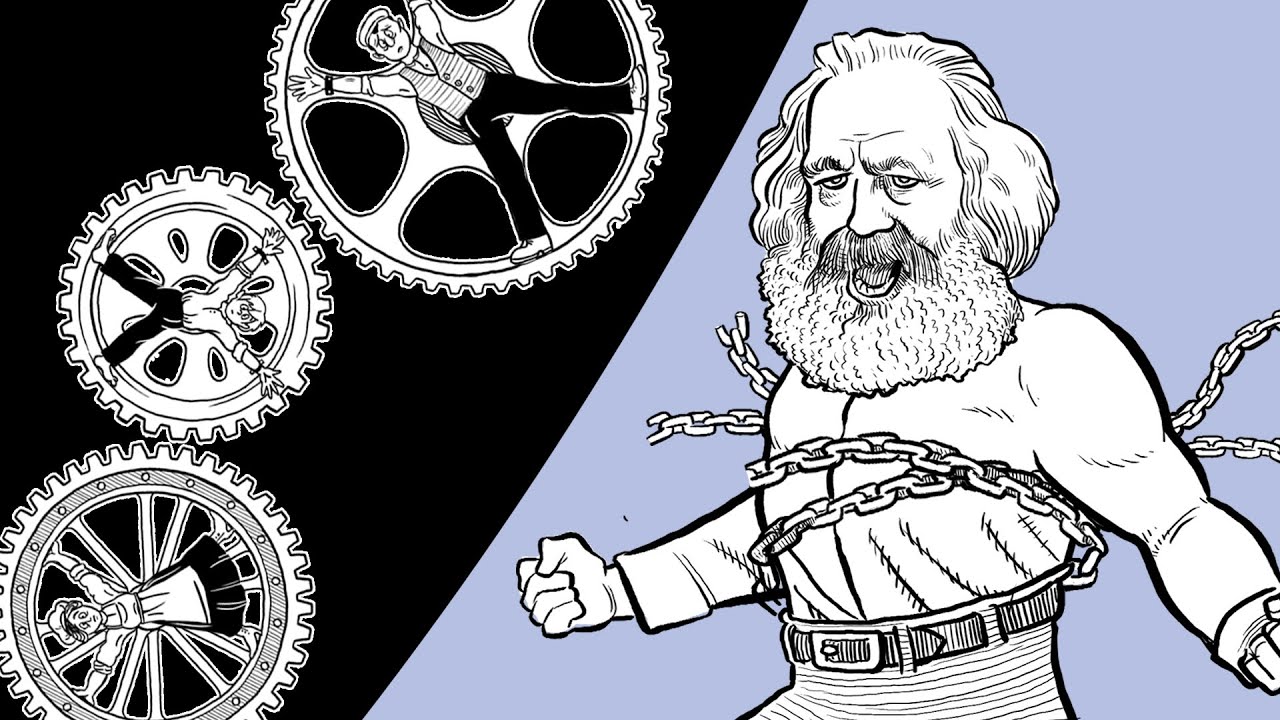


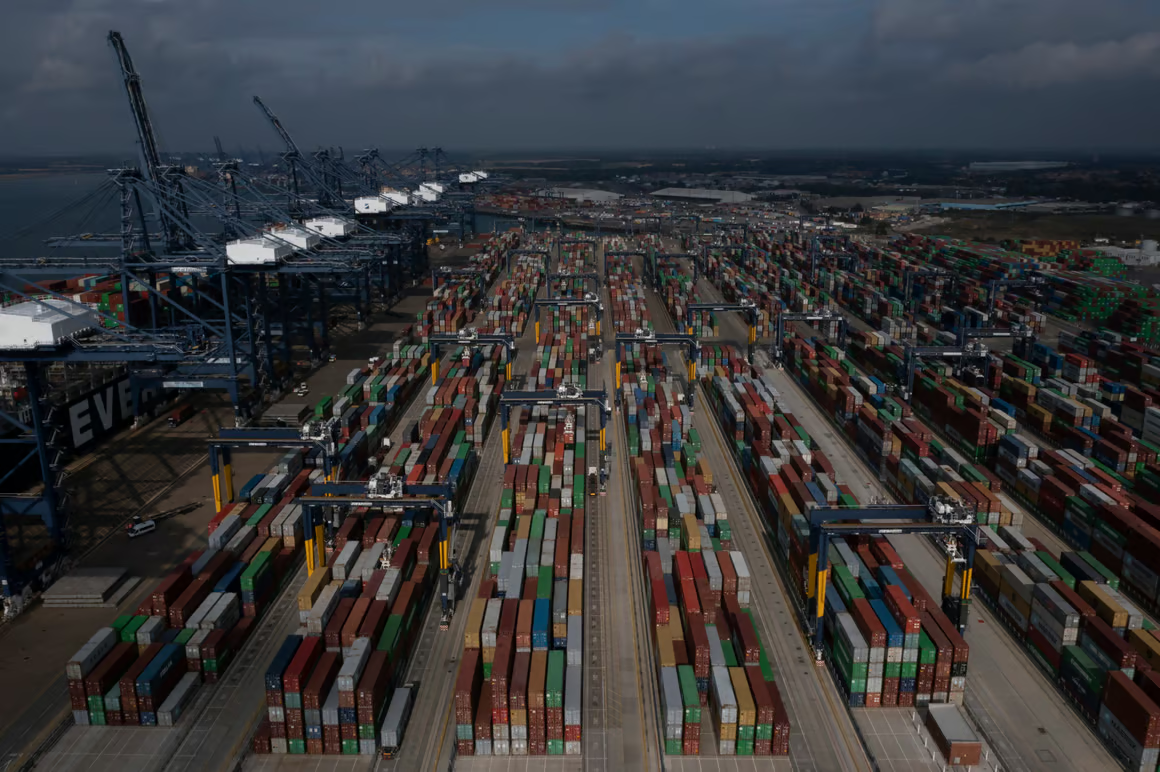


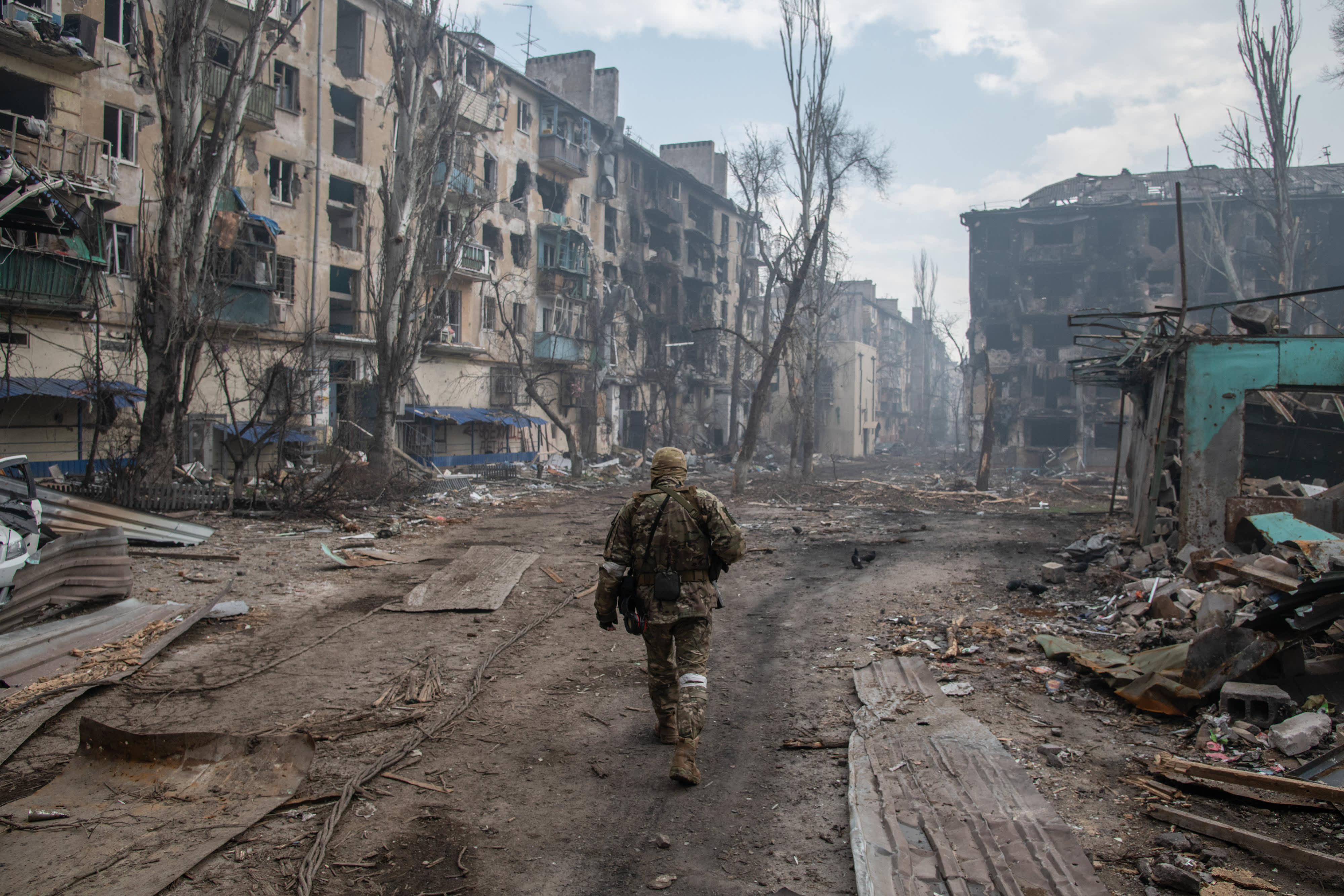
 Sráid Marx