Hate is useful?

Raju Das, in an article on ‘The Communist Manifesto’ noted that:

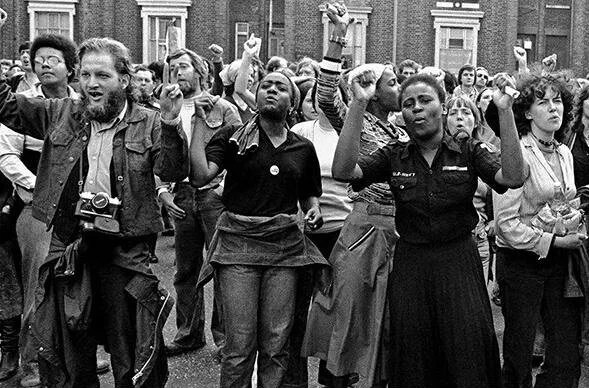
‘Interest in anti-capitalism as well as socialism is growing in many parts of the world.  According to a poll conducted in 28 countries, including the United States, France, China, and Russia, 56% agree that “capitalism as it exists today does more harm than good in the world”. A June 2021 poll indicates that 36% of Americans have a negative view of capitalism; this number is much higher among the youth: 46% of 18–34-year-olds and 54% of those aged 18–24 view capitalism negatively. Conversely, and interestingly, 41% of respondents from all ages have a positive view of socialism. This number is higher for the younger people: 52% of 18–24-year-olds and 50% of young adults aged 25–34 have a positive view of socialism. An October 2021 poll shows that 53% of Americans have a negative view of big business . . . The situation outside of the United States within the advanced capitalist world is similar.’

A more recent opinion poll by the magazine Jacobin also recorded promising results on the advance of the idea of socialism in the US. Believing these views can be advanced further by more hate, as we have reviewed in previous posts, is a mistake, not least because it already exists is copious amounts. What is required is clarification and direction, not a greater emotional charge which is unlikely to provide either.

Anger and hatred at the iniquities of capitalism on their own, or even fore-grounded, invite moralistic evaluations that do not in themselves form an understanding of how capitalism can be replaced or the nature of the alternative.  The influence of capitalism on the working class, in terms of illusions, pessimism, demoralisation, passivity, and backward ideas, can cause those opposed to it to look for an alternative in various ideas and movements that ignore or reject the working class as the force that can bring about the alternative.

Historically, revolts based on hatred have been the province of peasant rebellions that fail to achieve any lasting change, even in circumstances where they appear to be successful.  Provocations by the capitalist state rely on hatred of their regimes in order to suppress developing movements before their time has come; something only clear-headed judgement can hope to determine. Hate is not therefore a distinguishing mark of successful movements and while extreme subjectivism may have become more prominent it is not an answer to objectively unfavourable circumstances or contributory to the working out of strategy.

For Marx the primary need for socialist revolution is not so much to overthrow capitalism as to make the working class fit for its own rule – the transformation of the working class so that the economic, social and political system can be transformed.  This involves opposition to ideas and practices that divide the working class such as nationalism, racism and sexism but hatred of these should not lead to the belief that these can and must first be completely eradicated within the working class before the building of a working class movement can be commenced or continued.                                           

Marx and Engels stated in ‘The German Ideology’ that ‘Communism is for us not a state of affairs which is to be established, an ideal to which reality [will] have to adjust itself. We call communism the real movement which abolishes the present state of things’.  This includes the existing working class that must make itself capable of creating this movement, which is only possible through struggle, not the assumption that it can come when the class has first purified itself.

Marx had no illusions about the shortcomings of the working class and refused to simply follow it when its actions were antithetical to its long term interests.  In the Critique of the Gotha Programme’ written in 1875, he explained the character of society following the capturing of political power by the working class:

‘What we have to deal with here is a communist society, not as it has developed on its own foundations, but, on the contrary, just as it emerges from capitalist society, which is thus in every respect, economically, morally and intellectually, still stamped with the birthmarks of the old society from whose womb it emerges.’ The working class will itself still be stamped with this birthmark, both ‘morally’ and ‘intellectually’, something that intensifying hatred will do nothing to remedy.

Even alienation, which we looked at before, through which the workings of capitalism disorients and oppresses the working class while also acting to suppress and hide its true nature, has its positive as well as negative character, which more hatred would do nothing to illuminate. As Sean Sayers set out in an article:

Alienated labour ‘is also the process by which the producers transform themselves. Through alienated labour and the relations it creates, people’s activities are expanded, their needs and expectations are widened, their relations and horizons are extended. Alienated labour thus also creates the subjective factors – the agents – who will abolish capitalism and bring about a new society.’

‘Seen in this light, alienated labour plays a positive role in the process of human development; it is not a purely negative phenomenon. It should not be judged as simply and solely negative by the universal and unhistorical standards invoked by the moral approach. Rather it must be assessed in a relative and historical way. Relative to earlier forms of society – strange as this may at first sound – alienation constitutes an achievement and a positive development. However, as conditions for its overcoming are created, it becomes something negative and a hindrance to further development. In this situation, it can be criticized, not by universal moral standards but in this relative way.’ (Sean Sayers 2011, ‘Alienation as a critical concept’, International Critical Thought, 1:3, 287-304).

Advocating greater hatred in order for workers to advance towards greater awareness of their class position assumes it is a pedagogical aid for a politics that is already sufficient for its task. It is not such an aid and the politics sufficient to its objective is still in the process of elaboration.

Karl Marx’s alternative to capitalism part 70

Back to part 69

Marx admires capitalism too much?

A worker gathers items for delivery from the warehouse floor at Amazon’s distribution centre in Phoenix, Arizona November 22, 2013. REUTERS/Ralph D. Freso

Marx’s alternative to capitalism explains that it arises from the contradictory nature of capitalism.  The simple and popular, but misleading, understanding of this is that it is primarily expressed in capitalist crises and class struggle, and although Marx had much to say about both, his alternative regarded these as arising from property relations, on which we based a large number of the previous posts in this series, and on his claim that communists put these to the fore in seeking social and political change.

We have noted the (one-sided) emphasis on resistance to capitalism – ‘anti-capitalism’ – and the impulse to state what you are against instead of what you are for, with what you are against being more concrete than what you are for.  Concrete issues and instances of exploitation and oppression are often denounced by abstract claims for justice within the existing capitalist system.

It is worth emphasising the contradictory character of capitalism because many of those claiming adherence to Marxism find it difficult to fully appreciate that, for all the horrors of capitalism, what in the end is most important is that it provides the grounds for socialism.  It is not a question of there being a good side to capitalism and a bad side such that they can be separated, except in the most superficial way of description, but that they are inseparable and that it is this integrity that involves contradiction and antagonism out of which a new society arises.

Even very informed views fail in this regard, so that there is a compulsion to emphasise the ‘bad’ while relegating the ‘good’ to some purely historical existence.  As we have explained in the previous post, in a reproduction and critical commentary on ‘The Communist Manifesto’, China Miéville records Samir Amin writing that it was a ‘hymn to the glory of capitalist modernity’, and repeats the words of Joseph Schumpeter that ‘Never, I repeat, and in particular by no modern defender of the bourgeois civilization, has anything like this been penned, never has a brief been composed on behalf of the business class from so profound and so wide a comprehension of what its achievement is and of what it means to humanity.’

Miéville complains that if this ‘is an exaggeration, it isn’t by much’.  The Manifesto ‘admires capitalism and bourgeois society and the bourgeoisie.  It admires them too much.’  He quotes ‘a phrase from Neary, in another context, The Communist Manifesto’s “negativity is not negative enough”. ‘It does not hate enough’, exclaims Miéville. (A Spectre Haunting: On the Communist Manifesto, p 176). We reviewed this request to ‘hate more’ in a general sense in the previous post.

This view not only does not consider the purpose of writing the Manifesto – for a particular organisation at a particular time – but also its status as the elaboration of a set of beliefs, principles and programme that has had lasting relevance.

In ‘The Communist Manifesto’, Marx writes that:

‘Modern bourgeois society, with its relations of production, of exchange and of property, a society that has conjured up such gigantic means of production and of exchange, is like the sorcerer who is no longer able to control the powers of the nether world whom he has called up by his spells.’

‘For many a decade past the history of industry and commerce is but the history of the revolt of modern productive forces against modern conditions of production, against the property relations that are the conditions for the existence of the bourgeois and of its rule . . . The productive forces at the disposal of society no longer tend to further the development of the conditions of bourgeois property; on the contrary, they have become too powerful for these conditions, by which they are fettered, and so soon as they overcome these fetters, they bring disorder into the whole of bourgeois society, endanger the existence of bourgeois property.’

‘The weapons with which the bourgeoisie felled feudalism to the ground are now turned against the bourgeoisie itself.  But not only has the bourgeoisie forged the weapons that bring death to itself; it has also called into existence the men who are to wield those weapons – the modern working class – the proletarians.’

So, Marx’s praise for ‘bourgeois civilisation’, ‘capitalist modernity’, and even perhaps his ‘admiration’, insufficiency of ‘negativity’ and ‘hate’ are not unrelated to the grand forces of production created by capitalism that are to be wielded by ‘the modern working class’.  

The ‘good’ and the ‘bad’ are not separate and attempts to keep the good ‘side’ of a phenomenon while discarding the bad are doomed to failure.  Worse than that, many of those that promise to do so reject the development and resolution of the contradictions contained in the phenomenon – this ‘civilisation’ and ‘modernity’ – with the assurance that it can be maintained either with ‘reforms’; by asserting that the bad can be removed, while refusing to supersede the phenomenon as a whole, or by the rapid instigation of planning as if this was the alternative to capitalism understood solely as a market phenomenon.

To see ‘bourgeois civilisation’ and ‘capitalist modernity’ as simply negative or to belittle their power is thus also to call into question the power of the weapons to be wielded by ‘the proletarians.’  Ultimately, to question the revolutionary consequences of the rule of the bourgeoisie is to question the revolutionary character of the working class and its future rule.

It is thus not enough to say that ‘It’s OK to be angry about capitalism’, in the words of Bernie Sanders.  Even in the citadel of world capitalism, in the United States, there is growing evidence of opposition to capitalism and sympathy with socialism, but it’s not enough to simply get angry or to hate.  Recent events have demonstrated that there is no shortage of both. It is necessary to understand and to do this requires appreciation of capitalism’s contradictions.

Karl Marx’s alternative to capitalism part 69

Back to part 68

Back to Part 1

Forward to part 70

The need to hate capitalism more

In the 1970s I used to sell the paper of the International Marxist Group Red Weekly every Saturday afternoon on Union Street in Glasgow at the side entrance of the Central Station. I remember one occasion when a visibly agitated man rushed up to me demanding to know whether I was a communist – ‘Are you a communist?’ ‘Are you a communist?’  He launched into a few remarks I barely took in at the time and don’t remember at all now.  I gathered that he was very angry about something and ‘communism’ was some sort of answer. He then exited as frantically as he had arrived.  I doubt very much he had anything to do with ‘communism’ thereafter.

I was reminded of this minor incident reading China Miéville’s book on Marx’s Communist Manifesto, in which he borrows a phrase employed by someone else, and in a different context, to say that The Communist Manifesto’s “negativity is not negative enough”. ‘It does not hate enough’, (A Spectre Haunting: On the Communist Manifesto, p 176)

This appears in a section entitled ‘On Hate’ in which he states that capitalism deserves to be hated, but that “a focus on hatred . . . is fraught, and dangerous territory . . . Hatred, after all, is an emotion that can short-circuit thought and analysis, can segue into violence, and not necessarily with any discrimination’; although he then notes that “hatred, particularly by the oppressed, is inevitable” (p170-171)

Against this he quotes Marx’s favourite maxim – Nihil humani a me alienum puto – nothing human is alien to me, and while he then states that it’s “hardly productive to pathologise hate per se, not least when it’s natural that it arises . . . the very absence of a critical mass of hatred may militate against resistance.”  He then quotes others on the need for ‘class hatred’ – “a radical structural hate for what the world has become” that is not “personal, psychological or pathological hate, but a structural hate.’  However, a hate that is neither personal nor psychological is not an emotion and a ‘structural hate’ must refer to something else entirely if it is to refer to anything at all.

Miéville is correct to refer to a statement about “deliberate hate as a rational category”.  The philosopher Martha Nussbaum noted that “emotions always involve thought of an object combined with thought of the object’s salience or importance; in that sense, they always involve appraisal or evaluation.”  The neurologist Antonio Damasio similarly comments that “Emotions provide a natural means for the brain and mind to evaluate the environment within and around the organism and respond accordingly and adaptively.”

This is the opposite of the view of emotions–that they cloud rationality, which they obviously can, and fits comfortably into the long tradition of Western philosophy focused on what is rational but which exaggerates both the disruptive potential of most emotions and the precision and certainty of human rationality.  Emotions are an evolutionary development of humanity that helps us quickly gather and process information about the world and respond to it accordingly.  

Some have made the comparison of thinking slow and fast, with emotions involving the latter entailing problems associated with ‘snap decisions’ and avoidance of ‘careful deliberation.’  If anyone was to look to Marx for inspiration, they might consider his long years in the British Library in London; his purported need to read all potentially relevant books on a subject before forming a definite view, and this resulting in missed deadlines and much unfinished work left to posterity.

Miéville believes that hate is not only necessary for resistance but “may help not only with strength but intellectual rigour, and of analysis, too” (p173). He quotes an Anglican priest, Steven Shakespeare, quoted above regarding hate’s “dangerous territory”, that it is necessary to be “more discriminatory about hate, where it comes from, where it should be directed, and how it gets captured for the purposes of others.’

So, we are into Goldilocks territory of not too much, and not too little, hate but just the right amount. Or we can appeal to Aristotle’s golden mean; where, for example, courage is a virtue but if taken to excess is recklessness and if too little, cowardice.  “Emotional intelligence” is a modern variation.  Cogitating on how much hate to evoke against capitalism is, however, a pretty unproductive pursuit.

Miéville, however, is particular about determining the need for greater hate, including that “Marx and Engels were too generous in their eulogy to its [capitalism’s] transformation and energetic properties, and to the bourgeoisie itself, as well as about the likelihood of its collapse.” (p175)

It might be more accurate to say that Marx and Engels were too sanguine, optimistic and confident about the overthrow of capitalism (not its collapse) but that they didn’t live to see the development of the workers’ movement or the programmes developed by its various parts that impacted on the outcome of subsequent failures.  The point of this series of posts is not to relay this long and involved history but to set out what their alternative to capitalism was, which should go some way to exposing the reasons for failure so far.

As for Marx and Engels being too generous about the transformational and energetic properties of capitalism, this is simply false; it is in fact one of their most brilliant judgements and predictions, fully confirmed by today’s capitalism and its spread across the globe.

Miéville says we should retain our “shock” at the iniquities that capitalism throws up and that provoke an “appropriate human response, the fury of solidarity, the loathing of such unnecessary suffering . . . We should feel hate beyond words.”  But the feeling of solidarity is also an emotion.  An emotion that we should wish to promote, which is not (simply) a “humane” one but one based on a feeling of class solidarity, to be combined with the emotions of pride in our cause and our movement, and growing confidence in our success.

If there is a deficiency in emotional investment it is in these, which are more vital to our future than learning to hate capitalism that bit more.  No one experiences only one emotion at a time (hence the falsity of the question repeated by Miéville “is your hate pure”); and as we have said, even the most instinctive emotion involves rationality and a degree of thought.

Marx noted, in relation to Miéville’s call that we should retain our “shock”, “fury” and “loathing” that some suffering has not been “unnecessary”, but absolutely necessary for the development not only of humanity in general but of capitalism and the grounds it creates for the subsequent potential for socialism.  Many still cannot get their head round this: that the suffering imposed by capitalism was unavoidable for its birth and development – and in this sense necessary – but that this does not in the least mean we do not cease to damn it and to seek its overthrow.

To claim otherwise – that much of the suffering endured through capitalism was unnecessary must explain a number of things.  How could capitalism birth and develop without suffering?  Is a non-suffering capitalism possible? Is socialism possible without capitalism (and therefore without this suffering but then also without the working class)?  Was all this suffering therefore without any historical meaning, but simply contingent and accidental?  Explain the laws of the development of capitalism and its relation to the possibility of socialism without contradiction and antagonism and therefore suffering!

Marx is criticised in Miéville for his greater criticism of other socialisms than of the bourgeoisie because the former has none of the “ambivalence” that he attaches to the latter. (p176) This “ambivalence”, however, was entirely appropriate in a period in which capitalism was more or less fully developed in only a couple of countries and had yet to supplant the legacies of feudalism.  Apart from recognition of the insights of the original utopian socialists, Marx admonished their succeeding followers because there was no merit in repeating anachronistic nostrums that were now reactionary.

Did Marx and Engels hate capitalism more than Weitling, Proudhon and Bakunin?  This would be a hard claim to sustain, but whose politics is the best guide to ending it, and would their’s have been better had they done so?

The emotion of hate has its (inevitable) place, but this does not mean “we must hate harder than did the Manifesto”; the demand for greater hate (“hate beyond words”) is a substitute for politics.  After all his detour on the need for hate, Miéville says that “Hate is not and cannot be the only or main drive to renewal.  That would be deeply dangerous.  We should neither celebrate nor trust our hate. But nor should we deny it.”  It would have been better had he started and elaborated on this than drop it into the end of a disquisition on how much we must hate more.

Karl Marx’s alternative to capitalism part 68

Back to part 67

Forward to part 69

Back to Part 1

Understanding ‘Citizen Marx’ 3 of 3

Engels once said that ‘Marx and I, for forty years, repeated ad nauseam that for us the democratic republic is the only, political form in which the struggle between the working class and the capitalist class can first be universalised and then culminate in the decisive victory of the proletariat.’

The context was a claim against him that when ‘the socialist party, will become the majority’ it will ‘then proceed to take power.’  Engels however stated that ‘For a start, I have never said the socialist party, will become the majority and then proceed to take power.  On the contrary, I have expressly said that the odds are ten to one that our rulers, well before that point arrives, will use violence against us, and this would shift us from the terrain of majority to the terrain of revolution . . .’

Responding to the question of what form this power would take – ‘Will it be monarchic, or republican, or will it go back to Weitling’s utopia’, Engels replied that of course the Reichstag deputies are republicans and revolutionaries, the question of a Republic being the most controversial political question in Imperial Germany at that time.

Engels goes on to ask whether it is implied ‘that the German socialists attribute no more importance to the social form than to the political form? Again he would be mistaken. He should be well enough acquainted with German socialism to know that it demands the socialisation of all the means of production. How can this economic revolution be accomplished? That will depend on the circumstances in which our party seizes power, on the moment at which and the manner in which that occurs.’ (Engels, Reply to the Honourable Giovanni Bovio MECW Vol 27 p271)

What Engels is making clear is that the fight for democracy is vital to the struggle of the working class to achieve political power not that it is necessary to have a republic as the first step to communism. Even where the question of a Republic was the unmentionable political issue, the objective was ‘the socialisation of all the means of production.’

On a separate occasion he said that ‘If one thing is certain it is that our party and the working class can only come to power in the form of the democratic republic. This is even the specific form for the dictatorship of the proletariat . .’ (emphasis added – SM) On the question of a Republic he explains the content of the demand, if it is not possible to employ the term itself: ‘But the fact that in Germany it is not permitted to advance even a republican party programme openly, proves how totally mistaken is the belief that a republic, and not only a republic, but also communist society, can be established in a cosy peaceful way’

‘However, the question of the republic could possibly be passed by. What, however, in my opinion should and could be included is the demand for the concentration of all political power in the hands of the people’s representatives. That would suffice for the time being if it is impossible to go any further.’ (Engels A critique of the draft Social-Democratic programme of 1891, MECW Vol 27 p227)

Engels in his postscript to Marx’s Civil War in France wrote ‘And people think they have taken quite an extraordinary bold step forward when they have rid themselves of belief in hereditary monarchy and swear by the democratic republic. In reality, however, the state is nothing but a machine for the oppression of one class by another, and indeed in the democratic republic no less than in the monarchy; and at best an evil inherited by the proletariat after its victorious struggle for class supremacy, whose worst sides the proletariat, just like the Commune, cannot avoid having to lop off at the earliest possible moment, until such time as a new generation, reared in new and free social conditions, will be able to throw the entire lumber of the state on the scrap-heap.’

‘From the outset the Commune was compelled to recognize that the working class, once come to power, could not manage with the old state machine . . .’  The bourgeois republic was not therefore the mechanism to advance towards communism.

Marx noted of the Paris Commune that ‘the political rule of the producer cannot co-exist with the perpetuation of his social slavery.’

Back to part 2

Understanding ‘Citizen Marx’ 1 of 3

The book Citizen Marx, which deals with Marx’s engagement with republicanism, has been favourably reviewed in a number of socialist publications.  In previous posts we have shown that this was an engagement coloured by competition for the allegiance of a radicalising working class.  This involved starting from a materialist analysis of the conditions facing workers and other classes, which brought to the fore the property question and involved a clear separation of socialist politics from even the most radical republicanism.

The book notes both Marx and Engels very brief alignment with anti-political communism that eschewed political struggles because of their claimed irrelevance to the over-riding social question, which resolved into the question of property.  For Marx and Engels this involved the socialisation of production by the working class that would lead to the abolition of all classes, including itself.

This required the conquering of political power by the working class and the book deals with Marx and Engels treatment of the Paris Commune as the first example of the capture of such power (with some qualifications).  Many of their tributes to it and the force of its example included elements of the democratic functioning of the Commune that were championed by republicanism, for example the direct election of workers’ delegates to state office and their being subject to recall.

This state however was to be a workers’ state, and qualitatively different to existing capitalist states, whether an absolute monarchy, constitutional monarchy or bourgeois republic.  It was to be a state not ‘superimposed upon society’ but ‘one completely subordinate to it.’ (Citizen Marx p 392)

‘It was essentially a working-class government, the produce of the struggle of the producing against the appropriating class, the political form at last discovered under which to work out the economical emancipation of Labour.’   (Marx and Engels Collected Works, Volume 22 p334)

The most famous lesson learned was that ‘the working class cannot simply lay hold on the ready-made state machinery and wield it for their own purpose. The political instrument of their enslavement cannot serve as the political instrument of their emancipation.’  (MECW Vol 22 p533)

This is not the bourgeois state democratised, à la radical republicanism, but the destruction of the bourgeois state and creation of one that would serve as a political instrument of working class emancipation.  And as the emancipation of the working class was to be achieved by the working class itself this meant not just creation of a workers’ state but the working class emancipating society from the state – a state not ‘superimposed upon society’ but ‘one completely subordinate to it.’  As Bruno Leipold notes in Citizen Marx, for Marx the Commune was a ’Revolution against the State itself . . . a resumption by the people for the people, of its own social life.’  It was “the people acting for itself by itself.’ (Citizen Marx p 389 & 366)

Leipold states that through the experience of the Commune Marx not only changed his understanding of what a ‘social republic’ was but that this also ‘went hand in hand with a new attitude to the bourgeois republic.  While his Commune writings contain similar condemnations of the emancipatory limits of the bourgeois republic that we find in his 1848 writings, we find no corresponding statements that the bourgeois republic still remains the terrain on which this emancipation is to be fought for.’ (Citizen Marx p 357)

Much of the book covers the period before the Paris Commune and deals with the role of the working class in a purely democratic revolution, i.e. a bourgeois revolution.  Marx and Engels set out the policy of communists, in which the working class, particularly in Germany, must fight for a democratic republic – as an independent force – alongside the bourgeoisie (if and when it does indeed fight) in circumstances where it cannot yet impose its own interests because of undeveloped material conditions.

Forward to part 2

‘The People’ before Profit? – Karl Marx’s alternative to capitalism (part 67)

The substitution of ‘the people’ for the working class as the subject of struggle is presented In Ireland, in an almost classic case, by the People before Profit organisation, whose reformist politics are based on actions demanded from the Irish capitalist state.  While ‘people’ are to come ‘before profit’, ‘people’ replaces the working class, while coming before profit still leaves profit in place.  And anyway, aren’t capitalists people as well? 

This precept fails to bring to the fore the ‘property question’, demanded by Marx in the Communist Manifesto, whereby the profit of capital arising from exploitation of the working class is not de-prioritised but abolished!

It might be argued ‘what’s in a name’, were it not for the fact that the name was deliberated on and selected precisely in order to avoid clearer identification with the working class and socialism. Presumably because reference to ‘the people’ is more readily acceptable; postponing the task of raising awareness of the paramount role of class and denying the centrality previously accorded to it by anyone calling themselves Marxist. In asserting the priority of the people, and so rejecting the primacy of class, the organisation is setting an example to be followed, not one to be excused or ignored.

Failure to root socialist politics in the material reality of the working class leaves it rootless and prey to the material reality of other forces – we have already pointed to the role of the state in the political alternative offered by People before Profit – but the ideologies encompassing this are many.  Nationalism and racism require denial of the separate political interests of the working class – socialism is international while racism denies working class unity.  It is precisely class interest that is the alternative to these reactionary programmes, not acceptance of the prior interests of an undifferentiated people.

It is possible to fill this missing foundation with moral claims to ‘humanity’ which bases internationalism on ‘human rights’; the ‘self-determination of (capitalist) states’, or protection of minorities based simply on their being a minority.  Similarly, it is possible to oppose racism based on human rights, ‘diversity’, ‘inclusion’ and opposition to ‘hate’, but these are even more vague and useless than the concept of ‘the people’.  Their employment by many on the left, tellingly often paraded under the banner of a ‘social justice’ movement, is testament to a collapse into liberal (i.e. bourgeois) politics compared to which the 19th century republicanism we have been examining in the previous posts looks positively revolutionary.

If class is not primary and immediately necessary in order to take forward a movement and programme what is opened up is the intrusion of a wide variety of identity politics that makes nationality, race, or sex etc. the primary means of securing freedom from oppression. This in turn can lead to ‘intersectional’ coalitions that further divide while pretending to unify.

It leads to rejection of the view that the working class is the only social force able to create a new society and which alone can unite the oppressed through the abolition of class. It thereby simply becomes one segment of society with no reason to prioritise its role more than any other.  Petty bourgeois ideas of individual subjective identity flourish where the nebulous abstraction of ‘people’ becomes the source of power to change the world.  With this view of politics the numerous instantiations of the people come to substitute for the working class, which in turn leads to the search for a mechanism for them to do so, and which is invariably found to be the state.

In 1849 Marx criticised the naive belief in a single “will of the entire people” rather than that of a singular ruling class (or grouping of classes) that might represent its own interest as that of society as a whole, or at least of its large majority:

‘For the National-Zeitung there exists one will of the entire people, which is not the sum of contradictory wills but a united and fixed will. How is that?

That is—the will of the majority.

And what is the will of the majority?

It is the will which emerges out of the interests, life situation, and conditions of existence of the majority.

In order to have one and the same will, the members of the majority must therefore have the same interests, the same life situation, the same conditions of existence, or must be temporarily linked together in their interests, their life situation, their conditions of existence.

In plain words: the will of the people, the will of the majority, is not the will of separate estates and classes but of one single class, and of those classes and fragments of classes that are socially—i.e., industrially and commercially—subordinated to this ruling class.

“What should we say to that?” Is the will of the entire people the will of the ruling class?’

(Marx, Marx and Engels Collected Works Vol 8 p272, Articles from the Neue Rheinische Zeitung)

Marx, in The Civil War in France, noted that the Paris Commune ‘was the first revolution in which the working class was openly acknowledged as the only class capable of social initiative, even by the great bulk of the Paris middle class—shopkeepers, tradesmen, merchants—the wealthy capitalists alone excepted. The Commune had saved them by a sagacious settlement of that ever-recurring cause of dispute among the middle classes themselves—the debtor and creditor accounts.’

It was necessary then (as it is now) for the working class to be the ‘universal’ class and to represent the needs of a society oppressed by the prevailing system: ‘For the first time in history the petty and moyenne middle class  has openly rallied round the workmen’s Revolution, and proclaimed it as the only means of their own salvation and that of France!.’ (Marx, The Civil War in France, Marx and Engels Collected Works Vol. 22 p336 & 496)

This was not something that Marx learned only from the Commune but was something strikingly demonstrated by it, particularly the need to win the majority of the population that was then composed of peasants.  How this need is addressed today depends on the particular class composition of society, but this requires that the idea of a unified people is abandoned and the various classes and their interests identified.  In relation to the peasantry, for example, it did not mean strengthening or enlarging their individual property, while a programme based on the demands of ‘the people’ would leave this wide open.

In the writings through which he and Engels formulated their particular politics, The German Ideology, he argued that ‘For each new class which puts itself in the place of one ruling before it, is compelled, merely in order to carry through its aim, to represent its interest as the common interest of all the members of society, that is, expressed in ideal form: it has to give its ideas the form of universality, and represent them as the only rational, universally valid ones.’ For the working class, this is realised through the abolition of all classes, including itself.

Marx identified this early in his political development (in 1843) before becoming a ‘Marxist’ and expressed himself in the language of the philosophy of the time: ‘No class of civil society can play this role without arousing a moment of enthusiasm in itself and in the masses, a moment in which it fraternises and merges with society in general, becomes confused with it and is perceived and acknowledged as its general representative, a moment in which its claims and rights are truly the claims and rights of society itself, a moment in which it is truly the social head and the social heart.’ (Marx, Introduction to A Contribution to the Critique of Hegel’s Philosophy of Right)

For this to happen the working class must win others as allies to its programme.  This can only be done if, in the words of The Communist Manifesto, socialists ‘disdain to conceal their views and aims.’  It will not be done by pretending that its views are those of an amorphous ‘people’.  You can only rally others to your flag if it is your flag.

Back to part 66

Forward to part 68

Part 1

‘The People’ vs the Working Class 

Republicanism and Communism differed on the nature of the revolution that was required and so disagreed on the social force that would accomplish it. For the former it was ‘the people’ and for the latter the ‘proletarians of all countries’, which should ‘unite.’

Republicans accused communists of “ignoring the rest of humanity” while they viewed the people as the non-elite sections of the population, which may or may not have included the capitalist class, depending on the particular republican view.  Karl Heinzen, for example, did not see the new bourgeoisie as the enemy.

Marx argued that “The people . . . was a vague expression” to be replaced “by a definite one, the proletariat . . .”  The attempt to use the former combined various classes with an assumed common interest so that any separation within them was an unwarranted division that set back their common interests.

Even were a “privileged class” identified such a view failed to identify the different interests of the ‘non-privileged’ classes as if they had common class interests, including, for example, the working class, independent artisans, peasants and other petty bourgeois classes.

Only an identification of class and their associated interests could specify their material interests that might unite them or divide them. Such an analysis was inevitable as soon as one identified the particular class interest of the “privileged class”, which might prove to be varied – feudal princes or modern capitalists for example – which would then identify the subordinate class(es) they oppressed and exploited.  Talk of “the people’ obscured the interests of all classes, particularly the subordinate ones, and most importantly for the creation of a new society, concealed or blurred the interests of the working class.

Marx argued that failure to identify the separate interests of the different classes making up “the people” resulted in a false understanding of contemporary political realities.  So, in the elections to the French Constituent National Assembly in 1848 the republicans’ “imaginary people” were replaced by the “real people” the majority of whom voted for the candidates of the anti-republicans and elected the representatives of the bourgeoisie and landowners.

‘Accordingly, when a struggle is impending, they do not need to examine the interests and positions of the different classes. They do not need to weigh their own resources too critically. They have merely to give the signal and the people, with all its inexhaustible resources, will fall upon the oppressors.’  (Marx in Marx and Engels Collected Works Vol 11 p 65)

In the event of defeat ‘then either the fault lies with pernicious sophists, who split the indivisible people into different hostile camps, or the army was too brutalised and blinded to comprehend that the pure aims of democracy are also the best thing for it, or the whole thing has been wrecked by a detail in its execution, or else an unforeseen accident has this time spoilt the game. In any case, the democrat comes out of the most disgraceful defeat just as immaculate as he was innocent when he went into it, with the newly-won conviction that he is bound to win, not that he himself and his party have to give up the old standpoint, but, on the contrary, that conditions have to ripen to suit him.’ (Marx in Marx and Engels Collected Works Vol 11 p 65-66)

Politics based on the purported interests of ‘the people’ create imaginary interests that are not shared.  Marx gives the example in France of its famous fraternité, which in the 1848 revolution ‘found its true, unadulterated and prosaic expression in civil war, civil war in its most terrible aspect, the war of labour against capital.’ (Marx in Marx and Engels Collected Works Vol 7 p 147)

Marx accused the republican, Karl Heinzen, of invoking the solemn concept of ‘humanity’ to distract from the fact that while individuals may adopt a position that does not accord with their class position, this cannot be true of ‘whole classes which are based on economic conditions independent of their own will.’ (Marx in Marx and Engels Collected Works Vol 6 p 330)

The result is to deny the reality of class struggle, which has the result not of abolishing it but of confirming the interest of the bourgeoisie.  In 1850 Marx and Engels wrote that:

‘The struggles of the various classes and factions of the classes against each other, whose progress through their individual stages of development actually constitutes the revolution, are in the view of our evangelists only the unfortunate consequences of the existence of divergent systems, whilst in reality the reverse is true, the existence of various systems is the consequence of the existence of the class struggles. This itself shows that the authors of the manifesto deny the existence of the class struggles. Under the pretext of combating dogmatists, they do away with all specific content, every specific party point of view, and forbid the individual classes to formulate their interests and demands vis-à-vis the other classes.  They expect them to forget their conflicting interests and to become reconciled under the flag of a vagueness as shallow as it is unblushing, which only conceals beneath the apparent reconciliation of all party interests the domination of the interest of one party—the bourgeois party.’  (Marx in Marx and Engels Collected Works Vol 10 p 530)

Concepts such as ‘the people’ are unable to identify the specific interest of classes and are very rarely appropriate terms of analysis.  Their use usually denotes a false unity of interest behind which lies the interests of the capitalist class.  This can also appear credible because the social system, the dominant mode of production, aligns with the interest of the dominant class.  So, the claim to represent or act in the interests of the people is also the primary ideological justification of the capitalist state.

The concept of the people is incapable of exposing the claims of the state to act on behalf of the people because it rejects the separate interest of the working class.  At most it permits the view that the state is imperfectly or unsatisfactorily acting on behalf of the people but that it can be made to act in a way that remedies this.  This is the basis for the view that the state can reform the social system in such a way as to truly implement the interests of ‘the people’ and therefore that the state itself can be made to carry this out by reforming itself.  It is what Marxist call reformism, which denies that a replacement of capitalism and its state is necessary or possible.

Part 66 of Karl Marx’s alternative to capitalism

Back to part 65

Forward to part 67

Part 1

Socialism and the inadequacy of republicanism

A photograph of the Great Chartist Meeting on Kennington Common, London, 1848

Marx supported the struggle for democratic rights because he believed that a bourgeois republic with political freedoms would make the class struggle between capitalists and workers arising from social inequality more transparent, less disguised by monarchical rule.  It would weaken the legitimacy of authority more generally and stimulate working class political development.  Without this freedom the working class would not develop the political capacity to become the ruling class.

Bruno Leipold, in his book Citizen Marx, notes that Marx adopted many of the democratic demands of republican revolutionaries that constituted these political freedoms, ensuring that implementation of democratic rights was not restricted by measures from the bourgeois state specifically designed to nullify them. (Citizen Marx p244). He notes that this enthusiasm led to what proved to be over-optimistic expectations of what would follow as a result.  So, Marx and Engels appeared to endorse the view in 1846 that the introduction of the Peoples Charter would mean that the working class “will become the ruling class of England” (Marx and Engles Collected Works Vo 6 p 58, ‘Address of German Democratic Communists of Brussels to O’Connor, quoted in Citizen Marx p245)

In The Communists and Karl Heinzen Engels stated that ‘the Communists for the time being rather take the field as democrats themselves in all practical party matters. In all civilised countries, democracy has as its necessary consequence the political rule of the proletariat, and the political rule of the proletariat is the first condition for all communist measures.’ (Marx and Engels Collected Works Vol 6 p 299)

Leipold discusses their optimistic expectations of universal (manhood) suffrage in his book (p 245-249) but he also notes Marx’s view of the experience of the French Second Republic, which originated in a democratic revolution but which was usurped by a coup d’état led by Louis-Napoléon Bonaparte, who later declared himself Emperor. This experience had shown that although “bourgeois rule as the outcome of universal suffrage . . . is the meaning of the bourgeois constitution” their democratic commitment crumbles the “moment that the content of this suffrage, of this sovereign will, is no longer bourgeois rule.” On “March 10 universal suffrage declared itself directly against the rule of the bourgeoisie; the bourgeoisie answered by outlawing universal suffrage.” (Citizen Marx p 246 and 247). Marx was therefore wrong when he claimed that “The classes whose social slavery the constitution is to perpetuate, proletariat, peasantry, petty bourgeoisie, it puts in possession of political power through universal suffrage.” (Marx The Class Struggles in France, Marx and Engels Collected Works Vol 10 p79)

In country after country, we can see the fraudulent character of bourgeois democracy.  In the United States measures to suppress voting are routinely employed while the constitution that is so revered contains significant undemocratic institutions and practices.  The political system is dominated by massive amounts of big business money and individual capitalist wealth.  The repression unleashed by Trump and the multiple law and order organs of the state has demonstrated its class nature and renders pretence of its hallowed democracy cynical.  In Europe, triumvirates of Starmer, Macron. Scholtz or Merz participate in a proxy war that no one voted for and are either deeply unpopular and/or elected on historically low votes but endowed nevertheless with full powers.

The defective features of bourgeois democracy are particular to each country but their universal existence in one form or another is due to the capitalist character of society and the social power this entails for the capitalist class and its retinue of helpers.

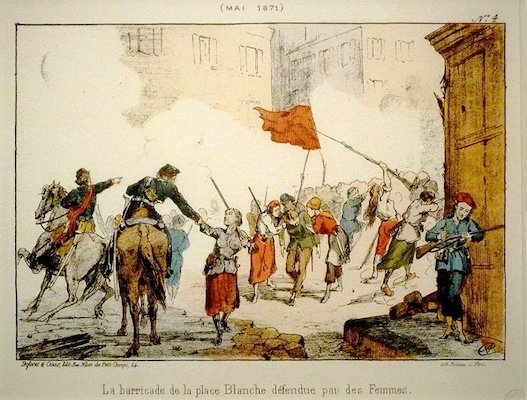
Marx was later to learn that a different form of state was required to break the power of these forces and embody real democracy.  This was discovered in the Paris Commune of 1871, when the working classes of that city overturned the ruling authorities and imposed their own rule.  Marx noted that:

‘The unity of the nation was not to be broken, but, on the contrary, to be organized by Communal Constitution, and to become a reality by the destruction of the state power which claimed to be the embodiment of that unity independent of, and superior to, the nation itself, from which it was but a parasitic excrescence.’

‘While the merely repressive organs of the old governmental power were to be amputated, its legitimate functions were to be wrested from an authority usurping pre-eminence over society itself and restored to the responsible agents of society. Instead of deciding once in three or six years which member of the ruling class was to misrepresent the people in Parliament, universal suffrage was to serve the people, constituted in Communes . . .’

‘It was essentially a working class government, the product of the struggle of the producing against the appropriating class, the political form at last discovered under which to work out the economical emancipation of labour.’

‘Except on this last condition, the Communal Constitution would have been an impossibility and a delusion. The political rule of the producer cannot co-exist with the perpetuation of his social slavery.’

Republicanism promised the right to ‘life, liberty and the pursuit of happiness’ but only social emancipation can deliver it.

Part 65 of Karl Marx’s alternative to capitalism

Back to part 64

Forward to part 66

Part 1


Marx’s critique of moral politics and the politics of morality

Marx’s criticism of the republican politics of Heinzen was just as cutting as that of Engels, with the title of his writing setting out its nature and the necessary response – Moralising Criticism and Critical Morality. He described it as ‘constantly preaching morality and constantly offending against it’ and again contrasted the approach of communism to that of republicanism:

‘Incidentally, if the bourgeoisie is politically, that is, by its state power, “maintaining injustice in property relations”, it is not creating it. The “injustice in property relations” which is determined by the modern division of labour, the modern form of exchange, competition, concentration, etc., by no means arises from the political rule of the bourgeois class, but vice versa, the political rule of the bourgeois class arises from these modern relations of production which bourgeois economists proclaim to be necessary and eternal laws.’

This type of analysis was not a question of simply understanding the world better but informing to what extent it was possible to change it, thus informing the correct approach to doing so:

‘If therefore the proletariat overthrows the political rule of the bourgeoisie, its victory will only be temporary, only an element in the service of the bourgeois revolution itself, as in the year 1794, as long as in the course of history, in its “movement”, the material conditions have not yet been created which make necessary the abolition of the bourgeois mode of production and therefore also the definitive overthrow of the political rule of the bourgeoisie.’

Where Heinzen declared that “You are trying to make social questions the central concern of our age, and you fail to see that there is no more important social question than that of monarchy or republic.” Marx said that ‘The question of property, depending on the different levels of development of industry, has always been the vital question for a particular class. In the 17th and 18th centuries, when the point at issue was the abolition of feudal property relations, the question of property was the vital question for the bourgeois class. In the 19th century, when it is a matter of abolishing bourgeois property relations, the question of property is a vital question for the working class . . . It so happens that the “social questions” which have been “dealt with in our own day” increase in importance in proportion as we leave behind us the realm of absolute monarchy.’

Today, the realm of absolute monarchs for the vast majority of countries has passed and the spread of capitalism has created a larger and larger working class that puts the social question to the fore.  If working class revolution is not currently on the agenda in any country it is not because the class struggle between the working class and capitalism does not exist but because the bourgeoisie has had a relatively long period of winning it.  Because the question of absolute monarchy was on the agenda in Marx’s time and capitalism and the working class were undeveloped, Marx had to reckon on how to orient in these circumstances so that the working class could take an independent position and advance its own interests.  The latter is the task today in an analogous situation in so far as the forces seeking to do so are again weak, although for very different reasons.

It is not therefore the case that the 19th century is a foreign land buried in a past epoch but that Marxists today can learn from the original Marx in how to defend and advance working class politics when it is politically weak.  This includes rejection of the claimed alternatives – in their approach to understanding society and identifying the forces that will create a new one – that existed then and are put forward now.  They are not exactly the same, but neither are they wholly different.

So, while Marxists see the property question as primary, the bourgeoisie today turns its back on it when presenting its own ‘solutions’ to the social question. Marx noted that ‘Nowhere . . . does social inequality obtrude itself more harshly than in the eastern states of North America, because nowhere is it less disguised by political inequality.’ He notes that it is here, and in other ‘constitutional or republican representative state[s], that the “question of property” has become the most important “social question”, it is very much the narrow need of the German bourgeois that interjects: the question of the monarchy is the most important “social question of the time”. It is in a very similar way that Dr. List, in the foreword to his Nationalökonomie* expresses his so naïve irritation that pauperism and not protective tariffs should have been “misconstrued” as the most important social question of our time.’

Today the question of tariffs is again to the fore – for the location of the largest capitalist firms across the world; the rivalry of the various capitalist powers through the creation of huge trading blocs, including the question of Brexit; and the pursuit of trade wars by the strongest power in an attempt to prop up its eroding supremacy.  In these circumstances the modern reactionary alternative, that in the mid-19th century was embodied in the petty bourgeois politics of artisan workers and the peasantry, is now embodied in the idea of the resurrection of national sovereignty and equality between nations, which has never existed and never will.

Marx noted that the 19th century version of middle class reform was ‘just a matter of avoiding extremes! What rational political constitution would be compatible with these extremes, these oh so abominable extremes! . . .  take a look at Heinzen’s “federal republic” with “social institutions” and its seven measures for the “humanisation of society”. We find that each citizen is assured a “minimum” of wealth below which he cannot fall, and a maximum of wealth is prescribed which he may not exceed’.

‘Has not Herr Heinzen solved all the difficulties, then, by reiterating in the form of state decrees the pious desire of all good citizens that no person should have too little and none, indeed, too much, and simply by so doing made it reality?  And in the same manner, which is as simple as it is splendid, Herr Heinzen has resolved all economic conflicts. He has regulated property according to the rational principles corresponding to an honest bourgeois equity. And please do not object that the “rational rules” of property are precisely the “economic laws” on whose cold-blooded inevitability all well-meaning “measures” will necessarily founder . . .’

These measures promised by republicans, which Marx ridicules as impossible under capitalism, were prompted to address the oppression of the absolute monarchy and the state then existing:

‘The violently reactionary role played by the rule of the princes only proves that in the pores of the old society a new society has taken shape, which furthermore cannot but feel the political shell—the natural covering of the old society—as an unnatural fetter and blow it sky-high.  The more advanced these new elements of social decomposition, the more reactionary will even the most harmless attempt at conservation by the old political power appear. The reaction of the rule of the princes, instead of proving that it creates the old society, proves rather that its day is over as soon as the material conditions of the old society have become obsolete.’

While it was not possible for the working class to pose its own solution immediately, Marx defended them in independently supporting steps towards the political freedoms that they could employ to further their own cause:

‘The workers know very well that it is not just politically that the bourgeoisie will have to make broader concessions to them than the absolute monarchy, but that in serving the interests of its trade and industry it will create, willy-nilly, the conditions for the uniting of the working class, and the uniting of the workers is the first requirement for their victory.’

‘They can and must accept the bourgeois revolutions a precondition for the workers’ revolution. However, they cannot for a moment regard it as their ultimate goal.’

Today, the ‘violently reactionary role played by the rule of the capiatalist class only proves that in the pores of the old society a new society has taken shape, which furthermore cannot but feel the political shell—the natural covering of the old society—as an unnatural fetter and blow it sky-high.’

These current political forms of capitalism are embodied in the nation state and their regional and world-wide alliances. They are incapable of serving the interest of humanity and are instead the mechanisms by which inter-capitalist rivalry threatens to precipitate a world war from which humanity may not emerge again, except perhaps as a species put back millennia in its civilisation.

The political shell to be broken today is this system of states; ‘its day is over’ and ‘the material conditions of the old society have become obsolete’.  It is not, however, opposition to globalisation and the utopian pursuit of a return of national sovereignty that is the solution.  Workers should reject the reactionary calls of nationalism, the shutting of borders and opposition to immigrant workers. Nor should it swallow the lies that their lives and freedoms are safe with their own ruling class but threatened by that of foreign rulers, so that they must unite with the former in war against the latter. Capitalist war is always draped in the robes of freedom and justice and the war cries today against Russia on behalf of the Ukrainian state are no different that the pleas on behalf of poor little imperialist Belgium during the horrors of the First World War.

Just as 150 years ago, the development of capitalism creates the ‘conditions for the uniting of the working class, and the uniting of the workers is the first requirement for their victory.’  We should not reject the creation of these conditions internationally in order to return to a past nationalism. Socialism is international or it is not socialism and we should not seek to support the division of the world working class but go beyond the unity it has achieved.

Marx’s progress beyond 19th century republicanism was based on the materialist analysis of the development of society at that time, and so it should be today.  His alternative was not moralistic criticism but the working class and its political movement.

Part 64 of Karl Marx’s alternative to capitalism

Back to part 63

Forward to part 65

Part 1

Engels and republicanism

Marx’s materialist understanding of history identified the contradictions of capitalist society, the struggle of classes and the alternative of working class rule.  Republican critics of communism rejected all of this with criticisms that have been repeated ad nauseum since.  The Italian republican Mazzini damned it for reducing man to existing in “the cold, dry, imperfect theory of economists, nothing more than a producing machine,” while the German republican Karl Heinzen stated that “humanity is not always determined by ‘class’ or the size of their wallet”. (Quoted in Citizen Marx p265)

Both Engels and Marx criticised Heinzen, and not just from a theoretical perspective but with a view to the political consequences of his approach, which opposed the materialist analysis that was the foundation of their politics.  Engels accused him of not appreciating where the political struggle was starting from and what should therefore be done:

‘Scarcely had the way back been cut off for him when he declared the necessity of an immediate revolution. Instead of studying conditions in Germany, taking overall stock of them and deducing from this what progress, what development and what steps were necessary and possible, instead of obtaining for himself a clear picture of the complex situation of the individual classes in Germany with regard to each other and to the government and concluding from this what policy was to be followed, instead, in a word, of accommodating himself to the development of Germany, Herr Heinzen quite unceremoniously demands that the development of Germany should accommodate itself to him” (Marx and Engels Collected Works Vol 6 p292-293)

He criticised his argument about the nature of the revolution that was required, whether a purely political one or also a social one was necessary:

‘He declares the princes to be the chief authors of all poverty and distress. This assertion is not only ridiculous but exceedingly damaging. Herr Heinzen could not flatter the German princes, those impotent and feeble-minded puppets, more than by attributing to them fantastic, preternatural, daemonic omnipotence.  If Herr Heinzen asserts that the princes can do so much evil, he is thereby also conceding them the power to perform as many good works. The conclusion this leads to is not the necessity of a revolution but the pious desire for a virtuous prince, for a good Emperor Joseph . . . the exploitation by the landowners and capitalists is after all surely responsible for nineteen-twentieths of all the misery in Germany!’

The role of the revolutionary party (understood as a general movement) was therefore different:

‘Its task is to reveal the oppression of the proletarians, small peasants and urban petty bourgeoisie, for in Germany these constitute the “people”, by the bureaucracy, the nobility and the bourgeoisie; how not only political but above all social oppression has come about, and by what means it can be eliminated; its task is to show that the conquest of political power by the proletarians, small peasants and urban petty bourgeoisie is the first condition for the application of these means’. (Marx and Engels Collected Works Vol 6 pp292-293, 294)

The republican demands of Heinzen, including his social ones, were therefore inadequate, not least because for him they were ‘not a means but an end.’   In fact, as we saw in the previous post, in so far as these arrested economic development – ‘free competition’ – without seeking to go beyond it they were reactionary:

‘All measures, therefore, which start from the basis of private property, and which are nevertheless directed against free competition, are reactionary and tend to restore more primitive stages in the development of property, and for that reason they must finally be defeated once more by competition and result in the restoration of the present situation.’

What made the demands of the communists appropriate was their arising from existing social conditions and their role within a continuing working class struggle (while those of Heinzen represented petty bourgeois politics, of the peasantry, for example).  This included that they necessarily had to be considered in an international context:

‘Herr Heinzen—one of the most ignorant men of this century—may, of course, not know that the property relations of any given era are the necessary result of the mode of production and exchange of that era. Herr Heinzen may not know that one cannot transform large-scale landownership into small-scale without the whole pattern of agriculture being transformed, and that otherwise large-scale landownership will very rapidly re-assert itself.’

‘Herr Heinzen may not know that a country as industrially dependent and subservient as Germany can never presume to undertake on its own account a transformation of its property relations other than one that is in the interests of the bourgeoisie and of free competition.’

‘In short: with the Communists these measures have sense and reason because they are not conceived as arbitrary measures but as consequences which will necessarily and of themselves ensue from the development of industry, agriculture, trade and communications, from the development of the class struggle between bourgeoisie and proletariat which is dependent on these; which will ensue not as definitive measures but as transitory ones, mesures de salut public arising from the transitory struggle between the classes itself.’ 

Engels therefore condemned the republican demands of Heinzen for being arbitrary arising from ‘obtusely bourgeois visions of putting the world to rights; because there is no mention of a connection between these measures and historical development’ (Marx and Engels Collected Works Vol 6 p 296)

Engels quotes communist criticism of Heinzen that they ‘have made fun of his sternly moral demeanour and mocked all those sacred and sublime ideas, virtue, justice, morality, etc., which Herr Heinzen imagines form the basis of all society.’  He criticises politics based on morality instead of recognition that this morality arises from society and that it is the material reality of this from which one must start. (Marx and Engels Collected Works Vol 6 p 301)

We are left with the seeming incongruous republican politics of a call for immediate revolution based on a limited democratic programme that, in so far as it seeks to go further, is out of kilter with the state of German development and what it can likely support.  Engels acknowledges the latter by stating that:

‘. . . the Communists for the time being rather take the field as democrats themselves in all practical party matters. In all civilised countries, democracy has as its necessary consequence the political rule of the proletariat, and the political rule of the proletariat is the first condition for all communist measures.’ (The optimism involved in this is take up in a future post)

Engels goes on: ‘Communism, insofar as it is a theory, is the theoretical expression of the position of the proletariat in this struggle and the theoretical summation of the conditions for the liberation of the proletariat.’ (Marx and Engels Collected Works Vol 10 p 299 and 304)

The reality of working class struggle and revolution in less developed capitalist societies that in themselves are not ripe for socialism, not least because they have a relatively small working class, has thrown up enduring controversy and countless debates.  In relation to them, this early article by Engels retains its relevance through its general approach compared to an earlier revolutionary republican – not socialist – alternative.

Part 63 of Karl Marx’s alternative to capitalism

Back to part 62

Forward to part 64

Part 1