A footnote on the pathology of imperialism part 3 – Libya, Egypt, Syria

13920919000462_PhotoIThe violence and brutality exploding out of the conflict raging in Syria has a lot to do with the machinations of western politicians, following the rationality of the sociopath, only until now they have been unable to find political enemies and allies as gullible as found in other places. One probable reason for this failure is that all of the possible partners seem to understand that the Western governments should not be trusted. Many of the primary actors realise they have a common interest, so you would think it would be easy to apply the same routine logic to get to the same end as transpired in Libya, but this has not been realised in practice.

The declared interest of the western political sociopath seems on the surface at least to be clear-cut. First to unseat the political regime of Bashar al Assad; second to establish a pro-western political regime in what remains of Syria, a regime that will put in jeopardy the one next door, the theocratic republic of Iran; third to reduce the influence of Russia in the region to an absolute minimum; fourth to ensure that the political neighbour on the other side, Israel does not have to ultimately intervene if Assad looks like being replaced by something much worse.

Despite knowing the ends to be pursued, the conflict gets ever more confused and chaotic. What relationships do the priorities have to each other? Do they even form a rational whole? Can the priorities be changed in order of importance? Finally, reason can easily come to grief when faced with finding the means to bring into being the prospective end.

Something that is not rational and not yet completely irrational comes to fill up the dark space, something resembling the adjustments made by a sociopath when his plans are exposed to obstacles. The common man’s term for it is, of course, failure but imperialism does not recognise failure as a working hypothesis.

The Western allies began this entire political cycle appearing to be uncertain as to how to respond to the democratic Arab Spring. When it appeared to be happening in Libya they made it clear they were in favour of a popular uprising, so they acted to push it on and help it to victory using air power. When the popular uprising occurred in Egypt they were slow to make up their minds.

It seemed to the outside observer that the western governments were in favour because the reporting in the normally obsequious media was generally supportive of the democratic protests against the dictatorship. But those to the wise always thought the western governments were playing a waiting game, knowing the US government had been supplying the dictatorship with dollars and weapons for decades.

It turned out that the western governments were not in favour of plain old democracy in Egypt. They were quite content for the old military dictatorship to come back to power with a new front on the grounds that the evolving democracy was flawed by the presence of a Islamic Party winning the election. So Islamic extremism serves more than one political purpose, in this case it is a rational case against good old democracy.

With Syria, the western governments were more certain what they wanted.  They were in favour of the popular uprising and there is evidence that they had been assisting the opponents of the dictatorship with money and assets for some time. The problem they faced when things took a violent turn for the worse was the old stumbling block of the United Nations and the norms of international law. It was not just that Russia has had a strategic military presence in Syria for years, which could also veto a UN motion facilitating direct western military intervention intended to tip the balance in favour of the popular uprising.  It was also that the regime of Assad constituted something more than a just a personal dictatorship.

His regime was representative of a substantial section of the population, not representative of a democratic majority, but representative of a privileged minority. This meant that merely killing Assad the individual would not bring about the demise of the Baathist regime. What the western governments really needed was some private army on the ground.

So who will be the boots on the ground?

This has been the heart-rending lament of the western governments and their puppets in the corporate media for the past two years. The western governments have attempted to bring about regime change in Syria without it being their own boots.

They asked their allies in the greater region to solve the problem for them. So a free licence to make war was given to the oil rich Gulf States of the wider region, to recruit the fighters to make up a proxy army acting on behalf of the west in Syria. The weapons were supplied indirectly via the famous Lebanese arms dealers.

Just as the fictional James Bond has a licence to kill, the seven dictatorships of the Gulf led by Qatar and Saudi Arabia have a licence to recruit and equip fighters to do battle in designated zones of strategic interest as they already had in Libya.  It was Qatar that largely financed and equipped that one, in its early stage.

In Yemen the Saudi theocracy is fighting another serious war that is also being brazenly supported by the western governments.  What sort of private war made up of foreign fighters is likely if it is being licensed and equipped by the Gulf Kings and the Saudi Princes?  The origins of the Saudi kingdom may just tell us the answer.

A footnote on the pathology of imperialism part 2 – from the individual to the political

article-2052178-0E7CE14700000578-204_634x450

by Belfast Plebian

I now want to make a connection between the abnormal personality in private life and the one in public life. If the individual mind can be natured in such a way that an acute episode of stress can make for behaviours psychiatrists associate with abnormal  and often disreputable behaviour, can something similar happen to a whole society or community under intense duress? If a community or society is going through a prolonged period of stress and abnormality will it not generate an increased number of people and events exhibiting similar traits to those associated with a personality disorder? How might that condition present itself in political life?

If we go back to the Lance Armstrong film, early on we don’t find a man who is irrational or obviously out of control.  In fact he is controlling, sophisticated, articulate, convincing in making friends and very rational in setting out his goals and finding the means to realise them. Yet there is something chilling about him in the later section in the way he bullies people, the way he uses and abuses friends, the way he lies in a very systematic way, and of course in the way that he succeeds big time in persuading an entire class of influential people to come over to his side. One gets the feeling at one time he could have ran for President and won.

Disreputable behaviour was present from the start but it was only when his quest for success began to meet with serious obstacles that his bad behaviour began to be noticed by others, just like Dr Jekyll and Mr Hyde. The proposition being put forward is that governments or States do something similar and more often than in private life; their policies can look rational to begin with but when they start to meet with serious obstacles states begin taking the twisted logic redolent of the sociopath. The result is a sizeable expansion of lying and maybe acts of violence. They become more like Mr Hyde.

It would be my hunch that success and failure in politics resembles this disreputable state of affairs more frequently than people living largely private lives like to think. In short, the political world contains more than its fair share of sociopaths and maybe even a few successful psychopaths. It is not my contention that the world of politics is a special draw to people with pre-existing personality disorder, rather it is that the normal political condition is, compared to the more clement one prevailing in private life, set out for people who are then conditioned to act out behaviours we might associate with mental abnormality

The typical political condition is one of conflict and stress and of unnerving uncertainty.  This makes an ideal laboratory for the unleashing of a type of abnormal rationality, a rationality more in keeping with one psychiatrists ascribe to abnormal individuals; the objective state of political life is one made for making a rational deviation. This generates an unusual sort of rationality, a perplexing combination of logic, lies and destruction.

A well-known statement concerning the role of the State in relation to the friend/ enemy distinction is one attributed to Lord Palmerston, an aristocratic politician especially detested by Karl Marx, ‘that Britain had no permanent allies and no perpetual enemies, only a perpetual interest.’ This is often quoted in support of the thesis in foreign relations known as political realism. Some of the most influential foreign affairs ministers are devotees of the theory like Zbigniew Brzezinski, the man credited with the first plan to arm and finance the Mujihideen in Afghanistan.

The idea is that a rational State actor participating in international affairs must always focus on the interest to be had without much regard for conventional moral issues, covering things like sticking with old friends and allies and refraining from suddenly switching sides in an international conflict. The interest is often an economic prize but it does not have to be. Yet is this not what a rational sociopath would do?  He goes after the top prize with a single minded dedication and zeal without regard for conventional moral scruple or past promises undertaken, subverting the normal ethics of friendship and decency.

When a private individual breaks promises without a care in the world and betrays friends it feels abnormal but when a politician like Lord Palmerston or Tony Blair does it it feels normal.  It is an unconscious thought that most of us expect serving politicians not to be fully accountable to moral law. It is almost like we are voting for people whom we excuse in advance.

In international relations it is wisdom to be as devious with old political friends as it is to be implacable with your current enemies. So if it means you win the prize – be ready to break with previous promises. In the case of western imperialism it is proper to act as if the rule of law exists only for the less powerful states but not really for the more powerful. A possible substitute maxim for the less powerful would be – always side with the evidently stronger state power, which today happens to be the USA. This maxim is the basis of NATO.

A delicious example occurred with the recent betrayal and ultimate execution of Colonel Gaddafi of Libya by his British and French allies. The Colonel thought he had made up with his old political enemies and was doing good trustworthy business with them again, especially in defeating Islamist groups. After years of enmity, in 2004 he did his famous deal in the desert, with Tony Blair acting on behalf of the western allies to destroy his weapons of mass destruction in return for diplomatic recognition. We know that his regime was sharing intelligence about al-Qaeda and other violent groups.

images

You might have thought had he had become an expert on the lies and duplicities of Western politicians but it appears that he did not completely understand international realism, that the only norm in western politics is that there are no ethical norms when it comes to political friendship; he seemed genuinely surprised that his new political friends in the west had moved so energetically to destroy him.  Still, there was a big prize to be had, first call on the country’s oil and gas wealth.

images (2)

The western media found no difficulty with his public execution, even though he had moved away from confronting western governments to cooperating with them.  They gloated over his murder with some gusto.  When a scratchy video showing his brutal execution was released, Hilary Clinton was seen laughing and high-fiving.  The western media said Gaddafi was a dictator, they also assumed he was a psychopath, this was probably true at the end of his long political run, but they neglected to mention that he was duped by a gang of cunning political sociopaths and that he was a bit too naïve for international politics western style.

images (1)

A footnote on the pathology of imperialism part 1 – Lance Armstrong

lance imagesby Belfast Plebian

Just a few nights ago I watched a television programme broadcast on BBC Four about the career of Lance Armstrong, the many times winner of the most gruelling sporting event known to man, the Tour de France, and was riveted by it. To win that thing once takes some doing, you almost have be prepared to kill yourself to succeed. Now, Lance won that damn thing seven times. It is hardly surprising that American big business was inspired by Lance’s achievement

He became the pride of America, corporations invited him to represent them; he spoke to the workers about the importance of mental discipline, ambition and dedication; he became the friend of successive Presidents and near Presidents; he founded a multi-million charitable foundation that was endorsed my countless movie stars and celebrities.

What was extra special about Lance was that after winning his first Tour he was diagnosed with Testicular Cancer. Now this condition can be treated if it is recognised early. However Lance’s cancer had already spread into other parts of his body including his brain. So Lance’s road to recovery was fraught with difficulty. Yet recover he did, and he went back to France to win the race another six times. No wonder then that American capitalism was in awe of Lance the over achiever. I have to admit that even me, a full time slacker, was impressed.

However it later transpired that Lance had won his tours by cheating on a grand scale. He had linked up with an infamous sports scientist who knew how to juice up the body to make it perform well beyond its natural state. If you wanted to be part of Lance’s all conquering team you had to participate in his well-orchestrated cheating.

Most of Lance’s support team went along with it because they believed every other cycling team on the tour was likely doing something similar. In fact Lance was taking so much juice that it might have been the toxins that brought on the cancer in the first place

While watching the documentary film two thoughts formed in my mind. The first was that Lance was the perfect match up for a certain type of ruthless capitalism; the business press often celebrate the top business executives by labelling them alpha males, they seem driven to succeed and will stop at nothing.

My second thought was he was a type of sociopath.  This thought only came into my mind near the end of the film when Lance telephoned a former teammate and his wife to apologise for all the bad things he had done to them by lying about them at a judicial hearing and to the press. They were at first a little gob smacked that he had taken over an hour to apologise to them and even seemed open to believing him. But then they realised that Lance’s apology was in fact just another Lance tactic, it was merely a PR ploy invented by Lance and his public relations team to save what was left of his damaged reputation and declining financial position after he had been shown to be, not just a cheat, but also an unrelenting liar.

Now I am no psychiatrist, so I went to the World Wide Web to find out what the professionals have to say about the term sociopath that had popped into my mind while watching the documentary.

I found out that the term originates from the America of the 1930s and was considered a useful one for separating those with specific anti-social characteristics from people who were criminal and dangerous i.e. the psychopaths. Today it is a common description for a type of personality that belongs in a group who may be said to exhibit a syndrome known as anti-social personality disorder. The popular use of the term is a little bit worrying for professionals because it gets mixed up with another state of mind disorder that also belongs to the group syndrome, namely the psychopath.

People with anti-social personality disorder exhibit the following behaviours:

1 They often breach the moral codes and conventions of the community they were socialised by.

2 They routinely lie and deceive family and friends.

3 They are impulsive and don’t foresee the likely consequences of rash decisions.

4 They are more prone to confrontation and conflict with other people than is normal.

5 They don’t feel guilty about harming other people who they believe are placing obstacles in their way.

6 They easily forget about bad things they have done to others in the past and expect family and friends they have hurt to always welcome them back no matter.

7 They are selfish most of the time, and have little thought for the troubles of others.

This is not the full list of criteria used by professionals but it is the essence of the matter. It has been argued that in the USA about 3 percent of the population can be assumed to be in the sociopath group and 1 percent in the psychopath group.

Now I dare say that most people might think that they could qualify as fitting the description if faced with abnormal circumstances, but the sociopath and the psychopath belong there given normal circumstances, they have a right to belong there.

I put Lance in the sociopath box mainly because he appeared not to be violent and a danger to others in the physical sense. He is not Ben Logan, brilliantly acted by Ben Kingsley in the film Sexy Beast, as convincing a portrayal of a murdering psychopath, as you are likely to see on the big screen.

It is to our benefit that people with personality disorders are thought to be a minority within our community. However all things are relative and there is a difference between the number of probable sociopaths and the number of probable psychopaths. It is generally believed by people who research these things that psychopaths are a tiny minority because they are produced by a fault in their physical nature, while sociopaths are more likely to pop up because their condition is attributable to nurture.

Well if the number of sociopaths can change due to changing social conditions then we have to be made aware of how this works itself out. It seems that a very stressed family situation, involving the rearing of children, is the place to start, being the social condition that makes for an individual acquiring the personality disorder syndrome. If a probable 4 per cent belongs to the groups; that is still 1 in every 25 people that you might know. It should be pointed out that most people who have the condition do not suffer from what is called a psychosis, meaning a detachment from reality due to the experience of suffering delusions or hallucinations. In short they do not strike one as being mad.

Scottish socialists debate independence 2

scottish_independence_sol-471450Neil Davidson argues that Scottish independence and separation would weaken British imperialism.  For Davidson, loss of nuclear weapons that might occur if they were no longer allowed to be sited in Scotland, might mean, for example, that (1) its permanent seat at the UN Security Council might go to India (also armed with nuclear weapons); (2) might weaken its usefulness to US imperialism and (3) presumably weaken the ideological hold of imperialist (i.e. nationalist) ideas on British workers.

Let’s look at these in turn.  Davidson refers to an excellent article in the ‘London Review of Books’ on the British experience in Afghanistan, which actually shows, not the usefulness of the British to the United States military but rather how bloody useless they really were, with overblown pretensions to ‘punch above their weight’ being demolished in the deserts of Helmand.

He fails to explain how replacing the declining imperialism of Britain with the rising capitalist power of India would be progressive, unless he thinks giving more legitimacy to the thieves’ kitchen that is the UN Security Council is some sort of advance. If removal from the Security Council would be a blow to the prestige of British imperialism and weaken its nationalist ideological hold over its people (approx. 63 million) does he not think that this might be balanced by an increase in the legitimacy of reactionary Indian nationalism and its reactionary ideological hold over a population of over 1.25 billion?

As pointed out before, British imperialism has been in decline for some time even with Scotland’s contribution, and will decline further with or without it:  “The strength of British imperialism has already declined by much more than Scottish separation could possibly achieve. Has the prospect for socialism increased during this time?  Has the strength of the working class increased as a result?  The answer is no and rips apart this ‘non-nationalist’ argument for Scottish independence.”

Davidson advances a number of arguments I have taken up before but it would appear that this bogus ‘anti-imperialist’ argument, that really defends a nationalism that has been knee-deep in imperialist blood-letting, is one he comes back to.

Davidson makes it clear in this debate that there is a range of arguments that others on the Scottish left advance in backing independence that he cannot support, including “claims that the Scottish are more democratic or radical than the English”, which he describes as “nonsense”.   This however is contradicted by his second major theme in support of independence, which is the supposed radically progressive character of the movement for independence, even though it’s pretty hard to ignore or deny its dominance by the right-wing SNP, a dominance rammed home after the referendum by the large numbers joining it.  If Davidson were correct we would have seen large numbers of the SNP leaving it to join the left, not traffic the other way (as Sandy McBurney points out).

Davidson, no doubt drawing on his role as a historian, also describes as “idiotic” the view that Scottish national identity existed in the 13th century, at Bannockburn and declaration of Arbroath, and he similarly describes the idea that Scotland is oppressed as also “historical nonsense”.

In fact, it would appear that Davidson finds it hard to swallow much of the nationalist case but that in spitting some of it out he is left with not very much to chew on.

He responds to Sandy McBurney’s analysis of the SNP by saying that it “is assumed that if independence happens, it will be all about the SNP.  But a yes vote on the basis of a mass, collective insurgency which is doing this for left-wing reasons would change the actual context in which the SNP come to power.  It’s not as if they could sail in and just do what they like, in that kind of context.”

But then, having invented an SNP led separate Scottish State that is beholden to a radical insurgent population (why would it still be led by the SNP then?) – an invented fantasy radical Scotland – he says about McBurney’s prognosis of a SNP led Scottish State that it is abstract: “This is a totally abstract argument, it wouldn’t face the actual situation we’d be in if Yes won.”

In other words if Yes had won it would inevitably have been a radical insurgent movement that achieved it so we should continue to make this our goal ignoring the very real unabstracted truth that the neoliberal SNP led and dominated the Yes campaign and, had it won, would have had masses of political credibility to do what it wanted.  Don’t believe me?

Well just look at it now.  It’s implementing austerity, as Sandy McBurney noted, yet tens of thousands of people opposed to austerity are not only voting for it but joining it!

Such is the nature of ideology that can blind people to what is happening in front of their eyes, because what is happening in front of their eyes has to be interpreted.  In a situation of a ‘charismatic’ leader, constant phrases about opposing austerity, constant declarations of the necessity for such austerity by the Tories, and lots of verbiage about the ‘Red Tories’ from left nationalist supporters, it is not altogether surprising that the SNP gets away with rank hypocrisy.  Nationalism is good at this sort of thing in quite a lot of places, including where I live.

So, while accusing McBurney of being abstract, it is actually Davidson who abstracts from the real world to build a political perspective that is not grounded in reality.  So he says that “neoliberalism has to be fought and we have to begin that fight somewhere.” But you always begin from where you are, i.e. with the working class and its organisations as they are.  Not by trying first to create a new capitalist state that for some unknown reason will make the job of opposing austerity easier.

And in fact while Davidson says that “you have to start from the situation you’re actually in”  he doesn’t actually do that.  While hundreds of thousands are joining the Labour Party to support Jeremy Corbyn, Davidson supports a new Scottish Left Project on the basis of a view that the fight for Scottish separation is left wing, when its advance has proved the opposite.  It is the SNP which has mushroomed as a result of the independence referendum despite previous claims that it was being led from the left.

Davidson appears to regret this and describes it as a problem but unfortunately the left nationalism he has hitched up to, albeit comparatively belatedly, bears some responsibility for this.  So when he asks whether it would have been better for the Scottish left to have “just sat around waiting”, “just sit back” and “fold our arms”, the answer is, in the absence of their doing something better like fighting nationalism, Yes.

To take up one last argument.  Davidson and others note that the British establishment, the US President and big business all support the unitary UK state while Sandy McBurney and others, like this blogger, accept the UK state and oppose Scottish separation.

We do so because, as Sandy McBurney states, this provides better conditions to defend and deepen working class unity.   Davidson’s challenge is that “they can’t both be right.”

The bigger sections of the capitalist class support the UK state, and also the European Union, because it provides the widest area within which they can advance their interests of accumulating capital with minimum obstacles to this process.

Marxists accept the UK state because it is the widest area within which the working class can currently organise relatively freely without the divisions caused by national borders and the attendant nationalist politics and ideology which divides it and its organisations.

While capitalism needs the state to defend its interests, and small capital might favour small capitalist states because they appear to better fit its narrower horizon (represented politically for example by the SNP or UKIP), it also seeks to internationalise its activities and have international state bodies that can support it in a way that a small nation state is less able to do.

The interests of the working class however lie in international unity of the class irrespective of nationality.  While those who wish to reform capitalism seek to get their hands on governmental office through operating the levers of the capitalist state, and sometimes see opportunities to achieve this more easily by making the state smaller – by having a separate Scottish state for example – this is not socialism.

Socialism by definition is international and Davidson knows that there is no such thing as socialism in one country – so why create new capitalist states to make the process of breaking out of nation states more difficult?

Marxists therefore have no allegiance to any capitalist state formation and wouldn’t shed any tears if a UK state was replaced by a European one that made the political and organisational unity of British, Irish, German, French and Polish workers etc. easier.

So, when both most of the capitalist establishment opposes Scottish nationalism and socialists do so as well and Davidson says “they can’t both be right”, the answer is – yes they can.

Just as the enemy of my enemy is not necessarily my friend so it is that the political position of the enemy does not require me to take up an equal and opposite position.  The simple minded propaganda of ‘Scotland more radical’ or ‘Scotland oppressed’ or the fanciful claims of the Radical Independence Campaign that Sandy McBurney points to, and Davidson makes no pretence to defend, are no guide for Scottish workers and neither is the attempt at apparently more sophisticated arguments in favour of independence advanced by Neil Davidson.

The Paris attacks

paris imagesWhen the events in Paris unfolded last week I initially thought that I was witnessing marginalised and alienated young people involved in acts of reactionary medieval brutality.  However the terrorists, and that is exactly what they were, employing the weapon of violence in order to terrorise into silence critics of their religion, were not young.  Nor was their inspiration.

Perhaps this does not matter.  Seeing them as marginalised and alienated adults is not so very different from seeing them as disaffected youth who are rebelling against an authority they despise.  It does however make it easier to appreciate that not every act of the marginalised and alienated is a distorted expression of progressive impulses.  For the second half of my initial view can hardly be challenged – that the Islamic fundamentalism expressed by the attackers is reactionary and characterised by medieval barbarism.

The forces mobilised by fundamentalism in such attacks should no more be seen as potential candidates for enlistment in the socialist cause, but who have unfortunately been led astray,  than are those who normally make up the ranks of the lumpenproletarian supporters of fascism.  Not all victims of capitalism are candidates for its socialist opposition.  That has never been the case, nor will it ever be the case.  The basis for socialism is not the most angry, desperate or oppressed but the working class and particularly its most enlightened sections.

These are not people who seek a failed or counterproductive means to an end with some progressive content.  The victory of Islamic fundamentalism over imperialism in countries with a Muslim majority is no sort of victory for the working class.  The enemy of my enemy is not by this fact my friend and the view that the greatest enemy is imperialism does not relegate to minor status the reactionary forces that seek to take society backwards.  This is especially true for socialists in those countries in which fundamentalism is strong and who do not have the luxury of seeing these forces as second order opponents or worse, genuine expressions of some sort of anti-imperialism.

The Anti-Capitalist Party in France states:

“This murderous violence comes from somewhere. It’s created in the heart of the social and moral violence which is very familiar to large numbers of the young people who live on the working class estates. It’s the violence of racism, xenophobia, discrimination and the violence of unemployment and exploitation. This barbarous violence is the monstrous child of the social war that the right and the left are waging in the service of finance. On top of this there are the wars they have started against Iraq, in Afghanistan, Libya, Africa and Syria. . . .”

But we can identify the ‘somewhere’ more accurately, for there is a direct connection between the murderous violence and reactionary social forces in what is called the Middle East, reactionary forces that are the enemy not only of French workers but of young people and workers in the countries of the Middle East.

The Anti-Capitalist Party also says that “there is no answer to the social decomposition of which the crime against Charlie Hebdo is a dramatic expression unless we fight the politics which make it possible.” But this social decomposition has taken the form in this case of Islamic fundamentalism, which must be fought.

The argument that the enemy is imperialism and the task is to oppose it as the root cause of the Paris events cannot excuse the need to respond to these attacks in the appropriate way, to identify the actions as wholly reactionary – the acts themselves, their motivation and their consequences.

In any case imperialism and fundamentalism are not opposites.  State sponsors of Islamic fundamentalism, such as Saudi Arabia, are often supported by imperialism and no general distinction can be drawn between the two such that opposition to one can be fundamentally separated from opposition to the other.  The forces of Islamic fundamentalism are at least partly the direct and indirect result of the actions of imperialism.  That they are only partly the result means that while opposition to one cannot be separated from opposition to the other neither can opposition to one be reduced to opposition to the other.

While some of this fundamentalism now pretends to an anti-imperialism this is the purest opportunism behind which lie reactionary class and ideological interests.  That first great fundamentalist state, Iran, now collaborates with imperialism in fighting a separate fundamentalist movement in the shape of the Islamic State.  The Islamic fundamentalists of Pakistan were for long dismissed by the Pakistani people as the B-team for the army that was the solid ally of the United States.  And we all are aware of the alliance between fundamentalism and the US in the war against the Soviet Union in Afghanistan.

Above all Islamic fundamentalism is an enemy of democracy and socialism.

It is therefore appropriate that the terrorist attacks have been used by the security agencies of western imperialist States to seek greater powers.  Even while the terrorists were known to these agencies and they failed to prevent the attacks.

Ordinary citizens cannot rely or place their trust in these agencies.  Their original sponsorship of Islamic fundamentalism in the war against the Soviet Union cannot be dismissed as a ‘mistake’ nor, as noted, can their continued collaboration with the most barbaric regimes that support various branches of fundamentalism be ignored.  “Saudi Arabia Launches Huge Arms Buying Spree; France to Net Most Orders” is one headline that shows both ugly faces of this alliance.

The restriction of democratic rights in France, Britain or Ireland will not come from these fundamentalists who do not have the power to implement their political programmes in these countries but from security apparatuses demanding greater powers.  It is not that the terrorists seek the implementation of repression in some misguided belief that this will stir resistance.  They do not seek resistance to the restriction of democratic rights because they do not support such rights themselves.  The whole idea of such a motivation would not cross anybody’s mind.

The reactionary character of these attacks is widely understood, which is why in France there has been widespread expression of the view that the division that the attacks seek to create must be opposed.  The latter is a progressive impulse that can only be consistent if it expresses complete opposition to fundamentalist terror and any racist or anti-Muslim response.

The indiscriminate murder of writers and journalists and any person that was in the Charlie Hedbo offices can also therefore only be seen as an attack on the right to freedom of speech, in this case the right to criticise Islam.  The attack was not an attack on Islamophobia or on racism.  The political programme of Islamic fundamentalism does not care for the equality of religious affiliation but regards non-believers in its faith as infidels.

In this sense statements that express the view that the “cartoons such as those published by Charlie Hedbo do nothing to advance the cause of freedom of speech. Rather, they amount to hate speech” do not change the nature of the attack.  In this situation it is necessary to identify clearly what has happened without fear that it compromises some political standpoint, which by virtue of being compromised demonstrates its misconception.

Such rights are purely bourgeois democratic rights?  Of course they are.  Is France not a capitalist country?  Bourgeois freedom of speech leads to the expression of views we dislike, even abhor?  How could it be otherwise?

But is it not better, much better, for French workers of all religions and none to have such democratic rights?  Are we only to defend freedom of speech when it is to our taste?  And for how long would that position be taken seriously?

The anti-Islam cartoons did not advance freedom of speech?  But were they not an expression of it?  And if there were no more cartoons ridiculing Islam, what would that be an expression of?  Is the Marxist critique of Islam also to be subordinated to the view that the oppression of Muslims means that the religious sensitivities of that people must not be offended lest their oppression be enhanced?  Where then are these peoples’ route out of oppression?  How are socialists in ‘the West’ to point out the hypocrisy of Christian support for war if religion is above criticism?

Perhaps it is only the religion itself that should be spared criticism but not its institutions?  But what of states where there is no separation?  Like many where Islam is the majority religion.

So the immediate response must be that of defending democratic rights and opposing the terrorism that seeks to destroy such rights.  It requires opposition to the security agencies of the State and the attempts to turn the actions of fundamentalists against every adherent of the Islamic faith through attacks on mosques and individual Muslims.

Such a defence must raise the banner of democracy against the fundamentalists that would destroy it, the repressive agencies of the State that would subordinate it to their control and to its false friends in the capitalist parties for whom it is accepted only in so far as it does not develop to threaten their system.

Does all this get to the root of the problem?

Is this root the alienation of capitalism or more specifically the imperialist domination and war against countries that are mainly Muslim?  Is it Islamic fundamentalism or religion in general?

I have mentioned a number of times that socialists are defined by what they are for but knowing what you are against is not a small thing either.  In Ireland we have socialists who are sanctimonious in their opposition to religious sectarianism but studiously avoid determining its exact concrete nature.

So yes capitalist alienation is expressed in the acts of desperate people who engage in barbarous acts of violence but we know that this alienation arises from the rather more concrete circumstances of imperialist domination and war in certain Muslim countries.  It would be impossible to effectively fight the violence of the Paris attacks without also opposing imperialist violence in these countries.  But the fundamentalist response to this imperialist violence in Paris and in these countries themselves is itself barbaric and must be opposed, in the interests of the potential victims of terrorism in France and in the Muslim world.

But if we know the causes of this alienation we also know how it has come to express itself in the backward form of Islamic fundamentalism.  We are therefore required to fight this reactionary, obscurantist ideology and programme.

Fundamentalism has grown not just because of the actions of imperialism, and the failure of nationalist and leftist programmes and movements in many Muslim countries, but also because it can more readily gain acceptance due to the fact that the populations are already deeply religious.

Combatting this is no easy task and, while opposition to religion must be a principle, its prosecution can only be carried out with regard to ensuring that those who want to fight for a better world in the here and now are not rejected for their belief in a hereafter world.  Such a fight will involve opposition to the material privileges of religion through its support by the state and through an alternative to the social programmes of well-funded fundamentalist movements.

In ‘the West’ it also means fighting the privileges of religion and for complete separation of church and state, in circumstances where it is rather easier to fight the material and ideological basis of religion.

As in all struggles it is necessary to be with the workers, in this case in their genuine expressions of revulsion at the terrorist attacks and their sincere advocacy of democratic rights, even, if not especially, when these are cynically and hypocritically appropriated by the likes of the dignitaries of such imperialism and Islamic fundamentalism who took part in the million person march in Paris.  At the same time it is necessary to put forward the equally sincere and honest programme that such violence can only be ended by opposition to Islamic fundamentalism, the imperialism that is its partner in barbarism and the irrational belief systems that so easily sanctify both.

‘Yes’, a non-nationalist argument for Scottish independence. Part 2

1aWhen Davidson gets to his non-nationalist argument for Scottish independence he gets the essential question correct.  He says:

“For socialists the question is about whether or not independence strengthens the working class. But the working class with which we should be concerned is not only British, still less only Scottish, but international. Furthermore, the question cannot be posed in a purely economic way: strength comes from ideological and political clarity as much as from organizational capacity. So what, then, are socialist arguments for independence that would meet these requirements? The most obvious is the possibility of breaking up the British imperialist state.”

So having got the issue right he immediately moves away from it.  From identifying the key question – how does the nationalist demand affect the political position of the working class, not just in Scotland, but internationally, including England and Wales – he starts to talk about the British State.

The purpose of this can only be that he sees the only, or at least main, merit in separation as the weakening of the British State caused by Scottish separation increasing the relative strength of the international working class.  But since the simultaneous weakening of the British working class is so easily dismissed by left nationalists, and the example set internationally – one of promoting the creation of new national states – is not addressed, this isn’t really their argument.  It certainly isn’t argued in this article.

Davidson refers to the wars in Iraq and Afghanistan but the SNP supported the 1990-91 war against Iraq and the war in Afghanistan, supported the intervention in Libya and has already done a U-turn on membership of NATO.  It would have supported the second Iraq war had the US and Britain gotten the fig-leaf of a UN resolution to cover their small difficulties.  There is therefore nothing inherently anti-war about Scottish nationalism, or any new Scottish state, which is hardly surprising given Scotland’s enthusiastic participation in building the British Empire.

There were of course demonstrations in Scotland against the Iraq war but there were also huge demonstrations in London numbering the hundreds of thousands that were part of a feeling across Britain of united opposition to the war.  The vote in Westminster against intervention into Syria shows that the British State is not very different from a putative Scottish one and is prepared to consider its own interests before joining in the next imperialist adventure.  There’s nothing principled in it, at least nothing progressive, but that exactly sums up the posturing of the SNP.  if we lump them in with the war-mongers of the Labour Party, Tories and hand-wringing Liberal Democrats, the political forces dominating Scottish politics don’t look very different from the rest of Britain.

The SNP has promised that the new Scotland will remain in NATO so that’s the biggest pointer to where Scotland’s place in the world will be.  Not much weakening of international imperialism there.

It is however the SNP promise to remove nuclear weapons from the Clyde that is held up as some sort of totem of the progressiveness of Scottish separation. So much so it would appear that some see it as the reason to support separation.

This promise of the SNP conflicts with their proposed NATO membership and Davidson acknowledges that “the SNP cannot be relied on to carry through the removal of Trident without mass pressure from below.” So there is no change from the current situation as far as that is concerned.  So what difference would Scottish separation mean?

There have, after all, been mass mobilisations against nuclear weapons twice before, with the Campaign for Nuclear Disarmament in the 1950s and 1980s.  In effect Davidson is ruling out a more successful repeat of these except if Scotland becomes independent but doesn’t say how this would work.

He seems to say that the SNP promise will encourage the demand to be taken up that the weapons be moved out of Scotland when it separates.  In one way it’s hard to think of an example in which ‘not in my back yard’ politics would less appropriate.  In the British movement the demand was that they be scrapped.  Left Scottish nationalists demand that they be moved down South.  If indeed they were moved the nationalists couldn’t demand that the new reduced British State scrap them because that would be none of their business, as the British State would be very quick to remind them.

Let us see how this might work.  There is ‘independence’ and the left attempts to set up a campaign to remove Trident missiles from the Clyde.  The campaign would face a strong SNP that had just won the referendum and would have lots of capital to expend taking unpopular decisions to set up and defend the fledgling state.

Faced with tough negotiations with the Government in London it could easily barter nukes on the Clyde in return for using the pound sterling, or sharing financial regulation, or support from London for negotiating entry into the EU, or negotiating pension arrangements, or negotiating Scotland’s share of the debt, or facilitating the timetable for separation.

In other words lots of potential excuses to ditch the promise to get rid of the nukes.  The SNP could even still blame it on the ‘London parliament’ for being oppressive, holding it up as yet another reason to strengthen the forces of Scottish nationalism rather than have campaigns that divide the Scottish people.

On the other hand the Left campaign would be asking that the nukes be moved down the road, which would save Scottish workers from what exactly?  If it made a difference by moving them, they can hardly expect the support of English workers and those English people opposed to nuclear weapons.  So not much chance of building an international campaign on this basis.

The only effect of Scottish separation would be to weaken the reasons for Scottish workers to oppose nuclear weapons and weaken any common action with English workers.  Such would be the result of the nationalist demand for moving them instead of the radical demand for scrapping them.

The question of nuclear weapons is one illustration of the central argument that Scottish separation would weaken the British state and weaken its imperialist role in the world: “Scottish secession would at the very least make it more difficult for Britain to play this role, if only by reducing its practical importance for the USA.”

But left Scottish nationalists are rather late coming to this cunning plan to weaken British imperialism and have rather missed the point.  British imperialism has been in decline for over a century.  Britain leant from the Suez debacle in 1956 that it can do nothing important if the US does not permit it.  Even in Suez the British did not attempt to act alone but connived with France and Israel to invade Egypt.  Even so, some historians have declared that it “signified the end of Great Britain’s role as one of the world’s major powers.”

On the anniversary of the Falklands War sections of the British establishment complained that if Argentina mounted the same operation again Britain would not have the resources to take the islands back.  In June the ‘Financial Times’ had a front page story reporting that analysts from within the British armed forces had warned that cuts in the British defence budget were endangering the US-UK military partnership.

The article stated that ‘Robert Gates, former US defence secretary, said this year: “With the fairly substantial reductions in defence spending in Great Britain, what we’re finding is that it won’t have  . . . the ability to be a full partner as they have been in the past.’  It would seem that the cuts of successive British Governments are already having the progressive effect that the left nationalists claim Scottish secession will have, but without the downside.

The strength of British imperialism has already declined by much more than Scottish separation could possibly achieve. Has the prospect for socialism increased during this time?  Has the strength of the working class increased as a result?  The answer is no and rips apart this ‘non-nationalist’ argument for Scottish independence.

The strength of the working class internationally is primarily a function of the united organisation and political consciousness of the working class itself.  On both counts Scottish nationalism weakens it and both organisationally and ideologically weakens the internationalism on which working class politics must be built.

No amount of claims that imperialism will be divided, when the EU and NATO will continue to include Scotland, can be allowed to divert attention from the essential nationalist logic of Scottish separation.

To be continued.

Scottish nationalism and British imperialism

Canny-Glasgow


‘Is there a Scottish Road to Socialism?’, edited by Gregor Gall, Scottish Left Review press, 2007.

‘Scotland’s Road to Socialism: Time to Choose’, edited by Gregor Gall, Scottish Left Review press, 2013.

One way of addressing the arguments about socialism and Scottish independence is to review the two books above, which give a platform to a fairly wide range of views, both those in favour of a Yes vote in the coming referendum and those in favour of a No vote.  It is also interesting to compare the arguments between the two over time to see how they have stood up, or fallen down.

In my first post I said that for socialists the relationship between independence and the self-determination of the working class involves a number of questions and not just that independence must in some way be a move towards socialism or makes it easier to achieve.  It would be possible to be a passionate supporter of independence by believing that in itself it was a step forward without also implying any great move forward for socialism.  What is striking in both books is the absence of this argument and the keenness of those supporting independence to minimise such an argument and argue that independence is either intimately bound up with socialism or makes it easier to achieve.

In 2007 one contributor wrote that “when the national question rears up again, as it inevitably must, the debate will not be over the degree of devolution, but a blunt choice between defending the British state or a bold demand for independence and socialism”.  In fact, of course, it is not.  It appears as a choice between the British state and a Scottish state – both capitalist.  Two instead of one and the consequences of each.

Colin Fox argues in ‘Time to Choose’ that “the key question is can the socialist cause be advanced in Scotland through independence or not?  And the answer is yes it can, but only provided it involves a complete repudiation of neo-liberalism, corporatism, the financialisation of our economy and existing class relations.”

The first problem is that the independence campaign is led by the Scottish National Party, a “pro-capitalist, neo-liberal party moving to the right” according to Fox, which would undoubtedly form the first government of the new capitalist state and, buoyed by a stunning victory, would put an indelible stamp on its new constitution. If there is a Yes majority there will therefore be no “repudiation of neo-liberalism, corporatism, the financialisation of our economy and existing class relations.”

If independence can only advance the socialist cause in Scotland by a complete renunciation of these things then clearly independence, the real independence currently on offer, will not advance the cause of socialism.

However if Scotland was an oppressed country, so that everyone within it suffered some denial of democratic rights, by virtue of being Scottish or living in Scotland, then it would be possible to argue that Scotland should be independent and that socialists should support such a demand even without the repudiation of neoliberalism etc.

Once again however the argument that Scotland is an oppressed nation is by and large conspicuous by its absence in the two books, despite the large and varied pro-independence contributions.

However one contribution in ‘Time to Choose’ does not shy away from making such a claim.  “The struggle for Scottish independence is, at its heart, an anti-colonial struggle.”

But who are the colonists?  It can hardly be the English born population in Scotland, its largest ‘minority’, all 422,386 of them.  But what other candidates for this role are there?

“Scottish independence is a blow at the heart of imperialism.”  But if imperialism is understood as an economic system nothing of the economic system in Scotland will essentially change.  If it is understood as the political arrangement of states we will have two capitalist states instead of one, both in the EU and both in NATO.

Both countries currently form a unitary state in which both are part of the same imperialist state.  While Britain has often been called England the Empire has always been called by its proper name – the British Empire.  Scotland has played a disproportionate role in this Empire, in its expansion and exploitation of the rest of the world, despite the proclivity of Scottish nationalists to talk about the British state and Scotland as if they were two entirely different places.

Left nationalists obscure the integral role of Scotland in British imperialism, talking about “independence that would . . .  free us from the shackles of British imperialism”, (Colin Fox ‘Time to Choose’). How could Scotland be shackled by British imperialism?  The Scottish people have been exploited not by the English but by fellow Scots.

Or rather they used to be.  Scottish capitalism, in partnership with the English as part of the British Empire, took an identifiably large role in building this empire precisely because it was separately involved.  The Scottish banks and other financial institutions, which continue to this day, and most of its major industrial corporations were owned and controlled within Scotland.  So much was this the case that one recent study by an economic historian has said that Scotland was even more oriented to Empire than the English.[i]

Part of this was due to the narrowness of the domestic market, a result of low incomes, itself a result of relatively low wages or the greater exploitation of Scottish workers by Scottish bosses.

In the 1960s however manufacturing employment began to fall in Scotland, in this respect no different from that of Britain as a whole.  In the UK manufacturing as a share of employment peaked in 1966 while in Scotland the percentage of industrial employment fell from 39.3% in 1965 to 32.3% in 1979, 17.7% in 1993 and 11.1% in 2007.  Scottish deindustrialisation looks greater than that of many other OECD (advanced capitalist) countries only because its starting point was higher while its finishing point is unremarkable.

The British government succeeded in postponing this deindustrialisation through regional policy and attracting multinationals through incentives, which increased sixteen-fold from 1962/63 to 1969/70, but these increasingly failed to have the desired effect in the 1970s, at the end of the post-war upswing in the world economy.  Decline in Empire and decline in industrial Scotland went in tandem because the latter was in integral part of the former.

The British state had failed to prevent deindustrialisation and the demands of the Left today for nationalisation show how little they have learnt from this failure, with their repeated calls for nationalisation.  Much of the Scottish left now wants a Scottish instead of the British state to do the business.  Nationalisation did little to reverse the decline of the railways, coal or steel industries.  In fact much of the decline took place under nationalisation, with employment in the Scottish railways falling from 55,393 in 1951 to 22,910 in 1971 and employment falling in the coal industry from 89,464 to 34,315 during the same period.

It has been argued that the beginning of deindustrialisation coincided with the beginning of serious pressure for devolution and the growth of Scottish nationalism; a section of the petty bourgeoisie clearly registering the need for another capitalist project to take over from the existing partnership in a declining empire.

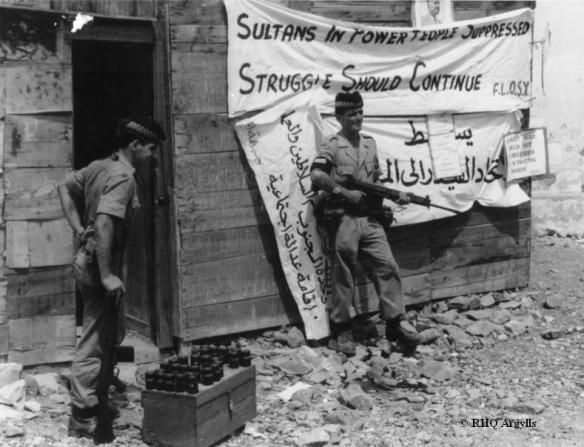
In this the nationalists typically saw things in reverse, with the SNP candidate in the famous Hamilton by-election in 1967 proclaiming “stop the world, Scotland wants to get on”.  In fact Scotland had been rampaging on the world for two centuries and many colonies at the time wanted it to get off.
Aden2005


Today however 87% of Scotland’s manufacturing industries turnover is in companies owned outside Scotland.  One study quoted in ‘Time to Choose’ states that “economic power does not lie in Scotland.  It still predominantly lies at a UK level.”  Scotland does have an autonomous financial services industry, in so far as any financial services in Britain can be described as autonomous. It also has oil but it isn’t owned by Scotland no matter what we think ‘Scotland’ means in this context.  Trade is dominated by the relationship with the rest of the UK – “Scotland exports more than twice as much to England, Wales and Northern Ireland as we do to the whole of the rest of the world put together.” (Time to Choose p. 108)

The basis for a nationalist Scotland has therefore eroded except in one very important respect, pointed out in the paper noted above.  This is in the growth of employment by the state: official Scottish Executive figures give public sector employment as a share of total employed as 23.5 % or 580,000.  However another estimate, taking account of out-sourcing and the growth of state-funded but non-state employment, puts the figure at 31% or 772,000.  The responsibility for most of this employment belongs to Edinburgh, not London; the official figures showing that 485,000 of the 580,000, or over 80%, falls under devolved budgets.

State employment in this respect substitutes for that lost by deindustrialisation.  This employment is financed by taxation of the increasingly service based economy including financial services, with its imperialist appropriation of surplus value, and of course oil, and also by debt.  What matters to Scottish nationalists are the revenues controlled by the state and hence the centrality of the debate about the tax revenue from oil and the levels of state expenditure it might support.

Scottish nationalism represents an attempt not so much to turn its back on Empire as to give a layer of the middle classes and capitalists direct access to the fruits of state activity, its taxation and expenditure.  To the working class the SNP promises fairness while to big business it promises a lower rate of corporation tax.  It doesn’t particularly matter what this rate is as long as it’s lower than that set in London; as the Tories lower it the SNP say lower still.

The state is no less the base of the nationalist left, in fact more so since it expects the state to do even more wonderful things to the Scottish working class.  For those who believe socialism is nationalisation of the economy it is no matter of principle what state might appear the most likely candidate to carry it out.

All this is why the proposals of the SNP promise such remarkable results from independence while also promising such little change to the fundamental features of the status quo.  While the currency stays the same and no radical change in policy is offered, relatively minor differences based on pure assumptions and assertions are open to the grandest of unproven promises.  No wonder there are complaints about the lack of clarity generated by the debate and confusion caused by claim and counter-claim.

Hypotheses, projections and counterfactuals take the place of hard and immediate alternatives.  So the debate is about can Scotland continue to use the pound sterling; can it stay a member of the EU or negotiate membership within months; can it continue with the Bank of England as lender of last resort and with financial regulation ‘from London’, otherwise a term of nationalist abuse.

There is no or precious little debate about whether the pound should be the currency or what a currency means or is supposed to achieve, or about how the financial services industry could provide the catalyst for a new economic crisis.  Keeping the pound, keeping financial regulation from the city of London, staying in the EU and continuing to cut corporation taxes are the marginal ‘changes’ upon which grand nationalist rhetoric hides reality.   Meanwhile the No camp assists the nationalists by claiming that they can’t have many of their fairly timid set of demands.

But if Scotland actually was an oppressed nation the nature and characteristics of such oppression would be central to the debate.  Even accepting a continuing capitalist Scotland there would be something important, something urgent, something raw that would inflame passion.  But there isn’t.


[i] The Economic basis of Scottish Nationhood since 1870, Jim Tomlinson, University of Glasgow.