Oppressor and Oppressed (6) – the enemy of my enemy is also mine

In a previous post I noted that the Russian invasion of Ukraine with a relatively small army meant that it did not, and could not, hope to annex the whole country and that its limited claims of annexation in the east of the country demonstrated the intention not to annex the whole country.  And all this is true as far as it goes.

Russia, however, has expanded its mobilisation, increased its military budget, and made clear that its war aims include denazification and demilitarisation of Ukraine in order that it can no longer pose a threat to Russian security or be an accomplice of NATO in threatening it.  So, while its strategy and objective is not primarily one of territorial gains, its key objective is the attrition of the Ukrainian armed forces.  It has these aims because it would, as I have also said before, be no great victory for Russia if the Ukrainian state were to lose only the regions that could be controlled by a pro-Russian population while it remained free in the greater part of the country to rebuild its army and join NATO.

Leftist supporters of Russia think its war aims are justified, thereby making their idea of the interests of the working class synonymous in this case with the interests of the Russian State, just as leftist supporters of Ukraine do the same.  In the case of the latter, they ignore that this means supporting the project of US imperialism to weaken Russia as a step towards the encircling of China.  In other words, they claim to oppose the war by supporting the advance towards an even greater one.

By claiming that Russia’s invasion of Ukraine demonstrates that it is an aggressive imperialist power intent on taking over Ukraine it justifies that country’s armed defence by the US and NATO and gives carte blanche to acceptance of the same claims by other capitalist states in the Baltics and Poland etc.  In doing so the rest of the NATO alliance is thereby validated.  You can’t support imperialism just a little bit, only here and not there. You can’t tell the workers of Eastern Europe, In Poland or Baltics etc. that their enemy is their own ruling class and that they should oppose the aggressive NATO alliance if you have just rejected those claims next door in Ukraine.

But supporters of the Russian state must also accept the logic of their position.  In order to achieve the war aims that they have bought into they must accept the means necessary to achieve them, just as supporters of Ukraine have supported NATO intervention as an inevitable consequence of their defending that state.  The removal of any potential threat to the security of the Russian state from Ukraine means the crippling of that country and an effective Russian veto on its political leadership.  Genuine socialists will not fret over the weaknesses of any particular capitalist state, since we seek their overthrow and replacement by the rule of the workers through their own state, but the subordination of one capitalist state by another requires oppression that socialists do not support.

In the case of Ukraine it is necessary for Russian war aims that it lack the industrial capacity to create its own arms industry of the required size, and that it lack the human resources to effectively fight.  The attacks on industrial infrastructure and the massive decline in population is evidence of growing Russian achievement of these objectives.   The population of the country fell from 41.2 million in 2021 to 34.7 million in 2023.  In 1999 52.3m people lived in Ukraine; the dramatic fall in population has therefore not been mainly the result of the war but of the disastrous effects of the introduction of capitalism after the fall of the Soviet Union.  Once again, the main enemy of working people is proved to be its own ruling class, which now sends them into war or exile in pursuit of war aims that are to the benefit of Western imperialism.  The future looks even bleaker.  This does not however absolve the Russian state of its responsibility for the invasion and its consequences.

If it is alright to inflict this oppression on Ukrainian workers, then leftist supporters of Russia cannot claim to defend the interest of the working class in any general and universal sense, since Ukrainian workers are no less a part of the world working class than any other.  If the interests of the Russian state can permit this because of some primary objective of defeat of US hegemony, why would this not equally permit suppression of the Russian working class, as is currently the case?  And if this war is only part of a larger picture of preventing the US ultimately dominating China, why isn’t the Chinese capitalist state permitted to bolster itself by suppressing the Chinese working class as well?  Between them the so called socialist supporters of Ukraine and Russia can effectively justify the suppression of the working class of the whole world.

By supporting Ukraine in its maximalist demands, and US support for them, the pro-Ukraine Left has effectively signed off on the extension of Russian war aims to the more or less ruination of the country, as the only effective way to neutralise it when it has become a proxy for the US and NATO. They may believe that Ukraine is determining the nature of the war but by it being utterly dependent on Western imperialist support it is the objectives of this imperialism, and its capacities to deliver on them, that determines its nature and its outcome, and also the political character of this left’s support for it.

So what are the implications for those opposing the war and presenting negotiations as the means towards peace?  If the US seeks war in Ukraine it is not on behalf of Ukraine but itself, and if Russia seeks subordination of Ukraine to its security interests, what concern does either have for its people?  These are the competing interests that will frame any negotiations because these are why the war started, will ultimately determine its result and thereby the outcome of any negotiations.

In any event, Ukraine as a state and its people will be the plaything of greater powers.  Russia can have no interest in a ‘Minsk 3’ deal that leaves its war aims unachieved while Ukraine has also rejected a ‘Minsk 3’.   Russian proposals to the US before the war were not consistent with US policy of its substantial and definitive defeat and if implemented would have signalled acceptance of Russian regional influence.

To argue for negotiations that could only be concluded by these parties is to argue for some temporary pause in their mutual antagonism, which would have to involve removal of the antagonism itself to be any way permanent, which in turn would mean the end of great power rivalry and competition among the largest and strongest capitalist powers.  In other words the removal of capitalism itself.

The role of socialists is explain all this and to warn against the designs of both parties, including the Ukrainian state that has made itself a willing proxy of Western imperialism, before and after commencement of the war.  What you don’t do is pick one oppressor rather than another that therefore necessarily requires an oppressed.

Back to part 5

Forward to part 7
Oppressor and Oppressed (2) – Palestine and beyond

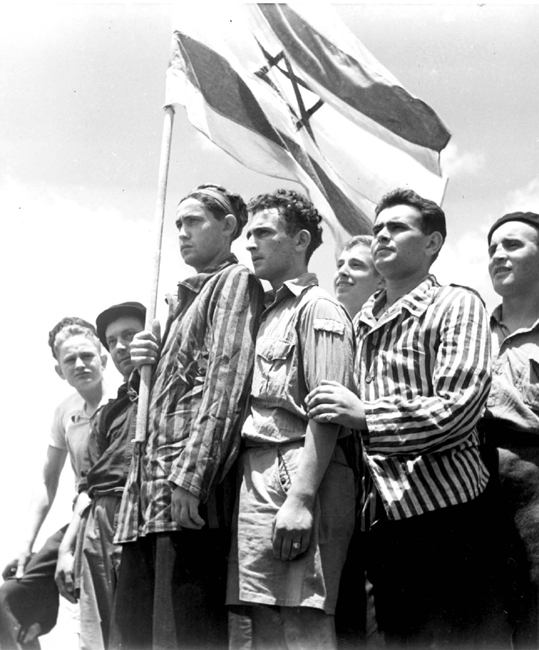
Buchenwald Concentration Camp survivors arrive in Palestine in 1945.

If ‘it is all very simple. We support the struggle of the oppressed’ it should not be difficult to identify who they are, and usually it isn’t, but not always.  What their oppression consists of is sometimes harder and how it is to be remedied harder still.  When I say harder, I mean that there is usually more dispute about it, not that there is something intrinsically difficult to determine but rather that there are fundamental differences about how it may be remedied, which in turn determines how it is understood.

For example, intersectionality identifies multiple oppressions and their combination but in doing so also identifies multiple oppressors and a hierarchy of oppression that can act to divide the oppressed into competing groups, with no joint and common project to overcome their oppression.  This series of posts deals with national oppression but even here these problems are raised.

Current events in Palestine illustrate some problems.   Jews are among histories victims and their treatment by fascism during the Second World War has become symbolic of their whole history of oppression.  The state of Israel has appropriated this symbolism to assert its legitimacy and rights, except these rights include the claim to Palestine as a state for the Jews, a Jewish state.  This has included the ethnic cleansing of the indigenous Palestinian population, a project that continues to involve dispossession and genocide.  The history of oppression and continued antisemitism against Jews is waved like a shroud to justify the claims of the Zionist movement, which proclaims a political programme and practice that involves oppression of the Palestinians.

These claims were accepted by many and it has taken decades of Palestinian oppression to reverse the sympathy many have had for the Jewish state. It should not have taken so long and stands as a warning against too simple an understanding of oppression and the claims of the oppressed. History is not a tale of good versus evil.

Marxism poses the working class as the force that can create the conditions for the ending of all oppression, whether based on class, sex, race, nationality or religion etc.  Since none of these will be ended without struggle it proposes a political programme to encompass all of them and sets out principles to judge the policies and strategies to pursue them.  As Marx once said, philosophers have only interpreted the world in various ways, the point is to change it.  To change it we have to interpret it correctly.

If we take the two wars currently raging in Gaza and Ukraine we are faced with the prospect of their expansion; so we need to understand the context in which they developed and how they might spread.  The war in Ukraine had not even begun before the United States threatened China by imposing economic sanctions, first by Trump and then by Biden, with warnings that it will intervene militarily in Taiwan.  Biden has now talked about an ‘inflection point’ in history, a decisive turning point affecting the whole world.  

Western powers have invested so much armed support to Ukraine they have admitted running out of some types of ammunition while promising to rectify this through massive rearmament, reminiscent of the build up of arms before the First and Second World Wars. A US general has predicted the possibility of war with China by 2025.

To think, therefore, that the wars in Gaza and Ukraine are unrelated events and are not expressions of the potential for a world-wide catastrophe is to feign woeful ignorance.  A response that starts from identifying the oppressed in Gaza and Ukraine and championing their cause does not get near understanding the stakes involved and what is necessary in response.

The Palestinian people are facing ethnic cleansing that in its purpose and execution is bleeding into genocide.  At a recent Palestine solidarity demonstration in Belfast a Palestinian speaker repeatedly thanked Israel for demonstrating its open commitment to destruction of the Palestinian people and to its murderous character, its dispensing with the normal lies and deception practiced by Western politicians.

This open declaration of barbarism would not be possible without the support of Western imperialism that demonstrates its full agreement to Israeli actions and revealing its own murderous character.  Rule by the capitalist class in most Western countries has ordinarily been based on some level of consent, or at least acquiescence, but their support for Zionist genocide is tearing a veil from the ugly face of capitalism.

This is the reason for the opposition to demonstrations in support of the Palestinian people, because they are objectively, and more and more subjectively, demonstrations against western governments and by this fact western imperialism.  In circumstances where this imperialism, under the hegemony of the United States, threatens ever wider and even greater cataclysmic conflict in pursuit of US hegemony, this threatens the support or acquiescence of their own working classes and thereby US dominance.

As we have said before, the Palestinian struggle is not just about Palestine– the world-wide demonstrations of support are proof of this.  The current slaughter is the continuation of the Zionist project and the Palestinian people are calling for a permanent solution before it completes.  By themselves the Palestinian people cannot prevent it and both an immediate and lasting ceasefire and creation of a free Palestine can only arise from a wider political struggle and revolutionary process.

This involves not only opposition to the Zionist state but to the reactionary Arab regimes that oppress their own people and seek increased collaboration with Israel.  Identifying the Palestinian people as oppressed does not identify how they can be free from oppression.  To be on their side means recognising this by including the vast majority of the Arab people in a struggle against their oppression.  Sweeping away the reactionary Arab rulers also includes disposing of the reactionary leadership of the Palestinian Authority. 

If the ending of one oppression is to succeed, and not to lead to another, it means embracing Jewish workers in Palestine, while also recognising that this necessarily involves the defeat of Zionism, with its project of Jewish subordination of the Palestinians and other Arab populations.  The argument that the possibility of a future oppression means that the current Zionist one must be accommodated or conciliated must be rejected; the possibility of a future oppression can never justify acceptance of current oppression but rather helps define how it should end.

The support given to the Zionist state by western imperialism means that even this is insufficient.  At the end of the day only the defeat of this imperialism, which can only be definitively carried out by its working class, can remove the decisive support available to the Zionist state.  The demonstrations in solidarity with the Palestinian people are therefore part of the same struggle that must become conscious of its own nature.

This is what imperialism fears most.  I remember being on the million-plus demonstration against the Iraq war in London, alongside many others across the world.  They did not prevent British involvement because the demonstration illustrated that the passive slogan ‘not in my name’ only dissociated the demonstrators from the actions of their governments but, by remaining at simple appeals to their ruling class, did not advance any project to remove them.

We can see from the barbaric oppression of the Palestinians that recognition of their plight as an oppressed people is only the first step.  The next are to understand how this oppression was created, how it persists and how it can be removed only by going beyond appeals to those supporting the oppression to end it.  Already, workers in Barcelona and Belgium have decided to take things into their own hands by blocking the supply of arms to Israel.  The extension of this across the world would be an enormous step towards ending the destruction of Gaza and attacks in the West Bank and against their own ruling class.

The oppression of the Palestinians thus raises many wider questions because it has a long history and involves the rest of the world.  No solution is possible that ignores this history or what is happening elsewhere.  War is an inevitable product of capitalism and these wars are the most recent of the very many wars that it has created, and will continue to create, unless a movement is created not simply to opposes this or that oppression but the system that perpetually creates all of them.

For many young people the oppression of the Palestinian people has opened their eyes to the need for political action to defend an oppressed people but their failure to take similar action in the much bigger war in Ukraine, or to appreciate the potential for even greater conflict, shows that they need to learn the lessons from the failures of their older generations, who opposed oppression but have failed to end it.  So it is not quite ‘all very simple’?

‘We support the struggle of the oppressed’ is good but there is an enormous problem when you oppose western imperialist intervention in Palestine but sit back or support it in Ukraine.

A look at the war in Ukraine is next.

Back to part 1

Forward to part 3

The enemies and friends of Palestinian Liberation (2)

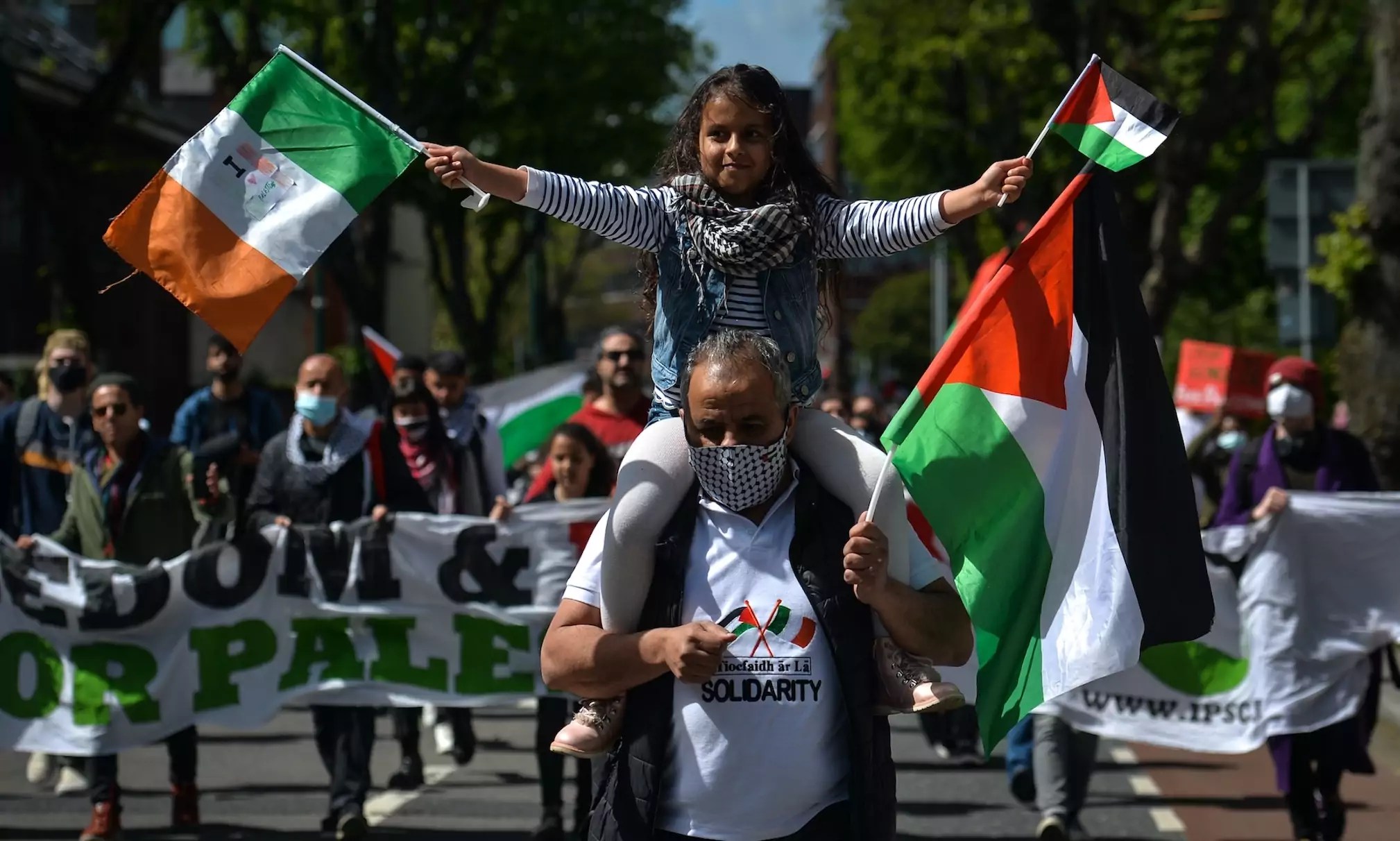
Demonstration in solidarity with the people of Palestine in Dublin, Ireland. (Photo: Artur Widak/NurPhoto via Getty Images)

US imperialism has made it clear that the Israeli cause is not just its cause but that of imperialism as a whole, encompassing its other proxy – Ukraine.  This country in turn has been happy to endorse this alignment, with Zelensky seeking a photo opportunity with Netanyahu but with Israel showing reticence only because its relations with Russia are not one of open antagonism.  An indication of the reactionary character of Russia and an embarrassment to everyone, including those leftists whose ‘anti-imperialism’ involves support for Russia.

On the other hand, many friends of the Palestinian people start sometimes from humanitarian concerns or some sort of more or less consistent and considered opposition to Western imperialism and its Zionist proxy. 

So who are the real friends of the Palestinian people might seem to be a reasonable question.  In answering it we have already seen from the previous post that we cannot identify who these are simply by accepting their word for it. We need to determine who might be expected to support the Palestinian people based on their own interests in doing so and what this support amounts to and its objectives might be.

So, just as every Arab country and people is composed of ruling classes, for whom the Palestinians are a problem, so too are there working classes and other subordinated sections of the people who genuinely support the Palestinians and have demonstrated this support.  But the Palestinian people themselves are also divided into classes, including a working class and other subordinated and marginalised people, for example in refugee camps, as well as a Palestinian middle class and bourgeoisie.

It has been the policy of the Arab states to turn the Palestinian movement into replicas of themselves, with a relatively privileged and corrupt leadership, which is why the Palestinian Authority lost Gaza and is now more and more discredited in the West Bank.  This has led to the growth of Islamic fundamentalist movements with their own state sponsors. A recent article in the ‘Financial Times‘ by a former British ambassador to Lebanon recommends that imperialism make its own attempt to fashion a Palestinian movement – “the US and Europeans have recog­nised that they need to rebuild main­stream Palestinian lead­er­ship, hav­ing cast them adrift.”

So, everyone wants to help the Palestinians, even the imperialists who are helping the Zionist regime murder thousands of them, or is happy to stand aside and parrot Israel’s ‘right to self-defence’, when what they actually mean is its right to commit mass murder and ethnic cleansing. Those who defend the democratic rights of the Palestinian people cannot therefore avoid the question of what sort of Palestine they want to solidarise with – an end to the current siege and offensive is only the most immediate task.

If we believe we can build a movement that can make a difference then it also needs to develop its own views and policy on the role of imperialism, the Arab states, Islamic fundamentalist regimes and movements, and the position of Jewish workers. This is what is meant by saying, as we did in the first post, that ‘the question of Palestine is not only about Palestine’. Even when it is about Palestine we should have a view on what sort of Palestine we want.

Arguing that it is none of our business is mistaken on two counts. First, it will not stop every other force, from imperialism to Islamic fundamentalism, seeking to create its own version of Palestine, and second, solidarity is a two way street. This means unless we think the Palestinians will always be purely victims we must allow their agency, and we want their actions to be in solidarity with the struggles of workers in the rest of the world who are, and will, come to their aid.

This means we need to consider what sort of Palestine solidarity we need. The same corruption, deceit and reactionary outlook that infects the Arab regimes, and the Palestinian movement itself ,exists among those in the West supporting Palestine, partly reflecting their class interests and partly, in some cases, awful politics.  Let us look at Ireland as an example.

The Irish state, and its people generally, are known to be the most pro-Palestinian in Europe, the Irish President, who has only symbolic powers in the main, voiced his opposition to von der Leyen’s declaration of unconditional support to Israel when she quickly visited it.  Yet who is stupid enough to believe that the Irish state, so dependent on the United States and its multinationals for its financing, will do anything effective to support the Palestinian cause and hinder Western imperialist support for it?

Or take the prominent participant in recent demonstrations supporting the Palestinian people – Sinn Fein.  It will most likely soon be a participant in Government in the Irish State. Is it going to use its position to effectively challenge Israel or its imperialist backer?  To ask the question is to answer it.  In the past it has had secret “below the radar” meetings with Likud, ‘explaining’ that it made its criticism of Israel’s policies in private, exactly the same boast of von der Leyen, Biden, Sunak etc. etc. More recently, it joined with the rest of the Irish establishment in welcoming Joe Biden to Ireland.

The only force that has an interest in solidarity with the Palestinian oppressed is the working class, and this is because their interests are aligned in opposing imperialism and the oppression that accompanies it.  Empathy with oppression is fine, but unless solidarity is a two-way street based on mutual interests it will not be strong or lasting.  Unfortunately some on then left are unable to express this solidarity consistently, because they either support western imperialism in Ukraine or also support the Zionist state itself.

Joe Biden has been congratulated by bourgeois media commentators for wrapping up the aid package for Israel with that for Ukraine, to out-manoeuvre Republicans in Congress, but it places a question in front of those on the left who oppose Israel but support Ukraine – do you support it?  Responding that you would wish to see the objects of this aid treated separately neither answers the question nor addresses the nub of the matter, which points to their inconsistent opposition to imperialism or in other words, inconsistent support.

If the Palestinian people are in the maelstrom of the world-wide imperialist conflict, the question to be put is how would it be possible to end their oppression without also ending this wider conflict, for as long as imperialism exists, so will war.  The eruption of the largest war in Europe since World War II and the renewed ethnic cleansing of the Palestinian people, with war also threatened in China and Taiwan, shows that this is not an idle or academic question.  It is one that requires and defines political movements and programmes.

It is not the first time the socialist movement and the working class has been placed with the choice.  In World War I the socialist movement split over ‘defence of the fatherland’ with most backing their own capitalist state in the war.  Today, much of the left has repeated the betrayal, mostly rallying to Ukraine and de facto Western imperialism, while another part supports Russia, ludicrously under the banner of ‘anti-imperialism’.

Neither has argued that the working class must maintain an independent position opposed to both, or argued that the only answer to capitalist war is socialism.  None of their various claims–for ‘self-determination’, ‘anti-imperialism’, or even ‘Free Palestine’ include any credible argument that these lead to socialism or are part of a socialist programme.  Nor could they– how could Western imperialist support for capitalist Ukraine, or support for Hamas, or other Arab states, or the Iranian state, lead to such an objective?  Yet many who support ‘Ukraine’ or the Palestinian cause claim to be socialists.

A socialism that is always deferred, to come to the fore at some future undefined point, while others in the meantime limit and define the political character of any solidarity, is blind to its own impotence.

The alternative programme is permanent revolution, which was first enunciated by Marx after the revolutions of 1848 and further elaborated by Trotsky after the Russian revolution in 1905 and put into practice in the revolution in 1917.  A future series of posts will look at how this has been, and should be, understood.

Back to part 1

The enemies and friends of Palestinian Liberation (1)

The hypocrisy and cynicism of Western imperialism is nauseating.  Biden, Sunak, Macron and Scholtz, not to mention von der Leyen all visited Israel to express their solidarity with the Zionist regime that over the last few decades has made it clear that the political solution these politicians claim to support is dead.  The seizure of land on the West Bank by settlers and killing of those getting in their way destroys any illusions that a two-state solution is remotely being considered.  This, and the increasing Zionist violence inflicted on the Palestinian population, is part of the explanation for the armed action of Hamas.

This was roundly condemned by these leaders whilst Israel had already begun to commit mass murder and destruction in Gaza.  The rest of the world is supposed to be brow-beaten into acceptance of this ethic cleansing through demands that they accept Israel’s ‘right to self-defence’, a right never invoked on behalf of the Palestinians.

As they became aware of mounting horror and opposition to the Zionist regime’s exercise of this ‘self-defence’, they called for humanitarian relief for the imprisoned population in Gaza, with Biden claiming he had won such a concession, before he cleared off back to the US to announce proposals for a $105 billion package of support for Ukraine’s war against Russia and Israel’s mass murder.

The cheque given to Israel, to ensure it could afford its mass killing, was underwritten by endorsement of its murderous siege, with the fig leaf of the opening of the border to Egypt of some relief from the blockade of food, medicine, water and fuel. The population of the north of Gaza was told to move south, as if this was a move to safety and access to humanitarian aid.

Moving south, they were bombed and have met with such pitiful amounts of help it is cynicism of extraordinary proportions.  The promise of relief by Biden was as much a part of the war on the Palestinians as the endorsement of ethnic cleansing.  The sending of aircraft carriers and other battleships by the US and Britain is a signal that the pogrom being carried out by Israel will receive their protection.  The mass protests, despite the propaganda of the capitalist media and threats of prohibition, demonstrate that in many imperialist countries working class people do not swallow the cynical policies of their leaders.

This demonstrates that the Zionist regime is increasingly no longer regarded as an innocent victim and that many want to express their support for a people subject to unimaginable oppression.  Opposition to the Zionist state is growing in the West but even this short resume of what has happened in the last few weeks reveals a bigger picture.

While the focus of many has understandably been on the immediate death and destruction meted out by the Zionist state, the actions and words of Western imperialism reminds us that the question of Palestine is not only about Palestine.  Israel is a settler colonial state sponsored by western imperialism, although also supported upon its creation by the Soviet Union, a testament to the reactionary nature of Stalinism.

The tyrannical Arab regimes are likewise creations of Western imperialism, which determined the borders of their countries for its own purposes.  Having just read some Marxist analysis of the Palestinian struggle from the early seventies, I was reminded that one such regime turned on the Palestinian movement and crushed it within its borders, in Jordan in 1970.  The recent recognition of Israel by the United Arab Emirates, Sudan, Morocco, and Bahrain, demonstrates again that these regimes are utterly reactionary.  Just before the latest events Israel was in negotiations to normalise relations with Saudi Arabia, which no doubt would have had some empty and worthless gestures towards the Palestinian ‘problem’ as part of the deal.

From the point of view of these regimes the Palestinian people are indeed a problem – that their populations are bitterly opposed to its oppression while they seek to advance their state interests, including through improved relations with the Zionist state.

In the past these Arab states were so weak, venal and corrupt that their subordination to Western imperialism was abject.  Their support for the Palestinians involved sponsoring their organisations as mirror images of themselves, cut down as in Jordan in 1970 when they became too big and powerful.  While these regimes have grown stronger and US imperialism has declined, so increasing their room for manoeuvre in protecting their own interests, these interests do not involve saving the Palestinians.

It is not a coincidence that the major opposition to Israel and immediate potential support to the Palestinians comes from a non-Arab regime–Iran–which is opposed by US imperialism and the Zionist state because it has asserted its own interests against them.  US imperialism has attempted to reverse its decline by provoking conflict, including marshalling its subordinate allies across the world in economic and military conflict with the enemies that might benefit most from its eclipse.

This has involved the proxy war in Ukraine against Russia, further expansion of its military alliance in Europe, and expanding economic sanctions against China.  The assertion of US authority in the Middle East through full commitment to Israel is part of the attempt to protect its imperial role in the region.  The opposition of Iran, the more muted opposition of the Arab regimes, and the increasing role attempted by China are all regional aspects of the ratcheting up of imperialist competition and conflict across the world.  The Palestinians in Gaza are currently in the maelstrom of all this, symbolised and made vital by Biden’s proposal for a $105 billion package to support Ukraine’s war and Israel’s mass murder.

Forward to part 2

Ukraine (6) – A proxy imperialist war

Photo: Ukrainian Presidential Press Office on Monday, April 25, 2022, from left; U.S. Secretary of Defense Lloyd Austin, Ukrainian President Volodymyr Zelenskyy and U.S. Secretary of State Antony Blinken, April 24, 2022,(Ukrainian Presidential Press Office via AP)

Covert action has been a favoured means of waging war since at least the start of the first Cold War, with such covert action often part of what has been variously termed vicarious or proxy warfare.  It has been used by Empires for a long time, employing the resources of their conquests, such as the British with Hindu Sepoys, Nepalese Gurkhas and the French with Algerian Berber Zouaves.  In the middle of the 19th century Britain ruled India with almost 278,000 troops of which only around 45,000 were European

From the Truman administration onwards the typical US intervention into other countries has also involved economic and financial sanctions, with the proxy element involving the demand that third countries implement these measures as well.  These are usually followed by clandestine or ‘special’ operations and then conventional war; the preferred agency of the CIA thus became involved in over 900 major covert actions between 1951 and 1975.

The supposed advantage of this approach is that it is less expensive in terms of money, troops and political capital.  The proxy war being waged by US imperialism today shows all these features except on a much larger scale.  Almost an entire, and relatively large, country is being employed as a proxy – unless one believes that the US is really concerned with the independence of the Ukrainian state and not the significant degrading of Russia.  The US has demanded that every other country impose its economic and financial sanctions even to the point of incurring massive damage to their own economies.

While proxy wars are supposed to be less expensive the sheer scale of this one involves massive cost, which however is incurred unequally.  The arms and energy industries, especially in the US are doing just fine.  Massive political propaganda has improved the political position of US imperialism, at least in the West, including the subordination of much of what passes for the Left in these countries, so that in this respect as well the proxy war has fulfilled its function. Whether this continues to hold good is another matter.

The first Cold War appeared to make direct war between the US and Russia unthinkable because of the risk of nuclear escalation, but the US has sought counterforce and nuclear primacy strategies that would supposedly make a nuclear war winnable in some meaningful sense.  The potential escalation involved in this proxy war is therefore greater than previous conflicts.

*                        *                           *

In a review of three books on proxy warfare In the London Review of Books Tom Stevenson notes that ‘America is the world’s most prolific sponsor of armed proxies’ and that it ‘has done most to develop the proxy war doctrine.  In January 2018 the US military introduced the ‘by-with-through’ approach. It was the work of J-2, the intelligence directorate of the Joint Chiefs of Staff: ‘the US military must organise, resource and train’ local forces and ‘operate by, with and through’ its ‘partners’ and ‘nations that share our interests’ (note that the word ‘proxy’ is avoided in favour of more anodyne terms). Using proxies has been common practice for the CIA for decades, but the J-2 doctrine describes an increasingly common style of war.’ 

He noted when writing (in the second half of 2020) that ‘around half the US troops in Afghanistan are technically mercenaries: they are deployed for private profit.’  In Iraq in 2008 the US had a proxy army of 103,000 ‘Sons of Iraq’ fighting in Anbar.  In Afghanistan the US trained over 50,000 mujahedeen, providing nearly $3bn in aid between 1979 and 1989.  As the CIA Director William Casey put it: ‘Here’s the beauty of the Afghan operation . . . Usually it looks like the big bad Americans are beating up on the little guys.  We don’t make it our war . . . All we have to do is give them help.” 

The current war has been precipitated by Ukraine seeking to formally join NATO while securing the approval of US imperialism for its security strategy aimed at the conquest of the Crimea, which Russia considers its own territory. Nancy Pelosi, before the provocative visit to Taiwan, said after a visit to Kyiv and a meeting with President Zelensky, that America stands “with Ukraine until victory is won.” US defence secretary Lloyd Austin said “we want to see Russia weakened to the degree that it can’t do the kinds of things that it has done in invading Ukraine.”

US objectives are therefore not limited to those internal to Ukraine but to requirements in relation to Russia, its economy and security, and the balance of power between it and both Russia and China, to which the US quickly turned its sights on the pretext of the Ukraine war.  There can be no doubt that the amount of military aid provided by western imperialism has materially affected the dynamics of the war with the effect of turning almost the whole of Ukraine into a proxy for its own interests.

Since these interests are truly world-wide the potential for a global conflict is obvious, even the pro-war left acknowledges this danger while cheerleading Ukrainian armed forces.  This awareness does not translate into opposition to the war itself but only to the imposition by the US and NATO of a no-fly zone over Ukraine and the open introduction of their troops on the ground.

It appears therefore that the only inter-imperialist war that can exist for this Left is one that creates the immediate potential for a nuclear exchange.  This currently has the effect of allowing an underestimation of the potential for this happening through anything short of direct kinetic combat.  Even the right-wing RAND corporation presents scenarios in which US intervention can trigger direct warfare with the potential use of nuclear weapons.  Others were noted in the previous post.

It has been argued that there has been no nuclear war between the United States and Russia because conventional war between them is also inconceivable.  Except that it has reasonably also been suggested that direct conventional war between them has not occurred because no conflict between them has occurred that has involved the vital interests of both, and from which therefore neither can retreat.

NATO membership of Ukraine, with the possibility of stationing long-range missiles within a short distance from Moscow, coupled with an avowed policy of a direct conventional attack on territory claimed to be part of Russia containing its Black Sea fleet, would obviously seem to involve vital strategic Russian interests.  That this scenario has precipitated aggressive Russian action can be a surprise to no one.  To pretend therefore that only Russia is responsible for this war lacks any credibility.

Russia has time and time again warned that Ukrainian membership of NATO is a red line. Putin in 2008 ,after the summit in which NATO declared Ukraine would become a member, said that “we view the appearance of a powerful military bloc on our borders . . . as a direct threat to the security of our country.”

It does not matter whether Russian action is morally reprehensible and should be condemned.  It is not the job of socialists to right the moral wrongs of world capitalism and the states that it comprises.  The job of socialists is to argue and fight for a new society in which such wrongs are abolished, and this means starting from current society and seeking how it can be changed.  This is the subject of the long series of posts on this blog on Marx’s alternative to capitalism (here for example), which relies on the independent social and political organisation of the working class across the world supported by other oppressed and exploited classes and layers of the population.

This will not be done by defending the prerogatives of capitalist states on the grounds that they have provoked invasion by other bigger capitalist powers, or the idiot view that we should defend their right to join imperialist military alliances.  We should oppose both the Russian invasion and the participation of western imperialism because only this identifies the sources of the war and the enemies of workers suffering from it directly and indirectly.

Gilbert Achcar of the Fourth International says that the war in Ukraine is not an inter-imperialist war because such a war ‘is a direct war, and not one by proxy, between two powers . . .’    In the last couple of decades the phenomenon of imperialist proxy wars has had a resurgence and the most significant wars of the last few decades have all been proxy wars of one variety or another, either originating or developing as such, including Iraq, Afghanistan, Syria, Libya and others.

It does indeed matter that US and NATO imperialism is not attempting to impose a no-fly zone or placing large numbers of troops on the front-line but refusal to call this an inter-imperialist proxy war has led to a position in which the actions of US/NATO imperialism is supported (through supply of arms) and the actions of the reactionary proxy (the Ukrainian state) are openly celebrated.

The war in Ukraine has brought the proxy mode of war increasingly adopted by imperialism to a new level, not only because of the scale of the war and the military support provided, not only because the proxy is a large state and is directly fighting Russia and not some Russian proxy, but because it involves the perceived vital interests of Russia.  We need only consider the response of US imperialism if Russia was pouring weapons into an anti-US Mexico that had declared its intention to reconquer Texas to appreciate the view of the Russian capitalist state. We can now see the provocation involved by successive reactionary Ukrainian governments including putting the objective of NATO membership into the constitution guided by an increasingly ultra-nationalist ideology.

Understanding that what we are seeing is an imperialist proxy war leads us to oppose both US imperialism and the Russian state and in doing so strengthens the independent political position of the working class.  If the road to freedom lies in appealing to the assistance of either US imperialism or Russia the working class will never learn to look to itself.

Back to part 5

Ukraine (5) – The role of Western Imperialism

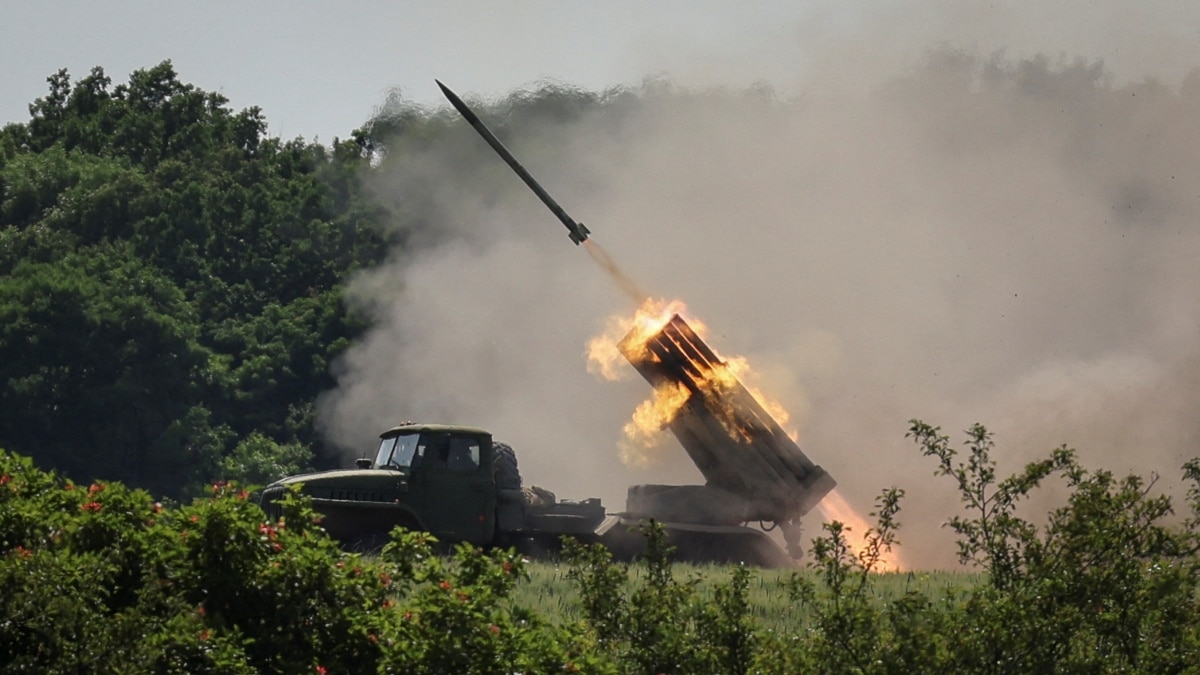
http://www.voanews.com

In the debate between Gilbert Achcar of the Fourth International and Alex Callinicos of the International Socialist Tendency, Callinicos sets out what Achcar’s view is on what constitutes an anti-imperialist war – ‘a direct war, and not one by proxy, between two powers, each of which seeks to invade the territorial and (neo)colonial domain of the other, as was very clearly in the First World War. It is a ‘war of rapine’ on both sides, as Lenin liked to call it.”

He then criticises this view – ‘This definition, which requires an inter-imperialist war to be one where both sides are seeking to conquer each other’s territory, doesn’t even fit the Second World War. British and French imperialism weren’t interested in seizing German territory, but in hanging onto their already overstretched empires. And Hitler wasn’t particularly interested in these. It was eastern Europe and the Soviet Union he was after.’

Callinicos finishes by saying that ‘The properly Marxist approach is to recognise that the present situation involves both an inter-imperialist war by proxy and a war of national defence on Ukraine’s part.’  It is not clear whether his proposed fight for national defence includes reconquering Crimea or the already separated parts of the Donbas.

Achcar writes that ‘the Russian invasion of Ukraine is the second defining moment of the New Cold War in which the world has been plunged since the turn of the century as a result of the US decision to expand NATO.’  Yet this ‘defining moment’ of a new Cold Ward is held not to define the war in Ukraine, the veritable front-line within it.  Still, he does not shy away from stating its importance, even if he gets the nature of it completely wrong: ‘the fate of Russia’s invasion of Ukraine will determine the propensity of all other countries for aggression.’

He opposes NATO ‘boots on the ground or the imposition of a No-Fly Zone from a distance’ and states that as a matter of general principle, he is against direct military intervention by any imperialist force anywhere. Asking for one of them to clash with another is tantamount to wishing for a world war between nuclear powers, he says.  Indeed so, but are we not also opposed to indirect ‘military intervention by any imperialist force anywhere’?  Not according to Achcar.

In a further article Achcar answers the following question – ‘Wouldn’t Ukraine’s standing up against the Russian invasion benefit NATO?’ – by saying ‘“so what?” Our support to peoples fighting imperialism shouldn’t depend on which imperialist side is backing them.’  To which the only rational answer is – how can a people be said to be ‘fighting imperialism’ when it is backed by a rival imperialism? And here, to be specific, we are talking about an independent capitalist state seeking to join by far the largest imperialist alliance!

In reply to the further question ‘Isn’t the ongoing war an inter-imperialist war?’ he answers:

‘If any war where each side is supported by an imperialist rival were called an inter-imperialist war, then all the wars of our time would be inter-imperialist, since as a rule, it is enough for one of the rival imperialisms to support one side for the other to support the opposite side. An inter-imperialist war is not that. It is a direct war, and not one by proxy. . .’

Since he believes that only a direct war between the US/NATO and Russia (and presumably China) is an inter-imperialist war then he must believe we have not seen an inter-imperialist war since World War II, and not between these protagonists, also perhaps excluding the Korean War in which China could hardly be considered imperialist but Russia was involved, leaving aside the question whether this too could be seen as imperialist since it was part of the Soviet Union.  

Since indirect intervention in Ukraine is not an imperialist war then all the too numerous to mention indirect wars, not to mention covert actions, by the US and others must not be considered imperialist war either.  From concern that we label too many wars as imperialist, which is itself rather strange if we consider imperialism to dominate the world, he has arrived at his happy conclusion that very few wars can be characterised as imperialist.

His response might be that one-sided imperialist interventions may be cited as imperialist wars but his argument is about an inter-imperialist war, although in the case of the war in Ukraine such a response would fail his argument.

Of course, the scope and scale of indirect imperialist intervention is relevant to considering whether and to what extent a particular war can be considered imperialist and thereby its political salience.  But this applies to Ukraine in which it is impossible to argue that both Russia and the US/NATO are not involved.  The sheer scale of Western imperialist intervention in Ukraine does not permit its intervention to be considered secondary. 

The major Western powers have publicly supplied over $14 billion in military aid, which is over two times the defence budget of nearly $6 bn of Ukraine in 2021, and excludes other promised funding nearly three times this amount, and no doubt other military support that has not been openly revealed.  Since these words were written Biden has promised even more lethal aid.  In addition, unprecedented sanctions must be regarded as war by other means and have historically preceded open conventional warfare.

The military aid follows years of increasing cooperation with NATO including training of its armed forces, their participation in the NATO occupations of Iraq and Afghanistan, and military exercises with NATO forces within the country. The US has directly impacted on the war through intelligence and real-time targeting of Russian forces and assets while it would be naive to believe that Western special forces have not been inside the country during the war.

The view that we are not witnessing an imperialist proxy war can lead to blindness to the assistance already given, both visible and hidden, and to the real possibility of escalation, which is at increased risk given what has already been committed.  It should already be noted that the nature of the weapons delivered by the US and other NATO powers is increasing in power and sophistication with the potential for fighter aircraft to be provided now under consideration. The debate is therefore not simply about an academic political characterisation of the war.  

Unfortunately, it is to be expected that much of the pro-war left will follow Western imperialist escalation, as it already has, not only because this is the logic of their political position of prioritising support to the Ukrainian State but because of an acquired emotional commitment. One only has to note Facebook posts in which so-called Marxists proclaim their gloating over Ukrainian advances to realise what counts for those with this commitment.

A recent examination of the potential routes to further escalation notes the following:

‘A Ukrainian law recently signed by Ukrainian President Volodomyr Zelenskiy gives Polish citizens the rights similar to those of Ukrainian citizens. This could serve as legal cover for thousands of Polish soldiers to enter Ukraine, don Ukrainian uniforms, and using NATO-supplied Western equipment begin fighting against Russia’s forces. When proof of any such gambit emerges – as it inevitably will – Russia could decide to hit Polish targets in response, bringing NATO into the war more directly in one form or another.’

The writer notes that ‘The Kharkiv advance was organized on the basis of: NATO training of tens of thousands of Ukrainian forces; massive Western weapons supplies to Kiev (e.g., see https://www.ustranscom.mil/cmd/usp.cfm); the NATO Central Command’s and Western intelligence’s deep embeddedness into the Ukrainian forces; NATO-designed counteroffensive tactics, strategy, and plan; large numbers of former Western soldiers and officers participating in the operation; possible participation of Polish officers and troops . . .  Retired former U.S. Army Colonel Douglas Macgregor has asserted that NATO officers form a military staff that is directing much of the Ukrainian war strategy and tactics.’

Back to part 4

Forward to part 6

Imperialism and Ireland


In the last post Boffy alerted me to a debate he has had on imperialism, the last few comments of which brought up the question of Ireland and its relationship to imperialism, and it is on this I want to make a few remarks.

He asks – “Does Ireland today conform to the ideas portrayed in Lenin’s “Imperialism, of a colony? Has development in Ireland been held back, by foreign investment or has it been advanced?”

On the first question the answer is partly yes – at least the North-East of the country, Northern Ireland – is a colony.  It is a part of one country ruled by a larger foreign neighbour that has not been integrated into the larger conquering territory, witness the howls of rage at the DUP supporting a Tory Government when not the slightest notice is taken when this Party is lauded for peacemaking in Ireland by being in government.

A settler-colonial population has historically claimed superior social and political rights over the native population, including most importantly, the claim that it needs a separate state because the native Catholic Irish cannot be trusted not to discriminate against Protestants the way Unionist Protestants have discriminated against them.

Sectarian social and political practices have been carried out that have been variously allowed, sanctioned and enforced by the British rulers.  When resistance to this erupted, the British State employed its superior force, armed the local settler colonial population and facilitated some of the worst sectarian atrocities by paramilitary thugs based in this population.  In the worst period thousands of Catholics moved in order to escape potential pogroms.

Even today the marking of territorial conquest is expressed through segregated residential areas with flags flown and footpaths painted to denote sectarian control.

A lot of this is widely recognised but the label colony is avoided in order to legitimise the role of the British, the role of the colonialists and the role of the erstwhile resistance to this British rule which has now accepted the partitionist framework.  It is also less easily appreciated because the native population are white West Europeans and could not have been, and generally have not been, subject to the barbarity of darker skinned native populations in other parts of the world.  The Great Famine, an Gorta Mór, is a major exception.

An English leftist, working for a while in Belfast in the 1980s and attending a meeting, noted that the ‘war’ that was taking place was indeed ‘low intensity’ and comparatively few people had or were being killed.  It was noted by a comrade of mine that while this was true the conflict was remarkably prolonged and protracted.  The two are undoubtedly related, but it is also the case that the North of Ireland is a small place and scaled up the scope of the violence looks less meagre.

But for all the reasons that the North is a colony the Southern Irish state is not.  It is as independent a state as any small Irish state could be.  As I have noted before, the last trappings of foreign British rule, including the oath of allegiance to the British monarchy and ownership by Britain of certain Irish “treaty’ ports, is history.

Some ‘anti-imperialists’ reject this level of independence and want a ‘real’ independent Irish State, one that can only come from being what is called a Workers’ Republic.  In fact, behind this ideal of ‘real’ independence lies Stalinist notions of state socialism, which involves nationalist politics and nationalisation, in other words it is much more likely to involve state capitalism.

What it isn’t is socialism and a Workers’ Republic.  It’s also utopian because there can be no independence, in the sense of a self-determining autonomy, for an Irish State within globalised capitalism.  It also has no support, as the tiny level of support for the Irish State leaving the EU demonstrates.  As for a real Workers’ Republic, it will enjoy much greater integration and unity with its neighbours than the current Irish State, so if you’re supporting socialism in order to be a ‘real anti-imperialist’ and have ‘real independence’ you’re backing the wrong horse.

These considerations matter for the approach of Irish socialists to the fight for socialism.  Whoever thinks that anti-imperialism is the banner under which to organise the whole Irish working class has to explain what national liberation content there is for Southern workers who face their own state and not a British one.  On this score, the answer to Boffy’s second question – “Has development in Ireland been held back, by foreign investment or has it been advanced?” – is that it has been advanced.

In the debate, Phil remarks that “In Ireland the pro-Moscow Sticks (Workers Party) supported imperialist investment for precisely the reasons you give. But the choice was not imperialist investment or no investment. Completely missing from that approach is the overthrow of capitalism. Not waiting until some magical figure of output has been reached and the industrial working class has grown to be a certain percentage of the population. All thanks to imperialism.”

Ignoring the irrelevant flourish of the last two sentences, and the fact that we are nowhere near approaching socialist revolution in Ireland, as a real, concrete and practical proposal in the here and now, in the sentence before these, Phil will know that it’s not just the Workers’ Party that supports multinational investment in Ireland – everybody does!

As the political joke goes, the difference between the Official Republicans and the Provisionals is merely a matter of timing; Sinn Fein do not now oppose this investment.  And neither does the social-democratic left, in the guise of the small self-proclaimed Marxist organisations, who signal their acceptance of this investment by proposing only that the low corporate taxation especially set to attract this investment actually is 12.5%; that the tax rate does what it says on the tin and is not lower than this headline rate.

The real question at issue is whether the struggle for socialism must be prosecuted under the banner of national liberation.  Those who say yes have taken last years’ centenary anniversary of the founding blow for national liberation as the guide for future action.  As I pointed out in a series of posts beginning with this one, the 1916 Rising did not itself pose a solution to the division of Ireland and neither has any nationalist or republican struggle since.

A purely democratic struggle or revolution could on paper offer a solution to the undemocratic abomination that is partition and the sectarianism that passes both for the problem and the solution in the North.  A truly democratic platform would be enough to indict the colonial Northern state but what would it offer to Southern workers.  Even a classic capitalist democracy in Ireland would destroy sectarianism and destroy the power of reactionary unionism but it would offer little to Southern workers.

What is required in Ireland therefore is the strengthening of the working class, and the prominence today of foreign capital, and the country’s history and current reality of foreign state intervention, should make it blindingly obvious that the alternative is not any sort of nationalism, under the banner of ‘anti-imperialism’ or not, but the international unity of Irish workers with their class brothers and sisters across Europe.  The idea that Irish workers will overthrow Irish capitalism because they want to get rid of foreign imperialism is utter nonsense.  Southern workers won’t go to war to fight British imperialism in the North and they won’t go to war to drive out multinational companies.

The stages involved in increasing the strength of the Irish working class include building stronger and more active trade unions; cooperative production that visibly heralds the alternative to capitalism, and a working-class party that expresses the best impulses to political independence among Irish workers, no matter how under-developed that may currently be.  It also means clarity on the nature of Irish reality and the lessons to be learnt from the history of the Irish and international socialist movement.

A footnote on the pathology of imperialism part 6

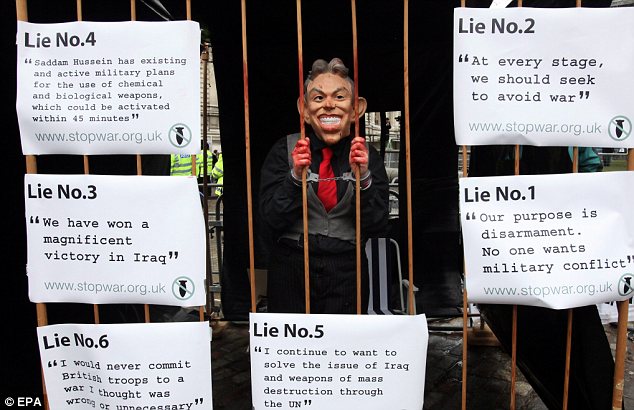
article-1246958-08136931000005DC-434_634x410Belfast Plebian

We sort of know from the historical record that there have to be potential economic rewards reaped by intervening in conflicts in the region, but as Syria has very little oil and gas compared to some of the others, some political scientists have concluded that the war must be about future access to fresh water.

There has always been more to imperialism than mere economic determination, there is the question of State of power and what that ultimately means. The politics of States in conflict concerns itself with power, yet political theory has trouble explaining what this actually amounts to. The working definition is that a viable State must hold a monopoly on power and no political regime can afford to give it up without a fight, so what is happening in Syria is a tug of war over State power. It is less about the type of regime i.e. a democracy or oligarchy than it is about State power.

What type of political regime comes to hold State power in Syria is of some importance to the people of the region but less so for the external interveners, none of them have democratic intentions or credentials, especially the democrats who form the Western interveners, the recent example of Egypt proves it. The western powers have been nearly coming to blows over who gets to sell the military regime military and police equipment.

Most people say they are sickened by politics, some complain about government policies, some about financial corruption, but everyone is sickened by the lies that come with politics. A few political theorists, for example Hannah Arendt cling to a romantic account of a life dedicated to public service or politics.  She respected, even admired, those statesmen dedicated to politics but still thought it necessary to account for the super abundance of lies that stain the reputations of them all

She once made an argument that philosophers, starting with Plato, had too much sway over our understanding of politics; that they held a negative viewpoint about it, and were too preoccupied with finding the truth to bother with the nonsense of it all.  She worried that if good people refused to care about politics the very worst would have their way with it. She felt that the European Jews suffered so much at the hands of Hitler and Stalin because they wanted to know as a people who took no part in politics. The philosopher Blaise Pascal explained the existence of the works about politics coined by Plato and Aristotle by reminding us that ‘this was the least philosophic and the least serious part of their life . . . they wrote of politics as if they had to bring order into a madhouse.’

What I found most interesting about the Lance Armstrong documentary was the part the intelligent telling of lies played in shaping the story. His story started out with one major lie known about by a few friends to get the cheating process started and it just got bigger and more elaborate.  All sorts of friends had to be inducted into a growing web of lies, new lies to cover up for gaps in the old ones. It is interesting, that I did not think he was abnormal in the psychiatric way of having a personality disorder until near the end of his career as a champion, until he started telling lies on national television about others including friends. It seems that abnormal behaviour does not show up much as any sort of failure in logic or rationality, or an inability to cope with life or anything feeble like that, rather it came to attention just as a proliferation of lies. People began to wonder why there is so much lying taking place.

If we follow the story as a political one, we can say that in democracies, political logic or rationality sometimes goes in the same direction.  A few lies are told to get things moving, maybe some lies are thought necessary to become party leader, then some more serious lies are told to get elected into government, and when in power the politician begins to tell even more lies and the longer they stay in government the more the lies accumulate, until in the end they are often denounced as an out and out liar. How many successful political careers now follow the same path?  The question comes up, why does the quantity and quality of lies keep increasing until the day comes that the public demand a fresh start in the form of a new government or a new political leader?

If we think about the Lance Armstrong case things began on a big lie from the start, although this is not always applicable in politics. What happens is that the rationality, or political wisdom is not well founded at the beginning and then quickly falls apart in a welter of contradictions, or the rationality comes up against the tough reality of the world and can find no solution.  When reason can find no solution the lies begin to substitute for the rationality. The more inadequate the reasoning is, the more lies come to dominate. This might explain why governments fall prey to the need to steadily increase the quota of lies, when the policies that seemed to be grounded in rationality are defeated by reality governments do nothing else but invent lies to cover for the failure.

Imperialist politics comes out worst on this score; as I pointed out earlier the very theories of international relations seem to sanction lying from the very outset. The plan by the western governments to change the regime in Syria has failed, so we are into the failure and lying on an epic scale phase. Recent history is about to be rewritten to suggest that the western governments never wanted to get rid of the Assad regime in the first place, that they never encouraged the foreign fighters, that they were only ever in this conflict to smash Islamic State.

It is still the case that terms borrowed from a relatively unproven science called psychiatry are not generally used to describe the political field. The language of political theory is very stale.  Going right back to Aristotle almost every modern science began with an attempted revolution against this one philosopher. The first to oppose his conclusions were the Astronomers; then the Physicists overturned his physics, especially Galelio and then Newton; then the biologists overturned his account of animals and plants, here especially Darwin. Then in around 1910 the new theories of mathematical logic, starting with Frege, and Russell dethroned his syllogistic logic and his dialectic of categories; it is perhaps surprising that the revolution in logic came so late on. Then closer to our time, the German philosopher Martin Heidegger opened up a tribal battle against the metaphysics of Aristotle or his first philosophy.

What then happened with the politics and the economics of Aristotle, was he not also demolished here? Well in one sense he was but in another sense he was not. The Englishman Thomas Hobbes made the argument that in politics ‘Aristotle was the worst who ever wrote’.  When it came to the choice of ancient Greeks he much preferred the historian Thucydides to the philosopher Aristotle. This estimation is prevalent to this day in that the realist theory in international relations claims to find its own inspiration in Thucydides’ history. However in the mind of Hobbes, none of the ancients were of sound calibre because they had no proper conception of what science is and it was only after Galileo Galilei discovered how to apply mathematics to natural things that we really found out what science could become

It was Hobbes who thought that he was the one in the best position to knock Aristotle down from his ruling perch concerning political and legal education. He hoped to have his own works replace the ones of Aristotle in the best schools and universities. One can also make the case that Adam Smith and his students intended to do the same thing with regard to the science of economics. There could be no science without the imitation of the mathematical method, this is what Hobbes taught. He claimed that his own deductive account of politics was the future because it was based on knowledge of axioms.

The difficulty facing Hobbes and Smith was twofold; Aristotle did not believe that politics, ethics and economics could become a science in the modern sense. This philosopher thought that in science you must let your expectations be determined by the object to be studied.  Some objects are more resistant to scientific research than others and these included human objects.  He did not say that knowledge concerning politics and economics was never to be had, only that the knowledge we do have does not have all the attributes of theoretical knowledge.

The second difficult is that the deductions made in modern social science owe their worth to the fact that the object being studied is skipped over in favour of delight with the method deployed in the study. The followers of Aristotle argued that the new scientific method was implicitly idealist, meaning that the conclusions that are reached are due more to the method used than the object to be understood. This complaint is particularly strong in regard to modern mathematical economics that many believe has lost sight of the object to be understood. Also it was said that if Hobbes succeeded were Aristotle had once failed, then how come hardly anyone beyond his own lifetime agreed with the conclusions he made concerning the nature of good Government. The books of Aristotle were taught in the best schools for 700 hundred years, those of his opponents barely lasted for 50.

The problem we find with Aristotle is not that he did not pass down to us a sound method for the scientific study of politics and economics, rather he did not tell us much about the part played by unsupported dogma in science and crucially about lying and propaganda in political life. The enemy of truth in philosophy is error, the enemy of rationality is incoherence or contradiction, it is not deliberate lying and its soul mates conscious deception, propaganda, advertising and the PR machine. You will not find in the works of the philosophers an account of how these important things came to play such a central role in political life. The small drop of knowledge we have gleaned from the unproven science of psychiatry is of very recent origin, although it might be of some use if it can give us an insight in the twisted world of lies and deceit.

Finally it is not the case that capitalism and its economy is not something that cannot be understood within the bounds of normal reason. There is a rational core in capitalism and even in imperialism that is predictable. We can go a long way in understanding the power struggles of States on the world stage by just following the money. However we have become so used in recent years to following the story of the successes of imperialism that we have forgotten that it sometimes fails. It has failed in Iraq, in Afghanistan and is failing in Syria. When imperialism fails we are often confronted with an aftermath of immense destruction.

This aftermath is also to be easily found in the three failures mentioned. It is the pathology of political failure that we have been concerned with here not with the rationality of the success. The pathology of failure is not just about violence and destruction it is also about lies and deception on an epic scale. And in one way the lies and deception are more important than the violence and destruction, because to move on to the next struggle you have to make people think the previous one was not so bad after all.

I for one am not convinced that the western governments have for one moment really accepted that they got things drastically wrong over Iraq, for a little while they merely pretended that they got it wrong, Tony Blair and George Bush made fools of us all, especially concerning the weapons of mass destruction. They can always offer the sceptical voters a revised or false account of the reasons for the failure, with the rider that we will get it right this time. Lies are very important in politics.

concluded

A footnote on the pathology of imperialism part 5 – sectarian war in Syria

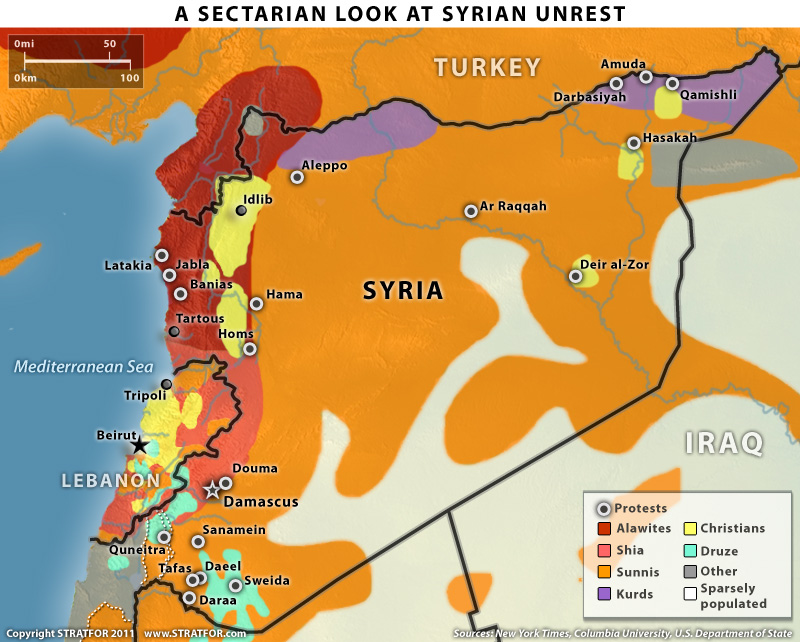
Sectarian STRATFOR Map of Syria

By Belfast Plebian

Over the summer months we were given to believe by reports in the western media that a more suitable, moderate army might be recruited and equipped to fight in Syria, the army of the oppressed Kurds. For a few months we listened to upbeat stories about how the Kurds were pushing back the Wahhabi fighters, of pictures of liberated Kurdish women not secluded in veils but dressed in military uniforms. This only lasted as long as NATO’s ally, Turkey refrained from attacking the positions of the Kurdistan Workers Party (PPK) and destroying the Kurdish People Protection Units

At the recent G20 gathering to discuss, supposedly, how to beat back Islamic State, we find the same western politicians standing shoulder to shoulder with the political leadership of another ultra conservative Sunni Islamic Party, only this time of a rediscovered ‘moderate’ one, the justice and development party or the AKP, led by what the English Guardian Newspaper likes to call Turkey’s dependable strongman Recep Tayyip Erdogan.

The recent election in Turkey took place at the same as a massive military onslaught on the Kurds was taking place, crossing the international border into Syria. The raid was so big that the Strongman had to go the Americans to plea for a renewal of his diminishing stock of bombs. The strongman is so committed to beating back the Islamic State their fighters were able to explode two massive bombs directed against the AKP and other non-sectarian political opponents during the election campaign

The party of the strongman supplies and equips its own legion of fighting Sunni sectarians across the border called the Ahrar al Sham. The strongman then ordered attacks on Rojava, the free part of Syria held by the Kurdish forces. It was reported in the Wall Street journal that Washington wanted it to be known that it was anxious to keep the territorial ambitions of the Kurds in check to fit with the interest of its NATO partner Turkey, and suddenly stories in the western media supportive of the army of the oppressed Kurds quickly faded away again.

It is generally accepted that Turkey is also buying oil and gas on the cheap from Islamic State. So it seems that the Kurds are not to be the West’s fabled boots on the ground after all. More and more the western governments are looking at Turkey as their agent of change in the region; we will have to wait to see how this turns out.  On the face it one might expect the western diehards to recalibrate their order of priorities, given that they have no willing army to substitute for the seventy thousand Wahabbi mercenaries already fighting and failing in Syria. The conflict is no longer a noble one, between the ‘just’, protesting on behalf of democracy and the ‘unjust’ who want to retain the dictatorship, it is an ignoble anarchy of competing local, regional and imperial interests all wrapped up in a frightful sectarian garb.

Syria is currently divided into at least four political territorial units. There is the part still held by the ‘Arab Socialist’ regime that is being backed by Iran and Russia. There is the part held by Islamic State that is being facilitated by Turkey and still being financed by sectarian backers in the Sunni Gulf States. There is the part that is in the hands of the partners linked to the western allies who still call themselves the Free Syrian Army, even though there is no unified army command any longer, and is endorsed in some fashion by the International Community i.e. the UN humanitarian agencies. Then there is the part that is in the control of the Kurdish factions, which have now to become self -sufficient. I don’t know how it will all turn out.

It should be mentioned that with this example I have only emphasised the strategic pact operating between the Western governments and the Wahabbi theocracy of Saudi Arabi, yet there is another side to the imperialist intervention, the pact between the Theocracy in Iran, the Arab Syrian dictatorship and the ruling element in Russia. The patriarch of the Russian Orthodox Church has claimed that Russia is waging ‘a holy war’ to preserve Christianity in Syria, a view backed by Putin. The Iran regime has called for a worldwide Shite jihad to protect the sacred religious sites of the believers in Syria. The Islamic Republic of Iran has rallied thousands of foreign fighters to protect the golden domed Sayyeda Zaynab Mosque of Damascus which is said to contain the remains of the granddaughter of the Prophet, and who is also the daughter of the martyred third imam Hussein. As many as 5,000 Lebanese Hezbollah have entered the sectarian fight, also thousands have come from Iraq, they all fight under the slogan ‘Bashar is not our concern, it is the Shiites.’ The India media report they think as many as 30,000, Indians Muslims could be involved. For every youtube video and facebook page placed by Sunni fighters there is another put there by the Shiites. If anything the Sunni foreign have met their match on the battlefield at the hands of the foreign Shiite fighters

A footnote on the pathology of imperialism part 4 – Wahabbi Islam

wahabimages

by Belfast Plebian

The ruling authority of the Saudi Princes can be traced back to a pact made in 1774 between one dominant Arab tribe and a Shia hating religious sociopath called Muhammad ibn Abdal Wahhab (1702-1792). The encyclopaedia Britannica tells us that :

‘ Abd al Wahhab’s teachings have been characterised as being puritanical and traditional representing the very early era of the Islamic religion. He made a clear stand against all innovations because he believed them to be reprehensible, insisting that the original grandeur of Islam could be regained if the Islamic community returned to the principles as first enunciated by the prophet.’

The pact intended that the clergy would be responsible for all religious-educational matters and the Al Saud warriors would be responsible for all political and military matters, including spreading an interpretation of Islam devised by Add al Wahhab. Unfortunately he describes both Christian and Jewish believers as sorcerers and devil worshippers, although he saved his real hatred for the other Muslim sects ie the apostates.

I am going to defer here to a historian who has written on these matters. I have on my book shelf a best selling book that I bought about five years ago by a historian called Reza Aalan called No god But God : the origins, evolution and future of Islam. He tells us that if it had not been for extraordinary political circumstances, Wahhabism would have passed away as a marginal and superficial sectarian idiocy.

‘Not only was this a spiritually and intellectually insignificant movement in a religion founded principally upon spiritualism and intellectualism, it was not even considered true orthodoxy by the majority of Sunni Muslims. Yet it had two distinct advantages, first it had the good fortune to emerge in the sacred lands of the ARABIAN PENINSULA, where it could lay claim to a powerful legacy of religious revivalism. Second, it benefited from a willing and eager patron, who saw in its simple ideals the means of gaining unprecedented control over the region. That patron was  Muhammad ibn Saud.’

The historian of Islam then tells us some important facts concerning the alliance between the two men, some of it is legend and untrustworthy but what we do know is:

The two men first met as Abd al-Wahhab and his disciples were tearing through the ARABIAN PENINSULA, demolishing tombs, cutting down sacred trees, and massacring any Muslim who did not accept their uncompromisingly puritanical vision of Islam….Abd al Wahhab’s holy warriors burst into the Hijaz, conquering Mecca and Medina and expelling the Sharif. Once established in the holy cities, they set about destroying the tombs of the Prophet and his first companions, including those pilgrimage sites that marked the birth place of Muhammad and his family…they set fire to every book they could find save the Quran. They banned music and flowers from the sacred cities and outlawed the smoking of tobacco and the drinking of coffee. Under penalty of death they forced the men to wear beards and the women to be veiled and be secluded.’

Then when much of the peninsula had been terrorised ‘they marched north to take their message to the Sufi and Shi’ite infidels. In 1802 on the holy day of Ashura, they scaled the walls of Karbala and massacred two thousand Shi’ite worshipper.in an uncontrolled rage they smashed up the tombs of Ali, Husayn and the Imams, giving particular vent to their anger at the tomb of the Prophet’s daughter Fatima.

What happened next was that the Ottoman Caliph sent a massive army to annihilate the Wahhabis. After some fierce battles, the Ottoman army restored the old order, ‘the Saudis had learned a valuable lesson; they could not take on the Ottoman Empire on their own. They needed a stronger alliance. …The opportunity to form such an alliance presented itself with the Anglo-Saudi Treaty of 1915. The British who were eager to control the Persian Gulf, encouraged the Saudis to recapture the ARABIAN PENINSULA from Ottoman control. To assist them in their rebellion the British provided them with shipments of weapons and gold. Under the command of Ibn Saud’s heir, Abd al-Aziz (1880-1953) the plan worked…After publicly executing 40,000 men and imposing Wahhabism over the entire population, Abd al-Aziz renamed the Arabian peninsular the Kingdom of Saudi Arabia….Here there was no debate between Modernists and Islamists, there was no debate whatsoever. Nationalism, Pan- Arabism, Islamic Socialism- none of these vibrant movements had a significant voice in the Saudi Kingdom. The only official doctrine that was tolerated was Wahhabi doctrine, any deviation was violently suppressed.’  

Now here is another BBC  iplayer film for the reader to take a look, it is called Bitter Lake. It tells us something of the still developing story of the connection between western imperialism and the ideological politics of the Kingdom of Saudi Arabia. At about 25 minutes in to the film we are presented with colour film footage of a meeting that occurred at the end of the Second World War, in February 1945 on a warship on the Great Bitter Lake, a part of the Suez Canal, between President F.D.Roosevelt and Saudi King Abd al Aziz. The voiceover says and I am paraphrasing a bit:

‘No one could possibly imagine the consequences of this meeting…The King knew that America needed oil ,Roosevelt wanted to forge an alliance between American industry and the Saudi King…The king was aware that there could be dangers posed to the customs and religion involved…we will take your technology and your money and political protection, on one condition, that you leave our religion alone’

wahabbi1

The pact in a nutshell was that America accepted the centrality of an unreformed Wahhabi religion in Saudi Arabia in return for unhindered market access to the oil and gas reserves it required for its industries. The Kingdom of Saudi Arabia represents an extreme form of what Leon Trotsky once referred to as the combined and uneven development of capitalism. A peculiar characteristic is the standing side-by-side in the same place of the very modern – advanced technology – and the pre-modern, ancient religion and barbarous customs

There is an aspect of this that is of some importance for our understanding of contemporary culture, the great divide between theoretical science and distribution of useful things. It is still the case with world culture that many societies appropriate all of the practical successes of science e.g. air travel, computer technology, phone technology, medicines, while blocking out all the theoretical innovations of the sciences that makes the many useful things available to everyone

This occurs even in America itself, most Americans are well clued into the various uses of technology, but a substantial number of them manage to completely neglect the theoretical claims of the sciences. The best example is the theory of evolution; in some surveys up to seventy per cent of Americans have dismissed it as real science. It is a happy accident that for such anti-intellectual people making use of the successes of science does not require them to know or care for the underlying theory. One result is that Wahabbis get to use modern technologies while screening their mind off from scientific theory, like evolution or the big bang. In our time we can experience the successes of science and technology without us making any intellectual effort.

The Saudi King and theocracy then decided that the Arab ‘socialism’ of Egypt’s Colonel Nasser was the new enemy to be contained. He had attempted to defy Britain and France by nationalising the largely British owned Suez Canal Company in 1956. The British and the French sent an army to take back the canal after conspiring with the government of Israel to instigate a phoney invasion of Egypt.

Hoping to take advantage of the instability in Egypt the Saudi’s began assisting the Muslim Brothers – who had been expelled from Egypt and from the other main Arab ‘Socialist State’ Syria. Our historian tells us that ‘the Muslim Brotherhood discovered more than just shelter in Saudi Arabia they discovered Wahhabism, and they were not alone. Hundreds of thousands or poor workers from all over the Muslim world began pouring into the Kingdom to work in the oil fields. By the time they returned to their homelands they had been indoctrinated into Saudi religiosity.’

‘Religious adherence to the Saudi model became the prerequisite for receiving government subsidies and contracts. The vast sums the Saudis paid to various Muslim charities, the foundations they established, the mosques, universities and primary schools they built – everything the Saudis did was inextricably linked to Wahhabism. In 1962, their missionary efforts gained momentum with the creation of the Muslim World League, whose goal was the spread of the Wahhabi ideology to the rest of the Muslim world…since the creation of the Muslim World League, the simplicity, certainty and unconditional morality of Wahhabism has infiltrated every corner of the Muslim world. Thanks to Saudi evangelism, Wahhabi doctrine has dramatically affected the religion of the Muslim Brotherhood, Mawdudi’s Islamic Association, the Palestinian Hamas and Islamic Jihad, to name only a few groups.’

The next episode brings us right up to date. During the American led 1991 Gulf war to turn back the ‘Arab Socialists’ conquest of Kuwait, then commanded by the dictator Saddam Hussein, a small group of alienated Saudi aristocrats calling themselves al Qaeda began to agitate for to return to the original founding doctrines of Wahhabism and turned against the Saudi Royal family itself, for permitting the corrupt treasure seeking American Crusaders open entry onto the holy land of Islam. They then defied the historical authority of the House of Saud by sending mostly Saudi born suicide fighters to crash civilian airplanes into the Twin Towers building in New York, starting a trans-national holy war against ‘Crusader Imperialism’ that has spread right across the Muslim world.

The Saudi rulers have a political/religious interest in common with the west in seeking to destroy the last bastion of ‘Arab Socialism’ in Syria. Western hostility is based on the fact that the regime is allied to both Iran and Russia. However the fighting boots on the ground that the West requires are all too frequently boots supplied with the stamp of the Wahhabi ideology imprinted on them

Today when the Gulf States are asked to explain their strategy to inquisitive western journalists about the removal of Assad and his regime they maintain that they are only financing and equipping foreign legion fighters who are deemed to be moderate in their religious belief. They say they are not helping Sunni extremists and mention various Sunni armies and militias they are not assisting. The distinctions are of little importance for it is the Wahhabi version of the Islam that unites all the fighters directly or indirectly connected to the Saudi political-religious theocracy. The division of moderates and extremists is a disingenuous western spin on the Wahhabi ideology. Behind the endless strife between many factions, micro distinctions and personal rivalries, there stands an intolerant and sectarian ultra conservative ideology.

Those western governments most engaged in the frequent desert military interventions maintain economic and personal ties to the same Saudi political regime that is primarily responsible for spreading the ultra-conservative Wahhabi ideology across the world Muslim community. The Saudi Princes deposit billions of dollars into western banks and investment funds; they maintain investments in corporations like News International and therefore in Fox News; and they buy up prime real estate like hotel chains, gulf courses and other prestigious sporting assets. At the same time they finance Wahhabi schools, build hundreds of Wahhabi Mosques, insist that only Wahhabi trained clerics staff them, and publish millions of books incubating their own very conservative version of Islam. They are estimated to be spending about six billion dollars per year on spreading educational materials. In September it was reported that the Saudi King had offered to build 200 Mosques in Germany to take care of the religious needs of the new wave of Syrian refugees entering the country.  It may be a good idea for the German government to decline the offer.

This brings me back to war torn Syria. If the Western governments are unable to put fighters on the will resort to all the nefarious techniques of cheating and lying to all participants, manipulating political friends, making political promises they don’t intend to keep, blackmailing strategic allies, rearranging the order of imperial priorities, and even arranging minor carnival stunts like the revenge killing of Jihadi John to save face. Killings ground that they can control, then they will fail to realise their primary ends.  Licensing the Gulf Monarchies to supply a foreign legion of sectarian Sunni fighters is no viable alternative. However the sociopath political leaders of the West are unlikely to quit what they started even though the initial plan has been thwarted. They like this attempt to say to a confused public that we are still on top of all this.