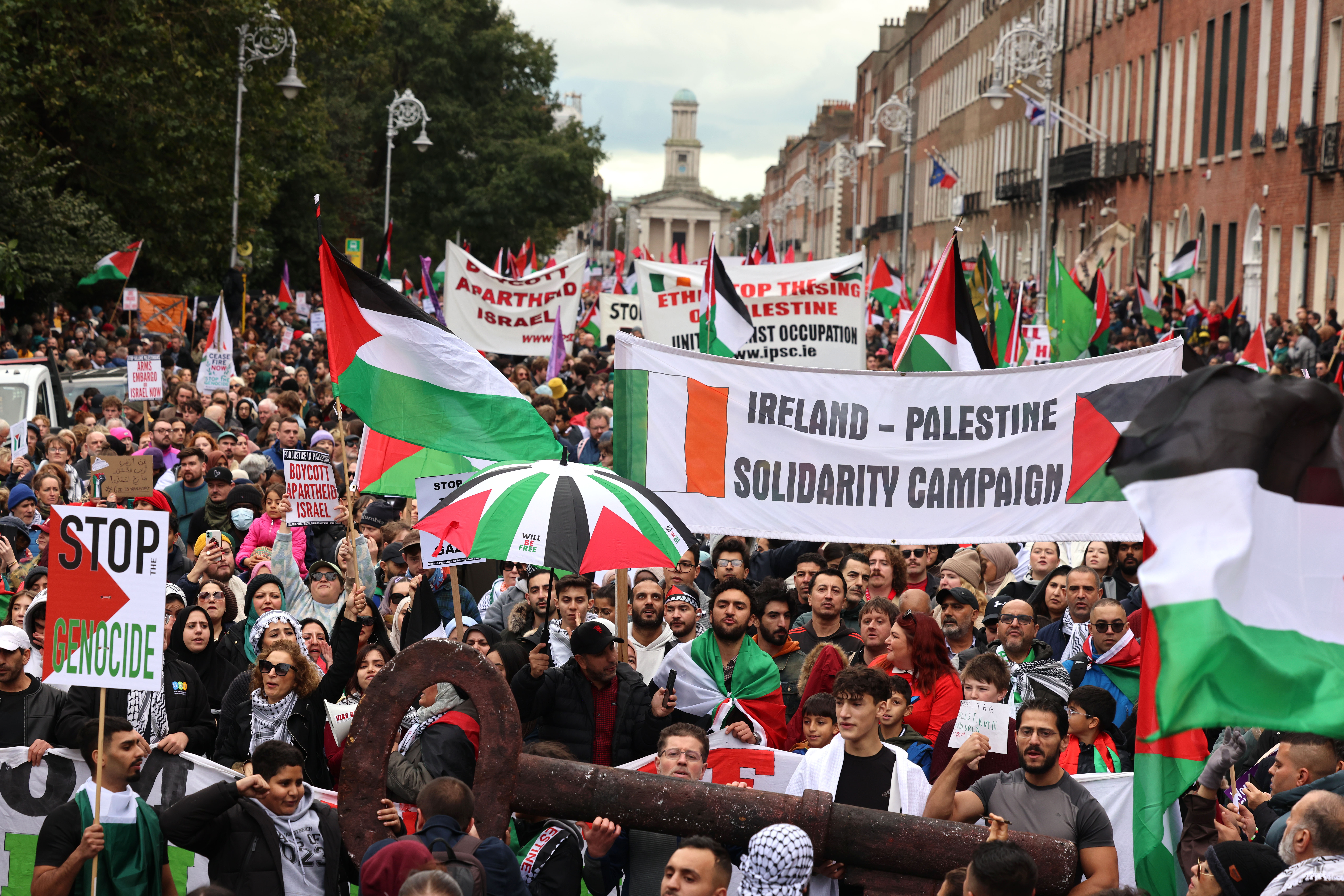
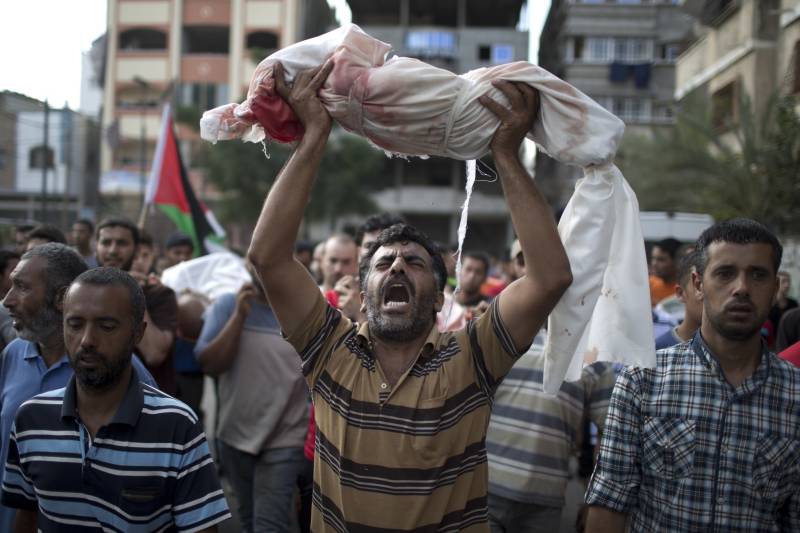
In the previous post I stated that the October 7 attack by Hamas precipitated the current genocide in Gaza, as in to hasten the occurrence of something; hastily, or suddenly. This does not make Hamas responsible for the genocide. This responsibility belongs to the Zionist state and to its US sponsor as well as those states that have also supported and defended it. As the first post made clear, this includes the Irish State, which studiously permits and facilitates the transfer of weapons and munitions from the US to Israel.
The responsibility of the Zionist state for genocide should not be a surprise, since the state itself is a settler colonial creation founded on the dispossession of the native Palestinian population subject to repeated expulsions and attacks. The viciousness of the Zionist state and of its response to any challenge has routinely been disproportionate and the evolution of Zionist politics from labour to far-right reflects the logic of its existence.
All this does not excuse Hamas from criticism that it provoked an attack for which it was totally unable to defend the people that it claimed to represent. This is essentially the argument of the Counterpunch article that I referenced before and which is illustrative of the arguments presented in the previous post.
On the Oct 7 attack the Counterpunch article states that ‘Hamas must have known that Israel would react with massive destruction in Gaza after the October 7th attacks’ and that its ‘military strategy was suicidal and poorly planned, also entailing war crimes against civilians which the leadership must have known would lead to the total destruction of Gaza.’ It further argues that ‘those who wish to engage in deluded fantasies like endless military confrontation having been the only avenue available to Hamas are quite deficient in their analysis which is bereft of intellectual rigor, to say the least. This sentiment is often felt by those attempting to appear the most revolutionary by taking what they perceive to be the most radical position.’
The failures of Hamas flow from the nature of the organisation: ‘the bulk of Palestinian resistance fighters—the actual fighters of Hamas and other entities—are acting out of anger and a desire for revenge, as the majority of them have lost family members due to Israeli attacks’; however ‘Hamas’ leaders . . . have climbed to the apex of power amongst the exploited and now seek their own privileges, power and financial gain.’
Hamas are described as corrupt ‘kleptocrats keen on getting rich, content with the privileges they possess in real life, and if they’re assassinated or killed in combat by the Israelis, then they believe they’ll be absolved in the afterlife—as Islamic fundamentalists do.’ An example of their corruption is provided – ‘Hamas had agreed to let the PA develop Gaza’s natural gas fields in exchange for a portion of the profits during negotiations with the US, Israel and Egypt. Simply put, Hamas’ leaders had decided they would sell their own people out to the Americans and Israelis—who effectively control the PA—in exchange for a cut on the back end.’
It is ironic therefore that the authors of the article argue that this is the alternative to HAMAS’s militarist adventurism and that the example provided by the Irish peace process is one to be emulated. The Irish example helps point to why they are wrong.
The success of the Good Friday Agreement, such as it actually exists, is largely due to the failure and unpopularity of the militarism of the IRA. What is wrong with this peace process is not that this militarism was abandoned but that without it the IRA and Irish republicanism generally had no political alternative to British imperialism. The circumstances in Palestine are radically different from the North of Ireland, including that there was never any threat of genocide to the nationalist population.
So, while imperialism in Ireland and the Irish state are genuine in seeking a pacified Northern state with nationalist participation in the local administration, the view that ‘for now only a two state solution along the 1967 borders seems even remotely achievable’ after ‘Palestine [is] developed and modernized under US-Israeli-PA rule’ is hopelessly optimistic and misguided. The two state policy has been endorsed by most of western imperialism for a long time and shown to be a fraud. The Zionist regime has rejected it and, as the authors explain , its initial support for Hamas was precisely to help prevent it.
On its own, their proposal for the economic and social development of the Palestinian areas (under what currently could only be some sort of imperialist rule) is not wrong. It is better, infinitely better, than genocide, but it fails to appreciate that the policy of genocide and steps to ethnic cleansing are a rejection of it by imperialism and Zionism, and of itself is not a policy of the working class, rather than simply potentially the best current conditions to allow one to develop.
The article, at best, falls into the familiar trap of providing ‘solutions’ that are not those of the working class because the working class cannot provide its own. It does this instead of accepting weakness and pursuing a policy of opposition, one that doesn’t pretend to the current possibility of socialist revolution. The writings of Marx and Engels are replete with such a policy where the working class is too weak or undeveloped to impose its own power but should not therefore politically support that of the bourgeoisie.
One of the ways by which better conditions for a working class alternative can be created is a working class led solidarity movement that sees this as one of its tasks. This involves opposition to genocide and western imperialist complicity but also an open policy of supporting a working class policy and movement.
This is a long way from the current humanitarian solidarity that refuses to take a position on the political solution while, in doing so, leaving reactionary forces to fill in the gap. It involves hoping that imperialism will do what it has demonstrated it has no intention of doing; hoping the Zionist state will be forced by imperialism to accept it, and hoping the reactionary Arab regimes will play a positive role in pushing this along, as opposed to their current closer and closer accommodation with both imperialism and Zionism.
Back to part 2

 Sráid Marx