How bad is the Labour Party’s Brexit policy?

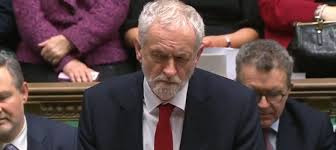
Britain’s main opposition Labour party leader Jeremy Corbyn delivers a speech on the final day of the Labour Party Conference in Brighton on September 27, 2017. / AFP PHOTO / Daniel LEAL-OLIVAS (Photo credit should read DANIEL LEAL-OLIVAS/AFP/Getty Images)

When I read in a blog that the Labour Party may support Brexit in any second referendum I could scarcely believe it. Could anyone be that misguided?  Such a course of action would be an act of political suicide – a betrayal of its previous Remain position and the vast majority of its members, voters and millions of other potential supporters who opposed Brexit and have looked to Labour as an alternative to the Tories.

When I looked at the interview, the gormless Labour spokesman obviously said more than he wanted, but the interpretation of what he had said wasn’t denied, and the unfortunate fact is that it is as consistent with the party’s actions since the referendum as any other.

Even to think of such an eventuality for a second brings to mind so many ways in which it makes no sense at all, so much so that it is difficult to credit that it would even be considered – unless you were an unreconstructed Blairite hoping to discredit Jeremy Corbyn, and looking for one popular policy to champion opposition to the leadership.

Were such a position to be taken, the majority of Labour voters would vote against its party while the majority of Labour activists would either not campaign or more likely campaign against it. The Labour Party would find itself scrambling for the votes of Leavers who were committed Tories, UKIPers or backward workers who don’t normally vote or have voted Labour but are still wedded to the most reactionary prejudices despite their tribal loyalty.

It would be the culmination of a Brexit policy of non-opposition to the most inept Tory Government for decades, from what on paper is the most radical leadership of the Party for decades, if not ever.

But how else can we describe the quick reversal of opposition to Brexit after the referendum, or the policy that looks very like the one May has been forced into, or the moaning that if only she had worked with Labour a consensus approach to implementing Brexit could have been achieved?  All capped off in the past few weeks by a section of the Tories themselves raising a vote of no confidence in their leader – before the official opposition – and doing more to weaken the leadership and the Government than any of the secret and bizarre parliamentary manoeuvres promised by Labour.

So what on earth could be used to justify such an approach?  Luckily (?) I have just read an apologia for Labour’s strategy that attempts to provide some justification for it.

The attempt is trapped within what Marxists have called parliamentary cretinism and consists of a number of diversions that take us away from the main issue, including the claim that before anything else can be done the absolute priority is defeating Theresa May’s deal and no deal.  While it correctly characterises Brexit as harmful to working class interests it gracelessly slides into arguing that a hard Brexit is the real problem.

It claims that continuing to oppose Brexit after the referendum would be “seriously damaging electorally’, straight after acknowledging the overwhelming support of Labour members and voters for Remain.  Like every apology for capitulation to Leave’s essentially reactionary constituency not a thought is given to the dangers involved in betraying Remain supporters – they are just congratulated on their discipline.

Instead we are informed we must wait until some Leavers change their minds, forced by the course of events and the failure of the Tories, before Labour can show leadership by openly opposing Brexit as well.  That Labour itself might help to change minds or have their predictions of inevitable Brexit failure confirmed, so gaining support and confidence from voters, is not proposed.

Not surprisingly, since the Labour policy of a good Brexit, like that of the Tories, also claims Brexit can be delivered with all the benefits, including frictionless trade, even though this claim has now been comprehensively debunked.  Nothing that has happened since the referendum can be seen to support any of the promises made for Brexit.  Yet rather than run with the tide of events, the Party has followed incoherently behind, having all its claims rubbished through the repeated humiliation of the Tories.

The argument in defence of the Labour leadership approach points to polls showing the unpopularity of Theresa May’s deal as validation of its strategy.  The sacrifice of principle involved in failing to oppose the attack on workers’ interests, which the article says is the great guiding principle of Corbyn’s approach to Brexit, is forgotten, while there is no recognition of the effect of Tory failure on voters’ confidence that Labour’s Brexit deal would be any more likely to succeed.

Despite reference to the recognition by Corbyn himself that Brexit is the most important issue facing the House of Commons in the 35 years he has been in it, the argument is put that the most important issue is the formation of a Corbyn led Government itself, with “a Jeremy Corbyn led government after a Brexit . . . better for the working class than no Brexit but with a non-Corbyn led Labour Party.”

This is presented as the issue “in the clearest terms” when in fact the alternatives are put in order to cloud the essential choice facing the Party.  It is an argument that says that what makes a Corbyn Government important is not what it does but simply that it exists.

But Brexit will undermine the grounds for a Corbyn Government through weakening the economy and reducing the scope for reversing austerity.  The article recognises the harmful effects of Brexit but this is more or less ignored when it comes to supporting the policy of a ‘good’ Labour Brexit.

These criticisms are even before we take into account more fundamental issues – such as why Corbyn thinks the British state is so uniquely capable of progressive reform that it must separate from the rest of the EU, while the other states that form the rest of it are condemned to languish under austerity. What does this say for any professed belief in workers’ unity.  Or are British workers also uniquely incapable of uniting with those in other countries to advance common interests?

Apart from capitulation to the Leave position following the referendum (are the rest of us supposed to do this too?), the most obvious problem with Labour’s position is its idea that any Brexit deal could be good for British workers.  If this was true why did it not support Brexit in the first place?  If not, why support it now?

The problem of course is the same as that facing Theresa May’s proposed deal – that hoping to retain all the benefits of EU membership while incurring no costs is simply unobtainable, and robs anyone saying it of credibility.  The idea peddled by nostalgic-for-the-Empire Leavers that the EU would bow down to the demands of Great Britain have been quashed and it doesn’t really matter who asks. In fact, if the EU is governed solely be neoliberal bureaucrats there is more reason assume they would be kinder to Theresa May than to Jeremy Corbyn.

The article states that:

“It is not crucial at all whether Britain is inside or outside the political structures of the EU – that is whether Britain is formally a member of the EU. What is important is that the British economy has the best access to the EU market (as without that it cannot find a large enough market for efficient production), that it has the best access to imported inputs for its own industries (as in a modern economy supply chains are international in scope) etc. Without these, in present conditions, whole industries, such as cars, would be devastated, with huge loss of jobs, while the plunge in the exchange rate of the pound that would follow would be highly inflationary and reduce real wages. All these economic effects would be seriously damaging to working class living standards. Therefore, what is important is access to the economic structures of the EU – the Customs Union, the Single Market etc. That is why Labour’s six tests for any deal with the EU all focus on the economy.”

We are invited to accept that political membership of the EU doesn’t matter. Yet we are also told to accept that the Labour deal will have the “exact same benefits” as membership; that it will pass its six tests, which include defending rights and protections and preventing a race to the bottom, while protecting national security and ensuring “fair management of migration”.

The Party policy therefore has its own variety of have cake and eat it, so that it wants to exit the political arrangements but still have “a British say in future trade deals’ (according to Jeremy Corbyn).  It seems innocent of any idea that the EU will take further economic and political steps that will seek to strengthen its project and affect Britain, which will have no say in the shape of this development.  Because this “is not crucial at all”.

John McDonnell has said of the EU that ‘They’ve seen this deal isn’t going to work, so therefore other opportunities will have to be explored. And they want the best optimum solution that will protect the European economy overall, just as we wish to protect the UK economy.”

But, as has been explained again and again, the EU is prepared to suffer some economic losses due to Brexit because it would potentially face much greater losses if other nationalist parties sought similar loss-free exits from the Union.  Of course the losses suffered by Britain will be much greater, that is why the EU can accept a no deal in a way that Britain cannot, but then this is true, and an inevitable consequence, of Brexit in any shape or form.  Clever parliamentary games by the Labour Party can change nothing fundamental about this.

The article excuses its sacrifice of principle and its acknowledgement of the harmful effects of Brexit by stating that:

“There are some issues on which a position must be taken regardless of the state of public opinion – war, the death penalty, sexism, racism. But Brexit is not one of these issues – Labour is rightly taking into account not only the objective impact of Brexit but public opinion and cannot vote, and no one proposes, to implement Remain if it is clear public opinion supports Leave.”

But no one has ever said, just as this author does, that they are sacrificing all their principles, just the ones – like opposing Brexit – that aren’t really supposed to be principles at all.  “Seriously damaging to working class living standards” is not apparently a principle that the new leadership of the Labour Party should fight for “regardless of public opinion”.  And the thought that public opinion could be won to what is becoming more and more obvious is apparently not worth thinking about either.

This stumbling and incoherent policy on Brexit does not bode well for those investing hope in the new Labour leadership, but it is good that the rank and file are now pushing for a stronger anti-Brexit policy.  They should continue with this and consider why it has been necessary. Why has the leadership itself not led on this?  What is it about the leadership’s perspective on how a society of equals could be created that it excludes committing to a European resistance to austerity and an international unity of workers?

Labour Party members should recognise this need to push and continue to push, until it has a leadership that not only follows the views of the membership, but also leads members in the struggle.

It is sincerely to be hoped that the views expressed on the Andrew Marr show do not become policy. If they do, the Labour Party will be cutting its own throat.

Karl Marx’s alternative to capitalism part 29 – base and superstructure 2

The distinction Marx made between base and superstructure may seem tangential to elaboration of his views on the alternative to capitalism but this is not the case.
Most people calling themselves socialist think that the state, which is part of the superstructure (as explained in earlier posts), will make progressive changes to the base – the economy.  This is either through taxation and increased state expenditure or through more radical measures such as nationalisation, or even sponsorship of workers’ cooperatives.

Reformist socialists see this coming about through elections and a new governing party, using the existing state machinery to effect the required changes.  Many Marxists see it coming about through destruction of the existing (capitalist) state and creation of a new one.  It is argued that this superstructural change will then effect revolutionary transformation of the economy.

Accusations that this is simply the failed model of the Russian Revolution are rebutted by statements that the new workers’ state will be more democratic than the existing one, and certainly more than the Russian one, with workers’ councils rather than a parliament – with rights to recall delegates, regular replacement of these delegates and their payment at the average workers’ wage.

Of course, the latter has a lot more going for it than the former; Marx believed you could not simply take over the existing state machinery to create a new society that is based on the working majority.  He believed that the state was:

“the form in which the individuals of a ruling class assert their common interests and in which the whole of the civil society of an epoch is epitomised.”  The modern state is thus the “form of organisation which the bourgeoisie are compelled to adopt, both for internal and external purposes, for the mutual guarantee of their property and interests.”

The Marxist view of the state will be the subject of later posts in this series.  For now, it is important to establish something fundamental about Marx’s understanding of the state and what this means for his alternative, for it is not the case that Marx foresaw any sort of state carrying out the transformation of capitalism into a new workers’ society.

The Russian Revolution has given us an experience in which the working class was so small and weak that the state became not only the main actor in that revolution, but became the main reference point in deciding whether this was indeed a socialist revolution and should be defended as such; whether it was considered healthy, and the home of genuine socialism, or unhealthy – product of a process of deformity or degeneration – but which should be defended nonetheless.

The character of the state became key to the debate, but shifted focus away from the basic truth of Marx’s alternative, which was that socialist revolution is not simply a political revolution but a social revolution. This social revolution could not depend on any state, except in so far as it was a mechanism to defend what made the transformation a social one, which is a reordering of the relations of production. It was this changed relations of production – changes to the material base – that would make a revolution socialist and make the superstructure, including a workers’ state that defended them, also ‘socialist’.

It is not the democratic content of the state that is the fundamental determinant of the healthy nature of any society issuing from socialist revolution but the relations of production.  In Russia in 1917-18 the workers very quickly became dependent on the state to reorganise production after early experiences of workers’ control, and the state very quickly became dependent on capitalist and managerial middle class expertise to run it – a very clear demonstration of the fundamental importance of the base over the superstructure.  No amount of democracy in the organisation of the state will compensate for a productive base lacking the necessary level of development.

Anarchists are therefore only partly right to blame the Bolsheviks for their policy of limiting direct workers’ control of industry after the revolution.  A fundamental mistake was to make the necessity of adopting state ownership and bourgeois experts a virtue,so that state ownership became socialism and the problem just one of the use of experts and lack of democracy in the state.

Marx believed that the state should be as small as possible and wither away, as Lenin so famously put it.  Unfortunately, no one has been able to explain how a revolution whose aim is widespread state ownership and control would lead to the state withering away. How could it, if the state becomes the means by which the economy is managed and developed?

Transformation of the productive forces and relations of production, the base, requires the transformation of the relations of production in which the capital relation is replaced by workers’ ownership of production and the removal of capitalist monopoly ownership of production, whether this is in the form of individual capitalist ownership or of shareholder capitalism in terms of trusts, monopolies etc.

The role of the state in these circumstances is reduced to legal title over the physical means of production, which could not, within limits, be bought and sold by individual workplaces or cooperatives; and general coordinating or regulatory activities.  It would also assist in society’s deliberation over its overall priorities in terms of material production and alternatives to it such as reduced working time.

The effective coordination of society’s production and its development would be less and less the role of the state and more and more the outcome of the growth of cooperative production, i.e. by the workers involved in production themselves.  That it should be thought to be the role of a workers’ state is only a legacy of social-democracy in capitalist countries and the dead hand of Stalinism.

This mistaken view of socialist revolution – that it primarily involves state ownership and a workers’ state, and its reflection in terms of the base-superstructure distinction – can be seen in an interesting article by Chris Harman on this subject.

He says, for example, that:

“Old relations of production act as fetters, impeding the growth of new productive forces. How? Because of the activity of the ‘superstructure’ in trying to stop new forms of production and exploitation that challenge the monopoly of wealth and power of the old ruling class. Its laws declare the new ways to be ille­gal. Its religious institutions denounce them as immoral. Its police use torture against them. Its armies sack towns where they are practiced.”

Of course, this is true, as far as it goes, but as the answer to the question posed it is not true, or rather the actions of the superstructure are not the main reason that the “Old relations of production act as fetters, impeding the growth of new productive forces.”  It is obviously the relations of production themselves – the capitalist monopoly of ownership of the means of production and the working class’s ownership only of its own labour power – that is the greatest impediment to the growth of cooperative ownership by the workers and a new cooperative economy.

This mistake of isolating the role of the superstructure in the role of defending the relations of production is carried further through believing that the superstructure is the only or primary means of transforming the base of society, the forces and relations of production. It leads to the following statement:

“The massive political and ideological struggles that arise as a result, decide, for Marx, whether a rising class, based on new forces of production, displaces an old ruling class. And so it is an absolute travesty of his views to claim that he ‘neglects’ the polit­ical or ideological element.”

In saying this however, it is rather that Harman neglects the transformation at the ‘base’ which is required to effect socialist revolution.

So, in speaking (correctly) of the increasing parasitical role of a growing state, evident in previous modes of production before capitalism, but also true of it, which led to the collapse of previous societies he states:

“But none of these developments take place without massive political and ideological struggles. It is these which determine whether one set of social activities (those of the superstructure) cramp a different set of social activities (those involved in main­taining and developing the material base). It is these which decide, for Marx, whether the existing ruling class maintains its power until it ruins society, or whether a rising class, based on new forms of production, displaces it.”

He goes on – “‘The history of all hitherto existing society is the history of class struggle’, wrote Marx and Engels at the beginning of The Communist Manifesto. But the class struggle is precisely the struggle between those who use the political and ideological institutions of the superstructure to maintain their power over the productive ‘base’ and exploitation, and those who put up resistance to them.”

“The superstructure exists to defend exploitation and its fruits. Any real fight against the existing structures of exploitation becomes a fight against the superstructure, a political fight. As Lenin put it, ‘Politics is concentrated economics.’”1

It is as if the superstructure can define the base, which is the opposite of what Marx intended but which informs the conceptions of small Marxist groups, who conceive of revolution essentially as involving smashing the capitalist state by a vanguard revolutionary party.  What is missing is the actions of a whole class transforming the relations of production through its own activity by directly transforming these relations themselves.

This is not to reject the need to destroy the capitalist state, or need to create a workers’ state, or the various mechanisms identified by Marx to ensure its democratic functioning, or the need to create a working-class party to fight for such things.  It is just that all these must rest on a conception of revolution which places these things into their proper context and perspective.  Otherwise relatively superficial – ‘superstructural’ phenomena- become misinterpreted as prefiguring socialist revolution when the material basis for such a revolution – at the level of the relations of production and the consciousness to which they give rise – are not in place.

This is reflected in repeated misinterpretation of purely political revolutions as either involving or immediately heralding socialist ones, or misguided optimism that social struggles involve proximate socialist revolution – think Venezuela and Chavismo, Castroism, May 1968 or events in France today etc. etc.  Not only does this lead to unnecessary disappointment but it also mis-educates everyone, including those who argue it, how exactly socialism can be expected to come about and even what it is.

At this point it is necessary to recall, using the base-superstructure distinction, just what gives rise to workers’ consciousness.  In the Communist Manifesto Marx says:

“Does it require deep intuition to comprehend that man’s ideas, views, and conception, in one word, man’s consciousness, changes with every change in the conditions of his material existence, in his social relations and in his social life?”

It is often assumed that the realm of ideas belongs to the superstructure, which may be correct when we think of schools, media etc., but it is not true that people get their ideas about how society works, what the constraints on changing it are, and what an alternative might be, only or even mainly from these superstructural institutions.  In fact, the most basic ideas about society come from the forces and relations of production, the base, including ideas about what capitalism is and how it might be changed.

As Marx says above, a change in material conditions changes people’s consciousness and these material conditions are also economic and social as well as political and cultural.  According to Marx the most fundamental are the economic and social and it is changes to these that will have the most effect on people’s consciousness.

Among many Marxists however, as I have noted above, it often appears that it is only political struggle that matters or is decisive, and it is argued that changing the relations of production can only be achieved, or even only begun, after seizure of political power.

This conflicts with Marx’s support for workers cooperatives, which can and do precede political revolution, but which will ultimately require the latter to defend them and confirm them as the starting point of a new socialist mode of production.  Otherwise what is missed is that their prior growth under capitalism can both materially and politically strengthen the working class in its future conquest of political power.


1 It is ironic that Harman employs this quote from Lenin, who used this phrase in the debate on the role of Trade Unions inside the Bolshevik Party after the Russian revolution. In this debate Lenin was referring to the need to evaluate the way forward in political terms, but the context also showed the determining role of the level of economic development, which handicapped the revolution and ultimately led to its thorough degeneration.  Lenin’s aphorism isn’t very helpful in our context.

Back to part 28

Forward to part 30

Karl Marx’s alternative to capitalism part 28 – Base and Superstructure

Marx wrote in the Preface to ‘A Contribution to the Critique of Political Economy’ in 1859 that “changes in the economic foundation lead sooner or later to the transformation of the whole immense superstructure.”

“In studying such transformations it is always necessary to distinguish between the material transformation of the economic conditions of production, which can be determined with the precision of natural science, and the legal, political, religious, artistic or philosophic – in short, ideological forms in which men become conscious of this conflict and fight it out. Just as one does not judge an individual by what he thinks about himself, so one cannot judge such a period of transformation by its consciousness, but, on the contrary, this consciousness must be explained from the contradictions of material life, from the conflict existing between the social forces of production and the relations of production.”

In this Marx argues the importance in understanding the transformation of society of the relationship between its base and its superstructure, which, like the rest of the Preface, has been the subject of no end of controversy since.

The analogy, metaphor, or whatever you want to call it – let’s call it conceptual analysis corresponding to real features of a whole social formation – is important to a Marxist understanding of the alternative to capitalism because, at its simplest, changing the superstructure, or rather attempting to do so, without changing its economic base – the forces and relations of production – will effect no fundamental change, effect no fundamental reordering and will effect no fundamental transformation of that social formation.

Without development of the productive forces inequality and destructive competition will continue, while without the abolition of classes exploitation and oppression will also continue.  Social and political programmes that fail to promise the revolutionary transformation of the current economic structure will therefore fail to remove inequality or abolish oppression and exploitation.

Let’s see how such an understanding informs the approach of Marxists to concrete political developments.

In Britain Jeremy Corbyn has captured the imagination of millions of people with his appeal to counter poverty and inequality with a more humane and caring politics.  In relating to him and his polices many people are attracted by his honesty and integrity, that he says what he believes and does not try to triangulate policies to be all things to all people, in the process strangling anything that might be progressive within them.

The Marxist approach however will question just how successful his policies might be, based as they are on the actions of a capitalist state – routinely called the ‘public sector’ –  and not on any revolutionary change in the class relations of society.  Corbyn, lest anyone be under any misapprehension, is not proposing to overthrow capitalism.  The exploitation of labour and the continued domination of the means of production by capital through exclusion of the working class from its ownership, will continue to form the irreducible bedrock of inequality in society, in terms of both economic resources and political power.

In fairness, it should be noted that there have been criticisms of the previous models of state ownership coming from the Corbyn leadership, models based on bureaucratic nationalisation and ownership by the state. This has led to references to other approaches, such as workers’ cooperatives, which offer a much more positive and potentially revolutionary alternative based on the actions of workers themselves.  Whether this will have any real currency in Corbyn’s programme remains to be seen.  Cooperatives based wholly on state sponsorship and support will struggle to attain the autonomy and freedom required to be genuine expressions of workers’ self-activity.

At a lower level of abstraction, we can see the same weakness in Corbyn’s claim that he can have a ‘jobs Brexit’, as if the relative isolation and restriction on British capitalism through exiting the EU would afford similar scope for reforms in a poorer British capitalism.  The alternative available is an international effort to make reforms at an international level, to the EU as a whole, reflecting as it does an increasingly globalised capitalist system.

Claims can be made to Corbyn’s sincerity and honesty, and these have shown themselves on many occasions to be admirable qualities, which they are for all socialists.  But what reforms Corbyn can make to reduce inequality, or take some edges off the oppression and exploitation of British capitalism, will depend not simply and not mainly on his subjective intentions, honest or otherwise.

They will depend on the power and cogency of the changes he can assist in effecting to the fundamentals of the economic system and the class power built upon it.  Failure in relation to the latter will brook no reprieve due to his integrity and sincerest intentions.  Instead this integrity and sincerity will be employed to explain and mitigate his failure, and will be all the more powerful in excusing such failure due to their previous undoubted verification.

This is what Marx meant by the importance of the relation between the base and superstructure of society, but this is not all he meant.

Some Marxists will deduce from this analysis that the duty of Marxists is to warn of Corbyn’s inevitable failure, or his betrayal and the disappointment it will create.  But if this were all that was required, or even mainly required, then life would be a lot simpler.

But it would also have proved Marx’s view of the relation between base and superstructure wrong.  For if denunciations by relatively small political groups could direct the class struggle, win the working class from left social democrats like Corbyn to Marxism, and in the process overthrow capitalism, then just how true would Marx’s claim be that “consciousness must be explained from the contradictions of material life, from the conflict existing between the social forces of production and the relations of production.”

Ideas can become powerful forces in society, and the current ideas about capitalism which have fed working class passivity are just such an example, but these ideas can themselves only become powerful if they find a material force in which and through which they are enacted; and they can only do this when they become consistent with, and express, powerful forces within the forces and relations of production.

Future posts i this series will look at the class struggle, the political programme of Marxism and what are the many ways in which socialism can be embodied in working class practice.  But all these must take account of the consciousness that inevitably arises when workers do not own the means of production, are mere hired labour and must compete with each other both for jobs and the terms and conditions of their employment.  All these are a given in society; are a given when you grow up and have to seek a living; and are a given in almost everything you are taught in school, through the media and before, during and after your working life.

So, as I have argued repeatedly – there must be some development of the forces and relations of production that forms the basis for the development of a socialist consciousness among the mass of the working class, and not just from episodic and voluntarist political struggle led by some vanguard organisation (that must, in order to be a vanguard, be in advance of the mass of workers, who are nevertheless claimed to be the subject and object of revolutionary transformation).

The forces of the working class movement must themselves be solidly based on the relations and forces of production and their actions must reflect not only their own consciousness of the transformation pregnant in society but must correspond to the actual changes that proceed even without their conscious intervention.  While the working class must bridge this disjuncture between what it must seek and what exists, we start from their separation.

As Marx says – “Just as one does not judge an individual by what he thinks about himself, so one cannot judge such a period of transformation by its consciousness . . .“  I might think I’m God’s gift to the opposite sex when I strut my stuff in the disco (and I don’t even do that anymore) but the opposite sex will be quick to disabuse me of such fanciful notions.  Marxist groups might think they advance the cause of the working class through condemnation of their mis-leaders but these workers have time and time again passed them by in their pursuit of ‘false Gods’.

At least part of the answer is to be part of this working class movement and to fight its battles with and beside them – its battles, not the ones that Marxists would choose that they fight.  For Marxists, this is the ABC of their politics, but too often many retreat into a view that ideas, their ideas, will trump the contradictions of material reality that Marx says determines consciousness.

To give but one example of this that has been mentioned many times on this blog – the supporters of Lexit want British workers to fight racism and xenophobia and overthrow membership of the European Union and its ‘fortress Europe’ immigration policy.  They want to oppose austerity by opposing the organisation that has stood behind it in member state after member state.  Yet this is a colossal failure because their myopic comprehension of Marxism fails to register the material reality of the international centralisation and concentration of capitalism and the political forms that have accompanied it and which are the real material contradictions that Marx says we must stand upon – not seek to run away from.

We cannot oppose international capitalism by seeking to exit its political structures when the only concrete alternative is a less advanced economic and political formation based on a national economy and a single national state.  If this were so then the advance of capitalism, contrary to the expectations of Marx, is an advance away from the possibility of socialism.  Such reactionary socialisms were severely criticised by Marx early in his political development in ‘The Communist Manifesto’.

Terry Eagleton in his book ‘Ideology: An Introduction’ states that:

“The base-superstructure doctrine has been widely attacked for being static, hierarchical, dualistic and mechanistic, even in those more sophisticated accounts of it in which the superstructure reacts back dialectically to condition the material base. It might therefore be timely and suitably unfashionable to enter a word or two in its defence. Let us be clear first what it is not asserting. It is not out to argue that prisons and parliamentary democracy, school rooms and sexual fantasies, are any less real than steel mills or sterling. Churches and cinemas are quite as material as coal mines; it is just that, on this argument, they cannot be the ultimate catalysts of revolutionary social change. The point of the base-superstructure doctrine lies in the question of determinations— of what ‘level’ of social life most powerfully and crucially conditions the others, and therefore of what arena of activity would be most relevant to effecting a thoroughgoing social transformation.”

In the next post we will look some more at the nature of the base-superstructure distinction.

Back to part 27

Forward to part 29

Labour Party strategy and the Brexit deal

Opportunism is by definition to seek short term gain while sacrificing long term principle.  The short term gain often doesn’t arise and the long term loss is long term.  I thought of this when I read an article in ‘The Guardian’ about Labour Party views on how to approach the Brexit deal just agreed with the EU by Theresa May.  I know you shouldn’t believe everything you read in the newspapers but unfortunately it is consistent with what we have seen, so I decided to write.

Small points are instructive.  Apparently those opposing Brexit are jokingly referred to as ‘Remonia’, which would include the majority of Labour voters and the vast majority of its members.  We are obviously still some way off from a membership led party.

Aside from this dismissal of its support, this reference has to ignore the damaging impact Brexit will have to working class interests and the potential undermining of the whole Corbyn social-democratic project. In the world of electoralism however the most loyal support is often taken for granted in a chase for the floating voter.

The article says that “Labour strategists believe they cannot get to the 45% or so of the vote they would need to win the next election if they are seen to represent only what they jokingly refer to as “Remoania”.

Whatever happened to convincing people of the truth of your politics, of changing their minds, of anticipating the effect of future events on their consciousness so that longer-term they can begin to see that what you are saying is correct?  There wouldn’t be a Labour Party in the first place if this approach hadn’t been taken!

Of Labour strategists, the article says that “some hold out the hope that Labour could pick up many of the leave-backing voters who feel sold out by the prime minister’s deal.  They’re available to us provided we don’t sound like remainers.”

Unfortunately, such an approach comes easily to the devotees of the idea of progressive politics in one country, which now cripples the Labour Party’s approach to Brexit, as it has crippled socialist politics for decades.

And what are Remain voters supposed to think when the Party sounds like Brexiteers instead?  Or are all these working class Labour voters and members assumed to be terminally stupid?  Are they to be treated the same way as the Scottish Labour support was, assumed away until Scottish nationalism bit into them and reduced the party to third place?

Another small point.  The article say that “In Corbyn’s inner circle, the shadow home secretary, Diane Abbott, has told friends she is on a “vigil” against any move that could alienate Labour supporters in staunchly remain seats such as her constituency of Hackney North and Stoke Newington.”

But then we are told that “Abbott is among those shadow cabinet members who have publicly expressed concern about the risks of a second referendum. She told the BBC’s Nick Robinson last week: “People should be careful what they wish for, because my view is that if we had a second referendum tomorrow leave would win again and not only would leave win again but leave voters would say what didn’t you understand about leave winning the first time?”

When you think about this, it is really a rather big point.  The article quotes an opinion poll which says “that Internal research is telling the party that 42% of voters think the deal negotiated by the prime minister will be worse than staying in the EU; against only 21% who believe it will be better. Voters have also told Labour’s pollsters – by a two to one margin – that they support MPs’ right to vote it down if they think it is damaging for the country.”

So why does a strong ‘Remainer’ think a second vote would be lost?

Of course the Labour Party position is to get a general election rather than a second referendum.  But this doesn’t answer the question so much as ask it.

The article approaches this problem, but only in so far as it touches on the fortunes of the party itself.  Like all Brexit coverage from the mainstream media, everything is seen through the lens of UK domestic politics and the fortunes of individual prominent politicians. The issue of Brexit itself is often dismissed, as is the view of the EU itself, and the population told by those paid to inform them that they are fed up hearing about it.  As the article in the Guardian puts it – “the majority of the public . . . say they want Brexit to be over and done with.”

If all I had to go on was this mass media I would be fed up with it as well.  But such views are from people who haven’t really thought about it enough and want other people to make their decisions for them, so that when they suffer from them they can then have someone to blame.  Exactly the opposite of what socialism requires, which is a population eager to take the reins away from the bumbling ruling class that has shown itself incompetent at the political level and complacent at the economic.

The article reports that Jeremy Corbyn has said that “this is a bad deal for the country . . . It is the result of a miserable failure of negotiation that leaves us with the worst of all worlds. It gives us less say over our future, and puts jobs and living standards at risk. “That is why Labour will oppose this deal in parliament. We will work with others to block a no-deal outcome, and ensure that Labour’s alternative plan for a sensible deal to bring the country together is on the table.”

And this is the problem.

May’s deal is a capitulation that appears to postpone its application, even though this is only partially true.  It is essentially a recognition that no deal would be a disaster and admission that all her ‘red lines’ were so much hot air. Her ‘people’s letter’ is either a letter to Santa or simply one lie after another.  The EU has strengthened its position through the transitional period and will impose its view on the new trading arrangements once this period ends.

The EU has also had enough warnings on the danger of a Britain outside the EU seeking to undermine it and its further development. The only perspective for Britain outside the EU is to act as a rival in such a way, most likely to the benefit of other powers.

This explains the re-emergence of the EEA/ EFTA as an option to be pursued during and after the transition.  But the ‘Norway’ option is woefully inadequate to Britain’s needs as it still leaves it with a lack of decision making powers in its arrangements with the EU and requires numerous individual agreements to complete these arrangements.  A temporary membership of EFTA, as put forward by some, might smooth the exit but would leave the essential future relationships unresolved, with Britain still alone at the end and exposed to the influence of stronger powers, including the EU.

Norway would be foolish to accept such membership. It would be akin to some desperate sleaze-ball coming up to you on the dance floor at the end of the night, asking for a shag, but saying he’s only asking you out because he fancies your mate.

In other words the options open to May are those open to Corbyn and May is right that the EU has no reason to give the Labour Party a better deal.  It has been remarked upon by many people beside myself that Corbyn’s idea of a good Brexit is even more delusional than Theresa May’s, or that of the other Tory ultra-Brexiteers.

Having made herself look stupid and pathetic so that, to quote the Guardian article again, only 21% of the population believe her deal will be better than staying in the EU, Corbyn’s strategy appears to be to repeat the failure.  If anything would open the door to a potential recapture of the Labour Party by its right wing, this is it.

The Guardian states that “a general election would risk exposing the bitter tensions within the party about Brexit. The leadership is clear it would want to go into an election promising to press ahead with leaving the EU, but strike a less economically damaging deal.”

So the Labour Party would go into an election on a platform that would alienate the mass of its membership and the majority of its voters; damage the economy and weaken the basis for its policies of growth and redistribution; and repeat the same failed strategy of the opposition while hoping for a different result – the clichéd definition of insanity.

And all this is based on the hope that Brexit voters will seek to punish Theresa May for her failure to deliver on her promises of a hard Brexit, while preventing them from going to UKIP.

Rather than expose the increasingly apparent illusions justifying Brexit and those who support it, and point out its complete failure, demonstrated again and again through the Brexiteers themselves avoiding responsibility for implementation of the referendum result, but ready to blame anyone who tries and fails; the Labour Party may now seek to present itself as the next bunch of suckers seeking to do the impossible on behalf of the delusional to the benefit of the totally deranged.

Brexit humiliated . . . again

Supporters of Brexit claimed it would ‘bring back control’ and allow Britain to agree more favourable trade deals with the rest of the world.  It was also argued by some that a trade deal with the EU would be the easiest to agree and that the EU would rush to conclude it, such was the importance of Britain to the rest of Europe.

When the EU took control of the negotiations and stated that it wasn’t even going to discuss a trade deal until other matters were sorted first the illusions of the Brexiteers were exposed as fantasy.

So instead they threatened the EU with a no deal scenario – “no deal is better than a bad deal” they said, in a reformulation of the claim that the EU needs Britain more than Britain needs the EU.

Now we have Theresa May arguing that the draft withdrawal agreement must be supported because no deal would be so awful that it cannot possibly be allowed, and hers is the only alternative. Gone are the claims that a trade deal with the EU will be easy to agree, and so ridiculous is the notion that the EU will rush to agree one that no one even thinks to ridicule it.

Boris Johnson claimed that the EU could “go whistle” for their divorce money and Britain would “have cake and eat it”,but now the draft withdrawal deal requires that Britain pay its money, and more besides for the period of the withdrawal, although it does involve “have cake and eat it.”  It’s just that it is the EU that will have cake and eat it – the UK will have to accept its rules, and in various areas not regress from them; will have to continue to pay into the EU; will have to accept new rules agreed during the period of the deal, and will have a veto over any attempt by Britain to remove the Irish backstop that will remain until a new deal with the EU is agreed, sometime in the future.  And of course, any new deal will reflect the imbalance of power between the UK and EU which produced the draft deal.

So far is the withdrawal deal removed from ‘taking back control’ that this is its defining feature – that Britain will submit to rules and relinquishes any influence over them.  Britain will leave the EU through an interim deal that has been agreed because alternative deals have stupidly been rejected by the Tory Government as beneath it.

But the can has only been kicked down the road, so that fatal choices have only been postponed, and when they come they will also be framed by the same imbalance of power that has given birth to the withdrawal deal. In the longer term this will simply be unacceptable to British capitalism.

So the deal does not so much postpone a final Brexit deal as anticipate it, because any sort of final trade deal following Brexit will see Britain subject to the same forces that have resulted in this humiliation. Any fanciful notion that the USA or China will be more accommodating than the EU in a future trading arrangement belongs in the same category as ‘have cake and eat it.”  The decline of British imperialism, and its relative weakness, is laid bare and its competitors are not going to ignore it or let it pass unexploited.

No wonder it is on the question of control that those opposed to the deal have seized.  This weakness, which even ultra Brexiteers have cottoned on to in their own infantile way, is the only possible reason they are now calling for no deal as the alternative – because they can’t get a better one.

It’s why two leading Brexiteers, despite supposedly being in charge of the negotiations, have condemned their outcome.  Why all Brexit ministers have not resigned and why the detested Theresa May is still leader of the Tory Party and Prime Minister.  No one wants her job, or at least not now and not yet.

But what applies to the Tories applies equally to the Labour Party and its alternative, which gets more obscure by the day.  Any putative Corbyn deal is subject to the same imbalance of forces, and claims that it can deliver a ‘jobs Brexit’ become ever less credible as a result of Tory failure.

That this is the case is in itself a condemnation of the failure to oppose Brexit and explain that there cannot be a good Brexit, and that the best option was to continue to argue for Remain.  Had this been done the Labour Party could now claim some credit.

Instead it relies on the Tories cutting their own throat, and the continuing hopes among its members and supporters that at some point the Party will oppose leaving.  And while it has said it will vote against May’s deal, its claims that it can negotiate a better one appear wafer-thin and its rationale for opposing May’s deal just as slim.  It follows the ultra Brexiteers in its current defence of a possible good Brexit by condemning May’s draft deal because of its commitment to having to obey rules while having no say over them.

It’s rather like the incredible story in ‘The Independent’ in which a Tory Brexit MP slams the deal because Britain will have no influence in Europe and will have no MEPs or Commissioner!

And what of the supporters of Lexit, who must oppose the May deal on precisely the same grounds? While Tory supporters of leaving the EU thought Britain could gain strength from Brexit the supporters of Lexit thought it would weaken the British State, as it will, ignoring the effect this would have in weakening that state’s potential to carry out the anti-austerity and state-led development policies they support.

Unfortunately, both share the same illusion that national solutions are better than international ones and on this both are wrong.  The supporters of Lexit think a progressive British State can end austerity and be the motor of progressive economic development on a national basis, while Tory Brexiteers foresee a deregulated, free market tax haven on the shores of Europe.  Both ignore the fact that the rest of Europe doesn’t disappear just because Britain leaves the EU and that the EU will not allow a threat to it to develop in either left or right forms.

Both capitalism and certainly socialism seeks and requires solutions at the international level, and while it may be possible to envisage a large offshore tax haven it is impossible to envisage a progressive island of socialism off Europe’s coast.

If the Lexiteers even got that far, which they couldn’t, they would suddenly find that they needed the rest of Europe’s working class to help them. And if they think that their example of splitting will inspire these workers then there won’t be a European working class to appeal to, just a collection of 27 other fragments of that class, all supporting their national roads to socialism, or nationalist xenophobic competition more likely, if they really did follow the British example.

It is no accident that today Theresa May has gone back to the most reactionary justification for Brexit in order to defend her deal – the idea that it will allow increased immigration controls that will apparently allow Britain’s young people to get jobs and training. As if it wasn’t austerity and Tory education policies that were the problem but foreign workers.

She has claimed that workers from the EU will not be able to “jump the queue”, except of course when the UK eventually, if ever, agrees a free trade deal with the EU, in which case the EU will want particular rights for its citizens.  The claims for Brexit never cease and never appear.

With this deal they have been postponed.  Promises made but not delivered, which will encourage true Brexit believers to rant ever more aggressively and their leaders to seek ever more scapegoats for their failure to deliver.

If the Tories, with the important assistance of the EU, were to succeed in pushing this deal through, the right-wing dynamic of Brexit would not be stopped or tempered but would continue to unfold. Hopes that a general election will lead to a Corbyn Government would place the burden of Brexit delivery on it, and without a policy of opposing Brexit such a government would have no mandate to reverse it.  Whoever in the Labour party thinks this is smart politics needs put out to pasture.

The Labour party should point to the current mess as the inevitable result of Brexit which is so bad the alternative offered by the Tories is only worse.  Only a fight to Remain can address the political turmoil by offering a way out.

People before Profit and preventing a Brexit hard border

In my last post on Brexit I argued that if the Labour Party seeks to implement Brexit, or facilitate it in any form, it will suffer severe consequences.  These will result not only from the effects of Brexit but also from failure to offer leadership to those opposed to it.  Last month’s demonstration in London of perhaps 700,000 people indicated the potential such a movement has.

Left supporters of Brexit damned its composition and the presence of Liberals, right wing Labour figures and the odd Tory, who were all in attendance. As I pointed out in a discussion on Facebook – had we witnessed 700,000 demonstrating for Brexit the Left supporters of Brexit would really have had something to complain about. There is zero chance that a demonstration in favour of Brexit of such size could be anything other than thoroughly reactionary and worryingly threatening to everything that the working class movement has stood for.

Yet we still read nonsense from the supporters of Lexit, who maintain their position by failing to engage with reality.  At least Jeremy Corbyn and the British Labour Party opposed Brexit.  The supporters of Lexit have no such excuse.

The stupidity of their position is no more obvious than in relation to the sticking point of the Brexit negotiations – the claim that there can be Brexit and no hard border in Ireland.  Theresa May has claimed that the UK can leave the EU and its Single Market and yet maintain the current frictionless arrangements.  But this is impossible, and she is running out of time to either reverse her position on the Single Market or dump us into a no deal.

In the first eventuality there would be no strong reason to seek an exit from the EU in the first place, and in the second scenario there will be what’s called a ‘hard’ border.  The supporters of Lexit in Ireland, People before Profit, have announced that they are “ready to oppose a hard border” and “will advocate mass civil disobedience against the imposition of a hard border . . .”

So just what form should or would this civil disobedience take?  And how would it be more than just a token protest and actually be effective?

Will, for example,  PbP seek to persuade lorry drivers to refuse to submit papers on the border that validate their imported or exported load?  Will they picket workplaces of hauliers, ports, factories and warehouses telling the workers not to process export or import paperwork?  Will this be done both North and South for those exporting and importing into the North?

Will PbP tell Environmental Health Officers and other border control officials to ignore any changes to regulations and continue to enforce current food and phytosanitary standards etc?  Does their support for Lexit entail opposition to these EU standards or to new ones?  Or is all this just so irrelevant to their thinking that they have ignored these issues?

What about all the loads that don’t get sent because the companies aren’t prepared for the bureaucracy required to trade across a hard border: the knowledge of regulations, how to implement them and demonstrate compliance  with them? What form of civil disobedience will take place here?  Or will they magic up a slogan – workers’ control of Single Market regulatory compliance?  And since People before Profit are opposed to the EU, will this workers control involve refusal to process regulations under Single Market rules or refusal to implement changes?

But maybe it will ignore the everyday reality of what Brexit entails and just have a political campaign around the Single Market?  But since only this can ensure a continuation of the current border arrangements, is People before Profit proposing to campaign in favour of the Single Market or against it?

Or perhaps they want their cake and eat it as well.  Get out of the EU but keep all the benefits.  Or simply ignore reality and persist with meaningless protest politics which are incapable of addressing the questions raised?  For example, how will civil disobedience address the inflation caused by the devaluation of the currency?  How will it make up for the fall in investment, or drop in tax receipts as a result of reduced growth, or the recession that will be brought about by the disruption to trade?  Have they got proposals that will boost trade with India, China and the “third world”’ or is it not really their place to say?

Will they picket airports and tell pilots that, in the event of a no deal, they should take off and fly to Paris, Malaga and Faro even though they and their aircraft will not have been approved by the EU to fly over its airspace and land at its airports?  Is it telling people not to worry and book their two weeks in the sun next year anyway because civil disobedience will sort it all out?

To ask these and a thousand other questions that arise from supporting Brexit show how detached from reality PbP is – protest politics  against reality that shows reality more effective in protesting against its politics.

Once again, some on the Left appear incapable of learning that its ‘principled’ politics are no substitute for a real, concrete alternative, i.e. one that makes sense in the real world.

In previous posts I have argued that the objective of seeking to leave the EU and supporting Brexit is not a route to the unity of the working class. This argument is at the level of principle and programme.  I have also argued that the practical effects of Brexit are contrary and hostile to the working class’s most immediate interests.

In this post it is clear that even if we start from the Lexiteers own demands, they have no idea how to make them effective; no idea how they could be made to work; and in fact, it is not at all obvious what it is they would be seeking to make effective.  Outside immediate socialist revolution they make no sense whatever, and probably even less sense within one.

But that’s what you get if you vote for Brexit, which, by definition, means the erection of new borders, and then you complain that a new border might be created!

PbP want a way out of the contradiction they have walked into by appealing to the Fine Gael led Government – “If a deal is agreed between London and the EU that includes measures like a hard border, the Irish government must veto it. Should a ‘no-deal Brexit’ occur, then Varadkar should clearly state that his government will not implement any measures that would lead to hard border.”

But this just shows that PbP has failed to learn anything from its mistaken support for Brexit and is demanding that the Southern State also leave the EU! And even here, in this statement, there is not the slightest recognition that this is what it is doing, never mind an open argument why this would be a good thing to do.

Once again there is a failure to think things through, to think concretely about what exactly, in practice, its political positions mean, what in the real world are the implications. Because failure by the Southern State to implement the Single Market endangers that market and fundamental rules of the European Union,.  There is not even the demand that the rules should be changed – just ignored!  In everyday language this is, as they say, just asking for it.

PbP claims that “neither side in the Brexit debate has the interests of working class people at heart, and we refuse to be bullied into backing one or the other.”  But that of course is exactly what People before Profit did.  It voted for Brexit.  And the vacuity of its attempts to deal with the consequences show that they really didn’t know what they were doing and that now, having bought it, they don’t know what to do with it.

But, as the Left is known for saying quite often, it is not the case that there is no alternative – there is.  It may involve a shift in the political method of PbP but this should be eased by the fact that changing its mind will lead it away from its current exposed position.

Opposing Brexit entails no support for the EU, or its policies, and involves no renunciation of political principle.  It recognises that the unity of the international working class rests on the international development of capitalism and that the creation of a socialist alternative will be based on this development and not on its retrogression. Socialism is a move forward to the future, not back to the past and a national road to socialism.  The political tendency behind PbP used to know this.


Visiting Amsterdam

In May I visited Amsterdam.  The weather was lovely and I had a great time.  Before I left I got unsolicited instruction on what coffee to look out for in the coffee houses and where the best places to eat were.  Unfortunately, the restaurants were a bit pricy and I’m no longer as keen on mind-altering substances of which I know nothing as I might have been in the past, not that I was ever very interested.

I’d been twice before but didn’t think I would be back as my partner doesn’t like the red-light district, and if you have been there then you will know that if you amble about Amsterdam for any length of time you’re bound to walk into a window with scantily clad women selling their services. But since she was attending a conference because of her work, I flew in at the end of the proceedings to share a short break.

As I like to read up about places I visit, I read some articles on the sex work/prostitution debate, which I will discuss in a future post.  More generally, knowing something of where you’re going always makes a place more interesting and can also give you a fresh appreciation of where you live the rest of the time.

So, for example, I learned that in Amsterdam squatting in a building unoccupied for a year was legalised in 1971, although the law was later changed in 2010.  Given Dublin’s acute housing crisis, this would be one initiative that would pay immediate dividends.  Housing cooperatives could organise the squatting and renovate the properties, connect to utilities and take a reasonable rent to cover expenses and to facilitate expansion of their business.  The only role for the state would be to pass a law allowing legal occupancy and working people could then do the rest for themselves.

Something else I read about Amsterdam also reminded me of Ireland.  Erasmus, after whom the student exchange programme is named, lived in the city for a few years.  He famously dissented from the structures of the Catholic Church, though remained a Catholic all his life and had a priest as his father.  When both parents died he was given over to the care of a monastery, an institution within which occurred the “whipping [of] boys to death every day.”  There was, he said, “more innocence in a brothel.”

And also like Ireland, with Saint Patrick and the snakes, Amsterdam has its own religious myths to explain its own particular christianity.  We are told that an old and dying resident of the city, shortly after taking his last Holy Communion, vomited up the Eucharist whole and intact.  When the women attending to the old man then threw the vomit in the fire the host didn’t burn.  Some time later, a church was built on the site of the old man’s house and when it burnt down (twice!) there are no prizes for guessing what survived unharmed, whole and intact.  The “miracle of Amsterdam” became a medieval wonder, which, like moving statues in Ireland, became good for business.

The religious flocked to Amsterdam, becoming its core residents, but it is reassuring to read that while fights broke out between the competing religious orders, the greater tension was between these orders as a whole and the rest of the city residents, who objected to the monasteries taking so much of the best land along the canals.  If only the anti-clerical feeling in Ireland could be married to the acute demand for housing in the same fashion.  Perhaps then, all the property belonging to the Sisters of Charity Property could be confiscated to alleviate the housing problem and pay for their misdeeds. Today these Amsterdam streets with their names derived from the religious foundations which were once their most prominent residents are the location of the red light district.

Not that the two were always very far apart. After all, when Martin Luther nailed his Ninety-Five Theses to the door of the church in Wittenberg, sparking the dramatic change that was to affect Amsterdam and many other cities, the Catholic Church was licensing brothels, fathering children openly and appointing an 8-year-old as bishop of Lisbon.

One of the most dramatic episodes of this Reformation revolt was the emergence of the Anabaptists, who proclaimed a religion that included rebaptism, polygamy and common ownership of property.  When the Amsterdam Anabaptists took advantage of drunken revelry to take over City Hall they were suppressed and killed, or at least the lucky ones were.  Those that were captured didn’t survive for very long.  Their chests were cut open and their beating hearts thrown into their faces, just before they were beheaded and then quartered. Amsterdam’s famous tradition of tolerance has clearly not always been quite what it’s been cracked up to be.

The major cause of this tradition, which is not without foundation, was the development and expansion of capitalism in the Netherlands and the trading and intermingling of peoples that merchant capitalism gave rise to.  Historians also point to the tradition of cooperation necessary in what was otherwise an inhospitable land – required to ensure that it was not overtaken by the sea.  The massive network of dams, dykes and canals required widespread cooperative labour to build and maintain.  This, on top of the lack of historical roots of the feudal system, has been credited with the individualism that has characterised something of Dutch culture.

Thus, Amsterdam has few grand buildings or palaces like Paris or even London, but is better known for its more human-scale canals, canal-boats and narrow canal houses.  One British resident, writing of the Dutch, could thus conjure up the stereotypical image of the country as “a place where office workers smoked weed over their desks, visited prostitutes at lunchtime and euthanised their grandparents in the evening.” (‘Why the Dutch are Different’).  Not, as he notes, that his Dutch friends were wholly accepting of the caricature.

Of course merchant capitalism, and its pioneering by the Dutch East India Company, which preceded the British one, also entailed colonial plunder and disastrous speculation.  It is no accident that many knowledgeable-after-the-fact economists have noted that the first speculative bubble was for tulips in the 1630s.  The darker history of the Dutch State and its capitalism includes slavery, which it was late to take up and also late to abandon, and colonial conquest, which it fought to retain after the Second World War – despite its own recent escape from occupation.

But, as Marx explained, capitalism meant progress, even if this progress comes dripping in blood.  One result of it was the growth of publishing, for which Amsterdam became an important world centre, significant to this day.  In the seventeenth century, it was estimated that half of all books published in the entire world came from the Dutch Provinces, implying that about 30 per cent came from Amsterdam.  The city became home to leading philosophers of the day in the shape of Locke and Spinoza.

Of course, capitalist rivalry led to war, in this case with England on four occasions.  It is not really surprising that most British people think they haven’t been successfully invaded since 1066, but in believing this they are mistaken, and ignorant of the successful Dutch invasion of 1688 and the installation of a Dutch stadholder as King of England.  Better known as King Billy where I live.  But then, if Churchill with his many failures and the rout leading up to evacuation at Dunkirk are held up as successes, and still inspire patriotic films today, why not say the Dutch were invited?  If only such ignorance didn’t provide the soil within which such ideas as Brexit could grow.

The Anglo-Dutch rivalry, it has been pointed out, has had its amusing side, looked at from centuries later.  So, one tract from the period had this title: ‘The Dutchmens Pedigree; Or, A Relation Shewing How They Were First Bred and Descended from a Horse-Turd Which Was Enclosed in a Butter-Box’.  Apparently, the terms ‘Dutch courage’ and ‘going Dutch’ are a few of the surviving derogatory usages from this time.

The Dutch state subsequently went into relative decline as the larger European powers took centre stage.  In the First World War the Dutch state was neutral and again declared its neutrality in the Second World War, once again expecting this to be respected.  In a speech to the Reichstag Hitler did say that he would honour it , but the next day ordered the invasion.  On 9 May 1940 the Dutch newspaper ‘Algemeen Handelsblad’ ran with the headline ‘Tensions Defused. Expected Events Not to Occur’, hours before Nazi tanks and troops crossed the border.

The results were catastrophic.  In 1940 there were 80,000 Jewish people in Amsterdam, while there are only around 15,000 today.  And while 75 per cent of Jews in France survived through the Nazi occupation only 27 per cent of Dutch Jews did so, an estimated 58,000 being killed, mostly in concentration camps.  While the Dutch labour and socialist movement launched an unbelievably courageous general strike in February 1941 to protest at the increasing persecution of Jews and deportation of Dutch workers to German factories, the efficiency of the Dutch state bureaucracy meant that you were more likely to die if you were Jewish in the Netherlands than almost anywhere else in Europe.

Today, you can visit the house of the Jewish teenager Anne Frank, which I had done on a previous trip, but it is much less well known that the Frank family were arrested by three Dutch policemen, at least one of whom continued to serve in the Amsterdam police until 1980.  Yet an American anthropologist writing a report on the Dutch near the end of the war could write that “no country in Europe is so jealous of its moral rightness as Holland.”  In one example quoted in her report, a German officer complained that the Dutch acted as if they had won the war.

In fact the Netherlands yielded up the highest number of volunteers for the Waffen SS of any country in Europe both relatively and absolutely, although the numbers were small – up to 25, 000 in a population of 9 million. Volunteering was supported and given some legitimacy by a member of the Dutch armed forces General Staff.  Of course, the occupation was not popular but collaboration was significant.

Such divisions in Dutch society were apparent before the war – the Amsterdam police commissioner had reassured the Gestapo in 1935 that the Dutch would cooperate in the fight against “Communist and Marxist machinations”, and the city Attorney General called for “the establishment of concentration camps where all undesirable communist elements could be sheltered.”

The war led to near famine conditions as the progress of liberation from Nazi occupation was delayed.  An estimated 210,000 Dutch were killed and another 70,000 died through starvation and general hardship, while the Dutch economy shrank by around 40 per cent.

The subsequent post-war recovery was remarkable with growth of almost 20 per cent a year between 1945 and 1950, fuelled by the American Marshall Plan,  The Netherlands receiving around ten times more per capita than Belgium. One early sign of what came to be seen as Dutch liberalisation was the setting up of the world’s first organisation to advance gay rights in 1946.

Today, the limits of the liberalism for which the Dutch state is famous is exposed by the rise of prominent reactionary individuals such as Geert Wilders and movements that employ the language of liberal secularism to promote reactionary politics.  I have seen this described as showing the limits of a tolerance based on a liberal commitment to rights and freedoms, expressed only as simple passive acceptance of difference, which might be true of some, but hardly explains the legalisation of same-sex marriage or euthanasia, or regulation of prostitution.

Bill O’Reilly, the US conservative , once called Amsterdam a “cesspool of corruption, crime, everything’s out of control – it’s anarchy!”  In response, one twenty-five year old Dutchman put up a video on the internet claiming that over 40 per cent of Americans had used cannabis while less than 23 per cent of Dutch people had, and drug-related deaths in the US were 38 per million while being only 2.4 in the Netherlands.

Today the number of coffee houses has declined and there is increasing expressions of concern that legalised prostitution in one country doesn’t work.  As I’ve noted, the Dutch have also seen a rise in racist movements which have increasingly collaborated with like-minded organisations in Europe and the US.  Dutch society is therefore not so different after all.

I, Dolours

‘I Dolours’ is a film about the life of Dolours Price, and her activities as a member of the IRA during the 1970s.  It is part dramatisation and part interview conducted by the journalist Ed Moloney, who is also the Producer and has written an important book on the history of the IRA.

Actor Lorna Larkin is excellent as Dolours and she needed to be, because the most arresting parts of the film are excerpts of the interview with Dolours.  She is determinedly articulate, direct and forthright.  One review has described her as a “terrifying and bitter woman”, but one person’s bitterness is another’s righteous anger.  She is unrepentant about her activities in the IRA and brutally honest.

And it is this honesty that so jars with the present, where a principal republican leader claims never to have been a member of the IRA and another claimed never to have killed anyone. While mainstream commentary ridicules such claims, it fails to register the service they do to its own anti-republican narrative.

Her unflinching justification of the IRA and its campaign will be shocking only to those too young not to have come across the ‘arrogant’ and ‘elitist’ republicans who regarded themselves as ‘defenders of the truth’, as described in Dolours’ own words.

It contrasts with the mealy-mouthed political sophistry of today’s Sinn Fein, many of whose members justify their current opportunism with their experience of previous sacrifice. As one comrade of mine put it, their descent into corruption is justified by the phrase ‘we’re worth it.’

Dolours’ interview is also interspersed with archival footage of the civil rights movement, which Dolours and her sister Marian joined, and the attacks on the movement by loyalists and police.  The demand for the most limited reforms was met by naked state and loyalist violence, with footage in the film of the ambush at Burntollet and the RUC attack on the 5thOctober civil rights march in Derry.

This has generally been passed over quickly in reviews but in the more recent media coverage, marking the 50thanniversary of these events, their importance to the creation of ‘the Troubles’ has been at least partially recognised.  It was obviously crucial to Dolours’ political development and from a socialist point of view led to a political and personal tragedy.  From such a viewpoint the alternative to the reform strategy of civil rights was not that of militarist republicanism, which Dolours notes she had at one time herself rejected.

From these attacks however, Dolours learned that “change would not be brought about by marching” and the objective of uniting Protestant and Catholic workers was the wrong one.  She came from a family steeped in republicanism, with her father taking part in the bombing of England during the Second World War, which Dolours seemed to regard as almost surreal in conception, while her aunt lived her life in the family home, having had her eyes and hands blown off while attempting to recover an IRA arms dump.

She was ultimately to be the third generation of the family to end up in jail, which might appear to lead to the belief that she was born to be in the IRA.  But if this were so then she would be less intelligent and less human than the woman that appears on the screen.  She embraced the idealism of the civil rights movement and then rebelled against its perceived ineffectiveness in fighting oppression.  She devoted herself to the IRA and consciously submitted to it discipline.  She didn’t seek to avoid danger, and refused to present herself as a hero.

She does not embellish events or her participation in them, and attributes her passion and zeal to youthful ardour.  She makes statements she knows will not gain her any sympathy, such as her defense of the killing of informers, while she displays sympathy of her own years later for only one disappeared, someone who went to his death believing that this death was deserved, just as Dolours did.

The film shows a number of clips of IRA car bombs in Belfast City Centre, and some of their grisly effects, and records her seeming endorsement of the view that one bomb in England was worth many times that number in Ireland.  It dramatises her volunteering to participate in the bombing of London, having had the risks explained, and even as other IRA volunteers walked away.

While noting the immature behaviour of some of the male IRA volunteers in England, who failed to follow orders and got drunk, she also acknowledges that this made no difference, because the whole operation had already been compromised by informers.

She and her sister were caught, imprisoned in England, and went on hunger strike to demand that they serve their sentences in Ireland.  For most of the hunger strike, which lasted over 200 days, she and her sister were force fed, an experience that eventually resulted in Marian’s, and then her, early release.

The film invites some sympathy for her during this period and her resulting continuing ill health, which led to her eventual premature death.  It can hardly do anything else, just as the picture of bomb explosions and their aftermath can hardly do anything other than evoke the opposite. But it also should prompt questions, because it does an injustice to Dolours to assume that the decisions she made were inevitable.

How, for example, was it hoped that these bombs would achieve republican objectives if bombs in Belfast mattered so little?  And why did they continue for so many years?

That Dolours was not asked these questions is understandable.  The interview was a last testament, to be shown only after her death, and her ill health at that time made her vulnerable.  The journalist Ed Moloney has explained the backstory to the interview on his blog.  She therefore said what she wanted to say.

This must also, unfortunately, explain rather unsatisfactory aspects of the film.  As has been noted elsewhere, it feels incomplete, not only on the political side but particularly in relation to Dolours future life after release. The ending feels rushed, and her opposition to the betrayal by the movement of the cause she dedicated herself to is not fully explained.  She does however say that what Sinn Fein had achieved was not worth missing a good breakfast.

Most media attention has focused on her admitted role in the killing of the disappeared: those who were considered to be informers and who were driven across the border, often it seems by Dolours, where they would be shot and their bodies buried.  Some of these bodies have not been recovered. This, she admits in the interview, was a war crime, but only it seems because families did not know their loved ones’ fate and could not be given a body for proper burial.

Of all those disappeared, the most notorious case was that of Jean McConville, a widow and a mother of ten children, who were separated from each other and put into care following their mother’s death.  Dolours is not kind after the event and makes no attempt to soften what she and her IRA comrades did.  The lack of any attempt at sugar coating gives her statements greater credence, although Jean McConville’s family protested at the film’s opening in Belfast and dispute some of her assertions.

Her other claim is only superficially more controversial and was aired long before the film, which was that Gerry Adams was not only in the IRA but also ordered the killing.  That the former has been denied by him is taken seriously by no one, which leaves denials of the latter also suffering from a problem of credibility.

The worst review of the film I have read ends with these remarks:

“Perhaps that is the saddest part of I, Dolours, is that she died feeling let down, deceived and unfulfilled, having not achieved her ultimate goal in life. Though, she does serve to be a forgotten relic of a time which indeed many would never wish to see the likes of again. Ultimately, Dolours is an unreliable narrator and we must remember that this is one woman’s perspective, and that everything she says must be taken with a pinch of salt.”

The film itself is testimony to her not being forgotten, and the poignancy of her story is an invitation not to forget but to learn from.  This includes the political lessons that are especially important, since she lived and died a political woman.  She makes clear that she did not seek to excuse or exonerate her activities, on the contrary she saw no reason to do so, and the film stands as a challenge to her erstwhile comrades who have made political careers doing so.

That she is an unreliable narrator seems hard to sustain given her definite and precise approach to the telling of her story; her complete avoidance of seeking after sympathy, and plain admission to her unpalatable actions. There is no reason to believe that “everything she says must be taken with a pinch of salt.”

On the contrary, it is the truthfulness of her words that cuts through the carefully constructed silences and avoidance that characterises today’s approach by Sinn Fein to the actions of the IRA.  Continued embrace of IRA history, along with denial of everything it entailed, or attempts to make us “all” responsible for actions which specific actors were only too willing to claim for themselves at the time; all this is incompatible with the truth that Dolours continues to speak.

On the question of Dolours feeling let down by not having achieved her ultimate goal, I get the feeling that, apart from the physical and psychological damage she suffered from her experience in prison, republican defeat was not decisive in contributing to her death.  Coming from a republican family she grew up and had lived with its consequences. She understood defeat and faced it when it happened.  Not for her black taxis driving up and down the Falls Road hooting its celebration. It was the betrayal of the movement that she devoted her life to which must have demoralised more than mere defeat.

She must have been aware that she drove to their deaths members of the movement whose betrayal, in the great scheme of things, was so much less than the movements’ later complete capitulation.  And just as she did this, so later did the republican movement do it to her.

The film is authentic in its showing of a republican view of ‘the Troubles’, free from today’s spin and bogus self-justification.  In this way it is an honest and faithful portrait of its subject.