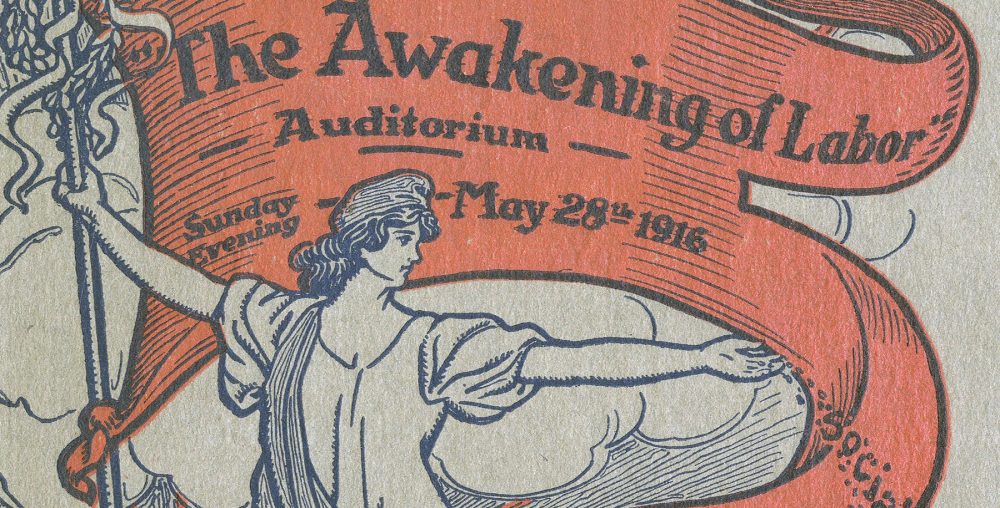
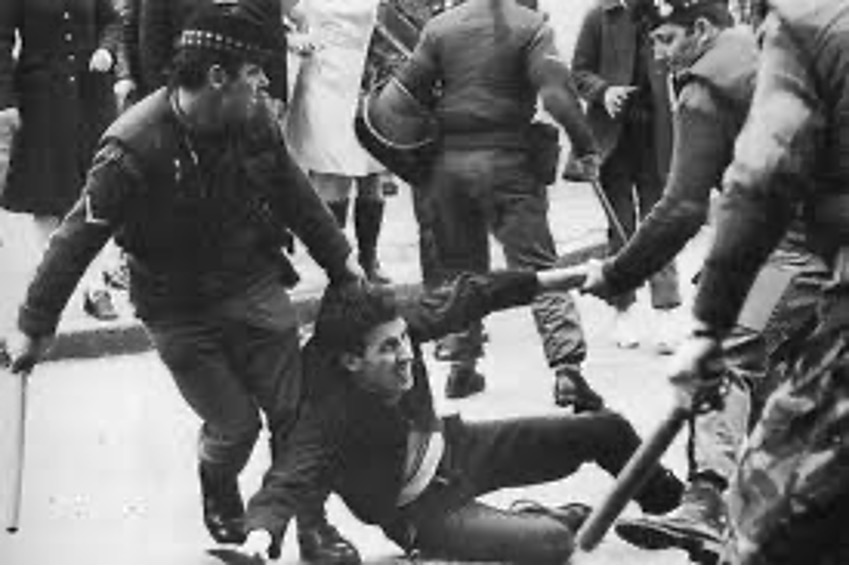
A recurring analogy made is with the Irish nationalist struggle against British imperialism and I have addressed this before.
Supporters of Ukraine have told us that ‘when internationalists support the Ukrainians right to resist militarily the Russian invasion and obtain arms from NATO countries, it is not an endorsement of NATO. There have been many movements of national liberation in the past which have called upon imperialist countries for arms without being condemned by socialists: Irish nationalists in 1917, the Spanish republic in 1936, the communist resistance in World War Two, to name a few.’
I wrote in reply –‘Let’s just take the Irish example. Was Ireland an independent state in 1916 or a British colony? Were the Irish rebels in 1916 seeking to join the German imperialist alliance, or did they claim ‘We serve neither King nor Kaiser’? Did the Irish workers movement participate as a separate political and armed force from the bourgeois nationalists, and did not James Connolly repeatedly declare the political independence of the Irish working class? Was his anti-imperialism the anti-imperialism of opposition to foreign rule or opposition also to capitalism and for the creation of a Socialist Republic? Where does the capitalist Ukrainian state and the ‘Ukrainian resistance’ stand on all these questions today?’
‘But let’s not leave the Irish analogy there. What happened to the Irish national struggle when the forces of the working class proved to be too weak and the movement became a purely bourgeois one? ‘Labour’ was told to wait, just as in Ukraine today, and the forces of bourgeois nationalism accepted a settlement with imperialism that left the working class more divided than before, subject to two reactionary regimes that inflicted years of austerity, unemployment and emigration built upon Catholic Church abuse of women and children and Protestant sectarianism and discrimination. Today the capitalist Irish state supports the Ukrainian capitalist state and imperialism, particularly that of the US, upon which its current success depends . . .’
I could have gone on to reference the policy of Marxists in Ireland over the last 50 or so years, which, despite many mistakes, never collapsed into support for Irish republicanism, never ceased to organise separately, never sought alliance with or peddled illusions in the Irish bourgeoisie and never looked, unlike republicans, to right-wing or establishment forces in the United States. The nature of that struggle meant that the idea of support from any western imperialist power would have been considered ridiculous.
In the Tendance Coatsey debate, one comment proclaims ‘I wonder if “Irish Marxism” would be in favour of someone arguing that Irish self-determination was of no interest to Irish workers since all it led to was a “bourgeois” republic. And after all, Irish nationalism enjoyed the support of imperialist Germany in both world wars.’
This is answered in the paragraphs above, but let’s carry out a thought experiment, which is obviously purely theoretical, to see how much the self-determination of independent capitalist states matters to Marxists.
Imagine that Britain had decided to go for the hardest of Brexits, with the ambition of setting itself up as a strategic geopolitical competitor to the European Union. This involved the hardest of hard borders within the island and severe disruption to trade between the Irish State and the rest of the European Union as transit through Britain became impossible. This precipitated armed republican attacks along the border on various institutions of the Northern State which were answered by the arrival of British troops to suppress the attacks.
Within the North of Ireland the arrival of these troops and armed clashes raised political tension enormously with riots and deaths in Belfast, Derry and other smaller towns. Republican groups hailed these circumstances as another example of ‘Nuair a bhíonn deacracht ag Sasana, bíonn deis ag Éirinn’ – ‘England’s difficulty is Ireland’s opportunity’ and launched an armed campaign against British rule. In the Irish State the ruling parties called upon the Irish people to resist British imperialism.
The conflict between Britain and the EU cannot be confined to Ireland and the English Channel is closed to trade while there are clashes between the Royal Navy and French vessels. To signal their full support to the Irish member state and prevent it buckling to British demands the EU sends its own troops to bolster the meagre Irish Army confronting the British.
What would be the attitude of socialists to such a march towards war? Would we support the self-determination of Ireland and its historically justified struggle against British imperialism and partition? Would we welcome the intervention of the EU as temporary allies in a morally justified struggle alongside the Irish capitalist state? Certainly republicans in the North would hail the new anti-imperialist struggle and the opportunity to fight for a ‘Socialist Republic’ and commend their renewed role as defenders of the Catholic people in the North, pretty much regardless of its effectiveness.
Well, this would be an extraordinary turn of events, but Irish socialists would begin by interrogating the claims of its own rulers and state, especially its claims to be defending the democratic rights of the Irish people. We would recall that it had viciously repressed previous armed revolts against partition and had opposed any progressive movement towards Irish unity while allying with British imperialism.
This previous collaboration would be held up as proof that there was no fundamental conflict, and certainly no fundamental difference, between British imperialism and the alliance of the Irish state with the rest of the European Union. There would therefore be no grounds upon which the Irish working class should follow its own state in a war against Britain on behalf of one side of the imperialist rivalry between Britain and the EU, which would determine the nature of the war.
The same interests would be true for workers in Britain, who would have no interest in supporting British imperialist antagonism to the EU. In the North of Ireland socialists would fight sectarian division, which the British state would use to bolster its own position on the island, while the Irish state would be compelled to base itself on the other side of the sectarian divide.
In summary, there are no circumstances in which Irish socialists would give up their independent organisation to support the Irish capitalist state, in or out of alliance with outside imperialist powers, for the sake of a struggle under a banner of self determination, in which neither of these has any interest. A war that saw the European working classes kill each other for the sake of a capitalist state that has always been content with the partition of the country, while selling itself as a tax haven for US multinationals, is one that only someone lost to socialism could consider supporting.
For many years radicals in Britain confused opposition to British imperialism in Ireland and support for Irish democracy with support for the Irish republican movement. This movement has now given up any serious pretence at struggle against British rule and accepted its role as partners in office with one of the most reactionary sectarian parties in Europe. Some of the British and European left have learned nothing from this experience but are stupid enough to point to Ireland as justification for their support for a different capitalist state but the same imperialism they once opposed.
Back to part 2




 Sráid Marx