The neutrality of the Irish state, that most of its people support, is a myth. The Irish government has repeatedly stated that the state is militarily neutral but not politically. Since its armed forces are tiny it might be said that its military neutrality doesn’t matter but its politics does. It is also often said that its policy of neutrality is whatever its government decides it is.
Already the so-called policy of neutrality is variously referred to as ‘not clear’ and ‘flexible’, while the anti-communism of the cold war period was clear, and before that its neutrality in the Second World War was flexible in favour of the Allied powers. Before that, the sympathies of Catholic Ireland with the nationalist and fascist forces of Franco was widespread.
At the minute the Government hides behind a ‘triple lock’ which mandates that more than twelve members of the armed forces can be sent overseas on operations only if the operation has been approved by the UN, the Government, and a resolution of Dáil Éireann. It is now complaining about “the illegal and brutal full scale invasion of Ukraine by a permanent member of the UN Security Council”, and that because of the Russian and Chinese veto on the Council no sanction on Russia can be approved. No such calls were made when the US or British engaged in recent “illegal and brutal” invasions, and the contrast with the approach of other countries such as India and South Africa at the recent G20 meeting is glaring.
The political practice of the Irish state has been to allow US troops to stop-over at Shannon airport on their way to its various wars and to have a deal with the British Royal Air Force to police its airspace. It has refused to assert its sovereignty by checking suspected US rendition flights and has always made clear its support for ‘the West’. To think that a state so dependent on US investment and financial flows, plus its integration into the European Union, would be in any meaningful way neutral in the conflicts these various states are involved in is for the birds.
The claim to any sort of neutrality is not only bogus but also hypocritical and malevolent. Hypocritical, because in the Irish State’s recent application to join the UN Security Council it made much of its non-membership of NATO while flying kites domestically in order to facilitate the first steps to joining it. Leo Varadkar stated that trading on its former status as a colony had helped it gather support for Ukraine and oppose ‘Russian imperialism’. The level of hypocrisy would be astonishing were it not so common; it claimed its privileged victim status in alliance with all the Western powers that are members of NATO, are former colonial powers, and currently comprise the biggest imperialist alliance in the world. All very ‘anti-imperialist’.
It is malevolent because it has combined lying with efforts to support the war in as strong a way as it can, without eliciting opposition from its own people. So, it has ignored its own housing and homeless problem by welcoming one of the highest levels of Ukrainian refugees in order to demonstrate its political support. Should anyone fall for the idea that this is the expression of some sort of (welcome) humanitarian concern, the previous and continuing policy on asylum seekers of direct provision should be noted, as should the second class status applied to refugees who aren’t Ukrainian. Even with regard to Ukrainian refugees, Varadkar has made it clear on a number of occasions that while the door is open there’s nowhere to stay: the not so subtle message is ‘stay away’.
Implementation of the welcome has therefore stumbled from crisis measure to crisis measure with an eagerness the state did not previously display. The self-image of ‘Cead Mile fáilte’ (“a hundred thousand welcomes”) does not withstand historical examination, including the referendum on the right of children born in Ireland to citizenship, which was targeted at excluding the children of non-EU nationals born in the Irish State.
The recent government sponsored ‘Consultative Forum on International Security Policy’, which was no more than an obvious attempt to advance the cause of NATO membership, majored on the threats to Irish security, while commentary has often focused on the vulnerability of undersea cabling off the Irish coast linking the US to Europe. No one was so impolitic at this Forum to mention the threat to underwater infrastructure from the Americans, responsible for blowing up the new Nordstream gas pipeline to Germany.
The deceitful nature of the Forum was indirectly exposed by the Dame of the British Empire who was invited to oversee the proceedings. She remarked that “I really don’t know any other country where they’ve done something like this, really tried to engage the entire population in an open conversation about a county’s role in the world, – national security is variably restricted to small groups of senior officials and decision makers.”
In fact, the Irish State is no different in this respect from other capitalist states, as the example of US military flights through Shannon airport demonstrates, and now the support given to Ukraine. The Forum was not an exercise in conversing with the people of Ireland but an occasion to lecture them about the necessity to get on board with the rest of the West, led by the US, in its increasing polarisation of the world and aggression against its competitors – Russia and China.
The Irish government claimed that its support for Ukraine was only going to involve provision of ‘non-lethal’ training to its armed forces, which included training in clearing mines and equipping it with two de-mining vehicles. Its ministers repeatedly emphasised the humanitarian nature of the training being provided. This claim was already something of a joke, given that clearing minefields was a crucial element of the Ukrainian offensive in which its armed forces have been thrown into a headlong assault against long-prepared Russian defences, only to be slaughtered in their tens of thousands. All for the sake of complying with the United States and the Zelensky regime, with the miserable result of the uncertain capture of small settlements that have been utterly destroyed in the process. Lives exchanged for a few kilometres of bloody ruins.
The revelation that the ‘non-lethal’ training also includes weapons training and military tactics has exposed the government as liars. Even the correspondent from the rabidly pro-war ‘Irish Times’ was compelled to admit that this was ‘a significant departure from the Government’s public position that Ireland is providing only non-lethal support. Weapons training was not included in public announcements by the Government of the Defence Forces participation in the EU training mission. It contrasts with a statement by Tánaiste and Minister for Defence Micheál Martin earlier this year that the training would be in “non-lethal” areas.’
There was no reference to weapons training in any Government statements in the Dáil during debates on Irish involvement, yet in July the Cabinet had authorised this extension of support. Just like other capitalist states, in Ireland “national security is variably restricted to small groups of senior officials and decision makers.” The policy of neutrality is indeed whatever the government decides it is.
The Department of Defence stated that the training presented “no conflict” with Irish military neutrality and denied any attempt to mislead the public on the nature of the training. It also said the training previously announced, which did not include any mention of weapons training, “was always intended to be indicative rather than exhaustive”. It was, it said, only a “modest step-up”.
What this “modest step-up” demonstrates is that the Irish State, through its participation in the EU’s Military Assistance Mission Ukraine (Eumam), is participating in a proxy war against Russia. It therefore also appropriates its own share of responsibility for its horrific results.
The comment below to a previous post is almost perfect in illustrating the illusions that exist on the role of the state and for which the series of posts were written. It is therefore worthwhile bringing greater attention to it along with my response:
=====================================
I would have reservations about what you say about the State and capital relationship. Both sides of the equation seem to be too general, categories that are not specific to time and place. I find the categories of the public sector versus the private sector a little more specific. The key thing here is that there has occurred over the last thirty years a major transformation in the relation between the two sectors. In short hand, there really is no public sector to talk about in the way we once did. One should preface talk about the public sector with the phrase ‘so called public sector’. The public sector has been taken over by the private sector yet throws over this capture an appearance of being in the hands of and being managed in the interest of the public.
When you use the public health service it is easy to believe that you are being served by what used to be known as the public sector, when in fact your are not, most of the services are provided to the hospital you are using by many private companies. This is just one example of many. It is interesting to see how in Britain many of what you would once have thought of as classic public services are in fact in the hands of private companies like SERCO.
I read the policy documents of the World Economic Forum and everything is dressed up in the clothes of Public Private Partnerships, something designed to deceive. What we mostly end up with, are private companies extracting money from what used to be called the Public Purse. Even the Dole broadly defined is operated by private companies pretending they are public bodies.
In a nut shell it is important to keep up with changes that have only recently occurred, over the last 30 years, not to get stuck using doctrines about State and Capital that are so universal that they pass over the particularities that now prevail.
RTE was once upon a time a part of the public sector, yet the funding came from both the licence fee and income raised from commercials. A model I have to admit I never liked, when I watch it I can’t stop moaning about the deluge of commercials, I have to sit through, more frequent than the those you get with British commercial television, four breaks for ads every hour. So the public broadcaster always had one foot in the commercial private sector. I wonder if State capitalism ever actually existed in the Republic of Ireland. When I travel from the North to the South I am struck by how more commercial the South seems to be, maybe this is too is deceptive.
=================================================
You write that the categories of State and Capital “are not specific to time and place” and that “the categories of the public sector versus the private sector [are] a little more specific”, and that the public sector gives “an appearance of and being managed in the interest of the public.” Of course, the opposite is the case.
“Public” and “private” in these contexts are empty abstractions designed precisely to obfuscate the real situation and to give appearances that essentially deceive. So-called public sector organisations are presented as if they serve the public but experience illustrates otherwise, as the posts on RTE demonstrate. The reformist left pretends that failures are due to the corruption of ‘public’ sector ownership by ‘private’ interests but the ‘public’ (however understood) does not own or control it; as we have seen from their sale and from the complete and utter lack of democracy and accountability in their operation.
Even ‘private ownership’ is no longer dominated by single ‘private’ capitalists but by collective pools of capital, including pension funds of workers, as well as pools of money of separate capitalist companies and ultra-rich individuals. Capital is being socialised but is still capital, so operates according to the laws set out by Marx, while the state is not the depository of the ’public’ or general interest but of the interests of the capitalist class as a whole. Again as set out by Marx.
It is a body separate and above society, which, while it rests on society, has its own interests that are intimately tied to the capitalist system and to various fractions of the capitalist class or to individual capitalists. Precisely in what way permits greater specification of their forms that are “specific to time and place”, which you see as the shortcoming of these categories. The general abstractions of ‘public’ and ‘private’ go nowhere, while the Marxist categories of ‘state’ and ‘capital’ have engendered whole libraries of analysis and empirical studies.
As I wrote on Facebook about the controversy at RTÉ – ‘it wasn’t commercial interests that decided to pay one presenter over €500,000 per year. It wasn’t they who doctored the accounts to hide this. It wasn’t they who cut other RTÉ workers’ salaries and conditions, and it wasn’t these interests who wasted millions by, for example, buying thousands of euros worth of flip flops on ‘barter accounts’. So what is it with “public service broadcasting” that requires so much forgiveness and support?’
Illusions in the ‘public sector’ are deep. Consider these facts:
During the Covid-19 lockdown everyone was invited to clap for the NHS in the North and in Britain when it had closed its doors to other services, with lasting effects we still suffer from, while it spent billions of pounds on useless equipment from the cronies of the Tory Party. Everyone now complains that they struggle to get a GP appointment, and that the service is crumbling, while more and more are signing up for private healthcare if they can afford it. If the ‘public’ sector really was there to serve the public none of this would be happening. If it really belonged to ‘the public’ it could be stopped but it can’t in its present form of state ownership.
The NHS is a bureaucratic monster. We recently learned of the neonatal nurse, Lucy Letby, who murdered at least seven infants and attempted to murder at least six others in her care between June 2015 and June 2016. The worst serial killers in British history have been ‘public sector’ employees paid to care for the public. It would be possible to write these off as tragic anomalies were it not for the fact that such scandals are exposed on a regular basis and are certain to recur. Only when workers and patients have the power to control and make accountable these services will this change, and this will only happen when these services are removed from bureaucratic state control.
You write that “most of the services are provided to the hospital you are using by many private companies” but this has always been the case. One of my first jobs was processing invoices from these companies in the NHS, from medical devices to food to pest control. The use of agency staff, employed indirectly through private companies, has certainly increased, but this is because the terms and conditions are better in some ways so workers such as nurses would rather work for an agency. In the last year millions of ‘public sector’ workers have gone on strike to get higher wages in defence of living standards ravaged by inflation, in the teeth of opposition by their state employers. Many workers in the private sector have already achieved higher pay increases without even having to go on strike.
You are correct to say that many previous state services have been privatised and often this leads to attacks on workers’ terms and conditions as well as deterioration in services. This often obscures the poor services previously provided under state ownership, as evidenced by telecoms in the South of Ireland. Much of the left opposed the creation of a single water authority in the Irish State, forgetting the failure of the previous mode of state ownership.
While it is correct to oppose privatisation it is no alternative to champion ownership by the state. The use of the term Public Private Partnerships, which you state is “something designed to deceive” is only true in one sense, for those with the illusion that state ownership is on behalf of the public. The purpose of the capitalist state is to protect capitalist ownership of the means of production, which is a sort of partnership. The use of the term Public Private Partnership is therefore not “something designed to deceive” but is actually a more accurate description of the relationship between State and Capital.
The alternative is workers’ ownership and not the belief that capitalist state ownership can be made democratic. This, of course, does not prevent us furthering any democratic changes that are possible without illusion that they are adequate or any sort of solution.
Queuing to look at one rental property in Dublin; pic Conor Finn, Sky News
Ireland suffered effective bankruptcy in 2007-08 through a property boom funded by a massive expansion of credit and crisis of overproduction, illustrated by employment in construction falling from 232,600 in in the last quarter of 2007 to 133,200 in the last quarter of 2017, a fall of 42.7%. Yet the drop was even more precipitous than this: from 236,800 in 2007 to 83,400 in 2012, that is, by 65 per cent. Almost one in every two workers who lost their jobs in the Irish state in the five years from 2007 to 2012 had previously been employed in construction.
The sector went from10.7 % of GDP in 2006 to 1.1% in 2011; going from the sixth largest share to the lowest in a group of around 50 countries during this period. The index of the value of residential construction fell from 751.7 In 2006 to 57.9 in 2012 while the index of non-residential construction fell from 115 to 73.59. The growth in the stock of housing plummeted:
From an unsustainable boom to a collapse and again rapid growth, the boom-slump-boom Irish economy now has capacity constraints only partly made up by immigration, leading to a new housing crisis in which not enough houses are being built, house prices have become extortionate again, and not enough properties are available for rental. To rub it in in, some of the partly finished houses from the boom were left to rot or demolished while the quality of much of what was built has become, or is becoming, uninhabitable because of poor materials or dangerous construction. The banks that workers bailed out in the 2008 crisis are back in profit, having involved themselves in new rip-off scandals, and now criticised for pitiful savings rates while borrowing costs for its customers increase. Despite their profits today their massive losses carried forward are set off against taxes, not a facility available to the working class.
The housing crisis dovetails with other aspects of the malfunctioning of Irish society including health and education. More than 830,000 patients are on hospital waiting lists while staff vacancies are unfiled, including senior medical staff, while there are hundreds of teaching vacancies in schools. Doctors, who in their career development will work for a year or two in Australia, aren’t coming back because they can’t afford houses in the areas they want to live. Executives in US multinationals complain that housing is an issue for their recruitment of staff, thus raising the potential of lost foreign direct investment.
It is tempting to say that only Ireland could go from bankruptcy to growth of 26% in 2015 (and over 12% in 2022), and in some ways this is not just another example of the contradictions of capitalism in general but does speak to the particular character of the Irish variety. Infamously, the Irish GDP figure is often ridiculed, and no longer accurately reflects real domestic economic activity; so although it has been boosted massively by US multinationals’ direct investment, it also reflects the massive impact of transfer of assets and production from elsewhere so that they can be taxed in the Irish State. This has resulted in a massive growth in corporation tax receipts and its concentration in a few multinational companies, with around 60% of receipts come from only ten companies.
What the Celtic Tiger boom shows, and the vertiginous climb out of the following slump, is that even in good times capitalism is a problem and does not discard its contradictions. The traditional Left alternative of spending more money by taxing the rich is not cutting to the root of the problems exposed, which arise from the contradiction of the development of productive forces coming up against the relations of production, which produce crises of overproduction and credit booms and slumps.
The unplanned and uneven development of these forces produces shiny new multinational offices beside small terraced houses that cost a fortune because not enough new housing has been built–in a city like Dublin that has witnessed an abundance of high cranes over its skyline for years.
The Government of the Irish State thus has a housing crisis and a surfeit of revenue. Calls by opposition parties to solve the problem by spending more money and taxing the rich doesn’t recognise that this is not the problem. The Irish state finds it both difficult and easy to spend money. In the first three months of 2023 spending on housing was €80m behind budget, while spending on the new national children’s hospital has ballooned from a budget of €650m to an estimate of over €2bn, although nobody knows how much it will eventually actually cost or when it will be finished, being already years behind schedule.
The ability of capitalist states to waste money, which goes inevitably into the pockets of private capitalists, is not confined to Ireland, but the Irish state does seem to be good at it. However, spending money to build houses requires workers to build them, land to build them on, and raw materials with which to build them.
Many workers and their skills have been lost following the Celtic Tiger collapse, as we have seen, and unemployment is low, falling from over 16% in 2012 to just over 4% now. Land is privately owned and hoarded, and raw material costs have increased worldwide due to general inflation caused by monetary policies to protect the asset values of the world’s ruling class and the dislocation of supply caused by Covid lockdowns and sanctions arising from the war in Ukraine. The Left, or some of it, thinks printing money is a solution, supported even stricter lockdowns, and supports western powers sanctions–so is in no position to parade its solutions.
In so far as it does, it calls upon the state to take direct action to build houses and acquire land. The capacity constraints mentioned remain as does the record of failure of the Irish state. The state itself is aware of this and the government in office has taken a host of initiatives to boost the housing market, mostly with the effect of increasing prices and relying on the private sector. In turn, many private capitalists have suffered, as is the norm, from the workings of their own market.
Out of all this the governing parties decided that they wanted a Housing Commission to advise it on what it should do, including proposals for a constitutional referendum on housing, so that it to be some sort of right that people could refer to. Not surprisingly, this has proven a problem.
It appears that there can be two approaches to putting such a right into the constitution. First, it could be a statement of aspiration, which would involve more perspiration in writing it than any effective action arising out of it. The second is the establishment of some legally enforceable obligation on the state, which the state fears will open it up to multiple legal challenges with all the horrific costs that this would entail. Less money to spend on housing would result, they claim.
And here we come to the Karl Marx bit. Famously, he said that ‘Right can never be higher than the economic structure of society and its cultural development conditioned thereby.’ In other words, if there aren’t the resources to build more houses the establishment of some ‘right’ to one will make no difference. As one right-wing commentator rightly said, a referendum ‘won’t lay a single brick.’
As Marx also said:
‘Right, by its very nature, can consist only in the application of an equal standard; but unequal individuals (and they would not be different individuals if they were not unequal) are measurable only by an equal standard insofar as they are brought under an equal point of view, are taken from one definite side only . . . one worker is married, another is not; one has more children than another, and so on and so forth. . . . To avoid all these defects, right, instead of being equal, would have to be unequal.’
So, to whom would a right to housing apply? Everyone 18 and over, asylum seekers and refugees? What sort of housing would a right entail – apartment, detached, terraced; where would it be sited and of what size? And at what cost? Who would decide all this and what effective remedies would there be for non-compliance with any determined right?
It can be no surprise that Sinn Fein (paywall) fully supports a referendum, and no surprise what its reasons are. Its housing spokesperson advances it because it ‘would restore trust in politics’ and would ‘put in place a basic floor of protection’, and ‘require the State, in its decisions and policies, to reasonably protect that right’; allowing ‘the courts to take the right into account where the State failed, manifestly to vindicate the right.’
However, just as a referendum will not lay a single brick, neither will any judge or judicial decision. As if in recognition of this, the Sinn Fein author, Eoin Ó Broin, endorses the view that “its primary effect may actually be in the sphere of politics, administration and policy’, but doesn’t explain how the current forces prompting action we have noted above are less compelling now. As for ‘restoring faith in politics’, the story of failure and ‘success’ set out above shows that faith in existing politics and the state is something to be overcome, not strengthened.
At the end of his piece the impotence of a constitutional right is acknowledged and then this acknowledgement denied–even on paper Sinn Fein can talk out of both sides of its mouth at the same time: ‘a constitutional right to housing will not, in and of itself, fix our broken housing system. It would, however, place a firm legal obligation on the current and all future governments to realise that right through its laws, policies and budgets.’
The toothless nature of aspirations enshrined in the Irish constitution have been evidenced before: in its previous Articles 2 and 3, which stated that ‘The national territory consists of the whole island of Ireland, its islands and the territorial seas.’ And that ‘Pending the re-integration of the national territory, and without prejudice to the right of the parliament and government established by this constitution to exercise jurisdiction over the whole territory, the laws enacted by the parliament shall have the like area and extent of application as the laws of Saorstát Éireann and the like extra-territorial effect.’ Far from advancing the claimed sacred goal of national reunification the articles became an alibi for not doing anything remotely effective, until eventually they were overturned for something else that isn’t working.
A more recent example illustrates the feebleness of expecting economic and social ‘rights’ to mean anything. A few weeks ago the Ombudsman for Children criticised the state for “profound violation of children’s rights”, so that the Health Service Executive (HSE) had “seriously failed in its duty to uphold the rights of children to the best possible healthcare”. “The examples of rights being ignored are numerous” he said, in a criticism that covered 20 years.
In reply, the HSE said that it had ‘prioritised targeted improvements and investment over recent years.” It couldn’t even be bothered to explain or exculpate itself from the many previous years of failure, never mind guarantee future satisfaction of children’s healthcare needs. Trusting the state or the constitution to deliver social and economic rights, that cannot even be precisely defined, is to trust the state and constitution that protects and legitimises the social and economic system that ensures that they are both needed and cannot be delivered.
People before Profit (PbP) wants an “RTÉ for the people”, but just as the name ‘People before Profit’ invites the question–what people?– so does this new sort of RTÉ. The elision of class in the PbP name pops up here again, where ‘the people’ doesn’t actually mean every person but perhaps only some, perhaps the poor, those not paid enough, or those considered to be suffering or illegitimately aggrieved.
PbP wants “genuine public service broadcasting [which] is more important than ever. But instead of being a valued public broadcaster, RTÉ has been undermined by underfunding by successive governments and by the deeply corrosive effects of advertising and sponsorships.”
But what is this ‘public service broadcasting’ that must be made “genuine”? What service is being provided, by whom and to whom?
In so far as it shapes, and purposively shapes, social and political views, the service provided is the view of the Irish state. This is most obvious when it openly decides to censor alternatives, as in Section 31 of the Broadcasting Authority Act 1960 , which allowed the relevant Minister to direct RTÉ “not to broadcast any matter, or any matter of any particular class”. In 1971 the first such directive was issued to direct RTÉ not to broadcast “any matter that could be calculated to promote the aims or activities of any organisation which engages in, promotes, encourages or advocates the attaining of any particular objective by violent means”. A year later the entire RTÉ Authority was removed over a report on an interview with the then leader of the Provisional IRA, with this censorship remaining in place until 1994.
‘Public service broadcasting’ is supposedly provided for public benefit rather than to serve purely commercial interests, but this entails the common misconception–that socialists are supposed to disavow–that the state can in some way represent the interests of society as a whole. And just as society is to be considered as a whole, and not one divided by classes with separate and antagonistic interests, so apparently we also have a classless ‘public’ just waiting to be served. Hence the burial of the concept of class entailed in supporting ‘public service broadcasting’.
An undifferentiated public is supposed to be serviced by a state that can faithfully represent its interests as against the private interests of “advertising and sponsorships” and of “social media companies owned by billionaires”. However, while it is one thing to oppose privatisation it is quite another to defend state ownership, although PbP gets it even more wrong! It not only supports state ownership but wants to see it massively extended.
It proposes “investment in a comprehensive national public media service, incorporating RTÉ and other public service media e.g. print, local radio, production companies, digital media, etc”, plus “annual public funding . . . increased to €500m, with guaranteed multi-annual funding to enable it to properly fulfil its public service broadcasting remit.” It wants “an additional fund . . . [to] be made available to respond to the long-standing lack of investment in RTÉ and to rapidly up-grade its equipment and technology”, on top of the revenue increase of over 40 per cent.
But, and there is a but, People before Profit only propose this on certain conditions: that pay caps should be applied to the few high-earners; that “proper” pay and conditions should apply to all other workers; that there should be an end to low pay, to bogus self-employment and precarious contracts; and that there should be mandatory trade union recognition and democratisation of RTÉ. And who should introduce this?
Well, presumably it is the proprietors who will ensure the introduction of “genuine public service broadcasting”. Who else could fulfil these conditions but its owners–the Irish state? So bang goes another principle of socialism–that “the emancipation of the working class is to be conquered by the working class itself”. ‘Proper’ pay, greater equality of income, working conditions, union recognition, and a say over the running of the company are all to be provided for workers by the state.
How do we know this is what is meant? Well, all the additional investment is to come through state taxation: “€500m through a 1% tax on all Information & communications companies” and “a further €500m through an additional 1.25% Big Tech Tax on the largest ICT companies.”
Democratisation is to come from “replacement of the current Board with a Board representative of RTÉ workers and civil society”; “the board should not be dominated by people with private industry backgrounds”; there should be “development of additional mechanisms for democratic workers and public input into programming decisions”; and “Board members should be subject to recall.” But who appoints the Board and who would have the power of recall, and recall before whom? Will the capitalist state institute some form of workers’ control; and if it did–how would this be workers control?
These pick and mix proposals have been made up as its authors went along: who is in “civil society”–the province of private interests–but not “people with private industry backgrounds”, and what exactly are the “additional mechanisms for democratic workers and public input”?
It’s as if PbP had never heard of Karl Marx’s strident opposition to relying on the state to support working class encroachment on capitalist ownership. It’s as if in the 19th century he anticipated the People before Profit proposals in his ‘Critique of the Gotha Programme’; were we not already aware that such rubbish has been part of the left for over 150 years and addressed here before in a number of posts.
It’s as if this Left has no idea of what an alternative programme would look like, a question they might find easier to answer if they first asked themselves who they are talking to–who they are addressing their programme to, who is it for? Not the government sitting opposite them in the Dáil during fine speeches; not to a disembodied electorate–seeking votes to save their seats at the next election; and not potential allies like Sinn Fein with whom they want to be beside in the next government.
A socialist programme is addressed to the workers – this is what is meant by ‘the emancipation of the working classes must be conquered by the working classes themselves’. This means that ‘proper’ pay and conditions can only be won by the workers themselves, and only made permanent through their own ruling of society. That union recognition is most powerful if achieved by the workers themselves–thus strengthening the possibility of avoiding a union sweet-heart deal with the employer, and some control over the union organisation itself. Only by doing it themselves will workers learn that the state broadcaster is not ‘theirs’ and will only be theirs if they take it over themselves, which is only likely and possible in a struggle to take over the running of the rest of society as well. That is, only under socialism, which is why we fight for it, because working people’s control over their own lives will only occur upon assertion of their interests as a class and their creation of a new social and economic system, called socialism.
So, when PbP states that “ICTU and the NUJ, in their submissions to the Future of Media Commission, both called for a “‘windfall tax’ on the major digital platforms to help support public interest and public service media”, they should demand that they not implore the state to do what it has already rejected, but that they put forward and implement their own alternative. That is, workers media that give a platform to working class organisations through the skills and effort of media and other workers, and one not strangled by the bureaucrats who run trade unions that make their existing media so boring and irrelevant most workers don’t bother with it (which is certainly my experience).
PbP rightly observe that RTÉ “is a microcosm of the unjust class society we live in”, but instead of pointing the way to how it might be overcome it feeds illusions in the state that exists to defend it. In the next post we will look at another current exercise that does the same thing.
It’s the subject that dominated the news for weeks in June and July and has now returned. The RTÉ presenter Ryan Tubridy is not coming back to the state’s radio station. The broadcaster’s most prominent and highly paid TV and radio presenter has eventually exited following the revelation that his salary was under-reported in the RTÉ accounts by €120,000 between 2017 and 2019 and €150,000 between 2020 and 2021.
A combination of RTÉ management’s concern to impose cuts on the rest of the workforce while keeping the appearance of Tubridy’s payments at under €500,000 a year, and some decidedly dodgy accounting treatment, has led to widespread complaints that RTÉ has been less than transparent and truthful. And to top it off, the controversy also exposed the existence of previously unknown ‘barter accounts’ used to butter up corporate clients, including €5,000 spent on flip-flops for a party, and €4,200 for membership of an exclusive club in London.
It has been feeding time at the zoo as the Irish media, including RTÉ itself, has reported endlessly over the convoluted unwinding of the story, with Oireachtas committees interrogation of most of the significant actors screened live on TV, and with some pubs streaming it live. Government Ministers have shaken their heads and commissioned a number of investigations and reports. The talk is of RTÉ having betrayed its audience – the Irish people. How could they do it?
So, the light entertainment switches to lots of bloviating by politicians competing to show how clueless they are, and other media commentators showing inordinate zeal in going after Tubridy, giving plenty of evidence of jealousy and excessive professional disdain. However, from the clueless to the haughtily disdainful, they all agree on what really matters – that RTÉ must win back the trust of its audience. To which, the only serious response by socialists should be – oh no it shouldn’t!
RTÉ is the Irish State’s media arm, and abides by what is its own ‘Overton window’, the range of ideas that are considered acceptable for representation and, by default, those that lie outside this narrow range, that are too ‘extreme’, and which therefore must be disparaged when not being ignored entirely. As the state broadcaster this range reflects the nature of the state, its character, and the particular complexion of its Irish variety. Its coverage of the war in Ukraine is not significantly different from that of the BBC. Since the British state makes no secret of its vanguard role in the proxy war against Russia, and the Irish state is supposed to be neutral, this might seem a greater condemnation of the Irish state, although this is not the case, which we will come to in a later post.
To sum it up, socialists do not want the general or specific views of the Irish state to be taken by the Irish working class as either unbiased, objective or truthful. Above all we want workers not to trust the presentation of the world and its events from the point of view of the Irish capitalist state, by firstly recognising that this is what is actually involved. That RTE lied about its ‘star personalities’ while attacking the pay and conditions of its workers should not be seen as some anomaly to be corrected but revealing of its true character.
Unfortunately, this is not the view of those elected representative of the Left who think of themselves as Marxists. Their view is very different:
‘In a world dominated by social media companies owned by billionaires, genuine public service broadcasting is more important than ever. But instead of being a valued public broadcaster, RTÉ has been undermined by underfunding by successive governments and by the deeply corrosive effects of advertising and sponsorships.’
People before Profit quote approvingly the words ofHarry Browne, Senior Lecturer in Media Studies at TU Dublin, who attended their press event, saying: “Ireland needs strong public service media. At last, this policy document points a way beyond the politics of scandal and outrage, towards a positive vision for RTÉ and other public oriented media.’ Attached to this is People before Profit’s support for the propaganda arm of the Irish state in the form of a report.
This starts by saying that ‘People are rightly disgusted at what has happened at RTÉ. It is a microcosm of the unjust class society we live in, where the highest paid and richest people are treated as the ‘talent’, while everybody else struggles to get by on low pay and precarious employment.’
Yes, it’s a microcosm of the unjust class society we live in, but its particular role is to spread the word that any injustices can be remedied, and by the state itself, including RTÉ, which has, for example, exposed abuse by the Catholic Church. This Left, by putting forward its support for ‘public service broadcasting’ with reforms, shows that it is part of this consensus.
Where this leaves this Left and the view of Marxists, which they claim to be, that the capitalist state must be smashed, is anyone’s guess. Like their perpetual demands for nationalisation and expansion of the role of the state in almost every area in order to deal with whatever problems capitalism throws up, the glaring contradiction of strengthening the state and the illusions in it, while claiming you’re going to destroy it, doesn’t seem to add up.
We’ll examine exactly what they propose in the next post.
A Russian soldier walks in the rubble in Mariupol’s eastern side, where fierce fighting takes place between Russian and pro-Russia forces and Ukraine on March 15, 2022.
Maximilian Clarke | SOPA Images | Lightrocket | Getty Images
This is a joint statement, by the authors of Sráid Marx and Boffy’s Blog, on the global crisis of Marxism, which has become manifest in the collapse of many “Marxist” organisations into social-imperialism, in relation to the Ukraine-Russia War. Those organisations have abandoned the independent third camp of the international proletariat, and, instead, lined up behind one of the contending imperialist camps of NATO/Ukraine or Russia/China. They have sought to place the world labour movement back to the position prior to World War I (WWI), which led to the split in the Second International and formation of the Third International, although such a development is not possible, today, if only because no real International exists, making the situation similar to that prior to Marx and Engels establishing the First International.
This crisis of Marxism has been a long time coming. Its roots lie in the nature of what passed for Marxism in the post-war period, a ‘Marxism’ that was, in fact, a form of petty-bourgeois socialism, manifest in its attitude to the state as the means of historical change, rather than the independent self-activity, and self-government of the working-class, and, concomitantly, in its attitude to the national question and nation state. Both of us, with a combined experience of nearly a century in the labour movement, were recruited, in our youth, into different Trotskyist organisations – the International Marxist Group (IMG)/Peoples Democracy in Ireland, and International Communist League (I-CL), respectively – of which we were members for many years, and yet, freed from the barriers to critical thinking imposed by membership of such sects, we have, independently of each other, arrived at almost identical conclusions about the nature of the Left, and on the critical issues of the day for the labour movement.
We have set out below a statement on the fundamental issues we believe lie behind the recent failure of many groups and individuals to develop an independent working class position on the war in Ukraine, and how this very open betrayal is a result of previous errors now compounded into an outright defence of the capitalist state. While both of us have been activists in Western Europe, and our arguments are derived directly from this experience, the issues raised are relevant to Marxists everywhere and the experience of others across the world will confirm this experience and the lessons drawn that we have set out below.
The State
This ‘Marxism’ is fundamentally distinguished from other forms of socialism by its attitude to the state. Not only did Marx and Engels talk about the state withering away under communism, both were intensely hostile to the capitalist state, as the state of the class enemy. In “State and Revolution”, Lenin points out that Marx’s attitude to it was the same as the anarchists.
“… it was Marx who taught that the proletariat cannot simply win state power in the sense that the old state apparatus passes into new hands, but must smash this apparatus, must break it and replace it by a new one.”
It is only in this latter sense that Marxists differ from the anarchists, i.e. in the need for the proletariat, after it has become the ruling-class, to establish its own semi-state, to put down any slave-holder revolt by the bourgeoisie. The idea that Marxists can call upon the existing capitalist state to act in its interest is, then, absurd. That opportunist attitude to the state was promoted by the Lassalleans, and Fabians, in Marx and Engel’s generation, and, as Hal Draper sets out, in The Two Souls of Socialism, became the ideology of The Second International. Marx opposed it in The Critique of The Gotha Programme, and Engels followed that with many letters, and also in his own Critique of The Erfurt Programme, in which he opposed the idea of a welfare state, National Insurance, and other forms of “state socialism”.
As Lenin says,
“Far from inculcating in the workers’ minds the idea that the time is nearing when they must act to smash the old state machine, replace it by a new one, and in this way make their political rule the foundation for the socialist reorganization of society, they have actually preached to the masses the very opposite and have depicted the “conquest of power” in a way that has left thousands of loopholes for opportunism.”
(ibid)
Stalinism adopted this opportunist attitude to the state. In the post-war period, it was taken on by organisations claiming the mantle of Trotskyism. In Britain, for example, the Revolutionary Socialist League, better known as The Militant Tendency, talked about a Labour Government nationalising the 200 top monopolies, but all these organisations raised demands for the capitalist state to nationalise this or that industry, usually to avoid bankruptcy, and they continue to do so. Even more ludicrously, they combine these utopian demands to the capitalist state with the further demand that it also then grant, to the workers in the industry, “workers’ control”, as though such a request would ever likely succeed, other than in conditions of dual power in society, i.e. conditions in which workers have established their own alternative centres of power, in the form of workers’ councils, enabling them to impose workers’ control, arms in hand.
What such demands also illustrate is a dangerous failure to distinguish the difference between government and state. Governments of different complexions come and go at frequent intervals, as does the bourgeois political regime, appearing as either “democracy” or “fascism”, which are simply masks which the bourgeoisie adopt according to their needs, but the state itself remains as the real power in society, permanently organised as the defender of the ruling class, including against the government if required.
Authentic Marxism, therefore, rejects these opportunist appeals to the state to act in the interests of the working-class. Our method is that of the self-activity and self-government of the working-class, which must organise itself to become the ruling class, and, in so doing, bring about its own liberation. We look to the advice of Marx and Engels and The First International to develop its own cooperative production, rather than to the capitalist state and we advise it, at all times, to take its own initiative in addressing its needs within capitalism. This includes organising its own social insurance, to cover unemployment, sickness and retirement, rather than relying upon the vagaries of state provision, which is geared to the fluctuating interests of capital, and its economic cycles, not the interests of workers.
Of course, as Marx sets out in Political Indifferentism, if the capitalist state does provide such services, we do not advocate a sectarian boycott of them, out of a sense of purity. As Marx sets out in The Poverty of Philosophy, what makes the working-class the agent of progressive historical change is precisely its struggle against the conditions imposed upon it, which results from the limits of capitalism, and to breach those limits by replacing capitalism. Capitalism is progressive in developing the forces of production, via the accumulation of capital. This has led it to maximise the exploitation of labour/rate of surplus value but does not mean that we advocate no resistance to its demands for wage cuts, or lower conditions. We point to the limited ability of capitalism to maximise the rate of surplus value, and so develop productive forces, as well as the limited ability of workers to raise wages, within the constraints of capitalism, and consequently, the need to abolish the wages system itself.
Nor do we advocate a boycott of socialised healthcare, education and social care systems, but point out their limited capitalist nature, the lack of democratic control and so on. We oppose any regression to less mature capitalist forms of private provision, not by defending the existing state forms, but by arguing the need to move forward to new forms directly owned and controlled by workers themselves. Whilst we offer support to workers’ struggles for improvements in existing provision, and for democratic control, we do so all the better to demonstrate to workers that so long as capitalism exists, no such permanent improvement and no real democratic control is possible.
All large scale industrial capital is now, socialised capital, be it state capital or that of corporations, and so properly the collective property of the “associated producers”, as Marx describes it in Capital III. Unlike the socialised capital of worker cooperatives, it is not, however, under the control of the associated producers, of the working class, but of shareholders and their Directors. Short of a revolutionary situation, and condition of dual power, workers cannot force the state to concede control over that capital to them. Even the social-democratic measures, such as those in Germany, providing for “co-determination” of enterprises, are a sham that retains control for shareholders, and simply incorporate the workers in the process of their own exploitation.
Similarly, we do not support the sham of bourgeois-democracy, which is merely a facade for the social dictatorship of the bourgeoisie, and its state, a facade they will drop in favour of fascism if their rule is challenged by workers. We defend the democratic rights afforded to workers – to organise and to advance their class interests – but we do not confuse defence of those rights, which the working class can use, with defence of the bourgeois democratic state that continually seeks to limit, erode and threaten them outright.
We recognise, however, that millions of workers do continue to harbour illusions in bourgeois democracy, and, so long as they do, we must try to break them from it. That is not done by a sectarian abstention, but by utilising it, and demanding it be consistent democracy. For example, abolition of Monarchy and hereditary positions and titles, election of judges and military top brass, abolition of the standing army, and creation of a popular militia under democratic control. We support the workers in any such mobilisation and demands for consistent democracy, but we offer support only as the means of demonstrating the limits to such democracy and the possibility of a higher alternative, so enabling them to shed their illusions in that democracy.
The means by which we seek to mobilise the workers, in all such struggles, are not those of bourgeois society, but those of the encroaching socialist society of the future. We advocate the creation of workplace committees of workers that extend across the limited boundaries of existing trades unions; we advocate, as and when the conditions permit, the linking up of such committees into elected workers’ councils, and the joining together of this network of workers councils on a national and international basis. We reject the idea of reliance on the capitalist state and its police to “maintain order”, or of its military to provide defence of workers, and instead look to democratically controlled Workers’ Defence Squads and Workers Militia to defend workers’ interests, including against the armies of foreign powers, terrorists and so on.
The National Question and The Nation State
The opportunist view of the state differs from the Marxist view, by presenting the state as some kind of non-class, supra-class, or class neutral body, standing above society, whereas Marxists define it as what it is, the state of the bourgeois ruling class. The opportunist view of the state is a petty-bourgeois view, reflecting the social position of the petty-bourgeoisie as an intermediate class, standing between the bourgeoisie and the proletariat, and which sees its role as mediating between these two great class camps.
It denies the class division of society. The symbol of this denial is the use of phrases such as “the nation”,“society”, “the people” and so on, which subsume the antagonistic classes, in each society, into one “nation”, and then transforms the state into being the state of “the nation”, or “the people”, rather than of the ruling class. This used to be the ABC of Marxism, and yet the Ukraine-Russia War, has seen a large part of the Left collapse into these opportunist and nationalist, as opposed to socialist, ideas.
The logic of this opportunist position flows inevitably from their view of the state as the agent of social change, as against the role of the working-class itself. It is necessarily a petty-bourgeois, nationalist view, as against a proletarian, internationalist view. It demurs from class struggle, in order to privilege and promote the combined interests of all classes within the nation, as a “national interest”, which necessarily sets that “national interest” against the “national interest” of other nations. The interests of workers of different nations are, thereby, brought into an antagonistic relation with each other, rather than with their own ruling class. Again, this used to be the ABC of Marxism, symbolised by Marx’s statement that the workers have no country, and appeal, in The Communist Manifesto, “Workers of The World Unite”.
In WWI, the opportunists in the Second International, continued to repeat these statements, but only as mantras, whilst, in practice, abandoning class struggle, and lining up under the banner of their particular capitalist state, in alliance with their own bourgeoisie. This characterises the positions of much of the Left, in relation to the Ukraine-Russia war, whether they have lined up in support of the camp of NATO/Ukraine on the one side, or Russia/China on the other, under claims of an “anti-imperialist” struggle, or war of national independence/national self-determination.
Marx argued that the workers of no nation could themselves be free, whilst that nation held others in chains. That is why it is the duty of socialists, in each nation, to oppose their own ruling class in its attempts to colonise, occupy, or in any other way oppress other nations. While the formation of nation states was historically progressive, as it was necessary for the free development of capitalist production and its development of the productive forces, the subsequent destruction of nation states, and formation into multinational states, is also historically progressive, for the same reason. But, just as Marxists’ recognition of the historically progressive role of capitalism, in developing the productive forces, which involves it exploiting workers, does not require us to acquiesce in that exploitation, so too the historically progressive role of imperialism, in demolishing the nation state, and national borders, does not require us to acquiesce in its methods of achieving that goal. (See: Trotsky – The Programme of Peace).
In both cases, we seek to achieve historically progressive goals, but without the limitations that capitalism imposes on their achievement, by moving beyond capitalism/imperialism to international socialism and communism. The struggle against militarism and imperialist war is fundamental to presenting the case, and mobilising that struggle for, the overthrow of capitalism, and its replacement by international socialism. We carry out these struggles on the basis of the political and organisational independence of workers from the bourgeoisie and its state, on the basis of Permanent Revolution. (See Marx’s Address to the Communist League, 1850)
This was the basis of the position set forward by Lenin in relation to The National Question. The task of Marxists, in oppressor states, is to oppose that oppression by their own ruling class and to emphasise the right to free secession, whilst the task of Marxists in oppressed states is also to oppose their own ruling class, pointing to its exploitation of the workers, and unreliable and duplicitous nature, and emphasising not the right to free secession, but the right to voluntary association. It is what determines the Marxist position of opposing, for example, Scottish nationalism, Brexit, or other such forms of separatism across the globe. As Lenin put it, we are in favour of the self-determination of workers, not the self-determination of nations.
In 1917, following the February Revolution, in Russia, the Mensheviks, and some of the Bolsheviks, such as Stalin, Kamenev and Zinoviev, also changed their position of opposing the war, and argued that the Russian state had become “revolutionary democratic”, i.e. a non-class state, overseeing a non-class form of democracy. Lenin vehemently opposed that social-patriotism, and threatened to split the party unless it was rejected. However, this position was never abandoned by Stalin, who resumed it after Lenin’s death, making it the foundation of his strategy of the Popular Front, applied in relation to national liberation struggles, for example “the bloc of four classes”, in China, in 1925-7, and in opposing fascism, as applied in France (1934-9), and in Spain (1934-6), and subsequently, in Stalinism’s collapse into what Trotsky called “communo-patriotism” in WWII.
In the post-war period, it was not only social-democrats, reformists and Stalinists that adopted this class collaborationist Popular Front approach. In place of the Marxist principle of the self-determination of the working-class, the petty-bourgeois Left, including those that described themselves as “Trotskyist”, threw themselves into supporting struggles for national self-determination and did so, not on the basis of simply opposing the role of their own ruling-class, but of actively supporting the bourgeois and petty-bourgeois nationalist forces engaged in those struggles.
Indeed, not only were the forces involved the bourgeois class enemy of the proletariat, but, in many cases, as in, for example, Korea, Vietnam, Algeria and so on, they were aggressively anti-working-class forces with which Marxists should have had no truck whatsoever, and against which Marxists should have been warning the workers, and against which they should have been aiding workers to defend themselves. (See: The Theses On The National and Colonial Questions). Again, the petty-bourgeois socialists had adopted the mantra of “My enemy’s enemy is my friend”, identifying imperialism as the enemy, and so the bourgeois and petty-bourgeois nationalists fighting that imperialism, as their friend. This was even the case where these forces violently suppressed Trotskyists within their own country. Today these forces have presided over or opened the door not to workers’ power but to capitalism.
This was never the position of Marxism, as set out, for example, in the Comintern’s Theses On The National and Colonial Questions. It is a perversion of that position introduced by Stalinism, and later adopted by the petty-bourgeois Left, in part under pressure from Stalinism, but also from peer pressure in the petty-bourgeois, student milieu in which it became embedded, and from which came much of the movement in support of these national liberation struggles, and from which it sought to recruit new members. In line with the principles of Permanent Revolution, first set out by Marx in his 1850 Address, not only was it necessary to ensure the political and organisational independence of the proletariat, and to arm it to defend itself against the national bourgeoisie, but, in so far as the proletariat was led to form any temporary tactical alliance with the peasantry and petty-bourgeoisie, it was on the basis of an alliance with those masses, and not with the parties representing those classes, and certainly not with the bourgeois state.
“Lenin, it is understood, recognized the necessity of a temporary alliance with the bourgeois-democratic movement, but he understood by this, of course, not an alliance with the bourgeois parties, duping and betraying the petty-bourgeois revolutionary democracy (the peasants and the small city folk), but an alliance with the organizations and groupings of the masses themselves – against the national bourgeoisie.”
This is in stark contrast to the position of the Left, in all national liberation struggles, in the post-war period, and in its position in relation, now, to the Ukraine-Russia war.
The Russia-Ukraine War
Like WWI, the Russia-Ukraine war has become an acid test of the Left. As with WWI, most of that Left has failed the test. That the Left social-democrats, the reformist socialists, and Stalinists should fail only repeats their failures going back to WWI, but for those that claim the mantle of Trotskyism to fail it indicates the crisis of Marxism, and that the nature of that Left, as described above, is actually petty-bourgeois.
It is no surprise that those that have collapsed into becoming cheerleaders for one or other of the two contending imperialist camps have done so by using the arguments that opportunists used in WWI, and in WWII, based upon arguments of national self-determination, and “anti-imperialism”. But, nor is it a surprise that the Stop The War Coalition, which opposes the war on both sides, does so not on the basis of Marxism and Leninism, and the principles of class struggle and revolutionary defeatism, but on the basis of opportunism and social-pacifism.
The Marxist position is not only that the war is reactionary on both sides, and so we oppose the war; it is also a recognition that such wars are not inexplicable events, or caused by fascist megalomaniacs, but flow from the nature of imperialism, its drive to create a global single market, dictated by the needs of large-scale capital itself. It is inevitably led to do this by the violent competition of nation states (and alliances of such states), each seeking to assert their dominant position in any new international formation. Simply appealing for peace is therefore utopian, and ultimately reactionary, just as much as appealing for capitalist enterprises to stop competing against each other or forming larger monopolies and cartels.
We do not argue for an end to capitalist competition or monopolies, but for workers to take over those monopolies, and, thereby, to be able to replace competition with increasing cooperation between them, as part of a planned organisation of production and distribution. That is the real basis of class struggle, not economistic, distributional struggles for higher wages within a continuation of capitalism. Similarly, we do not argue for an end to wars between capitalist states, or the destruction of nation states and formation of larger multinational states, such as the EU, as part of forming a world state, but for workers to overthrow the existing capitalist states and establish workers’ states, as the only permanent means of ending wars, and rationally constructing a single global state, based upon voluntarily association. That is the basis of class struggle at an international level, of the concept of revolutionary defeatism, as against utopian demands for peace, the demands of social-pacifism.
The Marxist position of revolutionary-defeatism, in relation to the Russia-Ukraine War, as with any such war, is not simply about opposing the war, but about explaining to workers that these wars are fought using their blood, but not for their interests, and that they will continue to suck their blood so long as capitalism continues to exist. In the same way that Marxists intervene in strikes to explain that workers will continue to have to strike for decent wages, so long as capitalism exists, and that such strikes will not, ultimately, prevent their condition in relation to capital deteriorating; so they intervene in imperialist wars to explain that they will continue so long as capitalism/imperialism exists, and so the answer is not a utopian demand for peace, but a class struggle for the overthrow of capitalism/imperialism itself, to turn the imperialist war into civil war!
In the post-war period, the petty-bourgeois Left became engrossed in the rash of “anti-imperialist” and national liberation struggles that erupted as the old European colonial empires collapsed, in part under pressure from US imperialism that sought to break open all of the monopolies and protected markets of those colonial empires, in order to give free access to US multinational corporations to exploit vast reserves of labour. At the same time, Stalinism encouraged the development of support for such movements, as agents of the global strategic interests of the USSR, in competition with US imperialism. As in China, in 1925-7, it sought to ally itself with the national bourgeoisie, and subordinate the interests of workers and poor peasants in these former colonies to that of the national bourgeoisie, which it sought to draw into its orbit, as symbolised by the Third World Movement. This same, class collaborationist, Popular Front approach, was adopted by the Stalinists in the formation of the various Solidarity campaigns established to support these “anti-imperialist”, national liberation struggles.
Whilst the “Trotskyist” Left continued to repeat the mantra of opposition to Popular Fronts, in practice, and seeing large numbers of students drawn to the campaigns of solidarity with this or that national liberation movement, nearly all of which were bourgeois in nature, and many of which were particularly authoritarian and anti-working-class, as with the Algerian NLF and Viet Cong, it joined in, and promoted these kinds of cross-class, popular frontist organisations. It did so for fear of isolation and losing out in the potential for expanding its contact lists of possible new members in its rivalry with competing sects.
The Ukraine Solidarity Committee is just the latest in a long list of such cross-class, Popular Frontist organisations that throws their support behind, and so acts as useful idiots for, some reactionary national bourgeoisie, which is the enemy of the workers of the given state. In the past, these Popular Front organisations often gave a pass to the USSR and its allies, whereas, today, the USC gives a pass to, and allies with, NATO imperialism and its associates in the EU, G7 and so on. On the other side, those social-imperialists that have thrown themselves into a cross-class alliance in support of Putin’s Russia and Xi’s China, on the basis that they are being threatened by NATO/US imperialism, are simply the mirror image of the USC.
What Is To Be Done?
As two individuals, we do not suffer the hubris of thinking that we have the answers to this modern crisis of Marxism, but we do believe that such a crisis exists when self-proclaimed Marxists openly support one capitalist state in war against another, each backed by one or the other of the two largest capitalist states in the world A similar condition exists today as that in the early days of Marxism, with only a handful of authentic Marxists, amidst a sea of petty-bourgeois sects that portray themselves as Marxists while peddling reformist programmes; a still not insignificant number of Stalinists and other Left reformists; and with mass workers parties that have reverted to being simply openly bourgeois parties, much as with the British Liberals and German Democrats of 1848.
Indeed, the British Labour Party, under Starmer, has declined even more than that, becoming dominated by the reactionary, petty-bourgeois nationalism promulgated by the Tory party. Yet, in the absence of mass socialist workers parties, the working-class continues to engage in its own struggles, for increased wages to counter inflation, for example, but also to look to these bourgeois workers’ parties (or simple bourgeois parties) as their political representatives, and Marxists cannot ignore this reality. Our task is to work alongside the working-class, in and out of struggle, and break it from the current delusions in those parties, and in bourgeois-democracy itself.
Appeals to create yet another Marxist sect, or to create some new Workers Party have proven to be pointless. Engels advised US socialists to work with the existing workers parties, and, likewise, prior to the creation of the Labour Party, advised Eleanor Marx and her associates to work with the Liberal Clubs, rather than the existing sects such as the SDF or ILP. As he noted, in 1848, he and Marx and their supporters had joined the German Democrats, and operated inside it, as its organised Left-Wing.
Our fundamental principle, as set out by Marx in his 1850 Address, is to maintain the political and organisational independence of the working-class as it seeks its self-emancipation. But, as Marx and Engels showed, that is not incompatible with working inside existing mass workers parties. Whether that is done openly or covertly is only a question of tactics, determined by what is possible at the given time. The existence of the Internet to produce online publications and networks makes that much easier today than it was even 25 years ago.
In the 1930’s, when the forces congregating around him and his supporters were very small, Trotsky advised them to join the various socialist parties, so as to operate within them, as an organised Left-Wing, and, thereby, to begin to build the required numbers for the creation of new mass revolutionary parties. It was the formation of an undeclared United Front with those rank and file workers. It is again forced upon us given the tiny forces of authentic Marxism. Our goal is not some Quixotic attempt to capture those parties, but simply to build the required numbers of authentic Marxists to be able to create effective revolutionary workers parties as alternatives to them, and, then, to move from an undeclared United Front with the rank and file of those parties to an open and declared proposal for a United Front, exposing the leaders of those parties and drawing ever larger numbers of workers to the banner of international socialism.
That is in the future, but the first step is to establish a network of authentic Marxists, much as Marx and Engels did with the Communist Correspondence Committees, and as Lenin and Plekhanov did with the Marxist discussion circles that over time laid the basis for the creation of the RSDLP.
If you are in agreement with the principles set out above, in this joint statement, whether you are an individual or organisation, we ask you to contact either of the authors via the comments sections of these statements on our respective blogs. If you have a social media presence, then give us the details so that we can share it with our readers, and we would ask that you do the same, for everyone else as part of an expanding global network of authentic Marxists, each supporting, in whatever way they can, the work of the others, and facilitating a discussion and development of authentic Marxist ideas.
Kier Starter, leader of the British Labour Party, flagging his alterrnative (Photo: Stefan Rousseau/PA)
Where does the current political crisis put the left? I can’t remember a time when it has been so divided, not only over the causes of a crisis but what to do about it. Brexit, Covid lockdowns and the Ukraine war have all contributed, as have years of printing money. Yet many on the left have supported Brexit, demanded more severe lockdowns, supported war and western sanctions, and it even has its fair share of proponents of Modern Monetary Theory.
Even the minimum of policies raises division: against austerity includes opposition to energy price increases, which can be solved by ending support for war and removing sanctions. Opposition to the threats to workers living standards, and attacks on democratic rights opened up by the threats of removing EU laws, can be advanced by opposing Brexit. This means giving focus to the awareness of the majority that Brexit has failed, by explaining the purpose of re-joining the EU.
Photo: Morning Star
The Labour Party isn’t going to fight for these because it has, like some on the left, supported all the steps that got us here. Some on the left have therefore said that it is better to face a weakened Tory government than a stronger Labour one committed to more or less the same agenda, so we shouldn’t call for a general election.
There are things wrong with this, although it has the merit of admitting that the left is chronically weak. This should give it pause to recognise just how close, or rather how far away, it is to leading any revolutionary change, and to considering just what the preconditions for this would be.
Opposition to the call for a general election may reveal the belief that your alternative is weak but the weakness of your enemy will not make up for it. Labour support for ‘balancing the books’, and therefore austerity, can easily permit their implementation by Sunak if he introduces the odd seemingly ‘fair’ implementation of pain, which would also prevent Labour from shouldering the blame. The effect of further Tory mistakes and division could either be to encourage opposition to austerity or usher in a Starmer government essentially wedded to the same project.
Calls for a general election to kick out the Tories should not be opposed but since we know that it’s not nearly enough the left should concentrate not on this but on what Marx would have called the momentary interests of the working class as well as its future.
This means supporting and generalising the strikes workers are taking to defend their living standards. It means politicising them, including with the demand to bring down the Tories with the purpose of also setting the expectations that will be placed on any alternative Government, including a Labour one. It means organising in the trade unions to make them more democratic, which is easier to do when workers are engaged in union activity, and building the grounds for longer term rank and file activity. It means similar activity in the Labour Party, and since this is mainly a defensive struggle against the leadership, it means defending existing rights and supporting the very few potential candidates who will get to stand in an election that support working class action.
If it is argued that the Labour Party is dead then such a view must be tested by the activity that can be organised within it; by the possibility of activating members and recruiting others through the strikes that are taking place, and some proof that the lessons of numerous attempts to organise a party outside it have been learnt. It’s not enough to say that numerous battles have been lost if it is not clear to thousands of Labour members that the war inside it is over and definitively lost. It’s not enough to propose some party that does not exist to something you claim is dead but will in some way have to be recognised as very much alive for millions who will vote for it.
Unity on the left is not enough. There is no point blindfolding ourselves to Brexit, which cannot, like Starmer hopes, simply be parked, but has to be opposed. Those who have supported it show no sign of recognising their mistake when it stares them in the face. Likewise, what is the point of demanding protection from the enormous increase in energy prices while supporting war and the sanctions that make it inevitable? The political struggle against these disastrous positions must continue.
The left, both in Britain and Ireland has put forward actions that the state must implement to address these problems: through nationalisation of energy companies, windfall taxes or price caps, increased state spending and taxation of the rich. All of these rely on the state doing what the working class needs to do itself, and the state doesn’t exist for this purpose. We have all just been given a huge lesson on who really controls society and what they are prepared to do even to a pro-capitalist Government that doesn’t play by its rules.
Nationalisation will not gain control over the supply of gas and oil so nationalising retail companies (known as suppliers in the industry) will not reduce prices; and you can’t nationalise companies in other countries. This is also the case in Ireland, where much of the industry is already nationalised. You certainly can’t nationalise Russian gas, but you can pay a lower price for it, if you argue it’s generally good practice to buy from the cheapest supplier.
You can’t continue to increase workers income from state payments to make up for inflation when the financial markets won’t even support unfunded tax cuts for the rich. While it’s an acceptable propaganda demand to increase taxation on the rich you won’t be able to make this the answer to the crisis. The underlying weakness of British capitalism is set to continue worsening, especially outside the EU, and redistribution of the tax burden isn’t going to change this.
The Tories have already overturned proposals to reverse corporation tax increases and there comes a point where significant increases would simply amount to a form of state capitalism, and one that is to the benefit of workers! That’s not the society we live in, or one that could possibly exist. Income taxes on the rich require a government to legislate it; require a capitalist class to accept it without shifting its incomes abroad, and a state willing to implement it. The British tax authorities have proved time and time again their willingness to indulge tax avoidance and evasion by corporations and the rich. Tax incentives are as much a part of the code as levies and these always apply to the rich; workers don’t need an incentive to work since it’s the only way they can afford a tolerable or decent standard of living.
The recent crisis of the British state’s creditworthiness was caused not by proposed tax cuts for the rich but by increased debt caused by income payments during the pandemic, and early predictions of a £150 billion bill for energy supports to energy companies in lieu of consumers paying. The idea that the financial markets will accept lending money to fill any gap left after screwing Britain’s rich, so that the incomes of the working class can be protected, ignores the political interests of the players involved in these markets. At the very least increased interest rates would be demanded if steps along this road were taken, which means they would get their pound of flesh one way or the other.
It makes no sense to offer alternatives that depend on actions by the state when you also argue any possible government won’t introduce them. To paraphrase Marx again, the emancipation of the working class must be conquered by the working class itself. So must the fight against austerity, the defence of living standards and against war.
Under capitalism the place of the working class is determined by its absence of property ownership – the means of producing goods and services. If you create these by your labour but don’t own them, you can’t expect to receive the revenue arising from them, and especially from a state that is there to defend existing property rights.
This means that the income of the working class comes overwhelmingly from wages and if these are being reduced through inflation the correct response is to increase them, including through strikes. The working class in many countries is now in the fortunate position of being in a period of low unemployment where it can take advantage of its position in the labour market to organise, demand wage increases and fight for them. The longer term perspective is to take ownership of the means of production, and thus of the goods and services produced, so it can determine the distribution of the incomes derived from their use and sale. In this it will obviously come up against the state determined to defend the rights of existing ownership.
It should be axiomatic for the left that the benevolence of the state is not the answer. It takes the workers’ own money and then decides how much of it to give back, to whom and for what purpose. It also borrows, then taxes workers to repay the borrowing. In all this it buys the goodwill of workers with their own money, pretending it is that of the government. The problem of lack of income then becomes one of demanding that the state gives you more, in the form of lower taxes, higher welfare and pensions, payments for not working (as in Covid) or subsidies to pay energy bills.
This analysis derives from very basic understandings derived from Marxism that many of its adherents accept in theory only to forget in practice. The failure produces a phenomenon not unknown to Marx.
It produces an inverted reality in which workers seek salvation in actions by the instrument of their subordination. It illustrates the grain of truth in accusations of the right that welfare dependency creates a culture of dependency, of which the politics of much of the left is a demonstration. It is indeed ironic that the right often betrays a better appreciation of the role of the state than many self-described socialists.
This state-centred socialism has resulted in support for Brexit because it is believed that somehow the British state can be relied upon to be more progressive than any European one, and can become the vehicle to introduce socialism.
It fuelled demands for more stringent lockdowns during the pandemic because the state can miraculously give people money to buy goods and services it then prevents them from making and providing.
The Left’s “zero-COVID” strategy in operation in China (Chinatopix Via AP)
It now results in support for a notoriously corrupt capitalist state and its armed forces because it supposedly embodies the interests of Ukrainian workers; indeed the workers of the world, even while it acts on behalf of the most powerful states, together forming what is customarily called imperialism.
From all this we can see that the task of the left in assisting the British working class in the current political crisis needs some work itself. A lot of work.
In the Communist Manifesto Marx states that ‘the first step in the workers’ revolution is the elevation of the proletariat to the ruling class, the winning of democracy. The proletariat will use its political rule to wrest bit by bit all capital from the bourgeoisie, to centralise all instruments of production in the hands of the state, i.e., of the proletariat organised as ruling class . . . ‘
There then follows a set of demands that ‘will naturally be different depending on the different countries. For the most advanced countries, however the following can be put into effect fairly generally.’ There is then a list of ten demands of which the most relevant for our purposes are –
‘5 Centralisation of credit in the hands of the state through a national bank with state capital and an exclusive monopoly.’
‘6. Centralisation of the whole transportation system in the hands of the state.’
‘7. Increase in national factories and instruments of production, reclamation and improvement of land in accordance with a common plan.’
These demands would appear to entail the introduction of socialism through actions of the state – albeit with the vital condition that this is a state in the hands of the workers – with state control of industry etc. under a centralised plan as the objective. This is in obvious contrast to Marx and Engels antipathy to (capitalist) state ownership and control as noted in previous posts; their opposition to a putative necessary role for the state in sponsoring workers cooperatives; and the prominent role they give to cooperatives in the development of the working class, its movement, and its heralding of a new socialist society.
To anticipate the argument to be presented: the Manifesto was written quickly, in particular circumstances, and, more importantly, at an early part of Marx and Engels’ political careers, including before their experience of the Paris Commune. However, none of this explains, or rather explains away, these passages since much of what is written in the Manifesto Marx and Engels defended for the rest of their lives.
If we take the opening lines quoted above: ‘the first step in the workers’ revolution is the elevation of the proletariat to the ruling class, the winning of democracy’, it must be said that while control of the state is required to secure the rule of any ruling class, such control does not make a class the rulers of society. Only in relation to the means of production can a class be constituted as the ruling class. Even were the working class to ‘win democracy’ it would not yet be a ruling class unless this democracy included its ownership and control of society’s productive powers.
Of course, Marx goes on to say that ‘the proletariat will use its political rule to wrest bit by bit all capital from the bourgeoisie, to centralise all instruments of production in the hands of the state’ but again, the state is a separate body of men and women and cannot be considered to be synonymous with the working class. So, if the state has its hands on the means of production it means the working class does not, and this is true even if the workers state is democratic. As noted before, state title to the productive resources of society would only be consistent with effective workers’ ownership if it performed the negative function of preventing alienation of particular factories etc from the collective ownership of society and their appropriation as private capital.
Immediately after the ten demands, Marx states that ‘when, in the course of development, class distinctions have disappeared and all production is concentrated in the hands of the associated individuals, the public power loses its political character.’
As Marx then says, ‘political power in its proper sense is the organised power of one class for the oppression of another.’ For the ‘public power to lose its political character’ the state would therefore have to cease to exist, but how does production leave its hands and come into the hands of the ‘associated individuals’?
The state, as instrument of ‘oppression’ is unsuitable for control of production and certainly for its exercise by the working class, and it is only by the working class becoming the ruling class can the state ‘wither away’, as it was later put by Lenin. The working class can therefore only be a ruling class through its role in production and can sustain and defend its position, at least initially, only by having a state of its own.
The socialist scholar, Hal Draper, states that the term ‘winning the battle of democracy’ (in one translation of the Manifesto) was cryptic and reflected Marx’s lack of certainty over whether this meant the victory of the democratic bloc existing in much of Europe at the time, that did not seek to go beyond capitalism or bourgeois rule, or outright proletarian rule as might be thought given the context.
The first edition of the Manifesto was in German and at this time only a bourgeois revolution was immediately anticipated in Germany – “the Communists turn their attention chiefly to Germany, because that country is on the eve of a bourgeois revolution . . .” The ten demands can be better understood as the programme of a radical bourgeois revolution that the working class would support in light of its own weakness and inability at that time to achieve its own class rule. This incapacity did not however mean that the working class was ever to cease for a minute to organise to defend and advance its own particular interests.
In the later 1872 German preface to the Manifesto Marx makes the following points:
‘However much that state of things may have altered during the last twenty-five years, the general principles laid down in the Manifesto are, on the whole, as correct today as ever. Here and there, some detail might be improved. The practical application of the principles will depend, as the Manifesto itself states, everywhere and at all times, on the historical conditions for the time being existing, and, for that reason, no special stress is laid on the revolutionary measures proposed at the end of Section II [the ten demands].’
‘That passage would, in many respects, be very differently worded today. In view of the gigantic strides of Modern Industry since 1848, and of the accompanying improved and extended organisation of the working class, in view of the practical experience gained, first in the February Revolution, and then, still more, in the Paris Commune, where the proletariat for the first time held political power for two whole months, this programme has in some details been antiquated. One thing especially was proved by the Commune, viz., that “the working class cannot simply lay hold of the ready-made state machinery, and wield it for its own purposes.”’
The Manifesto speaks of the proletariat using its political rule to wrest bit by bit all capital from the bourgeoisie, to centralise all instruments of production in the hands of the state, i.e., of the proletariat organised as ruling class . . .’ It goes on to say that this involves ‘measures which seem economically inadequate and untenable but which in the course of operation drive beyond their own limits, and are unavoidable as a means of transforming the whole mode of production.’
These might seem to have some correspondence to Trotsky’s approach laid out in the Transitional Programme, but here they relate to measures to be implemented following the already achieved ‘political supremacy’ of the working class and not the programme that precedes it. In this context it should also be said that a ‘transitional’ approach that substitutes demands for expropriation by the (capitalist) state in place of workers’ expropriation is a very different approach and involves a different transition.
Draper notes that:
‘the Manifesto was one of the few writings in which Marx spoke in terms of state ownership of the means of production. He usually left open the question of the forms of social ownership, which might include workers’ associations and cooperatives. The emphasis in the Manifesto reflected the emphasis in the movement for which it was written at the time. State ownership (by a workers’ state) was, to be sure, one form of social ownership for Marx.’
Draper also endorses the view that the demands were not specifically those of Marx or Engels but already existing and agreed demands of the Communist League, for whom the Manifesto was written. He also notes the extent that some other specific demands did not represent Marx’s own views, (in The Adventures of the Communist Manifesto).
These demands accord with other programmatic statements such as The Demands of the Communist Party in Germany, which were set out as the programme to be adopted in what was understood to be a radical democratic revolution, but not yet a working class and socialist one. In the Manifesto Marx employs the argument about their transitional nature in order to cover this (rather wide) gap, but their realisation would not achieve socialism even if it would strengthen the existing position of the working class and its future struggle.
Marx states in the Manifesto that when the proletariat ‘has become the ruling class by revolution, and as such has destroyed, by force, the old conditions of production, it destroys, necessarily, with these conditions of production, the conditions of existence of all class antagonism, of classes generally, and thus it destroys, also, its own supremacy as a class.’
Like Engels in Anti-Duhring, the prospectus is of the state dying following working class revolution and the means of production becoming the property of the associated producers, i.e. the working class. Since no capitalist class would now exist, and no other class could have ownership of the means of production, all class distinctions are removed and the division of society into classes disappears.
In this process many questions arise as to sequence, timing and agency and the telescoped summary in the Manifesto can only be properly considered with due regard to the development of Marx’s views at that time. It is possible to quote Marx and Engels in favour of state ownership but not possible to make this consistent with other major statements of view; with the consistency of their overall perspective and programme, or their foundational beliefs.
Two years after the publication of the Manifesto Marx, when he still had hopes for an approaching revolution, hoped that the communists could “make the revolution permanent until . . . at least the decisive forces of production are concentrated in the hands of the workers.” (Address of the Central Committee to the Communist League)
The first premise to the rules of the First International, written by Marx in 1864 as the first clause, was that ‘the emancipation of the working classes must be conquered by the working classes themselves . . .’
In 1882 Engels in London wrote to the German socialist August Bebel:
‘The development of the proletariat proceeds everywhere amidst internal struggles and France, which is now forming a workers’ party for the first time, is no exception. We in Germany have got beyond the first phase of the internal struggle, other phases still lie before us. Unity is quite a good thing so long as it is possible, but there are things which stand higher than unity. And when, like Marx and myself, one has fought harder all one’s life long against the alleged Socialists than against anyone else (for we only regarded the bourgeoisie as a class and hardly ever involved ourselves in conflicts with individual bourgeois), one cannot greatly grieve that the inevitable struggle has broken out.’
One such famous internal struggle was against the draft programme of the United Workers’ Party of Germany. The Critique of the Gotha Programme is a document based on a letter by Marx written in early May 1875 to the Social Democratic Workers’ Party of Germany (SDAP), with whom he and Engels were in close association.
The Critique, published after his death, was among Marx’s last major writings and is named after the proposed platform for the new united party to be created at the forthcoming congress, to take place in the town of Gotha. At the congress, the SDAP (“Eisenachers”, based in Eisenach) planned to unite with the General German Workers’ Association (ADAV), followers of the deceased Ferdinand Lassalle.
The Eisenachers sent the draft programme for the united party to Marx for comment. He found it negatively influenced by Lassalle, whom Marx regarded as an opportunist, and Marx’s response offers perhaps his last extended summary on programmatic strategy.
In a letter to Wilhelm Bracke, Marx states that “After the Unity Congress has been held, Engels and I will publish a short statement to the effect that our position is altogether remote from the said programme of principle and that we have nothing to do with it.’ Describing it as a ‘thoroughly objectionable programme that demoralises the Party’, he vowed not to ‘give [it] recognition, even by diplomatic silence.’
The document discusses numerous questions but it is particularly useful in presenting Marx’s views on strategy before working class conquest of political power, including the two questions at issue in our latest posts – on the cooperative movement and the role of the state.
It should be noted that Marx was not against socialist unity but did not support the abandonment of political principle in order to achieve it:
‘If, therefore, it was not possible — and the conditions of the item did not permit it — to go beyond the Eisenach programme, one should simply have concluded an agreement for action against the common enemy. But by drawing up a programme of principles (instead of postponing this until it has been prepared for by a considerable period of common activity) one sets up before the whole world landmarks by which it measures the level of the Party movement.’
Marx prefaced these remarks by saying that ‘every step of real movement is more important than a dozen programmes’, and he undoubtedly saw the cooperative movement as involving just such steps. Following the experience of the Paris Commune just a few years before he had also learned lessons from the real movement of the working class in relation to the role of the state.
The offending paragraph of the proposed united German Party stated:
‘The German Workers’ party, in order to pave the way to the solution of the social question, demands the establishment of producers’ co-operative societies with state aid under the democratic control of the toiling people. The producers’ co-operative societies are to be called into being for industry and agriculture on such a scale that the socialist organization of the total labour will arise from them.”
Marx notes sarcastically that:
‘Instead of arising from the revolutionary process of transformation of society, the “socialist organisation of the total labour” “arises” from “state aid”; that the state gives to the producers’ co-operative societies and which the state, not the workers, “calls into being”. It is worthy of Lassalle’s imagination that with state loans one can build a new society just as well as a new railway!’
He goes on, quoting the programme’s own words:
‘Second, “democratic” means in German “Volksherrschaftlich” [by the rule of the people] But what does “control by the rule of the people of the toiling people” mean? And particularly in the case of a toiling people which, through these demands that it puts to the state, expresses its full consciousness that it neither rules nor is ripe for ruling! . . . The chief offense does not lie in having inscribed this specific nostrum in the program, but in taking, in general, a retrograde step from the standpoint of a class movement to that of a sectarian movement.’
The socialist scholar Hal Draper has argued that ‘Marx’s objection to the “state aid” nostrum was not to “state aid” per se but to its place in the programme.’ What it had become in the hands of their ex-leader Lassalle was ‘a universal panacea’ and substitute for a rounded programme because the programme had no other socialist plank within it. The state-aid plank was already in the existing Eisenachers’ programme but only as one of many measures. On its own the demand was acceptable as part of a larger strategy as Engels argued:
‘that the universal panacea of state aid should be, if not entirely relinquished, at any rate recognised . . . as a subordinate transitional measure, one among and alongside of many other possible ones.’
But not as the strategy as a whole, which would make the working class dependent on state support: in effect with the same sort of result as today’s demands for widespread ‘public ownership’ and ‘nationalisation’; plus much of the approach to state redistribution of income.
Draper turns the issue into an aspect of Marx’s support for reforms but not for reformism; a question of what place reforms have in the programme, and not of reforms being assigned a certain all-encompassing role as the be-all and end-all. He also notes that holding up this single point in the programme is sectarian – holding aloft a particular demand that differentiates the Party from the working class movement. An approach that does not seek to marry the understanding of socialists to the real struggles of the working class and its organisations.
Marx goes on to say in his Critique:
‘That the workers desire to establish the conditions for co-operative production on a social scale, and first of all on a national scale, in their own country, only means that they are working to revolutionize the present conditions of production, and it has nothing in common with the foundation of co-operative societies with state aid. But as far as the present co-operative societies are concerned, they are of value only insofar as they are the independent creations of the workers and not proteges either of the governments or of the bourgeois.’
So, it is not the case that the Party’s support for workers’ cooperatives could routinely and always supplement support with calls for state assistance, rather in the way that today nationalisation is often accompanied with the call for ‘workers’ control’; but that such state support can be acceptable and may not on its own invalidate the workers’ efforts. However – ‘they are of value only insofar as they are the independent creations of the workers.’
This need for independence of the workers from the state is highlighted in the following section of the Gotha Critique, beginning by him quoting the programme that ‘according to [section] II, the German Workers’ the party strives for “the free state.”
Marx says of this that:
‘Freedom consists in converting the state from an organ superimposed upon society into one completely subordinate to it; and today, too, the forms of state are more free or less free to the extent that they restrict the “freedom of the state.”
‘The German Workers’ party—at least if it adopts the program—shows that its socialist ideas are not even skin-deep; in that, instead of treating existing society (and this holds good for any future one) as the basis of the existing state (or of the future state in the case of future society), it treats the state rather as an independent entity that possesses its own intellectual, ethical, and libertarian bases.’
This reminds us of Engels’ remark in an earlier post that the state represents society and the conclusion we drew that ‘In each case the state represented those classes that owned and controlled the means of production (at least of the social surplus), so that the capitalist state defends the ownership of the means of production of the capitalist class. The analogous role of the workers’ state is not to direct and manage its own ownership of the means of production but to defend the ownership by the working class of the means of production.’
For Marx ‘the whole programme, for all its democratic clang, is tainted through and through by the Lassallean sect’s servile belief in the state . . .’
The Critique of the Gotha Programme, published after his death, was among Marx’s last major writings but at the time German socialist Wilhelm Liebknecht, who supported the unity initiative, attempted to censor his criticism. Only in 1891, after threats by Engels, was the Critique published. Much of today’s Marxist movement gives every indication that this censorship was, in fact, successful.
In the previous post we noted that state ownership appeared an inevitable progression of the capitalist mode of production and could be read as a tendency to complete its development, with ‘the partial recognition of the social character of the productive forces forced upon the capitalists themselves. Taking over of the great institutions for production and communication, first by joint-stock companies, later in by trusts, then by the State. (All quotations from Engels’ Socialism Utopian and Scientific)
Such an outcome would not be socialism as some political tendencies might suggest with their programmes for widespread nationalisation: ‘the transformation, either into joint-stock companies, or into state ownership, does not do away with the capitalistic nature of the productive forces.’
The state guarantees (including ownership in many cases) of the financial system after the financial crash in 2008 illustrated almost perfectly the growing role of the state in supporting the whole constitution of the existing mode of production. The world-wide assumption of guarantees of employment and business survival during the Covid-19 pandemic has confirmed this. It is unfortunate that rather than highlight this, much of the left has called for even greater state intervention, further sowing illusions in its potentially progressive role.
So, if Engels made it clear that capitalist state ownership is not socialism, a second question was nevertheless raised: is ownership by a workers’ state socialist even if ownership by the capitalist state is not?
Engels says: ‘Whilst the capitalist mode of production more and more completely transforms the great majority of the population into proletarians, it creates the power which, under penalty of its own destruction, is forced to accomplish this revolution. Whilst it forces on more and more of the transformation of the vast means of production, already socialized, into State property, it shows itself the way to accomplishing this revolution. The proletariat seizes political power and turns the means of production into State property.’
So, it would appear that the seizure of the means of production by the workers’ state constitutes the decisive opening of the road to socialism, and some form of state socialism may indeed be the genuine article. (Although the wording here is rather peculiar, for while capitalism more and more transforms the ‘vast means of production . . . into state property’ the proletariat through its revolution is to turn it ‘into state property’–to complete the transformation?)
Except Engels immediately goes on to say this:
‘But, in doing this, it abolishes itself as proletariat, abolishes all class distinction and class antagonisms, abolishes also the State as State. Society, thus far, based upon class antagonisms, had need of the State. That is, of an organization of the particular class which was, pro tempore, the exploiting class, an organization for the purpose of preventing any interference from without with the existing conditions of production, and, therefore, especially, for the purpose of forcibly keeping the exploited classes in the condition of oppression corresponding with the given mode of production (slavery, serfdom, wage-labour).’
‘The State was the official representative of society as a whole; the gathering of it together into a visible embodiment. But, it was this only in so far as it was the State of that class which itself represented, for the time being, society as a whole: in ancient times, the State of slave-owning citizens; in the Middle Ages, the feudal lords; in our own times, the bourgeoisie.’
‘When, at last, it becomes the real representative of the whole of society, it renders itself unnecessary. As soon as there is no longer any social class to be held in subjection; as soon as class rule, and the individual struggle for existence based upon our present anarchy in production, with the collisions and excesses arising from these, are removed, nothing more remains to be repressed, and a special repressive force, a State, is no longer necessary. The first act by virtue of which the State really constitutes itself the representative of the whole of society — the taking possession of the means of production in the name of society — this is, at the same time, its last independent act as a State.’
‘State interference in social relations becomes, in one domain after another, superfluous, and then dies out of itself; the government of persons is replaced by the administration of things, and by the conduct of processes of production. The State is not “abolished”. It dies out. This gives the measure of the value of the phrase: “a free State”, both as to its justifiable use at times by agitators, and as to its ultimate scientific inefficiency; and also of the demands of the so-called anarchists for the abolition of the State out of hand.’
How do we avoid the conclusion that what is being proposed is that upon the socialist political revolution the new workers’ state that has gained ownership and control of the means of production through that revolution begins to disappear? Does this mean workers should struggle to enormously expand the power and scope of the state only in order for it to then more or less rapidly shrink and disappear?
To jump straight to a conclusion–the alternative is not to demand state ownership under capitalism, or to seek it under a workers’ state, but to struggle for workers’ ownership, that is for cooperative production by the working class and this ownership and control to encompass the whole economy.
It is the workers organised as producers that represents ‘society as a whole’, as required by Engels, and which can ‘openly and directly take possession’ of the productive forces and manage them, not any sort of state. Even a democratic workers’ state is an organised body of repression separate from the working class; any other definition simply mistakes what a state is. Whatever legal and administrative arrangements required to maintain the collective ownership of individual productive forces will either require a minimal role for the state or none at all, e.g. to prevent the alienation of particular productive forces owned by the class as a whole.
Capitalism has so developed the intellectual and social powers of the working class that it can direct the economy without capitalists; provided we do not stupidly restrict definition of the working class in such a way that it excludes its most educated layers, for example because they are normally significantly better off in terms of income than many other workers.
If we read Engels he speaks of ‘the State of that class which itself represented, for the time being, society as a whole: in ancient times, the State of slave-owning citizens; in the Middle Ages, the feudal lords; in our own times, the bourgeoisie.’
In each case the state represented those classes that owned and controlled the means of production (at least of the social surplus), so that the capitalist state defends the ownership of the means of production by the capitalist class. The analogous role of the workers’ state is not to direct and manage its own ownership of the means of production but to defend the ownership by the working class of the means of production.
Only upon these grounds can the class nature of society be radically changed such that, as Engels argued, the working class abolishes itself and all classes and in so doing abolishes the state. It makes no sense to believe that the state through its ownership of the forces of production will employ its political power to abolish itself, including its direction of society’s productive powers.
Socialism is not the granting of the productive powers of society to the working class by any sort of benevolent state. In Engels terms, the workers’ state can more and more be the representative of society under socialism to the extent that it disappears, reflecting the disappearance of classes themselves.
The socialist political revolution is the capture of political power by the working class in order to defend, and to extend, its social gains as the rising class in society, with its own ownership and control of society’s productive powers central to this. The struggle for workers’ cooperatives is the most direct way to make this a reality under capitalism, as both ideological and practical example of the power of the working class to create a new society.
Such a view is consistent with the other expressed views of Marx and Engels, including ‘seizing the means of production by society’, which we shall review in the next post.
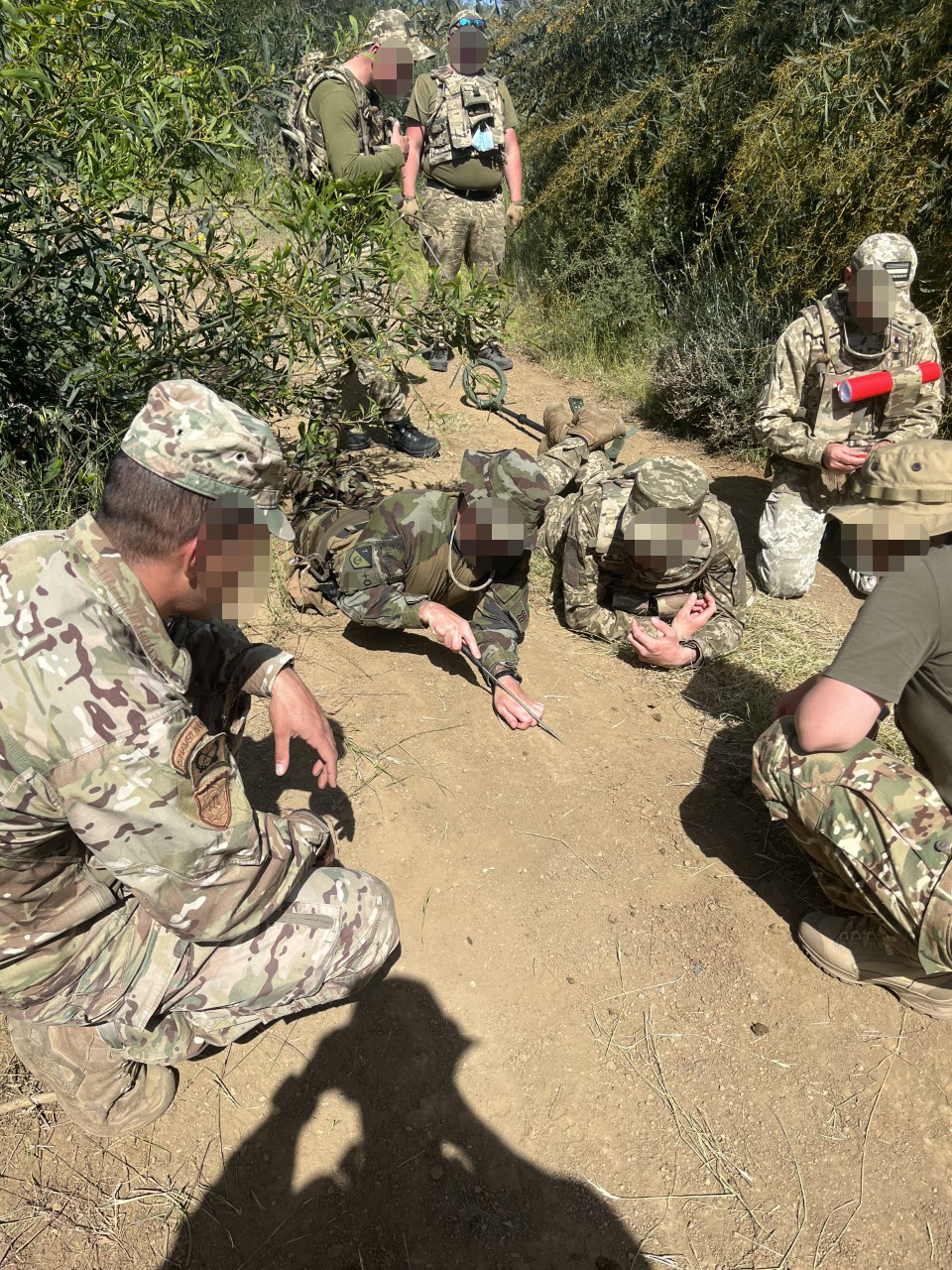




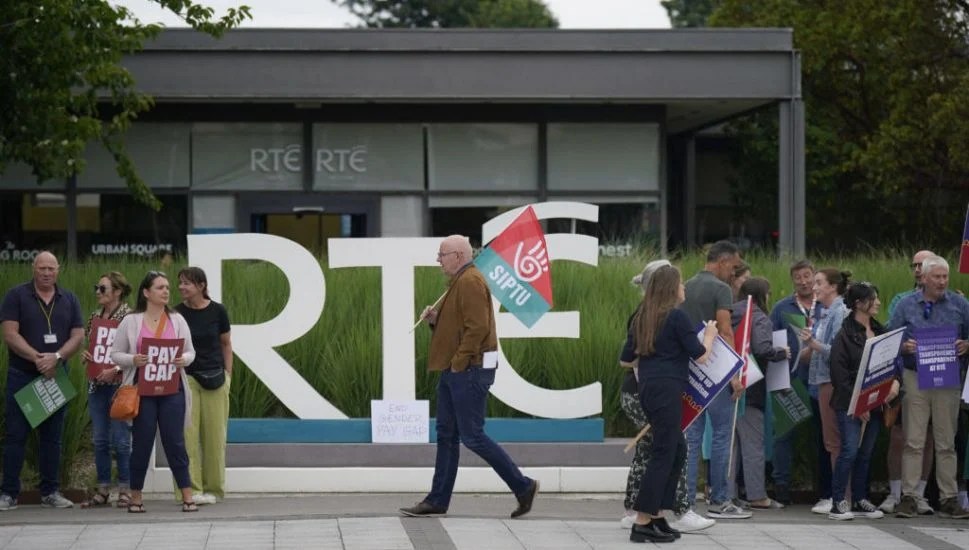

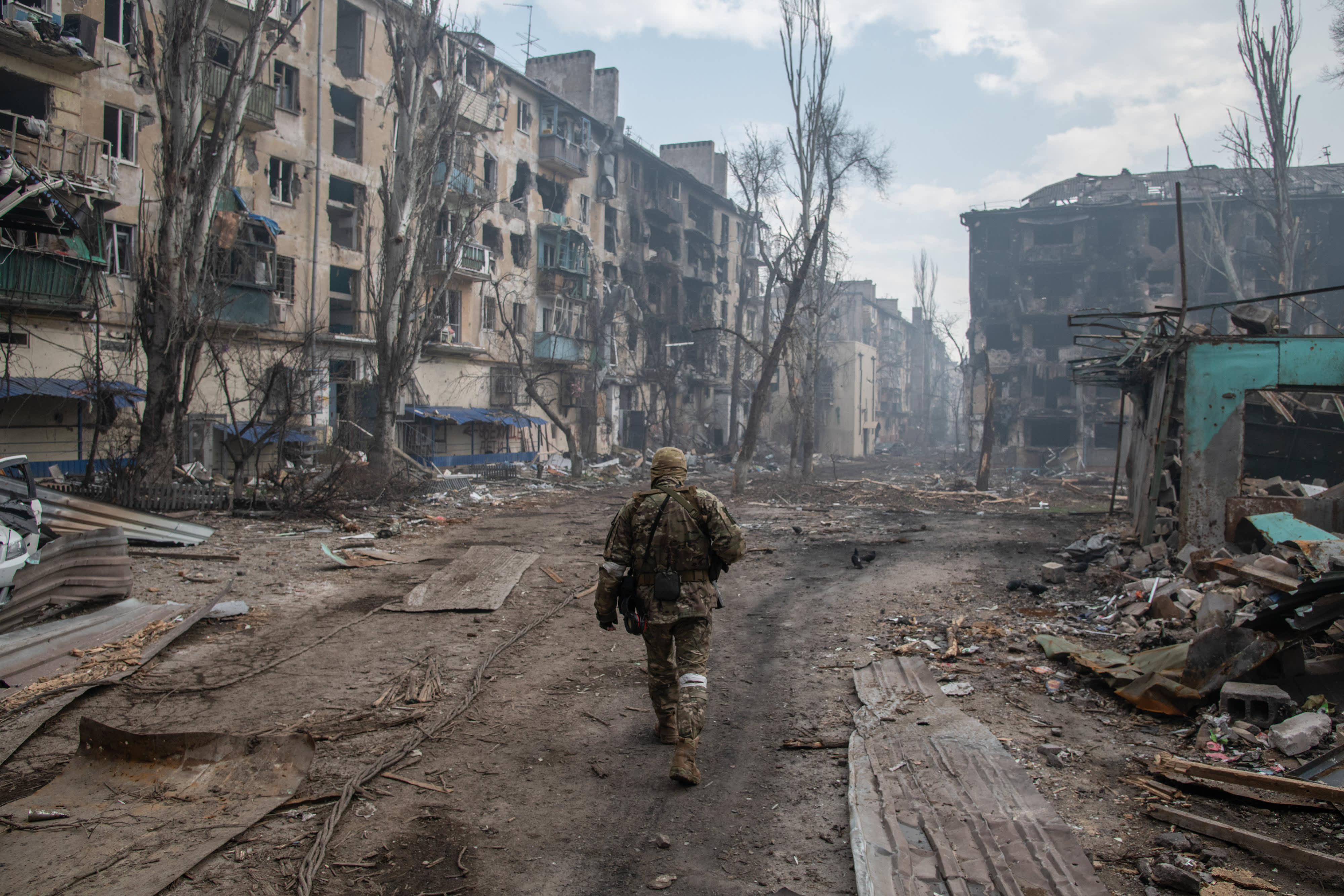
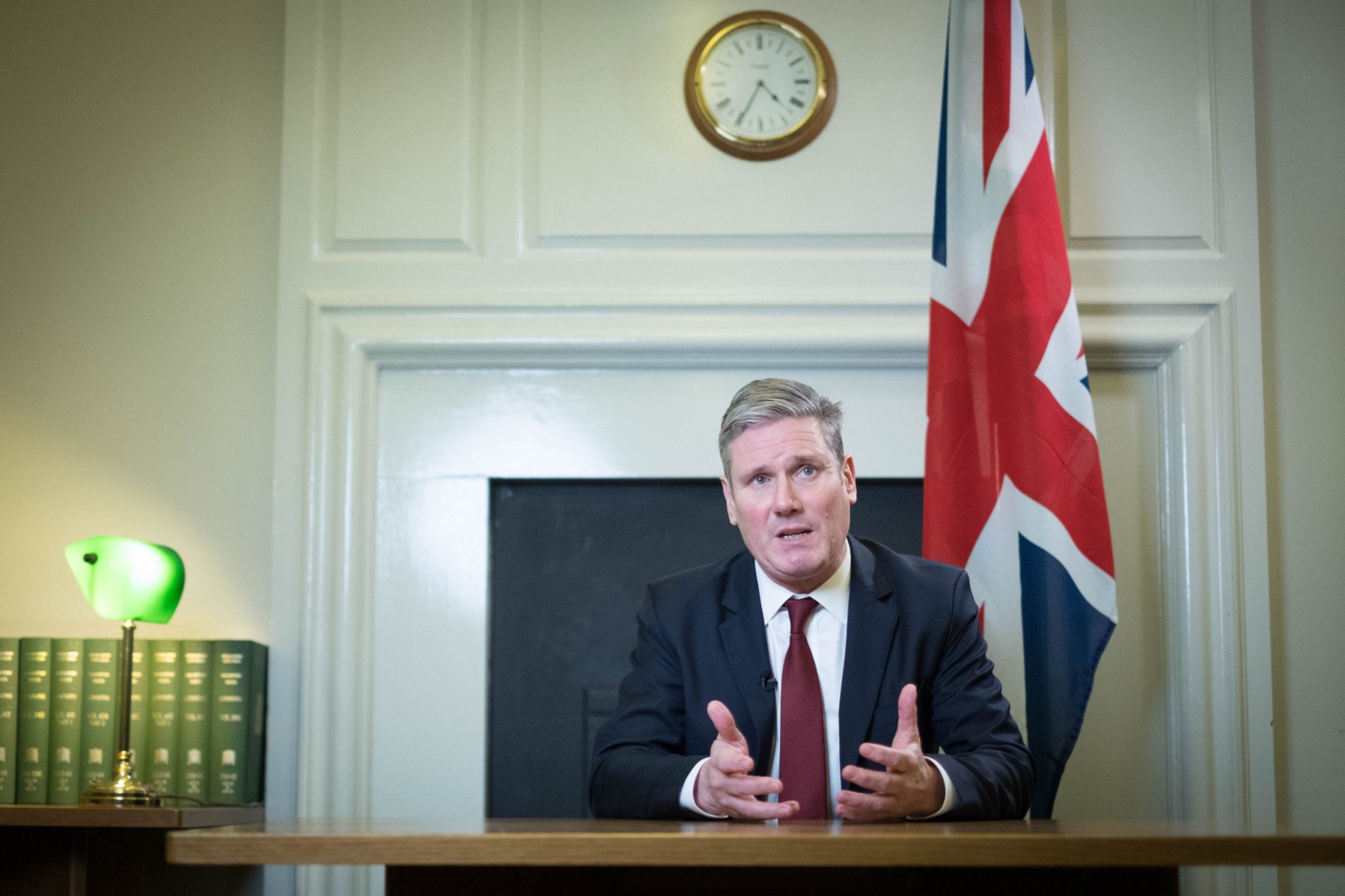
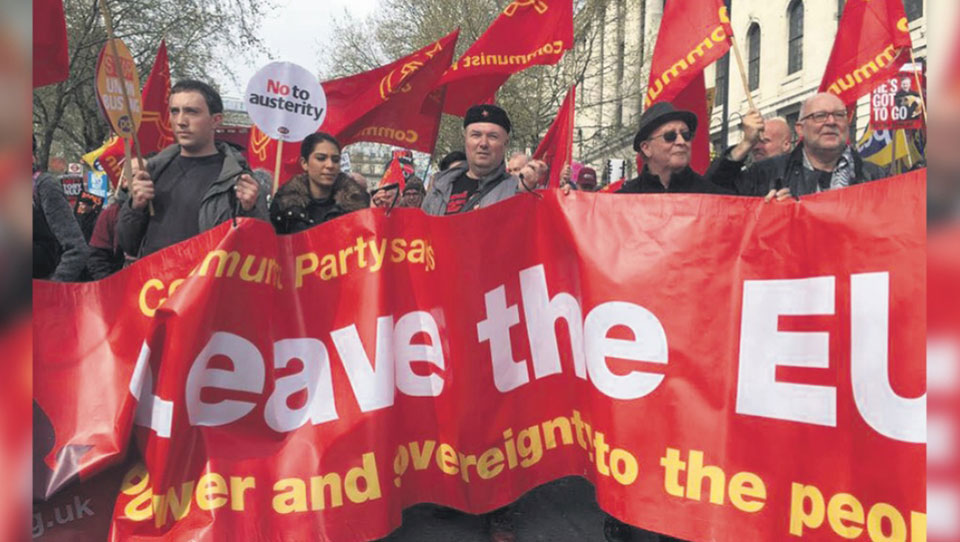


 Sráid Marx