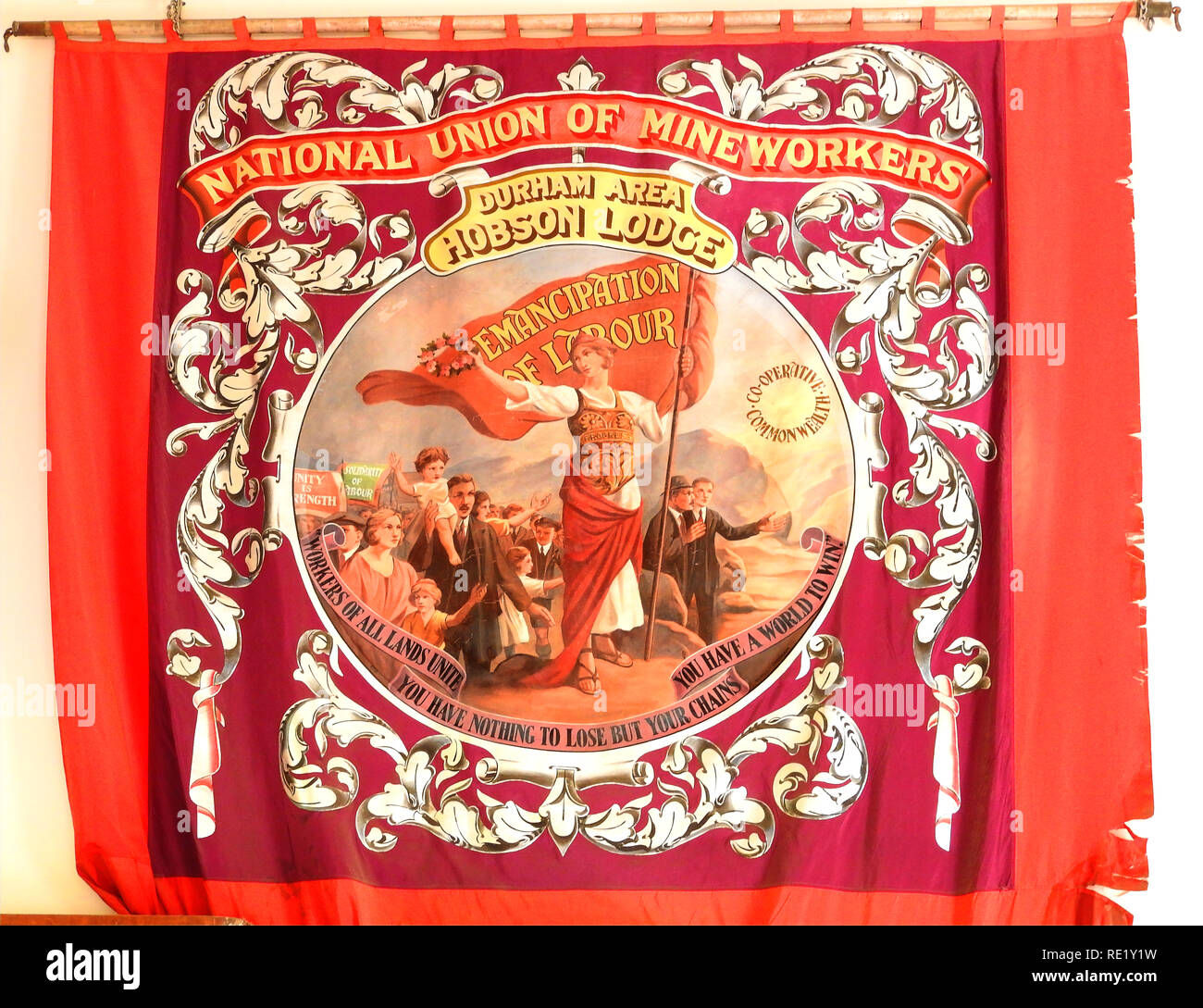
Karl Marx’s alternative to capitalism part 74 – the dictatorship of the proletariat (3)

It is ironic that Marx’s idea of the dictatorship of the proletariat is held up as evidence of his authoritarian and oppressive politics when his view was advanced against such conceptions, held by many of his immediate socialist predecessors and contemporaries.  These included such figures as the utopian socialist Saint-Simon, Blanqui, Wilhelm Weitling and Ferdinand Lassalle, who are no longer so well known, but whose views are still the staple of many today who are unaware of their ancestry.

In the previous posts on the book Citizen Marx, we noted that early in his political career he was on the extreme democratic wing of republicanism, and against the constraints on democracy supported by liberalism, going much further in identifying the road to a positive conception of freedom.  The first ‘dictatorship’ championed by him was the dictatorship of democracy in 1848 during the bourgeois revolutions of that year, which the bourgeoisie betrayed.  Such a democratic “dictatorship” would energetically repress any counter-revolution to defend itself from reaction.

For Marx the dictatorship of the proletariat was synonymous with terms that now sound less jarring, such as the ‘political power of the working class’ or the ‘rule of the proletariat’, and meant nothing more nor less than these.  In his book Citizen Marx, Bruno Leipold suggests that the various terms Marx used to describe the Paris Commune could also be employed – “Communal Constitution”, “Communal Republic”, “Republic of Labour” and “Social Republic”.  What this entailed was set out in the previous post, most particularly the abolition of classes leading to the abolition of the state, understood by Marx as the mechanism for imposing and defending class rule.

As Engels set out, ‘the state is nothing but a machine for the oppression of one class by another, and indeed in the democratic republic no less than in the monarchy; and at best an evil inherited by the proletariat after its victorious struggle for class supremacy, whose worst sides the victorious proletariat just like the Commune, cannot avoid having to lop off at once as much as possible until such time as a generation reared in new, free social conditions is able to throw the entire lumber of the state on the scrap heap.’ (Engels Introduction to Karl Marx’ s The Civil War in France 1Vol 27 p 190)

Marx ventured some views on how the state would develop that history has confirmed: 

“The bourgeois state is nothing more than the mutual insurance of the bourgeois class against its individual members, as well as against the exploited class, insurance which will necessarily become increasingly expensive and to all appearances increasingly independent of bourgeois society, because the oppression of the exploited class is becoming ever more difficult.”  (Marx, Le Socialisme et l’Impôt, par Emile De Girardin, Collected Works Vol 10 p 333)

Hal Draper, in his third volume of Karl Marx’s Theory of Revolution, entitled The Dictatorship of the Proletariat ventures that ‘Marx’s term ‘rule of the proletariat’ was reformulated as ‘dictatorship of the proletariat’ when Marx had to confront the Blanquist mind. (KMTR Vol III p 293).  Draper also notes the comparatively few times – six – that Marx used the term, within two defined periods: 1850–52 and 1871–75.  What matters is that it follows from the idea of a working class political struggle, leading to a working class revolution, and new collective property relations based on the working class.

Draper further states that ‘Not before the “Critique of the Gotha Program” and not after it did Marx ever indicate that the party program should include the ‘dictatorship of the proletariat’, or any formulation involving the word ‘dictatorship’. (KMTR Vol III, p 305)

We have also seen in the posts on Citizen Marx that Marx and Engels believed that a democratic republic provided the best conditions in which to fight for socialism and was therefore more important to the working class than the bourgeoisie. The latter could, if it had to, have its interests defended by dictatorial political regimes that rested on capitalist property relations, while collective and cooperative property relations are inimical to such political forms.  Whether the form of the bourgeois state was a bourgeois democratic republic or an authoritarian regime, all entailed the dictatorship of the capitalist class in their understanding of the term since the property relations were capitalist and defended by the state.

As The Communist Manifesto put it “All previous historical movements were movements of minorities, or in the interest of minorities. The proletarian movement is the self-conscious, independent movement of the immense majority, in the interest of the immense majority.”

“The immediate aim of the Communists is the same as that of all other proletarian parties: formation of the proletariat into a class, overthrow of the bourgeois supremacy, conquest of political power by the proletariat.”

What distinguished Marx’s conception from that of others was that the “dictatorship” was to be one of the proletariat not over it.  As Engels said of one who advanced the latter view:

‘Since Blanqui regards every revolution as a coup de main by a small revolutionary minority, it automatically follows that its victory must inevitably be succeeded by the establishment of a dictatorship—not, it should be well noted, of the entire revolutionary class, the proletariat, but of the small number of those who accomplished the coup and who themselves are, at first, organised under the dictatorship of one or several individuals. (Engels, The Program of the Blanquist Fugitives from the Paris Commune Collected Works Vol 24 p 13)

Emancipation was to be achieved by the working class itself, counterposed to the schemes of the supporters of Blanqui:

‘Brought up in the school of conspiracy, and held together by the strict discipline which went with it they started out from the viewpoint that a relatively small number of resolute, well-organised men would be able at a given favourable moment, not only to seize the helm of state, but also by a display of great, ruthless energy, to maintain power until they succeeded in sweeping the mass of the people into the revolution and ranging them round the small band of leaders. This involved, above all the strictest, dictatorial centralisation of all power in the hands of the new revolutionary government.’  (Engels Introduction to Karl Marx’ s The Civil War in France 1Vol 27 p 188)

This was to be true not only of the workers’ party in relation to society but within the party itself. As Engels put it in a letter in 1890 regarding the German Workers Party: “The biggest party in the empire cannot remain in existence unless every shade of opinion is allowed complete freedom of expression, while even the semblance of dictatorship à la Schweitzer must be avoided.” (Marx and Engels, Collected Works Vol 49 p 11)

Back to part 73

Karl Marx’s alternative to capitalism part 73 – the dictatorship of the proletariat (2)

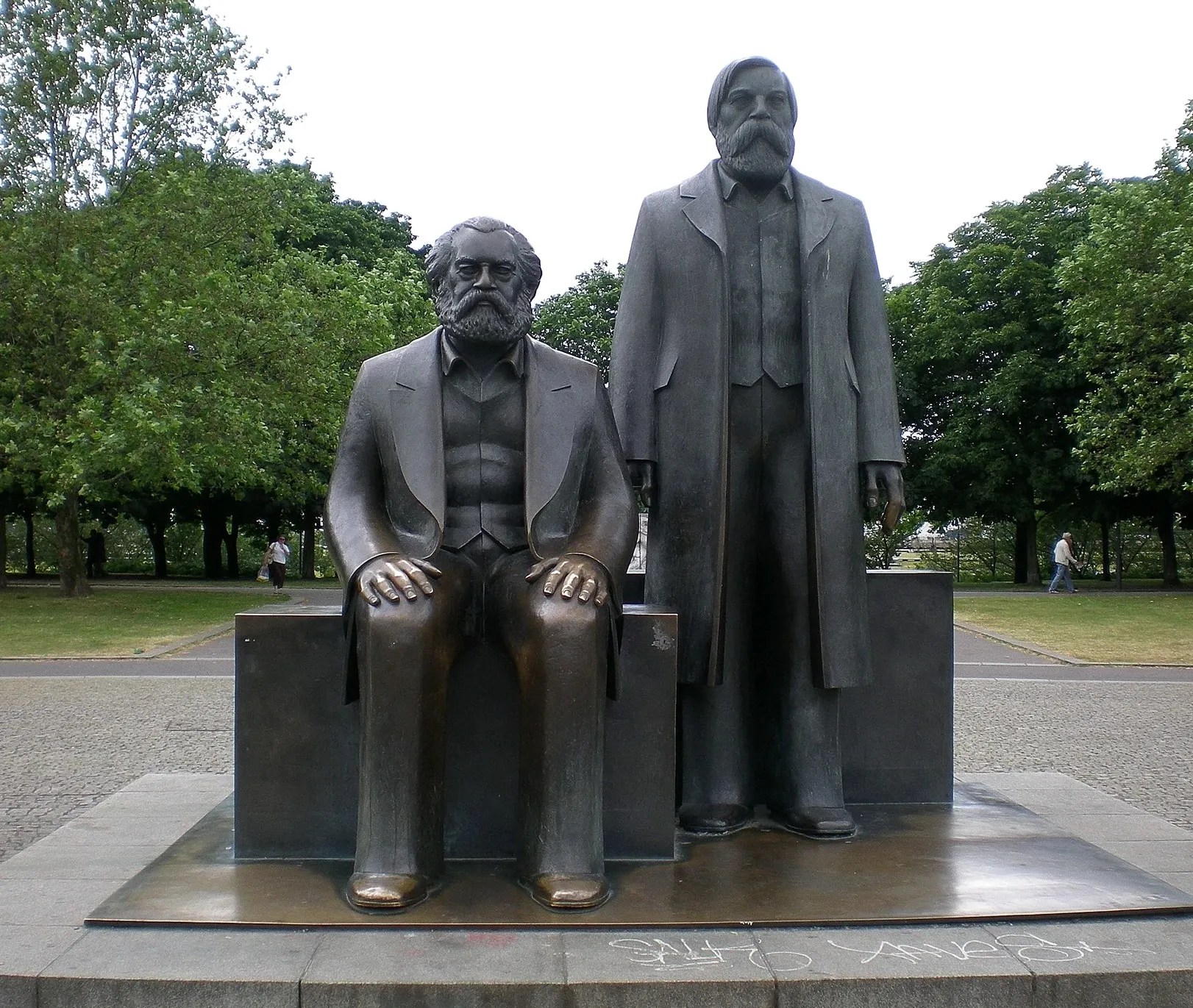
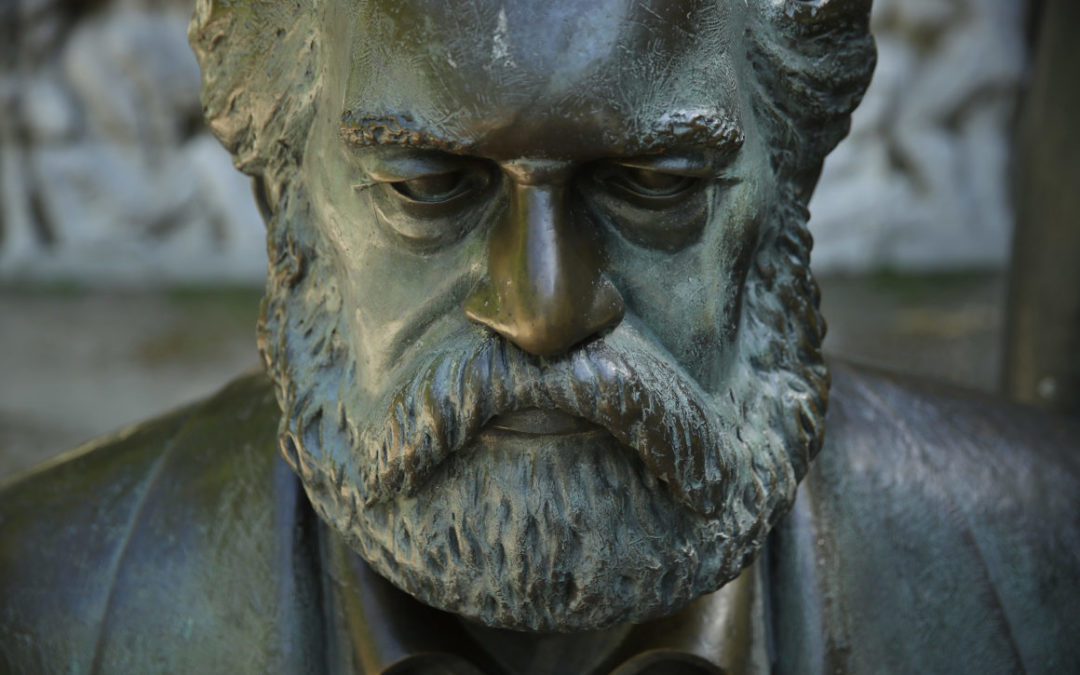
Statue of Karl Marx in Berlin May 4, 2018. Photo by Sean Gallup/Getty Images)

“Between capitalist and communist society there lies the period of the revolutionary transformation of the one into the other. Corresponding to this is also a political transition period in which the state can be nothing but the revolutionary dictatorship of the proletariat.” (Marx, Critique of the Gotha Programme, Collected Works Vol 24 p 95)

The qualitatively greater degree of freedom to which the dictatorship of the proletariat is directed is explained firstly by Marx’s opposition to the idea of a “free state”:  “Freedom consists in converting the state from an organ superimposed upon society into one completely subordinate to it, and even today forms of state are more free or less free to the extent that they restrict the “freedom of the state.”

The mistaken view of the state as the mechanism that can bring about freedom arises from the view that instead “of treating existing society (and this holds good for any future one) as the basis of the existing state (or of the future state in the case of future society), it treats the state rather as an independent entity that possesses its own “intellectual, ethical and libertarian bases”. (Critique of the Gotha Programme) This false idea is today more or less widespread among many ‘Marxists’ who champion nationalisation, ‘the public sector’, income redistribution and welfarism, or ‘national sovereignty’ and ‘self-determination’.

The basis of the state under the dictatorship of the proletariat is the development of cooperative economy to the national level and beyond so that society as a whole becomes a cooperative venture consciously moulded to human need by being consciously planned.  Capitalism begins this transition through its socialisation of production but only by raising its contradictions to a higher level while cooperative production begins its positive supersession.

This development within capitalism, however, cannot be adequate or sufficient to achieve its replacement, as Marx explained: “Restricted, however, to the dwarfish forms into which individual wages slaves can elaborate .. by their private efforts, the co-operative system will never transform capitalist society. To convert social production into one large and harmonious system of free and co-operative labour, general social changes are wanted, changes of the general conditions of society, never to be realised save by the transfer of the organised forces of society, viz., the state power, from capitalists and landlords to the producers themselves.” Marx Instructions for the delegates of the Provisional Geneal Council, Collected Works Vol 20 p.)

If the road to socialism can loosely be called rule by the working class Marx explains more clearly the steps which the dictatorship of the proletariat must take upon the conquest of political power (which, to emphasise, is inseparable from social power more generally): “What we are dealing with here is a communist society, not as it has developed on its own foundations, but on the contrary, just as it emerges from capitalist society, which is thus in every respect, economically, morally and intellectually, still stamped with the birth-marks of the old society from whose womb it emerges.  Accordingly, the individual producer receives back from society—after the deductions have been made—exactly what he gives to it.”

Marx explains that in these “altered circumstances no one can give anything except his labour, and . . . on the other hand, nothing can pass to the ownership of individuals except individual means of consumption.” The accumulation of capital by a minority class, and therefore also a class that must work on its behalf, cannot arise, so that with this “abolition of class distinctions all social and political inequality arising from them would disappear of itself.”  (Critique of the Gotha Programme, Collected Works Vol 24 p 96 & 92)

This must lead ultimately “In a higher phase of communist society, after the enslaving subordination of the individual to the division of labour, and thereby also the antithesis between mental and physical labour, has vanished; after labour has become not only a means of life but life’s prime want; after the productive forces have also increased with the all-round development of the individual, and all the springs of common wealth flow more abundantly—only then can the narrow horizon of bourgeois right be crossed in its entirety and society inscribe on its banners: From each according to his abilities, to each according to his needs!”

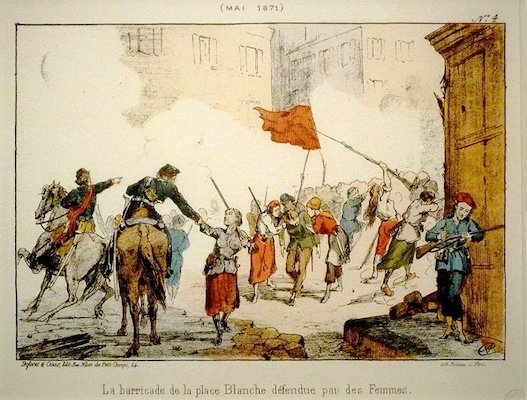
Not only did Marx and Engels put forward this prospectus, but they lived long enough to see an initial attempt to begin it, if only in a very limited fashion – in one city, for a short time, and by an undeveloped working class still short of full consciousness of its task:

“Well and good, gentlemen, do you want to know what this dictatorship looks like? Look at the Paris Commune. That was the Dictatorship of the Proletariat”. (Engels) “The political rule of the producer cannot coexist with the perpetuation of his social slavery. The Commune was therefore to serve as a lever for uprooting the economical foundations upon which rests the existence of classes, and therefore of class rule.” (Marx, The Civil War in France, Vol 22 p334)

“ . . the present “spontaneous action of the natural laws of capital and landed property”—can only be superseded by “the spontaneous action of the laws of the social economy of free and associated labour”, by a long process of development of new conditions, as was the “spontaneous action of the economic laws of slavery” and the “spontaneous action of the economical laws of serfdom”. “But they know at the same time that great strides may be taken at once through the Communal form of political organisation and that the time has come to begin that movement for themselves and mankind.” (Marx, The Civil War in France, Vol 22 p491-2)

“Its true secret was this. It was essentially a working-class government, the produce of the struggle of the producing against the appropriating class, the political form at last discovered under which to work out the economical emancipation of Labour.” (Marx, The Civil War in France, Vol 22 p334). This “economical emancipation of Labour” was thus to be ‘worked out’ by the working class itself, not by the new state or its governmental executive, but ‘under’ a ‘political form’ that obviously would require organisations of the working class separate from the state, even its own workers’ state to carry out this task..

The new relations of production, which it is the role of the workers’ state to defend, are the means by which the collective and associated labour will develop “by a long process” towards socialism: t”he superseding of the economical conditions of the slavery of labour by the conditions of free and associated labour can only be the progressive work of time.” (Marx, The Civil War in France, Vol 22 p 491)

This, in practice, and not just in theory, demonstrated the wholly democratic credentials of proletarian dictatorship in its earliest form.  In order to avoid bourgeois political corruption, Engels claimed that “the Commune made use of two infallible expedients. In this first place, it filled all posts—administrative, judicial, and educational—by election on the basis of universal suffrage of all concerned, with the right of the same electors to recall their delegate at any time. And, in the second place, all officials, high or low, were paid only the wages received by other workers. The highest salary paid by the Commune to anyone was 6,000 francs. In this way an effective barrier to place-hunting and careerism was set up, even apart from the binding mandates to delegates to representative bodies, which were also added in profusion” (Engels, postscript to The Civil War in France, Collected Works Vol 27 p190)

Back to part 72

Forward to part 74

Karl Marx’s alternative to capitalism part 72 – the dictatorship of the proletariat (1)

In a previous post I noted Marx’s statement that 

‘Now as for myself, I do not claim to have discovered either the existence of classes in modern society or the struggle between them. Long before me, bourgeois historians had described the historical development of this struggle between the classes, as had bourgeois economists their economic anatomy. My own contribution was 1. to show that the existence of classes is merely bound up with certain historical phases in the development of production; 2. That the class struggle necessarily leads to the dictatorship of the proletariat; 3. that this dictatorship itself constitutes no more than a transition to the abolition of all classes and to a classless society.’ (Marx letter to Joseph Weydemeyer, Marx Collected Works Vol 39, p62 & 65)

If we quote Lenin on this, he puts it in his typically forthright way:

‘The question of the dictatorship of the proletariat is the fundamental question of the modern working-class movement in all capitalist countries without exception… Whoever has failed to understand that dictatorship is essential to the victory of any revolutionary class has no understanding of the history of revolutions, or else does not want to know anything in this field.’ – Lenin, “A Contribution to the History of the Question of the Dictatorship”.

‘Those who recognise only the class struggle are not yet Marxists; they may be found to be still within the boundaries of bourgeois thinking and bourgeois politics. To confine Marxism to the doctrine of the class struggle means curtailing Marxism, distorting it, reducing it to something which is acceptable to the bourgeoisie.’

‘Only he is a Marxist who extends the recognition of the class struggle to the recognition of the dictatorship of the proletariat. This is what constitutes the most profound difference between the Marxist and the ordinary petty (as well as big) bourgeois. This is the touchstone on which the real understanding and recognition of Marxism is to be tested’. (Lenin, The State and Revolution.)

It is almost universal that when introducing this question, it is felt necessary to explain what is meant by the word “dictatorship”.  The feeling is justified. The history of Stalinist regimes that repudiated the common understanding of (bourgeois) democracy has made these statements appear as early political endorsement of later practice. This explanation of its meaning is ahistorical, and it is necessary to present the very different understanding of the term as it was understood by Marx.

This usually starts by noting that the word ‘dictatorship’ has a long history, going back to the ancient Roman Republic, denoting various specific political ideas that are not the same as the current conception of it – as a form of government in which absolute power is exercised by a dictator, or as signifying absolute, imperious, or overbearing power or control.  Like so many other political or philosophical thinkers, terms routinely employed by Marx often have a specific meaning which it is necessary to know to correctly understand his work.  In Marx’s case the use of the word dictatorship during his time was not confined to him and was widely understood.

For Marx it denoted not the overthrown or denial of democracy but its achievement, as put forward in The Communist Manifesto, which he generally subscribed to for the rest of his life:

“We have seen above, that the first step in the revolution by the working class is to raise the proletariat to the position of ruling class to win the battle of democracy.” In doing so “the working class can not simply lay hold of the ready made state machinery, and wield its ubiquitous organs of standing army, police bureaucracy, and judicature for its own purposes.’

“The proletariat will use its political supremacy to wrest, by degree, all capital from the bourgeoisie, to centralise all instruments of production in the hands of the State, i.e., of the proletariat organised as the ruling class; and to increase the total productive forces as rapidly as possible.” (Marx and Engels, The Communist Manifesto)

The dictatorship of the proletariat therefore refers to the period after the working class achieves political power, so that this power becomes that of the majority.  At this time Marx set out that the state would lead this process, but he subsequently emphasised the working class itself carrying out this task, initially through the growth of workers cooperatives and then through their forming a national (and international) cooperative economy.  This would be distinguished not so much by its planning as by the governance and control by the working class. (See note below)

Subsequent history has demonstrated that without this working class control socialism cannot be built, which is in many ways a truism, since socialism is (loosely) the name for the working class becoming the ruling class.  History also confirms Marx’s analysis of the position of the state: ‘the government machine or the state insofar as it forms a special organism separated from society through division of labour.’ (Marx, Critique of the Gotha Programme, Collected Works Vol 24 p 96)

In creating this ‘dictatorship’, society is radically changed and the previous economic and political power of the capitalist class – through their ownership and control of the means of production defended by the instrument of the state – is replaced by that of cooperative ownership and a state machinery, composed of workers, and controlled by the working class as a whole.  

Note: ‘That the workers desire to establish the conditions for co-operative production on a social scale, and first of all on a national scale, in their own country, only means that they are working to revolutionise the present conditions of production, and it has nothing in common with the foundation of co-operative societies with state aid. But as far as the present cooperative societies are concerned, they are of value only insofar as they are the independent creations of the workers and not proteges either of the governments or of the bourgeois’. (Marx, Critique of the Gotha Programme, Collected Works Vol 24 p 93-4)

Back to part 71

Forward to part 73

Karl Marx’s alternative to capitalism part 71

Marx states in ‘The Communist Manifesto’: ‘In proportion as the bourgeoisie, i.e., capital, is developed, in the same proportion is the proletariat, the modern working class, developed . . . Modern Industry has converted the little workshop of the patriarchal master into the great factory of the industrial capitalist. Masses of labourers, crowded into the factory, are organised like soldiers. As privates of the industrial army they are placed under the command of a perfect hierarchy of officers and sergeants . . . The more openly this despotism proclaims gain to be its end and aim, the more petty, the more hateful and the more embittering it is.’

‘The proletariat goes through various stages of development. With its birth begins its struggle with the bourgeoisie . . . At this stage, the labourers still form an incoherent mass scattered over the whole country, and broken up by their mutual competition. If anywhere they unite to form more compact bodies, this is not yet the consequence of their own active union, but of the union of the bourgeoisie, which class, in order to attain its own political ends, is compelled to set the whole proletariat in motion, and is moreover yet, for a time, able to do so.’

‘. . . but with the development of industry, the proletariat not only increases in number; it becomes concentrated in greater masses, its strength grows, and it feels that strength more . . .  The growing competition among the bourgeois, and the resulting commercial crises, make the wages of the workers ever more fluctuating. The increasing improvement of machinery, ever more rapidly developing, makes their livelihood more and more precarious; the collisions between individual workmen and individual bourgeois take more and more the character of collisions between two classes. Thereupon, the workers begin to form combinations (Trades’ Unions) against the bourgeois; they club together in order to keep up the rate of wages; they found permanent associations in order to make provision beforehand for these occasional revolts.’

‘Now and then the workers are victorious, but only for a time. The real fruit of their battles lies, not in the immediate result, but in the ever expanding union of the workers. This union is helped on by the improved means of communication that are created by modern industry, and that place the workers of different localities in contact with one another. It was just this contact that was needed to centralise the numerous local struggles, all of the same character, into one national struggle between classes. But every class struggle is a political struggle.’

‘This organisation of the proletarians into a class, and, consequently into a political party, is continually being upset again by the competition between the workers themselves. But it ever rises up again, stronger, firmer, mightier.’ 

‘Altogether collisions between the classes of the old society further, in many ways, the course of development of the proletariat. The bourgeoisie finds itself involved in a constant battle. At first with the aristocracy; later on, with those portions of the bourgeoisie itself, whose interests have become antagonistic to the progress of industry; at all time with the bourgeoisie of foreign countries. In all these battles, it sees itself compelled to appeal to the proletariat, to ask for help, and thus, to drag it into the political arena. The bourgeoisie itself, therefore, supplies the proletariat with its own elements of political and general education, in other words, it furnishes the proletariat with weapons for fighting the bourgeoisie.’

‘Of all the classes that stand face to face with the bourgeoisie today, the proletariat alone is a really revolutionary class.’

‘The advance of industry, whose involuntary promoter is the bourgeoisie, replaces the isolation of the labourers, due to competition, by the revolutionary combination, due to association. The development of Modern Industry, therefore, cuts from under its feet the very foundation on which the bourgeoisie produces and appropriates products. What the bourgeoisie therefore produces, above all, are its own grave-diggers.’

Marx goes on to set out the tasks of the working class revolution, which involves ‘the proletariat organised as the ruling class; and to increase the total productive forces as rapidly as possible.’ This revolution is not an eschatological thunderstrike out of the blue that suddenly transforms the world but a juncture arising within existing society through the development of its contradictions.

As a conscious process of real people, it cannot be the outcome of impetuous and spontaneous apprehension, but must arise from the considered and passionate commitment of the vast majority of the working class, arising from the history and development of their struggles as a class.

We can note at least three aspects of what Marx said that has obvious relevance to today.  The first is ‘the growing competition among the bourgeois’, which now takes place between previously inconceivably large corporations that span the globe that makes this competition an international phenomenon.  This both unites the interests of the world working class and divides it according to the strength of the capitalist system and political weakness of the working class.

The second is the the improved means of communication that can help ‘in the ever expanding union of the workers.’ We no longer need to merely read about wars but have daily, if not hourly, video coverage of its barbarity in Gaza and Ukraine.  What the working class movement has failed abysmally to do is to create its own international media, which remains in Lilliputian proportions in comparison to that of the bourgeoisie.

Through this media the bourgeoisie is compelled to appeal to the proletariat, to ask for help, and thus, to drag it into the political arena.  Hence the bias in coverage of the genocide in Gaza and the war in Ukraine.  Unfortunately again, we see the weakness of the working class movement that is happy to wallow in the lies about the imperialist character of the proxy war in Ukraine and line up behind its own ruling class.  The very saturation of the media allows those comfortable in this position to have their deception confirmed again and again.  A working class media would at least allow a wider source of information and debate, although again, such is the degeneration of much of the current left that petty bourgeois moralism is employed to silence critical voices.

In previous posts, we noted one result of such moralism in the call to hate capitalism more as a spur and guide to action.  We argued in response that a revolution conceived out of ‘negativity’ and ‘hate’, even if it is born out of oppression and exploitation, is utterly insufficient.  Such a view faces the problem of how such a social revolution could become the long-term goal of the working class and could be achieved by it.

Miéville, for example, can say that ‘capitalism is unbearable and yet, mostly, it’s borne’, resulting from the success of ‘capitalist-realist common sense that it’s impossible, even laughable, to struggle or hope for change.’  In part he puts this down ‘to a deliberate ruling-class propaganda strategy to discourage any belief in any such possibility’, but ‘also, at a base level, because it’s so difficult to think beyond the reality in which one has been created, lives and thinks now . . . conditioned as we are by existing reality, we cannot prefigure or simply ‘imagine’ such radical alterity.’

The result is that ‘it’s beyond our ken – we can only yearn for it, glimpse some sense of betterness out of the corner of the eye.’ (A Spectre Haunting: On the Communist Manifesto, p 89)

Such is the idealist view of the possibility of social revolution that cannot ground the future society from the current one but sees the current in purely, or at least mainly, decisively and definitively, in negative terms for which the appropriate emotion is hate.  This is why he states that ‘it’s so difficult to think beyond the reality’ when it is precisely this reality, clearly seen – not out of the corner of the eye – that provides the grounds for the social revolution, giving rise to the appropriate emotions of hope and courage derived from passionate belief in the cause, with hatred of oppression as a motivation but not determining the struggle.

This reality, according to Marx, includes the development of the forces of capitalist production and the associated relations of production that include the creation, expansion, development, organisation and growing consciousness of the working class.  The prosecution of this class struggle involves the creation of a mass, political working class movement that demonstrates not only its power to increasingly defend the interests of the working class but its potential to lead to the creation of a new society ruled by it.

This alternative is built upon the conditions and circumstances of the real world and not by thinking a prefigured ‘radical alterity’ – some largely imagined future alternative – but by changing this reality through prosecuting the class struggle, ranging from the creation of democratic and militant trade unions, to workers’ cooperatives and their association with each other, to the creation of mass working class parties committed to socialism.  The forces recognised by Marx that governed the development of the working class still exist today and are the grounds for the concomitant development of socialist politics.

Back to part 70

Forward to part 72

Hate is useful?

Raju Das, in an article on ‘The Communist Manifesto’ noted that:

‘Interest in anti-capitalism as well as socialism is growing in many parts of the world.  According to a poll conducted in 28 countries, including the United States, France, China, and Russia, 56% agree that “capitalism as it exists today does more harm than good in the world”. A June 2021 poll indicates that 36% of Americans have a negative view of capitalism; this number is much higher among the youth: 46% of 18–34-year-olds and 54% of those aged 18–24 view capitalism negatively. Conversely, and interestingly, 41% of respondents from all ages have a positive view of socialism. This number is higher for the younger people: 52% of 18–24-year-olds and 50% of young adults aged 25–34 have a positive view of socialism. An October 2021 poll shows that 53% of Americans have a negative view of big business . . . The situation outside of the United States within the advanced capitalist world is similar.’

A more recent opinion poll by the magazine Jacobin also recorded promising results on the advance of the idea of socialism in the US. Believing these views can be advanced further by more hate, as we have reviewed in previous posts, is a mistake, not least because it already exists is copious amounts. What is required is clarification and direction, not a greater emotional charge which is unlikely to provide either.

Anger and hatred at the iniquities of capitalism on their own, or even fore-grounded, invite moralistic evaluations that do not in themselves form an understanding of how capitalism can be replaced or the nature of the alternative.  The influence of capitalism on the working class, in terms of illusions, pessimism, demoralisation, passivity, and backward ideas, can cause those opposed to it to look for an alternative in various ideas and movements that ignore or reject the working class as the force that can bring about the alternative.

Historically, revolts based on hatred have been the province of peasant rebellions that fail to achieve any lasting change, even in circumstances where they appear to be successful.  Provocations by the capitalist state rely on hatred of their regimes in order to suppress developing movements before their time has come; something only clear-headed judgement can hope to determine. Hate is not therefore a distinguishing mark of successful movements and while extreme subjectivism may have become more prominent it is not an answer to objectively unfavourable circumstances or contributory to the working out of strategy.

For Marx the primary need for socialist revolution is not so much to overthrow capitalism as to make the working class fit for its own rule – the transformation of the working class so that the economic, social and political system can be transformed.  This involves opposition to ideas and practices that divide the working class such as nationalism, racism and sexism but hatred of these should not lead to the belief that these can and must first be completely eradicated within the working class before the building of a working class movement can be commenced or continued.                                           

Marx and Engels stated in ‘The German Ideology’ that ‘Communism is for us not a state of affairs which is to be established, an ideal to which reality [will] have to adjust itself. We call communism the real movement which abolishes the present state of things’.  This includes the existing working class that must make itself capable of creating this movement, which is only possible through struggle, not the assumption that it can come when the class has first purified itself.

Marx had no illusions about the shortcomings of the working class and refused to simply follow it when its actions were antithetical to its long term interests.  In the Critique of the Gotha Programme’ written in 1875, he explained the character of society following the capturing of political power by the working class:

‘What we have to deal with here is a communist society, not as it has developed on its own foundations, but, on the contrary, just as it emerges from capitalist society, which is thus in every respect, economically, morally and intellectually, still stamped with the birthmarks of the old society from whose womb it emerges.’ The working class will itself still be stamped with this birthmark, both ‘morally’ and ‘intellectually’, something that intensifying hatred will do nothing to remedy.

Even alienation, which we looked at before, through which the workings of capitalism disorients and oppresses the working class while also acting to suppress and hide its true nature, has its positive as well as negative character, which more hatred would do nothing to illuminate. As Sean Sayers set out in an article:

Alienated labour ‘is also the process by which the producers transform themselves. Through alienated labour and the relations it creates, people’s activities are expanded, their needs and expectations are widened, their relations and horizons are extended. Alienated labour thus also creates the subjective factors – the agents – who will abolish capitalism and bring about a new society.’

‘Seen in this light, alienated labour plays a positive role in the process of human development; it is not a purely negative phenomenon. It should not be judged as simply and solely negative by the universal and unhistorical standards invoked by the moral approach. Rather it must be assessed in a relative and historical way. Relative to earlier forms of society – strange as this may at first sound – alienation constitutes an achievement and a positive development. However, as conditions for its overcoming are created, it becomes something negative and a hindrance to further development. In this situation, it can be criticized, not by universal moral standards but in this relative way.’ (Sean Sayers 2011, ‘Alienation as a critical concept’, International Critical Thought, 1:3, 287-304).

Advocating greater hatred in order for workers to advance towards greater awareness of their class position assumes it is a pedagogical aid for a politics that is already sufficient for its task. It is not such an aid and the politics sufficient to its objective is still in the process of elaboration.

Karl Marx’s alternative to capitalism part 70

Back to part 69

Forward to part 71

Marx admires capitalism too much?

A worker gathers items for delivery from the warehouse floor at Amazon’s distribution centre in Phoenix, Arizona November 22, 2013. REUTERS/Ralph D. Freso

Marx’s alternative to capitalism explains that it arises from the contradictory nature of capitalism.  The simple and popular, but misleading, understanding of this is that it is primarily expressed in capitalist crises and class struggle, and although Marx had much to say about both, his alternative regarded these as arising from property relations, on which we based a large number of the previous posts in this series, and on his claim that communists put these to the fore in seeking social and political change.

We have noted the (one-sided) emphasis on resistance to capitalism – ‘anti-capitalism’ – and the impulse to state what you are against instead of what you are for, with what you are against being more concrete than what you are for.  Concrete issues and instances of exploitation and oppression are often denounced by abstract claims for justice within the existing capitalist system.

It is worth emphasising the contradictory character of capitalism because many of those claiming adherence to Marxism find it difficult to fully appreciate that, for all the horrors of capitalism, what in the end is most important is that it provides the grounds for socialism.  It is not a question of there being a good side to capitalism and a bad side such that they can be separated, except in the most superficial way of description, but that they are inseparable and that it is this integrity that involves contradiction and antagonism out of which a new society arises.

Even very informed views fail in this regard, so that there is a compulsion to emphasise the ‘bad’ while relegating the ‘good’ to some purely historical existence.  As we have explained in the previous post, in a reproduction and critical commentary on ‘The Communist Manifesto’, China Miéville records Samir Amin writing that it was a ‘hymn to the glory of capitalist modernity’, and repeats the words of Joseph Schumpeter that ‘Never, I repeat, and in particular by no modern defender of the bourgeois civilization, has anything like this been penned, never has a brief been composed on behalf of the business class from so profound and so wide a comprehension of what its achievement is and of what it means to humanity.’

Miéville complains that if this ‘is an exaggeration, it isn’t by much’.  The Manifesto ‘admires capitalism and bourgeois society and the bourgeoisie.  It admires them too much.’  He quotes ‘a phrase from Neary, in another context, The Communist Manifesto’s “negativity is not negative enough”. ‘It does not hate enough’, exclaims Miéville. (A Spectre Haunting: On the Communist Manifesto, p 176). We reviewed this request to ‘hate more’ in a general sense in the previous post.

This view not only does not consider the purpose of writing the Manifesto – for a particular organisation at a particular time – but also its status as the elaboration of a set of beliefs, principles and programme that has had lasting relevance.

In ‘The Communist Manifesto’, Marx writes that:

‘Modern bourgeois society, with its relations of production, of exchange and of property, a society that has conjured up such gigantic means of production and of exchange, is like the sorcerer who is no longer able to control the powers of the nether world whom he has called up by his spells.’

‘For many a decade past the history of industry and commerce is but the history of the revolt of modern productive forces against modern conditions of production, against the property relations that are the conditions for the existence of the bourgeois and of its rule . . . The productive forces at the disposal of society no longer tend to further the development of the conditions of bourgeois property; on the contrary, they have become too powerful for these conditions, by which they are fettered, and so soon as they overcome these fetters, they bring disorder into the whole of bourgeois society, endanger the existence of bourgeois property.’

‘The weapons with which the bourgeoisie felled feudalism to the ground are now turned against the bourgeoisie itself.  But not only has the bourgeoisie forged the weapons that bring death to itself; it has also called into existence the men who are to wield those weapons – the modern working class – the proletarians.’

So, Marx’s praise for ‘bourgeois civilisation’, ‘capitalist modernity’, and even perhaps his ‘admiration’, insufficiency of ‘negativity’ and ‘hate’ are not unrelated to the grand forces of production created by capitalism that are to be wielded by ‘the modern working class’.  

The ‘good’ and the ‘bad’ are not separate and attempts to keep the good ‘side’ of a phenomenon while discarding the bad are doomed to failure.  Worse than that, many of those that promise to do so reject the development and resolution of the contradictions contained in the phenomenon – this ‘civilisation’ and ‘modernity’ – with the assurance that it can be maintained either with ‘reforms’; by asserting that the bad can be removed, while refusing to supersede the phenomenon as a whole, or by the rapid instigation of planning as if this was the alternative to capitalism understood solely as a market phenomenon.

To see ‘bourgeois civilisation’ and ‘capitalist modernity’ as simply negative or to belittle their power is thus also to call into question the power of the weapons to be wielded by ‘the proletarians.’  Ultimately, to question the revolutionary consequences of the rule of the bourgeoisie is to question the revolutionary character of the working class and its future rule.

It is thus not enough to say that ‘It’s OK to be angry about capitalism’, in the words of Bernie Sanders.  Even in the citadel of world capitalism, in the United States, there is growing evidence of opposition to capitalism and sympathy with socialism, but it’s not enough to simply get angry or to hate.  Recent events have demonstrated that there is no shortage of both. It is necessary to understand and to do this requires appreciation of capitalism’s contradictions.

Karl Marx’s alternative to capitalism part 69

Back to part 68

Back to Part 1

Forward to part 70

The need to hate capitalism more

In the 1970s I used to sell the paper of the International Marxist Group Red Weekly every Saturday afternoon on Union Street in Glasgow at the side entrance of the Central Station. I remember one occasion when a visibly agitated man rushed up to me demanding to know whether I was a communist – ‘Are you a communist?’ ‘Are you a communist?’  He launched into a few remarks I barely took in at the time and don’t remember at all now.  I gathered that he was very angry about something and ‘communism’ was some sort of answer. He then exited as frantically as he had arrived.  I doubt very much he had anything to do with ‘communism’ thereafter.

I was reminded of this minor incident reading China Miéville’s book on Marx’s Communist Manifesto, in which he borrows a phrase employed by someone else, and in a different context, to say that The Communist Manifesto’s “negativity is not negative enough”. ‘It does not hate enough’, (A Spectre Haunting: On the Communist Manifesto, p 176)

This appears in a section entitled ‘On Hate’ in which he states that capitalism deserves to be hated, but that “a focus on hatred . . . is fraught, and dangerous territory . . . Hatred, after all, is an emotion that can short-circuit thought and analysis, can segue into violence, and not necessarily with any discrimination’; although he then notes that “hatred, particularly by the oppressed, is inevitable” (p170-171)

Against this he quotes Marx’s favourite maxim – Nihil humani a me alienum puto – nothing human is alien to me, and while he then states that it’s “hardly productive to pathologise hate per se, not least when it’s natural that it arises . . . the very absence of a critical mass of hatred may militate against resistance.”  He then quotes others on the need for ‘class hatred’ – “a radical structural hate for what the world has become” that is not “personal, psychological or pathological hate, but a structural hate.’  However, a hate that is neither personal nor psychological is not an emotion and a ‘structural hate’ must refer to something else entirely if it is to refer to anything at all.

Miéville is correct to refer to a statement about “deliberate hate as a rational category”.  The philosopher Martha Nussbaum noted that “emotions always involve thought of an object combined with thought of the object’s salience or importance; in that sense, they always involve appraisal or evaluation.”  The neurologist Antonio Damasio similarly comments that “Emotions provide a natural means for the brain and mind to evaluate the environment within and around the organism and respond accordingly and adaptively.”

This is the opposite of the view of emotions–that they cloud rationality, which they obviously can, and fits comfortably into the long tradition of Western philosophy focused on what is rational but which exaggerates both the disruptive potential of most emotions and the precision and certainty of human rationality.  Emotions are an evolutionary development of humanity that helps us quickly gather and process information about the world and respond to it accordingly.  

Some have made the comparison of thinking slow and fast, with emotions involving the latter entailing problems associated with ‘snap decisions’ and avoidance of ‘careful deliberation.’  If anyone was to look to Marx for inspiration, they might consider his long years in the British Library in London; his purported need to read all potentially relevant books on a subject before forming a definite view, and this resulting in missed deadlines and much unfinished work left to posterity.

Miéville believes that hate is not only necessary for resistance but “may help not only with strength but intellectual rigour, and of analysis, too” (p173). He quotes an Anglican priest, Steven Shakespeare, quoted above regarding hate’s “dangerous territory”, that it is necessary to be “more discriminatory about hate, where it comes from, where it should be directed, and how it gets captured for the purposes of others.’

So, we are into Goldilocks territory of not too much, and not too little, hate but just the right amount. Or we can appeal to Aristotle’s golden mean; where, for example, courage is a virtue but if taken to excess is recklessness and if too little, cowardice.  “Emotional intelligence” is a modern variation.  Cogitating on how much hate to evoke against capitalism is, however, a pretty unproductive pursuit.

Miéville, however, is particular about determining the need for greater hate, including that “Marx and Engels were too generous in their eulogy to its [capitalism’s] transformation and energetic properties, and to the bourgeoisie itself, as well as about the likelihood of its collapse.” (p175)

It might be more accurate to say that Marx and Engels were too sanguine, optimistic and confident about the overthrow of capitalism (not its collapse) but that they didn’t live to see the development of the workers’ movement or the programmes developed by its various parts that impacted on the outcome of subsequent failures.  The point of this series of posts is not to relay this long and involved history but to set out what their alternative to capitalism was, which should go some way to exposing the reasons for failure so far.

As for Marx and Engels being too generous about the transformational and energetic properties of capitalism, this is simply false; it is in fact one of their most brilliant judgements and predictions, fully confirmed by today’s capitalism and its spread across the globe.

Miéville says we should retain our “shock” at the iniquities that capitalism throws up and that provoke an “appropriate human response, the fury of solidarity, the loathing of such unnecessary suffering . . . We should feel hate beyond words.”  But the feeling of solidarity is also an emotion.  An emotion that we should wish to promote, which is not (simply) a “humane” one but one based on a feeling of class solidarity, to be combined with the emotions of pride in our cause and our movement, and growing confidence in our success.

If there is a deficiency in emotional investment it is in these, which are more vital to our future than learning to hate capitalism that bit more.  No one experiences only one emotion at a time (hence the falsity of the question repeated by Miéville “is your hate pure”); and as we have said, even the most instinctive emotion involves rationality and a degree of thought.

Marx noted, in relation to Miéville’s call that we should retain our “shock”, “fury” and “loathing” that some suffering has not been “unnecessary”, but absolutely necessary for the development not only of humanity in general but of capitalism and the grounds it creates for the subsequent potential for socialism.  Many still cannot get their head round this: that the suffering imposed by capitalism was unavoidable for its birth and development – and in this sense necessary – but that this does not in the least mean we do not cease to damn it and to seek its overthrow.

To claim otherwise – that much of the suffering endured through capitalism was unnecessary must explain a number of things.  How could capitalism birth and develop without suffering?  Is a non-suffering capitalism possible? Is socialism possible without capitalism (and therefore without this suffering but then also without the working class)?  Was all this suffering therefore without any historical meaning, but simply contingent and accidental?  Explain the laws of the development of capitalism and its relation to the possibility of socialism without contradiction and antagonism and therefore suffering!

Marx is criticised in Miéville for his greater criticism of other socialisms than of the bourgeoisie because the former has none of the “ambivalence” that he attaches to the latter. (p176) This “ambivalence”, however, was entirely appropriate in a period in which capitalism was more or less fully developed in only a couple of countries and had yet to supplant the legacies of feudalism.  Apart from recognition of the insights of the original utopian socialists, Marx admonished their succeeding followers because there was no merit in repeating anachronistic nostrums that were now reactionary.

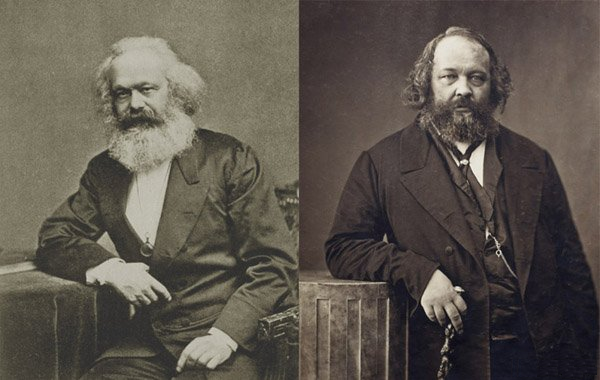
Did Marx and Engels hate capitalism more than Weitling, Proudhon and Bakunin?  This would be a hard claim to sustain, but whose politics is the best guide to ending it, and would their’s have been better had they done so?

The emotion of hate has its (inevitable) place, but this does not mean “we must hate harder than did the Manifesto”; the demand for greater hate (“hate beyond words”) is a substitute for politics.  After all his detour on the need for hate, Miéville says that “Hate is not and cannot be the only or main drive to renewal.  That would be deeply dangerous.  We should neither celebrate nor trust our hate. But nor should we deny it.”  It would have been better had he started and elaborated on this than drop it into the end of a disquisition on how much we must hate more.

Karl Marx’s alternative to capitalism part 68

Back to part 67

Forward to part 69

Back to Part 1

Understanding ‘Citizen Marx’ 3 of 3

Engels once said that ‘Marx and I, for forty years, repeated ad nauseam that for us the democratic republic is the only, political form in which the struggle between the working class and the capitalist class can first be universalised and then culminate in the decisive victory of the proletariat.’

The context was a claim against him that when ‘the socialist party, will become the majority’ it will ‘then proceed to take power.’  Engels however stated that ‘For a start, I have never said the socialist party, will become the majority and then proceed to take power.  On the contrary, I have expressly said that the odds are ten to one that our rulers, well before that point arrives, will use violence against us, and this would shift us from the terrain of majority to the terrain of revolution . . .’

Responding to the question of what form this power would take – ‘Will it be monarchic, or republican, or will it go back to Weitling’s utopia’, Engels replied that of course the Reichstag deputies are republicans and revolutionaries, the question of a Republic being the most controversial political question in Imperial Germany at that time.

Engels goes on to ask whether it is implied ‘that the German socialists attribute no more importance to the social form than to the political form? Again he would be mistaken. He should be well enough acquainted with German socialism to know that it demands the socialisation of all the means of production. How can this economic revolution be accomplished? That will depend on the circumstances in which our party seizes power, on the moment at which and the manner in which that occurs.’ (Engels, Reply to the Honourable Giovanni Bovio MECW Vol 27 p271)

What Engels is making clear is that the fight for democracy is vital to the struggle of the working class to achieve political power not that it is necessary to have a republic as the first step to communism. Even where the question of a Republic was the unmentionable political issue, the objective was ‘the socialisation of all the means of production.’

On a separate occasion he said that ‘If one thing is certain it is that our party and the working class can only come to power in the form of the democratic republic. This is even the specific form for the dictatorship of the proletariat . .’ (emphasis added – SM) On the question of a Republic he explains the content of the demand, if it is not possible to employ the term itself: ‘But the fact that in Germany it is not permitted to advance even a republican party programme openly, proves how totally mistaken is the belief that a republic, and not only a republic, but also communist society, can be established in a cosy peaceful way’

‘However, the question of the republic could possibly be passed by. What, however, in my opinion should and could be included is the demand for the concentration of all political power in the hands of the people’s representatives. That would suffice for the time being if it is impossible to go any further.’ (Engels A critique of the draft Social-Democratic programme of 1891, MECW Vol 27 p227)

Engels in his postscript to Marx’s Civil War in France wrote ‘And people think they have taken quite an extraordinary bold step forward when they have rid themselves of belief in hereditary monarchy and swear by the democratic republic. In reality, however, the state is nothing but a machine for the oppression of one class by another, and indeed in the democratic republic no less than in the monarchy; and at best an evil inherited by the proletariat after its victorious struggle for class supremacy, whose worst sides the proletariat, just like the Commune, cannot avoid having to lop off at the earliest possible moment, until such time as a new generation, reared in new and free social conditions, will be able to throw the entire lumber of the state on the scrap-heap.’

‘From the outset the Commune was compelled to recognize that the working class, once come to power, could not manage with the old state machine . . .’  The bourgeois republic was not therefore the mechanism to advance towards communism.

Marx noted of the Paris Commune that ‘the political rule of the producer cannot co-exist with the perpetuation of his social slavery.’

Back to part 2

Understanding ‘Citizen Marx’ 2 of 3

In one review of Citizen MarxMike Macnair states that ‘the conception of the democratic republic as the necessary first step to communism was, in fact, Marx’s conception: comrade Leipold has, I think, shown this beyond rebuttal.’  If this is taken to mean that the struggle always and everywhere involves firstly a fight for a bourgeois republic then we see that this is not the case. In the Paris Commune the struggle went immediately beyond it and Leipold argues that Marx never looked at the struggle for bourgeois democracy – a bourgeois republic – in the same way after it (see the previous post).

It is not true today because in many countries, capitalism is ruled by states with a democratic and republican form.  There are all sorts of restrictions and qualifications to this bourgeois democracy, and Marx noted and opposed them in his day, but this did not transform the working class struggle – and communists bringing ‘to the front, as the leading question in each, the property question’ – into a struggle first for a bourgeois ‘democratic republic’.  This is simply old-fashioned Stalinism in which the working class struggle is always limited to a fight for bourgeois democracy, and only when successful, then a struggle for socialism.  This never comes because the bourgeois allies asserted as necessary in the first struggle betray not only the struggle of the working class for socialism but also any struggle for democracy that involves the working class as an independent force.

Macnair appears to accept grounds for rejecting this approach today, on the basis that ‘It is nonetheless arguable that the more advanced stage of the spread of capitalism across the whole globe, and its decline at its core, means that we should focus more on socialisation: the immediate need to move beyond markets and privately-owned concentrations of capital as the means of coordinating human productive activities. . .  . In this sense socialisation is more immediately posed than it was in the later 19th century.’

This means that the working class is the majority of society, with the existence of a much more developed capitalist system that brings to the fore the question of working class dissolution of capitalist private property through socialisation of the productive forces.  To defend this process requires a Commune type state and not a bourgeois republic that will, no matter how democratic or republican, stand upon and defend capitalist property relations.

Unfortunately, Macnair rejects this – ‘There are two problems with this line of argument’ he claims. ‘The first is the Soviet case’ in which economic planning failed.  He argues that ‘Democratic republicanism is essential to effective economic planning; and, because it is essential to effective economic planning, it is also essential to believable socialism/communism.’

In fact, the Soviet Union was not an example of an ‘advanced stage’ capitalism and the initial major problem with socialisation of production was the small size of the forces of production that could most easily be socialised, and thus the associated weakness of the working class that would carry it out. This experience is not therefore an argument against working class socialisation of the forces of production and a state form of the Commune type adequate to defend this process.

The second problem he identifies with a ‘focus more on socialisation: the immediate need to move beyond markets and privately-owned concentrations of capital’ is not so much a structural feature of the current stage of capitalism (that it rules out socialisation) but an obstacle to it.  What he poses is an obstacle to any and all independent political action by the working class, including reform of the capitalist state that Macnair poses as the ‘necessary first step to communism.’

He writes that it is ‘illusory to imagine that it is possible to fight for “workers’ democracy” against the bureaucracy, without simultaneously proposing a constitutional alternative to the regime of the capitalist state as such. Without challenging the capitalist constitutional order, it is impossible to render transparent the dictatorship of the labour bureaucracy in workers’ organisations.’  The capitalist state must be democratised before the working class movement can also be so transformed appears to be the argument.

Democratising the capitalist state requires a force to do it, which presumably is the working class, but as long as the workers’ movement is strangled by bureaucracy this is not going to be done.  In terms of voting, elections in most minimally democratic bourgeois republics involve a bigger turnout than elections within trade unions, which illustrates the necessity to politicise the working class movement.  The prior task to making changes to the capitalist state is to dissolve illusions in it, including that it can be ‘really’ democratic and that it can be made a (more?) neutral mechanism that can be employed by the working class for its own ends.

Any mass mobilisation of the working class will face the immediate task of sidelining or removing the labour bureaucracy because the organisations and mobilisations this bureaucracy stifles are the workers own.  This task will need to be both independent of any change to the ‘constitutional order of the capitalist state’ and go beyond it.  Constitutional forms can change but the essential nature of the state remains.  Prioritising changing this is to invest in the capitalist state the power of making changes that only the self-emancipation of the working class can accomplish.  Why would a capitalist state, again no matter how democratic or republican, help ‘render transparent the dictatorship of the labour bureaucracy in workers’ organisations?’

Removing or otherwise destroying the labour bureaucracy will undoubtedly be accompanied with the need to struggle for goals outside the workers’ organisations, but these struggles should not be under the misapprehension that what we need is reform of the capitalist state constitution in order to change the constitution of the workers own organisations.  In so far as we often seek to change the operation of the capitalist state it is often to remove its influence on workers’ organisations.  The functioning of this state is not an example to follow, or an aid to understanding working class interests, but an obstacle to overcome including the many illusions workers have in it.

Attempts to give a place to republican politics within socialism that it should not have ignores the class character of even the most radical republicanism and inevitably drags us back to accommodation with the capitalist state.  This is not a lesson Citizen Marx teaches.

Back to part 1

Forward to part 3

Understanding ‘Citizen Marx’ 1 of 3

The book Citizen Marx, which deals with Marx’s engagement with republicanism, has been favourably reviewed in a number of socialist publications.  In previous posts we have shown that this was an engagement coloured by competition for the allegiance of a radicalising working class.  This involved starting from a materialist analysis of the conditions facing workers and other classes, which brought to the fore the property question and involved a clear separation of socialist politics from even the most radical republicanism.

The book notes both Marx and Engels very brief alignment with anti-political communism that eschewed political struggles because of their claimed irrelevance to the over-riding social question, which resolved into the question of property.  For Marx and Engels this involved the socialisation of production by the working class that would lead to the abolition of all classes, including itself.

This required the conquering of political power by the working class and the book deals with Marx and Engels treatment of the Paris Commune as the first example of the capture of such power (with some qualifications).  Many of their tributes to it and the force of its example included elements of the democratic functioning of the Commune that were championed by republicanism, for example the direct election of workers’ delegates to state office and their being subject to recall.

This state however was to be a workers’ state, and qualitatively different to existing capitalist states, whether an absolute monarchy, constitutional monarchy or bourgeois republic.  It was to be a state not ‘superimposed upon society’ but ‘one completely subordinate to it.’ (Citizen Marx p 392)

‘It was essentially a working-class government, the produce of the struggle of the producing against the appropriating class, the political form at last discovered under which to work out the economical emancipation of Labour.’   (Marx and Engels Collected Works, Volume 22 p334)

The most famous lesson learned was that ‘the working class cannot simply lay hold on the ready-made state machinery and wield it for their own purpose. The political instrument of their enslavement cannot serve as the political instrument of their emancipation.’  (MECW Vol 22 p533)

This is not the bourgeois state democratised, à la radical republicanism, but the destruction of the bourgeois state and creation of one that would serve as a political instrument of working class emancipation.  And as the emancipation of the working class was to be achieved by the working class itself this meant not just creation of a workers’ state but the working class emancipating society from the state – a state not ‘superimposed upon society’ but ‘one completely subordinate to it.’  As Bruno Leipold notes in Citizen Marx, for Marx the Commune was a ’Revolution against the State itself . . . a resumption by the people for the people, of its own social life.’  It was “the people acting for itself by itself.’ (Citizen Marx p 389 & 366)

Leipold states that through the experience of the Commune Marx not only changed his understanding of what a ‘social republic’ was but that this also ‘went hand in hand with a new attitude to the bourgeois republic.  While his Commune writings contain similar condemnations of the emancipatory limits of the bourgeois republic that we find in his 1848 writings, we find no corresponding statements that the bourgeois republic still remains the terrain on which this emancipation is to be fought for.’ (Citizen Marx p 357)

Much of the book covers the period before the Paris Commune and deals with the role of the working class in a purely democratic revolution, i.e. a bourgeois revolution.  Marx and Engels set out the policy of communists, in which the working class, particularly in Germany, must fight for a democratic republic – as an independent force – alongside the bourgeoisie (if and when it does indeed fight) in circumstances where it cannot yet impose its own interests because of undeveloped material conditions.

Forward to part 2