The British General election – what lies beneath?

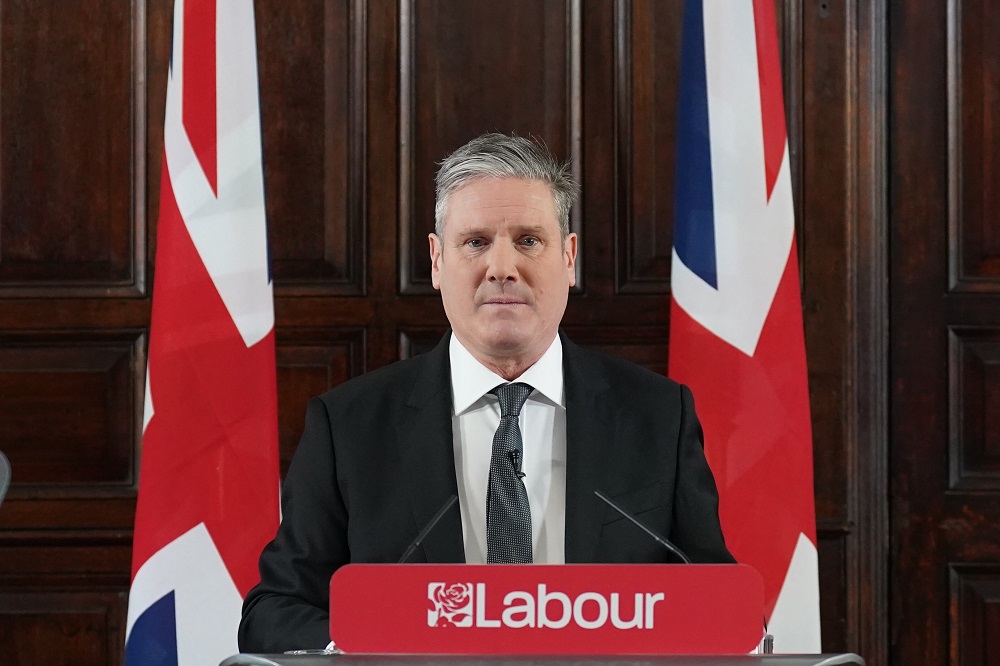
“Not only do the opinion polls say that Labour will win back working class areas in Northern England it lost in 2019, but it is also expected to do well in wealthy parts of the south that were once Tory heartlands.”  So read the full-page article in the Financial Times at the start of the week.  The reason?  “There’s only one answer to that: Brexit”, according to the Tory Chair of the House of Commons justice committee.

One section of the Tory base is leaving while the other in the so-called Northern ‘Red Wall’ is also departing, and since only one third of the electorate now still thinks Brexit was a good idea, the pool the Tories are fishing in – against the competition of the Reform party – is getting a lot smaller.  Since Starmer’s Labour Party also claims that it can get Brexit to work, and is also not talking about it, it is not a surprise that the share of the vote of the two main parties is now the lowest since 1918. Only 35 % of those polled think Starmer would make the best prime minister against 19% for Sunak, the former’s rating lower than all of the recent election winners.

It is obvious that the predicted Labour landslide victory has more to do with the unpopularity of the Tories than anything to do with Starmer, so that while Labour’s support has declined during the election so has that of the Tories.  The Financial Times reported that Tory support has fallen by a third since January and the view that the only issue that matters is getting rid of them has continued to dominate.

Both parties have embraced the politics of waffle with commitments that are as few and vague as the waffle is ubiquitous.  “Growth” is the answer to every problem yet the Brexit elephant in the room that squats on growth is ignored.  Starmer has followed Tory policy like its shadow while dropping every promise he ever made to become leader, parading his patriotism with “no time for those who flinch at displaying our flag”.

He has presented himself as a strong and tough leader –in such a way that his rating for being trustworthy has fallen from 38 to 29; his rating for honesty from 45 to 34; his rating for authenticity from 37 to 30 and, for all his posturing, his rating for charisma from 20 to 18.  What we don’t have therefore is popularity born of personality to explain why it’s not born of politics or principle.

The vacuousness of the politics of the election is covered up by trivia such as Sunak taking himself off early from commemorating the D-Day landings and the betting scandal, which shows that low-level corruption is always more easily exposed than the bigger stuff.  All this however is for the consumption of the masses.

The ‘get the Tories out’ mantra that also characterises the left is perfectly acceptable to the ruling class since the Tories have failed to govern properly, leading to Brexit and Truss’s unfunded tax cuts that briefly threatened the currency and suddenly raised interest rates.  Being anti-Tory is no longer a solely left-wing pursuit, which makes the primacy of getting them out (which is going to happen anyway) illustrative of the poverty and bankruptcy of many on the left.

Bourgeois commentators lament that the lack of honesty of the election ‘debate’ will lead voters to “distrust politicians and so our democracy itself” (Martin Wolf FT), while the more cynical shrug their shoulders and accept it.  “The UK is approaching a general election of vast importance for its future.  It just has to get next week’s one out of the way first” (Janan Ganesh FT).  The first worries that the British public will not be ready for the radical attacks that are coming their way while the second is concerned only that they learn to accept them next time.  Clearly both are more interested in what happens next, which doesn’t mean what happens to the Tories but what happens when we have Starmer.

One Irish commentator described him as “legendarily boring” and “resolutely moderate”, which fatuousness is what often passes for informed political commentary in the Irish press. The ruthlessness of Starmer’s dictatorship in the Labour Party and his pathological record of lying to become its leader should give even the dimmest observer pause to wonder what he will do with the exercise of real power.  What struck me ages ago was the unwillingness to wonder what decisions someone so innocent of due process in the Labour Party made when he was Director of Public Prosecutions.

The Starmer government is now the threat to the working class in Britain and to us in the north of Ireland, while the Tories are receding in the rear view mirror.  Preparing for this can best be done in the election by robbing this government of as much legitimacy as possible and using the election to organise potential opposition.  This means not voting for the Starmer’s Labour Party but only for those on the left of the party who might be considered as some sort of opposition, including those deselected and standing as independents.

The first-past-the-post electoral system is not designed to elicit people’s true preferences but incentivises many to vote against parties and not who they are for.  When there is widespread disenchantment with the major parties this can be muffled and stifled. Yet even with the current system we have seen support for the two main parties fall and ‘wasted’ votes for others may encourage further politicisation.

The Financial Times report that behind the steady gap between the Tories and Labour that will give Labour a ‘supermajority’ is a drop in Labour’s polling matching a fall in that of the Tories.  These trends may reverse as voting approaches but at the moment they show that their ‘competition’ is not strengthening either.  The FT claims that the Labour Party is experiencing high levels of turnover in its support, losing a quarter of those who had previously (January this year) said they were planning to vote for it.  Three per cent were undecided, 9 per cent were less  likely to vote, and 4 per cent were going to vote for the Lib Dems while potential Lib Dem voters were travelling in the opposite direction, perhaps for tactical reasons.

The proportion of voters who switched parties in elections used to be about 13 per cent in 1960 but is nearer 60 per cent now.  Some might lament that this illustrates a decline in class consciousness but since this was often an habitual Labourism it is not the loss that it may appear. What has suffered a greater loss is the coherence of the left that now mainly rallies behind its own ruling class, today in a war that has the potential to escalate catastrophically and which involves endorsement of all the hypocritical claims of the British state and ruling class it claims it oppose. The consensus on the war is something that the war itself may have to break.
Permanent Revolution (5) – the working class or ‘democratic capitalism’?

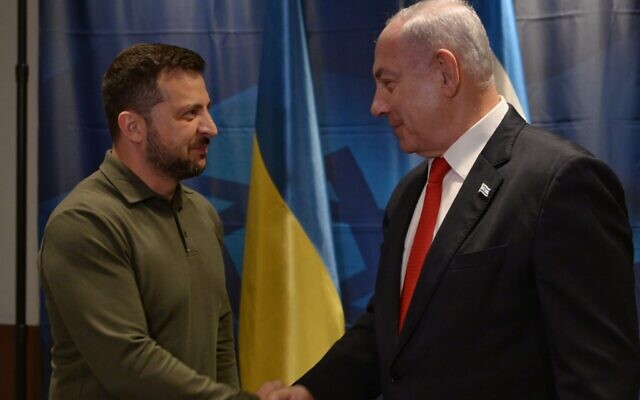
Avi Ohayon/GPO

As we noted in the previous post, the rejection of permanent revolution in practice is ultimately a result of the abandonment of any view that the working class and socialism are relevant. It is not that the objective prerequisites of socialism do not exist – in terms of development of the forces of production and creation of a large working class – but that this class is not conscious of its interests as a class and never will be.  Supporting Western imperialism in Ukraine or supporting Hamas in Gaza is a result.

For defenders of these views, being on the right side of the struggle of the oppressed is enough and everything else is secondary.  Other, perhaps ‘nice to have’ factors, like specifically working class political leadership, are relegated to an indefinite future.  Socialism becomes something so distant from application that it becomes akin to the promise of life after death.

As far as campaigns go, humanitarian demands raised in solidarity with the oppressed suffice to address the issues, and de facto support is provided for whatever political leadership happens to exist, justified on the basis that it does exist – the oppressed have picked their political leadership and who are we to disagree? ‘Being on the right side’ and ‘supporting the leadership of the oppressed’ become moralistic incantations that are supposed to demonstrate one’s commitment to the struggle while ironically condemning it to defeat.  This approach reaches its nadir when it entails support for Western imperialism in Ukraine or Islamic fundamentalism in Palestine.

Identification of the class forces involved and the distinctions arising go missing through talk, for example, of ‘Ukraine’ and the ‘Ukrainian resistance’.  Concepts such as class and the necessity for socialist leadership are rehearsed when left organisations recruit young people and provide them with what passes for a basic education in Marxism but are often ignored when real struggles develop.

*                     *                   *

Permanent revolution does not claim that certain democratic advances cannot be made by bourgeois forces (or by petty bourgeois ones) in every instance, although in the case of Ukraine and Palestine this is clear.  In Ukraine, western imperialism ignores the clampdown on democratic rights by the Zelensky regime including its lack of any constitutional legitimacy.  In this it repeats the events of 2014 and provides another example of the rules-based international order being whatever the Western powers say it is.

In Palestine it routinely speculates on what sort of Palestinian regime will be installed once the Zionist state has halted its genocide, with not the slightest recognition of the right of the Palestinian people to select its own government.  The leaderships that are touted as potential candidates are corrupt and designed to be weapons in the hands of the Zionist state (including the Palestinian Authority).

What democratic tasks that are achieved by bourgeois forces are carried out in their own interests, which interests demand that real democratic control by the majority of a country’s people is excluded.  It is ironic that those who argue that Western imperialism is in effect defending democracy in Ukraine do so when the façade of what passes for democracy is more and more exposed as fraudulent by its policy of support for genocide in Palestine.

In the West the right to protest is under attack as students are clubbed by cops and Zionist thugs in the US, while meetings are proscribed and Palestinian speakers expelled in Germany.  In the US the Presidential election is between two equally repulsive senile geriatrics, almost equally unpopular, where it is almost the case that Trump is the only candidate that Biden could possibly beat and Biden the only candidate that Trump will most likely defeat.

In Britain the choice between Sunak or Starmer is rendered fundamentally meaningless since no essential differences are involved so that there is no worthwhile choice to be made. When the limits of capitalist democracy are so blatantly exposed the stupidity of the claim that these forces are defending democracy becomes impossible to vindicate.  This should provide the opportunity to tear away the fraudulent pretence that imperialism is in some way the protector of any sort of democracy but this requires putting forward an alternative.

In the 19th and early 20th centuries democracy was viewed as tied tightly to the working class movement and socialism so that Friedrich Engels was able to state at one point that the two were almost synonymous.  The bureaucratisation of the workers’ movement, reaching its apogee in the Stalinist states, was a product of its incorporation into, and reconciliation with, the capitalist state, either in the form of reforming the state or in the form of ‘socialism in one country’ and its pursuit of accommodation with ‘democratic’ capitalism. In doing so it lost the identification of socialism with democracy.

The associated transformation of socialism into the idea that the capitalist state is the means to socialism, or even the potential embodiment of it, has meant that the central claim of Marxism, that the emancipation of the working class must be carried out by the working class itself, has been buried and lost.  This distortion is so ubiquitous it is how the idea of socialism is habitually and unthinkingly understood.

So, in Ireland the idea of a ‘left government’ (of a capitalist state) is paraded as the answer while in Britain the idea of nationalisation (capitalist state ownership) was, in the form of clause 4 of the Labour Party, the totem of socialism.  Other forms of capitalist rule, such as authoritarianism or fascism, thus become not just particular forms to be opposed but turn ‘democratic capitalism’ into the ‘lesser evil’ that must be positively supported.  What democratic rights that do exist thus become not just elements to be defended but reasons to ‘suspend’ opposition to capitalism and ally and subordinate socialism to the demands of ‘democratic’ capitalism.

These corrupting assumptions makes it easier for many self-declared socialists to claim that the Ukrainian state, Western imperialism, or the Russian or Chinese varieties are today’s forces of democracy, ‘anti-imperialism’ or even socialism.  All such claims are what permanent revolution rejects, and the road back to the central assertion of Marxism lies through reclaiming it.

*                     *                   *

In relation to Ukraine, permanent revolution means opposition to the Russian invasion, opposition to the Ukrainian state and opposition to the intervention of Western imperialism.  Opposition to war thus means organisation of the working class in opposition to membership of NATO and its rearmament.

In Palestine it means opposition to the Zionist State and its genocide and the liberation of the Palestinian people through a permanent revolution that seeks the unity of the Arab working class of the region against their exploiters and oppressors.  The liberation of the Palestinian people can only be achieved by the liberation of all the working classes and oppressed in the region, which alone can offer a socialist alternative to Jewish workers and an alternative to their allegiance to Zionism.

In this, we really have no choice.  The ‘democratic’ governments and states of the West have provoked a war in Ukraine and their defence of the Zionist state has shown us that there are no limits to the barbarity they will support.  Continued escalation of the war in Ukraine only points us to a world war.  

Russia and China are no defence against such a war because ultimately their only weapon against their Western enemies is also war.  The Russian invasion of Ukraine is proof, as are the repeated threats against Taiwan and the constant provocations of the United States that threaten to precipitate it.

Perhaps it will then be clear – even to the most stupid – that imperialism defends itself, is not interested in those it exploits and is no defender of democracy.   The working class, whose members are always expected to fight and die in every war, will face the choice of war or peace and that peace can only come through ending capitalism.  Once again it will be permanent revolution to end the war or war to end civilisation.

Of course, we are not there yet, but one product of the war in Ukraine has been the readiness of many in the West, normally opposed to war – as previously in Iraq – to rally behind this one.  The fake-left supporters of war are only a small part of this much larger constituency.  However the war in Ukraine ends, with some temporary ceasefire or agreement, the conflict and antagonism between rival imperialisms is not going to go away; imperialism itself has no way of ensuring that they do not intensify, and the world will face the possibility of their eventual resolution by way of force, in the way such conflicts have been settled before.

In some ways we are back to Marx, when the working class was not ready then either:

‘although the German workers cannot come to power and achieve the realisation of their class interests without passing through a protracted revolutionary development . . . they themselves must contribute most to their final victory, by informing themselves of their own class interests, by taking up their independent political position as soon as possible, by not allowing themselves to be misled by the hypocritical phrases of the democratic petty bourgeoisie into doubting for one minute the necessity of an independently organised party of the proletariat.’

Back to part 4

Irish elections (2) – the main story?

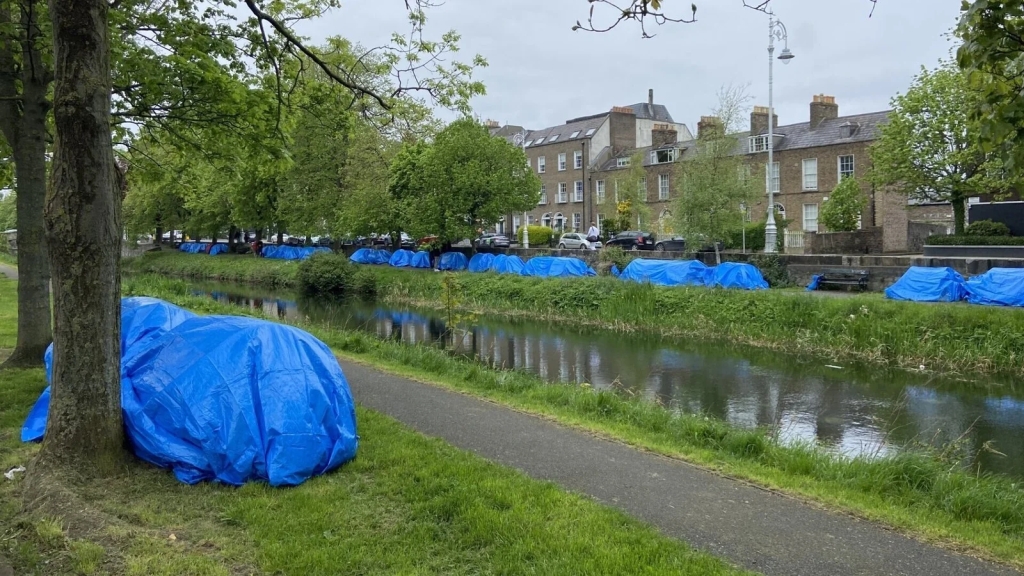
The government gives money to NGOs to help refugees. The refugees buy tents because the government won’t provide accommodation, so the government spends money to destroy the tents. Photo: RTE

The main story of the elections is that despite long-standing failures and some dissatisfaction the main governing parties, including the Greens, more or less held their own, illustrated in quick speculation that they will bring the date of the next general election forward.

Together they won around half the first preference vote in the local elections and 46 per cent in the European.  This is historically low for the two main parties (46 per cent and 41 per cent respectively) but these are now two cheeks of the same arse that are quite able to work together at the top while their voters are transferring to each other.  Even historically the previously minor party, Fine Gael, required a third party to represent an alternative, which the Green Party has, for now taken up, in the role previously performed by the Labour Party.

This has led once again to the obvious suggestion that they should merge, given the utter absence of any political differences.  At this point, however, one is reminded of the quote from the American comedian Bob Hope who said that “No one party can fool all of the people all of the time; that’s why we have two parties.”

The dissatisfaction that achieved expression was reflected in the 28 per cent vote for a variety of independents in the local election and 34 per cent in the European, while an independent won the Limerick mayoral contest.  Most of these have no fundamental political differences from the two main parties, in some cases merely being former members with no differences at all but availing of the possibilities for personal opportunism offered by the electoral system.

Despite the ups and downs the Irish state is politically stable, reflected in Fine Gael being in office for over 13 years.  This reflects the continuing recovery and growth from the financial crash.  Of course, this has a narrow foundation, resting on a limited number of US multinationals, but the threats are not yet immediate.

The problems of this growth – of income inequality and housing for example – are ones that ‘solve themselves’.  The poorest are atomised and prey to reactionary solutions or apathy while the inadequate infrastructure is partly a result of inadequate state capacity.  There is unanimous agreement that the solution lies in increasing this capacity – ranging from the governing parties themselves through to its liberal critics and its supposed left opposition. The precise role and scope of this increased state intervention is all that varies between them.  Not an inconsequential matter but not fundamental either.  The political origins of the left organisations as nominally Marxist gives its reformist programme nothing more than a radical tinge.

While Europe witnesses its biggest conflict since the Second World War, there is an Irish consensus that supports Western imperialism, which the left’s opportunism in also supporting Ukraine does nothing to challenge.  The gestures of the Government in supporting the Palestinian cause are enough to quell widespread opposition to what this imperialism does in its support for the Zionist state, while the position of the left on the war in Ukraine does nothing to clarify imperialism’s consistently reactionary and barbarous role.  Breaking the consensus on this is hard enough already given the dependence on US multinationals and EU membership, while the loss of Clare Daly in the elections is the loss of the most articulate and passionate opposition voice to this imperialism.  Again, the parliamentary left didn’t help by standing against her.

*                   *                  *

The final factor that is genuinely new is the electoral appearance of the far right, steeped in racism and xenophobia, flying the national flag and invoking Ireland’s colonial subjugation even while its most rancid elements collaborate with the British far-right.  Between it and the bourgeois parties lies various shades of reactionary nationalism; part of the stability of the ruling bloc of mainstream parties was their adoption of a harder rhetoric and tougher policies on immigration.  These parties have thus partially legitimised the more radical rhetoric to their right.

One commentator estimated that anti-immigrant candidates took 15 per cent of the vote in the Dublin European constituency and had three elected to Dublin City Council.  The naïve who think Irish nationalism is progressive because it is an expression of the oppressed should have cause to reflect, although if they have been able to ignore the character of the nationalism of Fine Gael, Fianna Fail, Sinn Fein and various republican militarists so far, it might not be a surprise if this is not revised by the far right becoming its latest expression.

It might also be estimated that about one third of the population of the Irish state still clings to its idea of this nationalism as that of holy Catholic Ireland.  In 2004 racism played no small part in an almost 80 per cent support for a referendum to limit the rights to Irish citizenship of children born in the State.

Since then, much has been made of the modernisation and progressive liberal development of the country but notwithstanding the mobilisations around referendums on divorce, abortion and gay marriage, much of these changes, including the support for change in these referenda, are due to the general secularisation of Irish society and not, unfortunately, to mass struggles of the working class, its movement or a mass women’s movement.  These changes received significant support from the main bourgeois parties and never called into question the political hegemony of these parties never mind the class foundations of the state.

All this is reflected, among other things, in the continued patronage by the state of the Catholic Church in education and health and the continued governance of the two main parties.  The growth of independents is a continuing tribute to the clientelism and parochialism of much of Irish politics.

There is therefore no crisis in the state that would provide the grounds for the mainstream parties to do more than give a certain legitimacy to anti-immigrant rhetoric.  It has no need to collaborate with outright racist forces even if they have been useful to put a squeeze on Sinn Fein through its more primitive support.  The far right is also handicapped by being very badly fragmented with no unifying figure appearing.  The far right is therefore not the primary problem but rather an expression of the weakness of an alternative.

*                   *                  *

I generally dislike blaming the successes of the right on the failure of the left since it often minimises our objective weakness, the strength of capitalist forces and their ideological hold, and the political resources of the bourgeoisie.  It is always necessary, however, to discuss what lessons we can learn.

Despite the relative success of the Governing parties there is general dissatisfaction and disaffection among many people.  That this was mainly expressed in votes for independents was a judgement on Sinn Fein.  That Sinn Fein failed to make the gains it expected while People before Profit/Solidarity stood still and didn’t increase its vote significantly is a judgement on it.

That PbP TD Paul Murphy indicated on RTE1 that a possible drop in votes was less important than a gain in seats indicates a left so mired in electoralism that its claimed ideological foundations are no guide to its actions.  It claims that it ‘sees elections as a way to build struggle’, but in reality it supports struggles in order to build itself and its primary goal in building itself is to win elections.

Its main strategy has thus been to work towards the creation of a ‘left Government’.  This only makes sense if Sinn Fein can be seen as a constituent part of this.  I have previously argued that the reformist programme of the left is no barrier to it being part of a ‘left’ government, which can be called ‘left’ because it isn’t going to be socialist or a workers’ government.  PbP/Solidarity is only on 2 – 3 per cent in opinion polls and elections so it very obviously needs something much bigger outside to make this remotely credible.

Enter Sinn Fein, and also exit Sinn Fein.  Just before the elections it was reported that the Party had travelled to London with financial firm Davy to give a briefing to ‘investors’.  Davy stated that ‘Sinn Fein does not plan to fundamentally change Ireland’s economic policy’ and noted that “overall, Sinn Fein’s approach from an economic standpoint is more ‘New Labour’ than ‘Corbyn Labour’.”  If this didn’t sink the credibility of a left Government as the way forward, then the recent election results certainly have.

These elections had a turnout of just over 50 per cent while the 2020 general election turnout was 63 per cent.  The next election will even on this basis be different, and some of the trends noted above will build up trouble if they continue.  What it will not be, however, is the opportunity to make the objective of a ‘left’ Government either credible or, more importantly, make it the central objective of those seeking to build a working class alternative.

Back to part 1

Irish Elections (1) – Sinn Fein was the future once?

For years Sinn Fein in the North was accused of acting as both government and opposition, enacting right wing policies in government while presenting itself as anti-establishment, pretending to oppose the sort of politics it was itself carrying out.  It talked out of both sides of its mouth and had more sides than the Albert Clock, as we say in Belfast.

It got, and still does to a lesser degree, get away with it because its dumping of traditional republicanism has been continually praised while its clinging to symbolic remembrance of its dead armed struggle is repeatedly damned.  More fundamentally, it succeeded because it is the most vigorous defender of Catholic rights in the ‘new’ political settlement that has been anointed saintly status by the powers that be, stretching from Washington and London to Dublin and Belfast, not to mention Brussels.

It has had lots of powerful friends on its journey from rebels to politicians, happy to indulge its self-ID as progressive radicals while it became the centrepiece of a regime of dysfunctional failure.  It could forever bask in the naked contempt of its unionist coalition partners, the best of enemies, while telling its supporters that a united Ireland was ‘within reach’. What made it repellant to some made it attractive to others.

*                   *                  *

During a walk-about with a Sinn Fein candidate in last weeks local elections an Irish Times journalist noted that some potential voters appeared to treat the party as if it was already in Government – part of the establishment – and part of the problem it was presenting itself as the solution to.  Waving Tricolours and singing rebel songs doesn’t exactly distinguish you in the South, which now routinely names itself Ireland, leaving the North to get along with Northern Ireland, the nomenclature that unionists goad Sinn Fein with its unwillingness to allow pass its lips.  Now Sinn Fein has found in ‘Ireland’ a new rival that claims to be even more nationalist than it and waves the flag even more vigorously.  The structural conditions applying in the North don’t exist south of the border so are no help to it.

The rise of the far-right and its opposition to immigration, especially in some working class areas of Dublin, is widely held to be a major reason for the apparently sudden and stunning setback to Sinn Fein in the local and European elections held last week.  In an opinion poll in June 2022 it was recording support at 36 per cent, by far the biggest party.  Last week it gained only 12 per cent of the first preference vote and would be the fourth largest if we count the bag of independents as a party.  In 2020 it suffered from standing too few candidates to maximise seats from 25 per cent of the vote while in 2024 it stood too many.

It isn’t Fine Gael or Fianna Fail who are labelled the traitors now, although Sinn Fein long ago found that approach would get them nowhere.  It is now Sinn Fein who are the traitors to the Irish nation, who support a ‘new plantation’ and who refuse to prevent immigration when ‘Ireland is full’.   It is Sinn Fein that is now accused by the assorted racists, far right and fascists as betrayers of the ordinary working class Irish.

All the anti-immigrant tropes that have been seen across Europe are now a ready currency in Ireland and Sinn Fein is the primary political target.  Within less than a couple of years a self-satisfied liberal view that Ireland was more or less immune from the rising tide of racism and xenophobia so prevalent elsewhere has been evaporated.

The growth of the population has largely been due to immigration while the keenness of the Irish bourgeoisie to show its support for Ukraine (in the absence of an ability to provide weapons or troops) has meant that over 100,000 Ukrainian refugees have been welcomed.  This has been followed by an increase in refugees from other countries, less welcome, not least because they aren’t white and no political capital is accrued by having them.

The Irish State was already undergoing a housing shortage when it decided to open its doors to these refugees; stumbling from one emergency measure to another in order to cope while offering welfare rates on a par with the natives.  As the number of those seeking international protection also grew local protests against the housing of these refugees developed in small towns and mainly working class areas of Dublin.

Numerous arson attacks prevented accommodation from being created for refugees while local people claiming not to be racist protested, claiming only to be concerned with the lack of local GP or other health services; an existing shortage of accommodation, or the turning of a local hotel that might have brought in tourists into a refuge for asylum seekers.  The localism of political activity in much of Ireland found it easier to mobilise against asylum seekers than against the failure of the state to keep health, education and housing in line with a growing population.  No doubt many of the local protesters are voters for the bourgeois parties responsible for the policies that led to the failure.

The governing parties decided to clamp down and the toughened rhetoric on immigration became one of control – ‘firm and fair’ – the same reactionary rhetoric employed elsewhere that everyone knows means an attack on the rights of refugees.  The governing parties had found a scapegoat for their failures and a handy weapon against its political rival in Sinn Fein: opinion polling claimed to show that part of its support was more opposed to immigration than that of other parties.

The party first tried to dampen this by arguing that the Government had failed to talk to or consult properly with local people about the accommodation of refugees in their areas but one of their TDs had to admit that “we were a bit all over the place.”  This has settled down to more or less aping the rhetoric of the Government and policies that are more or less the same.

None of this could appease those looking for a quick racist solution and who aren’t going to be convinced by the benefits of immigration, not least because they haven’t seen any.  The benefits of opposing anti-immigrant and racist solutions from a socialist point of view don’t exist for those who don’t have a socialist project and don’t see any utility in working class politics.  Sinn Fein can’t argue this way and even the left mainly presents liberal and human rights arguments that are no part of this politics.

Sinn Fein thus doesn’t escape blame from more backward and reactionary workers while its more liberal and vaguely progressive supporters won’t support it bowing too far in their direction.  Both have reason to doubt the party, with the recorded decline in its support preceding the more recent prominence of migration.

There is only so much complaining you can do before you’re asked to explain what you’re going to do about it, arising from doubts about exactly what you stand for.  U-turns have been public and obvious over a range of issues, including the price of housing, proposed hate legislation, support for the failed referendum proposals that were roundly defeated and then reversal of a promise to re-run the vote if they failed.  All these are small relative to the fundamental U-turns in the North, but this just illustrates the different environment it has to work in.

*                   *                  *

Sinn Fein is not yet the past, but it doesn’t look like the future now either.  That famous Irishman Oscar Wilde said that “there is only one thing in life worse than being talked about, and that is not being talked about.”  Sinn Fein has been much talked about leading up to the elections and especially about the results, including by the leader of the current Government coalition.  You’re not supposed to talk ill about the dead in Ireland so Sinn Fein isn’t dead, but it isn’t the main story and we’ll talk about that next.

Forward to part 2

Permanent Revolution (4) – keeping the theory, ditching the practice

The pro-Ukraine Left looking right

How do we explain adherence to the theory of permanent revolution while abandoning it in practice?

If you read Trotsky’s basic postulates laid out in the previous post, with as few preconceptions as possible, the answer is rather obvious; the theory has been abandoned because it no longer appears to correspond with reality.  There is little prospect of a democratic revolution, never mind a socialist revolution, in the near term in either Ukraine or Palestine for example, and, whatever about the objective premises of socialism being present (depending on what one considers objective factors) the crisis of humanity is not reducible to ‘the crisis of the revolutionary leadership.’

The last belief is comforting to the members, supporters and many ex-members of the small left wing groups because it licences their existence and previous years of activity.  If the decisive requirement now for a socialist revolution is the existence of a sufficiently coherent and large revolutionary organisation, then building that organisation is key and the hinge upon which everything hangs.

However, reality impinges on even the most dogmatic. When the real world does not conform to what is desired and the agent of change – the working class – has suffered defeats and no longer seems to present an alternative, attempts to escape this take the form of politics based on the view of what should exist – justice and freedom etc. – expressed in terms of rights. However, the material interests that do exist will determine what justice and freedom will entail in the real world, which means that this sort of politics inevitably pretends that the world that exists is not the one we have come to know well.

Thus the right to self-determination of Ukraine (or Palestine), if dependent on US imperialism, will be expressed only in so far as it conforms to the interests of this imperialism. Justice and freedom will exist only in so far as they are consistent with its interests. Relying on US imperialism to deliver any of these because it is argued that there is something worse – Russian imperialism – must ignore its whole history.

The view that pressure from protests will force it to impose a progressive solution has no previous experience to support it and protests become a cry for help to precisely those we need to be saved from. In the case of Palestine, protests demand that US imperialism changes course and supports some sort of Palestinian state while solidarity with Ukraine demands that it drive forward with its current course and provide ever more powerful weapons.

Except ATACMS, HIMARS, F-16s, Bradley’s and Abram tanks are not the weapons of freedom and justice, never mind working class emancipation. Passive acceptance of the unlikelihood of working class action to end the war, resulting in substituting other agents of change, cannot get round the fact that working class emancipation cannot be achieved except by the working class itself. The view that it cannot provide the solution means not that some other agent will provide it but that a different solution will be imposed. In Ukraine this means ‘self-determination’ becomes a Ukrainian state with NATO membership, in permanent antagonism with Russia, with the permanent potential for further war; in other words no solution at all.

This demonstrates that demands such as self-determination dredged up from the past, that appear to have a revolutionary heritage, no longer have the same original rationale or purpose: support for the self-determination of nations in a world no longer consisting of empires and colonies but of independent capitalist states entwined in imperialist alliances usually only means support for one imperialism or another. Ukraine is so clearly an illustration of this that to declare support for it reveals a left not only no longer tied to socialist politics, but no longer tethered to the real world. This is one in which imperialism will do what it always does and the smaller capitalist states will follow.

It is instructive that polls showed no majority in Ukraine for NATO membership for years but that this didn’t stop the Ukrainian state creating CIA stations in the country to spy on Russia or pushing membership on a reluctant people, ultimately enshrining it in the constitution. Ukraine joined in the US-led invasion of Iraq in 2003 while continuing to signal its support for imperialism through its contingent of troops in the occupation of Afghanistan. While now claiming to be a victim of imperialism, its special forces are fighting in Somalia under the direction of the US. All are sterling examples of the reactionary character of support for self-determination for already independent capitalist states and the consequences of abandoning a socialist analysis that doesn’t confuse the working class with its state.

The demand for self-determination of nations that applied to annexed and colonial countries with large peasant populations, now asserted in support of independent capitalist states that are part of imperialist alliances at war, is not essentially different from the policy of those ‘socialist’ parties that sent millions of workers to their death in World War I.   Supporters of the imperialist alliance that includes Ukraine claim that it is fighting a Russian colonial project while the supporters of the imperialist alliance that includes Russia claim they are opposing the Western colonial project of regime change and dismemberment of the Russian Federation. In World War I, Marxists did not support German imperialism because its enemy was the biggest empire and colonial power in the world and the absolutist regime in Russia, or support Britain because Germany was seeking to extend its own colonial plunder and was allied to the decrepit Austro-Hungarian Empire.

The current imperialist war that is being waged in Ukraine is thus supported by what can only be called deserters from socialism who refuse to see what is in front of their eyes – an old-fashioned capitalist war that is sending hundreds of thousands of workers to their deaths, inflicts catastrophic destruction on the livelihoods of millions of others, and binds most of the working class to their own nation, their own state and their own ruling class.  Nationalism triumphs again while these apostates dress it up as progressive ‘patriotism’, ‘de-colonialism’ or even ‘anti-imperialism’. What they can’t dress it up as is socialism.

They do not lead the working class in any direction that might advance its class consciousness or create the possibility of a minority becoming aware of the class conflicts going on underneath the war propaganda of the mainstream media. Rather they follow the working class as it follows its ruling class.  Their political arguments, such as they are, are essentially no different from the dominant reactionary narratives.  One that easily extends from ‘defending Ukraine’ to supporting the West’s military alliance NATO.

In what possible way can the need for the working class to have its own politics independent of, and opposed to, that of the capitalist system be advanced by supporting an imperialist alliance in war on the grounds that it is defending the right of another capitalist state to join ithis alliance? In what way would this be opposing imperialist war and defending the interests of the working class?

This situation can only prevail because there is no significant movement of the working class in the West (or in Russia) opposed to the war so support for one imperialist side or the other is seen as the viable alternatives.  Were there to be actions by workers in Western countries against the war the left supporters of the war would be thoroughly exposed. Their position therefore not only arises from the current passivity of the working class but depends upon it.

The price paid by the small renegade left organisations committed to this is that they are not so much the naked emperor as the naked emperor’s subjects. Thus, they continue their attempts to build small ‘revolutionary’ organisations which hide their irrelevance through their complete capitulation to the bourgeois politics of their own country.  They swim comfortably in the public mood because this mood is consonant with the actions and propaganda of its rulers and mass media.

What we are seeing is not only a failure to see the relevance of permanent revolution to the conflicts which exist but the process itself in reverse.  Not permanent revolution as a general process of radicalisation but an accelerated de-radicalisation reflecting the effect of the defeats of previous decades. From the working class – led by socialism – being the only effective leadership of democratic struggle, we instead are to accept that a rotten and corrupt capitalist state in the vanguard of Western imperialism is the centre of today’s democratic and anti-imperialist struggle. Put like that, it makes no sense at all.

Back to part 3

Forward to part 5