Trusting the State (2) – “RTÉ for the people”

PA Images

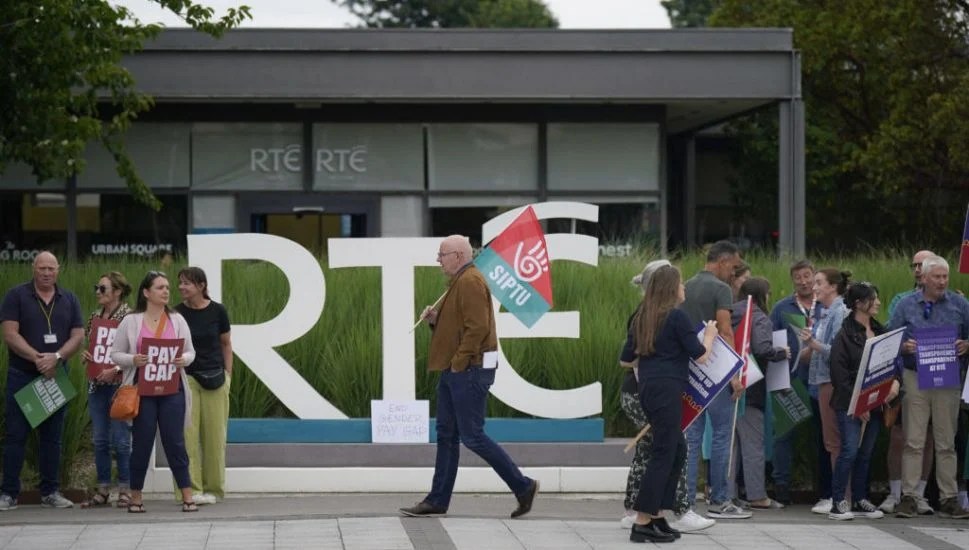
People before Profit (PbP) wants an “RTÉ for the people”, but just as the name ‘People before Profit’ invites the question–what people?– so does this new sort of RTÉ.  The elision of class in the PbP name pops up here again, where ‘the people’ doesn’t actually mean every person but perhaps only some, perhaps the poor, those not paid enough, or those considered to be suffering or illegitimately aggrieved.

PbP wants “genuine public service broadcasting [which] is more important than ever. But instead of being a valued public broadcaster, RTÉ has been undermined by underfunding by successive governments and by the deeply corrosive effects of advertising and sponsorships.”

But what is this ‘public service broadcasting’ that must be made “genuine”?  What service is being provided, by whom and to whom?

In so far as it shapes, and purposively shapes, social and political views, the service provided is the view of the Irish state.  This is most obvious when it openly decides to censor alternatives, as in Section 31 of the Broadcasting Authority Act 1960 , which allowed the relevant Minister to direct RTÉ “not to broadcast any matter, or any matter of any particular class”. In 1971 the first such directive was issued to direct RTÉ not to broadcast “any matter that could be calculated to promote the aims or activities of any organisation which engages in, promotes, encourages or advocates the attaining of any particular objective by violent means”. A year later the entire RTÉ Authority was removed over a report on an interview with the then leader of the Provisional IRA, with this censorship remaining in place until 1994. 

‘Public service broadcasting’ is supposedly provided for public benefit rather than to serve purely commercial interests, but this entails the common misconception–that socialists are supposed to disavow–that the state can in some way represent the interests of society as a whole.  And just as society is to be considered as a whole, and not one divided by classes with separate and antagonistic interests, so apparently we also have a classless ‘public’ just waiting to be served.  Hence the burial of the concept of class entailed in supporting ‘public service broadcasting’.

An undifferentiated public is supposed to be serviced by a state that can faithfully represent its interests as against the private interests of “advertising and sponsorships” and of “social media companies owned by billionaires”.   However, while it is one thing to oppose privatisation it is quite another to defend state ownership, although PbP gets it even more wrong!  It not only supports state ownership but wants to see it massively extended. 

It proposes “investment in a comprehensive national public media service, incorporating RTÉ and other public service media e.g. print, local radio, production companies, digital media, etc”, plus “annual public funding . . . increased to €500m, with guaranteed multi-annual funding to enable it to properly fulfil its public service broadcasting remit.”  It wants “an additional fund . . . [to] be made available to respond to the long-standing lack of investment in RTÉ and to rapidly up-grade its equipment and technology”, on top of the revenue increase of over 40 per cent.

But, and there is a but, People before Profit only propose this on certain conditions: that pay caps should be applied to the few high-earners; that “proper” pay and conditions should apply to all other workers; that there should be an end to low pay, to bogus self-employment and precarious contracts; and that there should be mandatory trade union recognition and democratisation of RTÉ.  And who should introduce this?

Well, presumably it is the proprietors who will ensure the introduction of “genuine public service broadcasting”.  Who else could fulfil these conditions but its owners–the Irish state?  So bang goes another principle of socialism–that “the emancipation of the working class is to be conquered by the working class itself”. ‘Proper’ pay, greater equality of income, working conditions, union recognition, and a say over the running of the company are all to be provided for workers by the state.

How do we know this is what is meant? Well, all the additional investment is to come through state taxation: “€500m through a 1% tax on all Information & communications companies” and “a further €500m through an additional 1.25% Big Tech Tax on the largest ICT companies.”  

Democratisation is to come from “replacement of the current Board with a Board representative of RTÉ workers and civil society”; “the board should not be dominated by people with private industry backgrounds”; there should be “development of additional mechanisms for democratic workers and public input into programming decisions”; and “Board members should be subject to recall.”  But who appoints the Board and who would have the power of recall, and recall before whom?  Will the capitalist state institute some form of workers’ control; and if it did–how would this be workers control?

These pick and mix proposals have been made up as its authors went along: who is in “civil society”–the province of private interests–but not “people with private industry backgrounds”, and what exactly are the “additional mechanisms for democratic workers and public input”?

It’s as if PbP had never heard of Karl Marx’s strident opposition to relying on the state to support working class encroachment on capitalist ownership.  It’s as if in the 19th century he anticipated the People before Profit proposals in his ‘Critique of the Gotha Programme’; were we not already aware that such rubbish has been part of the left for over 150 years and addressed here before in a number of posts.

It’s as if this Left has no idea of what an alternative programme would look like, a question they might find easier to answer if they first asked themselves who they are talking to–who they are addressing their programme to, who is it for?  Not the government sitting opposite them in the Dáil during fine speeches; not to a disembodied electorate–seeking votes to save their seats at the next election; and not potential allies like Sinn Fein with whom they want to be beside in the next government.

A socialist programme is addressed to the workers – this is what is meant by ‘the emancipation of the working classes must be conquered by the working classes themselves’. This means that ‘proper’ pay and conditions can only be won by the workers themselves, and only made permanent through their own ruling of society.  That union recognition is most powerful if achieved by the workers themselves–thus strengthening the possibility of avoiding a union sweet-heart deal with the employer, and some control over the union organisation itself. Only by doing it themselves will workers learn that the state broadcaster is not ‘theirs’ and will only be theirs if they take it over themselves, which is only likely and possible in a struggle to take over the running of the rest of society as well.  That is, only under socialism, which is why we fight for it, because working people’s control over their own lives will only occur upon assertion of their interests as a class and their creation of a new social and economic system, called socialism.

So, when PbP states that “ICTU and the NUJ, in their submissions to the Future of Media Commission, both called for a “‘windfall tax’ on the major digital platforms to help support public interest and public service media”, they should demand that they not implore the state to do what it has already rejected, but that they put forward and implement their own alternative. That is, workers media that give a platform to working class organisations through the skills and effort of media and other workers, and one not strangled by the bureaucrats who run trade unions that make their existing media so boring and irrelevant most workers don’t bother with it (which is certainly my experience).

PbP rightly observe that RTÉ “is a microcosm of the unjust class society we live in”, but instead of pointing the way to how it might be overcome it feeds illusions in the state that exists to defend it.  In the next post we will look at another current exercise that does the same thing.

Back to part 1

Forward to part 3

Trusting the State (1) RTÉ and Ryan Tubridy

It’s the subject that dominated the news for weeks in June and July and has now returned.  The RTÉ presenter Ryan Tubridy is not coming back to the state’s radio station.  The broadcaster’s most prominent and highly paid TV and radio presenter has eventually exited following the revelation that his salary was under-reported in the RTÉ accounts by €120,000 between 2017 and 2019 and €150,000 between 2020 and 2021.

A combination of RTÉ management’s concern to impose cuts on the rest of the workforce while keeping the appearance of Tubridy’s payments at under €500,000 a year, and some decidedly dodgy accounting treatment, has led to widespread complaints that RTÉ has been less than transparent and truthful.  And to top it off, the controversy also exposed the existence of previously unknown ‘barter accounts’ used to butter up corporate clients, including €5,000 spent on flip-flops for a party, and €4,200 for membership of an exclusive club in London. 

It has been feeding time at the zoo as the Irish media, including RTÉ itself, has reported endlessly over the convoluted unwinding of the story, with Oireachtas committees interrogation of most of the significant actors screened live on TV, and with some pubs streaming it live. Government Ministers have shaken their heads and commissioned a number of investigations and reports.  The talk is of RTÉ having betrayed its audience – the Irish people. How could they do it?

So, the light entertainment switches to lots of bloviating by politicians competing to show how clueless they are, and other media commentators showing inordinate zeal in going after Tubridy, giving plenty of evidence of jealousy and excessive professional disdain.  However, from the clueless to the haughtily disdainful, they all agree on what really matters – that RTÉ must win back the trust of its audience.  To which, the only serious response by socialists should be – oh no it shouldn’t!

RTÉ is the Irish State’s media arm, and abides by what is its own ‘Overton window’, the range of ideas that are considered acceptable for representation and, by default, those that lie outside this narrow range, that are too ‘extreme’, and which therefore must be disparaged when not being ignored entirely.  As the state broadcaster this range reflects the nature of the state, its character, and the particular complexion of its Irish variety.  Its coverage of the war in Ukraine is not significantly different from that of the BBC.  Since the British state makes no secret of its vanguard role in the proxy war against Russia, and the Irish state is supposed to be neutral, this might seem a greater condemnation of the Irish state, although this is not the case, which we will come to in a later post.

To sum it up, socialists do not want the general or specific views of the Irish state to be taken by the Irish working class as either unbiased, objective or truthful.  Above all we want workers not to trust the presentation of the world and its events from the point of view of the Irish capitalist state, by firstly recognising that this is what is actually involved.  That RTE lied about its ‘star personalities’ while attacking the pay and conditions of its workers should not be seen as some anomaly to be corrected but revealing of its true character.

Unfortunately, this is not the view of those elected representative of the Left who think of themselves as Marxists.  Their view is very different:

‘In a world dominated by social media companies owned by billionaires, genuine public service broadcasting is more important than ever. But instead of being a valued public broadcaster, RTÉ has been undermined by underfunding by successive governments and by the deeply corrosive effects of advertising and sponsorships.’ 

People before Profit quote approvingly the words of Harry Browne, Senior Lecturer in Media Studies at TU Dublin, who attended their press event, saying: “Ireland needs strong public service media. At last, this policy document points a way beyond the politics of scandal and outrage, towards a positive vision for RTÉ and other public oriented media.’  Attached to this is People before Profit’s support for the propaganda arm of the Irish state in the form of a report.

This starts by saying that ‘People are rightly disgusted at what has happened at RTÉ. It is a microcosm of the unjust class society we live in, where the highest paid and richest people are treated as the ‘talent’, while everybody else struggles to get by on low pay and precarious employment.’ 

Yes, it’s a microcosm of the unjust class society we live in, but its particular role is to spread the word that any injustices can be remedied, and by the state itself, including RTÉ, which has, for example, exposed abuse by the Catholic Church. This Left, by putting forward its support for ‘public service broadcasting’ with reforms, shows that it is part of this consensus.

Where this leaves this Left and the view of Marxists, which they claim to be, that the capitalist state must be smashed, is anyone’s guess. Like their perpetual demands for nationalisation and expansion of the role of the state in almost every area in order to deal with whatever problems capitalism throws up, the glaring contradiction of strengthening the state and the illusions in it, while claiming you’re going to destroy it, doesn’t seem to add up.

We’ll examine exactly what they propose in the next post.

Forward to part 2

‘Barbie’: the film

Warner Bros. Pictures

In the early 1970s it seemed to me that a product suddenly hit the shelves that as a child I spent all my pocket money on – Birds Eye Supermousse.  It was light, airy, sweet and utterly insubstantial.  For some reason it reminded me of ‘Barbie’.  They were a big hit at the time, as I remember, and now they have disappeared.  I forgot what they were called and had to search for their name.

At the weekend I went to see the film with my wife.  It was my idea, if only to see what all the fuss was about.  I had read numerous reviews that were generally favourable and a number of people I talked to appeared to have liked it to some degree.

The first reviews described a film of many levels: the product of a capitalist toy corporation that portrayed its Executive Board as greedy and stupid, about a product that many young girls disliked.  It was knowing and self-referential, like opposing mirrors that reflect your reflection.  It painted an ideal world of many different kinds of Barbie–to cover all the politically correct types that girls might aspire to be–with men as the subordinate sex, in obvious opposition to the real patriarchal world of male dominance.

Everything was cartoonish and pink but the reviews seemed to promise a more cerebral level and I wanted to see whether it existed and what it had to say.  Was this a feminist film that would succeed in advancing the confidence of young women?  What place might it have in the so-called ‘culture wars’?  Was it in any sense a ‘progressive’ film?  How could a product-placement film be progressive, or was this another variety of the ability of capitalism to commodifying everything; like putting Che Guevara on a T-shirt and flogging millions of them?

Well, I’m tempted to say that it isn’t for me to judge.  As a man long past his youth I’m not exactly the target demographic. However, talking to my wife she didn’t think older women would think much of it, in fact she thought it was awful, although I’m not sure many younger women will feel the same.

In any case, however one’s appreciation may differ, there is something definite to be said about the qualities of a film.  The plot, in so far as it existed, involved a doll that discovers death and leaves the dreamlike feminist ‘Barbie land’ to venture to the real world to sort out her existential angst.  She returns to the phantasy land of Barbie and engages with its newly ensconced patriarchy, which leads without any obvious rationale to the climax of the film.  

After just five minutes I wondered how I would see it through.  The opening cartoon-like world was silly, with the upturned sexual division of labour delivered with the subtlety of a hammer hitting a nail.  Later, feminist speeches came out of characters’ mouths like sermons delivered in a gender studies lecture; in a more real life setting their stilted and incongruous character might have stood out even more than they did.  Perhaps, especially for some younger women, this might have seemed novel and rebellious, but that would reflect more on the audience than the film.

This was, after all, a film about a doll that has been criticised for influencing young women to adopt a stereotypical view of what a woman should ideally be, one that almost all cannot hope to satisfy.  In today’s more PC environment (in some countries), capitalism can sell you difference as well, so you can now identify with and purchase many sorts of Barbie, including the late British Queen.  The film, however, sells it ‘radical’ feminist message through ‘stereotypical Barbie’, who remains as blonde and beautiful at the end of the film as she does at the beginning.  The other Barbies are just so many props that mark the difference.

At the start of the film we get a preposterous Helen Mirren voiceover –“Since Barbie can be anything, so can women . . . Girls become women who can achieve anything they put their minds to. Thanks to Barbie all the problems of feminism and equal rights have been solved.”  

Immediately we are invited to be sceptical of what we are about to see and hear, but to what end? And at the end?  What are we to think of a ‘feminist’ film that has its heroes achieve their aims through using their sexual appeal to men in order to set them in competition with each other and thereby achieve victory over them?  And what victory is this anyway – women on top?  On top of what?  All those dumb and doltish men?

In one speech a character states that it is: “literally impossible to be a woman. … we have to always be extraordinary, but somehow we’re always doing it wrong. You have to be thin, but not too thin. And you can never say you want to be thin. … You have to have money, but you can’t ask for money because that’s crass. You have to be a boss, but you can’t be mean. … You’re supposed to love being a mother, but don’t talk about your kids all the damn time. You have to be a career woman, but also always be looking out for other people. You have to answer for men’s bad behaviour, which is insane, but if you point that out, you’re accused of complaining…”

As issues facing women they don’t exactly stand out, unless you radically reframe them, but then the lightness of the film is hardly going to interrogate the perpetuation of the sexual division of labour, or could permit raw issues like abortion rights, domestic violence and rape to figure in it.

Of course, it is all supposed to be ironic, but because it is so confused it’s not clear what meaning is being subverted and by what other meaning.  Perhaps one reason why a number of reviews referred differently to its layers of meaning, including the idea that it is some sort of feminist statement, is that they went looking for some depth so they might see what they might like to see. 

A stereotypical Barbie Doll as a feminist hero is as strange as they come, but it has good company with the ideas of those for whom the rights of women can be asserted by men who simply claim that they are women themselves.  A film not so much of liberation as a faithful reflection of the poverty of the current politics of what is sometimes called woke capitalism.

As one reviewer put it in ‘The Irish Times’ (paywall), it is ‘a cosmically confused bore that seeks to moralise, but doesn’t know how’. . . [with] no real message and no understanding who its audience is.’   It is ‘a film so obsessed with being deemed acceptable by all groups at all times that it fails to do what it is supposed to: be good.’

Whatever serious message its creators think are contained within it, its delivery system didn’t work, while the message itself became a confused mess, especially at the end.  The film can’t overcome the shallowness of its origin which suits its cartoon character.  Not only did the plot fail to deliver, overwhelmed by its shallowness, but the most entertaining element was the male lead, who seemed to be the vehicle of what few jokes there were.  It would, however, have needed many more good ones to have made the film work in any significant way.

War as the continuation of politics by other means – the case of Ukraine 3 of 3

The latest weapons provided to Ukraine, including tanks, missiles and fighter aircraft, are the most recent of red lines previously declared by Western countries but then crossed.  Publications such as ‘The Economist’ and ‘The Guardian’ want to go much further because what is involved apparently is a righteous war of good against evil. From neoliberal to bleeding heart liberal the particular variety of liberal politics is of no consequence. They propose actions that, if followed through, would raise the potential of provoking nuclear war, all while blaming Putin for this possibility through threats that they claim he will not make good.

Some ‘left’ supporters of the war and Ukraine support this and present NATO as some sort of defensive organisation that should be supported.  In their case the politics is so aligned to the interests of Western imperialism that it can quite accurately be defined as bourgeois.

Yet another section of the supporters of Ukraine reveal all the political customs of the petty bourgeoisie and, like that class, are incapable of an independent political position.  This means that despite their proclaimed differences with these pro-NATO allies, they remain in the camp of the supporters of the war and the Ukrainian state.  They do so at the cost of incoherence as I have noted in a previous post.

In the latest example of this, their Professor, simultaneously opposes the ‘anti-NATO neo-campists [who] hide behind the argument that the ongoing war is one by proxy between two imperialist camps’ while also stating that ‘anti-Putin neo-campism, on the other hand, espouses the cause of Ukrainian maximalists by deliberately ignoring the fact that Ukraine is clearly being used as a proxy by NATO powers in order to cripple their Russian imperialist rival.’

Out of this dependence of Ukraine on Western imperialism he states that ‘the ongoing war remains at bottom until now an anti-imperialist war of self-defense on Ukraine’s side, even if it is indeed exploited by NATO powers for their own strategic interest.’  He pretends that precisely calibrating the type of weapons supplied to Ukraine can allow him to maintain his position of standing upright while lifting both feet off the ground at the same time. Thus he says that ‘I oppose anything that might tilt the balance toward turning this war into an essentially inter-imperialist one’, as if the weapons used determines its character.

For this political tendency the war has exposed existing weaknesses and errors that its membership would rather cling to, rather than to critically ask themselves how they got themselves into a position of alliance not only with the apologists of western imperialism but with western imperialism itself.  The price paid by them, however, in the material terms that might prod some reassessment, is rather puny, which is why they continue to support ‘anti-imperialist’ forces in usually far away countries that are also anti-working class.

Just as Ukraine became a piece on the chessboard of US hostility to Russia and China before the war, so its people are now only so many pawns to be sacrificed now it has begun. The NATO summit in Vlinius informed Ukraine that it will continue to encourage and support it fighting a war that it cannot win in order to join an imperialist alliance that will supposedly protect it, but not until it has been smashed by Russia because the rest of NATO doesn’t yet want the same war with Russia that it is fighting.

Just as Western imperialism led the Ukrainian state into war with Russia as its proxy, and this state in turn threw hundreds of thousands of its citizens to fight on behalf of this imperialism, so the price paid can be measured by the blood, flesh and bones of Ukrainian workers.  From the snipers’ massacre at the Maidan in 2014 to the war beginning in February 2022 the Ukrainian working class has paid for the criminal provocations of its own political leaders, its state, its far-right supporters, and the imperialist forces that stand behind them.  Following far in the rear comes the renegade ‘socialists’, idiot-like proclaiming their own support for this deadly charade where ‘self-determination’ is held up as the banner behind which the United States propels Ukraine forward into catastrophe.

The duplicity involved is made abundantly clear in the secret meetings between former senior US officials and Russia over the potential for negotiations to end the war.  So much for ‘nothing about Ukraine without Ukraine.’  Yet still the pro-war ‘left’ refuses to see that this is a proxy war, appearing to believe that the Ukrainian state is sacrificing its workers for ‘democracy’, and that the support from imperialism comes at no real cost.

It refuses to see what is reported every single day in the western media, that the war is part of a world-wide imperialist conflict that stretches to China and Taiwan and that a few weeks ago witnessed the EU attempt to recruit Latin America to the cause at the Community of Latin American and Caribbean States summit.  More immediately the war threatens to escalate further through Polish and Baltic states’ joining the conflict; conceivable because it has already escalated continuously; Ukraine is losing the war, and the Zelensky regime has shown a predilection for encouraging frightening escalation.

Even were this not to come to pass, and a negotiated agreement arise, any peace deal will be the imposition of the balance of forces between two capitalist blocs and will therefore be neither permanent nor present a road to permanent peace.  Satisfaction of the interests and needs of Ukraine’s workers or those of Russia will not be on the table.

In the event of any sort of gain by Western imperialism and its Ukrainian proxy, the settlement arrived at would ensure permanent conflict:

‘Some offi­cials have pitched the com­mit­ments as an “Israeli model” akin to the overt mil­it­ary sup­port Wash­ing­ton provides to the Jew­ish state.  The US cur­rently com­mits to mak­ing sure Israel has a “qual­it­at­ive mil­it­ary edge” in the Middle East and signs memor­andums of under­stand­ing every 10 years. Offi­cials envi­sion Ukraine could have something sim­ilar, put­ting the coun­try’s defences on a suit­able foot­ing.’  (Financial Times 11 July)

‘The idea would be to establish a unique military partnership with Ukraine involving the transfer of high-tech weaponry and intense military-to-military cooperation. The plan, says one US official, is to create a “defence-oriented force that would present too hard a target for any future Russian aggression”.  Geopolitical imperialist rivalry thus created the war; is an expression of it, and so will continue after it is ‘settled’.

It is, of course, not the case that the war will not change anything.  The destruction will be long lasting, and the bitterness and division created will endure for generations, visible today in the hundreds of thousands of disfigured, injured, and bitter casualties of war.

Support for either Ukraine and its imperialist sponsors, or for the Russian state, considered by others on the ‘left’ (by some act of transubstantiation?) to be ‘anti-imperialist’, will do nothing to bring working class unity any closer.  The left has been shattered into these competing blocs, continuing its long degeneration from any attachment to a belief in the potential of the working class to become a relevant actor on the world stage.

For those socialists who still hold to the idea that the working class represents a real alternative, one unfortunately not yet ready to impose itself, the purely temporary character of any end to the war, arrived at by negotiation between the warring parties, proves only negatively that we are right.

Supporters of Ukraine will find themselves supporting its war of ‘national liberation’ while its leaders negotiate a deal that prioritises their interests but will fail to deliver anything resembling ‘liberation’. They will still be championing its ‘self-determination’ even while the US negotiates the terms of its debacle. Just as before the war the Ukrainian state became an instrument of US imperialism, so now is this obvious in a war that would already be over were it not for US and other western support.

The US can now escalate the war again, perhaps with more stooges, in which case the role of Ukraine will be, even more obviously, one of a proxy in a much wider conflict, or its end can arrive sooner in negotiations that define Ukraine’s complete subordination. In either case imperialist competition will define the outcome, at least for the moment.

What other force can promise an end to the inter-imperialist rivalry that is both at the root of this war and its possible endings?  Would a victory for Ukraine and NATO be a great step forward for the workers across the world, in Latin America, Africa, Europe etc, or in the US itself?  Would a victory for the Russian state signal a step forward for the independent organisation of the working class in China, Russia or the rest of Asia for example?  Would the creation of a ‘multi-polar’ capitalism be a step forward or would the world look more like it did in 1914? Or do any of the ‘leftists’ promoting these outcomes believe anymore that Lenin was correct when he said that the end to war could come only from socialism?

The view that the tasks that only the working class can carry out can actually be accomplished by a capitalist state, which lies behind the support for Ukraine or Russia, is a continuation of the politics that has been peddled for a very long time by much of the left.  The war is a continuation of this politics by other means but these have demonstrated the political bankruptcy of this ‘left’ politics.

The alternative is to oppose the war, oppose both capitalist camps, and seek to create an anti-war movement among the working class that relies not on the outcome on the battlefield, imposed in imperialist negotiations, but on the mobilisation of the working class against the war, against the forces waging the war, and in favour of the imposition of the interests of the working class.

Back to part 2