 Let’s start at the very end of Theresa May’s speech, the bit where she says “So let’s get on with it.”
The EU negotiators could have been forgiven if they rolled their eyes in derision – they’ve been waiting for the British Government to decide what it wants for well over a year. And despite an earlier ‘agreement’ that needed ‘only’ legal drafting, it has failed to make any drafting of its own available. Indeed, the level of expectation created over the past 20 months is such that none was ever anticipated.
If Brexit was such a brilliant idea, the British would have been pushing the door to get out; the EU would have been rushing to convince them to stay in, and the negotiations would have been driven by British position papers – putting the EU on the spot on just exactly what it intended to do to mitigate the damage to it from UK withdrawal. But this whole idea is fanciful.
The dilatory and confused approach of the British faithfully reflects their predicament. The UK has decided on a course that weakens it economically and politically and risks the default position of no deal that is the worst possible outcome. It is in a time-limited process in which this default position is constantly staring it in the face.
The EU has driven the process while looking as if it has been trying to save the British from themselves. It has therefore done what the British were tasked to do so but didn’t, and come up with a solution to the question of avoiding a hard border inside Ireland.
Given all this, it shows how fatuous and vacuous the BBC is that its main political reporter claims that we can now ‘forget about all the cake jokes.’ A little bit of detail on the irreconcilable – the claims to both “want as frictionless a border as possible between us and the EU” and a cast-iron commitment that “we are leaving the single market”- is supposed to efface the glaring contradictions of this position, through some mealy-mouthed admission that “no-one will get everything they want.”
We are supposed to be impressed by this detail and change of tone, and by such messages as “we will not be buffeted by the demands to talk tough or threaten a walk out”. This from the Maybot who declared that Jean-Claude Juncker would find her “a bloody difficult woman” in the “tough” negotiations, and who month after month repeated that she was prepared to walk away with “no deal rather than a bad deal.”
Such is the shallowness and ignorance of the journalism at the BBC that smug and dismissive reporters can tell us that all this is to be forgotten on foot of a supposed new-found seriousness and coherence to the British position.
But the speech revealed nothing of this at all. What it did do, was not put the cake back in the cupboard but show us the ingredients to demonstrate just how ridiculous the idea of having it and eating it is, by going through case after case in which this was being demanded.
So, she wants the UK to have access to the EU’s internal energy market; wants British hauliers unrestricted access to the EU; access to the digital, science and innovation markets; continued membership of various EU bodies such as the European Medicines Agency, the European Chemicals Agency, and the European Aviation Safety Agency; and mutual recognition of qualifications.
She wants “measures to ensure the requirements for moving goods across borders are as simple as possible”, and while she doesn’t want passporting of financial services into the EU by British companies she wants to have the ability to “access each others’ markets.” This to be achieved with an agreement that is without precedent, one with “a collaborative, objective framework that is reciprocal, mutually agreed, and permanent and therefore reliable for businesses”. Oh, and she also wants the UK to be able make its own rules for the finance industry.
She rejects the charge that this is cherry-pickig, or rather admits that it is, but says that “if this is cherry-picking, then every trade arrangement is cherry-picking.” And she’s right. It’s just that she seems oblivious to the fact that, given the balance of power and the circumstances noted above, it is the EU by and large that will be picking the cherries. The EU has made this perfectly clear already by repeating ad nauseam that it will not accept the British approach.
The British wish list is supposed to be achieved by tariff arrangements through which goods entering the UK and bound for the EU will see UK customs levy EU tariffs on these goods and then hand over the money. It will require a comprehensive system of mutual recognition within which the UK will make a strong commitment that its “regulatory standards will remain at least as high as the EU’s”.
This commitment would mean that UK and EU regulatory standards would remain substantially similar in the future. “Our default is that UK law may not necessarily be identical to EU law, but it should achieve the same outcomes”. The UK wants that, as now, products “only need to undergo one series of approvals, in one country” to show that they meet the required regulatory standards.
Since the EU has fined the UK for not effectively implementing EU trade arrangements while it has still been inside the EU it seems strange that there would be no problem imposing the rules when it isn’t.
As for mutual recognition; the whole point of EU development of a single market is not recognition but harmonisation. Even since Brexit was announced the UK has been signing up to harmonised rules i.e. the same rules – as in identical rules. Not the same as in similar, not the same as in equal, and not the same as in the same outcome.
What Maybot is asking for is not only that the UK leave the single market while keeping its benefits, she is asking that the EU goes back in time to when mutual recognition was enough, and before it decided a single set of standards was the way to go. It is inconceivable that the EU would seek to protect itself from Brexit contagion by giving near frictionless access to the EU while undermining the basis of its current and future development.
All this is having your cake and eat it, set out as a shopping list, that Laura Kuenssberg of the BBC now thinks is an old joke. And it’s a joke alright, but rather like listening to a best man’s speech at a wedding where he goes OTT slagging off the groom. It leads to the audience starting to wonder – what the hell is she marrying him for? In this case, if all this is so necessary to leaving the EU why the hell are you leaving?
Among the supposed reasons is the claim by the Brexiteers that the EU is creating a super-state, which is supposedly not what the British signed up for. But it’s rather like what I said about some Scottish nationalists claims for independence.
These were that Scotland was an oppressed country, while in reality achieving separation was more likely to make Scotland an ‘oppressed’ country than remaining part of the UK. If the Brexiteers think that the British can remain sovereign, independent and totally autonomous, while the rest of Europe unites politically, the planet they live on is further away than anyone previously thought.
On one thing Kuenssberg is correct, if only because, like the rest of the media, she sees politics as a game played at Westminster. This was a speech aimed more at the rest of the Tory Party than the EU. Negotiations have been going on for months but we are to believe that only now is the British position being put forward, and not in the negotiations themselves but in yet another hyped-up speech. And with proposals that Maybot knows will not be accepted.
Kuenssberg is also correct in a more significant way. The triumphalist tone is gone even if the stupidity hasn’t. The recognition of British weakness shines through even though it isn’t admitted. And the direction of travel has become clearer even if it’s not the one that is being touted. The message coming out from the speech is that Britain needs the EU, and for Brexit to seem tolerably sensible needs the EU to fall over backwards to accommodate British needs. The EU will decline to fall over backwards or forwards, and Brexit will more and more be seen to make no sense.
The negotiations and the legal text that will be negotiated will make this clearer and clearer. The ‘detail’ that has eventually been extracted from the Tories simply defines in more granularity the contradictions of their position, while making explicit the impossible grounds on which they are expected to be resolved.
In this sense, it exposes Brexit and the Brexiteers, which is why Rees-Mogg has declared that “this is not the time to nitpick”. It leaves them more and more naked in espousing their ridiculous claims about British fortunes outside the EU and the benefits of no-deal. Unfortunately, if such ‘detail’ is the expected content of the eventual outcome, no-deal is ironically a possibility.
However, if the speech indicates a different direction of travel, to recognition of the constraints on British options, the Maybot speech was not the first this week to signpost the new direction. Jeremy Corbyn was forced to slightly dismount his Brexit horse, through which he has disingenuously pretended to represent working class Leavers and Remainers, by signaling that he wanted a customs union, in opposition to the Tory red-line that Britain was leaving it. This, it was claimed, would prevent a hard border in the island of Ireland.
Again, the media was full of praise for this political stroke. For these Westminster-obsessed ‘journalists’ the only game in town is the party-political personalities and games in this venerable institution – Corbyn had upstaged Maybot and put clear water between Labour and the Tories. It didn’t matter that his policy was also nonsense; that it is simply not possible that Britain alone could negotiate a new progressive customs union, or that a customs union by itself could prevent a hard border in Ireland.
But like the Maybot speech, but more so, it indicates the direction of travel. What matters now is the speed.
These shifts demonstrate that Brexit is ripping an enormous tear in the nationalist consensus that underlies British politics. Those that can navigate beyond its illusions will survive. Those that don’t will shipwreck on the rocky coast of their beloved island, falling victim to the enchanting music and singing voices of its nationalist Sirens. It’s an old story.
 The contradiction between the forces and relations of production is extreme under capitalism because the relations of production, while tending to promote the unlimited development of the forces of production, force the latter against the limits of these relations. Capitalism seeks to expand without limit through the creation and appropriation of surplus value expressed most immediately as the need to make profits. This is enforced through increased exploitation of labour and the competition of different capitals to capture market share. No previous mode of production has displayed such rapid development of its own logic of expansion, with such power, and with such effect across the world.
 So do we have yet another political crisis in the North of Ireland, with the failure of talks between the DUP and Sinn Fein to bring back the Stormont Executive? No one is really calling it a crisis since things remain as they were, and we simply have the now default position of no devolved administration. And neither is it exactly causing panic in the streets. So is there really nothing new then?
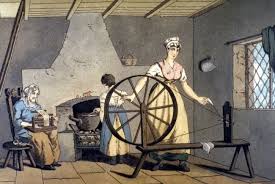 In Capital Volume 1 Marx provides an example of how the productive powers of society have come up against restricted relations of production, how they have further developed and in so doing have consequently revolutionised the economic foundation of society.
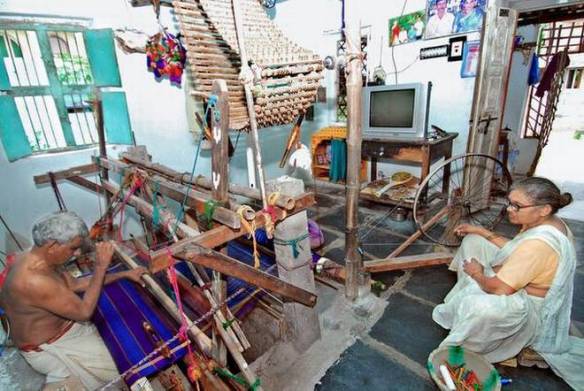 Capitalism as such cannot develop on the limited basis it finds in the already existing forces of production. The pre-requisites for capitalism as a system, as a form of truly social production as we now know it, is a capitalist labour process that is the real subsumption of labour under capital, where the instruments of production can only be operated cooperatively and not individually as before.
 The superior productivity – productive power – of the developing capitalist forces of production can then destroy less efficient methods of production (if it is allowed to) or it uses the state to enforce ‘free trade’ on less efficient productive arrangements. We then have a society in which every need of the worker and capitalist is provided by wage labour working for capital, and gone are the days when such needs were met by the product of one’s own labour or the trading by oneself of one’s own products for those not self-made. While the latter limits the organisation and division of labour including the application of technology, the employment of wage labour cooperatively together in one place opens up an enormous vista of expanding productivity.
 I noted in
  News in the North of Ireland for over a week has been dominated by the controversy created by Sinn Fein MP Barry McElduff, who posted a tweet of himself with a loaf of Kingsmill sliced bread on his head in the shop at a service station. He’s regarded as the Sinn Fein clown but nobody was laughing, at least not publicly, as he posted his video at 5 minutes past midnight on the 42nd anniversary of the killing of ten Protestant workmen by the IRA, at Kingsmill in Armagh.
 History develops through the contradiction between the forces and relations of production, the forces representing the material, including human, organisation of productive powers and the relations representing the social relations between the classes entailed by the productive forces.
 The discovery of intelligent life in the second largest galaxy of the Local Group – a galaxy called the Milky Way – itself in the universe within the Virgo Supercluster of galaxies, is of obvious significance. This life-form exists on a planet located in one of the spiral arms of the Milky Way (called the Orion Arm), which lies about two-thirds of the way out from the centre of the Galaxy. Here exists part of the Solar System – a group of eight planets, as well as numerous comets and asteroids and dwarf planets which orbit the Sun. The planet with intelligent life is called earth and it is the third planet from the Sun in the Solar System.
 Sráid Marx