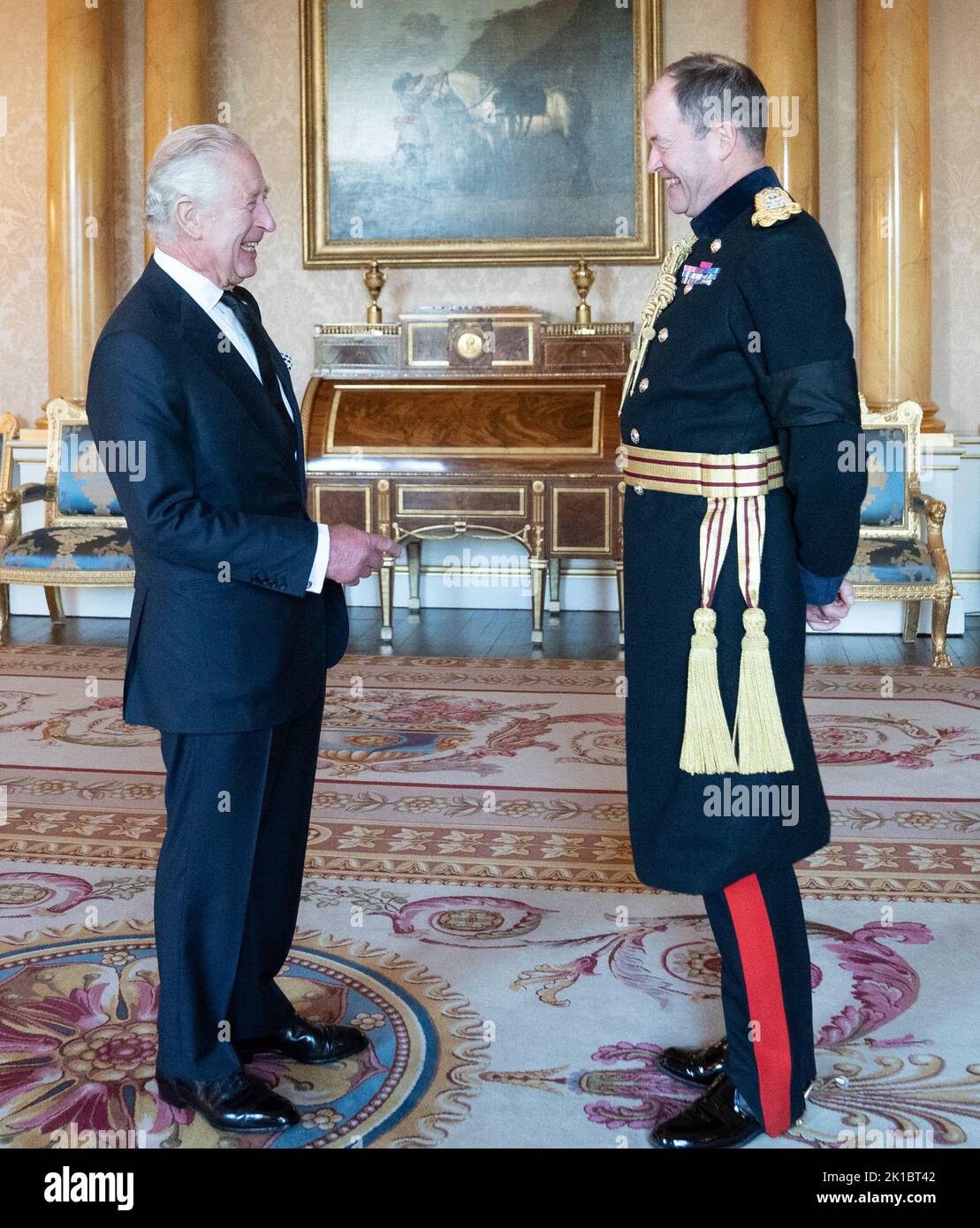
In my previous post I noted that the logic of supporting the Ukrainian State, and the British state’s support for it, was to support the British state itself; just as the Ukrainian state itself committed itself to this in their joint security agreement.
Further evidence of the unfolding logic of support for Ukraine was provided by the text of an agreement by leftist organisations in Eastern Europe published on International Viewpoint. On top of vague anti-capitalist aspirations, this noted that among its ‘top priorities is countering Russian aggression, which is destroying Ukraine and threatening the entire region. “The only reason why Russian troops have not yet attacked Poland or Romania is because of the US troops deployed there. We are convinced that the countries of our region must jointly build their own subjectivity and strength,”
The statement thus endorses the view that Russia is an immediate threat, that the people of the region are being protected by US imperialism, and that the countries should strengthen the military power of their states. There was no critique of any of these positions by the hosts of this statement and it is not hard to understand why.
The ‘Fourth International’, whose publication International Viewpoint is, agrees that Russian imperialism is responsible for the war, that the Ukrainian state should be defended and that the support of US imperialism (and British) should also be defended. This too, for them, is a top priority. The statement of the Central Eastern European Green Left Alliance (CEEGLA) is consistent with the political line of the Fourth International, which prioritises opposition to aggressive Russian ‘imperialism’ and supports Western imperialism in this opposition.
The remilitarisation of the West has been accelerated and trumpeted with more and more bellicose rhetoric from Germany and Eastern European states on the need to face a coming Russian invasion. Ukraine of course has been making this claim for two years, arguing that the best place to stop it is in Ukraine; in other words, the Western powers should directly join with Ukraine in the war. However, since Western powers are unprepared for this, including that they have not prepared their own populations, they have taken the route of proffering weapons to the Ukrainian state so that its workers can do the fighting and dying in the meantime.

Now the British state has upped this rhetoric by the head of its (supposedly non-political) Army calling for a “citizen army”, which implies the introduction of conscription, although this is denied, for what that’s worth.
In one way this is preparation for a replacement narrative to the one sold up to now that Ukraine must be supported because Western support is helping defeat the Russians, who are often portrayed as being as brutally incompetent as they are simply brutal. Now that it is becoming clearer that the West does not have the means to ensure a Ukrainian victory and Russia is winning the war, previous escalation of the power of the weapons supplied cannot continue without such escalation increasing the risk of a qualitative change in its character, which again the West is not prepared for.
The call for a “citizen army” raises lots of issues, including the not irrelevant point that Britain including the bit of Ireland it controls, does not actually have citizens – it has subjects. It is also relevant that some parts of the UK will not provide many volunteers, one thinks of the North of Ireland and Scotland in particular; and while these two might find some more than willing, many in England and Wales might also not be so keen.
For the left supporters of the idea that Russian imperialism is a real threat, which must be opposed as a priority – even alongside and on behalf of capitalist states, it raises the question of how the British military is to be supported in the case of Ukraine but not otherwise. (I assume that the pro-Ukraine left has not followed its own logic and gone so far down the road as to support the defence of its own capitalist state, although I have little doubt it would, should a war with Russia eventuate).
This left can maintain this inconsistent view because it refuses to consider everything from the position of the interests of the working class, the class as a whole. Instead, it has a routine of political positions based on reforming capitalism through its state by way of a range of political formulations that hang together while appearing to hang apart, unacknowledged as reciprocal. This includes self-determination for independent capitalist states; state removal of oppression of social groupings through laws against discrimination; capitalist state ownership of the means of production; capitalist state provision of welfare services, and capitalist state enlargement through appropriation of greater resources through increased taxation. Bizarrely, it thinks that this is a road to smashing this state.
The most important failure then is not to see the capitalist world as a whole and recognise the consequences, So, for example, it supports Western imperialist intervention in Ukraine but not in Palestine. It genuflects to the imperialist interest and objective in intervening in Ukraine but gives it no role in determining the nature of the war. In fact it goes further and refuses the idea that this is a proxy war and would have us believe that Western imperialism is supporting an anti-imperialist war of national liberation.
When we simply add up the increasing military intervention of the West in Ukraine; Middle East, including Yemen; in economic sanctioning and forecast of war with China; mobilisation of the Russian armed forces and growth of its military-industrial complex; the growth of Chinese military power; and the increased fracturing and realignment of state alliances with the relative decline of US imperialism, what we have is a drift to war across the world. In other words – World War III. The inevitability of war as a result of capitalist competition has in the past been well understood.
It must be obvious, to even the meanest intellect of those on the Left in the Western countries, that opposing the steps to this war by their own capitalist state cannot be done by claiming that in some parts of the world these states are defending the interests of the working class; against other capitalist states that are workers’ primary enemy. By doing so you have already surrendered the foundations of any argument a socialist might have.
The calls for a citizen army by the General is part of the British state’s preparation of the working class for war on its behalf, so how does the pro-war left prepare the working class to resist the entreaties and demands of the state by validating its role in Ukraine?
Behind the war in Ukraine lies Russia, China, Iran and North Korea on one side and the United States/Europe etc. on the other, with other states negotiating a place between them. A similar split arises in the war by Israel against the Palestinians and threats against Iran and some Arab countries. War over Taiwan would involve China and the US with Europe dragooned into supporting the US and Russia having good reason to support China. In other words these wars are conflicts between the same forces and their eruption signals their coming together. The forces creating them are not for disappearing so hoping that they will dissipate and simply go away are forlorn.
As regards the proposal of a citizens’ army, Boffy has succinctly put forward the socialist view of such a proposal. It is incompatible with the notion that workers should willingly join the armies of the capitalist state and defend its sovereignty, either with nominally separate workers battalions utterly subordinated to the Army command, or as individuals. In the latter case, it would be the duty of socialists to still carry forward their arguments, in so far as individuals can, and not to put a shine on the patriotic lies of the capitalist state.
So, once again, the socialist alternative stands in opposition to those defending Ukraine in the war, as the Interview with a Ukrainian and a Russian ‘socialist’ previously mentioned, shows.
When the head of the British Army makes a political speech with such a far-reaching proposal, which assumes an approaching war, the proper reaction is not one of either complacency or dismissive of the inconsequential. It is a political intervention of some purpose and socialists must explain what this purpose is and why it must be opposed.





 Sráid Marx