Can Ulster Unionism be left wing?

Flags of the Left?

In this week’s Belfast nationalist paper ‘the Irish News’ their regular columnist Brian Feeney put forward the claim that Protestant unionist workers had been duped into believing that being left wing was also to be ‘disloyal’.  Presumably these workers can therefore be left wing and ‘loyal’.   Indeed this is the thinking behind recent proposals within the United Left Alliance to build a “new mass working-class party in Northern Ireland to unite the working class against sectarian division and against the right-wing austerity of the Assembly Executive.”

An obvious objection to the ULA proposal is that it claims to stand for workers unity while accepting the division of workers created by partition.  The only way this can be justified is by accepting unionist claims that such workers unity should not exist.

A smarter unionist might claim that the unity of Irish workers would break the unity of the workers in Northern Ireland with those in Britain.  The problem of course is that Irish workers unity is sacrificed for a unity that does not exist.  There is in reality no genuine UK workers unity because most British workers regard those from Belfast, Derry and Enniskillen as Irish.  No carnival of reaction predicted before, and confirmed afterwards, by partition is likely upon the separation of the North of Ireland from Britain.

So we are back to the repeated collapse of what often passes for socialism in Ireland before the veto on workers unity demanded by unionism.  If such unionism is inherently and unavoidably reactionary then it is clear that such a veto should be rejected.  It might only be accepted if it could be credibly claimed that Feeney is right – Protestant workers are merely duped into believing that being left wing is also to be ‘disloyal’.

Unfortunately Feeney gives enough examples of the reactionary character of real unionism, as opposed to the pretend hypothetical unionism that at no time and nowhere has existed, to demonstrate that a different sort will never exist.  He records the mass expulsions of Catholic workers from the shipyards by sectarian unionist mobs in 1912 and 1920 when around 2,000 were expelled in the former year and thousands more in the second.  Crucially he also notes that 500 Protestant workers were also expelled in 1912 and 1,800 in 1920.  These were ‘rotten Prods’ who failed to demonstrate their true credentials by not being bigots.

Feeney notes that these Protestant workers refused to put an ‘ethnic’ solidarity, in reality a sectarian solidarity, in front of any other.  Some supporters of the ULA are presumably content that Protestant workers can accept this sectarian solidarity while being ‘left wing’.  If they did not put this sort of sectarian solidarity first then there could in principle be no objection to proposals for the unity of the whole Irish working class.  Proposals within the ULA that avoid this conclusion are in practice accepting that sectarian identity must be accepted and accommodated.  In other words sectarianism must be accepted and accommodated.  Protestations to the contrary can in reality be dismissed.  Political positions have consequences and in this case these are quite clear.

Feeney records the words of Peter Robinson of the DUP that ‘the unionists of Ulster were a distinct people entitled to determine their own future.’  Since the most right wing forces will always be the most vigorous defenders of this position acceptance of it necessarily means acceptance of the leadership of Protestant workers by the most reactionary bigots.

As to the cogency of Robinson’s claims – the unionists of Ulster were happily the unionists of Ireland until they could no longer garrison it all whereupon they then demanded not that they determine their own future but that the imperialist power did.  This then amounted to the seizure of both more than the territory within which they were a comfortable majority and less than would include all the Ulster unionist people they claimed they were.  The character of the movement that expressed this people politically became evident when it came to determining not their own future but that of the large Catholic minority they took with them.  This minority was subject to sectarian pogroms and systematic discrimination for nearly half a century before a civil rights movement exposed the irreformibilty of this unionist movement.

We can go back to Feeney’s claim that Protestant workers have been duped into believing that being left wing is ‘disloyal’.  It is obvious that they have not.  For what is it that unionism claims that there must be loyalty to?  Loyalty to what?  Well – to Queen and country!  To a monarchy and an imperialist power.  To partition and division.  To a state based on a sectarian head count.  To the rights and privileges of Robinson’s ‘distinct people’.

How could you possibly be left wing without being disloyal to all that?

Apologists on the left for capitulation to unionism put forward the final argument that we must accept unionism because the vast majority of Protestant workers are unionists.  In fact it is this very fact that makes opposition to partition absolutely necessary.  Opposition to partition is not necessary despite the unionism of Protestant workers but because of it.  It is not possible to break their commitment to this reactionary political programme without defeating it and it can only be definitively defeated by destroying the state power on which it bases its power.
Scottish Independence and a United Ireland

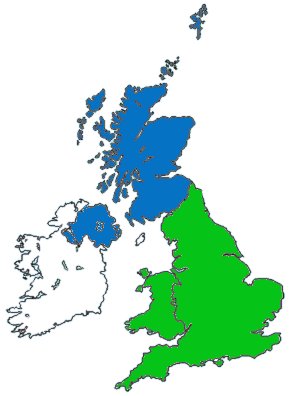
Peter Robinson, the leader of the Democratic Unionist Party and First Minister of the Northern Ireland administration made a speech last week about the attitude of unionists to a possible vote in Scotland for independence.  He didn’t think it would succeed and argued that there was no conflict between “one’s regional and national identity”.  Because the North of Ireland is just a region, and unionists believe themselves to be British, Robinson made the basic mistake of describing Scotland as a region when it is of course a nation.  The issues his speech touches on are interesting in a number of ways, especially the question of a United Ireland.

Firstly he states that even if Scotland voted for independence, he was confident “it would not alter Northern Ireland’s desire to maintain the link with England and Wales.”  But why England and Wales?  Why not Scotland?  We have all had to suffer the manifest nonsense of the existence of an ‘Ulster-Scots’ people with an Ulster-Scots’ language and an ‘Ulster-Scots’ culture yet nary a thought appears when it might seem there is a choice to be made between Scotland and the rest of Britain as our wider home.

This is of course because the ‘Ulster-Scots’ movement is a sectarian invention designed to prove the absolute and complete difference between the Irish, who have a real ancestral language, and can be taken as Catholic, and those who are not Catholic and support partition.  This is necessary to provide some legitimacy for this partition and the existence of the Northern State.   Marxists understand that all nations are inventions, it is just that one invented almost overnight on the basis of a non-language and another nation’s cultural heritage, whose purpose seems to fill in successful grant applications, is not very convincing.

The reason that an independent Scotland is not considered as the unit to which the Northern State must be subordinated is that it is too small and would not have the resource and power to enforce any challenge to the Northern State’s existence.  If that means sacrificing the blarney about kinship with Scotland, who cares?  After all didn’t unionists dump the identity of ‘loyal Irish’ when the majority of the Irish people decided they weren’t loyal?  And wouldn’t many also dump the loyalty to the Queen part of ‘loyal to Queen and country’ professions of faith should, heaven forbid, the British change their law, allow a Catholic to be head of State and the next King or Queen start believing in the doctrine of transubstantiation?

What matters is the existence of an outside power with the means to defend their claim to a privileged position within the population they have lived with for around four centuries.  Behind all the various labels they and others have attached – loyal Irish, Ulstermen, Ulster-Scots, British, British-Irish, Northern Irish – what is really sought is a designation that doesn’t make it quite so obvious that what is being claimed are sectarian rights.

The project tentatively raised in recent speeches by Peter Robinson about reaching out to Catholic unionists died a death when he recently supported sectarian loyalist parades past a Catholic Church in Belfast.  The attempts to dress unionism up in non-sectarian colours always fail.

A corollary of this is that those supporting Scottish independence because it will undermine Irish unionism are wrong because this unionism relies on State power directed from London, not any purported emotional or familial attachment to Scotland.  Equally the idea that because independence is sought on the grounds of democracy in Ireland, in the form of a United Ireland it should be supported for Scotland is also wrong.

For Marxists the objective is the unity of the working class across nations.  If it is not united, by definition it cannot act on behalf of its interests as a whole.  National divisions often prevent this unity.  To remove the salience of such divisions it is necessary that nations reflect no decisive material divisions beyond cultural ones that can be accommodated, involving difference without division.  For this to be the case there must be equality between nations.

Self-determination of nations is a means of ensuring that any nation suffering national oppression is able to escape this oppression and stand in a position of equality.  For small nations this is impossible in an imperialist dominated world so questions of nationality often frustrate international workers unity.  Nevertheless the removal of national divisions is also a process intrinsic to capitalist development and socialists must support the erosion and removal of divisions among workers due to nationality.

In Ireland partition has divided workers North and South and within the North on the grounds of religion. The removal of partition may be seen as part of a democratic process to remove the foundations of this division.  In principle partition and its associated divisions could just as well be undermined by a united polity across Britain and Ireland.  History has demonstrated that it is just this ‘unity’ that created and fostered this division in the first place.  A united and separate Irish State is therefore a legitimate project which could further the removal of divisions within Ireland and which socialists should recognise as progressive on this basis.

In Britain there is no real or substantive division among workers based on being English, Scottish or Welsh.  Creation of separate states, such as would  happen with Scottish independence, would however go a long way to creating the material foundation for such divisions. This would set back considerably the struggle for workers unity.

Scottish independence and a United Ireland do not have political dynamics that are at all similar and to believe so is in my view a mistake.  How do we know this?  Well this is one experience of Irish history that does have direct relevance to Scotland.  The creation of a separate state has deepened the divisions that existed in Ireland before partition because it created a new one.  This new one is also now strong and it is not one that is conducive to workers unity.  I’ll look at this in the next post.