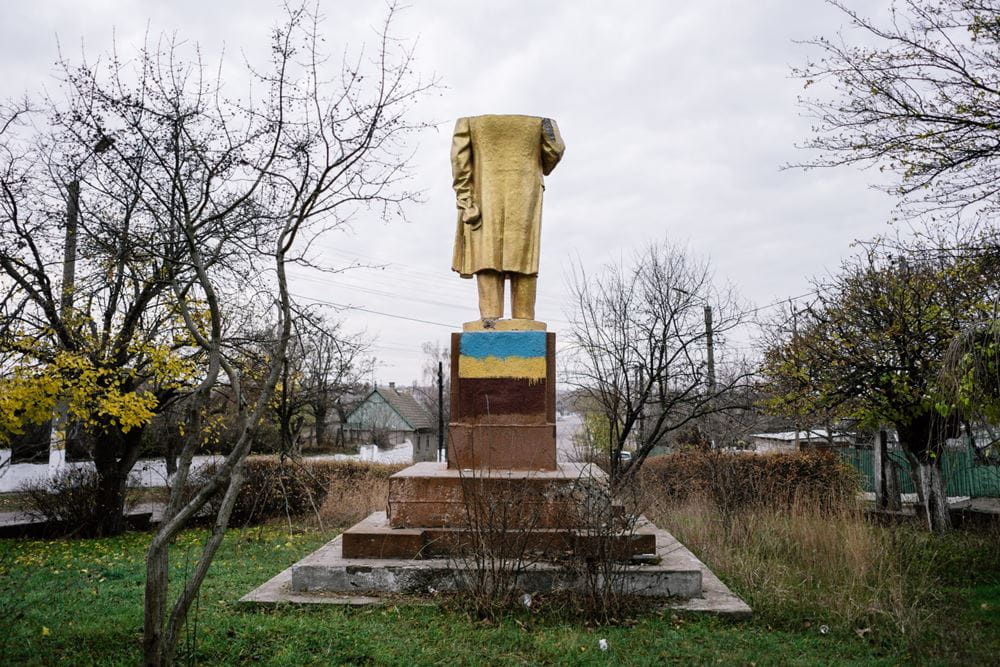
Nationalism planning for a United Ireland

The Belfast paper – The Irish News – has a column every Saturday by Patrick Murphy that regularly flagellates Sinn Fein for its hypocrisy and incompetence, sectarianism and corruption, its elevation of the cause of a united Ireland over a united people, and the constitutional question over questions of economic and social equality and poverty. Most of all it is criticised for its nationalism, even its betrayal of it through its recognition of the legitimacy of the ‘two traditions’ in Ireland, which translates as two nations and thereby betrays its own stated goal of a united nation.

Sinn Fein is not the only target and the SDLP and Southern parties get a lashing now and then as well.  It’s a bit repetitive, even if accurate in its own way, and his style can sometimes be irritating.  Anyway, the irony is that for all his economistic denunciations of nationalism, he is actually a bigger nationalist than the SDLP, Southern parties and Sinn Fein.

His bête noir is the European Union, which he sees as robbing Ireland of its sovereignty with Irish membership akin to allying with the British Empire against Germany in World War I, betraying Connolly’s entreaty to ‘serve neither King nor Kaiser but Ireland’. Of course, he has no difficulty is demonstrating the imperialist character of the EU and its current complicity in the imperialist and Zionist genocide in Palestine etc.  But he is no Marxist and so is unable to appreciate that his belief in a sovereign independent Ireland is a pipe-dream; a reactionary attempt to turn the clock back to a world of independent nation states that also ironically never existed and will never exist.  A recent article by Boffy sets out what is going on here.

By coincidence the Saturday issue of The Irish Times has an article by the Taoiseach Simon Harris setting out the need for the Irish State to defend its current success from the potentially devastating effects of a Trump presidency through some sort of ‘diplomatic offensive’.  This can only involve reminding Trump of how useful the Irish state is for the United States – “Ireland’s offering is one that speaks to Trump . . .”  Since what speaks to Trump most of all is willing and obsequious servility, the Irish are well practised in ingratiating themselves with US presidents, getting the opportunity to do so every St Patricks day with a ridiculously over-sized bowl of shamrock.  What handing over the bowl by the Irish Taoiseach symbolises is the handing over of the country to its true and ultimate chieftain.

The idea of Patrick Murphy that Ireland could genuinely be an independent and sovereign state, against the United States and outside of the European Union, is so divorced from reality it has been abandoned by every other Irish nationalist party.  Irish socialists should not take on the burden of trying to claim it and should instead recognise the ending of the era of nation states as heralding the ending (very painful ending) of capitalist nation states and inevitably of the nationalist ideology that is sustained by them.

The decline of nation states and agglomeration of super-states and imperialist alliances, demonstrated by the US and China and by NATO and BRICS, is an expression of the development of the productive forces of capitalism upon which the possibility of socialism rests.  The intensifying competition and rivalry between these imperialist states and their alliances poses an existential challenge to the interests of the working class, which, as Marx said, has no fatherland but can only assert its interests as an international class.

This means opposition to imperialist war, which currently means opposition to the imperialist conflict in Ukraine and the country’s proxy war on behalf of western imperialism against Russia.  It means rejecting the idea that an old slogan, and one not understood, of self-determination can be proclaimed as justification for supporting one or other side of this imperialist rivalry and the war it has generated.

That consciousness, including political consciousness, often lags behind economic and social development is nothing new and partly explains why many on the left have become enthusiasts for one imperialist alliance or the other.  This leads to hypocritical claims of opposition to oppression by the other side while ignoring the oppression of the favoured imperialism.  So, for example, the United States is claimed to be the key enemy of the working class of the whole world, including of Russia and China, while the role of these states in oppressing their own working class is a “separate question”, as one apologist for these states put it to me.

But let’s get back to the Murphy column in The Irish News.  He notes the recent ‘plan’ by Sinn Fein minister Conor Murphy to create 10,000 new student places centred on Derry.  He notes that it is based not on the purpose of new university facilities and what their wider role might have for development but mainly on where they will be sited.  Along with nearly all Stormont ‘plans’ it doesn’t have the money behind it to make it happen but promises to at least have some.  In this respect it is better than the new Health Service three year plan, recently announced while the first year was already three-quarters over and which promised new stuff if it had the money and cuts in the meantime.  This didn’t stop it being welcomed.

One of the many criticisms of the Conor Murphy plan was that it was a Northern Ireland plan that will reach full fruition by 2032, by which time his party leader has promised that Northern Ireland will not exist! Oh dear, nationalists revealing that they don’t believe their own hype?  I have to admit I almost laughed out loud.

Sinn Fein has been banging the drum on the ‘conversation’ about a united Ireland for years, demanding that the Irish government and everyone else start planning for it, lest the project suffer from the same lack of preparation as Brexit.  And here it is presiding over plans that ignore it!  Repeated calls for plans are followed by silence and their complete absence. Why? Because any plans would immediately confront obstacles that no one wants to talk about; assurances no one would believe, and promises that would invite the response of ‘why don’t you do that now then?’

Behind the empty rhetoric is the reality that nationalism itself has nothing to offer, which the utterly incapable Stormont regime has demonstrated in spades.  For socialists, the national question and a united Ireland is an Irish democratic revolution which cannot promise radical economic and social advance outside of an accompanying socialist revolution. All the limitations to an independent and united Ireland set out above would apply.

At most it is the act of uniting the country alone that would be justified as a democratic advance itself and during ‘the Troubles’ this was how it was implicitly understood.  Now, it is claimed by nationalists that it will have all sorts of other economic and social benefits that Sinn Fein says everyone else must plan for but which it can’t convincingly demonstrate exist and can’t plan for itself.  Instead, what political arrangements that are touted are flimsy and insubstantial – a new flag or national anthem – or actually undemocratic – some mechanism to guarantee continuing unionist power and influence.

All around us we see the pervasiveness of nationalist thinking and the failings of its nostrums.

Oppressor and Oppressed (10) – separating nations or uniting workers?

1920: M.N. Roy (centre, with black tie) with Vladimir Lenin (left) and Maxim Gorky (behind Lenin). An émigré communist party emerged in October 1920 in Soviet Tashkent under Roy’s guidance.

All the arguments employed against Lenin are claims on behalf of a national solution to national oppression.  The USC article asserts that Lenin believed that ‘the separation of an oppressed people and its creation of an independent state divided the proletariats of various nations, while a bourgeois multinational state with a ruling nation in command united them.’  But this makes no sense.

If Lenin believed that bourgeois empires united workers, why did he oppose great Russian chauvinism, or even place such importance on the right to self-determination if the former did not divide workers and the latter was required in order to unite them?  The article goes on to say that ‘state boundaries do not hinder the international drawing together of the workers of various nations. On the contrary, boundaries signify a respect for equal rights, and a real drawing together is only possible among equals.’

The world has by and large witnessed the end of multinational empires but where is the equality of nations?  How does the imposition of different laws, rules and regulations of labour; the creation of separate national labour organisations; the creation of separate economic, social and political circumstances in general – giving rise to different struggles – lead to drawing workers together?  Is not the point of the creation of such nations, from the nationalist point of view, that the different classes of the nation are ‘naturally’ to be separate from other nationalities and united within – workers with capitalists etc?

Since when was it possible for unequal nation states to achieve equality, and when did larger states stop imposing their interests on smaller ones, through political interference, economic coercion and war?  Is Ukraine not dramatic proof of all of these, by the West as well as Russia?  The author appears to recognise this when he writes that ‘modern American capitalism, which is not weighed down by feudal traditions, does not require the incorporation of other peoples into its state borders in order to dominate them.’  As we know, this hasn’t prevented repeated direct military invasion and occupation by it.  

The socialist demand for the equality of nations means only the right to independence and not belief in the possibility of real equality between vastly different states.   Their drawing together does indeed require the right to separation but rejection of the exercise of such a right can evidence that that this has already happened, to a greater or lesser extent.  Ultimately only the removal of the capitalist imperative to accumulate capital can remove the dynamic of antagonism between capitalist states.

In the Draft Theses on National and Colonial Questions for the Second Congress Of The Communist International, Lenin wrote that the 1914-18 war and the imperialists’ actions after it ‘are hastening the collapse of the petty-bourgeois nationalist illusions that nations can live together in peace and equality under capitalism.’

It is claimed in the USC article that the demise of the Tsarist multinational state after the First World War demonstrated the progressiveness of purely national formations, but the Second World War rather exposed the very restricted limits to this.  Cold War conflict muted direct war in Europe after World War 2, but even the success of the European Union in muting conflict between the major powers within Europe has not made all states within it equal.  The collapse of multinational Yugoslavia was not a progressive event, entailing war, ethnic cleansing and lasting bitterness and conflict.  Again, the war in Ukraine demonstrates that nation state independence is no obstacle to the intrusion of the more powerful.

The author opposes what Marx, and subsequently Lenin, considered as progressive tasks: ‘it was unfitting for a workers’ social-democratic party to support even the “progressive” tasks of capitalism on the eve of the First World War, because these tasks were accomplished with steel and blood.’   As Marx said, capitalism had never ‘effected a progress without dragging individuals and people through blood and dirt, through misery and degradation’, but that through its ‘development of the productive powers of man . . .  bourgeois industry and commerce create these material conditions of a new world . . .’  K Marx, The Future results of British rule in India, Collected Works Vol 12 p 221 and 222)

The author argues that Lenin’s concept of imperialism meant that ‘capitalism was decaying and that the only way out was through a socialist revolution and the disintegration of multinational and colonial empires. . . In this second period Lenin linked the resolution of the national question in Russia to the victory of the proletarian revolution’ and ‘considered that the peoples of Russia could unite again only in a union of republics with equal rights.’

In the Draft Theses on National and Colonial Questions Lenin wrote at its beginning that ‘In conformity with its fundamental task of combating bourgeois democracy and exposing its falseness and hypocrisy, the Communist Party, as the avowed champion of the proletarian struggle to overthrow the bourgeois yoke, must base its policy, in the national question too, not on abstract and formal principles but, first, on a precise appraisal of the specific historical situation and, primarily, of economic conditions.’

In this document he noted that ‘from these fundamental premises it follows that the Communist International’s entire policy on the national and the colonial questions should rest primarily on a closer union of the proletarians and the working masses of all nations and countries for a joint revolutionary struggle to overthrow the landowners and the bourgeoisie. This union alone will guarantee victory over capitalism, without which the abolition of national oppression and inequality is impossible.’

In 1916, after writing his brochure on imperialism, he wrote against a political opponent – in A Caricature of Marxism – that ‘every sensible worker will “think”: here we have P. Kievsky telling us workers to shout “get out of the colonies”. In other words, we Great-Russian workers must demand from our government that it get out of Mongolia, Turkestan, Persia; English workers must demand that the English Government get out of Egypt, India, Persia, etc.’

‘But does this mean that we proletarians wish to separate ourselves from the Egyptian workers and fellahs, from the Mongolian, Turkestan or Indian workers and peasants? Does it mean that we advise the labouring masses of the colonies to “separate” from the class-conscious European proletariat? Nothing of the kind. Now, as always, we stand and shall continue to stand for the closest association and merging of the class-conscious workers of the advanced countries with the workers, peasants and slaves of all the oppressed countries. We have always advised and shall continue to advise all the oppressed classes in all the oppressed countries, the colonies included, not to separate from us, but to form the closest possible ties and merge with us.’

‘We demand from our governments that they quit the colonies, or, to put it in precise political terms rather than in agitational outcries—that they grant the colonies full freedom of secession, the genuine right to self-determination, and we ourselves are sure to implement this right, and grant this freedom as soon as we capture power. We demand this from existing governments, and will do this when we are the government, not in order to “recommend” secession, but, on the contrary, in order to facilitate and accelerate the democratic association and merging of nations. We shall exert every effort to foster association and merger with the Mongolians, Persians, Indians, Egyptians.’

In June 1920 ‘a precise appraisal of the specific historical situation’ meant that ‘world political developments are of necessity concentrated on a single focus—the struggle of the world bourgeoisie against the Soviet Russian Republic, around which are inevitably grouped, on the one hand, the Soviet movements of the advanced workers in all countries, and, on the other, all the national liberation movements in the colonies and among the oppressed nationalities, who are learning from bitter experience that their only salvation lies in the Soviet system’s victory over world imperialism.’

‘Consequently, one cannot at present confine oneself to a bare recognition or proclamation of the need for closer union between the working people of the various nations; a policy must be pursued that will achieve the closest alliance, with Soviet Russia, of all the national and colonial liberation movements. The form of this alliance should be determined by the degree of development of the communist movement in the proletariat of each country, or of the bourgeois-democratic liberation movement of the workers and peasants in backward countries or among backward nationalities.’

‘Federation is a transitional form to the complete unity of the working people of different nations. The feasibility of federation has already been demonstrated in practice both by the relations between the R.S.F.S.R. and other Soviet Republics . .  . In this respect, it is the task of the Communist International to further develop and also to study and test by experience these new federations, which are arising on the basis of the Soviet system and the Soviet movement. In recognising that federation is a transitional form to complete unity, it is necessary to strive for ever closer federal unity . . . ; second, that a close economic alliance between the Soviet republics is necessary, otherwise the productive forces which have been ruined by imperialism cannot be restored and the well-being of the working people cannot be ensured; third, that there is a tendency towards the creation of a single world economy, regulated by the proletariat of all nations as an integral whole and according to a common plan. This tendency has already revealed itself quite clearly under capitalism and is bound to be further developed and consummated under socialism.’

He finishes the draft theses with the statement, that ‘complete victory over capitalism cannot be won unless the proletariat and, following it, the mass of working people in all countries and nations throughout the world voluntarily strive for alliance and unity.’  From all this it is clear that Lenin never departed from the view that the purpose of socialists, including in its national policy, was to create the maximum unity of the working class in its struggle for socialism. 

The Ukraine Solidarity Campaign has published an article that usurps the purpose of the demand for national self-determination as argued by Lenin, from one of strengthening the unity of the working class across and between countries to one of supporting the creation of new capitalist states in order to create an (impossible) equality of states; one that somehow leads to working class unity.  Internationalism as the unity of the working class regardless of nation has become the equality of nations, the solidarity of nationalisms with the retention of separate states and, by implication, the rights arrogated by them based on claims for the necessity of their existence.

The purpose is clear: to justify the war in Ukraine and the claims of the capitalist Ukrainian state on the subterfuge that these encompass the interests of its workers, which ‘Lenin’s contradictions’ have supposedly helped prevent from being appreciated.  It has the merit of recognising that Lenin cannot be summoned in support of Ukraine in the war, thereby undermining the arguments of others who think he can.

Series concluded

Back to part 9

Oppressor and Oppressed (9) – Lenin’s contradictions

The article published by the Ukraine Solidarity Campaign (USC) tells us that:


‘In another place Lenin stated that “large states can accomplish the task of economic progress and the tasks of proletarian struggle against the bourgeoisie more successfully than can small ones.” But Lenin also wrote the following: “In 1905 Norway separated from Sweden… What does this mean? Did the people lose? Did the interests of culture lose? Or the interest of democracy? Or the interests of the working class from such a separation? Not at all!… The unity and closeness of the Swedish and Norwegian peoples in fact gained from the separation.” This contradiction in Lenin (the progressive nature of multinational states and the progressive nature of the dissolution of multinational states).’

Lenin, however, says no more here than when larger states separate it is better that they do so without conflict, if unity does not have the necessary support, in order that the primary unity sought – that of the working classes of the various nations – is less impaired. Whether Lenin got this right in this particular case is secondary to the general argument.


The article goes on to say that ‘Most of Lenin’s statements, nevertheless, were in support of preserving the integrity of the Russian Empire, in 1903 he considered its disintegration “an empty phrase as long as its economic development continued to bind its various parts more closely into one political whole.” The break-up of Russia, according to Lenin, would be a step backwards, “in contrast to our aim of overthrowing autocracy,” In 1913 Lenin wrote:

“Autonomy is our plan for the organization of a democratic state. Separation is not our plan at all… On the whole we are opposed to separation. But we support the right to separation.”
This, indeed, was Lenin’s position. Both from the necessary, and much to be desired, purposes of development of the productive forces and the unity of the workers’ movement within the Tsarist Empire, the Bolsheviks were opposed to disintegration. As the article goes on to say, “The aim of socialism is not only to destroy the division of humanity into small states and all national aloofness, not only the rapprochement of nations, but also their merging,”


The author of the USC article criticises the idea of multinational states: ‘History has not yet provided us with the example of nations in one state enjoying complete equality, because a state is not only class coercion, but also national coercion. The stronger nation in a multinational state always wishes to be the ruling one.’[1]


Other lessons from history are, however, ignored; such as nation states often being the creation of nationalism, upon which national antagonisms have facilitated wars based on capitalist competition. Nation states often contain national minorities and attempts to create single-nation states often result in odious oppression of national minorities. Nationalism is not the answer to the disease of national oppression that it itself engenders.


It might therefore also be said that History has not yet provided us with the example of nation states enjoying complete equality, because a state is not only an instrument of class coercion, but also of national coercion of one against another. Instruments of class oppression will not be equal when there is competition between them to increase the resources that they can exploit.
The article appears to agree with this but seems to see it as relevant only within multinational states, in which it says that ‘as long as the state — violence — exists, equal rights for nations will be impossible, no matter how democratic the state might be.’


The USC article quotes from a ‘Ukrainian Marxist’ in 1916 ‘disagreeing with Lenin’s statement that a democratic Russian republic would make the realisation of the national right of separation a possibility’:


‘It is ridiculous to speak of the possibility of the ruler of a capitalist state “safeguarding rights of nations to self-determination,” Every state, even the most democratic, and especially today in the age of imperialism, would not only never agree to the separation of oppressed peoples but would always aspire towards new territorial gains, to a further oppression of nations. Capitalist governments have always looked upon the “rights of nations to self-determination” as treason to the fatherland and have punished the guilty with the death penalty… A blind faith in the democratic and socialist advantages of Russia…is in no way an expression —as is often thought — of the Great Russian socialism. On the contrary…the national program of Russian revolutionary social democrats is nothing other than the repetition of Great-Russian liberal patriotic programs.’


This argument contains some measure of truth – that capitalist governments cannot be relied upon not to oppress smaller national groups within their Empire, and is even true against Lenin who believed at this time that only a bourgeois democratic and not a working class revolution was possible. It ignores, however, that national minorities within nation states separated from Empires will also often be oppressed.


In terms of the class nature of the revolution that Lenin at that time believed would occur, he foresaw the working class taking the lead in this bourgeois democratic revolution, ensuring its thoroughly democratic character. Above all, as we have seen from the earlier post, the purpose of the demand for self-determination of nations by Lenin was the unity of the working class; not a presumed higher unity among different classes within a separating nation, with such unity always being that of the working class united with its ruling classes in its subordination. It is precisely this ‘solution’ to national oppression that the USC article attempts to assert.


It is claimed that the greater number of Lenin’s contradictions come from the period of the First World War and Russian 1917 revolutions, attacking what it sees as the cultural implications of Lenin’s policy:


‘Lenin wrote, on the one hand, that it was impermissible to force the Russian language upon the peoples of Russia: “you cannot drive people to heaven with an oak-wood club.” But, on the other hand, he wrote that in Ukraine in the Donbas region ‘the assimilation of the Great Russian and Ukrainian proletariat is an incontestable fact, and this fact is undoubtedly a progressive thing,” even though Tsarist assimilation was precisely the “oak-wood club” that Lenin condemned. For the Tsarist regime forbade the Ukrainian proletariat its own schools and compelled the Ukrainians to learn only in Russian. In another place Lenin wrote that he was for assimilation as long as it was not forced. But where in history does one see an uncompelled, voluntary assimilation?!’


Let’s start at the end – it is exactly the objective of socialist revolution to remove all oppression. That the chronicle of oppression, including national oppression, continues to exist is not at all surprising, given the heretofore failure of socialism. It is also possible, and what matters most, is that what is meant by assimilation is that the political unity of the different national proletariats is not prevented by national cultural, ethnic or racial differences.


‘Assimilation’ does not in itself entail oppression of cultural differences, including in language, but it is not the role of socialism to push against voluntary cultural assimilation, rather to allow those who wish to retain or develop cultural distinctions not to be forced by the state to disavow their cultural practices or to suffer discrimination against them. The example of the Donbas region quoted by Lenin is instructive: Ukrainian independence and Ukrainian nationalism have now, very obviously, failed to unite the different proletariats of the region and only Ukrainian nationalists can claim that ‘decolonisation’, that is the suppression of the Russian language and culture, is now the solution.

[1] We will leave aside such cases as the United States (are these states separate nationalities?) or the UK, where claims for the oppression of Scotland are false, with this country playing an equal, even outsized role, in creation of an Empire. There are other cases such a Belgium and Switzerland where the existence of two and several nationalities within one state has been the case.

Back to part 8

Forward to part 10

Oppressor and Oppressed (1) Introduction

What attitude should we take to resistance movements, such as Hamas?  Boffy’s Blog has a critique of a letter submitted to the ‘Weekly Worker’ that answers this question.  He particularly criticises the following paragraph:

Lazare says that Marxists do not side with rightwing groups claiming to speak in the people’s name. Wrong. In the 1950s we supported Eoka in Cyprus against the British. Likewise we supported the IRA. Lazare fails to understand that the nationalism of the oppressor and oppressed is not the same. It is all very simple. We support the struggle of the oppressed.’

This opens up a range of issues, but let’s start by breaking them down:

‘Lazare says that Marxists do not side with rightwing groups claiming to speak in the people’s name. Wrong.’

This claim, I think, is wrong.  Why would we – socialists/Marxists – side with right-wing groups?  What would these groups be doing that would warrant support?  Any anti-colonial or anti-imperialist struggle they would be involved in might put us ‘on the same side’ of such a struggle, only so long as they were actually involved in struggle, but would not mean that ‘we side with them’.  Any such struggle they carry out against imperialism will not be one against capitalism, i.e. not be waged against the system that at a certain historical stage we call imperialism.

They will not seek the emancipation of the working class and will seek instead the creation of a new capitalist state.  They will therefore have, or seek to advance, common class interests with the oppressor, therefore making their opposition defective, temporary and prone to betrayal.  They will not seek to make the working class the leadership of the struggle or seek to guide it to overthrow capitalism but will seek to thwart those that do.

To understand this it is helpful to defiine the class nature of the groups we are supposed to side with.  These can be bourgeois, or more often petty bourgeois, in which case it is necessary to see them as inimical to the interests we serve and as rivals, even if we sometimes are temporarily ‘on the same side’ with them in any particular struggle or issue at any particular time.  In all cases the socialist movement must organise itself separately from them and against them.  

‘In the 1950s we supported Eoka in Cyprus against the British. Likewise we supported the IRA.’

Here, I will limit myself to the Marxist approach to the IRA.  The political tendency I belonged to did not support the IRA.  We did not endorse its programme and did not support its armed struggle.  We took the view – going back to James Connolly – that, as with the whole tradition of Irish republicanism, it was a revolutionary nationalist movement that was united around the principle of armed struggle, a struggle that was parasitical on the mass anti-imperialist struggle and was bound to be defeated, which it was.

This did not mean that we were not ‘on the same side’ in a struggle against imperialism; did not mean that we did not defend it against charges of being a purely terrorist and criminal organisation; did not work with republicans in campaigns against British imperialist repression, or did not support a united Ireland and the smashing of the Northern State.  Tactical cooperation in united campaigns were possible and existed; but we organised separately and under our own banner and not as supporters of Irish republicanism or its movement.  The formula ‘unconditional but critical support’ did not apply.

To ‘give support’ must be taken to mean political support arising from political agreement and no such agreement existed between Marxism and Irish republicanism and obviously does not exist now that it has surrendered its own programme.

‘Lazare fails to understand that the nationalism of the oppressor and oppressed is not the same.’

Whether Lazare understands this or not is not what I want to address.  I want to agree that ‘the nationalism of the oppressor and oppressed is not the same.’  The former is reactionary, and the latter can have a democratic content that socialists would seek to advance.  However, not being the same does not mean that we support the nationalism of the oppressed, which is the usual next step that many mistakenly take.

We are not nationalists of any sort or variety and identification of some democratic content to any nationalist cause does not make us so.  Our support for the struggle against colonialism or imperialism is based on the interests and politics of the working class, which are universal across nations, both for the oppressed and the oppressor nations.

Nationalism, no matter what its variety, places primacy on the nation and asserts that it creates some separate and common interest that encompasses all its members.  Socialists and Marxists reject the claim that all the people within a nation have common interests, even (especially) in opposing colonial or imperialist rule, because they are impacted differently by this rule and thereby have different interests in removing it.

‘It is all very simple. We support the struggle of the oppressed.’

In general socialists and Marxists do ‘support the struggle of the oppressed’ but it is not ‘all very simple’ because we do not start from this assertion but from the interests of the working class and the struggle for socialism.  More will be said about this in a future post.

Supporting the struggle of the oppressed against their oppression (and not for any other reactionary objective) does not mean we necessarily support the organisations leading their struggle or their methods.  This is another step that many mistakenly take but this is based on assumed moral obligations and not on political accordance, unless one shares the same political programme and strategy as these organisations.

In the past this step has led the British ‘Troops Out Movement’ to move from support for the withdrawal of the British Army from Ireland – opposition to the oppressor – to essentially support for Sinn Fein, even after this movement had effectively abandoned its struggle against British rule.

This is itself an example of the mistake of supporting the nationalism of the oppressed because this nationalism will, as history has repeatedly demonstrated, be ‘defective, temporary and prone to betrayal’ even of its own proclaimed objective.  Even in success, anti-colonial movements have created new capitalist states in which ‘national liberation’ has encompassed the continuation of social and political oppression.

Marxism identifies the working class as the universal class that is the only force that can create the conditions to end all oppression.  This includes national oppression. The working class is not the most oppressed section of society so moral claims based on those suffering the most extreme poverty, exclusion, prejudice or discrimination, or some ideal of justice does not explain its role or potential emancipatory function.  This is true across the world, in all its struggles and applies to all of them.

Forward to part 2

4 Supporting the democratic content of nationalism

In ‘The Right of Nations to Self-Determination’ Lenin stated that 

‘The bourgeois nationalism of any oppressed nation has a general democratic content that is directed against oppression, and it is this content that we unconditionally support, At the same time we strictly distinguish it from the tendency towards national exclusiveness; we fight against the tendency of the Polish bourgeois to oppress the Jews, etc., etc.’

We have already explained in the previous posts the limits to such support but there are others that we have not addressed and that have further relevance when considering the situation in Ukraine today.  We should obviously be wary of claims of a democratic content to a nationalism that has already shown its reactionary character.

The recent history of Ukraine has demonstrated that the growth of nationalism in that country has been the product of the cynical strategy and policies of certain oligarchic factions in struggle with rivals.  It has been advanced not as the flag under which democratisation of Ukrainian society has advanced but as a cover for austerity and repression, and as a substitute for the failure of a number of bourgeois leaderships to carry out promises to rid Ukraine of corruption and systematic abuses of democracy.

As this nationalism has advanced it has not broadened the scope of democracy through inclusion of different ethic, linguistic and cultural groups but acted as a weapon to restrict the rights of minorities and impose a single ethno-nationalism.  This has included restrictions on freedom of speech through crack-downs on rival media organisations; the banning of political parties and silencing of particular political views; promotion of an ideology of anti-communism, and attacks on workers’ rights.

This nationalism has celebrated and legitimised fascist figures from its history (see above picture) and current political slogans from far-right organisations, going so far as to integrate their armed organisations into the state, and at times place significant figures in positions of power within the Government.  The significance of the far right has advanced under the banner of, and in lock-step with, wider Ukrainian nationalism.  It is not that mainstream Ukrainian nationalism and the state that promotes it have become fascist but that the mainstream has seen no need or want to separate itself from the far-right movement, which it has celebrated as its ‘best fighters’.

The Ukrainian state has faced a number of secessionist movements but the policy advocated by Lenin in dealing with such movements by offering the right of secession in order to forge democratic unity, as the best grounds for uniting its working class, has been rejected. When Ukrainian nationalism has demanded self-determination it has ignored its own responsibility to defend consistent democracy within the territory it claims.  Instead, it has moved further and further into alliance with the world’s greatest enemy of equality between nations – US imperialism and its NATO alliance.

In sum, there is no democratic content to Ukrainian nationalism and it cannot be defended.  If it currently wields hegemony, this is not only the responsibility of the far-right in the country, or the oligarchic and political factions who solidify their position with its support, but also due to the reactionary policy of the Russian state. This state can offer no democratic alternative because it too is headed by a corrupt and reactionary nationalist regime.  Between two such regimes the ‘instinctive and automatic rush to reach for the policy of self-determination of nations in order to justify the decision to support one side’, as explained in a previous post, is a betrayal of the working class of both nations.

The liberation of the Ukrainian working class will not be achieved in alliance with US imperialism, which is forging the strongest chains for this class through its superior economic and military power.  The utter dependency of Ukraine and its nationalists on US policy has now been firmly entrenched by the massive armed and associated financial support of the US.  Through this war Ukrainian nationalism has definitively made its country a client of the United States; so much for the promise of nationalism. 

Only by a struggle against this can the freedom of the Ukrainian working class be achieved, including in the East and South of the country, and only in conjunction with neighbouring countries including Russia.  This cannot be achieved by the US and NATO which seeks the permanent submission of Ukraine through radical diminution and debasement of Russia.

*                                  *                                  *

Unfortunately, some on the Ukrainian left acknowledge the reactionary character of US imperialism – ‘In this conflict, Russia can in no way be considered a different project than the US and the rest of the capitalist powers’ – but go on to frame the war as a purely anti-colonial struggle, with Russia as the imperial power.  ‘Ukraine needs to decolonize and de-Russify’, which neglects to explain how unity of the Ukrainian working class, including ethnic Russian workers with divided political loyalties, can be advanced.

Lip service is paid to ‘the centrality of Ukraine’s fight for independence from both Russian and Western Imperial domination’, and the war is presented as an ‘existential’ one for Ukrainians’ ‘very existence’, with war aims including the incorporation of Crimea and the Russian controlled Donbas republics under Kyiv rule.  Lenin’s policy of seeking unity through the right to secession isn’t on the table and the Ukrainian right to self-determination has simply become an example of the ‘refined nationalism’ that he warned against.

The article is therefore full of references to historic Russian oppression while defending Ukrainian ‘agency’ and ‘subjectivity’, all the while forgetting that it is now an independent state with its own capitalist structure and dynamics.  The war is framed as a national struggle, just as it is presented in the West; the war aims supported are those of the most rabid US neocon, and the current means of struggle by its capitalist state are endorsed.  How the war is understood, the appropriate war aims and means of struggle supported by Yuliya Yurchenko are the same as that of Western imperialism. 

What we have then is not a policy that will combat the most rabid forms of Ukrainian nationalism, which Yurchenko accepts is a real problem, even admitting the ‘risk [of] confirming Putin’s obscene lie that we are a nation of bigots and fascists.’  What it proposes is an idea that Ukrainian nationalism can be made progressive.  The problem with this is threefold.

First, Ukrainian nationalism is already presented as progressive in a very objective sense, although by no means only that, through the ‘spirit of collective solidarity’ that the war has inspired.  This is despite her acknowledgement that previous democratic protests and mobilisations have only led to the strengthening of different oligarchic factions and the far-right. She claims that ‘Russia’s invasion has stirred up a healthy degree of Ukrainian nationalism.’

Second, the view that a healthy nationalism can arise from the war understood in existential national terms is simply beyond any credible belief.  This is especially the case since Yurchenko’s war policy, being the same as the most reactionary nationalist, promises a ‘long fight’, one that can therefore be guaranteed to build up massive bitterness and resentment. The policy of reliance on imperialism and domestic austerity necessary to finance it, coupled with opposition to the right of minorities to secede, means that nothing progressive could emerge from such a war, unless it provoked a revolt against it and the policy behind it.  But Yurchenko is not proposing that.

Lastly, the idea that any sort of nationalism, however ‘healthy’, could be the cause that would carry the Ukrainian working class forward is simply absurd for the reasons enumerated in the previous paragraph.  Nothing in the answers given in Yurchenko’s interview indicates any strategy to expose the role of US imperialism or that of domestic capitalist and bourgeois political forces in bringing this war to the Ukrainian working class.  The war, she says, was ‘a completely unprovoked attack.’ Nothing about the moves towards joining NATO or the repeated attacks on the break-away regions in the Donbas. Nothing to indicate that the Ukrainian working class has separate interests in the war from its rulers.

‘Compromise’ is rejected and the Minsk peace process merely ‘so-called’ and also rejected.  There is no acknowledgement of any Ukrainian state responsibility for the failure.  Instead ‘we will not settle for anything less than the reunification and independence of Ukraine.’  How this can happen through subordination to the US and NATO is something she is no more able to explain that the rest of the Ukrainian nationalist spectrum.

Capitulation to nationalism means avoiding assignment of any responsibility, and hence any opposition, to domestic capitalism and its rotten state.

Ukrainian nationalism does not find any democratic content that justifies any defence of it just because some on the left support it, portray it as democratic, or think they can make it so.

Yurchenko declares that ‘the international left must put its decolonial hat on in thinking about Ukraine’; in other words, put on its blinkers and accept the progressiveness of a war backed by US imperialism, the corrupt Ukrainian capitalist state, and the ‘best fighters’ of the ‘Ukrainian resistance’–the fascists of the Azov regiment.

Whoever thinks there is any democratic content in this nationalist melange is irretrievably lost to the struggle for socialism.

Back to part 3

Forward to part 5

3 Lenin Against Nationalism

In the previous post we noted that capitalism extends itself across the globe, leading to both bigger capitals and bigger states and then to international economic and political organisation.  Inevitably small capitals and small nations suffer.  This does not mean that socialists seek to halt or reverse such processes.

Within the Great Russian Empire, with its prison house of peoples, Lenin advocated the closest relations between its nations and the united organisation of the working class movement.  In his article ‘Corrupting the Workers with Refined Nationalism’ he states that:

‘Marxists, stand, not only for the most complete, consistent and fully applied equality of nations and languages, but also for the amalgamation of the workers of the different nationalities in united proletarian organisations of every kind.’

How far this is from some of today’s ‘Marxists’ can be seen in their championing of the likes of Scottish nationalism or Catalan nationalism.  Where Lenin argued that socialists should demonstrate their proletarian internationalism through membership of united organisations, these left nationalists have demonstrated their nationalism by leading the way in splitting their own organisations along nationalist lines.

Lenin emphasises the need for unity in ‘On the National Pride of the Great Russians’:

“No nation can be free if it oppresses other nations,” said Marx and Engels, the greatest representatives of consistent nineteenth century democracy, who became the teachers of the revolutionary proletariat. And, full of a sense of national pride, we Great-Russian workers want, come what may, a free and independent, a democratic, republican and proud Great Russia, one that will base its relations with its neighbours on the human principle of equality, and not on the feudalist principle of privilege, which is so degrading to a great nation.’

‘Just because we want that, we say: it is impossible, in the twentieth century and in Europe (even in the far east of Europe), to “defend the fatherland” otherwise than by using every revolutionary means to combat the monarchy, the landowners and the capitalists of one’s own fatherland, i.e., the worst enemies of our country.’ 

‘We say that the Great Russians cannot “defend the fatherland” otherwise than by desiring the defeat of tsarism in any war, this as the lesser evil to nine-tenths of the inhabitants of Great Russia. For tsarism not only oppresses those nine-tenths economically and politically, but also demoralises, degrades, dishonours and prostitutes them by teaching them to oppress other nations and to cover up this shame with hypocritical and quasi-patriotic phrases.’

It is not necessary to endorse Lenin’s remarks about ‘desiring defeat’ or ‘lesser evil’ to appreciate the motivation of absolute opposition to the nationalism of Great Russia; the nationalism that lives on today in the pronouncements of Vladimir Putin but which is ideological garb draped over the body of the Russian state and oligarchic capitals that it is designed to protect.

Just as Marx supported the development of united nation states such as Germany and Italy, because this involved the internal overthrow of reactionary feudal privileges and restrictions, so he opposed national oppression within nations and looked to the progressive social forces within the oppressed and oppressor nations to achieve this free unity and benefit from it.  Lenin in this article mentions the ‘freedom and national independence for Ireland in the interests of the socialist movement of the British workers.’

The idea that in Ukraine any positive nationalist programme could issue from a corrupt capitalist state, one more and more the supplicant of US imperialism, and this spearheaded by its ‘best fighters’ who are fascists, shows the drastic illusions consuming many on the left. 

In relation to his opposition to Great Russian chauvinism, Lenin said that:

‘The objection may be advanced that, besides tsarism and under its wing, another historical force has arisen and become strong, viz., Great-Russian capitalism, which is carrying on progressive work by economically centralising and welding together vast regions. This objection, however, does not excuse, but on the contrary still more condemns our socialist-chauvinists . . .’

‘Let us even assume that history will decide in favour of Great-Russian dominant-nation capitalism, and against the hundred and one small nations. That is not impossible, for the entire history of capital is one of violence and plunder, blood and corruption. We do not advocate preserving small nations at all costs; other conditions being equal, we are decidedly for centralisation and are opposed to the petty-bourgeois ideal of federal relationships.’

He goes on to say that this does not mean supporting the capitalist political forces that promote this economic development.  However, it also means we do not seek to reverse it either.

In ‘The Revolutionary Proletariat and the Right of Nations to Self-Determination’ Lenin states that:

‘The Russian proletariat cannot march at the head of the people towards a victorious democratic revolution (which is its immediate task), or fight alongside its brothers, the proletarians of Europe, for a socialist revolution, without immediately demanding, fully and unreservedly, for all nations oppressed by tsarism, the freedom to secede from Russia. This we demand, not independently of our revolutionary struggle for socialism, but because this struggle will remain a hollow phrase if it is not linked up with a revolutionary approach to all questions of democracy, including the national question.’

‘We demand freedom of self-determination, i.e., independence, i.e., freedom of secession for the oppressed nations, not because we have dreamt of splitting up the country economically, or of the ideal of small states, but, on the contrary, because we want large states and the closer unity and even fusion of nations, only on a truly democratic, truly internationalist basis, which is inconceivable without the freedom to secede.’

Many of today’s ‘Marxists’ see in self-determination only separation and not the objective of unity.  They see the creation of new states where Lenin saw the unification of nationalities.  They think the right to secede mean support for secession when it is the means to provide guarantees to unification.  They think self-determination is only expressed by separation and creation of a new capitalist state when for Lenin it was the means for ensuring voluntary unity and the avoidance of such an outcome. Lenin advocated this policy even in the case of colonies.

In A Caricature of Marxism and Imperialist Economism Lenin writes that:

‘We demand from our governments that they quit the colonies, or, to put it in precise political terms rather than in agitational outcries—that they grant the colonies full freedom of secession, the genuine right to self-determination, and we ourselves are sure to implement this right, and grant this freedom, as soon as we capture power.’

‘We demand this from existing governments, and will do this when we are the government, not in order to “recommend” secession, but, on the contrary, in order to facilitate and accelerate the democratic association and merging of nations. We shall exert every effort to foster association and merger with the Mongolians, Persians, Indians, Egyptians. We believe it is our duty and in our interest to do this, for otherwise socialism in Europe will not be secure.’ 

‘We shall endeavour to render these nations, more backward and oppressed than we are, “disinterested cultural assistance”, to borrow the happy expression of the Polish Social-Democrats. In other words, we will help them pass to the use of machinery, to the lightening of labour, to democracy, to socialism.’

‘If we demand freedom of secession for the Mongolians, Persians, Egyptians and all other oppressed and unequal nations without exception, we do so not because we favour secession, but only because we stand for free, voluntary association and merging as distinct from forcible association. That is the only reason!’

The failure of Russia to offer a powerful and attractive example to Ukraine lies behind its turn towards invasion to substitute for this failure.  Undoubtedly this has divided the Ukrainian people themselves whose attempts to clean their own stables have been frustrated time and time again by oligarchic factions.

Through some of these factions the country has been turned towards the EU and NATO, membership of which its oligarchs and bourgeois political parties have attempted to impose even when the majority of the people have opposed it.  So, an unconstitutional Government signed an EU Association agreement and IMF loans, with their consequent massive implications for austerity, without any elections following the Maidan overthrow of the previous Yanukovych Government. The prime minister responsible, Yatsenyuk, admitted that “I will be the most unpopular prime minister in the history of my country . . .’

Three weeks before the ouster of Yanukovych the most popular opposition figure was Klitschko with a poll rating of 28.7% while Yatsenyuk didn’t even reach 3%.  Yatsenyuk however had the support of the United States, whose plans to put him in place were famously discussed in the leaked phone-call between US Deputy Secretary of State Victoria Nuland and the US ambassador Geoffrey Pyatt days before formation of the post-Maidan regime. 

The current divisions within Ukraine are not simply externally imposed but prove the failure and hypocrisy of nationalist claims to further national unity and oppose foreign interference.  In February 2017 a Gallop opinion poll recorded that more Ukrainians considered NATO a threat than a protection.  Nevertheless, the Ukrainian Government changed the constitution in 2019 to add a stipulation on “the strategic course” of Ukraine toward NATO membership.

This course has played no small part in causing the current massive escalation of war and making Ukraine utterly dependent on US imperialism, exposing all calls for defence of this state and its regime on the grounds of self-determination to be deceitful lies.

It is ironic that this subordination to the United States has been accompanied by, and is the product of, the growth of Ukrainian ultra-nationalism, proving that Lenin was right to warn that bourgeois nationalism will happily ally with external imperialism while demanding sacrifice from its own people.  This nationalism disguised as ‘self-determination’ has inevitably infected its left supporters in exactly the same way; we noted at the end of the previous post the absurdity of some on the left declaring that self-determination requires the ability of Ukraine to decide its own international alliances, including subordination within NATO.

The result of such subordination makes all talk of self-determination by the left while welcoming weapons from ‘anywhere’ – read NATO – not so much utter delusion, or even mistaken, but treacherous betrayal.  Having invited the US to determine the outcome of the war does this left really pretend the US will not determine the outcome of the peace? 

Back to part 2

Forward to part 4

2 What Lenin did not mean by self-determination of nations

In Ireland it has been common to hear left-wing nationalists claim that Marxists support the nationalism of oppressed nations.

In ‘Critical Remarks on the National Question’, quoted in the previous post Lenin writes:

‘The principle of nationality is historically inevitable in bourgeois society and, taking this society into due account, the Marxist fully recognises the historical legitimacy of national movements. But to prevent this recognition from becoming an apologia of nationalism, it must be strictly limited to what is progressive in such movements, in order that this recognition may not lead to bourgeois ideology obscuring proletarian consciousness.’

‘The awakening of the masses from feudal lethargy, and their struggle against all national oppression, for the sovereignty of the people, of the nation, are progressive. Hence, it is the Marxist’s bounden duty to stand for the most resolute and consistent democratism on all aspects of the national question. This task is largely a negative one. But this is the limit the proletariat can go to in supporting nationalism, for beyond that begins the “positive” activity of the bourgeoisie striving to fortify nationalism.’

‘To throw off the feudal yoke, all national oppression, and all privileges enjoyed by any particular nation or language, is the imperative duty of the proletariat as a democratic force, and is certainly in the interests of the proletarian class struggle, which is obscured and retarded by bickering on the national question. But to go beyond these strictly limited and definite historical limits in helping bourgeois nationalism means betraying the proletariat and siding with the bourgeoisie. There is a border-line here, which is often very slight and which the Bundists and Ukrainian nationalist-socialists completely lose sight of.’

‘Combat all national oppression? Yes, of course! Fight for any kind of national development, for “national culture” in general? — Of course not. The economic development of capitalist society presents us with examples of immature national movements all over the world, examples of the formation of big nations out of a number of small ones, or to the detriment of some of the small ones, and also examples of the assimilation of nations.’

‘The development of nationality in general is the principle of bourgeois nationalism; hence the exclusiveness of bourgeois nationalism, hence the endless national bickering. The proletariat, however, far from undertaking to uphold the national development of every nation, on the contrary, warns the masses against such illusions, stands for the fullest freedom of capitalist intercourse and welcomes every kind of assimilation of nations, except that which is founded on force or privilege.’

So we see the progressiveness of nationalism, as the political framework for the development of capitalism against feudal restrictions, but not as support for capitalist states or their various nationalisms that develop thereafter.  Thereafter, the development of capitalism creates a working class with the interests of this class the same across national borders and therefore opposed to the division of the class that nationalism entails.

Support for nationalism beyond the negative sense of opposition to national oppression is to capitulate to bourgeois nationalism.  Support against national oppression is limited to what is progressive in any nationalist movement and although there may be a border-line between this and betraying the working class to bourgeois nationalism, what we have in the approach of much of the left today is an instinctive and automatic rush to reach for the policy of self-determination of nations in order to justify the decision to support one state in any particular conflict.

Lenin’s ‘formula’ of self-determination of nations has been carried forward as the key to unlocking any national issue without regard to its historical limitation and by ignoring Lenin’s explicit subordination of this justification to the determining interests of the working class.  

Instead of the unity of the working class coming first, the demand for self-determination for a particular nation is placed beforehand, with the assumption that this leads to the former.  Since the demand for self-determination is a bourgeois democratic demand it cannot even on its own terms be seen to lead to the unity of the working class.  We have countless historical examples of self-determination being enacted through creation of new nation states with capitalist social relations and no progressive working class unity established.

Supporters of ‘Ukraine’ have, for example, said that ‘the people of Ukraine must be allowed to exercise freely their right to democratic self-determination, without any military or economic pressure’.  This has been accompanied with calls to cancel Ukraine’s foreign debt – ‘it is important in ensuring that, when they have reconquered their independence, Ukrainians won’t be even more dependent on creditors or domestic oligarchs over whom they have no control.’

But we have demonstrated that the demand for self-determination is not only not applicable to an independent country like Ukraine in this war, but is a capitulation to bourgeois nationalism, with the long quote above demonstrating why.

As Lenin says – self-determination is not support for anything other than the right to secede and form an independent state, and in doing so to reject feudal or dynastic chains such as were forged by the Tsarist, Ottoman and Austro-Hungarian Empires.  This will allow for the free development of capitalism by that particular state.  It is no job of socialists to uphold that state’s capitalist economic development that is built on the exploitation of workers, except in so far as we welcome this development by its creation of a working class that will overthrow it, and which more and more removes national differences.  It is therefore, not our job to seek to constrain such development through reactionary political projects such as Brexit or splitting already established states, such as Britain.

When left nationalists welcome that ‘Ukrainians’ have ‘reconquered their independence’ but complain that foreign debt must be also be cancelled, so that they won’t be dependent on foreign creditors or domestic oligarchs, they fall exactly into the camp of bourgeois nationalism.

Firstly, the cancellation of past debt will without doubt be followed by incurring new debts, debts that will be paid from the surplus produced by Ukrainian workers who will not be free and independent of either this debt or the domestic oligarchs, who can only be disposed of through socialist revolution and not mitigation of foreign loans.  It is no job of socialists to defend the capitalist development of smaller or weaker capitalist states as if they are somehow oppressed and exploited when the real exploitation involved is class exploitation.

While, on its own, socialists will not object to the cancellation of foreign debt (but why just foreign? what would these socialists demand if the debt was gifted to domestic creditors? ) this cannot be as part of support for a programme of capitalist economic development.  To repeat, for us the development of capitalism is of benefit because it creates the working class, and its greater development objectively prepares this class for its historic task of becoming the new ruling class and undertaking the task of abolishing class altogether. 

The capitalist development of new nations inevitably involves insertion into a world system that will rob the innocent of any illusion that their nation is really independent of the forces that determine its future.  Overwhelmingly these forces are based on the interests of the most powerful states and the largest capitals.  Just as big capitals destroy small ones within the framework of their own state, these capitals get too big for the nation state and seek existence across states, creating multinational capitals and multinational para-state bodies, which determine the fortune of smaller states and smaller capitals. 

In attempting to counter such forces Lenin goes on to say that ‘Consolidating nationalism within a certain “justly” delimited sphere, “constitutionalising” nationalism, and securing the separation of all nations from one another by means of a special state institution—such is the ideological foundation and content of cultural-national autonomy. This idea is thoroughly bourgeois and thoroughly false.’

‘The proletariat cannot support any consecration of nationalism; on the contrary, it supports everything that helps to obliterate national distinctions and remove national barriers; it supports everything that makes the ties between nationalities closer and closer, or tends to merge nations. To act differently means siding with reactionary nationalist philistinism.’  This is the ground on which socialists oppose all varieties of nationalism and oppose reactionary national movements.  

In one Facebook discussion a supporter of the Ukrainian state argued that self-determination required the ability of Ukraine to decide its own international alliances.  When someone tries to argue that socialists should fight for the right of a capitalist state to join an imperialist alliance such as NATO you know you aren’t dealing with any sort of socialist, and certainly not arguing with support from Lenin’s formulation of self-determination of nations.

to be continued

Back to part 1

Forward to part 3

Opinion polls and a United Ireland (4) – Support in the South for unity

Large majority of voters favour a united Ireland, poll finds

The Irish Times

It stands to reason that for a united Ireland to happen both North and South would have to agree to it.  The Irish Times/Ipsos MRBI poll in December last year recorded the results of an opinion poll on support for a united Ireland in the South.

An Irish Times columnist summed it up right from the start – ‘So, you want a united Ireland?  Of course.  Soon? Eh, not really.  Want to pay for it? Nope. Want unionists involved? Sure. Want to change the anthem or the flag? Not a chance.  How much do you really care about it? Let me get back to you on that.’

One thing really gets me about this type of thing, but I’ll get to this in a minute, after I briefly set out the results of the poll.

Support for Irish unity is broad – 62% support it, 16% say Northern Ireland should stay in the UK, 13% are undecided and 8% won’t bother themselves to vote.

Asked when they would like to see a referendum, 15% said now and 13% said never, while a further 16% said they would like to see it more than 10 years in the future.  Since the most popular response was ‘in the next ten years’, at 42%, it means that support for a referendum within this timescale is almost the same as that supporting a united Ireland at 57%.

It might be thought then that those supporting a united Ireland are rather keener on it than the spin placed on it by political commentary such as that just quoted.  Unfortunately for such a view the question was asked ‘how important is a United Ireland to you?’ and the most popular answer was ‘not very important, but I would like to see it someday.’  (For some reason this makes me think of this less well-known Irish rebel song).

This was the response of a majority of 52%, with only 20% saying it was ‘very important, it is a priority for me.’ More people than this, at 24%, said it was ‘not at all important’ with 4% saying they didn’t know.  Even among Sinn Fein supporters this was the most popular answer at 47%, with 16% saying ‘not at all’.

If I might seem flippant about this question it is because how important something is very much depends on the context and one might reasonably expect that an actual referendum would make the question have greater importance.  Whether this would increase or reduce support for a United Ireland again depends on context.

To determine the importance of it, or rather to emphasise its unimportance, the poll asked a number of questions about what compromises people in the South were prepared to make in order to make a united Ireland happen. Hence the comment above – ‘How much do you really care about it? Let me get back to you on that.’

So, asked if they would agree to a new flag, a new national anthem, paying higher taxes, having less money to spend on public services or re-joining the Commonwealth, support was 16%, 21%, 15%,13% and 14% respectively.  Or, to put it another way, 77%, 72%, 79%, 79% and 71% said no.  On the other hand, 47% agreed to ‘having closer ties to the UK’, whatever that meant – perhaps visiting their cousins more often? – and 44% agreed to ‘having unionist politicians as part of the Government in Dublin’, which is a hell of a lot more important than a flag or a song.  Yet another reason to doubt the value of these particular questions.

Which brings me to the one thing that really gets me about this type of thing.  These ‘compromises’ are paraded by liberals and the great and the good as if they are in the least bit important to unionists.  These people continually parrot that the concerns of unionists have to be listened to, yet their proposals show that they are the last to listen to them.  Unionism frankly doesn’t give a shit about what flag is flown in the South of Ireland and doesn’t care what the national anthem is either etc. etc.  As far as they are concerned, or rather proclaim loudly, it’s a foreign country and you can stand to whatever flag and sing whatever song you want.

In such circumstances, refusal to countenance such ‘compromises’, where only one side might agree, is perfectly rational.

This, however, is not very important.  What matters is the question that wasn’t asked, which reveals much about the blindness of those behind the opinion poll.

In the North, Lord Ashcroft’s poll asked ‘what would change in a united Ireland?’, in other words, what would be the benefit or cost of a united Ireland to unionists, nationalists and ‘neutrals’.  In the The Irish Times/Ipsos MRBI poll only costs are considered to exist and only questions on this were asked.

Behind the poll is the view that partition has brought the Irish state freedom and is an unquestionable success, how could it be improved?  How could incorporation of the North involve anything but potential costs or uncomfortable compromises?

For the liberal political classes and their cultural and diluted political nationalism, what might be acceptable to their comfortable existence – which they deftly weave into working class concerns about standard of living and welfare services – is the only relevant issue.

There is therefore a complete absence of the question ‘what problem is a united Ireland meant to solve?’

As far as the Southern establishment is concerned the only headaches reside in the North while a potential united Ireland itself raises problems.

But before we pour scorn on the bourgeois political classes in the South, socialists also have to ask themselves – what problems do we see being solved (at least even partially – as a step forward) by a united Ireland?

Since the answer is the unity of the working class this can only register in political consciousness in the South if there is a struggle for the independence of the working class for which such unity is required – and where is that struggle?

It hardly exists.  The trade unions are bureaucratised and are welded to social partnership in whatever form it takes, or appears not to take.  There is no mass working class party asserting the separate interests of the working class, and the left organisations with elected representatives are wedded to an electoral strategy fundamentally based on the institutions of the Southern State, with implications that they don’t understand and an effect on their state-socialism they are equally only dimly aware of.

Of course, they want a united Ireland, or some of them do, but since their conception of advancing socialism is through the current Irish State their whole approach involves promises of the potential benefits from this state and not the gains from an existing mass working class movement that has already delivered.

We can point to the gains made by the women’s and gay movement, in contraception, divorce, abortion and gay marriage but where is the recent experience of a mass workers’ movement achieving more or less comparable permanent advances?

A booming economy with higher living standards and lower unemployment is the result of multinationals and this is now sold as the same route to prosperity in the North, through its unity with the South.  The left wants the fruits of the relative success of capitalism in the South spread more widely with particular market/state failures addressed (such as health and housing), which rely on this growing economy, in turn reliant on US multinationals.

On the same day that The Irish Times reported its opinion poll results it also reported on some other statistics.  These were from the Police Service of Northern Ireland, which showed that almost double the number of Catholics as Protestants were arrested and charged over a five-year period from the beginning of 2016.  This is the sort of material reality that drives Irish nationalism in the North.

The absence of such a reality in the South explains a lot.

Marxists are always regaled with the charge that they don’t understand and can’t cope with nationalism.  The experience of Ireland shows that nationalism doesn’t understand itself and can’t cope without material reality, understood by Marxists, giving it substance.  It is the power of the state that gives nationalism an objective and in the South of Ireland they’ve already got one.

Back to part 3

The basis of socialist internationalism

Karl Marx’s Alternative to Capitalism – part 34
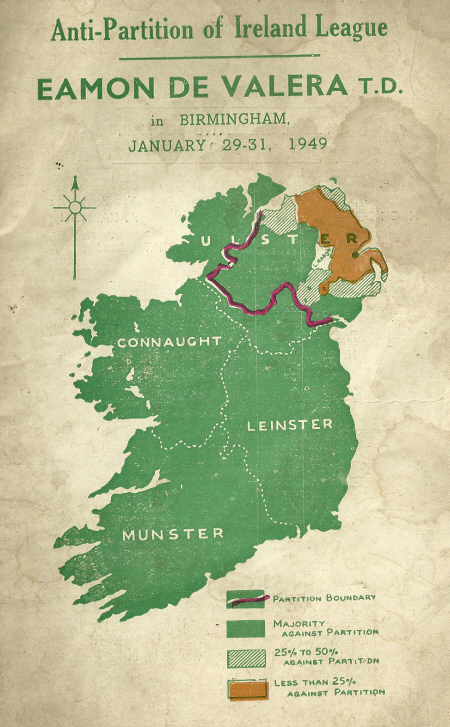
The previous post argued that capitalism continues to develop the forces of production while at the same time, in a contradictory process, continuing to fetter their development. This process opens the road to a new society of completely socialised productive forces, or socialism.  In order to reach it a certain level of development of the productive forces is necessary, which requires that this transformation take place internationally.

This is so because capitalism has long ago developed not only a world market but also, through the continuing socialisation of production, developed an international division of labour.  It therefore follows that the development of socialism in any single country cannot be achieved from an inferior level of development and cannot do so on its own.  While the overthrow of capitalism may first occur in a single country, the creation of socialism will face insuperable barriers and without further international development will fail.

Many analyses treat the development of the forces of production as a technological question or from a purely economic perspective, separate from consideration of class struggle or politics, divorced from the latter to the extent that they form a purely background enabling condition long since achieved.  This arises partly from the influence of Stalinism, for which purely national roads to socialism are already part of the ‘theory’, and partly from those Trotskyists for whom this constraint is no longer strictly binding because of a one-sided application of the theory of permanent revolution, positing that the tasks of capitalist development may and can, rather unproblematically, be taken forward by a working class regime due to the weakness of native capitalism.

The theory of permanent revolution is taken to have relaxed somewhat the constraint on possible socialist progress at a purely national level, while the decades of capitalist development since its first elaboration have actually tightened the constraint on the potential evolution of a country separated from the capitalist international division of labour.

In this theory the development of productive forces must be considered as a whole, at the level of the world, and at this level capitalism is ripe for socialism.  It is correctly recognised that for any revolution in a single country to survive it must spread.  However, because this revolution is considered mainly in political terms the grounds for socialist revolution as a social transformation engendered by the social power of the international working class is not fully appreciated.  The social power of the working class includes its role in the international division of labour, which provides the grounds for its political as well as economic unity, and is the basis for overcoming the much more uneven and volatile development of political struggles across the world that might otherwise leave working class political revolution isolated in a single country.

For many, socialist revolution is wrongly considered as implying that the task is simply one of destroying a system that is already historically decaying without consideration of the implications of its continuing development for a working class that is far from being able to impose its own solution.  This approach believes that capitalism is declining in a historic sense, evidenced by economic crises and general stagnation, along with other pathological conditions that are all held to be derived from decline.

Such conceptions become a dogma that is a given, and within which every malignant social and political phenomenon is interpreted and becomes an example thereof and not as more or less endemic expressions of the system.  While the laws of motion of the capitalist system discovered by Marx have produced results, ironically they are treated as if they no longer operate, which means his analysis in effect no longer applies.  So capitalism is no longer considered to revolutionise society by developing the forces of production and, despite all evidence to the contrary, is conceived as being in stagnation or perpetual crisis.  What we are left with is a dogmatic Marxism that ironically facilitates a political practice seemingly at odds with such an approach.

The effect is to reduce analysis to the level of immediate political struggle with an empirical approach to events.  As all the fundamental factors for socialism are considered to already be in place it encourages short-termism and an opportunist approach.  This does not necessarily mean that the wrong position is taken on any immediate political question but it does mean that even when the right one is taken it is not securely grounded.

If we consider the reality of the continued development of the international forces of production, we are forced to reject the nationalist perspectives of earlier left conceptions and their more recent expressions and inspirations.

For example, in this corner of the world there is no ‘British road to socialism’ and no way forward through attempts to constrain the dynamic of class struggle within national limits through a ‘left’ Brexit.  There is nothing progressive about some sort of Scotland of a ‘common weal’ that is common only to a select nationality and which believes social equality can be created within the boundaries of this small European country.  There can be no emancipation and liberation of the Irish working class – through pursuit of some mythical ‘real’ independence of the Irish nation in a Workers’ Republic – that is not part of a successful international revolution.

What all these have in common is that the international development of the forces of production makes all their struggles for national separation on supposedly progressive grounds utopian, and if they are utopian they will fail.  Whether they apparently achieve short term political success or not doesn’t matter in the end, fundamental economic and social forces will crush their promises, although these promises will long be abandoned by its sponsors before this happens.  The apparent victory of nationalism in the twentieth century and its defeat of its great ideological rival socialism hasn’t prevented the continuing International development of capitalism against which nationalist measures are impotent.  Only an international political arrangement can adequately address the governance of an international economy as capitalism already acknowledges (through the IMF, WTO, UN, NAFTA, G10, EU, ASEAN, BIS, OECD etc.)  and the only consistent International ideology and political programme is socialism.

If the Soviet Union could not develop a superior society to capitalism despite its size and resources, and if Britain cannot develop a superior capitalism to the EU, today bleeding from a thousand cuts that are barely reported, then the idea, for example, of Ireland or Scotland creating oases of social equality are fanciful.

The conditions for social equality cannot exist because the forces of production necessary for them, for socialism, must exceed the development of these forces under capitalism.  The productivity of labour and the most advanced techniques of production must go beyond that currently achieved by capitalism through its particular socialisation of production at the international level.  It is not a question of resisting and turning back what is now called globalisation but transforming the relations of production and the political determinations of these globalised productive forces.

The productiveness of any single country can no longer encompass all the goods and services considered as necessary consumption in the most advanced capitalist countries, in fact in all countries.  Inferior productivity than the most developed capitalism will see workers in any isolated regime buy goods and services from capitalist countries, so undermining their own economy and empowering capitalist industry to out-compete it.  It will see workers seek higher levels of living standards in capitalist countries, which their higher productivity delivers, by moving to these countries.

Only increased productivity can undermine the requirement for differential reward as an incentive to work, while this incentive will meanwhile exacerbate inequality.  Whatever the intentions, or the more democratic relations of production in any progressive departure from capitalism, superior capitalist forces of production will destroy such a departure if based on a narrow nationalist basis.  This is but a negative formulation of the earlier posts in this series emphasising the role of the forces of production determining – by bringing about, or in this case preventing – the development of new relations of production.

Of course, attempts at preventing all this can be made by administrative measures.  By curbing the entry into the country of cheaper goods produced by the more advanced capitalist countries and by reducing the supply of their new products and services.  By preventing investment in the country by capitalist firms and by restricting freedom to move to these countries of workers seeking a better life.  But how would this be possible if this society is ruled by the workers themselves?  How could they restrict their own freedoms if they are in charge?

These administrative measures would have to be imposed from without, and the mechanism for doing so is the state.  Since some workers would already have partially bought into this – if the project they supported was to create a new and separate ‘progressive’ state – they might at least initially support sacrifices and restrictions on freedoms, while others would not.  Those who would support them would seek reward for supporting the new state. Either by compulsion or reward the new ‘progressive state’ would generate its own inequality and its own restrictions of freedoms required to support this inequality – all in the name of progress and equality!  We have seen this film before and we know how it ends.

It is more than unfortunate that this understanding of the grounds for socialism elaborated by Marx and Engels have to be argued for again today, rather than having been forgotten, ignored of wilfully distorted or rejected by many of their so-called adherents.  The importance of internationalism and of embracing the interests of the working class as a whole was set out over 170 years ago:

“The Communists are distinguished from the other working-class parties by this only: 1. In the national struggles of the proletarians of the different countries, they point out and bring to the front the common interests of the entire proletariat, independently of all nationality. 2. In the various stages of development which the struggle of the working class against the bourgeoisie has to pass through, they always and everywhere represent the interests of the movement as a whole.”  (The Communist Manifesto)

Forward  to part 35

Back to part 33

From Civil Right to ‘the Troubles’ part 3 – nationalist failures

As we argued in the previous post, the civil rights movement grew out of the failure of the traditional alternatives which Catholics in the North of Ireland looked to in order to address their grievances.  These had sought to address the problem at source – through removing partition and ending the Northern State itself.

The first of these was through the Nationalist Party, whose various participation and absence from Stormont were equally ineffective.  Belfast Catholics also voted for various Labour parties and individuals and some radicals joined the Northern Ireland Labour Party in the 1960s, especially in Derry where they later played an important part in the civil rights movement. The Nationalist Party however was hardly a party at all, with no party structure, only holding its first annual conference in 1966, and was dominated by small businessmen, farmers, professionals and the clergy.

As the Anti-Partition League (APL) the Party had sought in 1945 to unite all those in the North opposed to partition and, like a couple of decades later, hoped that the new Labour government in London would be more sympathetic to its cause. The Party also appeared attuned to the times when Fianna Fail in the South ramped up its nationalist rhetoric when faced with a greener competitor on its flanks: Clann na Poblachta as part of a coalition Government in the South declared the Irish state a Republic in 1949.

The League tried to build a real organisation with offices and branches and to create a campaign with meetings and rallies across the North, also looking to the Irish in Britain and US, as well as in the Irish state.  Hopes of progress faced an intransigent Unionist government that banned nationalist demonstrations, while the Unionist Party increased its grip on Protestant workers assisted by Labour politics in the North splitting over partition.

The inevitable failure of the APL and lack of organisation of its successor signaled that Catholic disadvantage would not be reduced through constitutional campaigning. Relying significantly on local Catholic notables and the Church, the latter was more interested in its own temporal power than that of its flock, and this entailed funding from the Stormont regime and an amicable relationship with it.

The strongest Irish nationalist movements were the political parties in the South, but they too were more interested in the security and strength of their own partitioned state, which also came to be seen as linked to an amicable relationship with the Unionist State.

The second force within the Catholic population was nationalism in its more militant guise of republicanism. After the defeat of the Anti-Treaty forces in the civil war the defeated IRA sought a ‘second round’ of struggle against the Free State, the traitors who had split the movement and betrayed the true Republic.

Despite strenuous claims by republicans as to the continuity of their movement it is the discontinuities which are most remarkable, and the greatest break in the continuity of the movement in the 20th century was its attitude to the Irish State.  Today the idea that the main goal of the IRA should be to overthrow the Irish State would seem incredible, but this only illustrates how much the movement has changed.

A further split in the Anti-Treaty movement and the creation of Fianna Fail in 1926 exposed the weakness of militant republicanism and its nationalist politics. With Fianna Fail in government the lack of any principles based on class left it with no political rationale for prioritising overthrow of the new Irish State.  Popular opposition to any such project made ditching this objective easier, while also simpler to pass over the change in programme without anything being learned.  It was however now saddled with a policy that sought to abolish partition but without fundamental opposition to one of the partitioned states, the one previously considered to be the immediate and principal enemy.

Robbed of the perspective of a ‘second round’ against the Free Staters, the IRA embarked on a bombing campaign directly against Britain in 1939, which exposed the strategic weakness of the movement.  It was however saved from even greater humiliation by bigger concerns created by the much larger conflict.

The remaining target was the Northern State itself, which had witnessed isolated IRA action in the 1930s and 1940s, but which became the central target of a border campaign launched in 1956.  This however spluttered out long before it was brought to a formal close in 1962, when the IRA was forced to dump arms while blaming the people for lack of support.

In fact, elections in 1955 had shown that there was significant support in the areas where the campaign was expected to operate, so it appeared again that no real lessons were learnt, although it should have been clear what these were.   The restriction of IRA activity in Belfast already indicated some appreciation of weakness, but without any apparent consideration about what this might have meant for the effectiveness of its strategy as a whole and republican politics more generally.

There were now no more strategic targets left, with all three states in opposition to it having easily crushed attempts at armed rebellion.

At this point some in the republican movement did begin to learn lessons, which if fully comprehended and absorbed would have radically transformed the movement.  Unfortunately, the new emphasis in the 1960s on economic and social agitation was not in itself an alternative to belief in the power of armed struggle, and when this radical reconsideration was later completed by the Official republican movement it was not to lead to the embrace of socialism, but to the stultifying and corrupting grip of Stalinism.

Since Irish Republicanism had long become a militant form of nationalism, and Stalinism had long become a nationalist form of socialism, the difference between militant nationalism and nationalist socialism was both easy to cross over and easy to erase. Nationalism was common to both, as was the understanding of socialism as primarily amounting to state intervention by the existing state, with the cherry of a left governing party at the top of a capitalist cake.  Today some left-wing republicans have attempted to come to terms with the defeat of Provisional republicanism through embracing the current incarnation of Stalinism, although in doing so they have simply repeated the experience of the 1960s.

Nevertheless, the identification by some republicans of the need for attention to be given to economic and social agitation did provide an important thread that led to the creation of the civil rights movement. In this they were joined by concerned members of the Catholic middle class and radicals and leftists in the Northern Ireland Labour Party. In doing so these various currents would come together to identify a radical approach to the growing concern of many, a concern with what might seem to be a programme of limited reform, but which contained within it much more explosive potential.

That diverse movements came separately to this point indicates that forces more fundamental than themselves were working, and we will look at these in the next post.

Of course, in the end, the nationalist consciousness of the vast majority of Catholics in Northern Ireland was not broken by the civil rights movement despite the earlier failures of such politics.  As a result of this, more radical socialist and even left republican politics were not so much defeated as marginalised by the dynamics of developments as these ran into the ‘troubles’.  But before we get to that we will look at the progenitors of the civil rights movement.

Back to part 2

Forward to part 4