
In 2013 the President of the US National Endowment for Democracy (NED) wrote in the Washington Post that ‘Ukraine is the biggest prize’ and its ‘choice to join Europe will accelerate the demise of the ideology of Russian imperialism that Putin represents’, and therefore a critical step toward regime change in Russia. NED is an Non Governmental Organisation funded largely by the US government and intended, as its name suggests, to promote ‘democracy’ around the world. Democracy, that is, only when it is subservient to US interests and supported only in so far as these are respected.
So, we have a non-governmental organisation funded by government, claiming to be independent of it but boasting of leading the way in its foreign policy. In 2018 its National Defence Strategy defined ‘the re-emergence of long-term strategic competition’ with Russia and China as the ‘central challenge to US prosperity and security.’
As we have repeatedly noted, the position of the Left that supports Ukraine, not coincidentally, is almost identical to the position and even arguments of the governments and mass media of Western capitalist states.
Both justify their position on the basis that Ukraine is defending democracy, for itself and for others. The pro-war Left highlights ‘Russian imperialism’ and the role of Putin (but then, so does the NED), and it also supports regime change, without seeming to wonder what sort of regime change would be effected by the victory of western imperialism.
Of course, this left also claims to oppose western imperialism and will claim that it seeks a different sort of regime change. Except it has supported western imperialist intervention in support of Ukraine and in doing so has objectively supported exactly the sort of regime change that western imperialism wants. It thinks irrelevant to the cause of the war that NATO was to be enlarged so that Ukraine could potentially be the site of missiles only 5 minutes from Moscow, and wonders not what this implies for the possibility of nuclear war.
This expansion means nothing to them in understanding the motivations and objectives of any of the actors and therefore the nature of the war. No consideration of this is allowed to question why socialists should support the self determination of a state that has eagerly sought this position. Instead, the foreseeable and foreseen consequences are made irrelevant by free-floating moral concerns that Marxists reject precisely because they are divorced from the real world. Whatever ideas populate their heads, with whatever motivations, are irrelevant, and it does not matter what people call themselves or what they think they are.
Political programmes have objective effects independent of intention, which is precisely the point of seeking their implementation. It matters not only to state what you are opposed to (e.g. Russian ‘imperialism’) but what you are for (workers liberation) because this determines what means are excluded (NATO arms to Ukraine) and what objectives are to be opposed (including Ukrainian and NATO victory). Only the belief that some moral case stands above such considerations can justify support for Ukraine and of western imperialist backing for it; but if this is the case we have far departed from a materialist and Marxist understanding of politics and war.
How far we have was revealed in a Facebook exchange of views with a supporter of Ukraine who asked rhetorically ‘do people seriously believe that if Ukraine did not get weapons from NATO then the war would be brought to a peaceful end?’ As if with weapons to Ukraine it would! He states that ‘the people of Ukraine need and deserve our support and reveal a level of empathy, of basic humanity that appears sadly lacking in those who see the main problem as Ukraine receiving the means for the continuing existence of their independent state.’
We are asked for ‘empathy’ and ‘basic humanity’ so that weapons can be supplied that will wound and kill humans who must, it seems, not be deserving of empathy or considerations of ‘basic humanity’. And all this because we must support the provision of weapons so that the people of Ukraine receive ’the means for the continuing existence of their independent state.’
But since when did capitalist states belong to their people? Who is the ‘their’ in ‘their independent state’? What sort of state is the state of Ukraine? The same one that walked its people into a war through its pursuit of NATO membership against the wishes often of a majority of its people? How independent is Ukraine now, when it relies completely on western imperialism in order to continue the war? How ‘independent’ will it be when the war is over and it becomes subsumed under the imperialist alliance with an economy destroyed, millions of its people in exile and up to its neck in debt to western countries and their vulture financial institutions?
The only explanation for such stupidity is the belief in vacuous moralistic claims divorced from the real world that none of the parties at war are themselves stupid enough to believe.
These moralistic illusions rest on one event–the Russian invasion on 24 February last year. This is meant to be not only the grounds to explain everything but also the explanation itself, and by itself the imperative to support the Ukrainian state. But of course, one event explains nothing, requiring explanation itself, never mind mandating the correct socialist response. Even a series of events are in themselves no explanation of anything, but simply a series of happenings.
The pro-war left is compelled to go beyond this event themselves by insisting that the issue is one of Russian imperialism and self-determination of Ukraine, although by deriving their understanding solely from the Russian invasion they are unable even to account for this event, previous Ukrainian actions, or the subsequent actions of Western imperialism. And this is before we even consider just what is meant by Russian imperialism; the nature of the Ukrainian state and its actions and policy; and the strategy and actions of western imperialism before the invasion.
These latter issues have been dealt with before; it should be enough to note here that we face a proxy war by western imperialism, through the Ukrainian capitalist state against the Russian capitalist state, for us to determine that the working class has no interest in supporting either. The actions of all these actors are selectively presented by the pro-war left in order to bolster their pre-determined support for Ukraine, with the emphasis on the mental state and ideological declarations of Putin filling in for the lack of empirical support for the victimhood of the Ukrainian state, the progressive role of western imperialism and just why the Russians decided they needed to invade when they hadn’t done so before when it might have been easier to do so.
The point then of this series of posts has been, not to argue that the facts and events enumerated in themselves determine the correct approach to the war, but that they rebut the pro-war left’s support for Ukraine and western imperialism. This support is based not on Marxist analysis of the political forces but a litany of events that are meant to present a tidy narrative that comfortably brings one to express sympathy and solidarity with the ‘Ukrainian people’; without real life complications of people being divided into classes and ‘Ukraine’ being constituted by a state that, being a state, is actually separate from its people.
Along the road of this narrative the character of the Ukrainian state does not appear on the stage, and its manipulation of the Ukrainian people is absent. The character that is on stage is of the Ukrainian ‘people’, which substitutes for the many characters of the classes that inhabit Ukraine, including the Ukrainian working class, that might, if given the floor, express its own interests. The character of western imperialism simply arrives at the climax with sword and shield to defend the actor called ‘Ukraine’, although this role too is largely hidden. The Western saviour simply gives his sword and shield to the Ukrainian with the implication that they are to fight to the death, either theirs, the Russians or both.
This type of dramatic theatre, descended from the ancient Greeks, takes the audience from point A to point B, from invasion to support for ‘the resistance’, along the way filling it with emotions and sensations, of sympathy and outrage, earnestly hoping for a purgative resolution, a sort of happy ending for those suffering, in so far as one can be envisaged.
To paraphrase Bertolt Brecht; when asking whether one should feel the torment of someone suffering, he had his character respond that to do so ‘I must know why he is suffering’. Knowing why requires more than awareness that there was an invasion; that people are dying; that a perverted version of Lenin’s slogan of self-determination is the right answer, and that the biggest warmongers on the planet–out of character–are somehow doing the right thing.
Series Concluded
Back to part 14
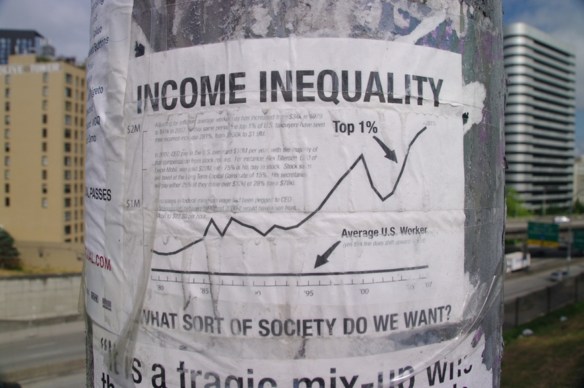 Most, if not all, people will oppose capitalism on moral grounds, or will at least be motivated by concerns for what they consider fairness and justice. Marx however was famously contemptuous of morality; it was said by someone who knew him that he ‘burst out laughing every time anyone spoke to him of morality.’


 Sráid Marx