Many of these international developments not unexpectedly find reflection in Ireland, often in an exaggerated fashion. Falling labour shares are associated with more open and liberalised capitalist economies and the economy of the Irish State has one of the most globalised in the world. (23) It no longer has the pretence to an independent currency (it never had one), can no longer set its own interest rates and progressively removed capital controls over the 1980s and 1990s. (24)
The share of expenditure going towards social protection as a share of GDP in the EU 15 rose slightly from 26.1% in 1991 to 27.9% in 2002 while it fell from 19.6% to 16% in the Irish State. The adjusted wage share of the economy which fell in the EU15 (see above), fell more dramatically in the Irish State – from 77.9% in the period 1960 – 1970 to 54% in 2001 – 2007. The share of non-agricultural incomes going to capitalists, the self-employed and landlords rose from 30.7% in 1987 to 48.1% in 2004 while the share of wages, pensions and social security fell from 69.2% to 52.1% in the same period. (25) This growing polarisation is reflected in increasing inequality. Between 1994-95 and 1999-2000 the average gross disposable income of the lowest 10% grew by 33.3% while it rose by 54.8% for the 6th highest and by 61.8% for the highest (richest) 10% of households. (26) [Most of these figures, because of their use of GDP, are distorted by US multinationals recording economic activity in the Irish state purely for tax purposes. This has led to the employment of different measures in order to exclude this effect.]
The processes lying behind these shifts include a growth in atypical employment and migration of workers into the State. (27) GAMA and Irish Ferries are testament to the use of foreign workers to lower particular and overall pay rates. The union bureaucracy has failed to fight this and often collaborated with it. Like unions elsewhere the Irish trade union movement has been weakened over the years despite growth in absolute numbers which it could hardly fail to achieve given the enormous rise in the workforce including in the public sector. However, its policy of not seeking to organise in the multinational sector and the emulation of this by indigenous private sector bosses has seen union density also fall. There are various measures but all show decline.(28)
Across the world, including Ireland the ability and willingness of the working class to fight back in defence of its interests has undoubtedly been set back. Strike statistics are only the most graphical measure of this development. Taking 42 countries and looking at the period between 1981-85 and 1996-2000 the number of countries in which strikes increased was 8 while there were 34 countries in which they declined. In the group in which strikes rose the increase was only 5,183 while the reduction in strike numbers was 63,657 in the group of countries in which there was a decline.(29) In the Irish State the annual number of days lost in strikes has fallen from over 580,000 in the 1970s to 26,650 in 2005. In the latter year there were only 15 strikes and only 10 in 2006, in which only 7,352 working days were lost, the lowest since records began in 1923.(30)
Industry & Workers
In looking at the future the only guide we have is the past, and the conceptual tools to analyse it in order to make some more or less tentative judgements. While the globalisation of capitalism is not a completely new phenomenon it is nonetheless true that the wave of internationalisation of capital has built upon earlier development and has reached a new level. It has brought huge countries more fully, into the dynamics of capitalist accumulation. In doing so it has created new working classes. The growth of the Irish working class is a small part of this process. Marx believed the development of capitalism will bring its gravediggers, but the new wave of capitalist growth takes place not just after a series of important defeats of the working class but also in historically new circumstances, in which the idea of a socialist alternative has hardly been weaker than for well over 100 years. The recent general election has confirmed the marginal character of the left in Ireland. [This has only changed slightly in recent years with the election of a small number of left TDs, the total of which has tended to decline, and without any comparable increase in its social weight.]
Historically geographical shifts in industrial production have created new working classes and, after a period, new class struggles. The paradigmatic industry of the twentieth century was the car industry. In fact, so emblematic has it been to successive waves of industrialisation that it has given its name to the way some theorists characterise the whole capitalist economy, speaking of ‘Fordism’ and ‘post-Fordist’ economies. The mass car industry has grown and shifted production from the US in the 1920s and 1930s, to north-west Europe after the Second World War, to southern Europe, including Argentina, then Brazil and South Africa mainly in the 1970s, and then South Korea in the 1980s and 1990s.
Much of this movement was designed to avoid unionisation or to seek out lower wages. The original decision to site auto production in Detroit was because of its anti-union environment and plants were almost immediately opened elsewhere after the big car factory strikes in 1936, in Buffalo in 1937 and in the US south and in rural areas. In Brazil investment dried up from the mid-1980s to mid-1990s after widespread strikes, and when it resumed it went to new greenfield sites devoid of unions.(31) In South Africa the failure to destroy militant unions was one factor leading to disinvestment in the 1980s. In Korea there were new class struggles although even here a new militant working class could not escape world –wide trends of reduced militancy, strikes fell from a high of 3,749 in 1987 to only 78 in 1997 before slowly increasing to 320 in 2003.(32) Nevertheless the shift in production from one site to another inevitably brought struggle in its wake even if this took some time – after all it took US unions 38 years to organise in Ford. (33)
The pace of events has quickened so that struggles arise earlier and unionisation sooner, but so also does incorporation and bureaucratisation of trade union movements. In part this reflects the product cycle: the car industry is no longer a new one with surplus profits from which workers may gain some portion. Production therefore continues to shift, in the US to small towns around the great lakes.(34) The search for increased exploitation takes place under ‘lean production’ strategies that are often ‘lean and mean.’
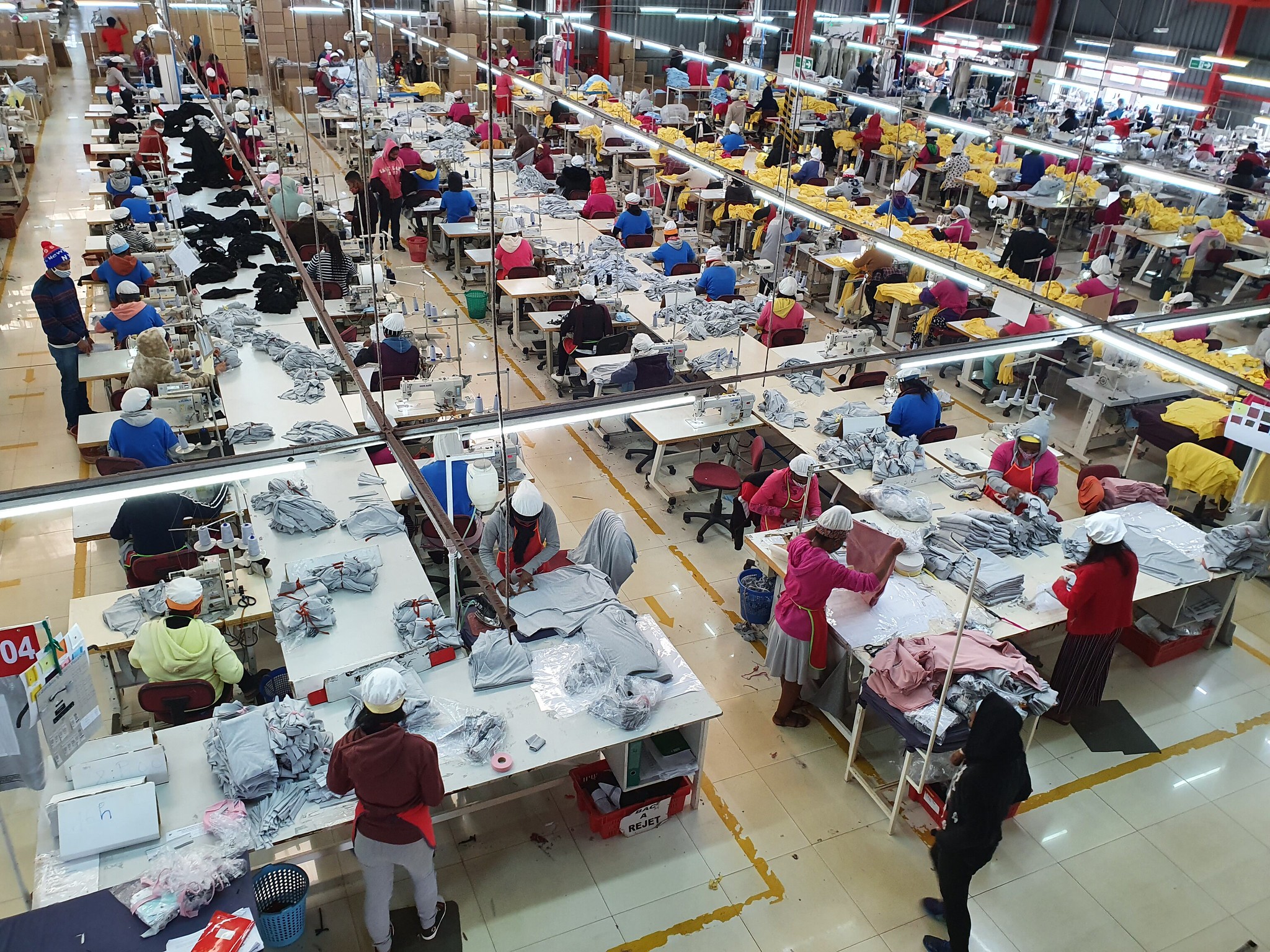
This experience of the car industry found a parallel in the ‘leading’ industry of the 19th century – textiles. It too saw production progressively mechanised and spread across the world from one country to another. The last few decades have witnessed the decimation of the textile industry in Ireland – north and south – beaten by low wage competition from abroad. Even more so than cars the textile industry is a mature one, even with technological progress in fashion and materials, so the scope for gains by workers in new production sites may be more limited. Today it is thought that car production, with its large numbers of workers brought together under one roof, is particularly suited to organisation, in contrast to textile production units, which have typically been much smaller and staffed more by women. In fact, the introduction of mechanisation in the car industry including the conveyor belt was also initially thought to be inimical to working class organisation – undermining the bargaining power acquired through possession of craft skills and reflecting ethnic divisions inside the workforce. It should also not be forgotten that one of working class history’s greatest bearers of struggle have been miners who have often worked in relatively small workplaces and with technology that has deskilled many of them. (35)
Thus, just as industrialisation shifted its driving edge from one industry to another so did worker organisation shift from one industry to another. While it may appear that car workers had greater bargaining power than textile workers it has been argued that the latter were no less militant, perhaps more so, but that their struggles were much more likely to go down to defeat. (36) And this brings us to the key variable in working class organisation and militancy. New developments in industrial organisation such as geographical dispersion of production and ‘just-in-time’ management have left capitalism more vulnerable to action by workers in the transport industries, and particularly new ones such as aviation. Yet today’s transport workers do not display comparably more militancy than those of yesteryear. What matters most then is not any objective bargaining power, derived either through possession of scarce skills or size and nature of the workplace. What matters is the political context and political consciousness.
This can be seen in the history of workers in the industries we have mentioned. It is seen in the militancy of textile workers despite their relatively unfavourable bargaining position. It can be seen in the car industry where in 1930s America political workers were crucial to strikes. In France the main Renault plant in Paris was closed for the first time in 20 years by the May Day strike in 1936. In contrast it can be seen negatively in the experience of workers in the aviation industry today.
The modern industries that play the leading role in capitalist accumulation are now also held to be inimical to easy organisation. Firstly, it is hard to identify just what the early 21st century equivalent to the textile or car industry is. Computerisation is driving technological development, and the semiconductor industry is obviously central to this, but it employs relatively few people and has not had the wider impact on working class development of these earlier industries. Many service industries seem either to combine very well paid workers, including for example some finance professionals, with much lower status and lower paid workers such as secretaries, telephone operators, cleaners and porters. There is no reason not to assume the proletarianisation of much of the former but this has yet to happen on a widespread basis. Personal services employ workers with relatively weak workplace and market place bargaining power but none of these obstacles are insuperable to organisation and militancy, especially with wider community support and mobilisation, i.e. when their struggles start to take on political characteristics. (37)
In any case we should emphasise that successful organisation for socialists is not primarily about achieving permanent gains within the system but organising for its abolition. The victories won by US car workers were subverted by the ‘Treaty of Detroit’ leading to the incorporation of US unions into the cold war establishment consensus, joining the witch hunt of militants, defeating rank and file organisation, accommodating to discriminatory practices and presiding over both membership decline and job losses. (38) Permanent victories, as Connolly once put it, do not exist short of the final victory, and this is not a trade union task. (39)
Notes:
(23) It has been voted the most globalised state in the world three years in a row by the US ‘Foreign Policy’ magazine.
(24) See ‘Financial Liberalisation and Economic Growth in Ireland’, John Kelly and Mary Everett, Central Bank Quarterly Bulletin Autumn 2004.
(25) Quoted in K Allen, op cit, pp. 244 & 245.
(26) R Munck, ‘Social Class and Inequality’, in ‘Contemporary Ireland: A Sociological Map’, p. 307 edited S O’Sullivan. See also the tables in ‘Bust to Boom: the Irish experience of growth and inequality’, Edited by B Nolan, P O’Connell and C Whelan, p,130 and 131 which suggest inequality driven by the rich getting richer.
(27) For example part time work increased from 10% of the total in 1990 to 18.1% in 2003, ‘Economic Miracles’, op cit p. 12.
(28) As a percentage of the employed workforce trade union membership has fallen from 56.2% in 1987 to 42% in 1998, quoted in ‘Corporatism in Ireland: a view from below’, in ‘Irish Employment Relations in the New Economy’, D D’Art and T Turner, p. 271. Separate figures record a reduction from 46% in 1994 to 35% in 2004 while ICTU admits that density has fallen from 39% to 36% in the last three years. It is lowest among young workers and is only 17.7% in those under 24 years of age. Where unions exist member participation has dropped.
(29) Quoted in ‘Global Industrial Relations’ edited by Morley, Gunnigle and Collings, p 279.
(30) Labour Relations Commission.
(31) Strike activity in Brazil reached a peak of 9 million workers involved in 1987. During the four years from 1985 to 1988, real industrial wages in Greater Sao Paulo grew by an average of 10 percent per year.’ B J Silver Forces of Labour: Workers’ Movements and Globalisation since 1870’ p. 36.
(32) ‘Global Industrial Relations,’ op cit.
(33) The exception, it is pointed out, is Japan where the working class suffered an historic defeat before the rise of mass car production. B J Silver, op cit.
(34) Japanese car factories have also moved to small towns close to the heart of traditional car manufacturing in the US and have avoided unionisation in the process. In Europe they have done the next best thing and signed single union sweetheart deals. ‘Global Restructuring and the Power of Labour’, Bill Dunn, p. 74
(35) The construction industry has also been one where subcontracting and small firm size did not prevent relatively high levels of unionisation although the scale of the former has increased, for example the percentage of UK construction workers directly employed fell from 77% in 1976 to 45% in 1996. Bill Dunn, op. cit., p. 108.
(36) In B J Silver, op cit.
(37) Call centres have actually grouped finance workers into larger workplaces even as the number and size of bank branches decline. They have been described as the ‘dark satanic mills’ of the 21st century. There are examples of workers fighting back against their bosses in the finance industry. In Spain bosses’ attempts to reduce the workforce ‘found that dismissals are problematic and costly, because voluntary redundancy is close to nonexistent and labor unions are strong and disputatious’. In France ‘by occupying their workplace, workers succeeded in forcing Société Générale to abandon a plan to eliminate jobs.’ Bill Dunn, p. 159.
(38) There were job cuts of 75,000 between 1957 and 1963. ‘Global Restructuring and the Power of Labour’, Bill Dunn, p. 67.
(39) These struggles were characterised by Rosa Luxemburg as a ‘labour of Sisyphus.’
Back to part 2

