
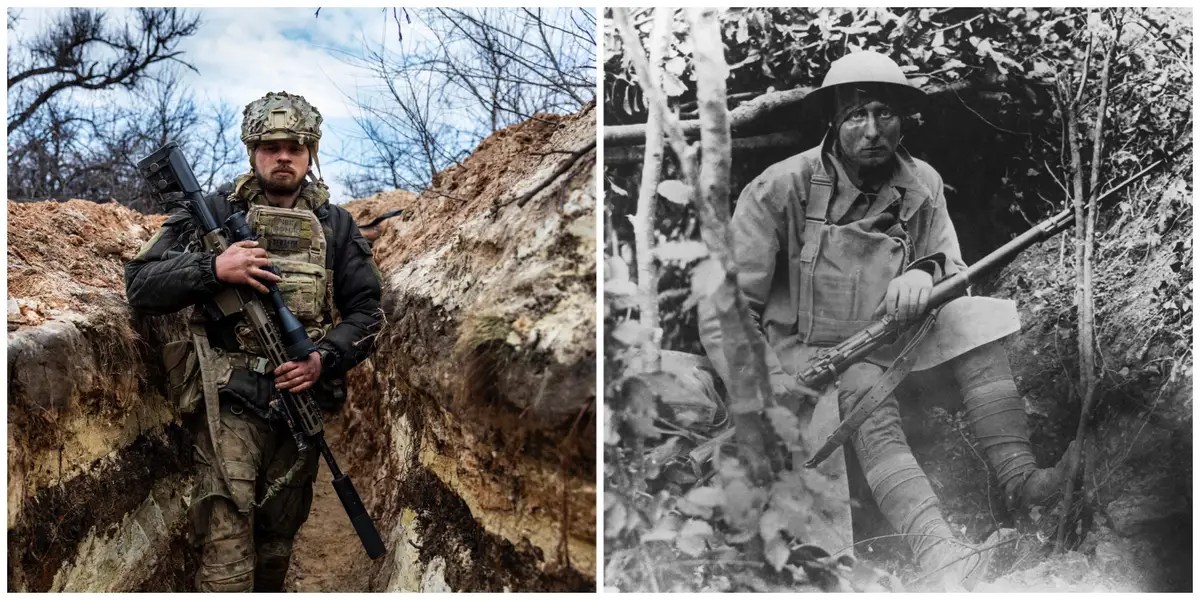
The Trump mantra of Making America Great Again is recognition of relative US decline and the need to arrest and reverse it, and in this he is no different from his recent predecessors. It is also recognition that this cannot be done in the old way – as during the short unipolar moment of US supremacy after the collapse of the Soviet Union.
The US no longer reigns supreme because of a higher level of industrial productivity and is no longer able to militarily dominate the whole world unchallenged despite an enormous military. The right-wing historian Niall Ferguson seriously overstates the case when he asserts that the US currently resembles the Soviet Union in the 1980s although his observations are accurate. In both there was/is a geriatric political leadership; the population no longer bought/buys into the political regime; the rising level of state debt was/is unsustainable, and most dramatically there was/is a marked decline in life expectancy in major sectors of the population caused by deaths of despair – alcoholism, opioids and suicide.
Despair is food for reactionary petty bourgeois politics, not for socialism, although socialism is no longer put forward by much of the left as an alternative. Other demands and policies and other movements have taken its place. As we have noted, in Ukraine it is ‘self-determination’ of an independent capitalist state; anyone but Le Pen for French workers to defend French bourgeois democracy; and a ‘left’ Government in Ireland that isn’t left in any genuine sense to replace a hundred years of Fianna Fail and Fine Gael.
The new imperialist rivalry makes the pro-war left’s approach of opposing imperialism through a policy of self-determination of nations incoherent, although it probably thinks the opposite. It forgets that the policy arose as a means of combatting nationalism, not supporting it. That it applied to countries and peoples that existed in colonies and empires, not already existing independent states. That the role of the policy was to propel bourgeois revolutions among these peoples as a way of advancing socialist revolution in the advanced imperialist countries. Not as a means of supporting bourgeois forces in already capitalist countries that seek alliances with one or other imperialism. Not in pursuit of a bourgeois revolution – whether called ‘national liberation’ or self-determination – where capitalism has already been fully established and with a large working class the task of which is to win it to socialism – through opposition to its own bourgeoisie and imperialism.
A world of at least nominally independent states makes a policy of self-determination dependant on secondary characteristics that results in political opportunism because this self-determination for countries can only apply against others. Such justification falls apart when one or other imperialist power becomes the sponsor of this ‘self-determination’. This is clearly the case in Ukraine, which requires massive NATO intervention as the only means of achieving what is claimed to be national liberation. This would necessarily involve the takeover by Western imperialism and would involve the pillaging of Ukrainian resources by the US and other multinationals, as various US media and politicians have made abundantly clear.
An article attempting to justify this position illustrates the problem of employing inane criteria to support capitalist war. Its “practical conclusions” are that “When an imperialist country is invading a poorer nation to try to carve up the world, advocating the latter’s right to resist and defending its right to self-determination is a basic democratic demand. Even saying you are in favour of the smaller nation winning is a principled and correct position.”
In this case the argument is that we must support a “poorer” or “smaller” nation against an imperialist one. Whatever about what is meant by “poorer” or “smaller,” what is missing is the need for a concrete class analysis of what the war involves – whether a “smaller” or “poorer” nation is sponsored and supported by a more powerful imperialist one or whether it is a capitalist state itself despite its poverty or size.
A world in which any significant war will involve support to one side or the other by an imperialist state in rivalry with another is ignored through moralistic claims about their size and wealth, ignoring that it is the working class who will fight and die in both. This is ignored because capitalist war is viewed as a war between nations and the class struggle is rendered irrelevant by choosing the most worthy and deserving capitalist state to support.
A policy of supporting self-determination and the independence of capitalist states is not a policy of supporting the right to self-determination of countries that are colonies or parts of former empires. It amounts to endorsing the policies of independent states against others and involves the left drumming up support for these under the cloak of the same hypocritical phrases about freedom long ridiculed by socialists.
It is as easy to declare support for the poorer and smaller alliance of Russia and China against the United States and the West over Ukraine – or Taiwan – as it is to support the West and its Ukrainian proxy. It is as stupid to declare one more democratic than the other, or to label one or the other as fascist, or define its capitalist character as non-imperialist, in order to justify support for it. In all cases the subordination of the working class to the favoured ‘democratic’ or ‘non-imperialist’ state is concealed and rendered invisible. Socialism cannot be put on the agenda by picking out what capitalist state to support, and the poverty of the arguments for it demonstrate it.
Back to part 1
 Sráid Marx