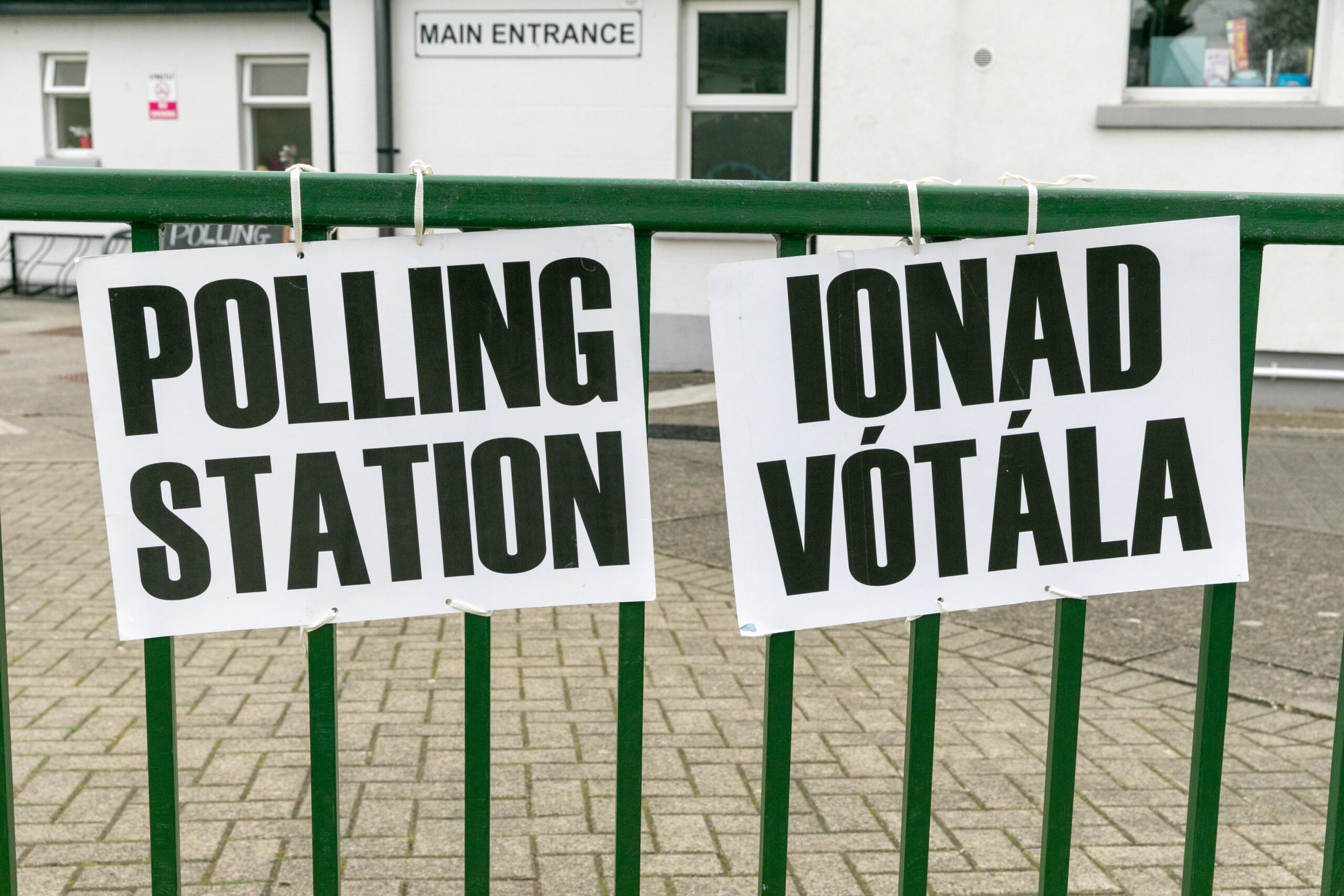
A continuation of the status quo is the result of the general election in the Irish state, with the two main capitalist parties, Fianna Fáil and Fine Gael, gaining 42.7% of the first preference vote. Falling just short of the 88 seats needed for a majority there are enough independents, who are FF and FG in everything but name, to prop them up. The only surprise is that Fianna Fáil topped the poll, the same party written off following it presiding over State bankruptcy and Troika vassalage after the crash in 2008.
Their main opposition, Sinn Fein, gained 19% and is more than willing to go into a coalition but ‘the left’ by which it might form an alternative one is too small and fragmented, and FF or FG will only consider it as a partner if they have to, and they don’t, so this route to government participation is also closed off to it. It has pulled its familiar trick, practised to perfection in the North, of claiming victory, which is only possible if you accept the disastrous previous local and European results as the benchmark. At one point, in the summer of 2022, an opinion poll put it on 36% but in the election its vote fell by 5.5% on the previous general election. Beyond the various figures, it will be staying in opposition, which is not at all where it wants to be.
The third leg of the existing government – the Green Party – collapsed from 12 to only 1 seat, that of its leader who now has no followers in the Dáil. Its previous participation in office led to its complete wipe out in 2011, following its collaboration in the bail-out of the banks and imposition of austerity. Like its fellow Green parties across Europe, its ‘left’ alternative credentials are to be taken seriously only by the terminally naïve.
On what is called ‘the left’, two parties did reasonably well in terms of their expectations. The vestal Social Democrats gained seats and 4.8% of the vote, while the shop-worn Labour Party staged its own return from near-death by gaining seats and a 4.7% share. They too have no justifiable route into government since FF and FG don’t need them that much and they would have little leverage on policy. They know they would likely suffer the fate of the Greens for their inevitable disappointing of the hopes of their supporters, busting the illusion that they are in some way ‘an alternative’. The unsullied Social Democrats are relative latecomers, which will be their major USP until they see their next career move as being junior ministers, while the problem with the Labour Party is that having nine lives as a junior partner in government has required suffering the same number of deaths. It could nevertheless still be a hard habit to break but this time probably just deferred.
The People before Profit – Solidarity alliance will continue to get state-funding with 2.8% of the vote, an increase of 0.2% but with a loss of two seats from 5 to 3. The core objective of being part of a left-alternative government to Fianna Fáil and Fine Gael might be said to have been destroyed except that it never existed in the first place. Neither formally nor informally was it advanced and ‘failed’ not only because of the continuing success of the main capitalist parties, even if much reduced by historical standards, but also by the weakness and incoherence of what PbP-Sol thinks of as ‘the left’. To its credit the Solidarity section of the alliance is less inclined to consider Sinn Fein as left but either way, the perspective of a left alternative government as a realistic alternative to the various permutations of the current bourgeois groupings has been exposed again. State funding, speeches in the Dáil and political social-work by TDs and would-be TDs are not only not a socialist alternative but not even a credible means of achieving the PbP-Sol reformist project.
On the right, the Catholic Aontú party made an advance with two seats and 3.9% of the vote while the Independent Ireland grouping won 4 seats and 3.6%. Beyond these more openly right-wing groups, a couple of independents made ground with anti-immigrant politics and the far-right also stood candidates in a coordinated attempt tom unite by not standing against each other. None were elected but what was noteworthy was their presence. They have not yet congealed into a movement with a leader and have been stymied by the absorption of the anti-immigrant message by the main bourgeois parties and independents to varying degrees.
The result then is a return to government in some form of the existing main capitalist parties and the continued exclusion of the fragmented opposition, which was always the most likely outcome and partly accounts for the reduced turnout –down from 62.9% in the 2020 election to 59.7%. The lowest in the history of the state. Almost as many didn’t vote as will have supported the two parties dominating the government. Some commentators, and the opposition, have attempted to explain that there are bubbling undercurrents waiting to have their effect but it is better to start explaining the apparent stability before explaining that something very different is really going on.
Forward to part 2
 Sráid Marx