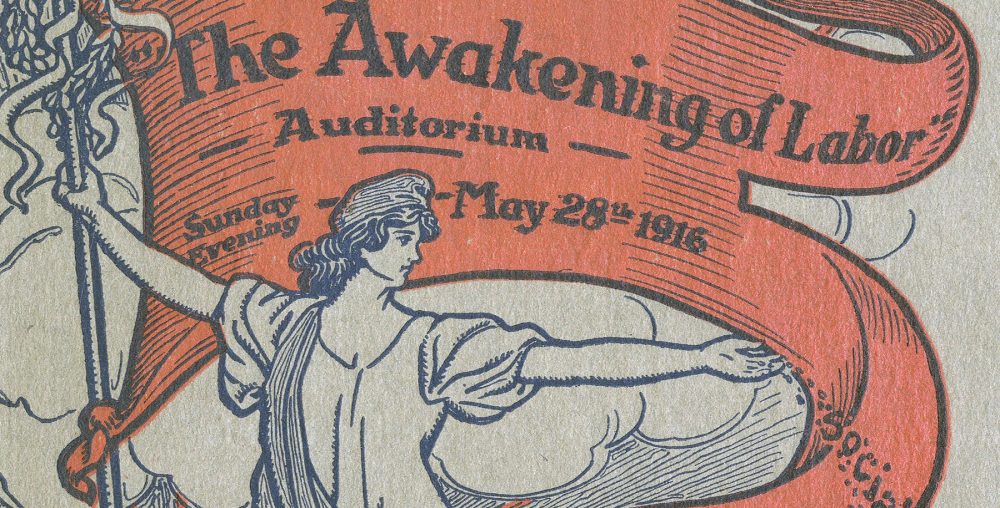

Much of the Irish Left seems to have a strange fascination with the Irish State’s declared policy of neutrality, wanting to defend it while also seeming to deny that it actually exists.
A report of a recent meeting in Belfast on the Socialist Democracy website records the confusion. It was organised by the Communist Party of Ireland calling for neutrality to be put into the constitution. Not all the speakers appear to have agreed.
‘Vijay Prashad pointed out that Ireland had only “nominal neutrality” and ‘Patricia McKenna made a similar point about the nominal nature of Irish neutrality . . . A campaign to include neutrality in the constitution would have no effect.’ The Socialist Democracy speaker stated that currently ‘essentially Ireland was acting as part of NATO.’ However, the article asserted that ‘even if the CPI’s campaign is restricted to neutrality, it would be a step forward from the silence and submission in the face of the open integration to NATO, and opportunities will arise to argue for an anti-imperialist campaign led by the working class.’
This ambiguity, if not confusion, also appeared in a statement the organisation put out earlier. It stated that ‘neutrality is not enough!’, implying that it existed. It argued that ‘political groups are right to petition for the retention of neutrality and we support these campaigns and petitions’, at the same time as saying that ‘simply setting the bar around the issue of neutrality is to chase a chimaera’, and that such campaigns are ‘not enough. Ireland is not a neutral country.’
The confusion is not confined to this organisation. A good article in the ‘Weekly Worker’ pointed out – ‘what are so-called socialists doing upholding the foreign policy of their ‘own’ bourgeois state?’ It references the People before Profit TD Richard Boyd Barrett who, in his own article, argues that:
‘the Irish political establishment, and especially Fine Gael, have been trying, stealthily, to undermine Irish neutrality for many decades. And in practice they have succeeded in ensuring that in terms of actual policy Ireland has always operated firmly in the camp of US imperialism.’
However, he too argues that the present policy should be defended: ‘There are also strong positive reasons for defending Irish neutrality’, he says. And argues for ‘the real potential that lies in Irish neutrality if we defend it and make real use of it’, such as expelling the Saudi and Russian ambassadors. He argues that this ‘would send an immensely powerful statement against imperialist occupation and oppression round the world.’ A more striking and powerful statement would be the expulsion of the US and Ukrainian ambassadors, but he doesn’t argue that!
He says that not only does neutrality exist, but that it should be defended, and takes to task those that deny both:
‘There is a kind of weary cynical argument you sometimes hear on the left which runs, “Irish neutrality has already been so eroded that it is not worth defending any more”. But this misses the point. Even the fig leaf of neutrality that still exists does constrain our political establishment to some degree, which is why they would like to get rid of it. Moreover, a successful people power campaign to defend it would offer the potential to make the neutrality much more real.’
However, such an argument isn’t cynical but starts from reality, and since when did socialists defend fig leaves? Do we not call them out for the lies and hypocrisy they are? Is the socialist argument that we should make the Irish State ‘really’ neutral?
In principle, socialists are not neutral between the various capitalist powers and their variable alliances – we oppose all of them, whether bundled up under US leadership in NATO or the alliance of Russia with China. These are all components of the world imperialist system and to fall into supporting one against the other is to betray the working class not only of the countries supported but the interest of the working class of the world as a whole.
Opposition to neutrality is therefore derived from our not being neutral to the capitalist state within our own countries. Not wishing to take sides in the wars between them is a result of this opposition to all of them and does not entail a policy of neutrality but of seeking to turn wars between them into a class war against them–all of them.
Opposition to joining NATO has been conflated with support for the Irish State’s claim of neutrality as if this was genuine and as if, if it were, we should support it. Of course, it would be better if it did have some more substance but it doesn’t and we should not pretend that it does; just as, while it is also better that the Irish State is not a formal member of NATO, we should not defend a policy of neutrality that does not even make a claim to political neutrality. And we should beware of formalities: Ukraine is not a formal member of NATO but is fighting the biggest war in Europe since World War II against Russia on its behalf.
We should support the majority of people in the State who oppose NATO membership but explain why it is that this alliance should itself be opposed. This includes its provocations leading to the Russian invasion of Ukraine, with all its horrific consequences for the Ukrainian people; a result of their political leadership walking them into the war through advancing the cause of NATO membership. Such membership is not a guarantee of security but signs a country up to its policy of defence of US hegemony, leading recently to wars in Iraq, Afghanistan, and Libya.
We are opposed to Irish soldiers fighting imperialist wars not because we have any illusion that the Irish State is not also part of the world imperialist system. It is a large tax haven for mainly US multinationals and the home of opaque financial flows in the International Financial Services Centre in Dublin. It is also the site of a lot of US direct investment. To think that this State could be ‘really’ neutral, as People before Profit argues, is to believe that the interests of the Irish capitalist state can align or be compatible with neutrality, and that ‘real’ neutrality would be accepted by the United States and the rest of Western imperialism.
For Socialist Democracy the Irish State ‘is a satrap of imperialism. The current drive to militarisation is not a spontaneous decision by the Irish government, but is the result of demands by the US’; it argues that ‘the fight against military adventures is also a fight for our own self-determination. How can we mobilise around claims for self-determination in other lands while ignoring the continued British military presence in Ireland . . .’
In reality the interests of the Irish capitalist state and of Irish capitalism are fully subordinated to Western imperialism and both have as much ‘self-determination’ as any capitalist state in Ireland will ever achieve. The addition of the Northern six counties will not change these fundamentals. The problem isn’t mobilising around ‘self determination for the Irish people’ but building an international workers’ movement to overthrow capitalism and create new states based on the working class.
The organisation complains that in the meeting its contribution was not accepted – ‘the issue of class did not arise’ – but pretending that the question of imperialism is one of self-determination is misleading on the same point. Defeat of imperialism in Ireland is co-terminus with overthrowing the Irish capitalist state and this requires a working class movement under the banner of socialism and not appeals to ‘the Irish people’ to determine its own future. Neither do appeals to ‘people power’ by People before Profit represent any class alternative, but a populist cry that deliberately avoids the question of class.
This is why it is wrong to absolve the Irish bourgeoisie of responsibility for the drive to NATO membership by saying that ‘the current drive to militarisation is not a spontaneous decision by the Irish government, but is the result of demands by the US.’ The Irish capitalist class is not being forced against its interests to pursue NATO membership and imperialism is not simply some foreign domination.
The Socialist Democracy web site quotes another speaker at the CPI meeting approvingly:‘Fearghal MacBhloscaidh made an important point when he pointed out that the battle against colonialism had led to a current of assimilation and a current for democracy. Modern Ireland was not based on the democratic impulse but on the counterrevolution that came to the fore after the war of independence.’
A similar, though not identical, idea is advanced by People before Profit in Boyd Barrett’s article:‘Ireland’s neutrality is a legacy of the Irish Revolution of the struggle against the British Empire, which made the new nation reject the idea of lining up with an empire. ‘For neither King nor Kaiser,’ as James Connolly and the Citizen Army put it in 1916. Fine Gael was born out of the counter revolution which aimed in the Civil War to crush the Irish Revolution. Visceral hatred of Irish republicanism and all it stood for, including Irish neutrality, is in their political DNA.’
It is true that ‘Ireland’s neutrality is a legacy of the Irish Revolution of the struggle against the British Empire’ but the Irish revolution was not led by James Connolly and the Citizen Army. It was not led by the working class and labour was infamously told to wait. The leadership of the Irish revolution was bourgeois and the revolution was a bourgeois revolution. In other words, it was not an anti-capitalist revolution but an ‘anti-imperialist’ one that was anti-Empire but pro-capitalist. Its objective was the creation of a separate capitalist state and this was as true of the ‘revolution’ as of the ‘counter-revolution’ on which so much is blamed, without thinking what difference victory for the anti-Treaty side would have made?
In fact we already know the answer to this because the leadership of the anti-Treaty revolutionaries came into government a decade later and nothing fundamentally changed. Ignoring this is to ignore the class nature that opposition to imperialism must take now, as it needed to do in the Irish revolution of a hundred years ago but failed to do so. The task is not to complete the Irish Revolution but to make a completely new one.
So it is true that ‘Ireland’s neutrality is a legacy of the Irish Revolution . . .’ but the limitations and nature of that revolution, compounded but not radically changed by the ‘counter-revolution’, are reflected in the current policy of ‘neutrality’, with its bourgeois character and its sterile protection against capitalist war.
Some on the left think that the Irish State can have a neutral foreign policy, but it can no more do that than have a neutral domestic policy. Since some of the left have abandoned Marxism this is indeed the road they are following. Fine words about Marx in print and a thoroughly reformist practice in the Dáil; or if you are from a Stalinist background, belief that there is a progressive Irish bourgeoisie, or section of it, ready to declare neutrality.
But if you can’t see the policy or progressive bourgeoisie, it’s because they’re not there.
Irish neutrality does not exist and since the class war is international it cannot exist.
 Sráid Marx
The context explains much. The issue is less NATO and more the EU. The republic of Ireland was once asked to join NATO by the US and declined the offer, the US government did not make a fuss about the matter back then. The republic joining NATO offered little to the cause of imperialism back in the 1950s.
The context has changed somewhat but again the Republic of Ireland is not being pressed by the US to join NATO, President Biden said so when asked. The real issue is the EU and its ongoing partnership with NATO. On Monday the foreign secretaries of all 27 EU member States gathered for the first time in a non member country, namely in the capital of Ukraine to make a statement of future intent of absolute support for the war against Russia.
To date the EU has mandated 11 sets of economic sanction against the EU. According to EU data as of September the EU and member State support to Ukraine totals roughly 64 billion dollars, in military assistance, including 3 billion for what is called ‘lethal equipment, 380 million for nonlethal supplies and 2 billion to buy for Ukraine 1 million rounds of ammunition. The EU has also established a training mission for the training of armed forces right across the bloc.
Also with financial aid , the EU has committed 38 billion in humanitarian economic assistance to Ukraine ; 11.6 billion provided out of the EU budget, 18 billion in the form of guaranteed loans, and 7’8 billion in donations from individual member States. Also the EU coordinates the delivery of emergency supplies to Ukraine, also an EU mandated temporary protection mechanism automatic rights for all Ukraine nationals who have fled the country to any member State including Ireland. Finally the EU is considering giving 50 billion in loans and grants for the 2023 period and seizing what remains of Russian assets in the member States and handing them over to Ukraine.
If we translate the above facts into Marxist understanding this is what we come up with. The EU is acting like the Executive Committee of the bourgeoisie in its relation to the crisis of international relations that is ongoing in respect to Ukraine.
The military operations of NATO are not much different form the normal state of things with regard to capitalists States, NATO is an instrument of war policy making not the formulator of the war policy. Of course the equation is complicated by the overseeing of an external force the United States Government. The EU is a junior partner to the US only because it does not fully control NATO and his limited military capacity of its own. Nevertheless it is fully engaged in formulation imperialist policy making and backing the policy up with the material resources.
My conclusion is that a debate in Ireland over the convention of neutrality is rather academic, because the conversation ignores the long standing partnership the EU has with NATO, the primary instrumental body deployed by imperialism. The real dilemma for the Irish, is how to be the most loyal member State within the EU all the while maintaining that political military neutrality
is in no way put in jeopardy by profession such loyalty to the EU. Almost everyone in Ireland manages to think of the EU as an anti-imperialist organisation, a lovely fluffy teddy bear.